FDA Issues Final Rules to Help Patients Gain Access to Investigational Drugs

The U.S. Food and Drug Administration (FDA) published two rules [on August 12, 2009] …that seek to clarify the methods available to seriously ill patients interested in gaining access to investigational drugs and biologics when they are not eligible to participate in a clinical trial and don’t have other satisfactory treatment options.

U.S. Food & Drug Administration

U.S. Food & Drug Administration

The U.S. Food and Drug Administration (FDA) published two rules [on August 12, 2009] …that seek to clarify the methods available to seriously ill

Margaret Hamburg, M.D., Comissioner of Food & Drugs, U.S. Food & Drug Administration

Margaret A. Hamburg, M.D., Commissioner of Food & Drugs, U.S. Food & Drug Administration

patients interested in gaining access to investigational drugs and biologics when they are not eligible to participate in a clinical trial and don’t have other satisfactory treatment options.

To support the effort to help these patients, the agency also is launching a new Web site where patients and their health care professionals can learn about options for investigational drugs. In general, these options include being treated with a drug that has been approved by FDA, being given an investigational drug as part of a clinical trial, or obtaining access to an investigational drug outside of a clinical trial.

The new rule, “Expanded Access to Investigational Drugs for Treatment Use,” makes investigational drugs more widely available to patients by clarifying procedures and standards. The other rule, “Charging for Investigational Drugs Under an Investigational New Drug Application,” clarifies the specific circumstances and the types of costs for which a manufacturer can charge patients for an investigational drug when used as part of a clinical trial or when used outside the scope of a clinical trial.

“With these initiatives, patients will have the information they need to help them decide whether to seek investigational products,” said Margaret A. Hamburg, M.D., Commissioner of Food and Drugs. “For patients seeking expanded access to investigational drugs and biologics, the new rules make the process easier to understand.”

Clinical trials are studies of drugs and biologics that are still in development and have not yet been approved by the FDA. Many patients enroll in clinical trials to gain access to investigational therapies and contribute to finding out how well an investigational therapy works, and how safe it is for patients. Obtaining a drug or biologic under an expanded access program may be an option for some patients who are not able to enroll in clinical trials.

The FDA has allowed expanded access to experimental drugs and biologics since the 1970s. That access has allowed tens of thousands of patients with HIV/AIDS, cancer, and other conditions to receive promising therapies when no approved alternative is available.

“The final rules balance access to promising new therapies against the need to protect patient safety and seek to ensure that expanded access does not discourage participation in clinical trials or otherwise interfere with the drug development process,” said Janet Woodcock, M.D., director of the FDA’s Center for Drug Evaluation and Research. “Clinical trials are the most important part of the drug development process in determining whether new drugs are safe and effective, and how to best use them.”

Source: FDA Issues Final Rules to Help Patients Gain Access to Investigational Drugs, FDA News Release, News & Events, U.S. Food & Drug Administration, 12 Aug. 09.

Additional Information:

Medicare Expands Coverage of PET Scans as Cancer Diagnostic Tool

“The Centers for Medicare & Medicaid Services (CMS) issued a final national coverage determination (NCD) to expand coverage for initial testing with positron emission tomography (PET) for Medicare beneficiaries who are diagnosed with and treated for most solid tumor cancers.  This decision applies to PET scans used to support initial diagnosis and treatment for most types of solid tumor cancers. … It also expands coverage of PET scans for subsequent follow up testing in beneficiaries who have cervical or ovarian cancer … A minimally invasive diagnostic imaging procedure, PET uses a radioactive tracer to evaluate glucose metabolism in tumors and in normal tissue. …”

“For Immediate Release: Monday, April 06, 2009
Contact: CMS Office of Public Affairs
202-690-6145

MEDICARE EXPANDS COVERAGE OF PET SCANS AS CANCER DIAGNOSTIC TOOL

CMS’ Coverage with Evidence Development Project Shows PET Scans as “Reasonable and Necessary” for Initial Treatment Decisions of Most Solid Tumor Cancers

Centers For Medicare & Medicaid Services

Centers For Medicare & Medicaid Services

The Centers for Medicare & Medicaid Services (CMS) issued a final national coverage determination (NCD) to expand coverage for initial testing with positron emission tomography (PET) for Medicare beneficiaries who are diagnosed with and treated for most solid tumor cancers.

This NCD removes a clinical study requirement for PET scan use in these patients.

Since 2005, Medicare coverage of PET scans for diagnosing some forms of cancer and guiding treatment has been tied to a requirement that providers collect clinical information about how the scans have affected doctors’ treatment decisions. This information was gathered through the National Oncologic PET Registry (NOPR) observational study. This decision removes the requirement to report data to the NOPR when the PET scan is used to support initial treatment (or diagnosis and “staging“) of most solid tumor cancers.

Medicare collects data from the NOPR under CMS’ Coverage with Evidence Development (CED) program. CED allows Medicare to develop evidence about how a medical technology is used in clinical practice so that Medicare can do the following:

(a) clarify the impact of these items and services on the health of Medicare beneficiaries;

(b) consider future changes in coverage for the technology; and

(c) generate clinical information that will improve the evidence base upon which providers base their recommendations to Medicare beneficiaries regarding the technology.

This decision is based, in part, on the information generated as a result of CMS’ 2005 decision to require NOPR reporting for many cancer PET scans. As a result of this evidence from NOPR, CMS reconsidered its 2005 coverage policy. This decision is the first time that CMS has reconsidered a coverage policy based on new evidence developed under the CED program.

‘This expansion in coverage for PET scans shows that the Coverage with Evidence Development program is a success,’ said CMS Acting Administrator Charlene Frizzera. ‘CED allowed us to cover an emerging technology, learn more about its usage in clinical practice, and adjust our coverage policies accordingly. Thanks to CED, Medicare beneficiaries have greater access to cutting edge medical technologies and treatments.’

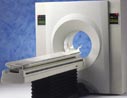
Positron Emission Tomography (PET) equipment (Photo Source:  www.RadiologyInfo.org)

Positron Emission Tomography (PET) equipment (Photo Source: RadiologyInfo.org)

This decision applies to PET scans used to support initial diagnosis and treatment for most types of solid tumor cancers. It also expands coverage of PET scans for subsequent follow up testing in beneficiaries who have cervical or ovarian cancer, or who are being treated for myeloma, a cancer that affects white blood cells. For these cancers, NOPR data collection will no longer be required. [Emphasis added by Libby’s H*O*P*E*™]

It is important to note that today’s decision still requires clinicians to report data to the NOPR when using PET scans to monitor the progress of treatment or remission of cancer in some cases. Although the evidence generated by the NOPR study helped CMS determine that PET scans are useful in helping guide treatment when cancer is first diagnosed, scientific evidence is not as strong in showing that PET scans are as useful in making subsequent treatment decisions for some types of cancer.

A minimally invasive diagnostic imaging procedure, PET uses a radioactive tracer to evaluate glucose metabolism in tumors and in normal tissue. The test may provide important clinical information to guide the initial treatment approach (e.g., diagnosis and “staging”) for many cancers.

This additional information may help physicians to distinguish benign from cancerous lesions and better determine the extent of a tumor’s growth or metastasis. PET scans have also been used in subsequent testing for cancer patients, e.g., to monitor cancer progression or remission after cancer treatment has begun.

More information about the types of cancer covered by this new policy is available in CMS’ final decision memorandum. …”

SourceMedicare Expands Coverage of PET Scans As Cancer Diagnostic Tool – CMS’ Coverage with Evidence Development Project Shows PET Scans as “Reasonable and Necessary” for Initial Treatment Decisions of Most Solid Tumor Cancers, Centers for Medicare & Medicaid Services, Press Release, April 6, 2009.

Secondary Sources:

Comment:  The CMS Decision Memo involving the use of PET scans for solid tumors allows an ovarian cancer patient (who is a Medicare beneficiary) to obtain a PET scan for “initial treatment strategy” purposes.  “Initial Treatment Strategy” is generally defined by CMS as encompassing initial diagnosis or staging.  An ovarian cancer patient (who is a Medicare beneficiary) can also obtain a PET scan for “subsequent treatment strategy” purposes.  “Subsequent Treatment Strategy” is generally defined by CMS as encompassing “restaging” and “monitoring response to treatment when a change in treatment is anticipated.”