
President of M.D. Anderson Outlines 10 Steps To Achieve Progress Against Cancer.

“The Houston Chronicle recently published a commentary by John Mendelsohn, M.D., president of M. D. Anderson, outlining actions the nation should take to achieve great progress against cancer. … Here are 10 steps we can take to ensure that deaths decrease more rapidly, the ranks of survivors swell, and an even greater number of cancers are prevented in the first place. …”

“Ten Pieces Help Solve Cancer Puzzle

John Mendelsohn, M.D., President, The University of Texas M.D. Anderson Cancer Center

John Mendelsohn, M.D., President, The University of Texas M.D. Anderson Cancer Center

The Houston Chronicle recently published a commentary by John Mendelsohn, M.D., president of M. D. Anderson, outlining actions the nation should take to achieve great progress against cancer.

An American diagnosed with cancer today is very likely to join the growing ranks of survivors, who are estimated to total 12 million and will reach 18 million by 2020. The five-year survival rate for all forms of cancer combined has risen to 66%, more than double what it was 50 years ago.

Along with the improving five-year survival rates, the cancer death rate has been falling by 1% to 2% annually since 1990.

According to the World Health Organization, cancer will be the leading worldwide cause of death in 2010. Over 40% of Americans will develop cancer during their lifetime.

While survival rates improve and death rates fall, cancer still accounts for one in every five deaths in the U.S., and cost this nation $89.0 billion in direct medical costs and another $18.2 billion in lost productivity during the illness in 2007, according to the National Institutes of Health.

Here are 10 steps we can take to ensure that deaths decrease more rapidly, the ranks of survivors swell, and an even greater number of cancers are prevented in the first place.

#1.  Therapeutic cancer research should focus on human genetics and the regulation of gene expression.

Cancer is a disease of cells that have either inherited or acquired abnormalities in the activities of critical genes and the proteins for which they code. Most cancers involve several abnormally functioning genes – not just one – which makes understanding and treating cancer terribly complex. The good news is that screening for genes and their products can be done with new techniques that accomplish in days what once took years.

Knowledge of the human genome and mechanisms regulating gene expression, advances in technology, experience from clinical trials, and a greater understanding of the impact of environmental factors have led to exciting new research approaches to cancer treatment, all of which are being pursued at M. D. Anderson:

  • Targeted therapies.  These therapies are designed to counteract the growth and survival of cancer cells by modifying, replacing or correcting abnormally functioning genes or their RNA and protein products, and by attacking abnormal biochemical pathways within these cells.
  • Molecular markers.  Identifying the presence of particular abnormal genes and proteins in a patient’s cancer cells, or in the blood, will enable physicians to select the treatments most likely to be effective for that individual patient.
  • Molecular imaging.  New diagnostic imaging technologies that detect genetic and molecular abnormalities in cancers in individual patients can help select optimal therapy and determine the effectiveness of treatment within hours.
  • Angiogenesis.  Anti-angiogenesis agents and inhibitors of other normal tissues that surround cancers can starve the cancer cells of their blood supply and deprive them of essential growth-promoting factors which must come from the tumor’s environment.
  • Immunotherapy. Discovering ways to elicit or boost immune responses in cancer patients may target destruction of cancer cells and lead to the development of cancer vaccines.

#2.  Better tests to predict cancer risk and enable earlier detection must be developed.

New predictive tests, based on abnormalities in blood, other body fluids or tissue samples, will be able to detect abnormalities in the structure or expression of cancer-related genes and proteins. Such tests may predict the risk of cancer in individuals and could detect early cancer years before any symptoms are present.

The prostate-specific antigen test for prostate cancer currently is the best known marker test to detect the possible presence of early cancer before it has spread. Abnormalities in the BRCA 1 and BRCA 2 genes predict a high risk for breast cancer, which can guide the decisions of physicians and patients on preventive measures. Many more gene-based predictors are needed to further our progress in risk assessment and early detection.

#3.  More cancers can and must be prevented.

In an ideal world, cancer “care” would begin with risk assessment and counseling of a person when no malignant disease is present. Risk factors include both inherited or acquired genetic abnormalities and those related to lifestyle and the environment.

The largest risk factor for cancer is tobacco smoking, which accounts for nearly one-third of all cancer deaths. Tobacco use should be discouraged with cost disincentives, and medical management of discontinuing tobacco use must be reimbursed by government and private sector payors.

Cancer risk assessment should be followed by appropriate interventions (either behavioral or medical) at a pre-malignant stage, before a cancer develops. Diagnosis and treatment of a confirmed cancer would occur only when these preventive measures fail.

A full understanding of cancer requires research to identify more completely the genetic, environmental, lifestyle and social factors that contribute to the varying types and rates of cancer in different groups in this country and around the world. A common cancer in Japan or India, for example, often is not a common cancer in the U.S. When prostate cancer occurs in African-Americans it is more severe than in Caucasians. A better understanding of the factors that influence differences in cancer incidence and deaths will provide important clues to preventing cancer in diverse populations worldwide.

#4.  The needs of cancer survivors must become a priority.

Surviving cancer means many things: reducing pain, disability and stress related to the cancer or the side effects of therapy; helping patients and their loved ones lead a full life from diagnosis forward; preventing a second primary cancer or recurrence of the original cancer; treating a difficult cancer optimally to ensure achieving the most healthy years possible, and more.  Since many more patients are surviving their cancers – or living much longer with cancer – helping them manage all the consequences of their disease and its treatment is critically important.  It is an area ripe for innovative research and for improvement in delivery of care.

#5.  We must train future researchers and providers of cancer care.

Shortages are predicted in the supply of physicians, nurses and technically trained support staff needed to provide expert care for patients with cancer.  On top of this, patient numbers are projected to increase.  We are heading toward a “perfect storm” unless we ramp up our training programs for cancer professionals at all levels.   The pipeline for academic researchers in cancer also is threatened due to the increasing difficulty in obtaining peer-reviewed research funding. We must designate more funding from the NIH and other sources specifically for promising young investigators, to enable them to initiate their careers.

#6.  Federal funding for research should be increased.

After growing by nearly 100% from 1998-2002, the National Cancer Institute budget has been in decline for the past four years. Through budget cuts and the effects of inflation, the NCI budget has lost approximately 12% of its purchasing power.  Important programs in tobacco control, cancer survivorship and support for interdisciplinary research have had significant cuts.  The average age at which a biomedical researcher receives his or her first R01 grant (the gold standard) now stands at 42, hardly an inducement to pursue this field. This shrinks the pipeline of talented young Americans who are interested in careers in science, but can find easier paths to more promising careers elsewhere.  Lack of adequate funding also discourages seasoned scientists with outstanding track records of contributions from undertaking innovative, but risky research projects.  The U.S. leadership in biomedical research could be lost.

Biomedical research in academic institutions needs steady funding that at least keeps up with inflation and enables continued growth.

#7.  The pace of clinical research must accelerate.

As research ideas move from the laboratory to patients, they must be assessed in clinical trials to test their safety and efficacy. Clinical trials are complicated, lengthy and expensive, and they often require large numbers of patients.  Further steps must be taken to ensure that efficient and cost-effective clinical trials are designed to measure, in addition to outcomes, the effects of new agents on the intended molecular targets. Innovative therapies should move forward more rapidly from the laboratory into clinical trials.

The public needs to be better educated about clinical trials, which in many cases may provide them with access to the best care available.  Greater participation in trials will speed up drug development, in addition to providing patients with the best options if standard treatments fail.  The potential risks and benefits of clinical trials must continue to be fully disclosed to the patients involved, and the trials must continue to be carefully monitored.

The issue of how to pay for clinical trials must be addressed. The non-experimental portion of the costs of care in clinical trials currently are borne in part by Medicare, and should be covered fully by all payors. The experimental portion of costs of care should be covered by the owner of the new drug, who stands to benefit from a new indication for therapeutic use.

#8.  New partnerships will encourage drug and device development.

One way to shorten the time for drug and device development is to encourage and reward collaboration among research institutions, and collaboration between academia and industry.  Increasingly, partnerships are required to bring together sufficient expertise and resources needed to confront the complex challenges of treating cancer. There is enormous opportunity here, but many challenges, as well.

Academic institutions already do collaborate, but we need new ways to stimulate increased participation in cooperative enterprises.

Traditionally, academic institutions have worked with biotech and pharmaceutical companies by conducting sponsored research and participating in clinical trials.  By forming more collaborative alliances during the preclinical and translational phases prior to entering the clinic, industry and academia can build on each other’s strengths to safely speed drug development to the bedside. The challenge is that this must be done with agreements that involve sharing, but also protect the property rights and independence of both parties.

The results of all clinical trials must be reported completely and accurately, without any influence from conflicts of interest and with full disclosure of potential conflicts of interest.

#9. We must provide access to cancer care for everyone who lives in the U.S.

More than 47 million Americans are uninsured, and many others are underinsured for major illnesses like cancer. Others are uninsurable because of a prior illness such as cancer.  And many are indigent, so that payment for care is totally impossible.

Depending on where they live and what they can afford, Americans have unequal access to quality cancer care. Treatment options vary significantly nationwide. We must find better ways to disseminate the best standards of high-quality care from leading medical centers to widespread community practice throughout the country.

Cancer incidence and deaths vary tremendously among ethnic and economic groups in this country. We need to address the causes of disparities in health outcomes and move to eliminate them.

We are unique among Western countries in not providing direct access to medical care for all who live here. There is consensus today among most Americans and both political parties that this is unacceptable.  Especially for catastrophic illnesses like cancer, we must create an insurance system that guarantees access to care.

A number of proposals involving income tax rebates, vouchers, insurance mandates and expanded government insurance programs address this issue. Whatever system is selected should ensure access and include mechanisms for caring for underserved Americans.  The solution will require give-and-take among major stakeholders, many of which benefit from the status quo.  However, the social and economic costs have risen to the point that we have no choice.

#10.  Greater attention must be paid to enhancing the quality of cancer care and reducing costs.

New therapies and medical instruments are expensive to develop and are a major contributor to the rising cost of medical care in the U.S.  The current payment system rewards procedures, tests and treatments rather than outcomes.  At the same time, cancer prevention measures and services are not widely covered.  A new system of payment must be designed to reward outcomes, as well as the use of prevention services.

Quality of care can be improved and costs can be reduced by increasing our efforts to reduce medical errors and to prescribe diagnostic tests and treatments only on the basis of objective evidence of efficacy.

A standardized electronic medical record, accessible nationwide, is essential to ensuring quality care for patients who see multiple providers at multiple sites, and we are far behind many other nations.  Beyond that, a national electronic medical record could provide enormous opportunities for reducing overhead costs, identifying factors contributing to many illnesses (including cancer), determining optimal treatment and detecting uncommon side effects of treatment.

What the future holds in store.

I am optimistic. I see a future in which more cancers are prevented, more are cured and, when not curable, more are managed as effectively as other chronic, life-long diseases. I see a future in which deaths due to cancer continue to decrease.

Achieving that vision will require greater collaboration among academic institutions, government, industry and the public.  Barriers to quality care must be removed.  Tobacco use must be eradicated.  Research must have increased funding.  Mindful that our priority focus is on the patient, we must continue to speed the pace of bringing scientific breakthroughs from the laboratory to the bedside.

M. D. Anderson resources:

John Mendelsohn, M.D.”

Primary SourceTen Pieces Help Solve Cancer Puzzle, by John Mendelsohn, M.D., Feature Article, The University of Texas M.D. Anderson Cancer Center Cancer News, Mar. 2009.
Endocyte Begins Phase II Clinical Trial of EC145 for Treatment of Women with Platinum Resistant Ovarian Cancer

Endocyte Inc. has announced the initiation of a randomized Phase II clinical study of the company’s investigational drug EC145 in women with platinum-resistant ovarian cancer. The phase II trial, also called the “PRECEDENT study,” will evaluate the efficacy and safety of EC145 when administered in combination with pegylated liposomal doxorubicin (PLD). …The PRECEDENT study will enroll 122 subjects and involve more than 50 clinical centers in the U.S., Canada, and Europe. … EC145 links a very potent anticancer drug to the vitamin folate, which is required for cell division. Rapidly dividing cancer cells over-express folate receptors to capture enough folate to support cell division. By combining a chemotherapy drug with folate, EC145 targets cancer cells while avoiding normal cells. This targeted approach is designed to provide treatment with more potent drugs with lower toxicity.”

″WEST LAFAYETTE, IN. – February 19, 2009 – Endocyte Inc. has announced the initiation of a randomized Phase II clinical study of the company’s investigational drug EC145 in women with platinumresistant ovarian cancer. The phase II trial, also called the “PRECEDENT study,” will evaluate the efficacy and safety of EC145 when administered in combination with pegylated liposomal doxorubicin (PLD).  PLD is widely used as a standard therapy for women with platinum-resistant ovarian cancer. The efficacy and safety of the combination of EC145/PLD  will be compared to treatment with PLD without EC145. Ovarian cancer is the fifth most common cancer among women in the United States and the leading cause of death due to cancer of the female reproductive system. The PRECEDENT study will enroll 122 subjects and involve more than 50 clinical centers in the U.S., Canada, and Europe. Trial details can be found at www.endocyte.com and http://www.clinicaltrials.gov.  EC145 links a very potent anticancer drug to the vitamin folate, which is required for cell division. Rapidly dividing cancer cells over-express folate receptors to capture enough folate to support cell division. By combining a chemotherapy drug with folate, EC145 targets cancer cells while avoiding normal cells. This targeted approach is designed to provide treatment with more potent drugs with lower toxicity.

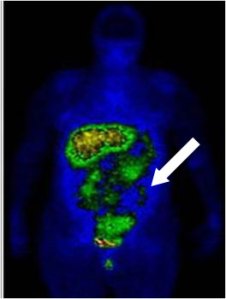
  Advanced Ovarian Cancer - Imaging folate-receptors cancer cells using EC20 (folate-Tc99m). Source:  Endocyte

Advanced Ovarian Cancer - Imaging folate-receptors cancer cells using EC20 (folate-Tc99m). Source: Endocyte

In addition to EC145, patients in the PRECEDENT trial will also be treated with a new molecular imaging agent called EC20 developed by Endocyte. By targeting folate receptors, EC20 imaging agent allows clinicians to identify tumors that overexpress the folate receptor. Using EC20, doctors may be able to identify, in advance, those patients who will benefit from EC145 therapy. According to Dr. Wendel Naumann of the Blumenthal Cancer Center, Carolinas Medical Center and principal investigator for the PRECEDENT study, ‘Patients with advanced, platinum resistant, ovarian cancer are in need of therapy that does not result in significant toxicity. The earlier clinical studies of EC145 were encouraging because they indicated that clinicians could use EC20 to identify women whose tumors expressed the molecular target of EC145. Therapy with EC145 might benefit these patients without causing significant additional toxicity.’ ‘The start of the PRECEDENT study is another important validation of Endocyte’s promising DGS [Drug Guidance System] technology platform,” said Dr. Richard Messmann, Endocyte’s vice president for medical affairs. ‘This also represents an important milestone in Endocyte’s efforts to develop a range of new drugs and predictive medicine tools to treat cancer and other serious diseases in the years ahead. ‘

About Endocyte
Endocyte is a privately-held biotechnology company with headquarters in the Purdue Research Park of West Lafayette, IN. Based on the applications of Endocyte’s advanced proprietary Drug Guidance System (DGS), the Company is working to develop new drugs and diagnostic agents to treat many types of cancer and other serious diseases. The DGS platform makes it possible to use highly-potent drugs on extended and frequent dosing schedules and in combination with other drugs to maximize efficacy. The technology improves drug targeting and reduces the risk of side effects by combining drugs with ligands that are able to identify and attach to receptors found on tumor and other disease cells. Endocyte is currently conducting three separate Phase 2 clinical trials for its lead compound, EC145, together with EC20, a companion molecular imaging agent, for the treatment of ovarian cancer and non-small cell lung cancer. Other clinical-stage products in the Endocyte pipeline include: EC0225, a combination of two potent anticancer drugs; BMS493, a potent drug being developed in partnership with Bristol-Myers Squibb; EC17, a targeted immunotherapy agent; and EC0489, a targeted cancer drug. The Company also has multiple product candidates in pre-clinical stage development.  This press release contains “forward-looking statements” as that term is defined in the Private Securities Litigation Reform Act of 1995. These statements are based on management’s current expectations and involve significant risks and uncertainties that may cause results to differ materially from those set forth in the statements. We undertake no obligation to publicly update any forwardlooking statement, whether as a result of new information, future events, or otherwise.

Contacts:
Vickey Buskirk, media relations, Endocyte Inc., (765) 463-7175 ext. 1117, vbuskirk@endocyte.com”

Quoted Source: ENDOCYTE BEGINS PHASE II CLINICAL TRIAL OF EC145 FOR TREATMENT OF WOMEN WITH OVARIAN CANCER, News Release, February 19, 2009 (PDF Document).

Other Sources:

Additional Resources:


Vermillion Files FDA Pre-Market Application for OVA1 Ovarian Tumor Triage Test

” …The OVA1 [Ovarian Tumor Triage Test] test will help assess the risk of malignancy in the hundreds of thousands of women who require surgery for ovarian tumors each year. ‘This information can be used to identify those who might benefit from referral to a gynecologic oncologist,’ said Fred Ueland, M.D., principal investigator of the study and Associate Professor of Gynecologic Oncology at the University of Kentucky. While most tumors are benign, numerous studies have shown that women with ovarian cancer have better overall outcomes when their surgery is performed by a gynecologic oncologist.”

FREMONT, Calif., June 25 /PRNewswire-FirstCall/ — Vermillion, Inc. (Nasdaq: VRML), a molecular diagnostics company, today announced that it has submitted a 510(k) pre-market notification application to the U.S. Food & Drug Administration (FDA) requesting regulatory clearance of its Ovarian Tumor Triage Test known as OVA1™.

As announced previously, the OVA1 prospective clinical trial met its primary endpoints, indicating that the test is capable of stratifying women with pelvic masses into high- and low-risk categories to help determine whether the patient should be referred to a specialist prior to surgery. The clinical trial was one of the largest ovarian cancer studies ever conducted and assessed more than 550 women with a confirmed adnexal mass at 27 clinical sites in the United States. Additionally, the trial was the culmination of more than eight independent studies in more than 2,500 women.

The OVA1 test will help assess the risk of malignancy in the hundreds of thousands of women who require surgery for ovarian tumors each year. ‘This information can be used to identify those who might benefit from referral to a gynecologic oncologist,’ said Fred Ueland, M.D., principal investigator of the study and Associate Professor of Gynecologic Oncology at the University of Kentucky. While most tumors are benign, numerous studies have shown that women with ovarian cancer have better overall outcomes when their surgery is performed by a gynecologic oncologist.

This is an important milestone for Vermillion and a significant step toward the commercialization of OVA1™. ‘We are pleased with the results of the trial and look forward to discussing the significance of our data and our commercialization strategy in an upcoming investor roundtable, planned for July,’ said Gail Page, President and CEO of Vermillion. ‘We also look forward to receiving regulatory clearance from the FDA and making OVA1 available to the hundreds of thousands of women who could benefit considerably from the test.’

Vermillion will host a roundtable teleconference to address the need for OVA1 on Tuesday, July 15. Fred Ueland, M.D., principal investigator of the OVA1 clinical study, will serve as the keynote speaker. Conference call details, including dial-in information and timing, are forthcoming.

About Vermillion’s Ovarian Cancer Diagnostic Program

In addition to developing a diagnostic test designed to distinguish between benign and malignant pelvic masses, Vermillion has a broad program of ovarian cancer diagnostic tests in development. Studies are underway to validate diagnostic tests developed to detect early-stage ovarian cancer, predict prognosis and recurrence, and identify women considered at high-risk for the disease.

Vermillion’s comprehensive diagnostic development program is being conducted with several leading collaborators at The Johns Hopkins School of Medicine, The University of Texas M.D. Anderson Cancer Center, Rigshospitalet (Copenhagen), and the University of Kentucky.

The Company’s OVA1 test is part of a strategic alliance with Quest Diagnostics to jointly develop and commercialize diagnostic tests.

About Vermillion

Vermillion, Inc. is dedicated to the discovery, development and commercialization of novel high-value diagnostic tests that help physicians diagnose, treat and improve outcomes for patients. Vermillion, along with its prestigious scientific collaborators, has diagnostic programs in oncology, hematology, cardiology and women’s health. Vermillion is based in Fremont, California. Additional information about Vermillion can be found on the Web at http://www.vermillion.com.”

[Quoted Source: Vermillion Files 510(k) Application With U.S. Food & Drug Administration for OVA1 Ovarian Tumor Triage Test – Significant Milestone Achieved Based on Compelling Clinical Studies, Vermillion, Inc. Press Release, June 25, 2008.]

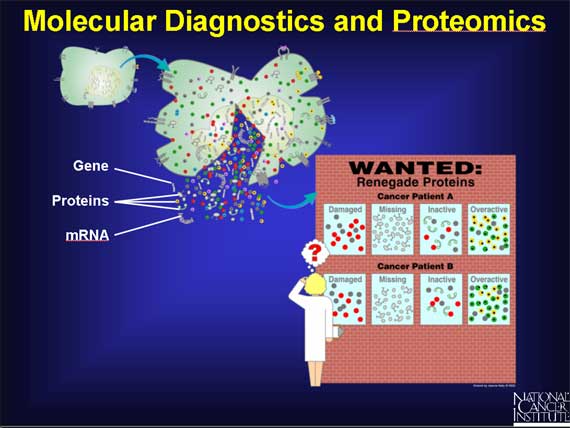
Additional Information:  To learn more about molecular diagnostics and proteomics, see Understanding Cancer Series: Molecular Diagnostics, National Cancer Institute, September 1, 2006.

LabCorp Announces Availability of Ovarian Cancer Blood Test To Assess The Presence of Early Stage Ovarian Cancer

“Laboratory Corporation of America® Holdings is now offering OvaSure™, an Ovarian Cancer Screening test to assess the presence of early stage ovarian cancer in high-risk women. In a recent study of high risk and average risk subjects, this blood test, using six biomarkers and research conducted at Yale University School of Medicine, was shown to discriminate between disease-free women and ovarian cancer patients (stage I-IV) with high specificity (99.4%) and sensitivity (95.3%). Additional studies performed at Yale University School of Medicine demonstrate comparable findings.”

On March 14, 2008, the H*O*P*E*™ weblog reported that a new blood test developed by the Yale University School of Medicine detected early stage ovarian cancer with 99% accuracy in Phase II clinical trial testing. To review the March 14 H*O*P*E*™ weblog post, click here. In 2006, Laboratory Corporation of America (Lab Corp) obtained licensing rights to the ovarian cancer early detection blood test, known as OvaSure™, from Yale. Today, Lab. Corp. announced in a press release that it is making the OvaSure™ blood test immediately available nationwide to women who are at high risk of developing ovarian cancer in the future. The relevant portion of the Lab Corp. press release dated June 23, 2007 is set forth below.

LabCorp Announces Availability of OvaSure™

Burlington, NC, June 23, 2008 – Laboratory Corporation of America® Holdings (LabCorp®) (NYSE: LH) is now offering OvaSure™, an Ovarian Cancer Screening test to assess the presence of early stage ovarian cancer in high-risk women. In a recent study of high risk and average risk subjects, this blood test, using six biomarkers and research conducted at Yale University School of Medicine, was shown to discriminate between disease-free women and ovarian cancer patients (stage I-IV) with high specificity (99.4%) and sensitivity (95.3%). Additional studies performed at Yale University School of Medicine demonstrate comparable findings.

‘LabCorp is pleased to offer for high-risk women the OvaSure test to enhance the potential of detecting and treating ovarian cancer in its early or localized stage when the likelihood of survival is greatest,’ said Myla P. Lai-Goldman, M.D., Executive Vice President, Chief Medical Officer of LabCorp. ‘OvaSure is a significant addition to LabCorp’s family of proteomic tests, and a major component of LabCorp’s strategy to bring the latest in diagnostic technology to women’s healthcare.’

It has been estimated that for the year 2008, 21,650 women will be newly diagnosed with ovarian cancer. It has been further estimated that 15,520 women will die from the disease in 2008. Despite being one-eighth as common as breast cancer, it is three times more lethal. If ovarian cancer is diagnosed and treated at the localized stage, the 5-year survival rate is 92%; unfortunately, only 19% of all cases are found at the localized stage. Most women have their ovarian cancer detected at the regional or distant stage when the 5-year survival rates are 71% and 30% respectively.

‘I am pleased that this test is available to help physicians detect and treat ovarian cancer in its earliest stages,’ said Gil Mor, M.D., associate professor in the Department of Obstetrics, Gynecology & Reproductive Sciences at Yale and a member of Yale Cancer Center. ‘Our team is proud that our research may help play a role in higher survival rates for women with this disease.’”

[Quoted Source: LabCorp Announces Availability of OvaSure™ , Laboratory Corporation of America Press Release dated June 23, 2008.]

Comment**: Although additional Phase III clinical trial testing with a larger patient population is required, the OvaSure™ blood test may represent the “gold standard” for early stage ovarian cancer detection in the near future. The immediate availability of the OvaSure™ blood test for use by women who are at high risk for developing ovarian cancer could save lives by catching ovarian cancer in its earliest stages, thereby making treatment of the disease highly effective. To view the ABCNews.com news report regarding the Yale ovarian cancer screening blood test that aired on April 21, 2008, click here.

**As of August 21, 2008, the amended OvaSure™ test “use” information provides, among other things, that a woman who has had both ovaries removed (i.e., a bilateral oophorectomy) should not use the test. Accordingly, it appears that the OvaSure™ test cannot be used by a “high-risk” woman to screen for an ovarian cancer recurrence, if she had both ovaries removed as part of her first line treatment following initial diagnosis of the disease.

OvaSure™ Information: The OvaSure™ blood test is now available nationwide through LabCorp. If you want to review OvaSure™ blood test information on the LabCorp. website, click here (then click on the letter “O” located on the upper left side panel keyboard and scroll down until you find the three OvaSure™ blood test information entries). It is our understanding that the OvaSure™ test cost approximately (U.S.)$225 and test results are available within five business days.

OvaSure™ Use (updated 8/21/08): “The OvaSureTM assay may be used as a tool to identify high-risk women who might have ovarian carcinoma. OvaSureTM is not indicated for a patient who is currently undergoing chemotherapy, who has had both ovaries removed, who is pregnant, or who is lactating. About 10% of women with benign ovarian masses (including cysts) may have positive results by this test.”

OvaSure™ Limitations (updated 8/21/08) : “Pregnant women or women who are lactating should not be screened by the assay because it may lead to false-positive results. A Calculated Risk Index of 0.50 or greater indicates a positive reading, which is suggestive of ovarian cancer (possible presence of disease). In a clinical study (see Journal Abstract below) across all disease stages, the six-marker panel composed of leptin, prolactin, osteopontin, insulin-like growth factor II, macrophage inhibitory factor, and CA-125 demonstrated a sensitivity of 95.3% and a specificity of 99.4% in detecting disease. Greater than 99% sensitivity (119 of 120) was shown in late-stage disease (stage III and stage IV). In early stage disease (stage I and stage II), the assay demonstrated a sensitivity of 91.6%, providing a significant improvement over CA-125 alone (less than 60% of stage I and stage II combined) for ovarian cancer detection. All positive readings should be retested on a new sample drawn at least three weeks after the original sample was collected. Patients with positive results confirmed by retesting on a second sample should be followed by a women’s health specialist who may order additional evaluations, such as sensitive imaging. Components used in this test are labeled as research purposes only. The performance characteristics of this product have not been established by the assay manufacturer. Results should not be used as a diagnosis for ovarian cancer without confirmation of the diagnosis by another medically established diagnostic product or procedure.”

OvaSure™ Journal Abstracts and Full Text Studies:

Updates:

  • July 2, 2008: The Society of Gynecologic Oncologists (SGO) issued a statement regarding the Labcorp OvaSure™ test. The SGO statement, dated July 2, 2008, is quoted below in its entirety.

“July 2, 2008

Society of Gynecologic Oncologists
Statement Regarding OvaSureTM

The Society of Gynecologic Oncologists (SGO) recognizes the need for accurate early detection biomarkers for ovarian cancer. For this reason, SGO reviewed the literature regarding OvaSure, a serum-based diagnostic test for ovarian cancer.

After reviewing OvaSure’s materials, it is our opinion that additional research is needed to validate the test’s effectiveness before offering it to women outside of the context of a research study conducted with appropriate informed consent under the auspices of an institutional review board.

SGO is committed to actively following and contributing to this vitally important research. As physicians who care only for women with gynecologic cancers, our hope is that these cancers can either be prevented or detected early. Because no currently available test has been shown to reliably detect ovarian cancer in its earliest and most curable stages, we will await the results of further clinical validation of OvaSure with great interest.”

The SGO is a national medical specialty organization of physician-surgeons who are trained in the comprehensive management of women with malignancies of the reproductive tract. The purpose of the SGO is to improve the care of women with gynecologic cancers by encouraging research and disseminating knowledge to raise the standards of practice in the prevention and treatment of gynecologic malignancies, in cooperation with other organizations interested in women’s health care, oncology and related fields.

Quoted Update Source: Society of Gynecologic Oncologists Statement Regarding OvaSure™, Society of Gynecologic Oncologists, July 2, 2008 (Adobe Reader PDF document).

Other Update Sources: Fast Facts: Background on The Society of Gynecologic Oncologists, Society of Gynecologic Oncologists Press Kit, undated.

“AM Nick is a Fellow in the Department of Gynecologic Oncology, and AK Sood is the Bettyann Asche-Murray Distinguished Professor in the Department of Gynecologic Oncology and in the Department of Cancer Biology, both at the University of Texas MD Anderson Cancer Center, Houston, TX, USA.

In order to overcome the significant mortality associated with ovarian cancer, a highly sensitive and specific screening test is urgently needed. CA125 is used to assess response to chemotherapy, detect recurrence, and distinguish malignant from benign disease; however, this marker is elevated in only 50-60% of stage I ovarian cancers, making it inadequate for early detection of malignancy. In this Practice Point, we discuss Visintin et al.‘s attempt to validate a novel multiplex assay that uses a panel of six serum biomarkers-leptin, prolactin, osteopontin, insulin-like growth factor II, macrophage inhibitory factor, and CA125 [medical abstract & full text of Visintin et. al. study provided above]. The study included 362 healthy controls and 156 patients with newly diagnosed ovarian cancer. The final model yielded 95.3% sensitivity, 99.4% specificity, a positive predictive value of 99.3% and a negative predictive value of 99.2%. These results indicate potential utility of this assay for early detection of ovarian cancer, although further validation is needed in a sample set representative of the general population.”

  • August 21, 2008: The Labcorp information with respect to the OvaSure™ test was recently modified. Despite that fact that the test was made available for “high-risk” women, it cannot be used by women who have had both ovaries removed. Consequently, it appears that a woman who had both ovaries removed (i.e., bilateral oophorectomy) after an initial diagnosis of ovarian cancer, cannot use the OvaSure™ test to screen for a potential recurrence of the disease in the future.