M.D. Anderson’s EphA2-Targeted Therapy Delivers Chemo Directly to Ovarian Cancer Cells

With a novel therapeutic delivery system, a research team led by scientists at The University of Texas M. D. Anderson Cancer Center has successfully targeted a protein that is over-expressed in ovarian cancer cells. Using the EphA2 protein as a molecular homing mechanism, chemotherapy was delivered in a highly selective manner in preclinical models of ovarian cancer, the researchers report in the July 29 issue of the Journal of the National Cancer Institute. … In the models, the therapy inhibited tumor growth in treated mice by 85 percent – 98 percent compared to control mice. … [Anil] Sood said, “We are gearing up to bring it to phase I clinical trials. A lot of the safety studies are well under way or nearing completion and we anticipate that this drug will enter clinical trials within the next few months.”

M. D. Anderson-led team finds potent antitumor activity with a monoclonal antibody-chemotherapy combination

With a novel therapeutic delivery system, a research team led by scientists at The University of Texas M. D. Anderson Cancer Center has successfully targeted a protein that is over-expressed in ovarian cancer cells. Using the EphA2 protein as a molecular homing mechanism, chemotherapy was delivered in a highly selective manner in preclinical models of ovarian cancer, the researchers report in the July 29 issue of the Journal of the National Cancer Institute.

EphA2 is attractive for such molecularly targeted therapy because it has increased expression in ovarian and other cancers, including breast, colon, prostate and non-small cell lung cancers and in aggressive melanomas, and its expression has been associated with a poor prognosis.

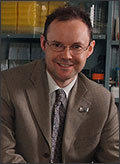
Anil K. Sood, M.D., professor and in the Departments of Gynecologic Oncology and Cancer Biology at the Univ. of Texas M. D. Anderson Cancer Center

Anil K. Sood, M.D., professor in the Departments of Gynecologic Oncology and Cancer Biology at the Univ. of Texas M. D. Anderson Cancer Center

“One of our goals has been to develop more specific ways to deliver chemotherapeutic drugs,” said senior author Anil K. Sood, M.D., professor and in the Departments of Gynecologic Oncology and Cancer Biology at M. D. Anderson. “Over the last several years we have shown that EphA2 is a target that is present quite frequently in ovarian and other cancers, but is either present in low levels or is virtually absent from most normal adult tissues. EphA2’s preferential presence on tumor cells makes it an attractive therapeutic target.”

The researchers used a carrier system to deliver chemotherapy directly to ovarian cancer cells. The immunoconjugate contains an anti-EphA2 monoclonal antibody linked to the chemotherapy drug monomethyl auristatin phenylalanine (MMAF) through the non-cleavable linker maleimidocaproyl. Research has shown that auristatins induce cell cycle arrest at the G – M border, disrupt microtubules and induce apoptosis (programmed cell death) in cancer cells.

The investigators evaluated the delivery system’s specificity in EphA2-positive HeyA8 and EphA2-negative SKMel28 ovarian cancer cells through antibody-binding and internalization assays. They also assessed viability and apoptosis in ovarian cancer cell lines and tumor models and examined anti-tumor activity in orthotopic mouse models with mice bearing HeyA8-luc and SKOV3ip1 ovarian tumors.

According to Sood, who is also co-director of both the Center for RNA Interference and Non-Coding RNA and the Blanton-Davis Ovarian Cancer Research Program at M. D. Anderson, the immunoconjugate was highly specific in delivering MMAF to the tumor cells that expressed EphA2 while showing minimal uptake in cells that did not express the protein. In the models, the therapy inhibited tumor growth in treated mice by 85 percent – 98 percent compared to control mice.

“Once we optimized the dosing regimen, the drug was highly effective in reducing tumor growth and in prolonging survival in preclinical animal models,” Sood said. “We actually studied bulkier masses because that is what one would see in a clinical setting where there are pre-existent tumors, and even in this setting the drug was able to reduce or shrink the tumors.”

As for future research with the EphA2-silencing therapy, Sood said, “We are gearing up to bring it to phase I clinical trials. A lot of the safety studies are well under way or nearing completion and we anticipate that this drug will enter clinical trials within the next few months.”

He added that his group is simultaneously conducting preclinical testing on other chemotherapy drugs to determine which agents might combine well with the immunoconjugate used in the current study.

“There is growing interest in molecularly targeted therapy so that we are not indiscriminately killing normal cells,” Sood noted. “The goal is to make the delivery of chemotherapy more specific. The immunoconjugate we used is in a class of drugs that is certainly quite attractive from that perspective.”

Research was funded by NCI-DHHS-NIH T32 Training Grant (T32 CA101642 to A.M.N.). This research was funded in part by support from M. D. Anderson’s ovarian cancer SPORE grant (P50 CA083639), the Marcus Foundation, the Gynecologic Cancer Foundation, the Entertainment Industry Foundation, the Blanton-Davis Ovarian Cancer Research Program, and Sood’s Betty Ann Asche Murray Distinguished Professorship.

Co-authors with Sood are Jeong-Won Lee, Hee Dong Han, Mian M. K. Shahzad, Seung Wook Kim, Lingegowda S. Mangala, Alpa M. Nick, Chunhua Lu, Rosemarie Schmandt, Hye-Sun Kim, Charles N. Landen, Robert L. Coleman, all of M. D. Anderson’s Department of Gynecologic Oncology; Robert R. Langley, of M. D. Anderson’s Department of Cancer Biology; Jeong-Won Lee, also of the Department of Obstetrics and Gynecology, Samsung Medical Center, Sungkyunkwan University School of Medicine, Seoul, Korea; Mian M. K. Shahzad, also of the Department of Obstetrics and Gynecology, Baylor College of Medicine, Houston, Texas; Hye-Sun Kim, also of the Department of Pathology, Cheil General Hospital and Women’s Healthcare Center, Kwandong University College of Medicine, Seoul, Korea; and Shenlan Mao, John Gooya, Christine Fazenbaker, Dowdy Jackson, and David Tice , all of MedImmune, Inc., Gaithersburg, Maryland.

Source: EphA2-Targeted Therapy Delivers Chemo Directly to Ovarian Cancer Cells – M. D. Anderson-led team finds potent antitumor activity with a monoclonal antibody-chemotherapy combination, M.D. Anderson News Release, 29 Jul. 09 [summarizing the findings of Lee JW, Han HD, Shahzad MM et. al. EphA2 Immunoconjugate as Molecularly Targeted Chemotherapy for Ovarian Carcinoma. J Natl Cancer Inst. 2009 Jul 29. [Epub ahead of print]].

Vox Populi*: Libby, We’ll Be Missing You

Vox Populi:  Libby, We’ll Be Missing You.

voxpopDear Libby,

One year ago today, you left us after an extended battle with ovarian cancer.  You are missed as a wife, a daughter, a sister, an aunt and a cousin.  You were, and continue to be, a very special family member to your loved ones who remain behind.  You battled this insidious disease with courage but lost that battle in the prime of your life at age 26.

I wonder why your life was cut short by this disease.

I wonder why an effective screening test has not been discovered by a country that set a lofty goal of landing a man on the moon and accomplished that goal within a decade.

I wonder why there are so many pink ribbons yet so few teal ribbons.

I wonder how the mothers of a major Hollywood celebrity (Angelina Jolie) and the President of the U.S. (Barack Obama) could die from ovarian cancer, yet U.S. women remain generally unaware of the early warning signs and symptoms of the disease.

I have faith that you are in a much better place now.  A place that only knows pure love.  A place that knows no pain or suffering. A place where there are logical answers to my questions above.

I remember when you rode in my new red convertible sports car at the age of 11 with your blond hair blowing behind you in the wind.  At that moment, your life seemed limitless.

I remember when, as a young adult, you helped others who could not help themselves.  You chose generosity and kindness while many of your peers sought money and power.

I remember your positive attitude after initial diagnosis, despite the fact that you had every reason to blame life and others for your plight.

I remember your dry sense of humor after a doctor attempted to soften the blow of a disease recurrence diagnosis by telling you that even he could step out into the street tomorrow and get hit by a bus.  You suggested that the doctor needed serious help with his “people skills,” but joked that his insensitive statement should appear on an ovarian cancer fundraising T-shirt.

I remember how you continued to seek out medical solutions to your disease in the face of dire odds and statistics.

I remember “hearing” your smile on the telephone, regardless of our 3,000 mile separation.

I will always remember your example of love, faith, hope, courage, persistence, and ultimately, acceptance.

On July 28, 2008, I wrote about two songs that immediately came to mind after I heard about your passing.  One year later, two songs again come to mind based upon your inspiration and memory.

The first song is I’ll Be Missing You.

I’ll Be Missing You was written by Terry “Sauce Money” Carroll and performed by Sean “Diddy” Combs (then Puff Daddy), Faith Evans and 112.  Terry Carroll received a 1997 Grammy Award for the song that is based in part upon the melody of the 1983 Grammy Award-Winning song Every Breath You Take (written by Sting and performed by The Police).  I’ll Be Missing You was inspired by the memory of Combs’ fellow Bad Boy Records artist Christopher Wallace (aka Notorious B.I.G. ) who died in March 1997.  The song lyrics express what our family is feeling today when we think of you:

… Life ain’t always what it seem to be
Words can’t express what you mean to me
Even though you’re gone, we still a team
Through your family, I’ll fulfill your dream

In the future, can’t wait to see
If you open up the gates for me
Reminisce sometime
The night they took my friend
Try to black it out but it plays again
When it’s real feelings’ hard to conceal
Can’t imagine all the pain I feel
Give anything to hear half your breath
I know you still livin’ your life after death

… It’s kinda hard with you not around
Know you in heaven smilin down
Watchin us while we pray for you
Every day we pray for you
Til the day we meet again
In my heart is where I’ll keep you friend
Memories give me the strength I need to proceed
Strength I need to believe …
I still can’t believe you’re gone
Give anything to hear half your breath
I know you still living you’re life, after death …

The second song is Eva Cassidy’s cover of Over The Rainbow, which is the Academy Award-Winning song written by Harold Arlen and E.Y. Harburg, and originally sung by Judy Garland, in the 1939 Academy Award-Nominated “Best Picture” film Wizard of Oz.

Eva Cassidy, like you, died in the prime of her life from cancer.  Eva was 33 years old when she died in 1996 from melanoma, the deadliest form of skin cancer.  During her life, she created and sung beautiful music in relative obscurity. After her death, millions of worldwide fans “discovered” her music and today celebrate her life.  The lyrics of this classic ballad celebrate our belief that you are now at peace in a beautiful place “somewhere over the rainbow,” along with the hope that we will one day be reunited with you:

Somewhere over the rainbow
Way up high
There’s a land that I heard of
Once in a lullaby

Some day I’ll wish upon a star
And wake up where the clouds are far behind me
Where troubles melt like lemondrops
Away above the chimney tops
That’s where you’ll find me

Somewhere over the rainbow
Bluebirds fly
Birds fly over the rainbow
Why then, oh why can’t I?

In Mitch Albom’s bestselling memoir Tuesdays With Morrie, Morrie Schwartz, who was suffering from terminal Lou Gehrig’s Disease, taught Albom (his former college student) an important lesson about how death reminds us to live fully each day with love. “As long as we can love each other, and remember the feeling of love we had, we can die without ever really going away,” he told Albom one Tuesday. “All the love you created is still there. All the memories are still there. You live on in the hearts of everyone you have touched and nurtured while you were here. Death ends a life, not a relationship.”

Libby, your memory, love, and inspiration live on in our hearts and minds.  Your physical life ended one year ago, but your relationship with us is eternal.  We will forever love you.

Libby Remick (1982 - 2008) Grieve not, nor speak of me with tears, but laugh and talk of me as if I were beside you there. -- Isla Paschal Richardson

Libby Remick (1982 - 2008) "Grieve not, nor speak of me with tears, but laugh and talk of me as if I were beside you there." -- Isla Paschal Richardson

I am requesting family members and readers to honor Libby by contributing at least $1.00 to ovarian cancer research via the Ovarian Cancer Research Fund (and PayPal).  To make a contribution, click on Kelly Ripa’s picture located on the left homepage sidebar, or simply CLICK HERE.

__________________________

  • Ovarian cancer causes more deaths than any other cancer of the female reproductive system.
  • In 2009, the American Cancer Society (ACS) estimates that there will be approximately 21,550 new ovarian cancer cases diagnosed in the U.S.  ACS estimates that 14,600 U.S. women will die from the disease, or about 40 women per day.
  • Ovarian cancer is not a “silent” disease; it is a “subtle” disease. Recent studies indicate that some women may experience persistent, nonspecific symptoms, such as (i) bloating, (ii) pelvic or abdominal pain, (iii) difficulty eating or feeling full quickly, or (iv) urinary urgency or frequency. Women who experience such symptoms daily for more than a few weeks should seek prompt medical evaluation. To learn more about the warning signs and symptoms of ovarian cancer, CLICK HERE.
  • Ovarian cancer can afflict adolescent, young adult, and mature women, although the risk of disease increases with age and peaks in the late 70s. Pregnancy and the long-term use of oral contraceptives reduce the risk of developing ovarian cancer.
  • There is no reliable screening test for the detection of early stage ovarian cancer. Pelvic examination only occasionally detects ovarian cancer, generally when the disease is advanced. A Pap smear cannot detect ovarian cancer. However, the combination of a thorough pelvic exam, transvaginal ultrasound, and a blood test for the tumor marker CA125 may be offered to women who are at high risk of ovarian cancer and to women who have persistent, unexplained symptoms like those listed above.
  • If diagnosed at the localized stage, the 5-year ovarian cancer survival rate is 92%; however, only about 19% of all cases are detected at this stage, usually fortuitously during another medical procedure.
  • For women with regional and distant metastatic disease, the 5-year ovarian cancer survival rates are 71% and 30%, respectively. The 10-year relative survival rate for all stages combined is 38%.

__________________________

*”Vox Populi,” a Latin phrase that means “voice of the people,” is a term often used in broadcast journalism to describe an interview of a “man on the street.”

In the spirit of Vox Populi, Libby’s H*O*P*E*™ searches online for original pieces of writing created by ovarian cancer survivors, survivors’ family members, cancer advocates, journalists, and health care professionals, which address one or more aspects of ovarian cancer within the context of daily life. The written pieces that we discover run the gamut; sometimes poignant, sometimes educational, sometimes touching, sometimes comedic, but always honest. The written piece may be an essay, editorial, poem, letter, or story about a loved one. In all cases, we have received permission from the writer to publish his or her written piece as a Libby’s H*O*P*E*™ Vox Populi weblog post.

It is our hope that the monthly Vox Populi feature will allow readers to obtain, in some small way, a better understanding of how ovarian cancer impacts the life of a woman diagnosed with the disease and her family. We invite all readers to submit, or bring to our attention, original written pieces suitable for publication as monthly Vox Populi features.


2009-2010 U.S. News & World Report Best U.S. Hospital Rankings

Today, U.S. News & World Report issued its 2009-2010 rankings of the best U.S. hospitals for adults. The University of Texas, M.D. Anderson Cancer Center is rated #1 in cancer treatment; Brigham and Women’s Hospital is rated #1 in gynecology; and Johns Hopkins is rated #1 overall based upon all medical specialties.

If you would like more information regarding the 2009-2010 U.S. News & World Report best U.S. hospital rankings, click here. To better understand how U.S. News & World Report ranked the hospitals in each specialty, read America’s Best Hospitals: Here’s How We Selected Them – Deaths, reputation, and patient safety were among the factors the rankings took into account, written by U.S. News & World Report’s Avery Comarow.  If you would like to review the current U.S. News & World Report America’s Best Children’s Hospitals list, click here.

Top 10 U.S. Hospitals: Cancer

Top 10 U.S. Hospitals: Gynecology

Top 10 U.S. Hospitals (highest scores in at least six medical specialties)

1. Univ. of Texas M.D. Anderson Cancer Center, Houston, Texas Brigham and Women’s Hospital, Boston, Massachusetts Johns Hopkins Hospital, Baltimore, Maryland
2. Memorial Sloan-Kettering Cancer Center, New York, New York Johns Hopkins Hospital, Baltimore, Maryland Mayo Clinic, Rochester, Minnesota
3. Johns Hopkins Hospital, Baltimore, Maryland Mayo Clinic, Rochester, Minnesota Ronald Reagan UCLA Medical Center, Los Angeles
4. Mayo Clinic, Rochester, Minnesota Duke University Medical Center, Durham, North Carolina Cleveland Clinic, Cleveland, Ohio
5. Dana-Farber Cancer Institute, Boston, Massachusetts Univ. of California, San Francisco (UCSF) Medical Center Massachusetts General Hospital, Boston, Massachusetts
6. University of Washington Medical Center, Seattle, Washington Cleveland Clinic, Cleveland, Ohio New York-Presbyterian Univ. Hospital of Columbia & Cornell, New York, New York
7. Massachusetts General Hospital, Boston, Massachusetts Magee-Womens Hospital of Univ. of Pittsburgh Medical Center, Pittsburgh, Pennsylvania Univ. of California, San Francisco (UCSF) Medical Center
8. Univ. of California, San Francisco (UCSF) Medical Center New York-Presbyterian Univ. Hospital of Columbia & Cornell, New York, New York Hospital of the University of Pennsylvania, Philadelphia, Pennsylvania.
9. Duke University Medical Center, Durham, North Carolina Massachusetts General Hospital, Boston, Massachusetts Barnes-Jewish Hospital/Washington University, St. Louis
10. Stanford Hospital and Clinics, Stanford, California Ronald Reagan UCLA Medical Center, Los Angeles Brigham and Women’s Hospital, Boston, Massachusetts

Feel The Vibe: SocialVibe.com Empowers Libby’s H*O*P*E* To Raise Money For Cancer Research

Today, Libby’s H*O*P*E*™ added a new widget to the homepage right sidebar.  The widget, provided by SocialVibe.com, allows our sponsor, the TNT Network, to make donations to Stand Up To Cancer, which is our supported cause.  Here’s how it works.  For each visitor who comes to our website and clicks on the widget to interact with the TNT Network brand, TNT makes a donation on our behalf directly to Stand Up To Cancer.  Better yet, it’s all free to Libby’s H*O*P*E*™ and our visitors.  It provides you, the visitor, with a way to support cancer research without having to make an actual cash donation.

Today, Libby’s H*O*P*E*™ added a new widget to the homepage right sidebar.  The widget, provided by SocialVibe.com, allows our sponsor, the TNT Network, to make donations to Stand Up To Cancer, which is our supported cause.  Here’s how it works.  For each visitor who comes to our website and clicks on the widget to interact with the TNT Network brand, TNT makes a donation on our behalf directly to Stand Up To Cancer.  Better yet, it’s all free to Libby’s H*O*P*E*™ and our visitors.  It provides you, the visitor, with a way to support cancer research without having to make an actual cash donation. Please note that Libby’s H*O*P*E*™ does not receive any monetary benefit from SocialVibe or TNT for displaying the widget.

Upon clicking our SocialVibe widget, you will be asked to answer the question “Who’s Your Hero,” and you will be able to view upcoming previews from TNT’s new television series entitled HawthoRNe, which stars Jada Pinkett Smith. Pinkett Smith plays Christina Hawthorne, a compassionate and headstrong Chief Nursing Officer, who leads a group of dedicated nurses at the fictional Richmond Trinity Hospital.  Hawthorne is the kind of nurse that you want on your side when you or someone you love is in the hospital. She is the kind of nurse who fights for her patients and does not let them slip through the cracks. When necessary, she takes on doctors and administrators who are overworked, distracted or just unable to see the human being behind the hospital chart.

I chose TNT as the initial Libby’s H*O*P*E*™ sponsor because both of my sisters are dedicated nurses who have spent many years caring for patients being treated in various hospital departments such as the emergency room, operating room, and intensive care unit.

We will change the sponsor from time to time so that our visitors can interact with different brands periodically.  We hope that you enjoy interacting with the SocialVibe.com widget while raising money for cancer research.

2009 ASCO Annual Meeting Highlights: Ovarian Cancer & Select General Issues

The 2009 American Society of Clinical Oncology (ASCO) Annual Meeting was held in Orlando, Florida from May 29 through June 2, 2009.  We provide below select highlights from the 2009 ASCO Annual Meeting that relate to ovarian cancer and other general issues.

The 2009 American Society of Clinical Oncology (ASCO) Annual Meeting was held in Orlando, Florida from May 29 through June 2, 2009.  We provide below select highlights from the 2009 ASCO Annual Meeting that relate to ovarian cancer and other general issues. Learn more about How to Read a Medical Abstract in a Research Study.

Development Time of Cancer Clinical Trials Linked to Accrual Goals.

Physicians Need to Address Prescription Costs With Patients Who Participate In Clinical Trials.

Availability of Experimental Therapy Outside of Randomized Clinical Trials In Oncology.

ASCO Fertility Preservation Guidelines For Cancer Patients Not Widely Followed By Oncologists.

Ginger (Zindol®) Quells Cancer Patients’ Chemotherapy-Related Nausea.

Early Treatment of Recurrent Ovarian Cancer Based Upon Rising CA-125 Levels Does Not Increase Survival.

Body Mass Index (BMI) Should Be Taken Into Account When Assessing A Cancer Patient’s Vitamin D Status.

Extreme Drug Resistance (EDR) Assay Results Do Not Independently Predict Or Alter The Outcomes of Patients With Epithelial Ovarian Cancer Who Are Treated With Optimal Cytoreductive Surgery Followed By Platinum & Taxane Combination Chemotherapy in Either a Primary or Recurrent Setting.

Systematic Review Of Past Study Results For Use of Cytoreductive Surgery Combined With Hyperthermic Intraperitoneal Chemotherapy (HIPEC).

Preliminary Results From Phase II Study of Oxaliplatin+Docetaxel+Bevacizumab As First Line Treatment of Advanced Ovarian Cancer Show 62% Overall Response Rate & 70% One-Year Progression Free Survival.

Combined Weekly Docetaxel + Gemcitabine In Relapsed Ovarian Cancer & Peritoneal Cancer Produces 59% Overall Response Rate.

A Phase II Trial of Irinotecan & Oral Etoposide Chemotherapy in Recurrent Ovarian Cancer Patients Produces 47% Overall Response Rate & 81% Clinical Benefit Rate.

Weekly Bevacizumab & Pegylated Liposomal Doxorubicin Produce 55% Clinical Benefit Rate In Progressing/Recurrent Ovarian Cancer Patients.

Phase II Study of Belotecan (CKD-602)+ Carboplatin Demonstrates 53% Overall Response Rate in Recurrent Ovarian Cancer Patients.

Single Agent Voreloxin Produces 11% Overall Response Rate & 52% Disease Control Rate in Phase II Study Involving Women with Platinum-Resistant Ovarian Cancer.

A Phase II Study of Patupilone In Patients With Platinum Refractory/Resistant Ovarian, Primary Fallopian, or Peritoneal Cancer Produces 48% Clinical Benefit Rate.

Trabectedin (Yondelis®) + Pegylated Liposomal Doxorubicin (PLD) Produces Better Response Than PLD Alone.

M.D. Anderson Cancer Center Finds Anti-VEGF Therapy Is Highly Effective In Patients With Ovarian Granulosa Cell Tumors.

M.D. Anderson Cancer Center Finds That Increased Angiogenesis Is A Significant Predictor Of Poor Clinical Outcome In Patients With Sex-Cord Stromal Tumors; Suggests Anti-Angiogenesis Therapy is Warranted For This Subtype of Ovarian Cancer.

ZYBRESTAT™ (Combretastatin A-4 phosphate) Produces 32% Confirmed Partial Response Rate (RR) in Evaluable Patients With Platinum Resistant Ovarian Cancer (25% RR if total enrolled patients used as denominator).

ASSIST-5 Trial of TELCYTA® + Pegylated Liposomal Doxorubicin Produces 12% Response Rate (With One Complete Response) in Patients With Platinum Refractory and Resistant Ovarian Cancer.

Two Studies Provide Contradictory Data for Use of Carboplatin + Pegylated Liposomal Doxorubicin in Ovarian Cancer

OGX-427 Treatment Demonstrates Safety, Evidence of Declines in Circulating Tumor Cells and Reductions in Tumor Markers in a Phase I Cancer Trial, Including 60% Response Rate (Based Upon Declining CA125) For Ovarian Cancer Patients.

Maintenance BIBF 1120 Could Delay Disease Progression in Recurrent Ovarian Cancer.

Oral PARP Inhibitor Olaparib (AZD2281) Effective Against BRCA-Deficient Advanced Ovarian Cancer.

Carfilzomib (PX-171-007) Produces Stable Disease For 4+ Months In One Ovarian Cancer Patient Who Failed Under Four Previous Treatment Lines – Phase II Solid Tumor Trial.

__________________________________________

About The American Society of Clinical Oncology

The American Society of Clinical Oncology is a non-profit organization founded in 1964 with the overarching goals of improving cancer care and prevention. More than 27,000 oncology practitioners belong to ASCO, representing all oncology disciplines and subspecialties. Members include physicians and health-care professionals in all levels of the practice of oncology. To view 2009 ASCO Annual Meeting presentation abstracts, click here.  To view 2009 ASCO Annual Meeting presentation abstracts regarding ovarian cancer, click here.  To view ASCO ovarian cancer information, click here.

About Cancer.Net

Cancer.Net, formerly People Living With Cancer (PLWC), brings the expertise and resources of the American Society of Clinical Oncology (ASCO), the voice of the world’s cancer physicians, to people living with cancer and those who care for and care about them. ASCO is composed of more than 27,000 oncologists globally who are the leaders in advancing cancer care. All the information and content on Cancer.Net was developed and approved by the cancer doctors who are members of ASCO, making Cancer.Net the most up-to-date and trusted resource for cancer information on the Internet. Cancer.Net is made possible by The ASCO Cancer Foundation, which provides support for cutting-edge cancer research, professional education, and patient information.

Cancer.Net provides timely, oncologist-approved information to help patients and families make informed health-care decisions. All content is subject to a formal peer-review process by the Cancer.Net Editorial Board, composed of more than 150 medical, surgical, radiation, and pediatric oncologists, oncology nurses, social workers, and patient advocates. In addition, ASCO editorial staff reviews the content for easy readability. Cancer.Net content is reviewed on an annual basis or as needed.

To view Cancer.Net ovarian cancer information, click here.

Learn more about How to Read a Medical Abstract in a Research Study, Cancer.Net.

One In Three Billion Found: Single Mutation In FOXL2 Gene May Cause Granulosa Cell Ovarian Cancer

“… Vancouver scientists from the Ovarian Cancer Research (OvCaRe) Program at BC Cancer Agency and Vancouver Coastal Health Research Institute have discovered that there appears to be a single spelling mistake in the genetic code of granulosa cell tumours, a rare and often untreatable form of ovarian cancer. This means that out of the three billion nucleotide pairs that make up the genetic code of the tumour, one – the same one in every tumour sample – is incorrect. The discovery, published online June 10th in the New England Journal of Medicine, marks the beginning of a new era of cancer genomics, where the complete genetic sequence of cancers can be unravelled and the mutations that cause them exposed. For women with granulosa cell tumours it represents the first specific diagnostic tool and clear path to develop much needed treatments for this cancer. …”

Found: One in Three Billion

The spelling mistake in the genetic code that causes a type of Ovarian Cancer

Eureka! Vancouver scientists from the Ovarian Cancer Research (OvCaRe) Program at BC Cancer Agency and Vancouver Coastal Health Research Institute have discovered that there appears to be a single spelling mistake in the genetic code of granulosa cell tumours, a rare and often untreatable form of ovarian cancer. This means that out of the three billion nucleotide pairs that make up the genetic code of the tumour, one – the same one in every tumour sample – is incorrect. The discovery, published online June 10th in the New England Journal of Medicine, marks the beginning of a new era of cancer genomics, where the complete genetic sequence of cancers can be unravelled and the mutations that cause them exposed. For women with granulosa cell tumours it represents the first specific diagnostic tool and clear path to develop much needed treatments for this cancer.

Dr. David Huntsman

David Huntsman, M.D. (Nfld.), Associate Professor, Department of Pathology & Laboratory Medicine, University of British Columbia; Genetic Pathologist, BC Cancer Agency

“This is really a two-fold discovery,” says Dr. David Huntsman, lead author and genetic pathologist at the BC Cancer Agency and Vancouver General Hospital and associate professor in the Department of Pathology and Laboratory Medicine at the University of British Columbia. “It clearly shows the power of the new generation of DNA sequencing technologies to impact clinical medicine, and for those of us in the area of ovarian cancer research and care, by identifying the singular mutation that causes granulosa cell tumours, we can now more easily identify them and develop news ways to treat them.”

In the past when scientists wanted to look at the sequence of a tumour, it was a laborious process, with each gene individually decoded into thousands of nucleotides and all data accumulated and sorted. Most studies could only look at one or at most a few of the 20,000 genes in the human genome whereas the new sequencing technologies allow scientists to look at everything at once. Through a collaboration between OvCaRe and the BC Cancer Agency’s Genome Sciences Centre, the research team used “next generation” sequencing machines that are able to decode billions of nucleotides at rapid speed and new computer techniques to quickly assemble the data. “This task would have been unfathomable in terms of both cost and complexity even two years ago,” says Dr. Marco Marra, Director of the BC Cancer Agency’s Genome Sciences Centre.

The OvCaRe team decoded four tumour samples of the relatively rare granulosa cell tumour, which affects five percent of ovarian cancer patients. Using the new sequencing technology and bioinformatics, they discovered a single nucleotide located in the FOXL2 gene was mutated in every sample. The research team further validated their work by examining a large number [95 samples] of additional tumour samples from across Canada and around the world, and are satisfied they have been able to validate that this mutation is present in almost all granulosa cell tumours and not in unrelated cancers. Most types of cancers, including ovarian cancers, have a broad range of genetic abnormalities. This finding shows that granulosa cell tumours have a characteristic single DNA spelling mistake that can serve as an easy to read identity tag for this cancer type.

“Although it has been suggested that hundreds of any cancer type would have to be sequenced at great depth to make clinically useful discoveries,” says Huntsman, “we had hypothesized that knowledge could be gained from much smaller studies if the cancers were carefully selected and represented clinically homogenous diseases. There are many rarer cancer types, like granulosa cell tumours that fit that bill and based upon our success in decoding granulosa cell tumours we are focusing on other rare tumours in what could be described as a guerrilla war on cancer. We hope that these studies will not only help future patients with rare tumours but will also teach us about more common ones as well.”

“This cancer is unique,” says Dr. Dianne Miller, gynecologic oncologist at BC Cancer Agency and Vancouver General Hospital. “For patients with this tumour type, it means they should all have the same response to the same treatment. And now that we have this pathway, we can look for existing cancer drugs that might work on this particular gene mutation to make the cancer disappear.”

The OvCaRe team was able to make this discovery because of the multidisciplinary nature of the group, which crosses two provincial health authorities and is made up of gynaecologists, pathologists, bioinformatics specialists, and oncologists. Further enhancing the team’s success is the centralization of patient treatment and record keeping.

“We are excited by this paper,” says Dr. Michael Birrer, professor, Department of Medicine, Harvard Medical School and director GYN/Medical Oncology, Medicine, Massachusetts General Hospital. “The ovarian cancer research and care community now has new biologic insights into this poorly understood tumour and a potential therapeutic target. More importantly, this tour de force study reveals the power of genomic approaches to cancer, particularly rare tumours.”

Ovarian cancer affects about one in 70 Canadian women. Approximately 2500 new cases are diagnosed each year and the five-year survival rate is only 30 per cent.

This study was supported by donors to VGH & UBC Hospital Foundation and the BC Cancer Foundation, and Genome BC for the development of Illumina sequencing at the BC Cancer Agency’s Genome Sciences Centre. OvCaRe and the BC Cancer Agency’s Genome Sciences Centre are also supported by the Michael Smith Foundation for Health Research.

Ovarian Cancer Research Program (OvCaRe) is a multidisciplinary research program involving clinicians and research scientists in gynaecology, pathology, and medical oncology. OvCaRe is a unique collaboration between the BC Cancer Agency, Vancouver Coastal Health Research Institute, and the University of British Columbia. Funding is provided through donations to VGH & UBC Hospital Foundation and the BC Cancer Foundation, who, in a joint partnership created a campaign to raise funds to make OvCaRe possible. The OvCaRe team is considered a leader in ovarian cancer research, breaking new ground in better identifying, understanding, and treating this disease. Earlier this year, the team discovered that ovarian cancer was not just one disease, but rather made up of several distinct subtypes.

Primary Sources:

Related N Engl J Med Editorial:  Shendure J, Stewart, CJ. Cancer Genomes on a Shoestring Budget. N Engl J Med 2009 0: NEJMe0903433 (Full Text).

Additional Reference:  Köbel M, Kalloger SE, Boyd N,et. al. Ovarian carcinoma subtypes are different diseases: implications for biomarker studies. PLoS Med. 2008 Dec 2;5(12):e232. PubMed PMID: 19053170; PubMed Central PMCID: PMC2592352.

Additional Resources:

Gloria Johns Was Told “Ovarian Cancer Patients Don’t Live Long Enough … To Have Support Groups;” She Proved Otherwise

Every so often, you come across a story of hope, courage, and dogged perseverance that renews the spirit and lifts the soul.  Gloria Johns’ story is a classic example.  Gloria Johns is a 61 year old stage IV ovarian cancer survivor, who has battled the disease for nine years through five cancer recurrences.  When Gloria inquired about enrolling in an ovarian cancer support group after her initial diagnosis, she was informed by a local health care professional that “[o]varian cancer patients don’t live long enough … to have support groups.”  Gloria Johns proved otherwise by establishing the first ovarian cancer support group in Alachua County, Florida (which encompasses the city of Gainsville). … Recently, Gloria’s inspirational story was featured in an online article (reprinted in full below) written by Jessica Chapman for The High Springs Herald.

Every so often, you come across a story of hope, courage, and dogged perseverance that renews the spirit and lifts the soul.  Gloria Johns’ story is a classic example.  Gloria Johns is a 61 year old stage IV ovarian cancer survivor, who has battled the disease for nine years through five cancer recurrences.  When Gloria inquired about enrolling in an ovarian cancer support group after her initial diagnosis, she was informed by a local health care professional that “[o]varian cancer patients don’t live long enough … to have support groups.”  Gloria Johns proved otherwise by establishing the first ovarian cancer support group in Alachua County, Florida (which encompasses the city of Gainsville).  Always encouraging, Gloria tells the women in her support group to “never take a day for granted,” while reminding them to ignore statistics because “women with ovarian cancer are not numbers.”

Recently, Gloria’s inspirational story was featured in an online article (reprinted in full below) written by Jessica Chapman for the The High Springs Herald. At the end of the story, Gloria states:  “My goal in life now is to help others on this journey and give them hope to overcome. … I believe with all my heart that God has ordained this for my life to make me the person he wants me to be.”  Ralph Waldo Emerson, the great American poet and essayist, wrote: “… [T]o leave the world a better place…to know even one life has breathed easier because you have lived. This is to have succeeded.” By any measure, Gloria Johns has succeeded.  Gloria’s ongoing support group work represents not only a job well done, but a life well spent.

We want to extend special thanks to The High Springs Herald, Jessica Chapman (author), and Edward Izquierdo (photographer) for allowing us to reprint Gloria Johns’ inspirational story.  We also want to thank Gloria Johns for her living example of courage, perseverance, and most importantly, hope.

___________________________________________

Johns’ beats cancer five times, forms support group that no one said could exist

By Jessica Chapman For The High Springs Herald, High Springs, Florida.

ALACHUA — In 2002, at 2 p.m., Gloria Johns’ eyes rolled back in her head, and she was gone. Then she was floating above her body, watching as doctors worked on her.

Her platelet count had just dropped to four. A patient’s platelet count is at a dangerous level when it is below 10.

When she woke up at 10 p.m., the nurse told her someone had sat with her all day. The woman with long, blond hair never said anything. The nurse thought it was Johns’ daughter, but it wasn’t.

She walked into the elevator just as Johns woke up.

Johns believes an angel sat with her until she woke up.

Photo By Edward Izquierdo. When Gloria Johns first attempted to form a support group for ovarian cancer patients, she was told they don't live long enough to join a support group. She proved otherwise and has the photos (above) to show it.

Photo By Edward Izquierdo. When Gloria Johns first attempted to form a support group for ovarian cancer patients, she was told they don't live long enough to join a support group. She proved otherwise and has the photos (above) to show it.

In 2000, Johns, 61, was diagnosed with stage IV ovarian cancer. For nine years, she fought through five recurrences of cancer.

And beat them all.

Throughout all the support from friends and family over the years, one thing Johns didn’t have when she first began treatment was a support group that could relate to what she was going through.

“I went to the patient liaison at North Florida (Regional Medical Center) to get one (a support group when she was first diagnosed), and she [the patient liaison] said, ‘Ovarian cancer patients don’t live long enough for us to have support groups,’” Johns recalled as she sat at the dining table in her kitchen. “That was discouraging.”

Ovarian cancer is the fifth most common cancer-related death among women. That is more deaths than any other cancer of the female reproductive system, according to the American Cancer Society.

After her third recurrence with cancer, which is when her heart stopped, she decided to start her own support group, the first ovarian cancer support group in Alachua County [Florida].

Johns, who has lived in the Alachua area for 13 years, mentioned the support group to her doctor, who thought it was a wonderful idea, and she started the group, Johns elaborated.

Before support groups for ovarian cancer and the success in cancer research began, tips like the ones these women share were few and far between, Johns said.

Ovarian cancer was known as the “silent killer” because by the time it was detected, it usually had spread to other areas of the body, according to the Mayo Clinic.

“Only about 20 percent of ovarian cancers are found before tumor growth has spread beyond the ovaries,” according to the Mayo Clinic.

“It’s overwhelming what cancer is doing to people,” Johns added. “It changes you.”

Along with encouraging the women in her support group to “never take a day for granted,” she reminds them to not look at statistics. Women with ovarian cancer are not numbers, she said.

Statistics include a wide range of people. The women in statistics include the young, old, those with different stages of cancer and those with multiple recurrences, Johns said.

For example, those statistics might not be true for a young woman in stage two of cancer, she elaborated.

Johns does believe that encouraging and supporting people can help prevent future ovarian cancer-related deaths. Johns frequently e-mails and calls other ovarian cancer patients throughout the country in need of support.

Many of the people who contact her have heard of her through oncology offices throughout Gainesville [Florida].

But while much of her time is spent encouraging other cancer patients, she makes sure to take care of herself, too. She has a rule: after one of the women has gone to hospice or home to family, she will not go see them, but she will call.

“I think that would be extremely detrimental,” she said. “I’ve never done that. I’ve been real careful about getting extremely close to people.”

Six women in the group have died. She has called and sent cards to them all, but she prefers not to talk about them.

Despite the hardships and losses, Johns has learned an important lesson in her journey with cancer: everything has a purpose, she said.

She believes that God’s purpose for her was to use her experiences with cancer to help and encourage the women facing the same problems.

Through five recurrences with cancer, five different treatments, five times losing her hair, five times facing the fear of dying, Johns could have used the support from the group she started.

“The first recurrence is worse than the first time in my opinion,” Johns said. “The first recurrence is tough because you were praying you’d beat this thing.”

The first treatment she received was nine months of carboplatin and taxol chemotherapy. After she went through these chemotherapy treatments, she was in remission for 10 months. Then the cancer came back, and she had three more chemotherapy treatments during her first recurrence.

“It never held a whole year,” Johns said. “It seemed to come back every August.

When the cancer came back two years later, she had a stem cell transplant at Moffitt Cancer Center in Tampa.

“You’re so weak (after the transplant) you can’t work,” she said. “You can’t be around animals. You can’t be around dirt because your immune system is so shattered there’s just nothing there.”

However, a weak immune system didn’t slow her down. When Johns returned home, she kept up with her regular activities, including teaching the college and career Sunday school class and leading the church choir at Antioch Baptist Church in LaCrosse.

The treatment was supposed to keep cancer from coming back for four years, but despite her hard work at returning to a normal life, the cancer came back two years after the treatment.

She, again, went through six months of chemotherapy, but the cancer came back in less than a year. This is when she went into anaphylactic shock. The anaphylactic shock was a result of too much chemotherapy over the past years.

After recovering, she decided that as long as she was in remission from the one and a half chemotherapy treatments she received, she would give her body a rest and stop treatment.

Almost three years passed before the cancer came back for the last recurrence in 2007, but this time she was prepared, Johns said.

Johns and her doctors knew that if the cancer came back, she would go through CyberKnife radiation, a new treatment previously used on brain tumors. The doctors were unable to use radiation on ovarian cancer patients until the CyberKnife radiation treatments began.

Her energy level went up after the radiation, and as a result, she felt “like myself again,” she said.

Ever since that treatment, she has been in remission. Thanksgiving 2008 marked two years in remission.

“I’ve been trying to get there for eight and a half years,” she said.

Now, Johns said she makes sure to appreciate her time, and she knows that if she loses the fight with cancer, as a result of her support group, something will be left behind “that was worth doing.”

“My goal in life now is to help others on this journey and give them hope to overcome,” Johns said. “I believe with all my heart that God has ordained this for my life to make me the person he wants me to be.”

SourceJohns’ beats cancer five times, forms support group that no one said could exist, by Jessica Chapman, News section, The High Springs Herald, published online May 29, 2009.  The article and accompanying photograph were republished by Libby’s H*O*P*E*™ with the permission of the The High Springs Herald, Jessica Chapman (the author) and Edward Izquierdo (the photographer).

Gene Network Sciences, UConn To Work On Computer-Modeled Ovarian Cancer Treatments

Gene Network Sciences, Inc. (GNS) today announced that it has entered into a research collaboration with The University of Connecticut Health Center’s Carole and Ray Neag Comprehensive Cancer Center in which the parties will incorporate genetic, genomic and clinical data (“3-D Data”) together into computer models of different cancers [with ovarian cancer as initial area of focus] to be used to identify the best treatments for individual patients and to develop new drug treatments and diagnostics.

Gene Network Sciences Announces Cancer Collaboration with University of Connecticut Health Center’s Neag Comprehensive Cancer Center

CAMBRIDGE, Mass., June 3 — Gene Network Sciences, Inc. (GNS) today announced that it has entered into a research collaboration with The University of Connecticut Health Center’s Carole and Ray Neag Comprehensive Cancer Center in which the parties will incorporate genetic, genomic and clinical data (“3-D Data”) together into computer models of different cancers to be used to identify the best treatments for individual patients and to develop new drug treatments and diagnostics. Financial terms were not disclosed.

runowicz

Carolyn D. Runowicz, M.D., Director, Neag Comprehensive Cancer Center, Univ. of Conn. Health Center; Chair, National Cancer Advisory Board

Tom Neyarapally, Senior VP, Corporate Development, Gene Network Sciences, Inc.

GNS and the Neag Comprehensive Cancer Center began their collaboration as a result of a connection made last year between two University of Connecticut alumni from different generations, Dr. Carolyn Runowicz (a graduate of the College of Liberal Arts and Sciences in the 1970s) and Tom Neyarapally (a graduate of the School of Engineering in the 1990s). Runowicz, who served as President of the American Cancer Society from 2005-2006 and is currently Director of the Neag Comprehensive Cancer Center, and Neyarapally identified ovarian cancer as an initial area of focus. Runowicz and Neyarapally are also, together with colleagues Drs. Molly Brewer and Iya Khalil, preparing a scientific publication regarding ovarian cancer treatment and the use of computational modeling capabilities such as GNS’s supercomputing-driven REFS(TM)[Reverse Engineering/Foward Simulation] platform to improve treatments and outcomes. The parties are also in the process of assembling a consortium in ovarian cancer with additional cancer centers that have yet to be named.

“With ever-increasing quantities of molecular and genetic data from cancer patients becoming available, we as clinicians are in great need of capabilities to optimally and rapidly utilize this information,” said Dr. Runowicz. “We are excited to link up with GNS, which has created a unique supercomputer-driven technology platform to turn this information directly into simulation models, and ultimately better treatments, for cancer patients.”

The parties will utilize the Neag Comprehensive Cancer Center’s clinical expertise to assess and validate findings from the ovarian cancer model simulations and will work with strategic partners to make drugs and diagnostics created based on these discoveries available to patients. They are also currently in discussions regarding the application of the REFS(TM) platform in other cancers such as prostate cancer.

“GNS is looking forward to working with the Neag Comprehensive Cancer Center’s extremely talented cancer researchers to rapidly convert data into actionable computer models of different cancers and clinical insights,” said Neyarapally, Senior Vice President of Corporate Development at GNS. “We feel privileged to be working closely with Dr. Runowicz, an established leader in the fight against cancer.”

About Gene Network Sciences

Gene Network Sciences (http://www.gnsbiotech.com/) is a leader in biosimulation with its ability to derive molecular mechanisms of drugs and diseases directly from molecular profiling and clinical data. Based in Cambridge, Massachusetts, and Ithaca, New York, GNS uses its REFS(TM) technology in pharmaceutical and clinical settings to rapidly turn combinations of genetic, genomic, and clinical measurements into models of disease progression and drug response. These models are then simulated to discover both new targets for drug intervention and genetic markers of drug response that allow patients who will respond to a given drug treatment to be matched to a particular clinical trial. By discovering how and why specific sets of genes and drug candidates impact human biology, GNS technology enables the rapid development of breakthrough drug and diagnostic products.

About The University of Connecticut Health Center

The University of Connecticut Health Center includes the schools of medicine and dental medicine, the UConn Medical Group, University Dentists, and John Dempsey Hospital. Founded in 1961, the Health Center pursues a mission of providing outstanding health care education in an environment of exemplary patient care, research and public service. To learn more about the UConn Health Center, visit our website at http://www.uchc.edu.

Contact:
Thomas Neyarapally
Gene Network Sciences
(617) 494-0492
tneyarapally@gnsbiotech.com

SourceGene Network Sciences announces a cancer collaboration with the University of Connecticut Health Center’s NEAG Comprehensive Cancer Center, Press Release, June 3, 2009.

Vox Populi*: A Daughter’s Thoughts On The 5th Anniversary of Her Mother’s Death From Ovarian Cancer

Vox Populi*:  A Daughter’s Thoughts On the 5th Anniversary of Her Mother’s Death From Ovarian Cancer

Continue reading

Early Treatment of Recurrent Ovarian Cancer Based Upon Rising CA-125 Levels Does Not Increase Survival

“European researchers report [at the 2009 American Society of Clinical Oncology Annual Meeting being held in Orlando, Florida from May 29 through June 2nd] that starting treatment early for an ovarian cancer relapse based on CA125 blood levels alone does not improve overall survival, compared with delaying treatment until symptoms arise.”

Continue reading

Stand Up To Cancer Funded Research Dream Team Takes Aim At Women’s Cancers

Stand Up To Cancer (SU2C), the Entertainment Industry Foundation’s charitable initiative supporting groundbreaking research aimed at getting new cancer treatments to patients in an accelerated timeframe, has reached a significant milestone, awarding the first round of three-year grants — that total $73.6 million — to five multi-disciplinary, multi-institutional research Dream Teams. … Each Dream Team’s project, funded for three years pending satisfactory achievement of stated milestones, is “translational” in nature, geared toward moving science from “bench to bedside” where it can benefit patients as quickly as possible. …

A Dream Team of leading cancer researchers will accelerate development of drugs to attack a mutated [PI3K] molecular pathway that fuels endometrial, breast and ovarian cancers, funded by a three-year $15 million grant awarded today by [SU2C] … Genetic aberrations in the network, known as the PI3K pathway, are found in half of all breast cancer patients, 60 percent of all cases of endometrial cancer and 20 percent of ovarian cancer patients. Other cancers that include a mutationally activated PI3K pathway include melanoma, colon and prostate cancers, brain tumors, and leukemia.

Continue reading

Genetic Testing For Hereditary Breast and Ovarian Cancers Greatly Underutilized By High-Risk Women

A women’s lifetime breast cancer risk is approximately 13 percent, and her ovarian cancer risk is less than 2 percent.  But women with BRCA1 (BReast CAncer 1) or BRCA2 (BReast CAncer 2) gene mutations may be 3 to 7 times more likely to develop breast cancer, and 9 to 30 times more likely to develop ovarian cancer, respectively, than women who do not possess such mutations. A recent report, published online in the Journal of General Internal Medicine on May 20, 2009, states that genetic testing of high-risk women for hereditary breast and ovarian cancers is greatly underutilized.

Continue reading

Researchers Are On The TRAIL To Killing Cancer With Genetically-Engineered Adult Stem Cells

“Researchers in London have demonstrated the ability of adult stem cells from bone marrow (mesenchymal stem cells, or MSCs) to deliver a cancer-killing protein to tumors.  The genetically engineered stem cells are able to home to the cancer cells, both in culture and in mouse models, and deliver TNF-related apoptosis-inducing ligand (TRAIL), destroying the tumor cells while sparing normal cells. …”

Continue reading

Mesothelin – A Potential New Target For Ovarian Cancer ImmunoTherapy

Researchers have generated altered immune cells that are able to shrink, and in some cases eradicate, large tumors in mice. The immune cells target mesothelin, a protein that is highly expressed, or translated in large amounts from the mesothelin gene, on the surface of several types of cancer cells. The approach, developed by researchers at the National Cancer Institute (NCI), part of the National Institutes of Health, and at the University of Pennsylvania School of Medicine, shows promise in the development of immunotherapies for certain tumors. The study appeared online the week of Feb. 9, 2009, in the Proceedings of the National Academy of Sciences. In a more recent study, appearing online May 5, 2009, in Molecular Cancer Therapeutics, NCI researchers developed a human antibody against mesothelin that shows potential, in laboratory experiments, for cancer treatment and diagnosis.

Continue reading

Symptoms Of Ovarian Cancer Remain Relatively Stabile Over Time As Reported By High Risk Women

Researchers from the Fred Hutchinson Cancer Research Center reported recently that symptoms of ovarian cancer tend to be relatively stable over time for women who are at increased risk of ovarian cancer based upon family history of cancer or BRCA 1/2 gene mutation.

Continue reading