
Canadian researchers affiliated with the Ovarian Cancer Research Program of British Columbia report that recurrent, lifetime-acquired mutations affecting the DICER1 gene occur in a range of nonepithelial ovarian tumors as well as other rare cancer tumor types, and appear common in Sertoli-Leydig ovarian tumors. The study findings were published online today in the New England Journal of Medicine.
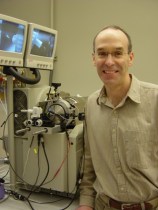
Dr. Gregg Morin, Head of Proteomics, Michael Smith Genome Sciences Centre, BC Cancer Agency; DICER 1 Mutation Ovarian Cancer Study Co-Leader

Dr. David Huntsman, Genetic Pathologist & Director of the Ovarian Cancer Research Program of British Columbia at the BC Cancer Agency & Vancouver Coastal Health Research Institute; DICER 1 Mutation Ovarian Cancer Study Co-Leader
Scientists at the British Columbia (BC) Cancer Agency, Vancouver Coastal Health Research Institute, and the University of British Columbia (UBC) are excited over a discovery made while studying rare tumor types.
Dr. David Huntsman, genetic pathologist and director of the Ovarian Cancer Program of BC (OvCaRe) at the BC Cancer Agency and Vancouver Coastal Health Research Institute, and Dr. Gregg Morin, a lead scientist from the Michael Smith Genome Sciences Centre at the BC Cancer Agency, led a research team who discovered that mutations in rare, seemingly unrelated cancers were all linked to the same gene, known as “DICER1.” The study findings were published online today in the New England Journal of Medicine. [1]
Background: RNA Interference, MicroRNAs, and DICER.
Nucleic acids are molecules that carry genetic information and include DNA (deoxyribonucleic acid) and RNA (ribonucleic acid). The DNA segments that carry genetic information are called “genes.” Together these molecules form the building blocks of life. DNA contains the genetic code or “blueprint” used in the development and functioning of all living organisms, while “messenger RNAs” or mRNAs help to translate that genetic code into proteins by acting as a messenger between the DNA instructions located in the cell nucleus and the protein synthesis which takes place in the cell cytoplasm (i.e., outside the cell nucleus, but inside the outer cell membrane). Accordingly, DNA is first “transcribed” or copied into mRNA, which, in turn, gets “translated” or synthesized into protein.
“RNA interference” (RNAi) is a mechanism through which gene expression is inhibited at the translation stage, thereby disrupting the protein production within a cell. RNAi is considered one of the most important discoveries in the field of molecular biology. Andrew Fire, Ph.D., and Craig C. Mello, Ph.D. shared the 2006 Nobel Prize in Physiology or Medicine for work that led to the discovery of the RNAi mechanism. While the mechanism itself is termed “RNA interference,” there are two major types of RNA molecules that play a key role in effectuating that interference. The first type of RNA molecules consists of “microRNAs” or miRNAs, while the second type consists of “small interfering RNAs” or siRNAs.
Current thinking suggests that RNAi evolved as a cellular defense mechanism against invaders such as RNA viruses. When they replicate, RNA viruses temporarily exist in a double-stranded form. This double-stranded intermediate would trigger RNAi and inactivate the virus’ genes, thereby preventing viral infection. RNAi may also have evolved to combat the spread of genetic elements called “transposons” within a cell’s DNA. Transposons can wreak havoc by jumping from spot to spot on a genome, sometimes causing mutations that can lead to cancer or other diseases. Like RNA viruses, transposons can take on a double-stranded RNA form that would trigger RNAi to clamp down on the potentially harmful “jumping gene” activity. Also, as noted above, RNAi is important for regulating gene expression. For example, the turning down of specific genes is critical to proper embryonic development.
Of relevance to the Canadian study findings within the context of RNAi are miRNAs. MiRNAs can bind to mRNAs and either increase or decrease their activity, for example, by preventing a mRNA from producing a protein. [2] In this context, “gene silencing” can occur through mRNA degradation or prevention of mRNA translation. MiRNAs play an integral role in numerous biological processes, including the immune response, cell-cycle control, metabolism, viral replication, stem cell differentiation and human development. MiRNA expression or function is significantly altered in many disease states, including cancer.
Because of its involvement in miRNA processing, the DICER1 gene plays an important role in maintaining health. It carries out a “factory style” function which involves chopping up miRNAs to activate them. [Ref. 2] These miRNAs, in turn, control hundreds of other genes as noted above. Based upon a study led by investigators from the University of Texas M.D. Anderson Cancer Center, the expression levels of DICER have global effects on the biogenesis of miRNA, and reduced gene expression correlates with a poor outcome in ovarian cancer. [3] In the M.D. Anderson study, two somatic (i.e., lifetime-acquired) missense DICER mutations were discovered in two epithelial ovarian cancer tumors. The M.D. Anderson investigators concluded that the DICER mutations were not associated with the alterations in DICER expression found in mRNAs. It is important to note that the type of somatic missense DICER mutations discovered in the M.D. Anderson study were not the same as those discovered in the Canadian study as discussed below.
Recurrent DICER Mutations Are Predominant In A Rare Form of Non-Epithelial Ovarian Cancer.
At the outset of the Canadian study, the OvCaRe team sequenced ovarian, uterine, and testicular tumors, expecting to find that their genomes would be distinct with specific, differing abnormalities. Much to their amazement, the researchers discovered that the same fundamental mutation in the DICER1 gene represented a common process underlying the different cancers which they examined.
Specifically, the Canadian investigators sequenced the whole transcriptomes or exomes of 14 nonepithelial ovarian tumors, which included two Sertoli–Leydig cell tumors, four juvenile (not adult) granulosa-cell tumors, and eight primitive germ-cell tumors of the yolk-sac type. The researchers identified closely clustered mutations in the region of DICER1 which encode the RNase IIIb domain in four samples. Based on these findings, the OvCaRe team sequenced the same region of DICER1 in additional ovarian tumors, and tested for the effect of the mutations on the enzymatic activity of DICER1.
Recurrent somatic (i.e., lifetime-acquired) DICER1 mutations in the RNase IIIb domain were identified in 30 of 102 nonepithelial ovarian tumors (29%), including 4 tumors which also possessed germline (i.e., inherited) DICER1 mutations. The highest frequency of somatic DICER1 mutations occurred in Sertoli–Leydig cell tumors (26 of 43, or 60%). Notably, the mutant DICER1 proteins identified in the samples possessed reduced RNase IIIb activity, but retained RNase IIIa activity.
The Canadian researchers also performed additional tumor testing and detected the DICER1 mutations in 1 of 14 nonseminomatous testicular germ-cell tumors, 2 of 5 embryonal rhabdomyosarcomas, and in 1 of 266 epithelial ovarian and endometrial carcinomas.
The groundbreaking nature of this discovery is reflected in the fact that the DICER1 “hotspot” mutations are not present in the 1000 Genomes Project data or the public data repository of The Cancer Genome Atlas consortium. To date, no recurrent DICER1 mutations have been reported in the mutation database of the Catalogue of Somatic Mutations in Cancer (COSMIC), in which 4 of 938 reported cancers possess somatic mutations but none in the RNase IIIb domain hot spots or RNase IIIa equivalents. Moreover, the Canadian researchers note that the newly-discovered DICER1 mutations were not observed in any of the more than 1000 cancer sequencing libraries which were studied.
Based upon the foregoing , the researchers concluded that somatic missense mutations affecting the RNase IIIb domain of DICER1 occur in a range of nonepithelial ovarian tumors, and possibly other cancers. Furthermore, the DICER1 mutations appear to be common in Sertoli-Leydig ovarian tumors (which are a subtype of nonepithelial, sex cord-stromal ovarian tumors). The researchers believe that the recurrent DICER1 mutations identified implicate a novel defect in miRNA processing which does not entirely destroy DICER1 functionality, but alters it.
Accordingly, the Canadian researchers suggest that the newly-discovered DICER1 mutations may represent an oncogenic event within the specific context of nonepithelial ovarian tumors, rather than a permissive event in tumor onset (as may be expected for loss of function in a tumor suppressor gene). The researchers note that DICER1 expression in tumors possessing the hotspot DICER1 somatic mutations argues against a role for DICER1 as a classic tumor suppressor gene. They further explain that the localized and focal pattern of the identified DICER1 mutations is typical of dominantly acting oncogenes, like KRAS and BRAF.
In sum, the Canadian researchers believe that the recurrent and focal nature of the DICER1 mutations and their restriction to nonepithelial ovarian tumors suggest a common oncogenic mechanism associated with a specifically altered DICER1 function that is selected during tumor development in specific cell types.
The Canadian study was supported through funding by Canadian Institutes for Health Research, Terry Fox Foundation, BC Cancer Foundation, VGH & UBC Hospital Foundation, Michael Smith Foundation for Health Research, and Genome BC.
Expert Commentary
“DICER is of great interest to cancer researchers” said Dr. Huntsman, who also holds the Dr. Chew Wei Memorial Professorship in the departments of Obstetrics and Gynecology and Pathology and Laboratory Medicine at UBC. “There have been nearly 1,300 published studies about it in the last 10 years, but until now, it has not been known how the gene functions in relation to cancer.”
“This discovery shows researchers that these mutations change the function of DICER so that it participates directly in the initiation of cancer, but not in a typical ‘on-off’ fashion,” says Dr. Morin who is also assistant professor in the department of Medical Genetics at UBC. “DICER can be viewed as the conductor for an orchestra of functions critical for the development and behavior of normal cells. The mutations we discovered do not totally destroy the function of DICER rather they warp it—the orchestra is still there but the conductor is drunk.”
This finding is the third of a series of papers published recently in the New England Journal of Medicine (NEJM) in which the OvCaRe team used new genomic technologies to unlock the molecular basis of poorly understood types of ovarian cancer. The first finding, published in the NEJM in 2009, identified mutations in the FOXL2 (forkhead box L2) gene as the molecular basis of adult granulosa cell ovarian cancer tumors. The second finding, published in the NEJM in 2010, determined that approximately one-half of clear-cell ovarian cancers and one-third of endometrioid ovarian cancers possess ARID1A (AT rich interactive domain 1A) gene mutations.
The DICER gene mutation breakthrough discovery is particularly pivotal because it could lead to solutions for treatment of more common cancers.
“Studying rare tumors not only is important for the patients and families who suffer from them but also provides unique opportunities to make discoveries critical to more common cancers – both in terms of personalized medicine, but also in applying what we learn from how we manage rare diseases to more common and prevalent cancers,” said Dr. Huntsman “The discovery of the DICER mutation in this varied group of rare tumors is the equivalent of finding not the needle in the haystack, but rather the same needle in many haystacks.”

Dr. Phillip A. Sharp, Professor, Koch Institute for Integrative Cancer Research, Massachusetts Institute of Technology; Co-winner of the 1993 Nobel Prize in Physiology and Medicine
“This breakthrough will be of interest to both the clinical and the fundamental science communities,” says Dr. Phillip A. Sharp, Professor, Koch Institute for Integrative Cancer Research at the Massachusetts Institute of Technology, and co-winner of the 1993 Nobel Prize in Physiology or Medicine for the discovery that genes are not contiguous strings but contain introns, and that the splicing of mRNA to delete those introns can occur in different ways, thereby yielding different proteins from the same DNA sequence. “Huntsman, Morin and colleagues’ very exciting discovery of specific mutations in DICER, a factor essential for syntheses of small regulatory RNAs in ovarian and other human tumors, could lead to new approaches to treatment.”
The Canadian OvCaRe research team is now working to determine the frequency and role of DICER mutations in other types of cancers. The research team is also expanding its collaboration to discover whether mutant DICER and the pathways it controls can be modulated to treat the rare cancers in which the mutations were discovered and more common cancers.
The Michael Smith Genome Sciences Centre (Michael Smith GSC), located at the BC Cancer agency, played a key role in this discovery. By way of background, Dr. Michael Smith was a co-winner of the 1993 Nobel Prize in Chemistry for his development of oligonucleotide-based site-directed mutagenesis, a technique which allows the DNA sequence of any gene to be altered in a designated manner. His technique created a groundbreaking method for studying complex protein functions, the basis underlying a protein’s three-dimensional structure, and a protein’s interaction with other molecules inside the cell.
A decision was made more than 10 years ago, championed by Drs. Michael Smith, Victor Ling, and others to create and locate the Michael Smith GSC within the BC Cancer Agency and in close proximity to Vancouver General Hospital (VGH). The chosen location for this critical facility provided the multidisciplinary cancer research teams in Vancouver with access to state-of-the-art technologies.
“We are one of less than five places in the world doing this type of work successfully. This discovery is one of a series of recent landmark findings from Vancouver that are reshaping our understanding of many cancers,” says Dr. Huntsman. “Since my arrival in Vancouver 20 years ago I have never before sensed such a strong feeling of communal pride and excitement within our research community. Our next task is to bring the discoveries into the clinic.”
About the Ovarian Cancer Research Program of British Columbia (OvCaRe)
OvCaRe is a multidisciplinary research program involving clinicians and research scientists in gynecology, pathology, and medical oncology at VGH and BC Cancer Agency. OvCaRe is a unique collaboration between the BC Cancer Agency, Vancouver Coastal Health Research Institute, and UBC. The OvCaRe team is considered a leader in ovarian cancer research which is breaking new ground in better identifying, understanding, and treating this disease. The OvCaRe seminal paper in PLoS (Public Library of Science), which addresses ovarian cancer as a group of distinct diseases, has been embraced by the global research community who has adopted the BC approach to ovarian cancer research. To learn more, visit www.ovcare.ca.
About the Michael Smith Genome Sciences Centre
Canada’s Michael Smith Genome Sciences Centre is an internationally recognized state-of-the-art facility applying genomics and bioinformatics tools and technologies to cancer research. Led by Dr. Marco Marra, the Michael Smith GSC is one of ten leading genomic research centres in the world and the only one of its kind in the world integrated into a cancer facility. With a primary focus on cancer genomics research, its scientists have been involved in many world-class groundbreaking discoveries over the past decade. To learn more, visit www.bcgsc.ca.
About the Vancouver Coastal Health Research Institute
Vancouver Coastal Health Research Institute is the research body of Vancouver Coastal Health Authority, which includes BC’s largest academic and teaching health sciences centres: Vancouver General Hospital, UBC Hospital, and GF Strong Rehabilitation Centre. The institute is academically affiliated with the UBC Faculty of Medicine, and is one of Canada’s top-funded research centres, with $82.4 million in research funding for 2009/2010. To learn more, visit www.vchri.ca.
About the British Columbia Cancer Agency
The BC Cancer Agency, an agency of the Provincial Health Services Authority, is committed to reducing the incidence of cancer, reducing the mortality from cancer, and improving the quality of life of those living with cancer. It provides a comprehensive cancer control program for the people of British Columbia by working with community partners to deliver a range of oncology services, including prevention, early detection, diagnosis and treatment, research, education, supportive care, rehabilitation and palliative care. To learn more, visit www.bccancer.ca.
About the University of British Columbia
The University of British Columbia is one of North America’s largest public research and teaching institutions, and one of only two Canadian institutions consistently ranked among the world’s 40 best universities. Surrounded by the beauty of the Canadian West, it is a place that inspires bold, new ways of thinking that have helped make it a national leader in areas as diverse as community service learning, sustainability, and research commercialization. UBC offers more than 55,000 students a range of innovative programs and attracts $550 million per year in research funding from government, non-profit organizations, and industry through 7,000 grants. To learn more, visit www.ubc.ca.
References
1/Morin G, Hunstman, DG et al. Recurrent Somatic DICER1 Mutations in Nonepithelial Ovarian Cancers. NEJM, published online December 21, 2011 (10.1056/NEJMoa1102903).
2/The Canadian investigators describe the operation of the RNAi pathway with respect to miRNA biogenesis as follows:
“MicroRNAs (miRNAs) are a functional class of noncoding RNA molecules that regulate translation and degradation of messenger RNA. MiRNA transcripts are processed from hairpin pre-miRNA precursors into short miRNA: miRNA* duplexes consisting of the miRNA targeting strand and the imperfectly complementary miRNA* strand (star strand, or inert carrier strand) by Dicer, an endoribonuclease with two RNase III–like domains. The RNase IIIb domain cuts the miRNA strand, whereas the RNase IIIa domain cleaves the miRNA* strand. The resultant RNA duplex is loaded into the RNA-induced silencing complex (RISC) containing an Argonaute protein. The miRNA* strand is then removed, leaving the miRNA strand, which targets messenger RNAs (mRNAs) for degradation or interacts with the translation initiation complex to inhibit and destabilize translation of the targeted messenger RNAs.” [footnote citations omitted]
3/Merritt WM, et al. Dicer, Drosha, and outcomes in patients with ovarian cancer. N Engl J Med. 2008 Dec 18;359(25):2641-50. Erratum in: N Engl J Med. 2010 Nov 4;363(19):1877. PubMed PMID: 19092150; PubMed Central PMCID: PMC2710981.
Sources:
- Gene links rare and unrelated cancers — An important breakthrough in cancer research, Joint Press Release, BC Cancer Agency, Vancouver Coastal Health Research Institute, and the University of British Columbia, December 21, 2011.
 Libby's H*O*P*E*