M.D. Anderson Study Predicts Dramatic Growth in Cancer Rates Among U.S. Elderly, Minorities

” … Over the next 20 years, the number of new cancer cases diagnosed annually in the United States will increase by 45 percent, from 1.6 million in 2010 to 2.3 million in 2030, with a dramatic spike in incidence predicted in the elderly and minority populations, according to research from The University of Texas M. D. Anderson Cancer Center. …Given these statistics, the role of screening and prevention strategies becomes all the more vital and should be strongly encouraged, said [Ben] Smith [M.D.]. … These findings also highlight two issues that must be addressed simultaneously: clinical trial participation and the increasing cost of cancer care. Historically, both older adults and minorities have been under-represented in such studies, and, therefore, vulnerable to sub-optimal cancer treatment. Simultaneously, over the past decade in particular, the cost of cancer care is growing at a rate that’s not sustainable. …”

“Research underscores impact on health care system, importance of screenings, prevention strategies, inclusive clinical trials

Cancer Newsline Podcast
M. D. Anderson audio player (click & play)
Dramatic Growth in Cancer Rates Among Elderly, Minorities

Over the next 20 years, the number of new cancer cases diagnosed annually in the United States will increase by 45 percent, from 1.6 million in 2010 to 2.3 million in 2030, with a dramatic spike in incidence predicted in the elderly and minority populations, according to research from The University of Texas M. D. Anderson Cancer Center.

The study, published online today in Journal of Clinical Oncology, is the first to determine such specific long-term cancer incidence projections. It predicts a 67 percent increase in the number of adults age-65-or-older diagnosed with cancer, from 1 million in 2010 to 1.6 million in 2030. In non-white individuals over the same 20-year span, the incidence is expected to increase by 100 percent, from 330,000 to 660,000.

Ben Smith, M.D., Adjunct Assistant Professor, Department of Radiation Oncology, The University of Texas M.D. Anderson Center

Ben Smith, M.D., Adjunct Assistant Professor, Department of Radiation Oncology, The University of Texas M.D. Anderson Cancer Center

According to Ben Smith, M.D., adjunct assistant professor in M. D. Anderson’s Department of Radiation Oncology, the study underscores cancer’s growing stress on the U.S. health care system.

‘In 2030, 70 percent of all cancers will be diagnosed in the elderly and 28 percent in minorities, and the number of older adults diagnosed with cancer will be the same as the total number of Americans diagnosed with cancer in 2010,’ said Smith, the study’s senior author. ‘Also alarming is that a number of the types of cancers that are expected to increase, such as liver, stomach and pancreas, still have tremendously high mortality rates.’

Unless specific prevention and/or treatment strategies are discovered, cancer death rates also will increase dramatically, said Smith, who is currently on active military duty and is stationed at Lackland Air Force Base.

To conduct their research, Smith and his team accessed the United States Census Bureau statistics, updated in 2008 to project population growth through 2050, and the National Cancer Institute’s Surveillance, Epidemiology and End Results (SEER) registry, the premier population-based cancer registry representing 26 percent of the country’s population. Cancer incidence rates were calculated by multiplying the age, sex, race and origin-specific population projections by the age, sex, race and origin-specific cancer incidence rates.

The researchers found that from 2010 to 2030, the population is expected to grow by 19 percent (from 305 to 365 million). The total number of cancer cases will increase by 45 percent (from 1.6 to 2.3 million), with a 67 percent increase in cancer incidence in older Americans (1 to 1.6 million), compared to an 11 percent increase in those under the age of 65 (.63 to .67 million).

With respect to race, a 100 percent increase in cancer is expected for minorities (.33 to .66 million); in contrast, in white Americans, a 31 percent increase is anticipated (1.3 to 1.7 million). The rates of cancer in blacks, American Indian-Alaska Native, multi-racial, Asian-Pacific Islanders and Hispanics will increase by 64 percent, 76 percent, 101 percent, 132 percent and 142 percent, respectively.

Regarding disease-specific findings, Smith and his team found that the leading cancer sites are expected to remain constant – breast, prostate, colon and lung. However, cancer sites with the greatest increase in incidence expected are: stomach (67 percent); liver (59 percent); myeloma (57 percent); pancreas (55 percent); and bladder (54 percent).

Given these statistics, the role of screening and prevention strategies becomes all the more vital and should be strongly encouraged, said Smith. In the study, Smith and his team site [sic]: vaccinations for hepatitis B and HPV; the chemoprevention agents tamoxifen and raloxifene; interventions for tobacco and alcohol; and removal of pre-malignant lesions, such as colon polyps.

These findings also highlight two issues that must be addressed simultaneously: clinical trial participation and the increasing cost of cancer care. Historically, both older adults and minorities have been under-represented in such studies, and, therefore, vulnerable to sub-optimal cancer treatment. Simultaneously, over the past decade in particular, the cost of cancer care is growing at a rate that’s not sustainable.

‘The fact that these two groups have been under-represented in clinical research participation, yet their incidence of cancer is growing so rapidly, reflects the need for therapeutic trials to be more inclusive and address issues that are particularly relevant to both populations,’ said Smith. ‘In addition, as we design clinical trials, we need to seek not only the treatment that will prolong survival, but prolong survival at a reasonable cost to patients. These are two issues that oncologists need to be much more concerned about and attuned to.’

Another issue that needs to be addressed is the shortage of health care professionals predicted. For example, according to a workforce assessment by American Society for Clinical Oncology (ASCO), the shortage of medical oncologists will impact the health care system by 2020. Smith said ASCO and other professional medical organizations beyond oncology are aware of the problem, and are actively engaged in efforts to try and grow the number of physicians, as well as encourage the careers of nurse practitioners and physician assistants who are part of the continuum of care, to best accommodate the increase in demand forecasted.

‘There’s no doubt the increasing incidence of cancer is a very important societal issue. There will not be one solution to this problem, but many different issues that need to be addressed to prepare for these changes,’ said Smith. ‘I’m afraid if we don’t come to grips with this as a society, health care may be the next bubble to burst.’

In addition to Smith, other M. D. Anderson authors on the study include: Thomas Buchholz, M.D., professor and chair of the Department of Radiation Oncology and the study’s senior author; Gabriel Hortobagyi, M.D., professor and chair of the Department of Breast Medical Oncology; and Grace Smith, M.D., Ph.D., assistant professor in the Department of Radiation Oncology. Arti Hurria, M.D., post-doctoral fellow in the Department of Medical Oncology, City of Hope Cancer Center, also is a contributing author on the study.”

Sources:

Routine Screening for Hereditary Breast and Ovarian Cancer Recommended By ACOG & SGO

Evaluating a patient’s risk of hereditary breast and ovarian cancer syndrome is an important first step in cancer prevention and early detection and should be a routine part of ob-gyn practice. Those who are likely to have the syndrome should be referred for further assessment to a clinician with expertise in genetics, according to a new Practice Bulletin jointly released today by The American College of Obstetricians and Gynecologists [ACOG] and the Society of Gynecologic Oncologists [SGO]. The new document also provides information on how to counsel patients with hereditary risk in cancer prevention and how to perform surgical removal of the ovaries and fallopian tubes in this population

“Routine Screening for Hereditary Breast and Ovarian Cancer Recommended

Washington, DC — Evaluating a patient’s risk of hereditary breast and ovarian cancer syndrome is an important first step in cancer prevention and early detection and should be a routine part of ob-gyn practice. Those who are likely to have the syndrome should be referred for further assessment to a clinician with expertise in genetics, according to a new Practice Bulletin jointly released today by The American College of Obstetricians and Gynecologists [ACOG] and the Society of Gynecologic Oncologists [SGO]. The new document also provides information on how to counsel patients with hereditary risk in cancer prevention and how to perform surgical removal of the ovaries and fallopian tubes in this population.

Hereditary breast and ovarian cancer syndrome is an inherited cancer-susceptibility syndrome marked by multiple family members with breast cancer, ovarian cancer or both; the presence of both breast and ovarian cancer in a single individual; and early age of breast cancer onset.

lu-karen-pic

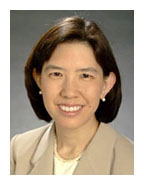
Karen Lu, M.D., Professor of Gynecologic Oncology at the University of Texas MD Anderson Cancer Center

‘The vast majority of families who have hereditary breast and ovarian cancer syndrome carry an inherited mutation of the BRCA1 or BRCA2 tumor suppressor genes. Women in these families may have a higher risk of breast, ovarian, peritoneal, and fallopian tube cancers,’ said Karen Lu, MD, professor of gynecologic oncology at the University of Texas MD Anderson Cancer Center, who helped develop the ACOG Practice Bulletin. ‘Though having a BRCA gene mutation does not mean an individual will undoubtedly develop cancer, it is better to know sooner rather than later who may be at risk.’

Women with either BRCA mutation have a 65%-74% chance of developing breast cancer in their lifetime. Ovarian cancer risk is increased by 39%-46% in women with a BRCA1 mutation and by 12-20% in women with a BRCA2 mutation. Approximately 1 in 300 to 1 in 800 individuals in the US are BRCA carriers. BRCA mutations may occur more frequently in some populations founded by small ancestral groups, such as Ashkenazi (Eastern European) Jews, French Canadians, and Icelanders. An estimated 1 in 40 Ashkenazi Jews has a BRCA1 or BRCA2 mutation.

The new document addresses the ob-gyn’s role in identifying, managing, and counseling patients with an inherited cancer risk. The initial screening evaluation should include specific questions about personal and family history of breast cancer and ovarian cancer. Because BRCA mutations can be passed down from both the father’s and mother’s side of the family, both sides of a woman’s family should be carefully examined. Obtaining a full family history may be impeded in women who were adopted, those from families that have multiple women who had a hysterectomy and oophorectomy at a young age, or those from families with few female relatives. The results of a general evaluation will help determine whether the patient would benefit from a more in-depth hereditary cancer risk assessment, which should be conducted by a health care provider with expertise in cancer genetics.

Further genetic risk assessment is recommended for women who have more than a 20%-25% chance of having an inherited predisposition to breast or ovarian cancer. These women include:

  • Women with a personal history of both breast cancer and ovarian cancer
  • Women with ovarian cancer and a close relative—defined as mother, sister, daughter, grandmother, granddaughter, aunt—with ovarian cancer, premenopausal breast cancer, or both
  • Women of Ashkenazi Jewish decent with breast cancer who were diagnosed at age 40 or younger or who have ovarian cancer
  • Women with breast cancer at 50 or younger and who have a close relative with ovarian cancer or male breast cancer at any age
  • Women with a close relative with a known BRCA mutation

Genetic risk assessment may also be appropriate for women with a 5%-10% chance of having hereditary risk, including:

  • Women with breast cancer by age 40
  • Women with ovarian cancer, primary peritoneal cancer, or fallopian tube cancer or high grade, serous histology at any age
  • Women with cancer in both breasts (particularly if the first cancer was diagnosed by age 50)
  • Women with breast cancer by age 50 and a close relative with breast cancer by age 50
  • Women with breast cancer at any age and two or more close relatives with breast cancer at any age (particularly if at least one case of breast cancer was diagnosed by age 50)
  • Unaffected women with a close relative that meets one of the previous criteria

Before testing, a genetic counselor can discuss the possible outcomes of testing; options for surveillance, chemoprevention, and risk-reducing surgery; cost and legal and insurance matters surrounding genetic tests and test results; and the psychologic and familial implications that may follow. The counselor can also provide written materials that women can share with family members who may also have an inherited risk.

Screening, Prevention, and Surgical Intervention

Those with hereditary breast and ovarian cancer syndrome can begin a screening and prevention plan based on individual risk factors and family history. Ovarian cancer screening approaches are currently limited. For women with a BRCA mutation, ACOG recommends periodic screening with CA 125 and transvaginal ultrasonography beginning between the ages of 30 and 35 years or 5-10 years earlier than the earliest age of first diagnosis of ovarian cancer in the family.

Risk-reducing salpingo-oophorectomy surgery—which removes both of the ovaries and fallopian tubes—can reduce the risk of ovarian and fallopian tube cancer by about 85% to 90% among BRCA carriers. Women who have BRCA1 or BRCA2 mutations should be offered risk-reducing salpingo-oophorectomy by age 40 or when childbearing is complete. The ideal time for this surgery depends on the type of gene mutation.

‘In this population, risk-reducing salpingo-oophorectomy and pathology review must be extremely comprehensive to check for microscopic cancers in the ovaries, fallopian tubes, and abdominal cavity,’ Dr. Lu said. According to the Practice Bulletin, all tissue from the ovaries and fallopian tubes should be removed, and a complete, serial sectioning that includes microscopic examination for occult cancer should be conducted. A thorough visualization of the peritoneal surfaces with pelvic washings should be performed. Any abnormal areas should undergo biopsy.

Strategies recommended to reduce breast cancer risk in women with a BRCA mutation include semiannual clinical breast examination; an annual mammogram and annual breast magnetic resonance imaging screening beginning at age 25 or sooner based on the earliest age onset in the family; chemoprevention therapy with tamoxifen; and bilateral mastectomy to remove both breasts, which reduces the risk of breast cancer by greater than 90%-95%.

Practice Bulletin #103 “Hereditary Breast and Ovarian Cancer Syndrome” is published in the April 2009 edition of Obstetrics & Gynecology.”

_______________________________________________________

About the American College of Obstetricians & Gynecologists

The American College of Obstetricians and Gynecologists is the national medical organization representing over 53,000 members who provide health care for women.

About the Society of Gynecologic Oncologists

The Society of Gynecologic Oncologists is a national medical specialty organization of physician-surgeons who are trained in the comprehensive management of women with malignancies of the reproductive tract.  The purpose of the SGO is to improve the care of women with gynecologic cancers by encouraging research and disseminating knowledge to raise the standards of practice in the prevention and treatment of gynecologic malignancies, in cooperation with other organizations interested in women’s health care, oncology and related fields. This is reflected in the Society’s Mission statement to “promote and ensure the highest quality
of comprehensive clinical care through excellence in education and research in gynecologic cancers.”

Primary Source:  Routine Screening for Hereditary Breast and Ovarian Cancer Recommended, News Release, American College of Obstetricians & Gynecologists, March 20, 2009.