
“Scientists from The University of Texas M. D. Anderson Cancer Center have found overexpression of tissue type transglutaminase (TG2) in ovarian cancer is associated with increased tumor cell growth and adhesion, resistance to chemotherapy and lower overall survival rates. When researchers targeted and silenced TG2 in animal models, cancer progression was reversed, suggesting the protein may also provide a novel therapeutic approach for late-stage ovarian cancer.”
“Scientists from The University of Texas M. D. Anderson Cancer Center have found overexpression of tissue type transglutaminase (TG2) in ovarian cancer is associated with increased tumor cell growth and adhesion, resistance to chemotherapy and lower overall survival rates. When researchers targeted and silenced TG2 in animal models, cancer progression was reversed, suggesting the protein may also provide a novel therapeutic approach for late-stage ovarian cancer.
 These findings in the July 15th issue of Cancer Research by a team of researchers led
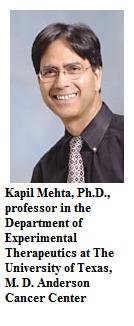 by Anil K. Sood, M.D., professor in the Departments of Gynecologic Oncology and Cancer Biology, and Kapil Mehta, Ph.D., professor in the Department of Experimental Therapeutics at M. D. Anderson, are among the first to explore TG2’s functionality in ovarian cancer.
‘TG2 appears to fuel different types of cancer through multiple molecular pathways, making it an important therapeutic target,’ said Mehta, whose lab also has connected TG2 overexpression to drug-resistant and metastatic melanoma, breast cancer and pancreatic cancer.
‘Drug resistance and metastasis are major impediments to the successful treatment of ovarian cancer and until now we had little information about the role TG2 played in ovarian cancer,’ Sood said. ‘We began to see its story unfold as we translated this data from tissue samples to cell lines to animal models.’
The American Cancer Society estimates 15,000 U.S. women will die from ovarian cancer this year. Most patients present with advanced stage disease that has spread beyond the primary tumor site. More than 70 percent of ovarian cancer patients will suffer a recurrence and eventually succumb to the disease.
Higher TG2, lower survival
The study, which examined 93 ovarian cancer samples of ranging stages, found that high levels of TG2 corresponded with significantly lower patient survival than those with low levels of TG2. Sixty-nine percent of high-stage ovarian cancers overexpressed TG2 compared with 30 percent of low-stage cancers. In-depth analysis demonstrated that tumors which overexpressed the protein tended to have an increased ability to invade healthy tissue and to survive or avoid the affects of chemotherapy.
‘From this investigation it became clear that TG2 activates the survival pathway p13K/Akt in these tumors, explaining the adverse, resistant behavior we observed on a molecular level,’ said Sood. ‘We then focused on whether silencing TG2 would block these effects.’
Researchers shut off TG2 with a small interfering RNA strand (TG2 siRNA) targeted to the protein, reducing the ability of the tumor cells to invade and killing them through programmed cell death, or apoptosis. ‘When exposed to this potent targeted therapy, ovarian cancer cells greatly reduced cancer cell proliferation and blood vessel development, while increasing apoptosis,’ said Sood.
Mouse model studies of chemotherapy-sensitive and chemotherapy-resistant models showed considerable antitumor activity both with TG2 siRNA alone and in combination with docetaxel chemotherapy. The combination therapy of TG2 siRNA with docetaxel reduced tumor weight by 86 percent, proving to have the greatest efficacy compared to control groups or those without chemotherapy.
‘While it remains to be seen if these results will translate in humans, looking ahead long term, it will be an attractive option against advanced ovarian cancer,’ said co-author Gabriel Lopez-Berestein, M.D. professor in the Department of Experimental Therapeutics at M. D. Anderson.
TG2 fuels pancreatic cancer differently
Sood and Lopez-Berestein, have developed siRNA therapy by packaging the gene-silencing strips of RNA in a fatty nanoparticle called a liposome and delivering it intravenously. TG2 is the third protein they have targeted in preclinical research. Sood and Mehta are moving TG2 siRNA toward Phase I clinical trials for ovarian and pancreatic cancers.
TG2 acts through different pathways in other types of cancer, Mehta noted. For example, TG2 overexpression causes the degradation of the tumor-suppressing protein PTEN in pancreatic cancer, Mehta and colleagues reported in Clinical Cancer Research in April. With PTEN out of the picture, pancreatic cancer is protected from a separate type of cell death called autophagy. In a separate paper, they showed that silencing TG2 with the siRNA liposome reduced tumor size, slowed metastasis and enhanced the effect of gemcitabine chemotherapy.
‘This aberrant protein is doing so many different things, you would have to develop a small-molecule drug to block each function,’ Mehta said. ‘Liposomal siRNA is exciting because it takes out TG2 completely, blocking everything that it does.’
Research was funded by grants from the National Cancer Institute, including M. D. Anderson’s Specialized Program in Research Excellence in Ovarian Cancer grant, a program project development grant from the Ovarian Cancer Research Fund, Inc., and the Zarrow Foundation.
In addition to Sood, Mehta and Lopez-Berestein, authors include Jee Young Hwang, M.D., Lingegowda S. Mangala, Ph.D., co-first authors, and Yvonne G. Lin, M.D., William M. Merritt, M.D., Whitney A. Spannuth, M.D., Alpa M. Nick, M.D., Derek J. Fiterman, M.D., and Robert L. Coleman, M.D., all of M. D. Anderson’s Department of Gynecologic Oncology; Jansina Y. Fok, also a co-first author, and Pablo E. Vivas-Mejia, Ph.D., both of the Department of Experimental Therapeutics; and Michael T. Deavers, M.D., of M. D. Anderson’s Department of Pathology. Hwang is also with the Department of Obstetrics and Gynecology, Dongguk University of College of Medicine, Kyung-ju, Korea. 07/15/08”
Quoted Source: TG2 Identified as Potential Target in Chemo-Resistant Ovarian Cancer – M. D. Anderson team silences protein with siRNA, implicates TG2 in fourth cancer, The University of Texas, M.D. Anderson Cancer Center News Release, July 15, 2008 (summarizing the findings of Clinical and biological significance of tissue transglutaminase in ovarian carcinoma; Sood, AK et. al, Cancer Res. 2008 Jul 15;68(14):5849-58.)
Additional Information:
- Liposomal siRNA – Genetic On/Off Switches That Target Ovarian Cancer Through the Trojan Horse Effect, H*O*P*E*™ posting dated March 25, 2008 (additional discussion of M.D. Anderson research projects relating to siRNA).
- An Introduction to RNA Interference, Science & Technology, Sirna Therapeutics (Center of Excellence for RNA technology within Merck Research Laboratories) website.
- RNA Interference In Action Animation – The following link provides an animated tour through the process of RNAi. The animation was specially created for Nature Reviews by Arkitek Studios.
- Gene Silencing Therapies Could Have Harmful Side Effects, Research Suggests, ScienceDaily Science News, March 28, 2008 (summarizing the findings of Sequence- and target-independent angiogenesis suppression by siRNA via TLR3; Kleinmann, M.E. et. al., Nature. 2008 Apr 3;452(7187):591-7. Epub 2008 Mar 26.)
- RNA Interference and Gene Silencing: History and Overview – RNAi as a Tool for Functional Genomics, Introduction, Applied Bioscience Website, May 20, 2002.
 Libby's H*O*P*E*