
Young Early-Stage Ovarian Cancer Patients Can Preserve Fertility

A new study finds that young women with early-stage ovarian cancer can preserve future fertility by keeping at least one ovary or the uterus without increasing the risk of dying from the disease. The study is published in the September 15, 2009 issue of CANCER, a peer-reviewed journal of the American Cancer Society.

A new study finds that young women with early-stage ovarian cancer can preserve future fertility by keeping at least one ovary or the uterus without increasing the risk of dying from the disease. The study is published in the September 15, 2009 issue of CANCER, a peer-reviewed journal of the American Cancer Society.

fertility

... “Given the potential reproductive and nonreproductive benefits of ovarian and uterine preservation, the benefits of conservative surgical management should be considered in young women with ovarian cancer” ...

Most cases of ovarian cancer are diagnosed at later stages and in older women. However, up to 17 percent of ovarian tumors occur in women 40 years of age or younger, many of whom have early stage disease. Surgery for ovarian cancer usually involves complete removal of the uterus (hysterectomy) and ovaries, which not only results in the loss of fertility, but also subjects young women to the long-term consequences of estrogen deprivation.

Jason Wright

Jason Wright, M.D., Assistant Professor, OB/GYN, Columbia University College of Physicians & Surgeons, New York City, NY

Researchers led by Jason Wright, M.D., of Columbia University College of Physicians and Surgeons in New York City conducted a study to examine the safety of fertility-conserving surgery in premenopausal women with ovarian cancer. This type of surgery conserves at least one ovary or the uterus.

The investigators analyzed data from women 50 years of age or younger who were diagnosed with early stage (stage I) ovarian cancer between 1988 and 2004 and who were registered in the National Cancer Institute’s Surveillance, Epidemiology and End Results database, a population-based cancer registry that includes approximately 26 percent of the US population. Patients who had both of their ovaries removed were compared with those who had only the cancerous ovary removed. A second analysis examined uterine conservation verus hysterectomy.

For their first analysis, the researchers identified 1,186 ovarian cancer patients. While most had both ovaries removed, about one in three (36 percent) had one ovary conserved. They found those in whom one ovary was saved had similar survival for up to at least five years.

To examine the effect of uterine preservation, the investigators studied a total of 2,911 women. While most of the women underwent hysterectomy, about one in four (23 percent) had uterine preservation. Uterine preservation also had no effect on survival.

Women who were younger, who were diagnosed in more recent years, and who resided in the eastern or western United States were more likely to undergo ovarian or uterine conservation.

These results are promising for the many young women who are diagnosed with ovarian cancer each year. An estimated 21,650 women in the United States were diagnosed with the disease in 2008. “Given the potential reproductive and nonreproductive benefits of ovarian and uterine preservation, the benefits of conservative surgical management should be considered in young women with ovarian cancer,” the authors concluded.

Source:  Wright JD, Shah M, Mathew L, et. al.  Fertility preservation in young women with epithelial ovarian cancer. CANCER; Published Online: August 10, 2009 (DOI: 10.1002/cncr.24461); Print Issue Date: September 15, 2009.

Comment: The key to this study is the concept that fertility preservation “should be considered in young women with ovarian cancer.”  As part of this consideration, the patient’s subtype of ovarian cancer may play an important role as well.  For example, a diagnosis of ovarian clear cell adenocarcinoma (OCCA) in a young adult woman should create a moment of pause in regard to fertility-sparing. The OCCA subtype of epithelial ovarian cancer can be extremely chemoresistant (even during first-line treatment), especially if the tumor histology indicates that the tumor possesses a dominant clear cell component or is a pure form of OCCA.  In addition, OCCA is a rare form of epithelial ovarian cancer in women worldwide (with the exception of Japanese foreign nationals). My hypothetical does not mean that fertility sparing should not be considered in the event of a OCCA diagnosis, it simply means that each woman should carefully discuss fertility-sparing with her board-certified gynecologic oncologist based upon the specific facts of her case, including tumor histology.
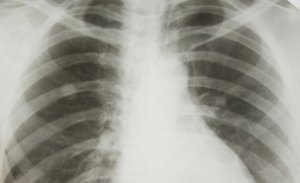
Ovary Removal May Increase Lung Cancer Risk

Women who have premature menopause because of medical interventions are at an increased risk of developing lung cancer, according to a new study published in the International Journal of Cancer.  The startling link was made by epidemiologists from the Université de Montréal, the Research Centre of the Centre Hospitalier de l’Université de Montréal and the INRS—Institut Armand-Frappier. …

Ovary removal may increase lung cancer risk

Press Release, Monday, 20 July 2009

lungsWomen who have premature menopause because of medical interventions are at an increased risk of developing lung cancer, according to a new study published in the International Journal of Cancer.  The startling link was made by epidemiologists from the Université de Montréal, the Research Centre of the Centre Hospitalier de l’Université de Montréal and the INRS—Institut Armand-Frappier.

“We found that women who experienced non-natural menopause are at almost twice the risk of developing lung cancer compared to women who experienced natural menopause,” says Anita Koushik, a researcher at the Université de Montréal’s Department of Social and Preventive Medicine and a scientist at the Research Centre of the Centre Hospitalier de l’Université de Montréal. “This increased risk of lung cancer was particularly observed among women who had non-natural menopause by having had both their ovaries surgically removed.”

The scientists studied 422 women with lung cancer and 577 control subjects at 18 hospitals across Montreal, Quebec, Canada. They assessed socio-demographic characteristics, residential history, occupational exposures, medical and smoking history, and (among women) menstruation and pregnancy histories.

Koushiki

Anita Koushik, researcher, Université de Montréal's Department of Social & Preventive Medicine; scientist, Research Centre of the Centre Hospitalier de l'Université de Montréal.

“A major strength of this study was the detailed smoking information which we obtained from all study participants; this is important because of the role of smoking in lung cancer and because smokers generally have lower estrogen levels than non-smokers,” says Dr. Koushik. “Although smoking is the dominant cause of lung cancer, we know other factors can play an important role in enhancing the impact of tobacco carcinogens; this research suggests that in women hormonal factors may play such a role.”

Women were considered menopausal if their menstrual periods had stopped naturally, surgically (by hysterectomy with bilateral surgical ovary removal) or because of radiation or chemotherapy.  Women who had at least one remaining ovary and who still had their menstrual periods at the time of diagnosis/interview were classified as premenopausal.  Among participants with natural menopause, the median age for attaining menopause was 50 years old; among those with non-natural menopause, it was at 43 years.

“Non-natural menopause, particularly surgical menopause, may represent an increased risk with younger age at menopause given that surgery is usually done before natural menopause occurs. It’s possible that vulnerability to lung cancer is caused by early and sudden decrease in estrogen levels or potentially long-term use of hormone replacement therapy and further research is needed to explore these hypotheses,” says Jack Siemiatycki a professor at the Université de Montréal’s Department of Social and Preventive Medicine and a scientist at the Research Centre of the Centre Hospitalier de l’Université de Montréal.

Siemiatycki

Jack Siemiatycki, professor, Université de Montréal's Department of Social & Preventive Medicine; scientist, Research Centre of the Centre Hospitalier de l'Université de Montréal


About the Study
The article “Characteristics of menstruation and pregnancy and the risk of lung cancer in women,” published in the International Journal of Cancer, was authored by Anita Koushik and Jack Siemiatycki of the Université de Montréal and Research Centre of the Centre Hospitalier de l’Université de Montréal and Marie-Elise Parent of the INRS—Institut Armand-Frappier.

Partners in Research
This study was funded by the Canadian Institutes of Health Research, the Fonds de la recherche en santé du Québec and the Guzzo-SRC Chair in Environment and Cancer.

Source: Ovary Removal May Increase Lung Cancer Risk, Press Release, University of Montreal, 20 Jul. 09 [summarizing the findings of Koushik A, Parent ME, Siemiatycki J. Characteristics of menstruation and pregnancy and the risk of lung cancer in women. Int J Cancer. 2009 May 11. (Epub ahead of print)].

Routine Screening for Hereditary Breast and Ovarian Cancer Recommended By ACOG & SGO

Evaluating a patient’s risk of hereditary breast and ovarian cancer syndrome is an important first step in cancer prevention and early detection and should be a routine part of ob-gyn practice. Those who are likely to have the syndrome should be referred for further assessment to a clinician with expertise in genetics, according to a new Practice Bulletin jointly released today by The American College of Obstetricians and Gynecologists [ACOG] and the Society of Gynecologic Oncologists [SGO]. The new document also provides information on how to counsel patients with hereditary risk in cancer prevention and how to perform surgical removal of the ovaries and fallopian tubes in this population

“Routine Screening for Hereditary Breast and Ovarian Cancer Recommended

Washington, DC — Evaluating a patient’s risk of hereditary breast and ovarian cancer syndrome is an important first step in cancer prevention and early detection and should be a routine part of ob-gyn practice. Those who are likely to have the syndrome should be referred for further assessment to a clinician with expertise in genetics, according to a new Practice Bulletin jointly released today by The American College of Obstetricians and Gynecologists [ACOG] and the Society of Gynecologic Oncologists [SGO]. The new document also provides information on how to counsel patients with hereditary risk in cancer prevention and how to perform surgical removal of the ovaries and fallopian tubes in this population.

Hereditary breast and ovarian cancer syndrome is an inherited cancer-susceptibility syndrome marked by multiple family members with breast cancer, ovarian cancer or both; the presence of both breast and ovarian cancer in a single individual; and early age of breast cancer onset.

lu-karen-pic

Karen Lu, M.D., Professor of Gynecologic Oncology at the University of Texas MD Anderson Cancer Center

‘The vast majority of families who have hereditary breast and ovarian cancer syndrome carry an inherited mutation of the BRCA1 or BRCA2 tumor suppressor genes. Women in these families may have a higher risk of breast, ovarian, peritoneal, and fallopian tube cancers,’ said Karen Lu, MD, professor of gynecologic oncology at the University of Texas MD Anderson Cancer Center, who helped develop the ACOG Practice Bulletin. ‘Though having a BRCA gene mutation does not mean an individual will undoubtedly develop cancer, it is better to know sooner rather than later who may be at risk.’

Women with either BRCA mutation have a 65%-74% chance of developing breast cancer in their lifetime. Ovarian cancer risk is increased by 39%-46% in women with a BRCA1 mutation and by 12-20% in women with a BRCA2 mutation. Approximately 1 in 300 to 1 in 800 individuals in the US are BRCA carriers. BRCA mutations may occur more frequently in some populations founded by small ancestral groups, such as Ashkenazi (Eastern European) Jews, French Canadians, and Icelanders. An estimated 1 in 40 Ashkenazi Jews has a BRCA1 or BRCA2 mutation.

The new document addresses the ob-gyn’s role in identifying, managing, and counseling patients with an inherited cancer risk. The initial screening evaluation should include specific questions about personal and family history of breast cancer and ovarian cancer. Because BRCA mutations can be passed down from both the father’s and mother’s side of the family, both sides of a woman’s family should be carefully examined. Obtaining a full family history may be impeded in women who were adopted, those from families that have multiple women who had a hysterectomy and oophorectomy at a young age, or those from families with few female relatives. The results of a general evaluation will help determine whether the patient would benefit from a more in-depth hereditary cancer risk assessment, which should be conducted by a health care provider with expertise in cancer genetics.

Further genetic risk assessment is recommended for women who have more than a 20%-25% chance of having an inherited predisposition to breast or ovarian cancer. These women include:

  • Women with a personal history of both breast cancer and ovarian cancer
  • Women with ovarian cancer and a close relative—defined as mother, sister, daughter, grandmother, granddaughter, aunt—with ovarian cancer, premenopausal breast cancer, or both
  • Women of Ashkenazi Jewish decent with breast cancer who were diagnosed at age 40 or younger or who have ovarian cancer
  • Women with breast cancer at 50 or younger and who have a close relative with ovarian cancer or male breast cancer at any age
  • Women with a close relative with a known BRCA mutation

Genetic risk assessment may also be appropriate for women with a 5%-10% chance of having hereditary risk, including:

  • Women with breast cancer by age 40
  • Women with ovarian cancer, primary peritoneal cancer, or fallopian tube cancer or high grade, serous histology at any age
  • Women with cancer in both breasts (particularly if the first cancer was diagnosed by age 50)
  • Women with breast cancer by age 50 and a close relative with breast cancer by age 50
  • Women with breast cancer at any age and two or more close relatives with breast cancer at any age (particularly if at least one case of breast cancer was diagnosed by age 50)
  • Unaffected women with a close relative that meets one of the previous criteria

Before testing, a genetic counselor can discuss the possible outcomes of testing; options for surveillance, chemoprevention, and risk-reducing surgery; cost and legal and insurance matters surrounding genetic tests and test results; and the psychologic and familial implications that may follow. The counselor can also provide written materials that women can share with family members who may also have an inherited risk.

Screening, Prevention, and Surgical Intervention

Those with hereditary breast and ovarian cancer syndrome can begin a screening and prevention plan based on individual risk factors and family history. Ovarian cancer screening approaches are currently limited. For women with a BRCA mutation, ACOG recommends periodic screening with CA 125 and transvaginal ultrasonography beginning between the ages of 30 and 35 years or 5-10 years earlier than the earliest age of first diagnosis of ovarian cancer in the family.

Risk-reducing salpingo-oophorectomy surgery—which removes both of the ovaries and fallopian tubes—can reduce the risk of ovarian and fallopian tube cancer by about 85% to 90% among BRCA carriers. Women who have BRCA1 or BRCA2 mutations should be offered risk-reducing salpingo-oophorectomy by age 40 or when childbearing is complete. The ideal time for this surgery depends on the type of gene mutation.

‘In this population, risk-reducing salpingo-oophorectomy and pathology review must be extremely comprehensive to check for microscopic cancers in the ovaries, fallopian tubes, and abdominal cavity,’ Dr. Lu said. According to the Practice Bulletin, all tissue from the ovaries and fallopian tubes should be removed, and a complete, serial sectioning that includes microscopic examination for occult cancer should be conducted. A thorough visualization of the peritoneal surfaces with pelvic washings should be performed. Any abnormal areas should undergo biopsy.

Strategies recommended to reduce breast cancer risk in women with a BRCA mutation include semiannual clinical breast examination; an annual mammogram and annual breast magnetic resonance imaging screening beginning at age 25 or sooner based on the earliest age onset in the family; chemoprevention therapy with tamoxifen; and bilateral mastectomy to remove both breasts, which reduces the risk of breast cancer by greater than 90%-95%.

Practice Bulletin #103 “Hereditary Breast and Ovarian Cancer Syndrome” is published in the April 2009 edition of Obstetrics & Gynecology.”

_______________________________________________________

About the American College of Obstetricians & Gynecologists

The American College of Obstetricians and Gynecologists is the national medical organization representing over 53,000 members who provide health care for women.

About the Society of Gynecologic Oncologists

The Society of Gynecologic Oncologists is a national medical specialty organization of physician-surgeons who are trained in the comprehensive management of women with malignancies of the reproductive tract.  The purpose of the SGO is to improve the care of women with gynecologic cancers by encouraging research and disseminating knowledge to raise the standards of practice in the prevention and treatment of gynecologic malignancies, in cooperation with other organizations interested in women’s health care, oncology and related fields. This is reflected in the Society’s Mission statement to “promote and ensure the highest quality
of comprehensive clinical care through excellence in education and research in gynecologic cancers.”

Primary Source:  Routine Screening for Hereditary Breast and Ovarian Cancer Recommended, News Release, American College of Obstetricians & Gynecologists, March 20, 2009.