Ovarian Cancers Detected Early May Be Less Aggressive

“The biology of ovarian cancers discovered at an early stage may render them slower growing and less likely to spread than more aggressive cancers, which typically are discovered in an advanced stage, according to a study led by investigators in the Duke Comprehensive Cancer Center.  This finding has implications for the question of whether screening for ovarian cancer could save lives. …”

“The biology of ovarian cancers discovered at an early stage may render them slower growing and less likely to spread than more aggressive cancers, which typically are discovered in an advanced stage, according to a study led by investigators in the Duke Comprehensive Cancer Center.  This finding has implications for the question of whether screening for ovarian cancer could save lives.

berchuck-andrew

Dr. Andrew Berchuck is Director of the Duke Division of Gynecologic Oncology, Duke Comprehensive Cancer Center, Durham, North Carolina

‘Our study showed that the ovarian cancers currently detected at an early stage have gene expression profiles that correlate with favorable outcome, rather than being representative of the entire spectrum of disease aggressiveness,’ said Andrew Berchuck, MD, a gynecologic oncologist at Duke and lead investigator on this study.  ‘This highlights the potential challenges of developing a screening test for this disease, because earlier detection of aggressive cases is essential if screening is to reduce ovarian cancer deaths.’

The results of this study and the implications for screening as an approach to decreasing mortality parallel the challenges seen in lung cancer and prostate cancer.  In those cancers, while screening approaches based on radiological imaging and/or blood markers detect cancers, it remains unclear whether cancer-related deaths are prevented because screening preferentially detects more benign cancers that are much less likely to be fatal, Berchuck said.

‘While these results could be seen as discouraging, it must be remembered that this information is an important piece of the ovarian cancer puzzle, and data like these that increase our understanding of the disease hopefully will eventually lead to breakthroughs in prevention, early detection and treatment of this deadly disease,’ Berchuck said.  Although there is currently no approved ovarian cancer screening test for the general population, the CA125 blood test and transvaginal ultrasound imaging currently are being evaluated in clinical trials.

The researchers looked at gene expression patterns in 166 ovarian cancer tissue samples taken from patients who were treated at Duke, H. Lee Moffitt Cancer Center, and Memorial Sloan-Kettering Cancer Center and from the Gynecologic Oncology Group Tumor Bank.  For this study, researchers examined samples of advanced ovarian cancers from patients who had experienced long-term survival — over seven years — and patients who had done extremely poorly, and died within three years of diagnosis.  The researchers used microarrays — a method for examining thousands of snippets of DNA — with about 22,000 probe sets to examine patterns of gene expression among the samples, and identified genes that were most predictive of survival.

‘We found that certain patterns predicted long-term survival and others predicted a poorer prognosis in advanced stage cases,’ Berchuck said. ‘Cancers that were detected at an early stage almost always shared gene expression characteristics with advanced stage cases that were long-term survivors, suggesting a shared favorable biology.’

The researchers published their results in the March 24, 2009, issue of the journal Clinical Cancer Research. The study was funded by the Gail Parkins Ovarian Cancer Research Fund and the National Institutes of Health.

Other researchers involved in this study include Edwin Iversen, Jingqin Luo, Jennifer Clarke, Hisani Horne, Angeles Secord, Jason Barnett, Susan Murphy, Holly Dressman, Jeffrey Marks of Duke; Douglas Levine and Jeff Boyd of Memorial Sloan-Kettering Cancer Center in New York City, NY; Miguel Alonso of the Universidad Autonoma de Madrid; and Johnathan Lancaster of H. Lee Moffitt Cancer Center and Research Institute.”

Primary SourceSpotlight:  Ovarian Cancers Detected Early May Be Less Aggressive, News Article, Duke Comprehensive Cancer Center, March 23, 2009.

Early Detection Remains Key in Updated National Comprehensive Cancer Network (NCCN) Guidelines for Ovarian Cancer

New updates to the NCCN Clinical Practice Guidelines in Oncology™ for Ovarian Cancer were presented at the NCCN 14th Annual Conference on March 14. Notable additions to the NCCN Guidelines are a section on managing allergic reactions to chemotherapy agents and new agents for recurrence therapy. Robert J. Morgan Jr., M.D., F.A.C.P. of  the City of Hope Comprehensive Cancer Center presented the updated NCCN Guidelines that continue to stress early detection of ovarian cancer and the enrollment of patients in clinical trials.

“Early Detection Remains Key in Updated NCCN Guidelines for Ovarian Cancer


New updates to the NCCN Clinical Practice Guidelines in Oncology™ for Ovarian Cancer were presented at the NCCN 14th Annual Conference on March 14. Notable additions to the NCCN Guidelines are a section on managing allergic reactions to chemotherapy agents and new agents for recurrence therapy. Robert J. Morgan, MD, of City of Hope Comprehensive Cancer Center presented the updated NCCN Guidelines that continue to stress early detection of ovarian cancer and the enrollment of patients in clinical trials.


March 16, 2009

morganrobert

Robert J. Morgan Jr., M.D., F.A.C.P., Professor of Medical Oncology, Department of Medical Oncology and Therapeutics Research, City of Hope Comprehensive Cancer Center, Duarte, CA & Chair of the NCCN Guidelines Panel for Ovarian Cancer

HOLLYWOOD, FL — Improvements in screening and early detection remains the key for women with ovarian cancer according to Robert J. Morgan, MD, of City of Hope Comprehensive Cancer Center and chair of the NCCN Guidelines Panel for Ovarian Cancer. Dr. Morgan discussed the future of ovarian cancer and notable changes to the recently updated NCCN Ovarian Cancer Guidelines at the NCCN Annual Conference on Saturday, March 14.

Dr. Morgan began by explaining that the major challenge in treating ovarian cancer is that by the time the majority of patients (70 percent) are diagnosed with the disease, it has already progressed to stage III or IV. ‘We have not yet found a good way to screen the general population or even the high-risk population of women for ovarian cancer,’ he said.

New to the NCCN Guidelines is a section on the management of allergic reactions in patients receiving chemotherapy for ovarian cancer. Dr. Morgan explained the need for this section as ovarian cancer tends to respond to the same treatment repeatedly. Combined with the fact that recurrence rates of ovarian cancer are high, this can result in patients often being retreated with the same chemotherapeutic agent. Given that virtually all chemotherapy drugs have the potential to cause infusion reactions, including agents commonly used in ovarian cancer, the NCCN Guidelines Panel felt it was important to provide information on allergic reactions and recommendations on desensitization regimens.

‘Most patients experiencing allergic reactions are able to be desensitized allowing for continued chemotherapeutic treatment, which is vital to the management of ovarian cancer,’ said Dr. Morgan.

Also new to the updated NCCN Guidelines is the addition of new agents for recurrence therapy, most notably pemetrexed (Alimta®, Eli Lilly and Company) as well as recommendations for therapies based on the timing of recurrence.

‘Seventy-five to 80 percent of patients with stage III or IV ovarian cancer will experience recurrence and this recurrence can occur at any time – during treatment, within 6 months of completing treatment, or more than a year after completing treatment,’ Dr. Morgan noted. ‘In the updated NCCN Guidelines, we differentiated appropriate therapy for recurrence based upon the time frame on which it occurs.’

Additionally, Dr. Morgan referred to a clinical trial suggesting that pemetrexed is active in recurrent ovarian cancer, to support the new recommendation in the updated NCCN Guidelines.

Dr. Morgan described new updates to the Principles of Primary Surgery section in the updated NCCN Guidelines that included the recommendation to consider completion surgery for patients responsive to chemotherapy with initially unresectable residual disease, as well as recommendations relating to special circumstances including minimally-invasive procedures, and fertility sparing procedures.

Dr. Morgan also discussed recent clinical studies conducted abroad that studied the effect of chemotherapy as an up-front therapy in patients with ovarian cancer, and concluded that ‘in the United States, up-front debulking surgery remains the recommendation for the best overall survival.’

Another addition to the updated NCCN Guidelines is a section on the Principles of Chemotherapy. This section emphasizes the encouragement of patients participating in clinical trials during all aspects of their treatment course as well as noting that patients with newly diagnosed tumors should be informed about the different options available, particularly IV [intravenous] vs. IV/IP chemotherapy and the risks and benefits of each regimen.

‘The future of ovarian cancer lies in early detection and improvements in screening,’ Dr. Morgan noted as he discussed potential biomarkers for the detection, prediction and prognostication of ovarian cancer.

He concluded that steady progress is being made in the treatment of ovarian cancer, but further trials are necessary to investigate the role of targeted agents alone and in combination in newly diagnosed and recurrent ovarian cancer. Finally, he again stressed the need for physicians to encourage their patients to participate in clinical trials.

For questions about NCCN or for interview information, please contact Megan Martin 215.690.0576.

About the National Comprehensive Cancer Network

The National Comprehensive Cancer Network (NCCN), a not-for-profit alliance of 21 of the world’s leading cancer centers, is dedicated to improving the quality and effectiveness of care provided to patients with cancer. Through the leadership and expertise of clinical professionals at NCCN Member Institutions, NCCN develops resources that present valuable information to the numerous stakeholders in the health care delivery system. As the arbiter of high-quality cancer care, NCCN promotes the importance of continuous quality improvement and recognizes the significance of creating clinical practice guidelines appropriate for use by patients, clinicians, and other health care decision-makers. The primary goal of all NCCN initiatives is to improve the quality, effectiveness, and efficiency of oncology practice so patients can live better lives. For more information, visit www.nccn.org.

The NCCN Member Institutions are

Cited SourceEarly Detection Remains Key in Updated NCCN Guidelines for Ovarian Cancer, News, National Comprehensive Cancer Network (NCCN), March 16, 2009.

Preliminary Findings of a Large British Study Indicate That CA-125 Blood Test & Transvaginal Ultrasound Test Can Detect Early Ovarian Cancer

“Ovarian cancer has a high case—fatality ratio, with most women not diagnosed until the disease is in its advanced stages. The United Kingdom Collaborative Trial of Ovarian Cancer Screening (UKCTOCS) is a randomised controlled trial designed to assess the effect of screening on mortality. This report summarises the outcome of the prevalence (initial) screen in UKCTOCS. …”

“Background

Ovarian cancer has a high case—fatality ratio, with most women not diagnosed until the disease is in its advanced stages. The United Kingdom Collaborative Trial of Ovarian Cancer Screening (UKCTOCS) is a randomised controlled trial designed to assess the effect of screening on mortality. This report summarises the outcome of the prevalence (initial) screen in UKCTOCS.

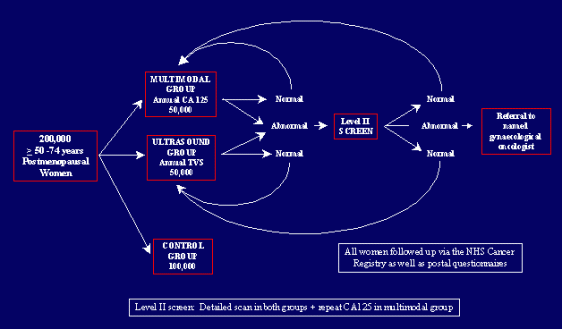
earlydetecttrialdesign1

The United Kingdom Collaborative Trial of Ovarian Cancer Screening - Overall Trial Design

Methods

Between 2001 and 2005, a total of 202,638 post-menopausal women aged 50—74 years were randomly assigned to [1] no treatment (control; n=101,359); [2] annual CA125 screening (interpreted using a risk of ovarian cancer algorithm) with transvaginal ultrasound scan as a second-line test (multimodal screening [MMS]; n=50,640); or [3] annual screening with transvaginal ultrasound (USS; n=50,639) alone in a 2:1:1 ratio using a computer-generated random number algorithm. All women provided a blood sample at recruitment. Women randomised to the MMS group had their blood tested for CA125 and those randomised to the USS group were sent an appointment to attend for a transvaginal scan. Women with abnormal screens had repeat tests. Women with persistent abnormality on repeat screens underwent clinical evaluation and, where appropriate, surgery. This trial is registered as ISRCTN22488978 and with ClinicalTrials.gov, number NCT00058032.

Findings

In the prevalence screen, 50,078 (98.9%) women underwent MMS, and 48,230 (95.2%) underwent USS. The main reasons for withdrawal were death (two MMS, 28 USS), non-ovarian cancer or other disease (none MMS, 66 USS), removal of ovaries (five MMS, 29 USS), relocation (none MMS, 39 USS), failure to attend three appointments for the screen (72 MMS, 757 USS), and participant changing their mind (483 MMS, 1,490 USS). Overall, 4,355 of 50,078 (8.7%) women in the MMS group and 5,779 of 48,230 (12.0%) women in the USS group required a repeat test, and 167 (0.3%) women in the MMS group and 1,894 (3.9%) women in the USS group required clinical evaluation. 97 of 50,078 (0.2%) women from the MMS group and 845 of 48,230 (1.8%) from the USS group underwent surgery. 42 (MMS) and 45 (USS) primary ovarian and tubal cancers were detected, including 28 borderline tumours (eight MMS, 20 USS). 28 (16 MMS, 12 USS) of 58 (48.3%; 95% CI 35.0—61.8) of the invasive cancers were stage I/II, with no difference (p=0.396) in stage distribution between the groups. A further 13 (five MMS, eight USS) women developed primary ovarian cancer during the year after the screen. The sensitivity, specificity, and positive-predictive values for all primary ovarian and tubal cancers were 89.4%, 99.8%, and 43.3% for MMS, and 84.9%, 98.2%, and 5.3% for USS, respectively. For primary invasive epithelial ovarian and tubal cancers, the sensitivity, specificity, and positive-predictive values were 89.5%, 99.8%, and 35.1% for MMS, and 75.0%, 98.2%, and 2.8% for USS, respectively. There was a significant difference in specificity (p<0.0001) but not sensitivity between the two screening groups for both primary ovarian and tubal cancers as well as primary epithelial invasive ovarian and tubal cancers.

Interpretation

The sensitivity of the MMS and USS screening strategies is encouraging. Specificity was higher in the MMS than in the USS group, resulting in lower rates of repeat testing and surgery. This in part reflects the high prevalence of benign adnexal abnormalities and the more frequent detection of borderline tumours in the USS group. The prevalence screen has established that the screening strategies are feasible. The results of ongoing screening are awaited so that the effect of screening on mortality can be determined.

Funding

Medical Research Council, Cancer Research UK and the Department of Health, UK; with additional support from the Eve Appeal, Special Trustees of Bart’s and the London, and Special Trustees of University College London Hospital.”

Primary Source

Sensitivity and specificity of multimodal and ultrasound screening for ovarian cancer, and stage distribution of detected cancers: results of the prevalence screen of the UK Collaborative Trial of Ovarian Cancer Screening (UKCTOCS); Sensitivity and specificity of multimodal and ultrasound screening for ovarian cancer, and stage distribution of detected cancers: results of the prevalence screen of the UK Collaborative Trial of Ovarian Cancer Screening (UKCTOCS); Usha Menon MD, Aleksandra Gentry-Maharaj Ph.D., Rachel Hallett Ph.D. et. al, The Lancet Oncology, Early Online Publication, 11 March 2009 doi:10.1016/S1470-2045(09)70026-9.

Comment

During an interview with the New York Times, Dr. Ian Jacobs, director of the Institute for Women’s Health at University College London, and director of the trial, discussed the optimism and the caveats associated with the preliminary clinical study results as follows:

We have now demonstrated we can pick up the vast majority of women with ovarian cancer earlier than they would have otherwise been detected and before they have symptoms, .. and that a good proportion of those women have earlier stage disease than we would normally expect them to have. … [W]omen thinking of having this must understand and realize that there’s a possibility it will do more harm than good. We have reason to think it will save lives, … and then the question is, will it save enough lives to balance out the harm it does? [Emphasis added].

Robert Smith, director of cancer screening for the American Cancer Society informed the New York Times that “[w]e’re not even remotely close to knowing how to screen women of average risk with these tests, or even if we should.” Mr Smith added that it is important to run large clinical trials, but that the preliminary results of this study must be interpreted with caution.

Secondary Sources

Two Studies Address Risk Reduction & Screening For BRCA 1/2 Gene Mutation Carriers

“Prophylactic salpingo-oophorectomy – removal of the ovaries and fallopian tubes–reduces the relative risk of breast cancer by approximately 50 percent and the risk of ovarian and fallopian tube cancer by approximately 80 percent in women who carry a mutation in the BRCA1 or BRCA2 gene, researchers report in the January 13 online issue of the Journal of the National Cancer Institute …. Women at high risk of ovarian cancer due to a genetic predisposition may opt for either surveillance or prophylactic bilateral salpingo-oophorectomy (pBSO).  Main objective of our study was to determine the effectiveness of ovarian cancer screening in women with a BRCA1/2 mutation.  At this time,’ Dr. de Bock and colleagues advise, “prophylactic bilateral salpingo-oophorectomy from age 35-40 for BRCA1 carriers and from age 40-45 for BRCA2 carriers is the only effective strategy, as it reduces the risk of ovarian cancer by 96% and may also protect against breast cancer with a risk reduction up to 53% when performed in premenopausal women.’ They add, ‘For women who still want to opt for screening, a more effective screening strategy needs to be designed.'”

Meta-analysis Confirms Value of Risk-Reducing Salpingo-Oophorectomy
for Women with BRCA Mutations

Prophylactic salpingo-oophorectomy – removal of the ovaries and fallopian tubes–reduces the relative risk of breast cancer by approximately 50 percent and the risk of ovarian and fallopian tube cancer by approximately 80 percent in women who carry a mutation in the BRCA1 or BRCA2 gene, researchers report in the January 13 online issue of the Journal of the National Cancer Institute .  Previous studies have shown substantial reduction in the risks of breast and ovarian or fallopian tube cancers in BRCA1/2 mutation carriers following salpingo-oophorectomy. However, the magnitude of the benefit has been unclear.

To establish a more reliable estimate of the magnitude of the benefit, Timothy Rebbeck, Ph.D., of the University of Pennsylvania School of Medicine in Philadelphia, and colleagues analyzed the pooled results of 10 published studies.  They found that risk-reducing salpingo-oophorectomy was associated with a 79 percent relative reduction in ovarian and fallopian tube cancer risk and a 51 percent relative reduction in breast cancer risk in women who carried mutations in BRCA1 or BRCA2 . When the researchers analyzed the effect of the prophylactic surgery on BRCA1 and BRCA2 mutation carriers separately, they found a similar benefit for the two groups in terms of breast cancer risk, with a 53 percent risk reduction for each group. The groups were too small to be examined independently for gynecologic cancer risk. ‘In conclusion, the summary risk reduction estimates presented here confirm that BRCA1/2 mutation carriers who have been treated with [risk-reducing salpingo-oophorectomy] have a substantially reduced risk of both breast and ovarian cancer,’ the authors write. ‘However, residual cancer risk remains after surgery. Therefore, additional cancer risk reduction and screening strategies are required to maximally reduce cancer incidence and mortality in this high-risk population.’

In an accompanying editorial, Mark H. Greene, M.D., and Phuong L. Mai, M.D., of the National Cancer Institute in Bethesda, Md., commend Rebbeck and colleagues ‘ effort and review the steps the study authors took to develop the most precise estimates of risk reduction following prophylactic salpingo-oophorectomy. The results ‘should benefit women who are trying to decide whether or not to undergo [risk-reducing salpingo-oophorectomy],’ the editorialists write. ‘We urge providers of cancer genetics counseling services to adopt the summary risk estimates developed by Rebbeck et al. as those most currently reliable when counseling BRCA mutation carriers.’

Contacts:
Article: Holly Auer, Holly.auer@uphs.upenn.edu ; 215-349-5659
Editorial: NCI Press Officers, ncipressofficers@mail.nih.gov ; 301-496-6641

Citations:
Article: Rebbeck T, et al. Meta-analysis of Risk Reduction Estimates Associated with Risk Reducing Salpingo-
Oophorectomy in BRCA1 or BRCA2 Mutation Carriers
. J Natl Cancer Inst 2009;101: 80 – 87 .
Editorial: Greene M and Mai PL. What Have We Learned from Risk-Reducing Salpingo-oophorectomy? J Natl
Cancer Inst
2009;101: 7 – 71 .”

Quoted SourceMEMO TO THE MEDIA -Meta-analysis Confirms Value of Risk-Reducing Salpingo-oophorectomy for Women with BRCA Mutations, JNCI  2009 101(2):69 (online Jan. 13, 2009).

Time to stop ovarian cancer screening in BRCA1/2 mutation carriers?

“Women at high risk of ovarian cancer due to a genetic predisposition may opt for either surveillance or prophylactic bilateral salpingo-oophorectomy (pBSO).  Main objective of our study was to determine the effectiveness of ovarian cancer screening in women with a BRCA1/2 mutation.

We evaluated 241 consecutive women with a BRCA1 or BRCA2 mutation who were enrolled in the surveillance program for hereditary ovarian cancer from September 1995 until May 2006 at the University Medical Center Groningen (UMCG), The Netherlands. The ovarian cancer screening included annual pelvic examination, transvaginal ultrasound (TVU) and serum CA125 measurement. To evaluate the effectiveness of screening in diagnosing (early stage) ovarian cancer sensitivity, specificity, positive and negative predictive values (PPV and NPV) of pelvic examination, TVU and CA125 were calculated.

Three ovarian cancers were detected during the surveillance period; 1 prevalent cancer, 1 interval cancer and 1 screen-detected cancer, all in an advanced stage (FIGO stage IIIc).  A PPV of 20% was achieved for pelvic examination, 33% for TVU and 6% for CA125 estimation alone. The NPV were 99.4% for pelvic examination, 99.5% for TVU and 99.4% for CA125. All detected ovarian cancers were in an advanced stage, and sensitivities and positive predictive values of the screening modalities are low. Restricting the analyses to incident contacts that contained all 3 screening modalities did not substantially change the outcomes. Annual gynecological screening of women with a BRCA1/2 mutation to prevent advanced stage ovarian cancer is not effective.”

CitationTime to stop ovarian cancer screening in BRCA1/2 mutation carriers?, van der Velde NM, Mourits, MJ,  Arts HJ, et. al.; Int J Cancer 2008;Vol 124: Issue 4: 919-923.

Comment: “At this time,’ Dr. de Bock and colleagues advise, “prophylactic bilateral salpingo-oophorectomy from age 35-40 for BRCA1 carriers and from age 40-45 for BRCA2 carriers is the only effective strategy, as it reduces the risk of ovarian cancer by 96% and may also protect against breast cancer with a risk reduction up to 53% when performed in premenopausal women.’ They add, ‘For women who still want to opt for screening, a more effective screening strategy needs to be designed.'” [SourceAnnual Screening for Ovarian Cancer in BRCA1/2 Carriers Deemed Ineffective, News Article, Cancerpage.com, Feb. 23, 2009.]

Oscar Winner Kathy Bates Is an Inspirational Ovarian Cancer Survivor

When you think of Kathy Bates, you recall immediately her portrayal of “Annie Wilkes” in the movie Misery.  In Misery, Kathy Bates, as Annie, holds her favorite author (played by James Caan) hostage.   The role of Annie Wilkes earned Kathy Bates an Oscar for “Best Actress.” Her role as the legendary “Unsinkable Molly Brown” in the movie Titanic is also unforgettable.  More recently, she re-teamed with her Titanic co-stars Leonardo DiCaprio and Kate Winslet in the movie Revolutionary Road, which is based upon Richard Yates‘ critically acclaimed novel by the same name.  Throughout her lengendary career, Kathy Bates has been a talented actress, television director, singer, producer, and composer.  Kathy can now add ovarian cancer spokesperson and advocate to her ongoing list of talented roles.

Bates appeared on the TODAY show on January 9th, 2009, to discuss her role in the film Revolutionary Road and her experience with ovarian cancer. The Kathy Bates interview video is provided below through a hyperlink.

Kathy Bates Interview on the NBC TODAY show

In September 2008, and for the first time publicly, Kathy Bates shared the story of her personal fight with ovarian cancer with the Ovarian Cancer National Alliance (OCNA) .  With respect to her OCNA interview, Bates said: “As an ovarian cancer survivor, I have decided to join forces with the Ovarian Cancer National Alliance by sharing my story and helping educate women about one of the deadliest cancers affecting women today.”  The interview was very personal and in-depth,  and Bates shared insights about how she was diagnosed with the disease.  The video of the Kathy Bates interview with OCNA is provided below.

Kathy Bates Interview with OCNA

As an ovarian cancer advocate, Ms. Bates also filmed a 30-second TV Public Service Announcement (PSA) about ovarian cancer and its symptoms.  Bates’ ovarian cancer PSA was launched in New York City taxi cabs during September 2008, National Ovarian Cancer Awareness month, and continues to run on TV networks nationwide.  In response to Kathy Bates’ willingness to speak out about ovarian cancer, Karen Orloff Kaplan, Chief Executive Officer of OCNA, said: “OCNA recognizes the personal strength it took Kathy to talk publicly about her run-in with cancer.  We appreciate her willingness to share her story and be an advocate for the organization in its mission to educate women across the country about ovarian cancer.”  The ovarian cancer PSA video featuring Kathy Bates is provided below.

Kathy Bates Ovarian Cancer PSA

Source:  Academy Award Winning Actress Kathy Bates Opens Up about her Experience with Ovarian Cancer, Articles, Ovarian Cancer National Alliance.

Libby’s H*O*P*E*(tm) Adds New Cancer Video Archive Courtesy of Vodpod.com

Yesterday, Libby’s H*O*P*E* added a new cancer video archive to the weblog courtesy of Vodpod.com.  Currently, the archive contains approximately 90 videos that address many general cancer and ovarian cancer issues, as well as the personal voices of those affected by cancer. The new video archive is located on the homepage right sidebar.  All you have to do is “click and play.”

vodpod-logoYesterday, Libby’s H*O*P*E* added a new cancer video archive to the weblog courtesy of Vodpod.com.  Currently, the archive contains approximately 90 videos that address many general cancer and ovarian cancer issues, as well as the personal voices of those affected by cancer. The new video archive is located on the homepage right sidebar.  All you have to do is “click and play.”  The video arrangement is set to “random order” so that new videos appear on the homepage sidebar each time you visit Libby’s H*O*P*E*.

If you are aware of a general cancer/ovarian cancer video that is educational, heartfelt, inspirational, humorous, poignant, or is simply dedicated to the one you love, please provide us with the URL address of the video.  The URL video address can be sent to us by email (click on the “contact” button located at the top of the homepage), or by comment (post a comment under this post).  Upon receipt of the video URL address, we will add the referenced video to the new archive.  We appreciate your participation in adding to our video archive and hope you find the archive helpful.

FDA Issues a Warning Letter to LabCorp Regarding The Illegal Marketing of The OvaSure™ Test

On September 29, 2008, the U.S. Food and Drug Administration (FDA) Office of In Vitro Diagnostic Device Evaluation and Safety (OIVD), Center for Devices and Radiological Health, issued a warning letter (FDA Warning Letter) to the Chief Executive Officer of the Laboratory Corporation of America (LabCorp) regarding the illegal marketing of the OvaSure™ ovarian cancer early detection diagnostic test. …Steven Gutman, M.D., M.B.A., the OIVD Director, informed David P. King, President and Chief Executive Officer of LabCorp, that his company was in serious violation of the Food, Drug, and Cosmetic Act (FDCA) involving the illegal marketing of the OvaSureTM test and asked that the violations be promptly corrected to avoid initiation of regulatory action by the FDA.

On September 29, 2008, the U.S. Food and Drug Administration (FDA), Office of In Vitro Diagnostic Device Evaluation and Safety (OIVD), Center for Devices and Radiological Health, issued a warning letter (the FDA Warning Letter) to the Chief Executive Officer of the Laboratory Corporation of America (LabCorp) regarding the illegal marketing of the OvaSure™ ovarian cancer early detection diagnostic test.

In the September 29th FDA Warning Letter, Steven Gutman, M.D., M.B.A., the OIVD Director, informed David P. King, President and Chief Executive Officer of LabCorp, that his company was in serious violation of the Food, Drug, and Cosmetic Act (FDCA) involving the illegal marketing of the OvaSureTM test and asked that the violations be promptly corrected to avoid initiation of regulatory action by the FDA. The FDA Warning Letter was issued to LapCorp after review of information obtained from LabCorp’s website including a press release and a technical bulletin, as well as information provided by LabCorp in a face-to-face meeting with the FDA on September 5, 2008.

The FDA Warning Letter to LapCorp states that the OvaSure™ test is a “device” under the FDCA because it is intended for use in the diagnosis of disease or other conditions, or in the cure, treatment, prevention, or mitigation of disease. Once classified as a “device” under the FDCA (assuming non-applicability of select exemption criteria), LapCorp is required by law to obtain marketing approval or clearance for the OvaSure™ test from the FDA prior to its sale to the public. This FDA finding, in theory, helps protect the public health by ensuring that new devices are shown to be both safe and effective or substantially equivalent to other devices already legally marketed in this country for which approval is not required.

Based upon OIVD’s findings, the FDA concluded that LapCorp did not obtain FDA marketing approval or clearance for the OvaSure™ test and is in violation of Federal law. Specifically, the FDA describes LapCorp’s violations of, and the required corrective action under, the FDCA as follows:

“… The device [i.e., OvaSure™] is adulterated under section 501(f)(1)(B) of the [Food, Drug, and Cosmetic] Act, 21 U.S.C. 351(f)(1)(B), because you do not have an approved application for premarket approval (PMA) in effect pursuant to section 515(a) of the Act, 21 U.S.C. 360e(a), or an approved application for an investigational device exemption (IDE) under section 520(g) of the Act, 21 U.S.C. 360j(g). The device is also misbranded under section 502(o) [of] the Act, 21 U.S.C. 352(o), because you did not notify the agency [i.e., the FDA] of your intent to introduce the device into commercial distribution, as required by section 510(k) of the Act, 21 U.S.C. 360(k). For a product requiring premarket approval before marketing, the notification required by section 510(k) of the act is deemed to be satisfied when a premarket approval application (PMA) is pending before the agency. 21 CFR §807.81(b). …

… You should take prompt action to correct these violations. Failure to promptly correct these violations may result in regulatory action being initiated by the FDA without further notice. These actions include, but are not limited to, seizure, injunction, and/or civil money penalties.”

The FDA Warning Letter provides LapCorp with 15 working days to correct its violations under the FDCA as noted above, and to explain how such violations will be prevented in the future. The FDA requests LapCorp to notify the agency if such corrective action cannot be taken within the specified 15 working day time frame.

Libby’s H*O*P*E*™ covered the initial marketing release of LabCorp’s OvaSure™ test and the FDA’s initial inquiry into the clinical validation support underlying the marketing of that test on June 23, 2008 and August 23, 2008, respectively.

Source: FDA Issued a Warning Letter to the CEO of LabCorp Regarding The Illegal Marketing of The OvaSureTM Test, Office of In Vitro Diagnostic Device Evaluation and Safety, Center for Devices and Radiological Health, Food and Drug Administration. September 29, 2008.

Hollywood Celebs Raise Awareness Regarding Hereditary Breast and Ovarian Cancer

Christina Applegate – Samantha Who?

ABC

Christina Applegate as Samantha in the ABC sitcom Samantha Who? Photo Credit: American Broadcasting Company

Recently diagnosed in July 2008 with breast cancer, Christina Applegate appeared on ABC’s Good Morning America program in August. The talented, Emmy award winning actress is currently the star of the ABC sitcom “Samantha Who?” Applegate came into the Hollywood limelight when she appeared in popular Fox sitcom “Married With Children,” in the role of “Kelly Bundy.”

With a great deal of courage, Christina revealed in the Good Morning America interview that she had a double mastecomy three weeks earlier to remove a tumor in one breast and prevent future breast cancer in the other. Christina made the decision to have a prophylatic double mastecomy because she tested positive previously for the BRCA 1 (breast cancer 1) gene mutation.

“I just wanted to kind of be rid of it,” explained Christina Applegate. “So this was the choice I made and it was a tough one.” Applegate is 36 years old, but because her mother is a two time survivor of breast cancer, Christina was carefully screened for breast cancer since she was 30 years old. “After looking at all the treatment plans, the one that was going to work for me was to have a bilateral mastectomy,” she said during the interview with ABC’s Robin Roberts, also a breast cancer survivor.

“I didn’t want to go back to the doctors every four months for testing. … I’m clear,” she declared. “Absolutely 100 percent clear and clean. It did not spread. They got everything out, so I’m definitely not going to die from breast cancer.”

To view Christina Applegate’s August 19, 2008 interview on ABC’s Good Morning America, CLICK HERE.

Jessica Queller – Pretty is What Changes

Jessica Queller, author of "Pretty is What Changes"

Jessica Queller, author of "Pretty Is What Changes"

Jessica Queller is a famous Hollywood writer/producer who worked on several hit television programs like Felicity, One Tree Hill, and most recently, the Gilmore Girls, which is an Emmy Award-winning, Golden Globe-nominated, American comedy-drama series. Eleven months after her mother succumbed to cancer, Jessica Queller had herself tested for the breast cancer (BRCA) gene mutation. Queller was 34 years old when she took the BRCA gene mutation blood test, and she tested positive, like Applegate, for the BRCA 1 (breast cancer) gene mutation.

Jessica’s mother had suffered from both diseases and ultimately died of ovarian cancer. In 2005, shortly after testing positive, Jessica wrote an Op-Ed piece for the New York Times entitled Cancer and the Maiden about the burden of knowledge that comes with testing positive for the breast cancer gene. This article was the launching point for her first book, a memoir, called Pretty Is What Changes: Impossible Choices, The Breast Cancer Gene and How I Defied My Destiny. Ultimately, Queller, like Applegate, decided to have both breasts removed to stave off cancer, and she wants to have her ovaries removed before she is 40 in the hope of preventing ovarian cancer in the future.

Jessica Queller is the recipient of the 2008 LIFE Hero award from the Val Skinner Foundation

To view Jessica Queller’s April 2, 2008 interview with Good Morning America’s Robbin Roberts, CLICK HERE.

What is Hereditary Breast and Ovarian Cancer?

Hereditary breast and ovarian cancer (HBOC) is identified generally by one or more of the following characteristics found in a family:

  • early age onset of breast cancer (often before age 50);
  • family history of both breast and ovarian cancer;
  • bilateral cancers (cancer that develop in both breasts, or both ovaries, independently) or an individual with both breast and ovarian cancer;
  • an autosomal dominant pattern of inheritance (vertical transmission through either the mother or father’s side of the family); and
  • an increased incidence of tumors of other specific organs, such as the prostate.

Other factors that increase the chance that hereditary breast and ovarian cancer exists within a family include:

What Are BRCA 1 & BRCA 2 Genes?

In 1990, DNA linkage analysis studies on large families with the characteristics described above, identified the first gene associated with breast cancer. Scientists named this gene “breast cancer 1″ or “BRCA1.” BRCA1 mutations are transmitted in an autosomal dominant pattern within a family. Since it was clear that not all breast cancer families were linked to BRCA1, studies continued and in 1994, scientists discovered another gene similar to BRCA1, and named it “breast cancer 2″ or “BRCA2.” BRCA2 gene mutations are also transmitted in an autosomal dominant pattern within a family. If a disease is autosomal dominant, it means that an individual only needs to get the abnormal gene from one parent to inherit the disease. One of the parents may often have the disease.

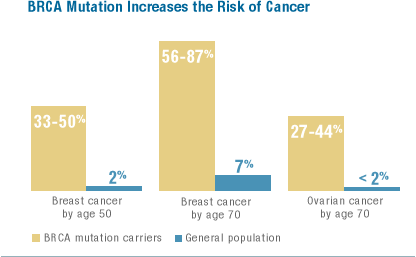
BRCA1 and BRCA2 are tumor suppressor genes, which means that they are responsible for controlling cell growth and cell death. Each individual possesses two BRCA1and two BRCA2 genes. When an individual possesses one altered or mutated copy of the BRCA1 or BRCA2 gene, the risk for various types of cancer increases:

  • BRCA1 Mutation Risks

— 36 percent to 85 percent lifetime risk for breast cancer

— 40 percent to 60 percent lifetime risk for second breast cancer (not reappearance of first tumor)

— 20 percent to 60 percent lifetime risk for ovarian cancer

— increased risk for other cancer types, such as prostate cancer

  • BRCA2 Mutation Risks

— 36 percent to 85 percent lifetime risk for breast cancer in females

— 6 percent lifetime risk for breast cancer in males

— up to 27 percent lifetime risk for ovarian cancer

— increased risk for other cancer types, such as pancreatic, prostate, laryngeal, stomach cancer, and melanoma

It is important to note that both copies of a tumor suppressor gene must be altered or mutated before a person will develop cancer. In HBOC, the first mutation is inherited from the mother or father and is therefore present in all cells of the body. This is called a “germline mutation.” Whether an individual with a germline mutation will develop cancer and where the cancer(s) will develop depends upon where (which cell type) the second mutation occurs. For example, assuming the second mutation is in the ovary, then ovarian cancer could develop. Assuming the second mutation is in the breast, breast cancer could develop. The development of a tumor ultimately requires mutations in multiple growth control genes. Loss of both copies of BRCA1 or BRCA2 is just the first step in the process. What causes these additional mutations to be acquired is unknown. Possible causes include chemical, physical, or biological environmental exposures, or cell replication errors.

An individual who possesses an inherited germline BRCA1 or BRCA2 mutation may not develop cancer in the future due to the non-occurrence of a second gene mutation which is necessary to knock out the function of the gene and start the process of tumor formation. The lack of a second gene mutation can make the cancer appear to skip generations in a family, when, in reality, one gene mutation is present. Regardless of whether cancer ultimately develops, an individual with a mutation possesses a 50/50 chance of passing the mutation on to the next generation, which could include male and/or female children. It is also important to note that the BRCA1 and BRCA2 genes are not located on the sex chromosomes, and therefore, BRCA gene mutations can be inherited from the mother’s or father’s side of the family.

What is a founder’s effect?

The majority of BRCA1 or BRCA2 gene mutations within a single family are unique. There are, however, a few exceptions. For example, specific recurring mutations have been found in individuals of Ashkenazi (Eastern Europe) Jewish descent, and persons from the Netherlands, Iceland, and Sweden. Mutations recur in these groups because of a so-called “founder’s effect.” “Founders” consist of a small group of people that interbred due to geographic or religious isolation. The “founder’s effect” occurs when that small group of people interbreeds over generations, thereby causing specific rare gene mutations to recur and become more common in the population.

The present day Ashkenazi Jewish population arose from a small group of founders. One or more of those founders probably carried specific gene mutations in BRCA1 or BRCA2. Notably, there are three mutations (two in BRCA1 and one in BRCA2) that account for the majority of the BRCA gene mutations possessed by Ashkenazi Jews. Accordingly, the existence of the founder’s effect is important to Ashkenazi Jewish individuals because it results in an increased occurrence of BRCA gene mutations in this population. This information hold practical importance within the context of gene testing, because some testing laboratories offer “ethnic-specific” gene mutation panels. Thus, laboratories can first investigate for specific gene mutations based upon the ethnic background of the indivdual, rather than search through the entire gene each time that person is tested.

In the general population, it is estimated that 1 in 500 individuals has a mutation in BRCA1 or BRCA2. In contrast, 1 in 40 Ashkenazi Jews possess recurring BRCA mutations. This increased occurrence places added emphasis on the assessment of family history for breast and ovarian cancer in Ashkenazi versus non-Ashkenazi persons.

NCI Population Estimates — Likelihood of a BRCA1 or BRCA2 Gene Mutation

The National Cancer Institute (NCI) statistics regarding the percentage of women found to possess BRCA gene mutations, as compared to samples of women and men with a variety of personal cancer histories regardless of family history, are provided below. The estimates are general in nature and cannot replace a personalized risk assessment by a certified genetic counselor, which may indicate a higher or lower mutation likelihood based upon specific family history characteristics.

Among non-Ashkenazi Jewish individuals (likelihood of having any BRCA mutation):

  • General non-Ashkenazi Jewish population: 1 in 500 (.2%).
  • Women with breast cancer (all ages): 1 in 50 (2%).
  • Women with breast cancer (younger than 40 years): 1 in 11 (9%).
  • Men with breast cancer (regardless of age): 1 in 20 (5%).
  • Women with ovarian cancer (all ages): 1 in 10 (10%).

Among Ashkenazi Jewish individuals (likelihood of having one of three founder mutations):

  • General Ashkenazi Jewish population: 1 in 40 (2.5%).
  • Women with breast cancer (all ages): 1 in 10 (10%).
  • Women with breast cancer (younger than 40 years): 1 in 3 (30%-35%).
  • Men with breast cancer (regardless of age): 1 in 5 (19%).
  • Women with ovarian cancer or primary peritoneal cancer (all ages): 1 in 3 (36%-41%).

Sources:

Comment: The vast majority of cancers are not due to inherited mutations. The decision to obtain genetic testing, and the action to take if you test positive for a gene mutation(s), are intensely personal decisions. It is generally recommended that you speak with a certified genetic counselor or similarly trained healthcare professional prior to engaging in genetic testing.

Additional Resources:

Lost In Translation? FDA Believes That LabCorp’s Ovarian Cancer Early Detection Test (OvaSure) Lacks Adequate Clinical Validation

The U.S. Food and Drug Administration (FDA) sent a letter to the Laboratory Corporation of America (LabCorp) on August 7, 2008, stating that it believes the Yale ovarian cancer early detection test (marketed by LabCorp under the name OvaSure™) ” … has not received adequate clinical validation, and may harm the public health.” In that letter, the FDA invites LabCorp to discuss all validation studies that support the marketing of the OvaSure™ test.

The U.S. Food and Drug Administration (FDA) sent a letter to the Laboratory Corporation of America (LabCorp) on August 7, 2008, stating that it believes the Yale ovarian cancer early detection test (marketed by LabCorp under the name OvaSure™) “… has not received adequate clinical validation, and may harm the public health.” In the letter, the FDA invites LabCorp to discuss all validation studies that support the marketing of the OvaSure™ test. The August 7 FDA letter appears to reflect a previously announced, yet controversial, change in FDA policy. Libby’s H*O*P*E*™ reported previously on the development of the Yale ovarian cancer early detection test [March 14, 2008], and LabCorp’s subsequent market release of that test under the name OvaSure™ [June 23, 2008].

On August 19, 2008, the Oncology STAT™ news service reported that the August 7 FDA letter was posted on the website of the Office of In Vitro Diagnostic Device Evaluation and Safety (OIVD) on August 15, but was removed from the site a few days later. On August 22, 2008, we identified the “cached” copy of the August 7 FDA letter on the OIVD website. The August 7 FDA letter is provided below in its entirety.

The August 7 FDA letter was issued by OIVD and informs LabCorp that “[i]t appears that you are marketing the Ovasure™ Test with performance characteristics (specifically, 95.3% sensitivity and 99.4% specificity) that are identical to those reported in a research study published by Visintin, I. et al., in the February 15 edition of Clinical Cancer Research (Visintin, I. et al., Clin Cancer Res. 2008 Feb 15;14(4):1065-72.).” The OIVD Director, Steven Gutman, M.D., M.B.A., states that the Visintin, I. et. al ” … research was carried out, and performance derived, on two populations that are strongly clinically biased for being healthy and normal, and for having already experienced ovarian cancer.” Based upon this rationale, the OIVD concludes that it does not believe “… the scientific community would consider the reported study sufficient to establish performance characteristics of a test in high risk women who might have ovarian cancer, i.e., in a clinical setting, as claimed in your intended use and promotional materials.”

Historical FDA Policy Regarding Laboratory-Developed (“Home Brew”) Tests

Based upon historical FDA policy, LapCorp would not be required to obtain FDA premarket or postmarket approval for the OvaSure™ test because the early detection test would be categorized as a “laboratory-developed test” (also referred to as a “home brew” test) under the Clinical Laboratory Improvement Amendments of 1988 (CLIA). In general, the CLIA establishes quality standards for all laboratory testing to ensure the accuracy, reliability and timeliness of patient test results regardless of where the test is performed.

Prior to 2006, the FDA did not exercise its authority to regulate home brew tests, which are developed by a laboratory for in-house use as a test service. The reasons are likely twofold. First, the FDA believed that the regulatory oversight exercised by the Centers for Medicare & Medicaid Services (CMS) with respect to the laboratories (under CMS jurisdiction pursuant to CLIA), ensured that such laboratories were competent to properly manufacture and use home brew tests without additional FDA intervention. Second, the FDA possessed regulatory authority to review the primary ingredients or components in the home-brew tests (known as “analyte specific reagents” (ASRs)), and did not believe that further test regulation was necessary.

Announcement of FDA Policy Change For Select In Vitro Diagnostic Assays

In 2006, and again in 2007, the FDA issued draft guidance (entitled, Draft Guidance for Industry, Clinical Laboratories, and FDA Staff: In Vitro Diagnostic Multivariate Index Assays) in which, for the first time, the agency exercised its authority to regulate select in vitro diagnostic multivariate index assays (“IVDMIAs”) that are developed and manufactured by clinical laboratories for their own use (i.e., laboratory-developed tests/home brew tests). An IVDMIA is a diagnostic laboratory assay or test that utilizes mathematical formulae to interpret genetic and protein data required for the generation of information used to make critical diagnosis and treatment decisions for patients. IVDMIAs, for FDA regulatory purposes, are classified as medical devices under the Federal Food, Drug & Cosmetic Act (FDCA), and therefore, can be subject to premarket and postmarket regulation. IVDMIAs developed and manufactured by commercial, non-laboratory-based companies are currently regulated by the FDA. The majority of IVDMIAs, however, are developed and manufactured by laboratories for their own use as home brew tests.

Under the FDA draft guidance, home brew IVDMIAs would in many cases require 510(k) pre-market clearance or Pre-Market Approval (PMA). In addition, these same IVDMIAs would have to comply with “device” post-market manufacturing and reporting requirements. The August 7 FDA letter does not state that a 510(k) pre-market clearance or Pre-Market Approval is required; rather OIVD invites LabCorp to discuss any “validation strategies” undertaken beyond the research results reported by Visintin, I. et. al. LabCorp is not the only company affected by the FDA policy change. The FDA also used its change in regulatory policy to prevent Correlogic Systems, Inc. from marketing its ovarian cancer early detection test, known as OvaCheck®, without prior FDA approval. Arguably, the FDA is placing the OvaSure™ and OvaCheck® ovarian cancer early detection tests on equal regulatory footing.

Ever-Increasing Sophistication of Genetic and Proteomic Assay Technology

The emergence and increased use of IVDMIAs using novel technology (e.g., proteomics) as an integral part of patient diagnosis and treatment, and their direct advertisement to consumers, may have influenced the FDA to conclude more recently that the current level of oversight with respect to genetic and proteomic testing by laboratories was inadequate. Assuming the FDA position is correct, inadequate federal oversight could lead to significant issues related to the quality and validity of IVDMIAs.

LabCorp Amendment of OvaSure™ “Use” Information

LabCorp recently amended its intended use and promotional materials to provide that the OvaSure™ test cannot be used by a woman who has had both ovaries removed (i.e., a woman who previously had a bilateral oophorectomy). Specifically, LabCorp intends that the OvaSure™ test be used to identify a woman who is at “high-risk” for ovarian cancer; however, an ovarian cancer survivor who is currently in remission, cannot use the OvaSure™ test to screen for a recurrence of the disease if her ovaries were removed as part of her first-line treatment after the initial ovarian cancer diagnosis. CLICK HERE to view Libby’s H*O*P*E* post (with updates) dated June 23, 2008, regarding the OvaSure™ test use and limitation information as amended.

Letter to the President and Chief Executive Officer of LabCorp

August 7, 2008
Via FedEx

David P. King
President and Chief Executive Officer
Laboratory Corporation of America
430 South Spring Street
Burlington, North Carolina 27215

Dear Mr. King:

It has come to our attention that you are currently marketing the OvaSure™ Yale Ovarian Cancer Test, also advertised as the OvaSure™ For Women at High-Risk for Ovarian Cancer, and OvaSure™ For Women at High-Risk for Ovarian Cancer, (Serial Monitor), (collectively referred to hereafter as the OvaSure™ Test) which is intended to be used as a tool to identify high-risk women who might have ovarian carcinoma. It appears that you are marketing the OvaSure™ Test with performance characteristics (specifically, 95.3% sensitivity and 99.4% specificity) that are identical to those reported in a research study published by Visintin, I., et al., in the February 15 edition of Clinical Cancer Research (Visintin, I. et al., Clin Cancer Res. 2008 Feb 15;14(4):1065-72.). We note that this research was carried out, and performance derived, on two populations that are strongly clinically biased for being healthy and normal, and for having already experienced ovarian cancer. Based on the available information, we do not believe the scientific community would consider the reported study sufficient to establish performance characteristics of a test in high risk women who might have ovarian cancer, i.e., in a clinical setting, as claimed in your intended use and promotional materials.

Based on our review of your promotional materials and the research publication cited above, we believe you are offering a high risk test that has not received adequate clinical validation, and may harm the public health. We would like to discuss with you your offer of this test, and any validation strategies you have undertaken beyond those reported in the publication cited above.

We look forward to discussing this with you, and are committed to working with you as we strive to protect the public health without unnecessarily imposing regulatory burdens on the marketing of products of potential clinical importance.

Sincerely yours,

/S/

Steven I. Gutman, M.D., M.B.A.
Office Director
Office of In Vitro Diagnostic Device Evaluation and Safety
Center for Devices and Radiological Health

Comments:

  • The corporate and governmental intrigue surrounding the FDA regulatory issues with respect to the OvaSure™ and OvaCheck® ovarian cancer early detection tests would make for a thrilling Hollywood screenplay, except for the catastrophic fact that approximately 15,000 U.S. women die annually from ovarian cancer due to the lack of a reliable early detection test. Because of the latter, approximately 80 percent of women are not diagnosed until they are in advance stages of the disease.
  • The FDA’s current – and still evolving – policy signals a strong possibility that previously unregulated diagnostics could require FDA approval or clearance prior to marketing as well as being subject to other medical device requirements under the FDCA.
  • It is critical for the FDA to take whatever action is necessary to protect U.S. public health. It is also essential that ovarian cancer survivors, clinicians and all affected corporate entities receive clear, consistent regulatory guidance and prompt action from the FDA with respect to this potential life-saving matter.

Sources:

Updates:

  • September 9, 2008: The FDA recently reposted on its website, a copy of the August 7th letter to the President and Chief Executive Officer of LabCorp regarding OvaSure™. To view a copy of the letter, CLICK HERE.

Symptom Screening + CA-125 Blood Test = Better Detection of Early Stage Ovarian Cancer

” …Research has found that when used alone, a simple four-question symptom-screening questionnaire and the CA125 ovarian-cancer blood test each detect about 60 percent of women with early-stage ovarian cancer and 80 percent of those with late-stage disease. This study found that when used together, the questionnaire and blood test may boost early-detection rates to more than 80 percent and late-stage detection rates to more than 95 percent. …”

“Women’s reports of persistent, recent-onset symptoms linked to ovarian cancer – abdominal or pelvic pain, difficulty eating or feeling full quickly and abdominal bloating – when combined with the CA125 blood test may improve the early detection of ovarian cancer by 20 percent, according to new findings by researchers at Fred Hutchinson Cancer Research Center published online today in CANCER.

Research has found that when used alone, a simple four-question symptom-screening questionnaire and the CA125 ovarian-cancer blood test each detect about 60 percent of women with early-stage ovarian cancer and 80 percent of those with late-stage disease. This study found that when used together, the questionnaire and blood test may boost early-detection rates to more than 80 percent and late-stage detection rates to more than 95 percent.

‘Of course, it is the increase in the detection of early-stage disease that is the most exciting,’ said lead author M. Robyn Andersen, Ph.D., an associate member of the Public Health Sciences Division at the Hutchinson Center. Cure rates for those diagnosed when the disease is confined to the ovary are approximately 70 percent to 90 percent. However, more than 70 percent of women with ovarian cancer are diagnosed with advanced-stage disease, when the survival rate is only 20 percent to 30 percent.

‘This research suggests that if a woman has one or more symptoms that are new for her, having begun within the past year, and if the symptoms happen nearly daily or at least 12 times a month, that may well be a signal to go in and discuss those symptoms with her doctor,’ Andersen said. ‘It’s probably not going to be ovarian cancer, just as most breast lumps are not breast cancer, but it’s still a sign that it might be worth checking with her doctor to see if a CA125 blood test and transvaginal ultrasound may be appropriate.’

Assessing the symptoms included in the symptom-screening index may already be done by some doctors based on a consensus statement issued last year by the National Institutes of Health. The researchers hope their symptom index will help doctors know which among their patients who complain of symptoms such as abdominal swelling and pelvic pain might have cancer.

The symptom-screening index, developed in 2006 by paper co-author Barbara A. Goff, M.D., professor and director of Gynecologic Oncology at the University of Washington School of Medicine, is not used proactively in clinical general practice, but Andersen and colleagues are conducting a pilot study to assess the value of using it as a screening tool among normal-risk women as part of their routine medical-history assessment.

For the just-published study, the researchers administered the symptom questionnaire to 75 women about to undergo surgery for pelvic masses who were later diagnosed with ovarian cancer (the case group), and 254 healthy women at high risk for ovarian cancer due to a family history of the disease (the control, or comparison, group). The cases were recruited through Pacific Gynecology Specialists at Swedish Medical Center in Seattle, and the controls were recruited through the Ovarian Cancer Early Detection Study, a joint project of the Hutchinson Center and the Marsha Rivkin Center for Ovarian Cancer Research.

The National Institutes of Health/National Cancer Institute, the Marsha Rivkin Center for Ovarian Cancer Research and the Canary Foundation supported this research.”

[Quoted Source: Symptom screening plus a simple blood test equals a 20 percent jump in early detection of ovarian cancer, Fred Hutchinson Cancer Research Center News Release, June 23, 2008.]

LabCorp Announces Availability of Ovarian Cancer Blood Test To Assess The Presence of Early Stage Ovarian Cancer

“Laboratory Corporation of America® Holdings is now offering OvaSure™, an Ovarian Cancer Screening test to assess the presence of early stage ovarian cancer in high-risk women. In a recent study of high risk and average risk subjects, this blood test, using six biomarkers and research conducted at Yale University School of Medicine, was shown to discriminate between disease-free women and ovarian cancer patients (stage I-IV) with high specificity (99.4%) and sensitivity (95.3%). Additional studies performed at Yale University School of Medicine demonstrate comparable findings.”

On March 14, 2008, the H*O*P*E*™ weblog reported that a new blood test developed by the Yale University School of Medicine detected early stage ovarian cancer with 99% accuracy in Phase II clinical trial testing. To review the March 14 H*O*P*E*™ weblog post, click here. In 2006, Laboratory Corporation of America (Lab Corp) obtained licensing rights to the ovarian cancer early detection blood test, known as OvaSure™, from Yale. Today, Lab. Corp. announced in a press release that it is making the OvaSure™ blood test immediately available nationwide to women who are at high risk of developing ovarian cancer in the future. The relevant portion of the Lab Corp. press release dated June 23, 2007 is set forth below.

LabCorp Announces Availability of OvaSure™

Burlington, NC, June 23, 2008 – Laboratory Corporation of America® Holdings (LabCorp®) (NYSE: LH) is now offering OvaSure™, an Ovarian Cancer Screening test to assess the presence of early stage ovarian cancer in high-risk women. In a recent study of high risk and average risk subjects, this blood test, using six biomarkers and research conducted at Yale University School of Medicine, was shown to discriminate between disease-free women and ovarian cancer patients (stage I-IV) with high specificity (99.4%) and sensitivity (95.3%). Additional studies performed at Yale University School of Medicine demonstrate comparable findings.

‘LabCorp is pleased to offer for high-risk women the OvaSure test to enhance the potential of detecting and treating ovarian cancer in its early or localized stage when the likelihood of survival is greatest,’ said Myla P. Lai-Goldman, M.D., Executive Vice President, Chief Medical Officer of LabCorp. ‘OvaSure is a significant addition to LabCorp’s family of proteomic tests, and a major component of LabCorp’s strategy to bring the latest in diagnostic technology to women’s healthcare.’

It has been estimated that for the year 2008, 21,650 women will be newly diagnosed with ovarian cancer. It has been further estimated that 15,520 women will die from the disease in 2008. Despite being one-eighth as common as breast cancer, it is three times more lethal. If ovarian cancer is diagnosed and treated at the localized stage, the 5-year survival rate is 92%; unfortunately, only 19% of all cases are found at the localized stage. Most women have their ovarian cancer detected at the regional or distant stage when the 5-year survival rates are 71% and 30% respectively.

‘I am pleased that this test is available to help physicians detect and treat ovarian cancer in its earliest stages,’ said Gil Mor, M.D., associate professor in the Department of Obstetrics, Gynecology & Reproductive Sciences at Yale and a member of Yale Cancer Center. ‘Our team is proud that our research may help play a role in higher survival rates for women with this disease.’”

[Quoted Source: LabCorp Announces Availability of OvaSure™ , Laboratory Corporation of America Press Release dated June 23, 2008.]

Comment**: Although additional Phase III clinical trial testing with a larger patient population is required, the OvaSure™ blood test may represent the “gold standard” for early stage ovarian cancer detection in the near future. The immediate availability of the OvaSure™ blood test for use by women who are at high risk for developing ovarian cancer could save lives by catching ovarian cancer in its earliest stages, thereby making treatment of the disease highly effective. To view the ABCNews.com news report regarding the Yale ovarian cancer screening blood test that aired on April 21, 2008, click here.

**As of August 21, 2008, the amended OvaSure™ test “use” information provides, among other things, that a woman who has had both ovaries removed (i.e., a bilateral oophorectomy) should not use the test. Accordingly, it appears that the OvaSure™ test cannot be used by a “high-risk” woman to screen for an ovarian cancer recurrence, if she had both ovaries removed as part of her first line treatment following initial diagnosis of the disease.

OvaSure™ Information: The OvaSure™ blood test is now available nationwide through LabCorp. If you want to review OvaSure™ blood test information on the LabCorp. website, click here (then click on the letter “O” located on the upper left side panel keyboard and scroll down until you find the three OvaSure™ blood test information entries). It is our understanding that the OvaSure™ test cost approximately (U.S.)$225 and test results are available within five business days.

OvaSure™ Use (updated 8/21/08): “The OvaSureTM assay may be used as a tool to identify high-risk women who might have ovarian carcinoma. OvaSureTM is not indicated for a patient who is currently undergoing chemotherapy, who has had both ovaries removed, who is pregnant, or who is lactating. About 10% of women with benign ovarian masses (including cysts) may have positive results by this test.”

OvaSure™ Limitations (updated 8/21/08) : “Pregnant women or women who are lactating should not be screened by the assay because it may lead to false-positive results. A Calculated Risk Index of 0.50 or greater indicates a positive reading, which is suggestive of ovarian cancer (possible presence of disease). In a clinical study (see Journal Abstract below) across all disease stages, the six-marker panel composed of leptin, prolactin, osteopontin, insulin-like growth factor II, macrophage inhibitory factor, and CA-125 demonstrated a sensitivity of 95.3% and a specificity of 99.4% in detecting disease. Greater than 99% sensitivity (119 of 120) was shown in late-stage disease (stage III and stage IV). In early stage disease (stage I and stage II), the assay demonstrated a sensitivity of 91.6%, providing a significant improvement over CA-125 alone (less than 60% of stage I and stage II combined) for ovarian cancer detection. All positive readings should be retested on a new sample drawn at least three weeks after the original sample was collected. Patients with positive results confirmed by retesting on a second sample should be followed by a women’s health specialist who may order additional evaluations, such as sensitive imaging. Components used in this test are labeled as research purposes only. The performance characteristics of this product have not been established by the assay manufacturer. Results should not be used as a diagnosis for ovarian cancer without confirmation of the diagnosis by another medically established diagnostic product or procedure.”

OvaSure™ Journal Abstracts and Full Text Studies:

Updates:

  • July 2, 2008: The Society of Gynecologic Oncologists (SGO) issued a statement regarding the Labcorp OvaSure™ test. The SGO statement, dated July 2, 2008, is quoted below in its entirety.

“July 2, 2008

Society of Gynecologic Oncologists
Statement Regarding OvaSureTM

The Society of Gynecologic Oncologists (SGO) recognizes the need for accurate early detection biomarkers for ovarian cancer. For this reason, SGO reviewed the literature regarding OvaSure, a serum-based diagnostic test for ovarian cancer.

After reviewing OvaSure’s materials, it is our opinion that additional research is needed to validate the test’s effectiveness before offering it to women outside of the context of a research study conducted with appropriate informed consent under the auspices of an institutional review board.

SGO is committed to actively following and contributing to this vitally important research. As physicians who care only for women with gynecologic cancers, our hope is that these cancers can either be prevented or detected early. Because no currently available test has been shown to reliably detect ovarian cancer in its earliest and most curable stages, we will await the results of further clinical validation of OvaSure with great interest.”

The SGO is a national medical specialty organization of physician-surgeons who are trained in the comprehensive management of women with malignancies of the reproductive tract. The purpose of the SGO is to improve the care of women with gynecologic cancers by encouraging research and disseminating knowledge to raise the standards of practice in the prevention and treatment of gynecologic malignancies, in cooperation with other organizations interested in women’s health care, oncology and related fields.

Quoted Update Source: Society of Gynecologic Oncologists Statement Regarding OvaSure™, Society of Gynecologic Oncologists, July 2, 2008 (Adobe Reader PDF document).

Other Update Sources: Fast Facts: Background on The Society of Gynecologic Oncologists, Society of Gynecologic Oncologists Press Kit, undated.

“AM Nick is a Fellow in the Department of Gynecologic Oncology, and AK Sood is the Bettyann Asche-Murray Distinguished Professor in the Department of Gynecologic Oncology and in the Department of Cancer Biology, both at the University of Texas MD Anderson Cancer Center, Houston, TX, USA.

In order to overcome the significant mortality associated with ovarian cancer, a highly sensitive and specific screening test is urgently needed. CA125 is used to assess response to chemotherapy, detect recurrence, and distinguish malignant from benign disease; however, this marker is elevated in only 50-60% of stage I ovarian cancers, making it inadequate for early detection of malignancy. In this Practice Point, we discuss Visintin et al.‘s attempt to validate a novel multiplex assay that uses a panel of six serum biomarkers-leptin, prolactin, osteopontin, insulin-like growth factor II, macrophage inhibitory factor, and CA125 [medical abstract & full text of Visintin et. al. study provided above]. The study included 362 healthy controls and 156 patients with newly diagnosed ovarian cancer. The final model yielded 95.3% sensitivity, 99.4% specificity, a positive predictive value of 99.3% and a negative predictive value of 99.2%. These results indicate potential utility of this assay for early detection of ovarian cancer, although further validation is needed in a sample set representative of the general population.”

  • August 21, 2008: The Labcorp information with respect to the OvaSure™ test was recently modified. Despite that fact that the test was made available for “high-risk” women, it cannot be used by women who have had both ovaries removed. Consequently, it appears that a woman who had both ovaries removed (i.e., bilateral oophorectomy) after an initial diagnosis of ovarian cancer, cannot use the OvaSure™ test to screen for a potential recurrence of the disease in the future.

“Scars Are Just Tattoos With Better Stories”

This week H*O*P*E*™ highlights and honors Katie Fetzer. Katie is a 25-year old kindergartner teacher and an inspirational ovarian cancer survivor. A nagging pain that never went away and only seemed to grow in intensity prompted Fetzer to make a visit to her doctor in 2006. An ultrasound revealed a large mass on her left ovary, so she followed up with her gynecologist. Her gynecologist referred the young woman, who hadn’t even had the chance to begin her career as a teacher yet, to a gynecologic oncologist.

“He looked me right in the eye and said, ‘I will take care of this for you,'” Fetzer said of her oncologist. “And then,” she added, “I could breathe again.” Subsequent to the initial diagnosis, Fetzer had three surgeries-one to remove her left ovary as well as lymph nodes in her abdominal area; another to remove lymph nodes in her neck; and the last, which was in January 2007, to remove her remaining ovary. The nodes were removed because some of the cancerous cells invaded her lymphatic system. Fetzer also undergoes CT scans every six months as follow-up. She has not received radiation or chemotherapy because these types of treatments work best on fast-growing cells, and her cancer cells are slow-growing.

Katie’s gynecological oncologist went above and beyond when he helped her find a way to harvest some of her eggs before her ovaries were removed. The eggs were extracted and frozen right after Christmas 2006, before her second ovary was removed. “I call it my Christmas miracle,” she said, adding “It was a no-brainer for me to do this. I’ve always wanted to be a mom and to have that taken away from me was terrifying. … After the success of the egg harvesting, I feel so calm. I don’t have to worry.”

Now, Katie lives her life moment by moment, but certainly to its fullest. “It’s a sticky subject because these cells are still in your body and I think it’s a matter of if and when something triggers them,” she said. “… [O]ne of the biggest changes I’ve made is to not sweat the small stuff. … Now that I have basically a new shot – a new chance – I try to prioritize on what’s really important. Like, should I worry about tomorrow? Well, no, because tomorrow is not here.”

Fetzer is making a difference by speaking and educating others about ovarian cancer. Always a teacher at heart, Katie speaks to medical students and medical professionals in training as part of an educational ovarian cancer awareness program sponsored by the Ovarian Cancer National Alliance (OCNA). Through OCNA’s innovative educational program, Survivors Teaching Students: Saving Women’s Lives(SM), future healthcare professionals – physicians, nurse practitioners, nurses and physician assistants – increase their understanding of ovarian cancer symptoms and risk factors so that they can diagnose the disease when it is in its earlier, treatable stages.

Survivors Teaching Students brings ovarian cancer survivors, like Katie, into medical school classrooms to share their stories and key information about the disease. The program is now conducted in more than 50 medical schools around the country and in a number of nurse practitioner, nursing and physician assistant training programs.

During Katie’s teaching sessions, she tells her story to illustrate the difficulty of early diagnosis and the resulting extended and recurring treatment, thereby putting a face and voice to the disease. In turn, Katie’s “students” gain insights into listening to a patient’s concerns and become sensitized to the psychosocial aspects of ovarian cancer as well as the need for early detection.

Katie is in her second year of teaching for the school district of East Troy, Wisconsin. Her kindergartners love her — so much so that her students sent her handmade get well cards when she was hospitalized and made her a quilt. As a result of her earlier surgeries, Katie has a 9-inch abdominal scar. When Katie’s kindergartner students ask if she has a scar from her surgery, Katie simply smiles and tells them that “scars are just tattoos with better stories.”

Katie’s courage and her willingness to make a difference in the fight against ovarian cancer was highlighted in a television news story created by ABC affiliate WISN (Channel 12). The inspirational WISN video is provided below.

[Quoted Source: Twenty-four candles – plus five – Patient celebrates Aurora Women’s Pavilion’s milestone, by Sue Suleski, WestAllisNOW.com, June 29, 2007.]

Young Cancer Survivor Teaches Medical Students About the Warning Signs and Symptoms of Ovarian Cancer

WISN – Channel 12 News Story

2008 American Society of Clinical Oncology (ASCO) Annual Meeting Abstracts Available On-Line

The 44th Annual Meeting of the American Society of Clinical Oncology (ASCO) will be held on May 30th through June 3rd, 2008 in Chicago, Illinois. Under a new policy, ASCO publicly released clinical trial brief abstracts two weeks before the start of its 2008 Annual Meeting on May 30th, where full results will be presented before thousands of cancer doctors. The new ASCO policy was intended to avoid stock trading on non-public information that was believed to have occurred under a prior policy in which ASCO mailed out abstracts under embargo weeks before its annual meeting.

I have provided hyperlinks below to a variety of cancer topics that may be of interest to ovarian cancer survivors. Please note that with the exception of the first “ovarian cancer” category listed below, the remaining categories will contain abstracts that address various types of cancer. H*O*P*E*™ will provide one or more posts that address ovarian cancer abstract highlights after the completion of the 2008 ASCO Annual Meeting on June 3rd.

Gynecologic Cancer:

Ovarian Cancer

Developmental Therapeutics: Cytotoxic Chemotherapy:

Cytotoxic Chemotherapy
Drug Resistance
Pharmacology / Pharmacokinetics
Phase I Studies

Developmental Therapeutics: Immunotherapy:

Antibodies
Cell-Based Therapy
Cytokines
Other: developmental therapeutics: immunotherapy
Vaccines

Developmental Therapeutics: Molecular Therapeutics:

Antiangiogenic or Antimetastatic Agents
Cell Cycle Inhibitors
Chemoprevention
Epigenetic Strategies
Functional Imaging
Gene Therapy/Antisense Strategies
Other Novel Agents
Pharmacodynamics
Pharmacogenomics
Pro-Apoptotic Agents
Receptor-Targeted Antibodies/Ligands
Tyrosine Kinase Inhibitors
Vascular Targeting

Tumor Biology and Human Genetics:

Cancer Genetics
Epidemiology / Molecular Epidemiology
Immunobiology
Molecular Diagnostics and Staging
Molecular Targets
Other: Tumor Biology and Human Genetics
Prognostic Factors
Radiation Biology
Tumor and Cell Biology

Cancer Prevention:

Cancer Prevention

Patient Care:

Cancer in Older Patients
Cancer-Related Complications
End-of-Life Care
Other: patient care
Palliative Care
Quality-of-Life Management
Supportive Care

Health Services Research:

Health Services Research
Outcomes Research
Practice Management/Professional Issues

Take The “Check-Up Day Pledge” and Register For the “Woman Challenge” During Women’s National Health Week

” …Women are often the caregivers for their spouses, children and parents and forget to focus on their own health. But research shows that when women take care of themselves, the health of their family improves. …”

National Women’s Health Week empowers women across the country to get healthy by taking action. The nationwide initiative, coordinated by the U.S. Department of Health and Human ServicesOffice on Women’s Health (OWH), encourages women to make their health a top priority and take simple steps for a longer, healthier and happier life. During the week, families, communities, businesses, government, health organizations and other groups work together to educate women about steps they can take to improve their physical and mental health and prevent disease, like:

* Engaging in physical activity most days of the week;

* Eating a nutritious diet;

* Visiting a healthcare provider to receive regular check-ups and preventive screenings; and

* Avoiding risky behaviors, like smoking and not wearing a seatbelt.

It is important to celebrate National Women’s Health Week to remind women that taking care of themselves is essential to living longer, healthier and happier lives. Women are often the caregivers for their spouses, children and parents and forget to focus on their own health. But research shows that when women take care of themselves, the health of their family improves. During National Women’s Health Week it is important to educate our wives, mothers, grandmothers, daughters, sisters, aunts and girlfriends about the steps they can take to improve their health and prevent disease. After all, when women take even the simplest steps to improve their health, the results can be significant and everyone will benefit. The 9th Annual National Women’s Health Week began on Mother’s Day, May 11, 2008 and will be celebrated until May 17, 2008.

National Women’s Check-Up Day is a nationwide effort, coordinated by the U.S. Department of Health and Human Services’ Office on Women’s Health, to:

* Encourage women to visit health care professionals to receive or schedule a check-up; and
* Promote regular check-ups as vital to the early detection of heart disease, diabetes, cancer, mental health illnesses, sexually transmitted diseases, and other conditions.

As part of National Women’s Check-Up Day, the U.S. Department of Health and Human Services, Agency for HealthCare Research and Quality, provides a health checklist entitled, “Women: Stay Healthy At Any Age, Your Health Checklist.” Top health experts from the U.S. Preventive Services Task Force suggest that when you go for your next checkup, you should use the health checklist and talk to your doctor or nurse about how you can stay healthy regardless of age.

The WOMAN Challenge, a free eight week challenge encouraging women and girls (ages 9 and older) to walk 10,000 steps a day or get 30 minutes of moderate exercise daily. Team participation is highly encouraged, so create a team with your friends, family or coworkers. The WOMAN Challenge is a great way to get the exercise you need while having fun and staying motivated. It begins on Mother’s Day, May 11, and ends on July 5, 2008.

Click Here to Take the “Check-Up Day Pledge”

Click Here to Register for the “Women Challenge”

Testing and Management for Hereditary Breast and Ovarian Cancer

The term “hereditary cancer syndrome” describes an inherited gene mutation that increases the chance to develop one or more types of cancer. For instance, the main hereditary breast cancer syndromes-caused by mutations in the BRCA1 or BRCA2 genes-are also associated with an increased risk for ovarian cancer. Testing is available to identify hereditary breast and ovarian cancer (HBOC) syndrome. Signs of hereditary breast & ovarian cancer syndrome may include, but are not limited to:

  • Breast cancer at age 45 or younger
  • Breast cancer in both breasts in a woman at any age
  • Both breast and ovarian cancer in the same woman
  • Two or more family members with ovarian cancer and/or breast cancer, especially if the breast cancer was diagnosed at or before age 50
  • At least one family member with breast cancer and one with ovarian cancer
  • Breast cancer in men
  • A number of relatives on the same side of the family with breast or ovarian cancer and one of these cancers:

o Prostate cancer
o Pancreatic cancer
o Melanoma

Identifying HBOC is important because there are effective medical options that can reduce the high risk of breast and/or ovarian cancer associated with this syndrome.

The video Making Informed Decisions: Testing & Management for Hereditary Breast and Ovarian Cancer, created by Myriad Genetic Laboratories, Inc., is designed to answer common questions about HBOC syndrome testing and medical management options. In the video, you will meet several women who share their experiences with genetic testing and the use of genetic test results to make decisions regarding their healthcare, including genetic risk management.

Please note that the video is not a substitute for consultation with your doctor. With the information from this video, you should consult with your doctor so as to make the most informed decision possible regarding testing and management of HBOC syndrome.

You can view the 22 minute video by clicking on the hyperlink below. The video viewing screen is located under the “Ovarian Cancer Video Archive” posting dated May 6, 2008.

Making Informed Decisions: Testing & Management for Hereditary Breast and Ovarian Cancer Video

Comment/Additional Resources: For more information regarding HBOC syndrome, genetic testing, genetic counseling & counselors, and genetic risk management, please click the “Genetics” caption tab located at the top of the H*O*P*E* homepage. The BRCA mutation chart above was provided by Myriad Genetics Laboratories, Inc.