2008 Genetic Information Nondiscrimination Act Signed Into Law By President Bush

“For Immediate Release
Office of the Press Secretary
May 21, 2008

President Bush Signs H.R. 493, the Genetic Information Nondiscrimination Act of 2008

Oval Office

2:05 P.M. EDT

THE PRESIDENT: I want to thank the members of Congress who’ve joined us as I sign the Genetic Information Nondiscrimination Act, a piece of legislation which prohibits health insurers and employers from discriminating on the basis of genetic information. In other words, it protects our citizens from having genetic information misused, and this bill does so without undermining the basic premise of the insurance industry.I also want to pay homage today to — and not only to members of the Congress who are behind me, but also to Senator Ted Kennedy, who has worked for over a decade to get this piece of legislation to a President’s desk. All of us are so pleased that Senator Kennedy has gone home, and our thoughts and prayers are with him and his family.

Now it’s my honor to sign the Genetic Information Nondiscrimination Act.

(The Act was signed.)

Thank you. (Applause.)

END 2:06 P.M. EDT”

[Quoted Source: “President Bush Signs H.R. 493, the Genetic Information Nondiscrimination Act of 2008,” White House Press Release, May 21, 2008.]

Comment: The enactment of the Genetic Information Nondiscrimination Act (GINA) of 2008 is momentous. Yesterday marks the start of the genetic medicine era – an era made possible by the Federal privacy protection extended to each individual under GINA. For additional GINA background, see Federal Enactment of the 2008 Genetic Information Nondiscrimination Act (GINA) As Law Appears Imminent, by Paul Cacciatore, H*O*P*E*™ Weblog posting dated April 30, 2008.

How Genomic Medicine Is Changing the Management of Breast & Ovarian Cancer — Live Webcast on May 21st

“Helix Health, the first U.S. stand-alone genomic medicine practice, is hosting a 90-minute webcast this Wednesday, May 21, 2008 from 1:00-2:30 PM EDT examining: How Genomic Medicine Is Changing the Management of Breast & Ovarian Cancer.

Every hour, 150 people in the United States are diagnosed with cancer. There is a growing number of people who are not willing to wait for that diagnosis. They are undergoing genetic testing to discover, and to know what they must do to manage these risks… personalized medicine for effective heath care management.

Topics:

What should a doctor and patient do when a patient tests positive?

What is the risk in taking a “wait and see” approach?

Are there alternatives to radical surgery?

What are potential tort issues in predictive genetic testing and medical
uses of genetic tests?
Panel:

Steven A.R. Murphy, MD – Clinical Genetics Fellow at Yale School of Medicine, and Helix Health’s Managing Partner will moderate the panel.

Barbara A. Ward, MD – Director, The Breast Center of Greenwich Hospital; principal investigator of the STAR Trial; surgical oncologist affiliated with Yale-New Haven Health System.

Jessica Queller – author of Pretty Is What Changes; television writer for Felicity, The Gilmore Girls and One Tree Hill. Writer/producer on Gossip Girl.

Jennifer Ibrahim, MD – clinical geneticist specializing in preconception genetics as well as familial cancer syndromes.

David Ewing Duncan – bestselling author of Masterminds: Genius, DNA and the Quest to Rewrite Life; Director, Center for Life Sciences Policy, UC Berkeley; Chief Correspondent and co-host of National Public Radio’s “Biotech Nation“.

Gary E. Marchant, Ph.D. J.D., Lincoln Professor of Emerging Technologies, Law & Ethics, Sandra Day O’Connor College of Law; Executive Director, Center for Law, Science & Technology, Professor, School of Life Sciences Arizona State University.

Registration is limited, so please register soon. If you are unable to attend, a podcast of the session will soon be available on the Helix Health website.

About Helix Health, PLLC/LLC – a medical practice that is bringing genomic medicine to health care. With offices in Greenwich, CT and New York, NY, Helix Health offers patients and their physicians expertise in genomic medicine and provides the tools required to take full advantage of genetic testing.

Contact info@helixhealth.org for more information, or visit http://www.helixhealth.org/

Click Here To Register For the Helix Health Live Webcast

[Quoted Source: “Join NPR’s David Ewing Duncan, Author Jessica Queller and a Panel of Medical and Legal Experts in a 90-Minute Webcast on Genetic Testing, Genomic Medicine and Breast & Ovarian Cancer,” The Earth Times Press Release dated May 19, 2008.]

2008 American Society of Clinical Oncology (ASCO) Annual Meeting Abstracts Available On-Line

The 44th Annual Meeting of the American Society of Clinical Oncology (ASCO) will be held on May 30th through June 3rd, 2008 in Chicago, Illinois. Under a new policy, ASCO publicly released clinical trial brief abstracts two weeks before the start of its 2008 Annual Meeting on May 30th, where full results will be presented before thousands of cancer doctors. The new ASCO policy was intended to avoid stock trading on non-public information that was believed to have occurred under a prior policy in which ASCO mailed out abstracts under embargo weeks before its annual meeting.

I have provided hyperlinks below to a variety of cancer topics that may be of interest to ovarian cancer survivors. Please note that with the exception of the first “ovarian cancer” category listed below, the remaining categories will contain abstracts that address various types of cancer. H*O*P*E*™ will provide one or more posts that address ovarian cancer abstract highlights after the completion of the 2008 ASCO Annual Meeting on June 3rd.

Gynecologic Cancer:

Ovarian Cancer

Developmental Therapeutics: Cytotoxic Chemotherapy:

Cytotoxic Chemotherapy
Drug Resistance
Pharmacology / Pharmacokinetics
Phase I Studies

Developmental Therapeutics: Immunotherapy:

Antibodies
Cell-Based Therapy
Cytokines
Other: developmental therapeutics: immunotherapy
Vaccines

Developmental Therapeutics: Molecular Therapeutics:

Antiangiogenic or Antimetastatic Agents
Cell Cycle Inhibitors
Chemoprevention
Epigenetic Strategies
Functional Imaging
Gene Therapy/Antisense Strategies
Other Novel Agents
Pharmacodynamics
Pharmacogenomics
Pro-Apoptotic Agents
Receptor-Targeted Antibodies/Ligands
Tyrosine Kinase Inhibitors
Vascular Targeting

Tumor Biology and Human Genetics:

Cancer Genetics
Epidemiology / Molecular Epidemiology
Immunobiology
Molecular Diagnostics and Staging
Molecular Targets
Other: Tumor Biology and Human Genetics
Prognostic Factors
Radiation Biology
Tumor and Cell Biology

Cancer Prevention:

Cancer Prevention

Patient Care:

Cancer in Older Patients
Cancer-Related Complications
End-of-Life Care
Other: patient care
Palliative Care
Quality-of-Life Management
Supportive Care

Health Services Research:

Health Services Research
Outcomes Research
Practice Management/Professional Issues

Global Consortium Formed To Hunt For Cancer Genes

“The International Cancer Genome Consortium is one of most ambitious biomedical research efforts since the Human Genome Project. The consortium will help to coordinate current and future large-scale projects to understand the genomic changes involved in cancer. This genomic information will accelerate efforts to develop better ways of diagnosing, treating and preventing many types of cancer.”

“Toronto, April 29, 2008 –Research organizations around the world announced today that they are launching the International Cancer Genome Consortium (ICGC), a collaboration designed to generate high-quality genomic data on up to 50 types of cancer through efforts projected to require up to a decade. The ICGC, which is extending an invitation to all nations to participate, will make its data rapidly and freely available to the global research community.

Each ICGC member intends to conduct a comprehensive, high-resolution analysis of the full range of genomic changes in at least one specific type or subtype of cancer, with studies built around common standards of data collection and analysis. Each project is expected to involve specimens from approximately 500 patients and have an estimated cost of $20 million (U.S.).

As part of its coordination efforts, the ICGC will generate a list of approximately 50 cancer types and subtypes that are of clinical significance around the globe. ICGC members plan to assume responsibility for specific cancers, and one of the ICGC’s roles will be to facilitate the exchange of information so participants’ efforts do not duplicate each other.

Current ICGC members include:

* Australia: National Health and Medical Research Council (Observer Status)
* Canada: Genome Canada (Observer Status); Ontario Institute for Cancer Research
* China: Chinese Cancer Genome Consortium
* Europe: European Commission (Observer Status)
* France: Institut National du Cancer
* India: Department of Biotechnology, Ministry of Science & Technology
* Japan: RIKEN; National Cancer Center
* Singapore: Genome Institute of Singapore
* United Kingdom: The Wellcome Trust; Wellcome Trust Sanger Institute
* United States: National Institutes of Health

‘Clearly, there is an urgent need to reduce cancer’s terrible toll. To help meet that need, the Consortium will use new genome analysis technologies to produce comprehensive catalogs of the genetic mutations involved in the world’s major types of cancer,’ said Thomas Hudson, MD, of the ICGC Secretariat, which is based at the Ontario Institute for Cancer Research in Toronto. ‘Such catalogs will be valuable resources for all researchers working to develop new and better ways of diagnosing, treating and preventing cancer.’

Worldwide, more than 7.5 million people died of cancer and more than 12 million new cases of cancer were diagnosed in 2007. Unless progress is made in understanding and controlling cancer, those numbers are expected to rise to 17.5 million deaths and 27 million new cases in 2050.

Once thought of as a single disease, cancer is now understood to consist of a large number of different conditions. In almost all forms, however, cancer changes the genetic blueprint, or genomes, of cells, and causes disruptions within normal biological pathways, leading to uncontrolled cell growth. Because genomic changes are often specific to a particular type or stage of cancer, systematically mapping the changes that occur in each cancer could provide the foundation for research to identify new therapies, diagnostics and preventive strategies.

The ICGC’s main criteria for prioritizing cancer types will be: impact, including incidence and mortality rates, availability of therapies and age of onset; scientific interest; and feasibility, which includes the ability to obtain enough high-quality samples to conduct a large-scale project.

To facilitate comparisons among different types of cancer, the ICGC guidelines list key factors for its members to consider in the production of genomic catalogs. Those factors include comprehensiveness, which involves detecting all cancer genes mutated in at least 3 per cent of tumor samples; resolution, which involves generating data at the level of individual DNA bases; quality, which involves monitoring based on common standards for pathology and technology; and controls, which involves comparisons of data from matched, non-tumor tissue.

ICGC member nations plan to agree to common standards for informed consent and ethical oversight. While the informed consent process will necessarily differ according to each member country’s requirements, the consortium’s policies state that cancer patients enrolled in an ICGC-related study should be informed that their participation is voluntary, that their clinical care will not be affected by their participation and that data obtained from analyses using their samples will be made available to the international research community. ICGC members will ensure that all samples will be coded and stored in ways that protect the identities of the participants in the study.

To maximize the public benefit from ICGC member research, data will be made rapidly available to qualified investigators. In addition, all consortium participants will agree not to file any patent applications or make other intellectual property claims on primary data from ICGC projects.

The ICGC is open to all entities that agree to its policies and guidelines. A white paper detailing those policies and guidelines is available on the consortium’s Web site at www.icgc.org.

The International Cancer Genome Consortium is one of most ambitious biomedical research efforts since the Human Genome Project. The consortium will help to coordinate current and future large-scale projects to understand the genomic changes involved in cancer. This genomic information will accelerate efforts to develop better ways of diagnosing, treating and preventing many types of cancer.

For more information and updates about ICGC activities, go to www.icgc.org”

[Source: “Scientists Form International Cancer Genome Consortium,” International Cancer Genome Consortium, PressRelease dated April 29, 2008.]

Testing and Management for Hereditary Breast and Ovarian Cancer

The term “hereditary cancer syndrome” describes an inherited gene mutation that increases the chance to develop one or more types of cancer. For instance, the main hereditary breast cancer syndromes-caused by mutations in the BRCA1 or BRCA2 genes-are also associated with an increased risk for ovarian cancer. Testing is available to identify hereditary breast and ovarian cancer (HBOC) syndrome. Signs of hereditary breast & ovarian cancer syndrome may include, but are not limited to:

  • Breast cancer at age 45 or younger
  • Breast cancer in both breasts in a woman at any age
  • Both breast and ovarian cancer in the same woman
  • Two or more family members with ovarian cancer and/or breast cancer, especially if the breast cancer was diagnosed at or before age 50
  • At least one family member with breast cancer and one with ovarian cancer
  • Breast cancer in men
  • A number of relatives on the same side of the family with breast or ovarian cancer and one of these cancers:

o Prostate cancer
o Pancreatic cancer
o Melanoma

Identifying HBOC is important because there are effective medical options that can reduce the high risk of breast and/or ovarian cancer associated with this syndrome.

The video Making Informed Decisions: Testing & Management for Hereditary Breast and Ovarian Cancer, created by Myriad Genetic Laboratories, Inc., is designed to answer common questions about HBOC syndrome testing and medical management options. In the video, you will meet several women who share their experiences with genetic testing and the use of genetic test results to make decisions regarding their healthcare, including genetic risk management.

Please note that the video is not a substitute for consultation with your doctor. With the information from this video, you should consult with your doctor so as to make the most informed decision possible regarding testing and management of HBOC syndrome.

You can view the 22 minute video by clicking on the hyperlink below. The video viewing screen is located under the “Ovarian Cancer Video Archive” posting dated May 6, 2008.

Making Informed Decisions: Testing & Management for Hereditary Breast and Ovarian Cancer Video

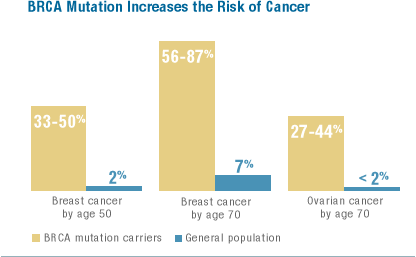
Comment/Additional Resources: For more information regarding HBOC syndrome, genetic testing, genetic counseling & counselors, and genetic risk management, please click the “Genetics” caption tab located at the top of the H*O*P*E* homepage. The BRCA mutation chart above was provided by Myriad Genetics Laboratories, Inc.

Federal Enactment of the 2008 Genetic Information Nondiscrimination Act (GINA) As Law Appears Imminent

“Although nearly 40 states have had individual forms of the legislation in place, with the federal passage of GINA, the message would be unambiguous: the misuse of genetic information resulting in discrimination in employment or health insurance is against the law in all U.S. states.”

“After installing compromises and ‘minor’ changes, including a ‘firewall’ separating the potential liabilities insurers and employers could face, the US Senate last week unanimously passed the Genetic Information Nondiscrimination Act [‘GINA’].

The bill, which seeks to protect individuals’ genetic information from being misused by insurers and employers, now moves to the House, where it is also expected to pass, and then to the White House, where President Bush is expected to sign it into law.

According to American Society of Human Genetics Executive VP Joann Boughman, the Senate version of the bill adopts language appearing in the House bill (HR 493) designed to ‘limit, but not completely prevent,’ employees from suing their employer for being denied insurance based on genetic information obtained by a payor.

The bill exempts employers from liabilities if the employer ‘inadvertently’ garners genetic information through a company-sponsored wellness program, or must request such information in order to monitor biological effects of toxic substances in the workplace. The bill’s language also specifies that ‘an employer, employment agency, labor organization, or joint labor-management committee shall not be considered to be in violation … [for the] use, acquisition, or disclosure of medical information that is not genetic information about a manifested disease, disorder, or pathological condition of an employee or member, including a manifested disease, disorder, or pathological condition that has or may have a genetic basis.’

Industry observers have long said that the lack of legal protections for people’s genetic information deters them from participating in clinical trials for gene-based therapies and tests, which in turn hampers advances in the genetics field.

In an NIH-funded study of families newly -diagnosed with a hereditary cancer syndrome named hereditary non-polyposis colorectal cancer, researchers found that participants consistently asked how their involvement in the study would impact their and their families’ insurance. During the study, ‘it was clear that there was an overwhelming concern, and in some cases, a palpable anxiety about the impact of genetic testing on health insurance,’ Donald Hadley, an associate investigator and a genetic counselor with the National Human Genome Research Institute, said in a 2004 testimony to the HHS Secretary’s Advisory Committee on Genetics, Health, and Society.

‘These concerns dominate our informed consent process and recur session after session with an intensity that opened our eyes to the level of concern that the public feels about genetic discrimination,’ Hadley said in his testimony.

With the expected passage of GINA, academic genetic researchers, diagnostics firms, and pharmacogenomics companies can better assure clinical trial participants that their genetic data will not be used to make insurance or employment decisions, and that they have recourse under the law if their genetic information is abused in such a manner.

GINA is expected to go back to the House of Representatives where it will be aligned with the Senate version of the bill and voted on again. Because GINA has already passed in the House twice with ‘considerable support,’ it is not expected to encounter any problems when the lower chamber votes on it, which can happen as early as this week.

Once it clears the House, GINA is expected to be signed into law ‘in short order,’ Kurt Bardella, press secretary for GINA sponsor Sen. Snowe, told Pharmacogenomics Reporter sister publication GenomeWeb Daily News last week.

In a recent address to the National Institutes of Health, President George Bush said he is willing to sign the bill into law if it passes Congress.

GINA’s Long Haul

Since last summer, after GINA cleared the House the first time by a vote of 420 to 3, the bill has had many detractors. The bill’s main opponent was Senator Coburn, who placed a hold on GINA, citing concern that the bill could potentially increase lawsuits against employers.

Mainly, Coburn wanted the bill to include a ‘firewall’ that would prohibit employees from being able to sue their employers if an insurer denied coverage based on genetic information.

Then in March, in a surprising move, the House passed GINA by a vote of 264 – 148 as part of the Paul Wellstone Mental Health and Addiction Equity Act of 2007 (H.R. 1424), which would require health insurers to cover mental health and substance abuse-related disorders under group health plans.

Attaching GINA to that bill appeared to invite more detractors to the expanded legislation. When the Wellstone bill passed in the House, 11 senators, including Coburn, sent a letter to Democratic leaders in Congress raising concerns about GINA’s ability to ‘maintain current law distinctions between employee benefit disputes … and disputes about civil rights in the employment context.’

Some of GINA’s other detractors, including the US Chamber of Commerce, the National Association of Manufacturers, and the National Retail Federation, shared the Senators’ concerns. These groups, which formed the Genetic Information Non-Discrimination in Employment Coalition, remained optimistic that the group may be appeased with ‘minor technical fixes’ to GINA, according to Michael Eastman, executive director of labor policy at the US Chamber of Commerce.

With GINA’s passage in the Senate, it seems those ‘minor fixes’ are now in place.

Senator Coburn’s office did not return requests for comment on GINA’s passage prior to deadline.

Employer Exemptions

Although the bill would make it unlawful for an employer to obtain genetic information from an employee or a family member in order to make employment decisions, the employer is not held liable for a number of scenarios.

For example, an employer would not be breaking the law if he “inadvertently requests or requires family medical history of the employee or family member of the employee” through a employee-provided wellness program; if the employee provides prior, knowing, voluntary, and written authorization; if the employee and the doctor receive individually identifiable information concerning the results of such services; and if the employer receives genetic information regarding these services in ‘aggregate terms that do not disclose the identity of specific employees.’

The employer is also exempt if genetic information is requested to comply with medical leave laws; if an employer purchases documents that are commercially and publicly available that include family medical history; or where the information involved is to be used for genetic monitoring of the biological effects of toxic substances in the workplace. In the last instance, the employer is required to provide written notice of the genetic monitoring on an employee.

Genetic Alliance President Sharon Terry described the compromise as a product of a “great conversation” between all parties involved and the engagement of the genetics community. She also suggested that the sudden advancement in consumer genetic testing businesses over the past year, and greater discussion in the media about the uses and ethics of such tests, could have helped push the bipartisan effort to pass GINA.

Grassroots Instruction

Expecting GINA to be signed into law, its supporters are now focused on educating physicians and patients regarding their rights.

‘Our challenge now is to make sure that doctors and patients are aware of these new protections so that fear of discrimination never again stands in the way of a decision to take a genetic test that could save a life,’ Kathy Hudson, director of the Genetics and Public Policy Center at Johns Hopkins University.

The pending passage of the bill also was lauded by the Personalized Medicine Coalition, a collection of industry, academic, payor, and other partners. The PMC lauded two of its members, IBM and Eli Lilly, for adding genetic nondiscrimination to their employment policies in advance of GINA’s passage.

‘GINA closes important gaps in the current patchwork of federal and state protections against the misuse of genetic information,’ the PMC said in a statement. ‘Current federal statutes for protecting medical information, including the Health Insurance Portability and Accountability Act, do not prohibit insurers from requiring genetic testing or from denying coverage based on genetic information; and while the Americans with Disabilities Act protects individuals with symptomatic genetic disabilities, it is not clear if it explicitly covers discrimination based on unexpressed genetic susceptibility to disease.’

In the ASHG‘s view, the promulgation of a national genetic anti-discrimination law will help clear up the confusing patchwork of state laws that have emerged.

‘Although nearly 40 states have had individual forms of the legislation in place, with the federal passage of GINA the message would be unambiguous: the misuse of genetic information resulting in discrimination in employment or health insurance is against the law in all US states,’ the ASHG said in a statement.”

[Quoted Source: “Senate Unanimously Passes GINA, Though With‘Compromises’; Now Faces Sympathetic House,” by Turna Ray, Pharmacogenomics Reporter, April 30, 2008.]

Comment: For additional GINA and genetic discrimination information, please refer to the following: (i) “Genetic Information Nondiscrimination Act: 2007-2008,” National Human Genome Research Institute, National Institutes of Health, April 24, 2008; (ii) “Senate Gives GINA Critical Boost Toward Becoming Law,” National Human Genome Research Institute, National Institutes of Health, April 24, 2008; (iii) “Genetic Discrimination” Overview, National Human Genome Research Institute, National Institutes of Health, April 28, 2008; and (iv) “State Genetic Privacy Laws,” National Conference of State Legislatures, January 2008.

Updates:

Jewish Women Change Their Destinies by Testing for Genetic Mutation

“One in 40 Ashkenazi Jews – compared to one in 500 in the general population – carries a mutation that gives women a 50 percent to 85 percent chance of getting breast cancer by the time they are 80. The genetic mutation, discovered in 1994, also increases the likelihood of melanoma and ovarian, prostate or pancreatic cancer. While within the general population about 5 percent of cancers can be attributed to a hereditary syndrome, in the Jewish community, that number is closer to 30 percent. ”

“Erika Taylor didn’t want to know whether she had the breast cancer gene.

‘My thinking was I would never get a prophylactic mastectomy,’ Taylor, 44, said of the idea of removing her breasts as a preventive measure. ‘I just thought it was horrible thing to do to myself, and if I was unwilling to do that, why bother finding out?’

Her grandmother died of breast cancer at 56, and her mother battled and beat the disease in her 30s. Taylor, who is single and the mother of a 14-year-old boy, always suspected cancer was in her future, but taking steps to confirm that was not something she wanted to do. Until she got her own diagnosis.

A routine mammogram last November revealed early stage noninvasive cancer cells in Taylor’s milk ducts, making information about her genetic status vital for determining her treatment.

All of a sudden, the idea of ‘I would never do such a thing’ goes out the window,’ she said. ‘It’s astonishing how quickly you go, ‘OK, OK, what do I need to do? I’ll do it.” Taylor’s mother tested first, and when she was identified as a carrier of the BRCA 2 genetic mutation common in Ashkenazi Jews, Taylor tested next. In January, she found out she, too, carries the gene that makes it likely that even if she were to rid herself of her diagnosed cancer, it would probably recur.

Like a growing number of women, Taylor faced both the gift and the terror of knowledge.

One in 40 Ashkenazi Jews – compared to one in 500 in the general population – carries a mutation that gives women a 50 percent to 85 percent chance of getting breast cancer by the time they are 80. The genetic mutation, discovered in 1994, also increases the likelihood of melanoma and ovarian, prostate or pancreatic cancer. While within the general population about 5 percent of cancers can be attributed to a hereditary syndrome, in the Jewish community, that number is closer to 30 percent.

The good news is that knowledge about how the mutation causes cancer is opening scientific doors to more effective, targeted treatment for those already diagnosed. And people who have the genetic mutation can take preventative measures to drastically reduce their breast and ovarian cancer risk.

Surgery – removal of the breasts and ovaries – reduces the risk of breast cancer by 90 percent, to well below the 13 percent odds of getting breast cancer in the general population. But less-drastic measures, such as drug therapy, removal of just the ovaries and careful screening to catch and cure the cancer at an early stage, can also save lives. Genetic information also helps women feel empowered to take control of other factors that raise risk, such as smoking, alcohol consumption and obesity.

‘The use of genetic information to understand a person’s risk for diseases like cancer is clearly reaping huge benefits,’ said Dr. William Audeh, a medical oncologist with an emphasis on hereditary risk at Cedars-Sinai Medical Center‘s Samuel Oschin Comprehensive Cancer Institute. ‘It’s gone from being a somewhat frightening piece of information that gave people concerns to a hugely important piece of information that empowers people to either take preventative steps that can save their lives or to accurately target therapy if one develops cancer. There is a general understanding that genetic information for cancer is going to be critical for taking the best care of people.’

Knowing she had the genetic mutation sent Taylor, editor of the trade publication, Pool and Spa magazine, into a tailspin of research and soul-searching. Treatment for DCIS (ductal carcinoma in situ) usually consists of removal of the tumor and perhaps radiation. But Taylor’s genetic status put her in a different risk category, and after hearing from four different doctors that her cancer, even if cured, would return, she opted for a double mastectomy and reconstruction. Her surgery is scheduled for May.

Taking the test

While Taylor confirmed her genetic status after a cancer diagnosis, experts encourage people to test before cancer strikes. For Ashkenazi Jews, having just one relative who has had premenopausal breast cancer warrants getting tested, according to geneticists. (For non-Jews, testing is indicated if there are two relatives.) Any history of male breast cancer or any ovarian cancer in the family also raises a red flag, as do multiple cases of melanoma or pancreatic cancer. And women who themselves have early onset breast cancer should be tested, so they can tailor their treatment and inform other family members.

In the last five years, the number of people testing for the BRCA mutation has increased by 50 percent every year, according to Myriad Genetics, which patented the blood test for BRCA about 12 years ago. About 70,000 people tested last year. Myriad recently launched an East Coast direct-marketing campaign for the test.

Of the estimated 600,000 people who carry the gene in the United States, only about 20,000 have been identified. Of those 600,000 carriers, about 150,000 are Jewish, mostly Ashkenazi. Other ethnic groups, such as French Canadians and Filipinas, also have a genetic predisposition, as do some Latina subpopulations – some of which have been traced back to having Jewish genes.

Only about 15 percent of people who test come out with positive results, though the percentage is somewhat higher among Jews. But even a negative result is not entirely reassuring, since it indicates only that the specific mutations were not found. Other as-yet-undiscovered mutations, or other genes, could also cause a heavy incidence of cancer in a family, according to Dr. Ora Gordon, director of the GenRISK adult genetics program at Cedars.

Gordon encourages anyone being tested to see a genetic counselor to get the results properly interpreted and to understand their options if they find out they are carriers.

‘When learning about this for the first time, very frequently people say to themselves, If I’m not going to have surgery, I shouldn’t get this test.” Gordon said. ‘But that would be a tremendous loss in terms of potential reassurance for people who are not carriers and for identifying people who might have a whole variety of other options that might provide very substantial risk reduction.’

Prophylactic bilateral mastectomy – or having both breasts removed before any sign of cancer – seems to be growing in popularity as an option in the United States, though hard statistics are just now being compiled.

One recent study of women with the BRCA mutation and a cancer diagnosis put the rate of mastectomy at 50 percent in the United States, the highest by far of anywhere in the world. In Israel, that number is 2 percent, Gordon said.

In Los Angeles in particular, the numbers seem to be especially high.

Gordon estimates that 65 percent to 70 percent of BRCA-positive women in Cedars’ cancer programs opt for the surgery, some immediately, some after a few years of surveillance. ‘The quantity and quality of medical options makes the surgery more attractive in big cities, and Los Angeles has a high tolerance for breast surgery,’ Gordon said. She is spearheading a study about decision-making among BRCA-positive women at Cedars’ Gilda Radner early detection program, which screens genetically high-risk women for ovarian cancer.

Gordon understands that a woman’s decision about treatment is intertwined with her relationship status, her self-image and how many family members she saw battle or succumb to cancer.

Surgery or surveillance?

‘The decision to take off your breasts is really hard. It’s a part of your body that is associated with your outward appearance, and it’s a part of who you are. It’s a part of your sex life,’ said Joi Morris, who was 41 when she learned she carried the same genetic mutation that gave her mother and grandmother breast cancer at a young age.

Morris remembers a day, not long after she found out, when she really confronted the issue as her sons, then 7 and 10, played at the beach.

‘My kids were in the water and jumping and playing and having a fabulous time, and I looked down at my breasts in my swimming suit and thought, “Oh my God, what would it be like to not have these?'” ‘It’s a seesaw of emotions,’ she said, because at the same time, ‘you wake up every morning, and you know you are at risk, and you wonder if there is something in there you can’t find.’

Morris initially opted for close surveillance – a regimen of regular mammograms, manual exams, ultrasounds and breast MRIs – the most sensitive, noninvasive screening available, used only for high-risk patients. Her first MRI revealed a lump close to her chest wall.

‘I panicked. There is no other way to put it. That lump turned out to be benign, but the whole process was so stressful for me and hard on my family. I just decided if this lump is not cancer, the next one could be,’ Morris said.

She had a prophylactic bilateral mastectomy, with immediate reconstruction. As it turned out, her surgery wasn’t prophylactic at all – pathology revealed pre-cancerous cells scattered throughout both breasts.

Early in the process, Morris turned for support and information to FORCE: Facing Our Risk for Cancer Empowered, an organization that advocates for people at high genetic risk for breast and ovarian cancer.

Today, she is an outreach coordinator for FORCE, helping link women through face-to-face groups and one-on-one pairings as they face life-altering decisions.

‘It was very hard getting those results,’ said Lisa Stein, a 43-year-old mother of two, who found out she has the gene last year. ‘I was trying to prepare for being positive, but I don’t think you ever can. After I got the results, I really struggled. I was feeling raw for a while, crying easily knowing that it was going to be life-changing.’

Stein’s mother died of breast cancer at 57, and her grandmother died of ovarian cancer, but she didn’t test until her older sister, Lauren Rothman, tested positive.

Rothman opted for a mastectomy, but Stein chose to keep her breasts.

‘I think I knew instinctively that I was not going to have a double mastectomy. That felt too radical to me,’ Stein said. ‘I didn’t feel psychologically prepared or that it was necessary. I don’t feel like cancer is imminent; I feel like I have a few years to take it in and think about it and prepare, so I’ve put that decision on hold.’

She goes in for screening every few months, and she said the anxiety of waiting for those results has been manageable.

Both Rothman and Stein had their ovaries removed, however, which doctors are now recommending for women who test positive and who are finished having children or who are over age 35. Removing ovaries not only reduces the risk of ovarian cancer – which is notoriously hard to catch early and thus has a high mortality rate – but it reduces the risk of breast cancer by 50 percent. Stein also went on Tamoxifen, a drug taken by breast cancer survivors to reduce the risk of recurrence and which reduces risk by 50 percent in BRCA-positive women. The birth control pill, which stops the ovaries from cycling, can also reduce the risk of ovarian cancer but requires more vigilant screening for breast cancer.

Both ovary removal and Tamoxifen push women into menopause, with all its emotional, sexual and physiological ramifications.

‘I think of myself as a healthy person but not like I used to – it’s kind of tainted,’ Stein said. ‘It’s an identity issue. I still think of myself as youthful, but suddenly, I’m dealing with instant menopause, and that doesn’t sit well with me. But I’m dealing with it.’

Stein and Rothman provide support for each other, despite the different routes they’ve taken.

‘I came to reality very quickly – and the reality was I wanted to see my children grow up, and I didn’t want cancer, and I didn’t want chemotherapy. I wanted the rest of my life,’ Rothman said. Her daughters were 3 and 5 years old when she had surgery.

Rothman, a program director for Hadassah of Southern California, traveled to New Orleans for her breast procedure – two surgeries and tatoooing – at a small clinic that specializes in natural-tissue reconstruction, where a solid flap of fat is removed from the belly and inserted into the shell of the breast after tissue has been removed. The surgery offers a more natural result than silicone implants, though it is longer and more involved.

‘This procedure has provided me with a new outlook on life. It has taken a huge weight off my shoulder,’ Rothman said. ‘I no longer go into mammograms thinking, “Is this the year I’m going to get cancer like mom?'”

And she loves her new body – she got not only a breast lift but a bonus tummy tuck, too.

Advances in reconstructive techniques mean that women have several options for maintaining a body they can feel proud of.

Decades ago, radical mastectomies removed all the tissue and muscle of the chest wall. Today, the muscle is not removed, and reconstructive surgery, usually at the time of mastectomy, can leave intact the women’s natural skin, but in most cases the nipples and areola are removed. A silicone implant, or, as in Rothman’s case, fat from the abdomen, fills the pocket from which breast tissue was removed. Nipples and areola are tattooed on, or some surgeons use a new technique that leaves a woman’s own nipple and areola intact. Doctors try to bury scars in the fold beneath the breast, though that is not always possible.

But even the most beautifully done reconstructions leave a woman with scars and no sensation in her breasts.

‘When women come to see me, my approach is to listen to them and find out where they are in life and how they relate to their own breasts,’ said Dr. Kristi Funk, a breast surgeon and director of patient education at Cedars’ Brandman Breast Center. ‘Women have different feelings about sexuality and what roles breasts play, and that makes a big difference.’

Funk also finds out about the woman’s relationship status, and how she has been affected by a family history of cancer.

More information, better treatment

Family histories can be deceptive, however. Some families don’t know their medical histories, because they were lost due to the Holocaust or immigration.

The gene also can hide out in male members of a family.

A BRCA 1 gene mutation raises the risk of male breast cancer to 6 percent, and there is no increased risk for other cancers. BRCA 2 mutation also increases the risk for melanoma, prostate and pancreatic cancer. Still, men who carry the gene are likely never to get any cancer, although they have a 50 percent chance of passing the gene to children. Families with few females may never discern any cancer history.

Dora Cohen (not her real name) suspects it was her father who passed the BRCA 1 gene mutation to her. Last year, she was diagnosed with DCIS, a noninvasive cancer, which was treated with a lumpectomy and radiation. Of the many oncologists she saw, only one recommended that as an Ashkenazi woman in her 40s, she probably should have genetic testing.

In the last six months, Dora has had her ovaries, uterus and breasts removed.

Her daughter, Diane (not her real name), who is 27 and has been married for two years, doesn’t want to get tested yet.

‘I see what my mom is going through,’ Diane said. ‘I want to have kids, and I’m not in a place where I would take those measures [mastectomy and removal of the ovaries]. Knowing I’m positive and having that pressure on me would be something very difficult to live with.’

She and her husband of two years have pushed up their plans for children, and she worries that a positive test could jeopardize her medical insurance, especially because she is self-employed.

Federal and California law provide fairly good protection against genetic discrimination from insurers, stipulating that a genetic predisposition cannot be considered a pre-existing condition. But individual policies are not as well protected as group policies.

Still, genetics experts say much of the fear is overblown. They point out that there has been little litigation involving genetic discrimination, and that the insurance industry is open to the reality that genetic testing can lead to better and more cost-effective treatment. Most insurers cover genetic testing, and some genetic counseling – a rapidly growing field.

‘The genetics community has been struggling to help people understand the importance of talking to someone who knows the nuances of genetic testing,’ said Heather Shappell, a genetic counselor and founder of Informed Medical Decisions, which offers over-the-phone genetic counseling.

‘Genetic tests do not always yield a yes-or-no answer,’ Shappell said, ‘and often doctors aren’t sure how to read the results and guide patients through their decisions.’

In August, Aetna extended full coverage for Shappell’s phone-counseling services to its 14 million policyholders.

What geneticists are looking for is an error in the sequencing of the BRCA gene.

All people carry two genes, BRCA 1 and BRCA 2, which prevent cancer by repairing damaged cells. A mutation damages the genes’ repair function, which leads to uncontrolled growth and causes cells to become cancerous.

About 95 percent of Ashkenazi Jews who have the mutation have one of three errors, which means the mutation is easier to find and the test costs much less – about $400, as compared to $3,000 for a test that analyzes the entire gene.

As researchers learn more about how BRCA mutations cause cancer, they are developing targeted treatments.

A clinical trial with sites at Cedars and City of Hope uses a drug called a PARP-inhibitor to shut down the cell’s backup repair function. Normal cells are not affected, because the primary repair pathway is still functioning. But cancerous cells are left with no functioning repair system, so those cells die. Because normal cells are not affected, there are few major side effects.

‘We have a promising situation where you have a treatment which is completely targeted to cancer and leaves the normal cells alone. And that is very different from treatments like chemotherapy, where there is toxicity to every cell,’ said Audeh of Cedars.

Another study in Israel has found that women with ovarian cancer who are BRCA positive respond better to chemotherapy and have a higher survival rate than women who are not carriers, according to Jeff Weitzel at City of Hope. Weitzel, an investigator in the PARP-inhibitor trial, is also working on a study that manipulates hormones to reduce breast density, which makes surveillance through mammography and ultrasound more effective.

In February, the Jerusalem Post reported that doctors for an Orthodox woman undergoing in-vitro fertilization at Hadassah Hospital were able to identify and screen out embryos that had inherited her BRCA mutation. [Jerusalem Post Feb. 2008 article abstract]

A gift of life?

But while such progressive procedures have been generally well received in Israel, there is still social reluctance to test for the gene, especially in traditional circles, where families fear a genetic flaw could hurt the marriageability of their kids.

Debra Nussbaum Stepen, a Los Angeles therapist who now lives in Israel, is trying to break those perceptions. She works as a therapist at a clinic for hereditary breast and ovarian cancer, and she volunteers for Bracha, a Hebrew-language Web site for BRCA carriers.

The name of the site – bracha means blessing and is a play on BRCA – connotes that knowing one’s genetic makeup is a blessing that can save one’s life.

It is a lesson Stepen learned personally.

Her father had several kinds of cancer, including breast cancer, and before he died at 77, Debra urged him to get genetic testing. She was 51 and had never had cancer when she found out she carried the gene.

‘My doctor told me my breasts were ticking time bombs, and I couldn’t go to bed at night knowing that and thinking today am I going to get cancer?’ said Stepen, who has three stepchildren and a new stepgranddaughter.

She observed her father’s first yahrzeit in New Orleans, where she was undergoing the third and last part of a double mastectomy and reconstruction.

‘I said to my husband, in my father’s death he gave me the gift of life,’ Stepen said.

It takes time to reach this comfort level. As Erika Taylor prepares for her surgery in a few weeks, she worries about the ‘gift’ she may give to her son. She and her mom have talked about how irrational that guilt is.

‘I can say to my mom, “You didn’t know. It’s OK. It’s not your fault,’” she said. ‘But when it comes to me and my son, I think how could I have done this to my son. I am in abject horror that I might have passed this on to him. I know it’s irrational, but the whole idea fills me with grief.’

At the same time, she has hope.

‘My grandmother died from breast cancer at 56. My mother almost died of this disease. And I’m not going to even come close to dying,’ Taylor said. ‘My hope for my son, if he has this, is that he may not have to have any medical intervention at all. Maybe they can repair this mutation. The idea that there is trajectory moving in the right direction gives me some comfort and hope.’”

[Quoted Source: “Jewish women change their destinies by testing for genetic mutation,” by Julie Gruenbaum Fax (Jewish Journal of Greater Los Angeles), Texas Jewish Post, April 24, 2008 (emphasis added)]

Comment: For additional information relating to hereditary breast and ovarian cancer with respect to all women (Jewish and Non-Jewish), refer to the following: (i) FORCE: Facing Our Risk of Cancer Empowered; (ii) National Breast and Ovarian Cancer Coalition; (iii) “Clinical Considerations,” Genetic Risk Assessment and BRCA Mutation Testing for Breast and Ovarian Cancer Susceptibility Recommendation Statement, U.S. Preventive Services Task Force (USPSTF), Agency for Healthcare Research & Quality (AHRQ), U.S. Department of Health & Human Services, September 2005; (iv) “Genetics” hyperlinked materials, H*O*P*E* Blog homepage.


Macmillan Cancer Support Launches On-Line Personalized Assessment For Risk of Inherited Breast or Ovarian Cancer

With so many women concerned about the possibility of inherited breast or ovarian cancer, Macmillan Cancer Support launched “OPERA” (On-line Personal Education and Risk Assessment) – the first United Kingdom on-line interactive software program which gives personalized information regarding a woman’s risk with respect to hereditary breast and ovarian cancer. Macmillan Cancer Support is based in London, England and merged with Cancerbackup in April 2008.

Dr Andrea Pithers, Genetic Information Project Manager at Macmillan Cancer Support, says: “By simply typing in some details of your family medical history, OPERA can provide personalised information and advice on whether there might be an inherited genetic link and where to go for further information and support.”

Upon the OPERA launch, Mike Richards, the United Kingdom Government’s National Cancer Director said: “This is an important resource for all those who have concerns over breast and ovarian cancer in their family. For many it will provide reassurance that the risk is not as high as they feared. For others it will provide the information which prompts them to see their GP [General Practitioner] and get tested for the BRCA gene or to be referred appropriately for further genetic assessment.”

Jan Buckle discovered that she inherited a BRCA gene mutation after her sister died of breast cancer and her mother was diagnosed with the same disease. She had her ovaries removed and a double mastectomy with reconstructive surgery as a preventative measure against developing cancer herself. When asked to comment about OPERA, Jan said: “OPERA will be very useful for families like mine, and those who are worried that inherited breast and ovarian cancer runs in their family. It was really important for me to know the risks and to find out if I had the gene so I could make informed decisions on how to prevent breast and ovarian cancer occurring. Knowing your risk from inherited breast or ovarian cancer and getting good advice on what to do is much better than burying your head in the sand and just hoping that you don’t get breast cancer. I urge anyone who has any concerns to go on-line and try OPERA out for themselves.”

For additional resources regarding hereditary breast and ovarian cancer, click on the “Genetics” caption tab located at the top of the H*O*P*E* homepage.

OPERA Genetic Breast/Ovarian Cancer Risk Assessment Tool

[Source: “Macmillan Cancer Support launch on-line personalised assessment for risk of inherited breast or ovarian cancer,” Macmillian Cancer Support Press Release dated April 23, 2008.]