MAGP2 Gene Expression Signature: A Potential Ovarian Cancer Personalized Treatment Target

A multi-institutional study has identified a potential personalized treatment target for the most common form of ovarian cancer. In the December 8 issue of Cancer Cell, the research team describes finding that a gene called MAGP2 – not previously associated with any type of cancer – was overexpressed in papillary serous ovarian tumors of patients who died more quickly. They also found evidence suggesting possible mechanisms by which MAGP2 may promote tumor growth.

A multi-institutional study has identified a potential personalized treatment target for the most common form of ovarian cancer. In the December 8 issue of Cancer Cell, the research team describes finding that a gene called MAGP2 (microfibril-associated glycoprotein 2) – not previously associated with any type of cancer – was overexpressed in papillary serous ovarian tumors of patients who died more quickly. They also found evidence suggesting possible mechanisms by which MAGP2 may promote tumor growth.

Michael Birrer, MD, Ph.D., Professor, Department of Medicine, Harvard Medical School; Director GYN/Medical Oncology, Medicine, Massachusetts General Hospital

“Ovarian cancer is typically diagnosed at an advanced stage when it is incurable, and the same treatments have been used for virtually all patients,” says Michael Birrer, MD, PhD, director of medical gynecologic oncology in the Massachusetts General Hospital (MGH) Cancer Center, and the study’s corresponding author. “Previous research from my lab indicated that different types and grades of ovarian tumors should be treated differently, and this paper now shows that even papillary serous tumors have differences that impact patient prognosis.” Birrer was with the National Institutes of Health when this study began but later joined the MGH Cancer Center.

The fifth most common malignancy among U.S. women, ovarian cancer is expected to cause approximately 15,000 deaths during 2009. Accounting for 60 percent of ovarian cancers, papillary serous tumors are typically diagnosed after spreading beyond the ovaries. The tumors typically return after initial treatment with surgery and chemotherapy, but while some patients die a few months after diagnosis, others may survive five years or longer while receiving treatment.

To search for genes expressed at different levels in ovarian cancer patients with different survival histories, which could be targets for new treatments, the researchers conducted whole-genome profiling of tissue samples that had been microdissected – reducing the presence of non-tumor cells – from 53 advanced papillary serous ovarian cancer tumors. Of 16 genes that appeared to have tumor-associated expression levels, MAGP2 had the strongest correlation with reduced patient survival.

Further analysis confirmed that MAGP2 expression was elevated in another group of malignant ovarian cancer tumors but not in normal tissue. MAGP2 gene expression was also reduced in patients whose tumors responded to chemotherapy. Recombinant expression of MAGP2 in samples of the endothelial cells that line blood vessels caused the cells to migrate and invade normal tissue.  In addition, MAGP2 gene overexpression increased microvessel density — a measurement used to determine the extent of tumor angiogenesis. The latter two observations suggest a potential role for MAGP2 gene overexpression in the growth of an ovarian cancer tumor’s blood supply.

“By confirming that different ovarian tumors have distinctive gene signatures that can predict patient prognosis, this study marks the beginning of individualized care for ovarian cancer,” says Birrer, a professor of Medicine at Harvard Medical School. “MAGP2 and the biochemical pathways it contributes to are definitely targets for new types of therapies, and we plan to pursue several strategies to interfere with tumor-associated pathways. But first we need to validate these findings in samples from patients treated in clinical trials.”

About The Study

Co-lead authors of the Cancer Cell paper are Samuel Mok, M.D., M.D. Anderson Cancer Center, and Tomas Bonome, National Cancer Institute (NCI). Additional co-authors are Kwong-Kowk Wong, M.D. Anderson; Vinod Vathipadiekal, Aaron Bell, Howard Donninger, Laurent Ozbun, Goli Samimi, John Brady, Mike Randonovich, Cindy Pise-Masison, and Carl Barrett, NCI; Michael Johnson, Dong-Choon Park, William Welch and Ross Berkowitz, Brigham and Women’s Hospital; Ke Hao and Wing Wong, Harvard School of Public Health; and Daniel Yip, University of South Florida. The study was supported by grants from the National Institutes of Health, the Ovarian Cancer Research Fund and the National Cancer Institute.

About Massachusetts General Hospital

Massachusetts General Hospital, established in 1811, is the original and largest teaching hospital of Harvard Medical School. The MGH conducts the largest hospital-based research program in the United States, with an annual research budget of more than $600 million and major research centers in AIDS, cardiovascular research, cancer, computational and integrative biology, cutaneous biology, human genetics, medical imaging, neurodegenerative disorders, regenerative medicine, systems biology, transplantation biology and photomedicine.

Sources:

OU’s Non-Toxic Drug Makes Ovarian Cancer Cells Respond To New Treatment & Undergo Cell Suicide

“Cancer researchers at the University of Oklahoma Health Sciences Center have found a way to turn ineffective new cancer drugs into cancer-fighters. By using their patented chemical compound, SHetA2, researchers tricked cancer cells into responding to new treatments and undergoing cell suicide. … [T]he compound will work with several cancers, including lung, kidney, ovarian, colon and pancreatic cancer. … [The] research team … patented the SHetA2 Flex-Het and hope[s] to start clinical trials for the compound within a year. …

Cancer researchers at the University of Oklahoma Health Sciences Center have found a way to turn ineffective new cancer drugs into cancer-fighters. By using their patented chemical compound, SHetA2, researchers tricked cancer cells into responding to new treatments and undergoing cell suicide. The research appears in the journal Gynecologic Oncology.

Doris Mangiaracina Benbrook, Ph.D., is in her lab at the University of Oklahoma Health Sciences Center in Oklahoma City. (Photo: Univ. of Oklahoma Health Sciences Center)

“This discovery means that we can use our non-toxic cancer prevention pill to improve treatment for people who already have cancer,” said Doris Mangiaracina Benbrook, Ph.D., principal investigator on the project. “All studies to date have not found any side effects of taking our drug, giving hope that we can prevent cancer in healthy people, and improve treatment for cancer patients, without increasing toxicity.”

The latest study looked at an upcoming class of cancer treatment drugs that worked well in experimental models, but proved ineffective against many human tumors. Dr. Benbrook and her team decided to test their compound’s ability to “fix” the problem. It worked.

“The new chemotherapy drugs are antibodies that bind to cell surface receptors called ‘Death Receptors.’ The binding of the antibodies activates the death receptors in cancer cells and causes cell suicide with little harm to normal cells. Many cancers, however, are resistant to the antibodies,” Benbrook said. “We’ve shown that SHetA2 treatment can make ovarian and kidney cancer cells sensitive to the death receptor antibodies and kill the cancer.”

Benbrook said the compound will work with several cancers, including lung, kidney, ovarian, colon and pancreatic cancer.

“It would be a significant advancement in health care if we could avoid the severe toxicity and suffering that late stage cancer patients have to experience,” Benbrook said.

The synthetic compound, SHetA2, a Flex-Het drug, was created by Benbrook with the help of chemist Darrell Berlin at Oklahoma State University. The compound directly targets abnormalities in cancer cell components without damaging normal cells. The disruption causes cancer cells to die and keeps tumors from forming.

Flex-Hets or flexible heteroarotinoids are synthetic compounds that can change certain parts of a cell and affect its growth. Benbrook and her research team have patented the SHetA2 Flex-Het and hope to start clinical trials for the compound within a year. If the compound continues to be found safe, it would be developed into a pill to be taken daily like a multi-vitamin to prevent cancer. This new discovery means that the pill also could be used to make patients, who already have cancer, better respond to treatment.

Vodpod videos no longer available.

Sources:

PI3K Pathway: A Potential Ovarian Cancer Therapeutic Target?

…[T]here are several PI3K signaling pathway targeting drugs in clinical development for use against ovarian cancer and solid tumors, including GDC-0941, BEZ235, SF1126, XL-147, XL-765, BGT226, and PX-866.  The results of two recent medical studies suggest that the use of PI3K-targeted therapies may offer an effective therapeutic approach for patients with advanced-stage and recurrent ovarian cancer, including a generally chemotherapy-resistant histological subtype of epithelial ovarian cancer known as “ovarian clear cell cancer” (OCCC).  The targeting of the PI3K pathway in endometrial, ovarian, and breast cancer is also being investigated by a Stand Up To Cancer “Dream Team.” …

PI3K Cellular Signaling Pathway — An Overview
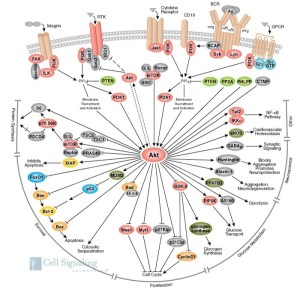
PI3K/AKT cellular signaling pathway (Photo: Cell Signaling Technology(R))

In 2004 and 2005, multiple researchers identified mutations in the PIK3CA  gene with respect to multiple cancers.[1]  The PIK3CA gene encodes the PI3K catalytic subunit p110α. PI3K (phosphoinositide 3- kinase) proteins have been identified in crucial signaling pathways of ovarian cancer cells. PI3Ks are also part of the PI3K-AKT-mTOR signaling pathway which promotes cellular glucose metabolism, proliferation, growth, survival, and invasion and metastasis in many cancers. PIK3CA gene mutations can increase PI3K signaling, thereby activating the PI3K-AKT-mTOR pathway within cancer cells.

As of this writing, there are several PI3K signaling pathway targeting drugs in clinical development for use against ovarian cancer and solid tumors, including GDC-0941, BEZ235, SF1126, XL-147, XL-765, BGT226, and PX-866. [2]  The results of two recent medical studies suggest that the use of PI3K-targeted therapies may offer an effective therapeutic approach for patients with advanced-stage and recurrent ovarian cancer, including a generally chemotherapy-resistant histological subtype of epithelial ovarian cancer known as “ovarian clear cell cancer” (OCCC).  The targeting of the PI3K pathway in endometrial, ovarian, and breast cancer is also being investigated by a Stand Up To CancerDream Team.”

Frequent Mutation of PIK3CA Gene In Recurrent & Advanced Clear Cell Ovarian Cancer

OCCC is one of the five major subtypes of epithelial ovarian cancer. OCCC accounts for only 4% to 12% of epithelial ovarian cancer in Western countries and, for unknown reasons, it comprises more than 20% of such cancers in Japan [3,4,5]. OCCC possesses unique clinical features such as a high incidence of stage I disease, a large pelvic mass, an increased incidence of venous thromboembolic complications, and hypercalcemia. It is frequently associated with endometriosis.  Compared to serous ovarian cancer, OCCC is relatively resistant to conventional platinum and taxane-based chemotherapy. For these reasons, new effective therapies are desperately needed for OCCC.

Researchers from Johns Hopkins and the University of California, Los Angeles (UCLA) analyzed 97 OCCC tumors for genetic sequence mutations in KRAS (v-Ki-ras2 Kirsten rat sarcoma viral oncogene homolog), BRAF (v-raf murine sarcoma viral oncogene homolog B1), PIK3CA (phosphoinositide-3-kinase, catalytic, alpha polypeptide), TP53 (tumor protein p53), PTEN (phosphatase and tensin homolog), and CTNNB1 (Catenin, Beta-1) as these mutations frequently occur in other major types of ovarian cancers.[6] The samples tested included the following:

  • 18 OCCCs for which affinity-purified tumor cells from fresh specimens were available;
  • 10 OCCC tumor cell lines.

Upon test completion, the researchers discovered that sequence mutations of PIK3CA, TP53, KRAS, PTEN, CTNNB1, and BRAF occurred in 33%, 15%, 7%, 5%, 3%, and 1% of OCCC cases, respectively.
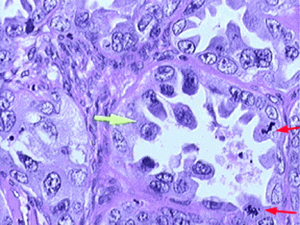
Clear cell carcinoma of the ovary (Photo: Geneva Foundation For Medical Education & Research)

The sequence analysis of the 18 affinity purified OCCC tumors and the 10 OCCC cell lines showed a PIK3CA mutation frequency of 46%. Based upon these findings the researchers concluded that the use of PIK3CA-targeting drugs may offer a more effective therapeutic approach compared with current chemotherapeutic agents for patients with advanced-stage and recurrent OCCC. As noted above, there are several PI3K-targeting drugs in clinical development for use against ovarian cancer and solid tumors.[2]

Notably, one of the researchers involved with this OCCC study is Dennis J. Slamon, M.D., Ph.D. Dr. Slamon serves as the Director of Clinical/Translational Research, and as Director of the Revlon/UCLA Women’s Cancer Research Program at the Jonsson Comprehensive Cancer Center. Dr. Slamon is also a professor of medicine, chief of the Division of Hematology/Oncology and Executive Vice Chair of Research for UCLA’s Department of Medicine. Dr. Slamon is a co-discoverer of the breast cancer drug Herceptin®. Herceptin is a monoclonal antibody targeted therapy used against HER-2 breast cancer, an aggressive breast cancer subtype that affects 20% to 30% of women with the disease. Herceptin’s development was based, in part, upon the unique genetic profile of HER-2 breast cancer as compared to other forms of breast cancer. Herceptin® revolutionized the treatment of HER-2 postive breast cancer and is recognized worldwide as the standard of care for that subtype of breast cancer.  The approach taken by Johns Hopkins and UCLA researchers in this study — the identification of  a subtype within a specific form of cancer that may be susceptible to a targeted therapy —  bears a striking similarity to the overarching approach taken in the development of Herceptin®.

Ovarian Cancer & Other Solid Tumors With PIK3CA Gene Mutations Respond To PI3K-AKT-mTOR Pathway Inhibitors In Phase I Clinical Testing.

Testing patients with cancer for PIK3CA gene mutations is feasible and may allow targeted treatment of the PI3K-AKT-mTOR cellular signaling pathway, according to the results of a University of  Texas, M.D. Anderson Cancer Center study presented on November 17, 2009 at the 2009 AACR (American Association for Cancer Research)-NCI (National Cancer Institute)-EORTC (European Organization For Research & Treatment of Cancer) International Conference on Molecular Targets and Cancer Therapeutics.[7]
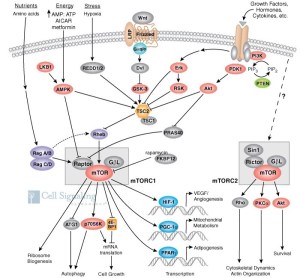
mTOR cellular signaling pathway (Photo: Cell Signaling Technology(R))

Filip Janku, M.D., Ph.D, a clinical research fellow with the M.D. Anderson Cancer Center’s department of investigational cancer therapeutics, and colleagues conducted a mutational analysis of exon 9 and exon 20 of the PI3KCA gene using DNA from the tumors of patients referred to targeted therapy clinical trials. Patients with PIK3CA mutations were preferably treated whenever possible with regimens utilizing PI3K-AKT-mTOR signaling pathway inhibitors.

As part of this study 117 tumor samples were analyzed. PIK3CA mutations were detected in 14 (12%) patients.  In tumor types with more than 5 patients tested, PIK3CA mutations were identified in endometrial cancer (43%, 3 out of 7 patients), ovarian cancer (22%, 5 out of 23 patients), squamous head and neck cancer (14%, 1 out of 7 patients), breast cancer (18%, 2 out of 11 patients), and colon cancer (15%, 2 out of 13 patients). No mutations were identified in patients with melanoma or cervical cancer.

Of the 14 patients found to possess PIK3CA mutations, 10 were treated based upon a clinical trial protocol that included a drug targeting the PI3K-AKT-mTOR pathway.  A partial response to treatment was experienced by 4 (40%) patients. Although the total number of patients is small, there were 2 (67%) patient responses in 3 endometrial cancer cases, 1 (25%) patient response in 4 ovarian cancer cases, 1 (100%) patient response in 1 breast cancer, and no patient response in 1 colorectal cancer case.  Although the total number of study patients is small, the researchers conclude that the response rate appears high (40%) in tumors with PIK3CA mutations treated with PI3K-AKT-mTOR pathway inhibitors.

“The implications of this study are twofold,” said Dr. Janku.  “We demonstrated that PIK3CA testing is feasible and may contribute to the decision-making process when offering a patient a clinical trial. Although this study suffers from low numbers, the response rate observed in patients treated with inhibitors of PI3K/AKT/mTOR pathway based on their mutational status was well above what we usually see in phase-1 clinical trials.”  “These results are intriguing but at this point should be interpreted with caution,” said Janku. “The promising response rate needs to be confirmed in larger groups of patients. We expect to learn more as this project continues to offer PIK3CA screening to patients considering a phase-1 clinical trial.”

Stand Up 2 Cancer Dream Team: Targeting the PI3K Pathway in Women’s Cancers

The potential importance of the PI3K pathway in the treatment of ovarian cancer is emphasized by the two medical studies above.  This issue is also receiving considerable attention from one of the Stand Up 2 Cancer (SU2C) “Dream Teams,” which is going to evalute  the potential for targeting the PI3K pathway in women’s cancer.  SU2C assigned $15 million of cancer research funding to this critical issue.  The scientists involved in this SU2C Dream Team are the pioneers who discovered the PI3K pathway and validated its role in human cancers, and they will focus on breast, ovarian and endometrial cancers, all of which possess the PI3K mutation.

The leader and co-leaders of the PI3K pathway SU2C team are set forth below.

Leader:

Lewis C. Cantley, Ph.D., Director, Cancer Center at Beth Israel Deaconess Medical Center.

Co-Leaders:

Charles L. Sawyers, M.D., Director, Human Oncology and Pathogenesis Program, Memorial Sloan-Kettering Cancer Center.

Gordon B. Mills, M.D., Ph.D., Chair, Department of Systems Biology, University of Texas, M.D. Anderson Cancer Center.

The specific SU2C Dream Team research goal with respect to targeting the PI3K pathway in women’s cancers is stated as follows:

The PI3K pathway is mutated in more cancer patients than any other, and these mutations are the most frequent events in women’s cancers, making it an attractive molecular target for agents that inhibit these genetic aberrations. If successful, this project will allow clinicians to use biomarkers and imaging techniques to predict which patients will benefit from PI3K pathway inhibitors and lead to the development of therapeutic combinations that will hit multiple targets in the complex pathways that contribute to cancer cell growth.  This work will help assure that these therapies are given to patients who will benefit from them, and it will also increase the overall pace of clinical trials targeting PI3K inhibitors.

Based upon the two studies discussed, and the creation and funding of the SU2C Dream Team for the purpose of targeting the PI3K pathway in women’s cancer, the future holds great promise in the battle against ovarian cancer (including OCCC).  It is our hope that more clinical study investigators will offer PI3K pathway mutation screening to all ovarian cancer patient volunteers.  Libby’s H*O*P*E*™ will continue to monitor the clinical development of PI3K pathway inhibitors, and make our readers aware of all future developments.

________________________________

References:

1/Yuan TL, Cantley LC. PI3K pathway alterations in cancer: variations on a theme. Oncogene. 2008 Sep 18;27(41):5497-510. PubMed PMID: 18794884
Samuels Y, Ericson K. Oncogenic PI3K and its role in cancer. Curr Opin Oncol. 2006 Jan;18(1):77-82. PubMed PMID: 16357568.
Levine DA, Bogomolniy F, Yee CJ, et. al. Frequent mutation of the PIK3CA gene in ovarian and breast cancers. Clin Cancer Res. 2005 Apr 15;11(8):2875-8. PubMed PMID: 15837735.
Samuels Y, Wang Z, Bardelli A, et. al. High frequency of mutations of the PIK3CA gene in human cancers. Science. 2004 Apr 23;304(5670):554. Epub 2004 Mar 11. PubMed PMID: 15016963.

2/For open ovarian cancer clinical trials using a PI3K-targeted therapy; CLICK HERE; For open solid tumor clinical trials using a PI3K-targeted therapy, CLICK HERE.

3/ Itamochi H, Kigawa J & Terakawa N.  Mechanisms of chemoresistance and poor prognosis in ovarian clear cell carcinoma. Can Sci 2008 Apr;99(4):653-658. [PDF Document]

4/Schwartz DR, Kardia SL, Shedden KA, et. alGene Expression in Ovarian Cancer Reflects Both Morphology and Biological Behavior, Distinguishing Clear Cell from Other Poor-Prognosis Ovarian CarcinomasCan Res 2002 Aug; 62, 4722-4729.

5/Sugiyama T & Fujiwara K.  Clear Cell Tumors of the Ovary – Rare Subtype of Ovarian Cancer, Gynecologic Cancer, American Society of Clinical Oncology (ASCO) Educational Book, 2007 ASCO Annual Meeting, June 2, 2007 (Microsoft Powerpoint presentation).

6/Kuo KT, Mao TL, Jones S, et. al. Frequent Activating Mutations of PIK3CA in Ovarian Clear Cell Carcinoma. Am J Pathol. 2009 Apr 6. [Epub ahead of print]

7/Janku F, Garrido-Laguna I, Hong D.S.  PIK3CA mutations in patients with advanced cancers treated in phase I clinical trials, Abstract #B134, Molecular Classification of Tumors, Poster Session B, 2009 AACR-NCI-EORTC Molecular Targets and Cancer Therapeutics Conference. [PDF Document].


UCLA Researchers Significantly Inhibit Growth of Ovarian Cancer Cell Lines With FDA-Approved Leukemia Drug Dasatinib (Sprycel®)

The drug dasatinib (Sprycel®), approved for use by the U.S. Food and Drug Administration in patients with specific types of leukemia, significantly inhibited the growth and invasiveness of ovarian cancer cells and also promoted their death, say UCLA researchers in the November 10th issue of the British Journal of Cancer. The drug, when paired with a chemotherapy regimen, was even more effective in fighting ovarian cancer cell lines in which signaling of the Src family kinases — associated with approximately one-third of ovarian cancers– is activated. Clinical trials that involve the testing of dasatinib against ovarian cancer and solid tumors are currently ongoing.

Researchers affiliated with the University of California, Los Angeles (UCLA), Mayo Clinic and Harvard Medical School announced that they have established a biological rationale to support the clinical study of the U.S. Food & Drug Administration (FDA)-approved leukemia drug dasatinib (U.S. brand name: Sprycel®), either alone or in combination with chemotherapy, in patients with ovarian cancer. The study appears in the November 10th edition of the British Journal of Cancer.

Background

Dasatinib is an FDA-approved drug for the treatment of chronic myeloid leukemia (CML) and Philadelphia chromosome positive acute lymphoblastic leukemia (ALL). Dasatinib is a small-molecule inhibitor that targets several tyrosine kinases, including the Src kinase family, Ephrin type-A receptor 2 ( EphA2) , and the focal adhesion kinase (FAK).

Src is the prototypic member of a family of nine non-receptor tyrosine kinases (Src, Lyn, Fyn, Lck, Hck, Fgr, Blk, Yrk, and Yes). The Src family kinase (SFK) proteins regulate four main cellular fuctions that ultimately control the behavior of transformed cancer cells:  cell proliferation, adhesion, invasion, and motility.

Eph receptors and ephrins are integral players in cancer formation and progression, and are associated with advanced ovarian cancer and poor clinical outcome.

FAK is a non-receptor tyrosine kinase involved in the regulation of cell adhesion, survival, and migration.  Preclinical studies indicate that FAK plays a signficant role in ovarian cancer cell migration and invasion.

Dasatinib Study Methodology & Findings

slamon1

One of the dasatinib study authors is Dennis J. Slamon, M.D. Ph.D. Dr. Slamon is the Director of Clinical/Translational Research & Director of the Revlon/UCLA Women's Cancer Research Program, at the UCLA Jonsson Comprehensive Cancer Center. He is also the co-discoverer of Herceptin®, a targeted therapy that revolutionized the treatment of HER-2 positive breast cancer.

The researchers carried out the study by testing the effects of dasatinib on human ovarian cancer cells in vitro, using a panel of 34 established human ovarian cancer cell lines.  The 34 cell lines selected were representative of the major epithelial ovarian cancer subtypes:

On this basis, the researchers examined the effects of dasatinib on ovarian tumor cell proliferation, invasion, apoptosis, and cell-cycle arrest.  To more fully understand the activity of dasatinib, the researchers also studied the efficacy of chemotherapeutic drugs (i.e., carboplatin and paclitaxel) in combination with dasatinib against ovarian cancer cells that were previously determined to be dasatinib-sensitive.

The overarching goals of the study were (i) to provide a rationale to test dasatinib as a single agent or in combination with chemotherapy in patients with ovarian cancer, and (ii) to identify molecular markers that may help define subsets of ovarian cancer patients most likely to benefit from treatment with dasatinib.

Significant findings reported in the dasatinib study are summarized below.

  • Concentration-dependent, anti-proliferative effects of dasatinib were seen in all ovarian cancer cell lines tested.
  • Dasatinib significantly inhibited tumor cell invasion, and induced tumor cell death, but was less effective in causing tumor cell-cycle arrest.
  • At a wide range of clinically achievable drug concentrations, additive and synergistic interactions were observed for dasatinib plus carboplatin or paclitaxel.
  • 24 out of 34 (71%) representative ovarian cancer cell lines were highly sensitive (i.e.,  ≥ 60% growth inhibition) to dasatinib.
  • 6 cells lines were moderately sensitive (i.e., 40% – 59% growth inhibition) to dasatinib.
  • 4 cell lines were resistant (i.e., < 40% growth inhibition) to dasatinib.
  • When comparing dasatinib sensitivity between cell lines based solely upon histological subtype (i.e., serous papillary, clear cell, endometrioid, mucinous, and undifferentiated ovarian cancer cell lines), no single histological subtype was more sensitive than another.
  • Ovarian cancer cell lines with high expression of Yes, Lyn, Eph2A, caveolin-1 and 2, moesin, annexin-1 and 2 and uPA (urokinase-type Plasminogen Activator), as well as those with low expression of IGFBP2 (insulin-like growth factor binding protein 2), were particularly sensitive to dasatinib.
  • Ovarian cancer cell lines with high expression of HER-2 (Human Epidermal growth factor Receptor 2), VEGF (Vascular endothelial growth factor) and STAT3 (Signal Transducer and Activator of Transcription 3) were correlated with in vitro resistance to dasatinib.

Based upon the findings above, the researchers concluded that there is a clear biological rationale to support the clinical study of dasatinib, as a single agent or in combination with chemotherapy, in patients with ovarian cancer.

Konecny

Gottfried E. Konecny, M.D., UCLA Assistant Professor of Hematology/Oncology, UCLA Jonsson Comprehensive Cancer Center Researcher & First Author of the Dasatinib Study

Ovarian cancer, which will strike 21,600 women this year and kill 15,500, causes more deaths than any other cancer of the female reproductive system. Few effective therapies for ovarian cancer exist, so it would be advantageous for patients if a new drug could be found that fights the cancer, said Gottfried E. Konecny, M.D., a UCLA assistant professor of hematology/oncology, a Jonsson Comprehensive Cancer Center researcher, and first author of the study.

“I think Sprycel® could be a potential additional drug for treating patients with Src dependent ovarian cancer,” Konecny said. “It is important to remember that this work is only on cancer cell lines, but it is significant enough that it should be used to justify clinical trials to confirm that women with this type of ovarian cancer could benefit.”

Recent gene expression studies have shown that approximately one-third of women have ovarian cancers with activated Src pathways, so the drug could potentially help 7,000 ovarian cancer patients every year. Notably, a gene expression study published in 2007 reported Src activation in approximately 50% of the ovarian cancer tumors examined.

In the dasatinib study, the UCLA team tested the drug against 34 ovarian cancer cell lines and conducted genetic analysis of those lines. Through these actions, the researchers were able to identify genes that predict response to dasatinib. If the work is confirmed in human studies, it may be possible to test patients for Src activation and select those who would respond prior to treatment, thereby personalizing their care.

“We were able to identify markers in the pre-clinical setting that would allow us to predict response to Sprycel®,” Konecny said. “These may help us in future clinical trials in selecting patients for studies of the drug.”

Dasatinib is referred to as a “dirty” kinase inhibitor, meaning it inhibits more than one cellular pathway. Konecny said it also inhibits the focal adhesion kinase (FAK) and ephrin receptor, also associated with ovarian cancer, in addition to the Src cellular pathway.

The next step, Konecny said, would be to test the drug on women with ovarian cancer in a clinical trial. The tissue of responders would then be analyzed to determine if the Src and other pathways were activated. If that is confirmed, it would further prove that dasatinib could be used to fight ovarian cancer. In studies, women would be screened before entering a trial and only those with Src dependent cancers could be enrolled to provide further evidence, Konecny said, much like the studies of the molecularly targeted breast cancer drug Herceptin® enrolled only women who had HER-2 positive disease.

“Herceptin® is different because we knew in advance that it only worked in women with HER-2 [gene] amplification,” he said. “In this case, we don’t clearly know that yet. The data reassures us that the drug works where the targets are over-expressed but we need more testing to confirm this.”

The tests combining the drug with chemotherapy are significant because chemotherapy, namely carboplatin and paclitaxel, is considered the standard first line treatment for ovarian cancer patients following surgery. Because dasatinib proved to have a synergistic effect when combined with chemotherapy, it may be possible to add this targeted therapy as a first line treatment if its efficacy is confirmed in future studies.

Dasatinib Study Significance

The dasatinib study is potentially significant to the area of ovarian cancer treatment for several reasons.

First, although this study only tested dasatinib in vitro against ovarian cancer cell lines, the drug is already FDA-approved.  Accordingly, the general safety of the drug has already been established by the FDA.

Second, 71% of the ovarian cancer lines were highly sensitive to dasatinib.

Third, dasatinib was additive to, or synergistic with, the standard of care chemotherapy drugs used in first line ovarian cancer treatment, i.e., carboplatin and paclitaxel.

Fourth, the study established molecular markers that may be predictive of dasatinib effectiveness in particular patients.  In theory, a patient’s tumor biopsy could be tested for the presence of those molecular markers to determine whether a patient will benefit from dasatinib.

Fifth, one of the dasatinib study authors is Dennis J. Slamon, M.D. Ph.D. Dr. Slamon is the director of Clinical/Translational Research, and director of the Revlon/UCLA Women’s Cancer Research Program, at the UCLA Jonsson Comprehensive Cancer Center. Dr. Slamon is also the co-discoverer of Herceptin®, a targeted therapy that revolutionized the treatment of HER-2 positive breast cancer.  Herceptin® is a targeted therapy that kills HER-2 positive breast cancer cells while leaving normal cells unaffected.  The potential use of dasatinib to treat select ovarian cancer patients who test “positive” for specific molecular markers (e.g., Src cellular pathway activation) is similar to the extremely successful drug development approach used for Herceptin®.

Open Clinical Trials Testing Dasatinib (Sprycel®) Against Ovarian Cancer & Solid Tumors

As of this writing, there are several open (i.e., recruiting) clinical trials that involve testing dasatinib against ovarian cancer and solid tumors.

For a list of open clinical trials that involve testing dasatinib against ovarian cancer, CLICK HERE.

For a list of open clinical trials that involve testing dasatinib against solid tumors, CLICK HERE.

All potential volunteers must satisfy the clinical trial entrance criteria prior to enrollment.  Depending on the drug combination being tested, one or more of the solid tumor clinical trials may not be appropriate for an ovarian cancer patient.

About the UCLA Jonsson Comprehensive Cancer Center

UCLA’s Jonsson Comprehensive Cancer Center (JCCC) has more than 240 researchers and clinicians engaged in disease research, prevention, detection, control, treatment and education. One of the nation’s largest comprehensive cancer centers, JCCC is dedicated to promoting research and translating basic science into leading-edge clinical studies. In July 2009, JCCC was named among the top 12 cancer centers nationwide by U.S. News & World Report, a ranking it has held for 10 consecutive years. For more information on JCCC, visit the website at http://www.cancer.ucla.edu.

Sources:

Women Often Opt to Surgically Remove Their Breasts, Ovaries to Reduce Cancer Risk

Many women at high risk for breast or ovarian cancer are choosing to undergo surgery as a precautionary measure to decrease their cancer risk, according to a report in Cancer Epidemiology, Biomarkers & Prevention, a journal of the American Association for Cancer Research.

PHILADELPHIA – Many women at high risk for breast or ovarian cancer are choosing to undergo surgery as a precautionary measure to decrease their cancer risk, according to a report in Cancer Epidemiology, Biomarkers & Prevention, a journal of the American Association for Cancer Research.

Gareth

Dr. Gareth Evans is an international authority on cancer genetics. Dr. Evans is the Chairman of the National Institute For Health & Clinical Excellence (NICE) familial breast cancer group; Chairman, Cancer Genetics Group & Council Member, British Society of Human Genetics; Consultant, Genesis Prevention Center, Univ. Hospital of South Manchester NHS Trust; Professor, Univ. of Manchester, UK

“Women have their breasts or ovaries removed based on their risk.

Claudine_2009_July_(photo_credit_Phil_Humnicky,_Georgetown)

Dr. Claudine Isaacs is an Associate Professor of Medicine, Director of the Familial Cancer Registry Shared Resource, Director of the Clinical Breast Cancer Program, and the Co-Medical Director of the Fisher Center for Familial Cancer Research at the Lombardi Comprehensive Cancer Center, Georgetown Univ., Washington, D.C. (photo credit: Phil Humnicky, Georgetown Univ.)

It does not always happen immediately after counseling or a genetic test result and can take more than seven years for patients to decide to go forward with surgery,” said lead researcher D. Gareth Evans, M.D. Evans is a consultant in clinical genetics at the Genesis Prevention Center, University Hospital of South Manchester NHS Trust and a professor at the University of Manchester, United Kingdom.

Evans and colleagues assessed the increase in risk-reduction surgery among women with breast cancer and evaluated the impact of cancer risk, timing and age.

Rate of increase was measured among 211 women with known unaffected BRCA1 or BRCA2 mutation carriers. BRCA1 and BRCA2 are hereditary gene mutations that indicate an increased risk for developing breast cancer. Additionally, more than 3,500 women at greater than 25 percent lifetime risk of breast cancer without mutations also had a documented increase in risk-reduction surgery.

Women who had a biopsy after undergoing risk evaluation were twice as likely to choose a risk-reducing mastectomy. Forty percent of the women who were mutation carriers underwent bilateral risk-reducing mastectomy; 45 percent had bilateral risk-reducing salpingo-oophorectomy (surgical removal of ovaries). These surgeries are widely used by carriers of BRCA1 and BRCA2 gene mutations to reduce the risk for breast and ovarian cancer.

Evaluated by gene type, bilateral risk-reducing salpingo-oophorectomy was more common in women who were BRCA1 gene carriers – 52 percent had the surgery compared with 28 percent of the women who were BRCA2 gene carriers.

“We found that older women were much less likely to have a mastectomy, but were more likely to have their ovaries removed,” said Evans.

Most of the women, specifically those aged 35 to 45 years, opted for surgery within the first two years after the genetic mutation test, but some did not make a decision until seven years later.

“This is a very interesting study. It fleshes out some of what we know about adoption of risk reduction strategies in high-risk women who have participated in a very comprehensive and well thought-out genetic counseling, testing and management program,” said Claudine Isaacs, M.D., an associate professor of medicine and co-director of the Fisher Center for Familial Cancer Research, Lombardi Comprehensive Cancer Center at Georgetown University.

BRCA1 and BRCA2 mutation carriers have a very high lifetime risk of cancer, and for BRCA1 carriers there are unfortunately no clearly proven non-surgical prevention strategies, according to Isaacs. These women face a 50 to 85 percent lifetime risk of breast cancer, and mastectomy is currently the most effective prevention method available.

The findings confirm the expectations that when a woman has a biopsy, even if benign, most are more likely to opt for risk-reduction surgery.

“Screening should be conducted at a place with expertise in an effort to minimize false-positive results, which often lead to biopsy. This will minimize the anxiety that comes along with such a diagnosis. Patients should consult with an expert in advance and stay in contact with them to see how the science may be changing over time,” she advised. “This is an ongoing conversation that needs to be addressed and individualized for each patient.”

Likewise, Evans suggested that additional studies are needed to help evaluate the communication efforts and methods between doctors and/or counselors and women at risk for breast cancer. Questions to be raised should include how is the communication method occurring, are the doctors sympathetic and is there an ongoing dialogue?

“Careful risk counseling does appear to influence women’s decision for surgery although the effect is not immediate,” the researchers wrote.

References:

Young Early-Stage Ovarian Cancer Patients Can Preserve Fertility

A new study finds that young women with early-stage ovarian cancer can preserve future fertility by keeping at least one ovary or the uterus without increasing the risk of dying from the disease. The study is published in the September 15, 2009 issue of CANCER, a peer-reviewed journal of the American Cancer Society.

A new study finds that young women with early-stage ovarian cancer can preserve future fertility by keeping at least one ovary or the uterus without increasing the risk of dying from the disease. The study is published in the September 15, 2009 issue of CANCER, a peer-reviewed journal of the American Cancer Society.

fertility

... “Given the potential reproductive and nonreproductive benefits of ovarian and uterine preservation, the benefits of conservative surgical management should be considered in young women with ovarian cancer” ...

Most cases of ovarian cancer are diagnosed at later stages and in older women. However, up to 17 percent of ovarian tumors occur in women 40 years of age or younger, many of whom have early stage disease. Surgery for ovarian cancer usually involves complete removal of the uterus (hysterectomy) and ovaries, which not only results in the loss of fertility, but also subjects young women to the long-term consequences of estrogen deprivation.

Jason Wright

Jason Wright, M.D., Assistant Professor, OB/GYN, Columbia University College of Physicians & Surgeons, New York City, NY

Researchers led by Jason Wright, M.D., of Columbia University College of Physicians and Surgeons in New York City conducted a study to examine the safety of fertility-conserving surgery in premenopausal women with ovarian cancer. This type of surgery conserves at least one ovary or the uterus.

The investigators analyzed data from women 50 years of age or younger who were diagnosed with early stage (stage I) ovarian cancer between 1988 and 2004 and who were registered in the National Cancer Institute’s Surveillance, Epidemiology and End Results database, a population-based cancer registry that includes approximately 26 percent of the US population. Patients who had both of their ovaries removed were compared with those who had only the cancerous ovary removed. A second analysis examined uterine conservation verus hysterectomy.

For their first analysis, the researchers identified 1,186 ovarian cancer patients. While most had both ovaries removed, about one in three (36 percent) had one ovary conserved. They found those in whom one ovary was saved had similar survival for up to at least five years.

To examine the effect of uterine preservation, the investigators studied a total of 2,911 women. While most of the women underwent hysterectomy, about one in four (23 percent) had uterine preservation. Uterine preservation also had no effect on survival.

Women who were younger, who were diagnosed in more recent years, and who resided in the eastern or western United States were more likely to undergo ovarian or uterine conservation.

These results are promising for the many young women who are diagnosed with ovarian cancer each year. An estimated 21,650 women in the United States were diagnosed with the disease in 2008. “Given the potential reproductive and nonreproductive benefits of ovarian and uterine preservation, the benefits of conservative surgical management should be considered in young women with ovarian cancer,” the authors concluded.

Source:  Wright JD, Shah M, Mathew L, et. al.  Fertility preservation in young women with epithelial ovarian cancer. CANCER; Published Online: August 10, 2009 (DOI: 10.1002/cncr.24461); Print Issue Date: September 15, 2009.

Comment: The key to this study is the concept that fertility preservation “should be considered in young women with ovarian cancer.”  As part of this consideration, the patient’s subtype of ovarian cancer may play an important role as well.  For example, a diagnosis of ovarian clear cell adenocarcinoma (OCCA) in a young adult woman should create a moment of pause in regard to fertility-sparing. The OCCA subtype of epithelial ovarian cancer can be extremely chemoresistant (even during first-line treatment), especially if the tumor histology indicates that the tumor possesses a dominant clear cell component or is a pure form of OCCA.  In addition, OCCA is a rare form of epithelial ovarian cancer in women worldwide (with the exception of Japanese foreign nationals). My hypothetical does not mean that fertility sparing should not be considered in the event of a OCCA diagnosis, it simply means that each woman should carefully discuss fertility-sparing with her board-certified gynecologic oncologist based upon the specific facts of her case, including tumor histology.

Novel Targeted Gene Therapies Use Diphtheria Toxin To Fight Ovarian Cancer; One Clinical Trial Underway

Two separate research teams reported promising results last week based upon preclinical studies involving the use of diphtheria toxin to fight ovarian cancer. … A targeted gene therapy was utilized in both studies, wherein a gene fragment capable of producing diptheria toxin was combined with a nanoparticle which was targeted against a unique or overexpressed genetic characteristic of the ovarian cancer tumor cells. Both research teams reported significant reduction in ovarian cancer tumor mass and extended survival for the treated mice. Based upon these findings, one research team already announced the opening of a Phase I/II clinical trial which will test the novel therapy on patients with advanced stage ovarian cancer.

Targeted Gene Therapy In the Fight Against Ovarian Cancer

The peritoneal cavity is a common site of ovarian cancer and accompanying ascites caused by the disease. Ascites is an abnormal buildup of fluid in the peritoneal cavity that causes swelling.  Malignant tumor cells may be found in the ascites fluid in connection with late stage ovarian cancer.  Massive ascites and the related abdominal distention can cause anorexia, nausea, vomiting and respiratory difficulties, and negatively impact the patient’s quality of life. Ovarian cancer patients frequently experience disease involvement of the pelvic and retroperitoneal lymph nodes as well. The standard primary treatment of patients with advanced stage ovarian cancer is cytoreductive surgery followed by platinum drug and taxane drug doublet chemotherapy. Despite this aggressive approach, there is a high rate of disease recurrence. Although discovery of several other active nonplatinum cytotoxic agents has improved outcome, long-term survival rates are low. Success of traditional chemotherapy has been limited by drug resistance and lack of specificity with respect to disease formation and progression. Thus, novel “targeted” ovarian cancer therapies that achieve improved long-term disease control with lower toxicity are desperately needed.

A so-called “targeted therapy” utilizes drugs or other medically manufactured substances (e.g., small molecule drugs or monoclonal antibodies) to block the growth and spread of cancer by interfering with specific molecules involved in cancer tumor growth and progression.  By identifying and selectively focusing upon molecular and cellular changes or unique genetic characteristics that are specific to cancer, targeted cancer therapies may be more effective than other types of treatment, including chemotherapy, and less harmful to normal cells.

It is possible for a targeted therapy to incorporate a gene therapy. Gene therapy is an experimental treatment that involves the introduction of genetic material (DNA or RNA) into a human cell to fight a disease such as cancer.  When both therapeutic approaches are combined by researchers, a “targeted gene therapy” is the result.  A targeted gene therapy is an attractive approach to controlling or killing human cancer cells only if the therapy can selectively identify and exploit the genetic and epigenetic alterations in cancer cells, without harming normal cells that do not possess such alternations.

Two separate research groups reported promising results last week based upon preclinical studies involving the use of diphtheria toxin to fight ovarian cancer.  The toxin is produced by a deadly bacterium (Corynebacterium diphtheriae).  A targeted gene therapy was utilized in both studies, wherein a gene fragment capable of producing diptheria toxin was combined with a nanoparticle which was targeted against a unique or overexpressed genetic characteristic of the ovarian cancer tumor cells.  Both research teams reported significant reduction in ovarian cancer tumor mass and extended survival for the treated mice. Based upon these findings, one research team already announced the opening of a Phase I/II clinical trial which will test the novel therapy on patients with advanced stage ovarian cancer.

MIT-Lankenau Institute Researchers Use Diphtheria Toxin Gene Therapy To Target Overexpression Of The MSLN & HE4 Ovarian Cancer Genes.

anderson

Daniel Anderson, Ph.D., Research Associate, David H. Koch Institute for Integrative Cancer Research, Massachusetts Institute of Technology

The first study, which appears in the August 1 issue of the journal Cancer Research, was conducted by a team of researchers from the Massachusetts Institute of Technology (MIT) and the Lankenau Institute of Medical Research (Lankenau Institute). In this study, the researchers used a nanoparticle as a delivery vehicle (or vector) for DNA that encodes a diphtheria toxin suicide protein (DT-A).  The novel nanoparticles are made with positively charged, biodegradable polymers known as poly(beta-amino esters). When mixed together, these polymers can spontaneously assemble with DNA to form nanoparticles. The polymer-DNA nanoparticle can deliver functional DNA when injected into or near the targeted tissue.

The nanoparticle carrying the DT-A is designed to target overexpression of two genes (mesothelin (MSLN) and HE4 (or WFDC2)) that are highly active in ovarian tumor cells, but not in normal cells. Once inside an ovarian cancer tumor cell, the DT-A disrupts the tumor cell’s ability to manufacture critical life sustaining proteins, thereby causing cell death.  Accordingly, the choice of the DT-A fragment of a diptheria toxin gene ensures high ovarian cancer cell killing activity.  It also avoids unintended toxicity to normal cells because the DT-A released from destroyed ovarian cancer cells is not able to enter normal neighboring tissue cells in the absence of the DT-B fragment which was excluded from the original nanoparticle delivery system or vector.

As part of this study, researchers administered DT-A nanoparticles directly into the peritoneal cavity – which encases abdominal organs such as the stomach, liver, spleen, ovaries and uterus – of mice xenografted with primary and metastatic ovarian tumors.  Ovarian cancer is known to initially spread throughout the peritoneal cavity, and current therapeutic approaches in humans include direct injection into the peritoneal space, thereby targeting the therapy to the ovaries and nearby tissues where tumors may have spread.

“… [The researchers] discovered that the intraperitoneal (IP) administration of DT-A nanoparticles resulted in a significant reduction in ovarian tumor mass and extended survival for the treated mice.  The researchers also found that the targeted gene-therapy treatment was as effective, and in some cases more effective, than the traditional chemotherapy combination of cisplatin and paclitaxel. …”

langerrobert

Robert S. Langer is the David H. Koch Institute for Integrative Cancer Research Professor (there are 14 Institute Professors at MIT; being an Institute Professor is the highest honor that can be awarded to a faculty member). Dr. Langer has written approximately 1,050 articles. He also has approximately 750 issued and pending patents worldwide. Dr. Langer’s patents have been licensed or sublicensed to over 220 pharmaceutical, chemical, biotechnology and medical device companies. He is the most cited engineer in history.

Sawicki

Janet Sawicki, Ph.D., Professor, Lankenau Institute of Medical Research. Dr. Sawicki also serves as an Associate Professor at the Kimmel Cancer Center of Thomas Jefferson University. Her ovarian cancer research is funded by the National Institutes of Health, the U.S. Department of Defense, the Sandy Rollman Foundation, the Teal Ribbon Ovarian Cancer Foundation, and the Kaleidoscope of Hope Foundation.

Daniel Anderson, Ph.D., research associate in the David H. Koch Institute for Integrative Cancer Research at MIT and a senior author of the paper, and others from MIT, including Institute Professor Robert Langer, along with researchers from the Lankenau Institute, led by Professor Janet Sawicki, discovered that the intraperitoneal (IP) administration of DT-A nanoparticles resulted in a significant reduction in ovarian tumor mass and extended survival for the treated mice.  The researchers also found that the targeted gene-therapy treatment was as effective, and in some cases more effective, than the traditional chemotherapy combination of cisplatin and paclitaxel. Furthermore, the novel therapy did not have the toxic side effects of chemotherapy because the diptheria toxin gene is engineered to function in ovarian cells but is inactive in normal cell types.

Based upon these finding, the MIT and Lankenau Institute researchers concluded that IP administration of DT-A nanoparticles, combined with designed targeting of those nanoparticles against ovarian tumor cell gene (MSLN & HE4) expression, holds promise as an effective therapy for advanced-stage ovarian cancer. According to Anderson, human clinical trials could start, after some additional preclinical studies, in about 1 to 2 years.  Currently ovarian cancer patients undergo surgery followed by chemotherapy. In many cases, the cancer returns after treatment.  Disease recurrence is problematic because there are no curative therapies for advanced-stage tumors.

For several years, the MIT-Lankenau Institute team worked to develop the DT-A nanoparticles as an alternative to viruses, which are associated with safety risks. In addition to ovarian cancer, these nanoparticles have demonstrated treatment potential for a variety of diseases, including prostate cancer and viral infection. “I’m so pleased that our research on drug delivery and novel materials can potentially contribute to the treatment of ovarian cancer,” Langer said. In future studies, the team plans to examine the effectiveness of nanoparticle-delivered diphtheria toxin genes in other types of cancer, including brain, lung and liver cancers.

Other MIT authors of the paper are recent MIT Ph.D. recipients Gregory Zugates and Jordan Green (now a professor at John’s Hopkins University), and technician Naushad Hossain. The research was funded by the Department of Defense and the National Institutes of Health.

Israeli Researchers Use Diphtheria Toxin Gene Therapy To Target Overexpression Of The H19 Ovarian Cancer Gene.

The second study was conducted by Israeli researchers and was published August 6 online ahead of print in the Journal of Translational Medicine.

In the provisional study report, the researchers note that based upon earlier studies from their team and others, the H19 gene has emerged as a candidate for cancer gene therapy. The H19 gene is expressed at substantial levels in ovarian cancer tumor cells, but is nearly undetectable in surrounding normal tissue cells.  Although the Israeli research team acknowledges that the exact function of H19 is the subject of past debate, it notes that recent data suggests a role for H19 in promoting cancer progression, angiogenesis and metastasis.

As a first step, Israeli researchers tested H19 gene expression in ovarian cancer cells obtained from the ascites fluid of 24 patients, and established that H19 expression levels were detected in 90% of the tested patients. Of those patients with positive H19 expression, 76% showed a moderate or high level of expression, while 24% showed a low level of expression.

Next, the researchers created a DT-A nanoparticle similar to the one created by the MIT/Lankenau research team as described above, except the Israeli nanoparticle was designed to target H19 overexpression within ovarian cancer cells.  The therapeutic effect of the DT-A/H19 nanoparticles was first tested in vitro against various ovarian cancer cell lines and cells obtained from patient ascites fluid.  The researchers determined that the DT-A/H19 nanoparticle therapy caused ovarian cancer cell death.  The therapeutic effect of the DT-A nanoparticles was tested in vivo by injecting the DT-A nanoparticles into mice xenografted with ovarian cancer tumors. The researchers estimate that the DT-A nanoparticle therapy reduced ovarian cancer tumor growth in the treated mice by 40%.

Based upon these finding, the researchers note that although the study report issued is provisonal, it is their working hypothesis that intraperitoneal administration of DT-A/H19 nanoparticles holds the potential to (1) reach ascites tumor cells, (2) deliver its intracellular toxin without targeting normal tissue cells, and (3) reduce tumor burden & fluid accumulation; and therefore, improve the patient’s quality of life, and hopefully, prolong her survival.

  • DT-A/H19 Nanoparticle Therapy Administered To An Israeli Patient On A Compassionate Use Trial Basis

In the provisional study report, the researchers state that the targeted gene therapy was administered to an Israeli patient with advanced, recurrent ovarian cancer, who qualified for compassionate use treatment under Israeli regulatory rules.  Specifically, the patient’s intraperitoneal ovarian cancer metastases and ascites were treated with the DT-A/H19 nanoparticle therapy after the failure of conventional chemotherapy. The results of the single patient compassionate use trial suggest that the drug caused no serious adverse events at any drug dosage level.  Moreover, the patient experienced (1) a 50% decrease in serum cancer marker protein CA-125, (2) a significant decrease in the number of cancerous cells in the ascites, and (3) a clinical improvement as reported by her doctors.  It is reported that the patient’s quality of life increased during the course of treatment and her condition continues to be stable, with no new cancerous growths.

  • Phase I/II Clinical Trial To Test DT-A/H19 Nanoparticle Therapy (BC-819) In the U.S. & Israel

The DT-A/H19 nanoparticle therapy is being developed commercially by BioCancell Therapeutics, Inc (BioCancell) Recently, BioCancell announced the opening of a clinical trial to test the DT-A/H19 nanoparticle therapy (also referred to as BC-819) in patients with advanced stage ovarian cancer.  The clinical trial is entitled, Phase 1/2a, Dose-Escalation, Safety, Pharmacokinetic, and Preliminary Efficacy Study of Intraperitoneal Administration of DTA-H19 in Subjects With Advanced Stage Ovarian Cancer, and the trial investigators are recruiting patients in the U.S. and Israel as indicated below.

University of Pennsylvania Medical Center [Abramson Cancer Center] (Recruiting)
Philadelphia, Pennsylvania, United States, 19104-6142
Contact: Lana E. Kandalaft, Pharm.D, PhD – 215-537-4782 (lknd@mail.med.upenn.edu)
Principal Investigator: George Coukos, M.D., Ph.D.

Massey Cancer Center (Not yet recruiting)
Richmond, Virginia, United States, 23298-0037
Contact: Jane W. Baggett, RN 804-628-2360 (jbaggett@mcvh-vcu.edu)
Principal Investigator: Cecelia H. Boardman, M.D.

The Edith Wolfson Medical Center (Recruiting)
Holon, Israel
Contact: Pnina Nir (972)-52-8445143 (pninanir@wolfson.health.gov.il)
Principal Investigator: Tally Levy, M.D.

Hadassah University Hospital (Recruiting)
Jerusalem, Israel
Contact: Zoya Bezalel (972)-2-6776725 (zoyab@hadassah.org.il)
Principal Investigator: David Edelman, MD

Meir Hospital (Recruiting)
Kfar Saba, Israel
Contact: Tal Naderi 09-7472213 (Ta.INadiri@clalit.org.il)
Principal Investigator: Ami Fishman, MD

In the provisional study report, the Israeli researchers discuss the importance of collecting data regarding the correlation between the level of ovarian cancer cell H19 expression and the efficacy of the treatment as part of the clinical trial discussed above.  Based upon accrued future clinical trial data, the researchers believe that they will be able to identify in advance patients that will respond to this novel therapy, as well as non-responders who are resistant to all known therapies, thereby avoiding treatment failure and unnecessary suffering and cost.

References:

Ovary Removal May Increase Lung Cancer Risk

Women who have premature menopause because of medical interventions are at an increased risk of developing lung cancer, according to a new study published in the International Journal of Cancer.  The startling link was made by epidemiologists from the Université de Montréal, the Research Centre of the Centre Hospitalier de l’Université de Montréal and the INRS—Institut Armand-Frappier. …

Ovary removal may increase lung cancer risk

Press Release, Monday, 20 July 2009

lungsWomen who have premature menopause because of medical interventions are at an increased risk of developing lung cancer, according to a new study published in the International Journal of Cancer.  The startling link was made by epidemiologists from the Université de Montréal, the Research Centre of the Centre Hospitalier de l’Université de Montréal and the INRS—Institut Armand-Frappier.

“We found that women who experienced non-natural menopause are at almost twice the risk of developing lung cancer compared to women who experienced natural menopause,” says Anita Koushik, a researcher at the Université de Montréal’s Department of Social and Preventive Medicine and a scientist at the Research Centre of the Centre Hospitalier de l’Université de Montréal. “This increased risk of lung cancer was particularly observed among women who had non-natural menopause by having had both their ovaries surgically removed.”

The scientists studied 422 women with lung cancer and 577 control subjects at 18 hospitals across Montreal, Quebec, Canada. They assessed socio-demographic characteristics, residential history, occupational exposures, medical and smoking history, and (among women) menstruation and pregnancy histories.

Koushiki

Anita Koushik, researcher, Université de Montréal's Department of Social & Preventive Medicine; scientist, Research Centre of the Centre Hospitalier de l'Université de Montréal.

“A major strength of this study was the detailed smoking information which we obtained from all study participants; this is important because of the role of smoking in lung cancer and because smokers generally have lower estrogen levels than non-smokers,” says Dr. Koushik. “Although smoking is the dominant cause of lung cancer, we know other factors can play an important role in enhancing the impact of tobacco carcinogens; this research suggests that in women hormonal factors may play such a role.”

Women were considered menopausal if their menstrual periods had stopped naturally, surgically (by hysterectomy with bilateral surgical ovary removal) or because of radiation or chemotherapy.  Women who had at least one remaining ovary and who still had their menstrual periods at the time of diagnosis/interview were classified as premenopausal.  Among participants with natural menopause, the median age for attaining menopause was 50 years old; among those with non-natural menopause, it was at 43 years.

“Non-natural menopause, particularly surgical menopause, may represent an increased risk with younger age at menopause given that surgery is usually done before natural menopause occurs. It’s possible that vulnerability to lung cancer is caused by early and sudden decrease in estrogen levels or potentially long-term use of hormone replacement therapy and further research is needed to explore these hypotheses,” says Jack Siemiatycki a professor at the Université de Montréal’s Department of Social and Preventive Medicine and a scientist at the Research Centre of the Centre Hospitalier de l’Université de Montréal.

Siemiatycki

Jack Siemiatycki, professor, Université de Montréal's Department of Social & Preventive Medicine; scientist, Research Centre of the Centre Hospitalier de l'Université de Montréal


About the Study
The article “Characteristics of menstruation and pregnancy and the risk of lung cancer in women,” published in the International Journal of Cancer, was authored by Anita Koushik and Jack Siemiatycki of the Université de Montréal and Research Centre of the Centre Hospitalier de l’Université de Montréal and Marie-Elise Parent of the INRS—Institut Armand-Frappier.

Partners in Research
This study was funded by the Canadian Institutes of Health Research, the Fonds de la recherche en santé du Québec and the Guzzo-SRC Chair in Environment and Cancer.

Source: Ovary Removal May Increase Lung Cancer Risk, Press Release, University of Montreal, 20 Jul. 09 [summarizing the findings of Koushik A, Parent ME, Siemiatycki J. Characteristics of menstruation and pregnancy and the risk of lung cancer in women. Int J Cancer. 2009 May 11. (Epub ahead of print)].

Beyond BRCA1 & BRCA2: U.K. Researchers Identify Genetic Defect That Could Increase Risk of Ovarian Cancer Up To 40%

Scientists have located a region of DNA which – when altered – can increase the risk of ovarian cancer according to research published in Nature Genetics today. An international research group led by scientists based at the Cancer Research UK Genetic Epidemiology Unit, at the University of Cambridge and UCL (University College London) searched through the genomes of 1,810 women with ovarian cancer and 2,535 women without the disease from across the UK. …The scientists estimate that there is a 40 per cent increase in lifetime risk for women carrying the DNA variation on both copies of chromosome nine compared with someone who doesn’t carry it on either chromosome. The risk for women carrying the variation on both chromosomes is 14 in 1000 – compared with [10] ten in 1000 [in the general population]. … The lifetime risk for a woman carrying the DNA variant on one copy of the chromosome is increased by 20 per cent from ten in 1000 to 12 in 1000. …

Genetic link to ovarian cancer found

Cancer Research UK

SUNDAY 2 AUGUST 2009

Cancer Research UK Press Release

Scientists have located a region of DNA which – when altered – can increase the risk of ovarian cancer according to research published in Nature Genetics today.

An international research group led by scientists based at the Cancer Research UK Genetic Epidemiology Unit, at the University of Cambridge and UCL (University College London) searched through the genomes of 1,810 women with ovarian cancer and 2,535 women without the disease from across the UK. They analysed 2.5 million variations in DNA base pairs – the letters which spell out the genetic code – to identify common spelling ‘errors’ linked to ovarian cancer risk.

The scientists identified the genetic ‘letters’- called single nucleotide polymorphisms (SNPs) – which when spelled slightly differently increase ovarian cancer risk in some women. This is the first time scientists have found a SNP linked uniquely to risk of ovarian cancer and is the result of eight years of investigations. With the help of the international Ovarian Cancer Association Consortium (OCAC), they then looked at more than 7,000 additional women with ovarian cancer and 10,000 women without disease from around the world to confirm this finding.

Vodpod videos no longer available.

The region of risk DNA is located on chromosome nine – there are 23 pairs of each chromosome in humans, one of each pair inherited from each parent. The scientists estimate that there is a 40 per cent increase in lifetime risk for women carrying the DNA variation on both copies of chromosome nine compared with someone who doesn’t carry it on either chromosome. The risk for women carrying the variation on both chromosomes is 14 in 1000 – compared with [10] ten in 1000 [in the general population].

Approximately 15 per cent of women in the UK population carry two copies of the variant DNA.

The lifetime risk for a woman carrying the DNA variant on one copy of the chromosome is increased by 20 per cent from ten in 1000 to 12 in 1000. Approximately 40 per cent of women in the UK carry one copy.

Senior author Dr. Simon Gayther, whose work is supported by Cancer Research UK and The Eve Appeal charity which fundraises for the gynaecological cancer research team based at UCL, said: “The human DNA blueprint contains more than 10 million genetic variants. These are part and parcel of our characteristics and make-up – but a handful will also increase the chances of some women getting ovarian cancer and we have found the first one of these.”

“There is now a genuine hope that as we find more, we can start to identify the women at greatest risk and this could help doctors to diagnose the disease earlier when treatment has a better chance of being successful.”

Dr. Andrew Berchuck, head of the international Ovarian Cancer Association Consortium steering committee, said: “This study confirms that ovarian cancer risk is partly determined by genetic variants present in a large number of women. This initial discovery and others that will likely follow in the future lay the groundwork for individualised early detection and prevention approaches to reduce deaths from ovarian cancer.”

Ovarian cancer is the fifth most common cancer in women in the UK with around 6,800 new cases diagnosed each year in the UK – 130 women every week. It is the fourth most common cause of cancer death in women in the UK with around 4,300 deaths from the disease in the UK each year.

BRCA1 and BRCA2 are high risk genes which cause breast cancer and are already known to significantly increase the risk of ovarian cancer- but faults in these genes are rare and probably cause less than five per cent of all cases of ovarian cancer.

Lead author, Professor Dr Paul Pharoah, a Cancer Research UK senior research fellow at the University of Cambridge, said: “We already know that people with mistakes in the BRCA1 and BRAC2 genes have a greater risk of ovarian cancer – but on their own they don’t account for all of the inherited risk of the disease. “It is likely that the remaining risk is due to a combination of several unidentified genes – which individually carry a low to moderate risk. Now we have ticked one off, the hunt is on to find the rest.”

Rose Lammy, the mother of David Lammy MP [Member of Parliament] for Tottenham and Minister for Higher Education and Intellectual Property, died of ovarian cancer in 2008. Rose Lammy’s DNA sample was included in the study, and she carried both risk alleles of the new genetic marker that researchers have identified.

David Lammy said: “I am pleased that Mum’s sample was included in this study as it is one step towards earlier diagnosis of ovarian cancer when treatment is more successful. We now know the fact that she had this altered DNA meant that her lifetime risk had risen from 10 in 1,000 to 14 in 1,000, an increase of 40 per cent compared to those women who don’t carry this DNA variation. Dr Lesley Walker, director of cancer information at Cancer Research UK, added: “This is an important discovery. Our researchers have worked as part of a huge collaboration to establish the regions of DNA that can increase someone’s risk of developing ovarian cancer. “This research paves the way for scientists to discover even more genes linked to ovarian cancer and could lead to new approaches to treat or prevent the disease – crucially it will help doctors manage women who are at increased risk.”

Source: Genetic link to ovarian cancer found, Cancer Research U.K. Press Release & Video, 02 Aug. 09.

Reference: Honglin Song et al. (2009). A genome-wide association study identifies a new ovarian cancer susceptibility locus on 9p22.2 Nature Genetics 10.1038/ng.424.

New Study Shows Four-Year Window for Early Detection of Ovarian Cancer

A new study by Howard Hughes Medical Institute researchers shows that most early stage ovarian tumors exist for years at a size that is a thousand times smaller than existing tests can detect reliably.  But the researchers say their findings also point to new opportunities for detecting ovarian cancer—a roughly four-year window during which most tumors are big enough to be seen with a microscope, but have not yet spread.

Tiny Early-Stage Ovarian Tumors Define Early Detection Challenge

Currently available tests detect ovarian cancer when it is about the size of the onion in the photograph. To reduce ovarian cancer mortality by 50 percent, an early detection test would need to be able to reliably detect tumors the size of the peppercorn. (Photo Source:  Patrick O. Brown, Howard Hughes Medical Institute Investigator, Research News Release, July 28, 2009)

Currently available tests detect ovarian cancer when it is about the size of the onion in the photograph. To reduce ovarian cancer mortality by 50 percent, an early detection test would need to be able to reliably detect tumors the size of the peppercorn. (Photo Source: Patrick O. Brown, Howard Hughes Medical Institute Investigator, Research News Release, July 28, 2009)

A new study by Howard Hughes Medical Institute researchers shows that most early stage ovarian tumors exist for years at a size that is a thousand times smaller than existing tests can detect reliably.

But the researchers say their findings also point to new opportunities for detecting ovarian cancer—a roughly four-year window during which most tumors are big enough to be seen with a microscope, but have not yet spread.

“Our work provides a picture of the early events in the life of an ovarian tumor, before the patient knows it’s there,” says Howard Hughes Medical Institute researcher Patrick O. Brown. “It shows that there is a long window of opportunity for potentially life-saving early detection of this disease, but that the tumor spreads while it is still much too small to be detected by any of the tests that have been developed or proposed to date.”

According to the American Cancer Society, some 15,000 women in the United States and 140,000 women worldwide die from ovarian cancer each year. The vast majority of these deaths are from cancers of the serous type, which are usually discovered only after the cancer has spread.

“Instead of typically detecting these cancers at a very advanced stage, detecting them at an early stage would be enormous in terms of saving lives,” says Brown, who is at Stanford University School of Medicine. Early detection would enable surgeons to remove a tumor before it spreads, he adds.

The article—co-authored by Chana Palmer of the Canary Foundation, a nonprofit organization focused on early cancer detection—was published July 28, 2009, in the open access journal PLoS Medicine.

“Like almost everything with cancer … the more closely you look at the problem, the harder it looks,” Brown says. “That’s not to say that I don’t believe it’s a solvable problem. It’s just a difficult one.” — Patrick O. Brown, M.D. Ph.D.

Patrick O. Brown, M.D. Ph.D., Howard Hughes Medical Institute Investigator, Stanford University School of Medicine

Patrick O. Brown, M.D. Ph.D., Howard Hughes Medical Institute Investigator, Stanford Univ. School of Medicine

“Like almost everything with cancer … the more closely you look at the problem, the harder it looks,” Brown says. “That’s not to say that I don’t believe it’s a solvable problem. It’s just a difficult one.”

In the quest to develop early detection methods for ovarian cancer, Brown says, science hasn’t had a firm grasp on its target. So he and Palmer took advantage of published data on ovarian tumors to generate a better understanding of how the cancer progresses in its earliest stages.

The team analyzed data on serous-type ovarian tumors that were discovered when apparently healthy women at high genetic [BRCA1 gene mutation] risk for ovarian cancer had their ovaries and fallopian tubes removed prophylactically. Most of the tumors were microscopic in size; they were not detected when the excised tissue was examined with the naked eye.

The analysis uncovered a wealth of unexplored information. Thirty-seven of the early tumors had been precisely measured when they were excised – providing new details about the size of the tumors when they were developing prior to intervention, Brown says. By extrapolating from this “occult” size distribution to the size distribution of larger, clinically evident tumors, the researchers were able to develop a model of how the tumors grew and progressed. “We are essentially trying to build a story for how these tumors progress that fits the data,” Brown explains.

Among the study’s findings:

  • Serous ovarian tumors exist for at least four years before they spread.
  • The typical serous cancer is less than three millimeters across for 90 percent of this “window of opportunity for early detection.”
  • These early tumors are twice as likely to be in the fallopian tubes as in the ovaries.
  • To cut mortality from this cancer in half, an annual early-detection test would need to detect tumors five millimeters in diameter or less – about the size of a black peppercorn and less than a thousandth the size at which these cancers are typically detected today.

Brown’s lab is now looking for ways to take advantage of that window of opportunity to detect the microscopic tumors and intervene before the cancer spreads.

One strategy the laboratory is pursuing is to examine tissues near the ovaries, in the female reproductive tract, for protein or other molecular markers that could signify the presence of cancer. Brown says answering another question might also prove helpful: whether there is any reliable flow of material from the ovaries and fallopian tubes through the uterus and cervix into the vagina—material that might be tested for a specific cancer marker.

Despite science’s broad understanding of cancer at a molecular level, it has been challenging to identify simple molecular markers that signal the presence of early disease. One current blood marker, CA-125, has proven useful in monitoring later-stage ovarian cancer, but it has not been helpful for early detection. So Brown’s lab is also looking for biomarkers that are present only in ovarian tumors and not in healthy cells, instead of relying on tests that look for unusually high levels of a molecule that is part of normal biology (like CA-125).

The researchers are doing extensive sequencing of all messenger RNA molecules (which carry information for the production of specific proteins) in ovarian cancer cells, searching for evidence of proteins in these cells that would never be found in non-cancer cells. These variant molecules could be produced as a result of chromosome rearrangements—when the genome is cut and spliced in unusual ways—in ovarian cancers. “It’s a long shot,” says Brown, “but it’s important enough to try.”

Source: Tiny Early-Stage Ovarian Tumors Define Early Detection Challenge, Research News, Howard Hughes Medical Institute, July 29, 2009 [summarizing Brown PO, Palmer C, 2009 The Preclinical Natural History of Serous Ovarian Cancer: Defining the Target for Early Detection. PLoS Med 6(7): e1000114. doi:10.1371/journal.pmed.1000114].

Trojan Horse* For Ovarian Cancer–Nanoparticles Turn Immune System Soldiers Against Tumor Cells

In a feat of trickery, Dartmouth Medical School immunologists have devised a Trojan horse to help overcome ovarian cancer, unleashing a surprise killer in the surroundings of a hard-to-treat tumor. Using nanoparticles–ultra small bits– the team has reprogrammed a protective cell that ovarian cancers have corrupted to feed their growth, turning the cells back from tumor friend to foe. Their research, published online July 13 for the August Journal of Clinical Investigation, offers a promising approach to orchestrate an attack against a cancer whose survival rates have barely budged over the last three decades …

Hanover, N.H.—In a feat of trickery, Dartmouth Medical School immunologists have devised a Trojan horse to help overcome ovarian cancer, unleashing a surprise killer in the surroundings of a hard-to-treat tumor.

Using nanoparticles–ultra small bits– the team has reprogrammed a protective cell that ovarian cancers have corrupted to feed their growth, turning the cells back from tumor friend to foe. Their research, published online July 13 for the August Journal of Clinical Investigation, offers a promising approach to orchestrate an attack against a cancer whose survival rates have barely budged over the last three decades.

Dr. Jose Conejo-Garcia (right) with graduate student Juan Cubillos-Ruiz  (Photo Source:  Dartmouth Medical School News Release,

Dr. Jose Conejo-Garcia (right) with graduate student Juan Cubillos-Ruiz (Photo Source: Dartmouth Medical School News Release, 13 Jul. 09)

“We have modulated elements of the tumor microenvironment that are not cancer cells, reversing their role as accomplices in tumor growth to attackers that boost responses against the tumor,” said Dr. Jose Conejo-Garcia, assistant professor of microbiology and immunology and of medicine, who led the research. “The cooperating cells hit by the particles return to fighters that immediately kill tumor cells.”

The study, in mice with established ovarian tumors, involves a polymer now in clinical trials for other tumors. The polymer interacts with a receptor that senses danger to activate cells that trigger an inflammatory immune response.

The Dartmouth work focuses on dendritic cells–an immune cell particularly abundant in the ovarian cancer environment. It does take direct aim at tumor cells, so it could be an amenable adjunct to other current therapies.

“The cooperating cells hit by the particles return to fighters that immediately kill tumor cells.” —Dr. Jose Conejo-Garcia

“That’s the beautiful part of story–people usually inject these nanoparticles to target tumor cells. But we found that these dendritic cells that are commonly present in ovarian cancer were preferentially and avidly engulfing the nanoparticles. We couldn’t find any tumor cells taking up the nanoparticles, only the dendritic cells residing in the tumor,” explained Juan R. Cubillos-Ruiz, graduate student and first author.

Dendritic cells are phagocytes–the soldiers of the immune system that gobble up bacteria and other pathogens, but ovarian cancer has co-opted them for its own use, he continued. “So we were trying to restore the attributes of these dendritic cells–the good guys; they become Trojan horses.”

Cancer is more than tumor cells; many other circulating cells including the dendritic phagocytes converge to occupy nearby space. The dendritic cells around ovarian cancer scoop up the nanocomplexes, composed of a polymer and small interfering RNA (siRNA) molecules to silence their immunosuppressive activity.

Nanoparticle incorporation transforms them from an immunosuppressive to an immunostimulatory cell type at tumor locations, provoking anti-tumor responses and also directly killing tumor cells. The effect is particularly striking with an siRNA designed to silence the gene responsible for making an immune protein called PD-L.

The new findings also raise a warning flag about the use of gene silencing complexes in cancer treatment. Inflammation is a helpful immune response, but the researchers urge caution when using compounds that can enhance inflammation in a patient already weakened by cancer.

Ovarian cancer, which claims an estimated 15,000 US lives a year, is an accessible disease for nanoparticle delivery, according to the investigators. Instead of systemic administration, complexes can be put directly into the peritoneal cavity where the phagocytes take them up.

Samples of human ovarian cancer cells show similar responses to nanoparticle stimulation, the researchers observed, suggesting feasibility in the clinical setting. It could be part of a “multimodal approach,” against ovarian cancer, said Conejo-Garcia also a member of the Dartmouth’s Norris Cotton Cancer Center. “The prevailing treatment is surgical debulking, followed by chemotherapy. Our findings could complement those because they target not the tumor cells themselves, but different cells present around the tumor.”

Co-authors are Xavier Engle, Uciane K. Scarlett, Diana Martinez, Amorette Barber, Raul Elgueta, Li Wang, Yolanda Nesbeth and Charles Sentman of Dartmouth; Yvon Durant of University of New Hampshire, Andrew T Gewirtz of Emory, and Ross Kedl of University of Colorado.

The work was supported by grants from the National Institutes of Health, including the National Cancer Institute and National Center for Research Resources, a Liz Tilberis Award from the Ovarian Cancer Research Fund, and the Norris Cotton Cancer Center Nanotechnology Group Award.

Read an interview of Jose Conejo – Garcia with the Ovarian Cancer Research Fund.

Source: Trojan Horse for Ovarian Cancer–Nanoparticles Turn Immune System Soldiers against Tumor Cells, News Release, Dartmouth Medical School, July 13, 2009 (summarizing Cubillos-Ruiz JR, Engle X, Scarlett UK, et. al. Polyethylenimine-based siRNA nanocomplexes reprogram tumor-associated dendritic cells via TLR5 to elicit therapeutic antitumor immunity. J Clin Invest. 2009 Aug 3;119(8):2231-2244. doi: 10.1172/JCI37716. Epub 2009 Jul 13).

__________________

* The Trojan Horse was a tale from the Trojan War, as told in Virgil’s Latin epic poem The Aeneid. The events in this story from the Bronze Age took place after Homer’s Iliad, and before Homer’s Odyssey. It was the strategy that allowed the Greeks finally to enter the city of Troy and end the conflict. In the best-known version, after a fruitless 10-year siege of Troy, the Greeks built a huge horse figure and hid a select force of men within it. The Greeks left the Horse at the city gates of Troy and pretended to sail away.  Thereafter, the Trojans pulled the Horse into their city as a victory trophy. That night the Greek force crept out of the Horse and opened the gates for the returning Greek army, which had sailed back to Troy under cover of night. The Greek army entered and destroyed the city, decisively ending the war. A “Trojan Horse” has come to mean any trick that causes a target to invite a foe into a securely protected bastion or place.

M.D. Anderson’s EphA2-Targeted Therapy Delivers Chemo Directly to Ovarian Cancer Cells

With a novel therapeutic delivery system, a research team led by scientists at The University of Texas M. D. Anderson Cancer Center has successfully targeted a protein that is over-expressed in ovarian cancer cells. Using the EphA2 protein as a molecular homing mechanism, chemotherapy was delivered in a highly selective manner in preclinical models of ovarian cancer, the researchers report in the July 29 issue of the Journal of the National Cancer Institute. … In the models, the therapy inhibited tumor growth in treated mice by 85 percent – 98 percent compared to control mice. … [Anil] Sood said, “We are gearing up to bring it to phase I clinical trials. A lot of the safety studies are well under way or nearing completion and we anticipate that this drug will enter clinical trials within the next few months.”

M. D. Anderson-led team finds potent antitumor activity with a monoclonal antibody-chemotherapy combination

With a novel therapeutic delivery system, a research team led by scientists at The University of Texas M. D. Anderson Cancer Center has successfully targeted a protein that is over-expressed in ovarian cancer cells. Using the EphA2 protein as a molecular homing mechanism, chemotherapy was delivered in a highly selective manner in preclinical models of ovarian cancer, the researchers report in the July 29 issue of the Journal of the National Cancer Institute.

EphA2 is attractive for such molecularly targeted therapy because it has increased expression in ovarian and other cancers, including breast, colon, prostate and non-small cell lung cancers and in aggressive melanomas, and its expression has been associated with a poor prognosis.

Anil K. Sood, M.D., professor and in the Departments of Gynecologic Oncology and Cancer Biology at the Univ. of Texas M. D. Anderson Cancer Center

Anil K. Sood, M.D., professor in the Departments of Gynecologic Oncology and Cancer Biology at the Univ. of Texas M. D. Anderson Cancer Center

“One of our goals has been to develop more specific ways to deliver chemotherapeutic drugs,” said senior author Anil K. Sood, M.D., professor and in the Departments of Gynecologic Oncology and Cancer Biology at M. D. Anderson. “Over the last several years we have shown that EphA2 is a target that is present quite frequently in ovarian and other cancers, but is either present in low levels or is virtually absent from most normal adult tissues. EphA2’s preferential presence on tumor cells makes it an attractive therapeutic target.”

The researchers used a carrier system to deliver chemotherapy directly to ovarian cancer cells. The immunoconjugate contains an anti-EphA2 monoclonal antibody linked to the chemotherapy drug monomethyl auristatin phenylalanine (MMAF) through the non-cleavable linker maleimidocaproyl. Research has shown that auristatins induce cell cycle arrest at the G – M border, disrupt microtubules and induce apoptosis (programmed cell death) in cancer cells.

The investigators evaluated the delivery system’s specificity in EphA2-positive HeyA8 and EphA2-negative SKMel28 ovarian cancer cells through antibody-binding and internalization assays. They also assessed viability and apoptosis in ovarian cancer cell lines and tumor models and examined anti-tumor activity in orthotopic mouse models with mice bearing HeyA8-luc and SKOV3ip1 ovarian tumors.

According to Sood, who is also co-director of both the Center for RNA Interference and Non-Coding RNA and the Blanton-Davis Ovarian Cancer Research Program at M. D. Anderson, the immunoconjugate was highly specific in delivering MMAF to the tumor cells that expressed EphA2 while showing minimal uptake in cells that did not express the protein. In the models, the therapy inhibited tumor growth in treated mice by 85 percent – 98 percent compared to control mice.

“Once we optimized the dosing regimen, the drug was highly effective in reducing tumor growth and in prolonging survival in preclinical animal models,” Sood said. “We actually studied bulkier masses because that is what one would see in a clinical setting where there are pre-existent tumors, and even in this setting the drug was able to reduce or shrink the tumors.”

As for future research with the EphA2-silencing therapy, Sood said, “We are gearing up to bring it to phase I clinical trials. A lot of the safety studies are well under way or nearing completion and we anticipate that this drug will enter clinical trials within the next few months.”

He added that his group is simultaneously conducting preclinical testing on other chemotherapy drugs to determine which agents might combine well with the immunoconjugate used in the current study.

“There is growing interest in molecularly targeted therapy so that we are not indiscriminately killing normal cells,” Sood noted. “The goal is to make the delivery of chemotherapy more specific. The immunoconjugate we used is in a class of drugs that is certainly quite attractive from that perspective.”

Research was funded by NCI-DHHS-NIH T32 Training Grant (T32 CA101642 to A.M.N.). This research was funded in part by support from M. D. Anderson’s ovarian cancer SPORE grant (P50 CA083639), the Marcus Foundation, the Gynecologic Cancer Foundation, the Entertainment Industry Foundation, the Blanton-Davis Ovarian Cancer Research Program, and Sood’s Betty Ann Asche Murray Distinguished Professorship.

Co-authors with Sood are Jeong-Won Lee, Hee Dong Han, Mian M. K. Shahzad, Seung Wook Kim, Lingegowda S. Mangala, Alpa M. Nick, Chunhua Lu, Rosemarie Schmandt, Hye-Sun Kim, Charles N. Landen, Robert L. Coleman, all of M. D. Anderson’s Department of Gynecologic Oncology; Robert R. Langley, of M. D. Anderson’s Department of Cancer Biology; Jeong-Won Lee, also of the Department of Obstetrics and Gynecology, Samsung Medical Center, Sungkyunkwan University School of Medicine, Seoul, Korea; Mian M. K. Shahzad, also of the Department of Obstetrics and Gynecology, Baylor College of Medicine, Houston, Texas; Hye-Sun Kim, also of the Department of Pathology, Cheil General Hospital and Women’s Healthcare Center, Kwandong University College of Medicine, Seoul, Korea; and Shenlan Mao, John Gooya, Christine Fazenbaker, Dowdy Jackson, and David Tice , all of MedImmune, Inc., Gaithersburg, Maryland.

Source: EphA2-Targeted Therapy Delivers Chemo Directly to Ovarian Cancer Cells – M. D. Anderson-led team finds potent antitumor activity with a monoclonal antibody-chemotherapy combination, M.D. Anderson News Release, 29 Jul. 09 [summarizing the findings of Lee JW, Han HD, Shahzad MM et. al. EphA2 Immunoconjugate as Molecularly Targeted Chemotherapy for Ovarian Carcinoma. J Natl Cancer Inst. 2009 Jul 29. [Epub ahead of print]].

One In Three Billion Found: Single Mutation In FOXL2 Gene May Cause Granulosa Cell Ovarian Cancer

“… Vancouver scientists from the Ovarian Cancer Research (OvCaRe) Program at BC Cancer Agency and Vancouver Coastal Health Research Institute have discovered that there appears to be a single spelling mistake in the genetic code of granulosa cell tumours, a rare and often untreatable form of ovarian cancer. This means that out of the three billion nucleotide pairs that make up the genetic code of the tumour, one – the same one in every tumour sample – is incorrect. The discovery, published online June 10th in the New England Journal of Medicine, marks the beginning of a new era of cancer genomics, where the complete genetic sequence of cancers can be unravelled and the mutations that cause them exposed. For women with granulosa cell tumours it represents the first specific diagnostic tool and clear path to develop much needed treatments for this cancer. …”

Found: One in Three Billion

The spelling mistake in the genetic code that causes a type of Ovarian Cancer

Eureka! Vancouver scientists from the Ovarian Cancer Research (OvCaRe) Program at BC Cancer Agency and Vancouver Coastal Health Research Institute have discovered that there appears to be a single spelling mistake in the genetic code of granulosa cell tumours, a rare and often untreatable form of ovarian cancer. This means that out of the three billion nucleotide pairs that make up the genetic code of the tumour, one – the same one in every tumour sample – is incorrect. The discovery, published online June 10th in the New England Journal of Medicine, marks the beginning of a new era of cancer genomics, where the complete genetic sequence of cancers can be unravelled and the mutations that cause them exposed. For women with granulosa cell tumours it represents the first specific diagnostic tool and clear path to develop much needed treatments for this cancer.

Dr. David Huntsman

David Huntsman, M.D. (Nfld.), Associate Professor, Department of Pathology & Laboratory Medicine, University of British Columbia; Genetic Pathologist, BC Cancer Agency

“This is really a two-fold discovery,” says Dr. David Huntsman, lead author and genetic pathologist at the BC Cancer Agency and Vancouver General Hospital and associate professor in the Department of Pathology and Laboratory Medicine at the University of British Columbia. “It clearly shows the power of the new generation of DNA sequencing technologies to impact clinical medicine, and for those of us in the area of ovarian cancer research and care, by identifying the singular mutation that causes granulosa cell tumours, we can now more easily identify them and develop news ways to treat them.”

In the past when scientists wanted to look at the sequence of a tumour, it was a laborious process, with each gene individually decoded into thousands of nucleotides and all data accumulated and sorted. Most studies could only look at one or at most a few of the 20,000 genes in the human genome whereas the new sequencing technologies allow scientists to look at everything at once. Through a collaboration between OvCaRe and the BC Cancer Agency’s Genome Sciences Centre, the research team used “next generation” sequencing machines that are able to decode billions of nucleotides at rapid speed and new computer techniques to quickly assemble the data. “This task would have been unfathomable in terms of both cost and complexity even two years ago,” says Dr. Marco Marra, Director of the BC Cancer Agency’s Genome Sciences Centre.

The OvCaRe team decoded four tumour samples of the relatively rare granulosa cell tumour, which affects five percent of ovarian cancer patients. Using the new sequencing technology and bioinformatics, they discovered a single nucleotide located in the FOXL2 gene was mutated in every sample. The research team further validated their work by examining a large number [95 samples] of additional tumour samples from across Canada and around the world, and are satisfied they have been able to validate that this mutation is present in almost all granulosa cell tumours and not in unrelated cancers. Most types of cancers, including ovarian cancers, have a broad range of genetic abnormalities. This finding shows that granulosa cell tumours have a characteristic single DNA spelling mistake that can serve as an easy to read identity tag for this cancer type.

“Although it has been suggested that hundreds of any cancer type would have to be sequenced at great depth to make clinically useful discoveries,” says Huntsman, “we had hypothesized that knowledge could be gained from much smaller studies if the cancers were carefully selected and represented clinically homogenous diseases. There are many rarer cancer types, like granulosa cell tumours that fit that bill and based upon our success in decoding granulosa cell tumours we are focusing on other rare tumours in what could be described as a guerrilla war on cancer. We hope that these studies will not only help future patients with rare tumours but will also teach us about more common ones as well.”

“This cancer is unique,” says Dr. Dianne Miller, gynecologic oncologist at BC Cancer Agency and Vancouver General Hospital. “For patients with this tumour type, it means they should all have the same response to the same treatment. And now that we have this pathway, we can look for existing cancer drugs that might work on this particular gene mutation to make the cancer disappear.”

The OvCaRe team was able to make this discovery because of the multidisciplinary nature of the group, which crosses two provincial health authorities and is made up of gynaecologists, pathologists, bioinformatics specialists, and oncologists. Further enhancing the team’s success is the centralization of patient treatment and record keeping.

“We are excited by this paper,” says Dr. Michael Birrer, professor, Department of Medicine, Harvard Medical School and director GYN/Medical Oncology, Medicine, Massachusetts General Hospital. “The ovarian cancer research and care community now has new biologic insights into this poorly understood tumour and a potential therapeutic target. More importantly, this tour de force study reveals the power of genomic approaches to cancer, particularly rare tumours.”

Ovarian cancer affects about one in 70 Canadian women. Approximately 2500 new cases are diagnosed each year and the five-year survival rate is only 30 per cent.

This study was supported by donors to VGH & UBC Hospital Foundation and the BC Cancer Foundation, and Genome BC for the development of Illumina sequencing at the BC Cancer Agency’s Genome Sciences Centre. OvCaRe and the BC Cancer Agency’s Genome Sciences Centre are also supported by the Michael Smith Foundation for Health Research.

Ovarian Cancer Research Program (OvCaRe) is a multidisciplinary research program involving clinicians and research scientists in gynaecology, pathology, and medical oncology. OvCaRe is a unique collaboration between the BC Cancer Agency, Vancouver Coastal Health Research Institute, and the University of British Columbia. Funding is provided through donations to VGH & UBC Hospital Foundation and the BC Cancer Foundation, who, in a joint partnership created a campaign to raise funds to make OvCaRe possible. The OvCaRe team is considered a leader in ovarian cancer research, breaking new ground in better identifying, understanding, and treating this disease. Earlier this year, the team discovered that ovarian cancer was not just one disease, but rather made up of several distinct subtypes.

Primary Sources:

Related N Engl J Med Editorial:  Shendure J, Stewart, CJ. Cancer Genomes on a Shoestring Budget. N Engl J Med 2009 0: NEJMe0903433 (Full Text).

Additional Reference:  Köbel M, Kalloger SE, Boyd N,et. al. Ovarian carcinoma subtypes are different diseases: implications for biomarker studies. PLoS Med. 2008 Dec 2;5(12):e232. PubMed PMID: 19053170; PubMed Central PMCID: PMC2592352.

Additional Resources:

Genetic Testing For Hereditary Breast and Ovarian Cancers Greatly Underutilized By High-Risk Women

A women’s lifetime breast cancer risk is approximately 13 percent, and her ovarian cancer risk is less than 2 percent.  But women with BRCA1 (BReast CAncer 1) or BRCA2 (BReast CAncer 2) gene mutations may be 3 to 7 times more likely to develop breast cancer, and 9 to 30 times more likely to develop ovarian cancer, respectively, than women who do not possess such mutations. A recent report, published online in the Journal of General Internal Medicine on May 20, 2009, states that genetic testing of high-risk women for hereditary breast and ovarian cancers is greatly underutilized.

Continue reading

Researchers Are On The TRAIL To Killing Cancer With Genetically-Engineered Adult Stem Cells

“Researchers in London have demonstrated the ability of adult stem cells from bone marrow (mesenchymal stem cells, or MSCs) to deliver a cancer-killing protein to tumors.  The genetically engineered stem cells are able to home to the cancer cells, both in culture and in mouse models, and deliver TNF-related apoptosis-inducing ligand (TRAIL), destroying the tumor cells while sparing normal cells. …”

Continue reading