
From February 5th through 8th, 2009, the Society of Gynecologic Oncologists’ (SGO) held its 40th Annual Meeting on Women’s Cancer in San Antonio, Texas. The meeting, viewed as the preeminent scientific and educational conference for women’s cancer care specialists, featured more than 350 scientific oral and poster presentations as well as educational sessions dealing with advances in the care and treatment of women’s cancers.

From February 5th through 8th, 2009, the Society of Gynecologic Oncologists‘ (SGO) held its 40th Annual Meeting on Women’s Cancer in San Antonio, Texas. The meeting, viewed as the preeminent scientific and educational conference for women’s cancer care specialists, featured more than 350 scientific oral and poster presentations as well as educational sessions dealing with advances in the care and treatment of women’s cancers. Several important presentations relating to ovarian cancer were made during the meeting and are highlighted below:
- Combined Bevacizumab and Topotecan Associated With Complications, Limited Activity in Platinum-Resistant Ovarian Cancer: Presented at SGO, by Gabe Waggoner, DocGuide.com, DGDispatch dated Feb. 6, 2009 [Presentation title: Bevacizumab and Weekly Topotecan as Salvage Chemotherapy for Ovarian Cancer. Abstract 112].
- SGO: IVF Confers Slight Long-Term Risk of Ovarian Cancer, by Charles Bankhead, Medical News from SGO: Society of Gynecologic Oncologists Meeting, February 6, 2009 [Presentation Source: Burger C, et al; The risk of borderline and invasive ovarian tumors after ovarian stimulation for in vitro fertilization in a large Dutch cohort after 15 years of follow-up, SGO 2009; 112(Suppl 1): Abstract 6].
- SGO: Optimal Surgery Holds Benefits in Ovarian Cancer with Upper Abdominal Disease, by Charles Bankhead, Medical News from SGO: Society of Gynecologic Oncologists Meeting, February 6, 2009 [Presentation Source: Zivanovic O, et al; Upper abdominal disease cephalad to the greater omentum and the impact on progression-free survival in patients with stage IIIC ovarian cancer; SGO 2009; 112(Suppl 1): Abstract 1].
- SGO: Rectovaginal Nodules Predict Bowel Perforation Risk with Bevacizumab, by Charles Bankhead, Medical News from SGO: Society of Gynecologic Oncologists Meeting, February 9, 2009 [Presentation Source: Richardson DL, et al; Which factors predict bowel complications in patients with recurrent epithelial ovarian cancer being treated with bevacizumab? SGO 2009; 112(Suppl 1): Abstract 41].
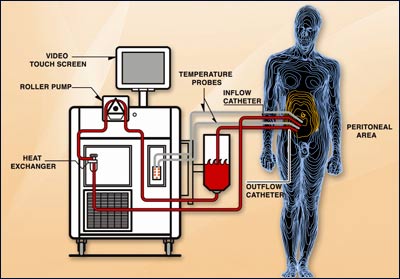
- Low Completion Rates for GOG 172 Intraperitoneal Chemotherapy Regimen: See Aletti G, et al Intraperitoneal chemotherapy for ovarian cancer: Exploring the “dark side” of the moon” SGO 2009; 112(Suppl 1): Abstract 40 (Source: SGO: Few Ovarian Cancer Patients Tolerate Intraperitoneal Regimen, by Charles Bankhead, Medical News from SGO: Society of Gynecologic Oncologists Meeting, February 11, 2009).
- Six Chemotherapy Cycles More Beneficial Than Three in Treating Stage I Ovarian Cancer: Presented at SGO, by Gabe Waggoner, DocGuide.com, DGDispatch dated Feb. 9, 2009 [Presentation title: Is There a High-Risk Subgroup With Stage I Ovarian Cancer Most Likely to Benefit From Six Versus Three Cycles of Adjuvant Chemotherapy? Abstract 43 ].
- No Differences in Tumour-Biomarker Response Between Women Receiving Intravenous Versus Intraperitoneal Chemotherapy for Ovarian Cancer: Presented at SGO, by Gabe Waggoner, DocGuide.com, DGDispatch dated Feb. 9, 2009 [Presentation title: CA-125 Regression in Ovarian Cancer Patients Treated With Intravenous Versus Intraperitoneal Platinum-Based Chemotherapy: A Gynecologic Oncology Group Study. Abstract 46].
- Oxaliplatin (Eloxatin®), Docetaxel (Taxotere®) & Bevacizumab (Avastin®) Combination Shows Promise for Women With Advanced Ovarian, Peritoneal, and Fallopian Tube Cancer: See Herzog TJ, et al; Preliminary safety results of TEACO, a phase 2 trial of oxaliplatin, docetaxel, and bevacizumab as first-line therapy for advanced cancer of the ovary, peritoneum,and fallopian tube SGO 2009; 112(Suppl 1): Abstract 48 (Source: SGO: Novel Drug Combination Shows Promise in Advanced Ovarian Cancer, by Charles Bankhead, Medical News from SGO: Society of Gynecologic Oncologists Meeting, February 10, 2009).
- Vermillion Presents Critical Data From Its OVA1 Clinical Trial, Vermillion Inc. News Release, February 10, 2009 [Presentation based upon a study entitled, A biomarker panel for distinguishing between malignant and benign ovarian tumors, which was co-authored by Fred Ueland, MD, Associate Professor of Gynecologic Oncology at the University of Kentucky and Principal Investigator of the OVA1 clinical trial, and Zhen Zhang, PhD, Associate Professor of Pathology at the Johns Hopkins University School of Medicine as well as Vermillion scientists].
- Angiogenesis Linked to Poor Survival in Patients With Rare Type of Ovarian Cancer – Drugs that block new blood vessel formation may improve outcomes of patients with sex cord-stromal tumors, M.D. Anderson Cancer Center News Release, Feb. 5, 2009 (Researchers from The University of Texas M. D. Anderson Cancer Center found that increased angiogenesis, or blood vessel formation, and vascular endothelial growth factor expression are associated with poor survival in women with sex cord-stromal ovarian tumors. This data was presented in a poster session).
About the Society of Gynecologic Oncologists
The SGO is a national medical specialty organization of physicians who are trained in the comprehensive management of women with malignancies of the reproductive tract. Its purpose is to improve the care of women with gynecologic cancer by encouraging research, disseminating knowledge which will raise the standards of practice in the prevention and treatment of gynecologic malignancies, and cooperating with other organizations interested in women’s health care, oncology and related fields. The Society’s membership, totaling more than 1280, is primarily comprised of gynecologic oncologists, as well as other related medical specialists including medical oncologists, radiation oncologists and pathologists. SGO members provide multidisciplinary cancer treatment including chemotherapy, radiation therapy, surgery and supportive care. More information on the SGO can be found at http://www.sgo.org.

 Libby's H*O*P*E*