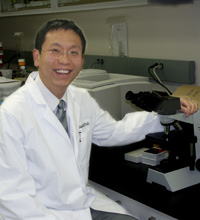
Addition of Dasatinib (Sprycel) to Standard Chemo Cocktail May Enhance Effect in Certain Ovarian Cancers

“The addition of a chemotherapeutic drug for leukemia to a standard regimen of two other chemotherapy drugs appears to enhance the response of certain ovarian cancers to treatment, according to a pre-clinical study led by researchers in the Duke Comprehensive Cancer Center.  ‘We know that a pathway called SRC is involved in cell proliferation in certain types of cancers, including some ovarian cancers,’ said Deanna Teoh, MD, a fellow in gynecologic oncology at Duke and lead investigator on this study.  ‘By examining gene expression data, we determined that the combination of the leukemia drug dasatinib (Sprycel) made carboplatin and paclitaxel more effective in cell lines with higher levels of SRC expression and SRC pathway deregulation.’ …”

secord3

Angeles Secord, MD, Gynecologic Oncologist, Duke University Medical Center & Senior Investigator on this study. Deanna Teoh, MD, Gynecologic Oncologist at Duke was the lead investigator.

“The addition of a chemotherapeutic drug for leukemia to a standard regimen of two other chemotherapy drugs appears to enhance the response of certain ovarian cancers to treatment, according to a pre-clinical study led by researchers in the Duke Comprehensive Cancer Center.

‘We know that a pathway called SRC is involved in cell proliferation in certain types of cancers, including some ovarian cancers,’ said Deanna Teoh, MD, a fellow in gynecologic oncology at Duke and lead investigator on this study.

‘By examining gene expression data, we determined that the combination of the leukemia drug dasatinib (Sprycel®) made carboplatin and paclitaxel more effective in cell lines with higher levels of SRC expression and SRC pathway deregulation.’

That synergistic effect, in which drugs used in combination strengthen each other’s efficacy, was absent when low SRC expression and low SRC pathway deregulation were present, Teoh said.

‘These findings indicate that we may be able to direct the use of a targeted therapy like dasatinib based on gene expression pathways in select ovarian cancers,’ she said.

The results of the study are being presented on a poster at the 100th annual American Association for Cancer Research meeting in Denver on April 19, 2009. The study was funded by the Prudent Fund and the National Institutes of Health.

‘Our ultimate goal is to offer personalized therapy for women with ovarian cancer,’ said Angeles Secord, MD, a gynecologic oncologist at Duke and senior investigator on this study.

‘Hopefully in the future we will apply targeted therapies to individual patients and their cancers in order to augment response to treatment while minimizing toxic side effects.’

For this study, researchers examined four ovarian cancer cell lines, known as IGROV1, SKOV3, OVCAR3 and A2780. Three of the cell lines demonstrated high activation of SRC and one demonstrated lower SRC expression.

All were treated in lab dishes with various combinations of the chemotherapeutic agents dasatinib, carboplatin and paclitaxel.

‘We found that the addition of dasatinib to standard therapy in the three cell lines with significant SRC pathway deregulation – IGROV1, OVCAR3 and A2780 – enhanced the response of the cancer cells to therapy,’ Teoh said.

‘Conversely, in SKOV3, which has minimal SRC protein expression and pathway deregulation, we saw the least amount of anti-cancer activity when we added dasatinib.’

It’s possible that by blocking the SRC activity with the dasatinib, we are enhancing the effect of the other chemotherapeutic agents, Teoh said.

The results of this study support the further investigation of targeted biologic therapy using a SRC inhibitor in some ovarian cancers, she said. Currently a phase I trial of a combination of dasatinib, paclitaxel and carboplatin is available for women with advanced or recurrent ovarian, tubal and peritoneal cancers.

Dasatinib is a chemotherapeutic that is currently FDA-approved for use in leukemia. It is manufactured by Bristol-Myers Squibb and is sold under the brand name Sprycel. Bristol-Myers Squibb provided the dasatinib used in this study.

Other researchers involved in this study include Tina Ayeni, Jennifer Rubatt, Regina Whitaker, Holly Dressman and Andrew Berchuck.”

Source: Addition of Dasatinib to Standard Chemo Cocktail May Enhance Effect in Certain Ovarian Cancer, by Duke Medicine News and Communications, News, Health Library, DukeHealth.org, April 13, 2009.

Secondary Sources:

Tumor-Promoting Protein COX-2 Is The Target Of First Joint Symposium Between AACR & ASCO

An inflammatory protein implicated in a variety of cancers is the target of the first joint symposium between the nation’s two premier cancer research organizations.  The presidents of the American Association for Cancer Research (AACR) and the American Society of Clinical Oncology (ASCO) organized the session focused on the COX-2 enzyme and cancer treatment Monday afternoon — April 20, 2:30-4:30 p.m., in rooms 205-207 of the Colorado Convention Center — at the AACR’s 100th Annual Meeting 2009 in Denver.  A similar symposium on new molecular targets will be conducted at ASCO’s annual meeting in May 29- June 2 in Orlando.  COX-2 is best known as a target for preventing dangerous polyps that lead to colorectal cancer, but it is also advancing as a target for treatment of many solid tumors. …

“Leading cancer organizations team up on tumor-promoting protein – AACR and ASCO begin joint symposia at annual meetings with focus on COX-2

An inflammatory protein implicated in a variety of cancers is the target of the first joint symposium between the nation’s two premier cancer research organizations.

duboismdander

Raymond DuBois, M.D., Ph.D., President, AACR; Provost and Executive Vice President, The University of Texas M. D. Anderson Cancer Center

The presidents of the American Association for Cancer Research (AACR) and the American Society of Clinical Oncology (ASCO) organized the session focused on the COX-2 enzyme and cancer treatment Monday afternoon — April 20, 2:30-4:30 p.m., in rooms 205-207 of the Colorado Convention Center — at the AACR’s 100th Annual Meeting 2009 in Denver. A similar symposium on new molecular targets will be conducted at ASCO’s annual meeting in May 29- June 2 in Orlando.

COX-2 is best known as a target for preventing dangerous polyps that lead to colorectal cancer, but it is also advancing as a target for treatment of many solid tumors.

‘Our symposium is timely because we are starting to see data from Phase II and Phase III clinical trials about COX-2 inhibition following post-surgical chemotherapy in colon cancer patients,’ said Raymond DuBois, M.D., Ph.D., president of AACR and provost and executive vice president at The University of Texas M. D. Anderson Cancer Center.

‘There’s been a great deal of preclinical and translational research addressing COX-2 overexpression in tumors and its role in cancer growth and survival. In prevention, inhibiting this enzyme reduces the number of high-risk precancerous polyps by 66 percent,’ DuBois said. ‘The time is ripe to combine basic science and clinical expertise to advance the therapeutic potential of this approach.’

Joint efforts are critical to the development of new approaches against cancer, said ASCO President Richard L. Schilsky, M.D., professor of medicine at the University of Chicago Medical Center.

‘The development of targeted therapies for cancer prevention and treatment requires the close collaboration and combined resources of basic scientists and clinical investigators,’ Schilsky said. ‘The success of targeted therapy for cancer depends first and foremost on a comprehensive understanding of the biology of the drug target coupled with a robust assay to assess target inhibition and a drug that hits the target. With these ingredients in place, clinical trials can be designed to assess the impact of treatment in the population most likely to benefit.’

schilsky

Richard L. Schilsky, M.D., President, ASCO; Associate Dean for Clinical Research, Professor of Medicine at the University of Chicago Medical Center.

‘The AACR/ASCO Symposium illustrates these core principles and demonstrates that continued progress against cancer requires the partnership of all investigators and practitioners represented by these two great organizations,’ Schilsky said.

The idea for joint symposia at each organization’s annual meeting has been discussed for years and was advanced by immediate past presidents William Hait, M.D., Ph.D., of AACR and Nancy Davidson, M.D., of ASCO.

DuBois and Schilsky co-chair the symposium. Scheduled presentations are:

  • COX-2 and Cancer Biology by DuBois, who discovered the enzyme’s overexpression in tumors.
  • Overview of COX-2 as a Target for Cancer Treatment, by Schilsky.

*          *          *

AACR is the world’s oldest and largest professional organization dedicated to advancing cancer research. ASCO is the world’s leading professional organization representing physicians who care for people with cancer. Many scientists and physicians are members of both organizations.”

Source: Leading Cancer Organizations Team Up on Tumor-Promoting Protein – AACR and ASCO begin joint symposia at annual meetings with focus on COX-2, M.D. Anderson News Release, The University of Texas M.D. Anderson Cancer Center, April 17, 2009.

Comment:  The relationship between ovarian cancer and COX-2 remains unclear.  Some in vitro and in vivo studies make a connection between ovarian cancer and COX-2, while others suggest that COX-1 is more relevant to current ovarian cancer research.  It is an area that warrants further investigation.

Recent Studies Re Ovarian Cancer and COX-2:

Senator Barbara Boxer Reintroduces Legislation to Better Diagnosis Ovarian Cancer

On March 31, 2009, U.S. Senator Barbara Boxer (D-CA) reintroduced the Ovarian Cancer Biomarker Research Act of 2009 (H.R. 1816) legislation to develop new technologies to detect and fight ovarian cancer.  The Ovarian Cancer Biomarker Research Act bill, if ultimately enacted as law, would authorize $30 million each year for four years to fund research and development of reliable screening techniques for ovarian cancer. The bill would also authorize clinical trials to verify research techniques and bring together a panel of experts to evaluate and direct the progress of the work.

Senator Barbara Boxer of the State of California

Senator Barbara Boxer of the State of California

On March 31, 2009, U.S. Senator Barbara Boxer (D-CA) reintroduced the Ovarian Cancer Biomarker Research Act of 2009 (H.R. 1816) legislation to develop new technologies to detect and fight ovarian cancer.  The Ovarian Cancer Biomarker Research Act bill, if ultimately enacted as law, would authorize $30 million each year for four years to fund research and development of reliable screening techniques for ovarian cancer. The bill would also authorize clinical trials to verify research techniques and bring together a panel of experts to evaluate and direct the progress of the work.

Upon reintroduction of  H.R. 1816, Senator Boxer said, “Early detection is key to helping more women beat this dangerous disease. When ovarian cancer is diagnosed in its early stages, more than 93 percent of women go on to live longer than five years. I am proud to sponsor this bill that makes a commitment to fight ovarian cancer with every possible tool.”

Congressman Howard L. Berman (D-CA) also reintroduced the Ovarian Cancer Biomarker Research Act of 2009 on March 31st in the U.S. House of Representatives.

The complete text of H.R. 1816, the Ovarian Cancer Biomarker Research Act of 2009, is set forth below.  This is the original text of the bill as it was written by its sponsor and submitted to the U.S. House of Representatives for consideration.  For an Adobe Reader PDF copy of H.R. 1816, CLICK HERE.

This bill is in the first step in the U.S. legislative process. Introduced bills and resolutions first go to committees that deliberate, investigate, and revise them before they go to general debate. The majority of bills and resolutions never make it out of committee.  Contact your U.S. Representative and let him or her know that you support this bill.

Source: Boxer Reintroduces Legislation to Better Diagnose Ovarian Cancer, Press Release, Office of Senator Barbara Boxer, April 1, 2009.

_____________________________________________

HR 1816:  Ovarian Cancer Biomarker Research Act of 2009

111th CONGRESS

1st Session

H. R. 1816

To amend the Public Health Service Act to authorize the Director of the National Cancer Institute to make grants for the discovery and validation of biomarkers for use in risk stratification for, and the early detection and screening of, ovarian cancer.

IN THE HOUSE OF REPRESENTATIVES

March 31, 2009

Mr. BERMAN (for himself, Mr. HALL of Texas, Ms. BORDALLO, Ms. LEE of California, Mr. VAN HOLLEN, Mr. MCGOVERN, Mr. MCDERMOTT, Mr. BOUCHER, Mr. KING of New York, Mr. GENE GREEN of Texas, Mr. WOLF, Ms. KILROY, Mr. BURTON of Indiana, Mr. ISRAEL, Mr. HINCHEY, Mr. SESTAK, Ms. DELAURO, Ms. SHEA-PORTER, Mrs. MALONEY, Mr. MCMAHON, Ms. WASSERMAN SCHULTZ, Mrs. CAPPS, Mr. SERRANO, Mr. FARR, and Ms. EDWARDS of Maryland) introduced the following bill; which was referred to the Committee on Energy and Commerce

A BILL

To amend the Public Health Service Act to authorize the Director of the National Cancer Institute to make grants for the discovery and validation of biomarkers for use in risk stratification for, and the early detection and screening of, ovarian cancer.

Be it enacted by the Senate and House of Representatives of the United States of America in Congress assembled,

SECTION 1. SHORT TITLE.

This Act may be cited as the ‘Ovarian Cancer Biomarker Research Act of 2009′.

SEC. 2. GRANTS FOR ESTABLISHMENT AND OPERATION OF RESEARCH CENTERS FOR THE STUDY OF OVARIAN CANCER BIOMARKERS.

Subpart 1 of part C of the Public Health Service Act is amended by adding at the end the following new section:

‘SEC. 417G. GRANTS FOR ESTABLISHMENT AND OPERATION OF RESEARCH CENTERS FOR THE STUDY OF OVARIAN CANCER BIOMARKERS.

‘(a) In General- The Director of the Institute, in consultation with the directors of other relevant institutes and centers of the National Institutes of Health and the Department of Defense Ovarian Cancer Research Program, shall enter into cooperative agreements with, or make grants to, public or nonprofit entities to establish and operate centers to conduct research on biomarkers for use in risk stratification for, and the early detection and screening of, ovarian cancer, including fallopian tube cancer or primary peritoneal cancer. Each center shall be known as an Ovarian Cancer Biomarker Center of Excellence, and shall focus on translational research of ovarian cancer biomarkers.

‘(b) Research Funded- Federal payments made under a cooperative agreement or grant under subsection (a) may be used for research on any of the following:

‘(1) The development and characterization of new biomarkers, and the refinement of existing biomarkers, for ovarian cancer.

‘(2) The clinical and laboratory validation of such biomarkers, including technical development, standardization of assay methods, sample preparation, reagents, reproducibility, portability, and other refinements.

‘(3) The development and implementation of clinical and epidemiological research on the utilization of biomarkers for the early detection and screening of ovarian cancer.

‘(4) The development and implementation of repositories for new tissue, urine, serum, and other biological specimens (such as ascites and pleural fluids).

‘(5) Genetics, proteomics, and pathways of ovarian cancer as they relate to the discovery and development of biomarkers.

‘(c) First Agreement or Grant- Not later than 1 year after the date of the enactment of this section, the Director of the Institute shall enter into the first cooperative agreement or make the first grant under this section.

‘(d) Availability of Banked Specimens- The Director of the Institute shall make available for research conducted under this section banked serum and tissue specimens from clinical research regarding ovarian cancer that was funded by the Department of Health and Human Services.

‘(e) Report- Not later than the end of fiscal year 2010, and annually thereafter, the Director of the Institute shall submit a report to the Congress on the cooperative agreements entered into and the grants made under this section.

‘(f) Authorization of Appropriations- For the purpose of carrying out this section, there are authorized to be appropriated $25,000,000 for each of the fiscal years 2010 through 2013, and such sums as may be necessary for each of the fiscal years 2014 through 2020. Such authorization of appropriations is in addition to any other authorization of appropriations that is available for such purpose.’.

SEC. 3. OVARIAN CANCER BIOMARKER CLINICAL TRIAL COMMITTEE.

Subpart 1 of part C of the Public Health Service Act, as amended by section 2, is further amended by adding at the end the following new section:

SEC. 417H. OVARIAN CANCER BIOMARKER CLINICAL TRIAL COMMITTEE.

‘(a) Ovarian Cancer Biomarker Research Committee Established- The Director of the Institute shall establish an Ovarian Cancer Biomarker Clinical Trial Committee (in this section referred to as the ‘Committee’) to assist the Director to design and implement one or more national clinical trials, in accordance with this section, to determine the utility of using biomarkers validated pursuant to the research conducted under section 417E for risk stratification for, and early detection and screening of, ovarian cancer.

‘(b) Membership-

‘(1) NUMBER- The Committee shall consist of 11 voting members and such number of nonvoting members as the Director of the Institute determines appropriate.

‘(2) APPOINTMENT- The members of the Committee shall be appointed by the Director of the Institute, in consultation with appropriate national medical societies, research societies, and patient advocate organizations, as follows:

‘(A) VOTING MEMBERS- The voting members of the Committee shall be appointed by the Director of the Institute as follows:

‘(i) Two patient advocates.

‘(ii) Two national experts in statistical analysis, clinical trial design, and patient recruitment.

‘(iii) Two representatives from the Gynecologic Oncology Group.

‘(iv) One representative from the Department of Defense Ovarian Cancer Research Program.

‘(v) Four ovarian cancer researchers.

‘(B) NONVOTING MEMBERS- The nonvoting members of the Committee shall include such individuals as the Director of the Institute determines to be appropriate.

‘(3) PAY- Members of the Committee shall serve without pay and those members who are full time officers or employees of the United States shall receive no additional pay by reason of their service on the Committee, except that members of the Committee shall receive travel expenses, including per diem in lieu of subsistence, in accordance with applicable provisions under chapter I of chapter 57 of title 5, United States Code.

‘(c) Chairperson- The voting members of the Committee appointed under subsection (b)(2) shall select a chairperson from among such members.

‘(d) Meetings- The Committee shall meet at the call of the chairperson or upon the request of the Director of the Institute, but at least four times each year.

‘(e) Clinical Trial Specifications- In designing and implementing the clinical trials under this section, the Director of the Institute shall provide for the following:

‘(1) PARTICIPATION IN TRIAL- To the greatest extent possible, all academic centers, community cancer centers, and individual physician investigators (as defined in subsection (f)) shall have the opportunity to participate in the trials under this section and to enroll women at risk for ovarian cancer in the trials.

‘(2) COSTS FOR ENROLLMENTS- Subject to the availability of appropriations, all the costs to the centers and offices described in paragraph (1) for enrolling women in the trials under this section shall be reimbursed by the Institute.

‘(3) NATIONAL DATA CENTER- A national data center shall be established in and supported by the Institute to conduct statistical analyses of the data derived from the trials under this section and to store such analyses and data.

‘(4) GUIDELINES FOR MEDICAL COMMUNITY- Data and statistical analyses of the clinical trials under this section shall be used to establish clinical guidelines to provide the medical community with information regarding the use of biomarkers validated pursuant to the research conducted under section 417E for risk stratification for, and early detection and screening of, ovarian cancer.

‘(f) Individual Physician Investigator Defined- For purposes of subsection (e)(1), the term ‘individual physician investigator’ means a physician–

‘(1) who is a faculty member at an academic institution or who is in a private medical practice; and

‘(2) who provides health care services to women at risk for ovarian cancer.

‘(g) Report- Not later than the end of fiscal year 2010, and annually thereafter, the Director of the Institute shall submit a report to the Congress on the activities conducted under this section.

‘(h) Authorization of Appropriations- For the purpose of carrying out this section, there are authorized to be appropriated $5,000,000 for each of the fiscal years 2010 through 2013, and such sums as may be necessary for each of the fiscal years 2014 through 2020. Such authorization of appropriations is in addition to any other authorization of appropriations that is available for such purpose.’.

Stanford Researchers Harness Nanoparticles To Track Cancer Cell Changes

“A new imaging technology could give scientists the ability to simultaneously measure as many as 100 or more distinct features in or on a single cell. In a disease such as cancer, that capability would provide a much better picture of what’s going on in individual tumor cells. A Stanford University School of Medicine team led by Cathy Shachaf, PhD, an instructor in microbiology and immunology, has for the first time used specially designed dye-containing nanoparticles to simultaneously image two features within single cells. … In a study published April 15 in the online journal PLoS-ONE, the Stanford team was able to simultaneously monitor changes in two intracellular proteins that play crucial roles in the development of cancer. Successful development of the new technique may improve scientists’ ability not only to diagnose cancers-for example, by determining how aggressive tumors’ constituent cells are-but to eventually separate living, biopsied cancer cells from one another based on characteristics indicating their stage of progression or their degree of resistance to chemotherapeutic drugs….”

“STANFORD, Calif. – The more dots there are, the more accurate a picture you get when you connect them. A new imaging technology could give scientists the ability to simultaneously measure as many as 100 or more distinct features in or on a single cell. In a disease such as cancer, that capability would provide a much better picture of what’s going on in individual tumor cells.

Catherine Shachaf, Instructor, Microbiology & Immunology, Catherine Shachaf, Instructor, Microbiology & Immunology

Catherine Shachaf, Instructor, Microbiology & Immunology - Baxter Laboratory, Stanford School of Medicine

A Stanford University School of Medicine team led by Cathy Shachaf, PhD, an instructor in microbiology and immunology, has for the first time used specially designed dye-containing nanoparticles to simultaneously image two features within single cells. Although current single-cell flow cytometry technologies can do up to 17 simultaneous visualizations, this new method has the potential to do far more. The new technology works by enhancing the detection of ultra-specific but very weak patterns, known as Raman signals, that molecules emit in response to light.

In a study published April 15 in the online journal PLoS-ONE, the Stanford team was able to simultaneously monitor changes in two intracellular proteins that play crucial roles in the development of cancer. Successful development of the new technique may improve scientists’ ability not only to diagnose cancers-for example, by determining how aggressive tumors’ constituent cells are-but to eventually separate living, biopsied cancer cells from one another based on characteristics indicating their stage of progression or their degree of resistance to chemotherapeutic drugs. That would expedite the testing of treatments targeting a tumor’s most recalcitrant cells, said Shachaf, a cancer researcher who works in a laboratory run by the study’s senior author, Garry Nolan, PhD, associate professor of microbiology and immunology and a member of Stanford’s Cancer Center.

Cancer starts out in a single cell, and its development is often heralded by changes in the activation levels of certain proteins. In the world of cell biology, one common way for proteins to get activated is through a process called phosphorylation that slightly changes a protein’s shape, in effect turning it on.

Two intracellular proteins, Stat1 and Stat6, play crucial roles in the development of cancer. The Stanford team was able to simultaneously monitor changes in phosphorylation levels of both proteins in lab-cultured myeloid leukemia cells. The changes in Stat1 and Stat6 closely tracked those demonstrated with existing visualization methods, establishing proof of principle for the new approach.

While the new technology so far has been used only to view cells on slides, it could eventually be used in a manner similar to flow cytometry, the current state-of-the-art technology, which lets scientists visualize single cells in motion. In flow cytometry, cells are bombarded with laser light as they pass through a scanning chamber. The cells can then be analyzed and, based on their characteristics, sorted and routed to different destinations within the cytometer.

Garry Nolan, Associate Professor, Microbiology & Immunology - Baxter Laboratory; Member, Bio-X; Member, Stanford Cancer Center, Stanford School of Medicine

Garry Nolan, Associate Professor, Microbiology & Immunology - Baxter Laboratory; Member, Bio-X; Member, Stanford Cancer Center, Stanford School of Medicine

Still, flow cytometry has its limits. It involves tethering fluorescent dye molecules to antibodies, with different colors tied to antibodies that target different molecules. The dye molecules respond to laser light by fluorescing-echoing light at exactly the same wavelength, or color, with which they were stimulated. The fluorescence’s strength indicates the abundance of the cell-surface features to which those dyes are now attached. But at some point, the light signals given off by multiple dyes begin to interfere with one another. It is unlikely that the number of distinct features flow cytometry can measure simultaneously will exceed 20 or so.

The new high-tech dye-containing particles used by the Stanford team go a step further. They give off not just single-wavelength fluorescent echoes but also more-complex fingerprints comprising wavelengths slightly different from the single-color beams that lasers emit. These patterns, or Raman signals, occur when energy levels of electrons are just barely modified by weak interactions among the constituent atoms in the molecule being inspected.

Raman signals are emitted all the time by various molecules, but they’re ordinarily too weak to detect. To beef up their strength, the Stanford team employed specialized nanoparticles produced by Intel Corp., each with its own distinctive signature. Intel has designed more than 100 different so-called COINs, or composite organicinorganic nanoparticles: These are essentially sandwiches of dye molecules and atoms of metals such as silver, gold or copper whose reflective properties amplify a dye molecule’s Raman signals while filtering out its inherent fluorescent response. The signals are collected and quantified by a customized, automated microscope.

Shachaf anticipates being able to demonstrate simultaneous visualization of nine or 10 COIN-tagged cellular features in the near future and hopes to bring that number to 20 or 30, a new high, before long. ‘The technology’s capacity may ultimately far exceed that number,’ she added. Some day it could be used for more than 100 features. Meanwhile, another group outside Stanford, now collaborating with the Nolan group, has developed a prototype device that can detect Raman signals in a continuous flow of single cells, analogous to flow cytometry but with higher resolving power, Shachaf said.

The study was funded by the National Cancer Institute’s Center for Cancer Nanotechnology Excellence Focused on Therapy Response and by the Flight Attendant Medical Research Institute. Other Stanford contributors were researchers Sailaja Elchuri, PhD, and Dennis Mitchell of the Nolan lab; engineering and materials science graduate student Ai Leen Koh; and Robert Sinclair, PhD, professor of materials science and engineering.

# # #

The Stanford University School of Medicine consistently ranks among the nation’s top 10 medical schools, integrating research, medical education, patient care and community service. For more news about the school, please visit http://mednews.stanford.edu. The medical school is part of Stanford Medicine, which includes Stanford Hospital & Clinics and Lucile Packard Children’s Hospital. For information about all three, please visit http://stanfordmedicine.org/about/news.html.”

Source: Stanford researchers harness nanoparticles to track cancer cell changes, by Bruce Goldman, News Release, Stanford School of Medicine, April 14, 2009.

Primary Citation:  Shachaf CM, Elchuri SV, Koh AL, Zhu J, Nguyen LN, et al. 2009  A Novel Method for Detection of Phosphorylation in Single Cells by Surface Enhanced Raman Scattering (SERS) using Composite Organic-Inorganic Nanoparticles (COINs). PLoS ONE 4(4): e5206. doi:10.1371/journal.pone.000520. For an Adobe Reader PDF copy of the study, CLICK HERE.

FDA Grants Paclical “Orphan Drug” Designation

“Oasmia Pharmaceutical, Uppsala, Sweden, has been granted Orphan Drug designation by the USA FDA of Paclical® for the treatment of ovarian cancer. Orphan Drug designation can entail additional assistance from FDA to expedite and optimize drug development and upon approval a seven year market exclusivity is granted. …”

“Oasmia: FDA grants Paclical® Orphan Drug Designation for ovarian cancer in the USA

Julian Aleksov, CEO, Oasmia Pharmaceutical AB

Julian Aleksov, CEO, Oasmia Pharmaceutical AB

Oasmia Pharmaceutical, Uppsala, Sweden, has been granted Orphan Drug designation by the USA FDA of Paclical® for the treatment of ovarian cancer. Orphan Drug designation can entail additional assistance from FDA to expedite and optimize drug development and upon approval a seven year market exclusivity is granted.

Orphan drug designation is intended to support the clinical development of new drugs in diseases affecting less than 200,000 people. This provides Oasmia with seven year market exclusivity on the indication when the pharmaceutical is approved. There is no direct generic competition during the period and FDA often provides technical and financial assistance to expedite and optimize drug development.

The designation is based on the hypothesis that Paclitaxel is safer than Taxol®. Oasmia Pharmaceutical is conducting a Phase III study comparing the use of Paclical to Taxol® in patients with ovarian cancer. A safety objective is to show the superiority of hypersensitivity reactions.

This designation shows that the FDA has a great confidence in the company and our product. The United States is one of the most important markets for Paclical®. This decision improves the possibilities for the product, says Julian Aleksov, CEO of Oasmia in a comment.

About Ovarian Cancer
Ovarian cancer is a disease with few and unspecific symptoms at its early stages, and is difficult to detect. The numbers of patients that are diagnosed are increasing on a yearly basis. Ovarian cancer is most often diagnosed in women over 50 years of age, but younger women are also affected. The annual incidence of new diagnosed cases is approximately 125,000 women in EU [European Union] alone. In the USA ovarian cancer accounts for 3 % of all cancer cases and is the fifth leading cause of cancer related deaths in the US.

About Paclical®
With the retinoid based unique platform XR-17, Oasmia has managed to produce a water soluble formulation of Paclitaxel (Paclical®), that does not require premedication and without the severe Cremophor® EL related side effects. The main indication is ovarian cancer. Other planned indications are malignant melanoma and lung cancer (NSCLC).

About Oasmia
Oasmia Pharmaceutical AB develops second and third generation cancer drugs based on nanotechnology for human and veterinary use. The broad portfolio is focused on oncology and contains several promising products in clinical and pre-clinical phase. Oasmia cooperates with leading universities and other biotech companies to discover and optimize substances with a favourable safety profile and better efficacy. The company was founded in 1998 and is based in Uppsala, Sweden. …”

Source: Oasmia: FDA grants Paclical® Orphan Drug Designation for ovarian cancer in the USA, Oasmia Pharmaceutical AB, April 14, 2009.

CNTO 328 Shows Promise For Ovarian Cancer In Small Clinical Trial, Say U.K. Scientists.

British scientists have developed and clinically tested a drug that could prolong the lives of ovarian cancer patients. A clinical trial of the drug, codenamed CNTO328, has been carried out at the Centre for Experimental Cancer Medicine, which is part of Barts and the London School of Medicine and Dentistry. … The drug is an antibody which works by targeting a molecule called Interleukin 6, which is made by cancer cells and is vital to help them multiply, spread and develop their own blood supply. … “At the end of the trial, eight of the women were either stable or getting better. Their cancer had stopped growing. That doesn’t sound great, but in ovarian cancer that’s pretty good because [without the drug] the disease would have progressed in all of them,” said McNeish.

British scientists have developed and clinically tested a drug that could prolong the lives of ovarian cancer patients.  A clinical trial of the drug, codenamed CNTO328, has been carried out at the Centre for Experimental Cancer Medicine, which is part of Barts and the London School of Medicine and Dentistry.

Eight of the 18 women enrolled in the trial experienced tumor stabilization or shrinkage.  The investigators noted that the percentage of women who received clinical benefit from CNTO328 is an unusually high proportion for an experimental cancer drug study. Typically only between 5%  and 20% of participants secure any benefit from taking untried treatments, according to the investigators.

Iain McNeish, MA, Ph.D., MRCP, Professor of Gynecological Oncology, Honorary Consultant in Medical Oncology,  Deputy Director Centre for Experimental Cancer Medicine Centre for Molecular Oncology & Imaging, Barts and the London School of Medicine & Denistry

Iain McNeish, MA, Ph.D., MRCP, Professor of Gynecological Oncology, Honorary Consultant in Medical Oncology, Deputy Director Centre for Experimental Cancer Medicine Centre for Molecular Oncology & Imaging, Barts and the London School of Medicine & Denistry, London, United Kingdom

Professor Iain McNeish, a professor of gynaecological oncology at Barts hospital in London and chief investigator of the trial, said: “We have taken the drug from the laboratory into patients and the results are promising.  The hope with this group of patients was to slow down the progress of their ovarian cancer, improve the quality of their life and possibly make them live longer. We have been quite successful in doing that. If this becomes a treatment, this is a whole new approach to treating ovarian cancer.”

The drug is an antibody which works by targeting a molecule called Interleukin 6, which is made by cancer cells and is vital to help them multiply, spread and develop their own blood supply.  Interleukin 6 is found in many cancers but plays a key role in ovarian cancer’s movement into the abdomen. The antibody binds to the Interleukin 6, blocks its progress by ensuring that it cannot bind itself to the cancer cells to assist their growth and thus renders it harmless.

McNeish hopes that, if further trials confirm the drug’s potential, it could prove as effective in tackling ovarian cancer as Herceptin has been in breast cancer. CNTO328 works in a similar way to Herceptin, which has revolutionized breast cancer treatment in recent years. “The dream scenario is that a combination of the existing chemotherapy drugs and this type of antibody will be a big breakthrough and open up a new avenue for the treatment of ovarian cancer”, said McNeish.

The new drug is the result of a collaboration between Professor Fran Balkwill, an expert in cancer and inflammation at the Institute of Cancer, Barts and the London School of Medicine and Denistry, and a Dutch biotech company called Centocor, which is now owned by Johnson & Johnson.

Eighteen women with the disease from north-east London and Essex joined the trial which began in late 2007.  All 18 were expected to live for less than a year when they began receiving the drug because their cancer had returned after undergoing several courses of chemotherapy.  Ten women died but the health of eight women improved. Seven of those eight women are still alive.  “At the end of the trial, eight of the women were either stable or getting better. Their cancer had stopped growing. That doesn’t sound great, but in ovarian cancer that’s pretty good because [without the drug] the disease would have progressed in all of them,” said McNeish.

Annwen Jones, chief executive of the UK charity Target Ovarian Cancer, said there were too few drugs available to treat ovarian cancer because of a lack of research. “This early stage trial certainly shows promise, because it appears that the growth of tumors has been slowed down in a good proportion of the patients who took part in the study,” said Jones. “Women being treated for ovarian cancer could be forgiven for despair, particularly when they grow resistant to chemotherapy and there are no drugs that can get them over this hurdle. Research projects like this are vital if we are to develop desperately needed new treatments,” she said.

Primary Sources:

Additional Resources:

GOG Reports on Evaluation of Pemetrexed in Treatment of Recurrent Platinum-Resistant Ovarian Cancer

A phase II Gynecologic Oncology Group (GOG) clinical study found that pemetrexed (Altima®)-an antifolate antineoplastic agent that disrupts folate-dependent cell replication metabolic processes-is sufficiently active in the treatment of recurrent platinum-resistant ovarian cancer to warrant further investigation.  “Thus [pemetrexed] should be considered for combination with other agents, especially carboplatin, in first-line therapy,” said David Miller, M.D., F.A.C.S. (University of Texas Southwestern Medical Center, Dallas, USA) and colleagues.

millerdavid

David Miller, M.D. F.A.C.S., Professor, Gynecologic Oncology, University of Texas Southwestern Medical Center

A phase II Gynecologic Oncology Group (GOG) clinical study found that pemetrexed (Altima®)-an antifolate antineoplastic agent that disrupts folate-dependent cell replication metabolic processes-is sufficiently active in the treatment of recurrent platinum-resistant ovarian cancer to warrant further investigation.  “Thus [pemetrexed] should be considered for combination with other agents, especially carboplatin, in first-line therapy,” said David Miller, M.D., F.A.C.S. (University of Texas Southwestern Medical Center, Dallas, USA) and colleagues.

The purpose of the GOG study was to estimate the antitumor activity of pemetrexed in patients with persistent or recurrent, platinum-resistant epithelial ovarian or primary peritoneal cancer and to determine the nature and degree of toxicities.  The patients that participated in the study experienced disease progression on platinum-based primary chemotherapy or recurred within 6 months. Pemetrexed at a dose of 900 mg/m2 was administered as an intravenous infusion over 10 minutes every 21 days. Dose delay and adjustments were permitted for toxicity. Treatment was continued until disease progression or unacceptable adverse effects.  From July 6, 2004, to August 23, 2006, 51 patients enrolled in the study.  A total of 259 cycles (median, four; range one to 19 cycles) of pemetrexed were administered, with 40% of the patients receiving six or more cycles.

According to the investigators, the study produced the following results:

  • No treatment -related deaths were reported;
  • Eighteen patients (38%) had progressive disease. Three patients (6%) were not assessable;
  • One patient (2%) had a complete response (CR) and nine patients (19%) had partial responses (PRs), with a median duration response of 8.4 months. Seventeen patients (35%) had stable disease (SD) for a median of 4.1 months. Clinical benefit rate (CR + PR + SD) was 56%; and

Based upon the foregoing results, the investigators noted that pemetrexed “exhibited activity more favorable than that seen in other agents that have been test in first-line combinations by the GOG.” Pemetrexed, according to the investigators, has sufficient activity in the treatment of recurrent platinum-resistant ovarian cancer at the dose and schedule tested to warrant further investigation.

Sources:

Medicare Expands Coverage of PET Scans as Cancer Diagnostic Tool

“The Centers for Medicare & Medicaid Services (CMS) issued a final national coverage determination (NCD) to expand coverage for initial testing with positron emission tomography (PET) for Medicare beneficiaries who are diagnosed with and treated for most solid tumor cancers.  This decision applies to PET scans used to support initial diagnosis and treatment for most types of solid tumor cancers. … It also expands coverage of PET scans for subsequent follow up testing in beneficiaries who have cervical or ovarian cancer … A minimally invasive diagnostic imaging procedure, PET uses a radioactive tracer to evaluate glucose metabolism in tumors and in normal tissue. …”

“For Immediate Release: Monday, April 06, 2009
Contact: CMS Office of Public Affairs
202-690-6145

MEDICARE EXPANDS COVERAGE OF PET SCANS AS CANCER DIAGNOSTIC TOOL

CMS’ Coverage with Evidence Development Project Shows PET Scans as “Reasonable and Necessary” for Initial Treatment Decisions of Most Solid Tumor Cancers

Centers For Medicare & Medicaid Services

Centers For Medicare & Medicaid Services

The Centers for Medicare & Medicaid Services (CMS) issued a final national coverage determination (NCD) to expand coverage for initial testing with positron emission tomography (PET) for Medicare beneficiaries who are diagnosed with and treated for most solid tumor cancers.

This NCD removes a clinical study requirement for PET scan use in these patients.

Since 2005, Medicare coverage of PET scans for diagnosing some forms of cancer and guiding treatment has been tied to a requirement that providers collect clinical information about how the scans have affected doctors’ treatment decisions. This information was gathered through the National Oncologic PET Registry (NOPR) observational study. This decision removes the requirement to report data to the NOPR when the PET scan is used to support initial treatment (or diagnosis and “staging“) of most solid tumor cancers.

Medicare collects data from the NOPR under CMS’ Coverage with Evidence Development (CED) program. CED allows Medicare to develop evidence about how a medical technology is used in clinical practice so that Medicare can do the following:

(a) clarify the impact of these items and services on the health of Medicare beneficiaries;

(b) consider future changes in coverage for the technology; and

(c) generate clinical information that will improve the evidence base upon which providers base their recommendations to Medicare beneficiaries regarding the technology.

This decision is based, in part, on the information generated as a result of CMS’ 2005 decision to require NOPR reporting for many cancer PET scans. As a result of this evidence from NOPR, CMS reconsidered its 2005 coverage policy. This decision is the first time that CMS has reconsidered a coverage policy based on new evidence developed under the CED program.

‘This expansion in coverage for PET scans shows that the Coverage with Evidence Development program is a success,’ said CMS Acting Administrator Charlene Frizzera. ‘CED allowed us to cover an emerging technology, learn more about its usage in clinical practice, and adjust our coverage policies accordingly. Thanks to CED, Medicare beneficiaries have greater access to cutting edge medical technologies and treatments.’

Positron Emission Tomography (PET) equipment (Photo Source:  www.RadiologyInfo.org)

Positron Emission Tomography (PET) equipment (Photo Source: RadiologyInfo.org)

This decision applies to PET scans used to support initial diagnosis and treatment for most types of solid tumor cancers. It also expands coverage of PET scans for subsequent follow up testing in beneficiaries who have cervical or ovarian cancer, or who are being treated for myeloma, a cancer that affects white blood cells. For these cancers, NOPR data collection will no longer be required. [Emphasis added by Libby’s H*O*P*E*™]

It is important to note that today’s decision still requires clinicians to report data to the NOPR when using PET scans to monitor the progress of treatment or remission of cancer in some cases. Although the evidence generated by the NOPR study helped CMS determine that PET scans are useful in helping guide treatment when cancer is first diagnosed, scientific evidence is not as strong in showing that PET scans are as useful in making subsequent treatment decisions for some types of cancer.

A minimally invasive diagnostic imaging procedure, PET uses a radioactive tracer to evaluate glucose metabolism in tumors and in normal tissue. The test may provide important clinical information to guide the initial treatment approach (e.g., diagnosis and “staging”) for many cancers.

This additional information may help physicians to distinguish benign from cancerous lesions and better determine the extent of a tumor’s growth or metastasis. PET scans have also been used in subsequent testing for cancer patients, e.g., to monitor cancer progression or remission after cancer treatment has begun.

More information about the types of cancer covered by this new policy is available in CMS’ final decision memorandum. …”

SourceMedicare Expands Coverage of PET Scans As Cancer Diagnostic Tool – CMS’ Coverage with Evidence Development Project Shows PET Scans as “Reasonable and Necessary” for Initial Treatment Decisions of Most Solid Tumor Cancers, Centers for Medicare & Medicaid Services, Press Release, April 6, 2009.

Secondary Sources:

Comment:  The CMS Decision Memo involving the use of PET scans for solid tumors allows an ovarian cancer patient (who is a Medicare beneficiary) to obtain a PET scan for “initial treatment strategy” purposes.  “Initial Treatment Strategy” is generally defined by CMS as encompassing initial diagnosis or staging.  An ovarian cancer patient (who is a Medicare beneficiary) can also obtain a PET scan for “subsequent treatment strategy” purposes.  “Subsequent Treatment Strategy” is generally defined by CMS as encompassing “restaging” and “monitoring response to treatment when a change in treatment is anticipated.”

Synergistic Anti-Tumor Effect of CRM197 & Paclitaxel in Ovarian Cancer

CRM197, an inhibitor of heparin-binding EGF-like growth factor (HB-EGF), produces a synergistic ovarian cancer anti-tumor effect when combined with paclitaxel, according to study results published in the March 15th issue of the International Journal of Cancer.  The investigators, Dr. Shingo Miyamoto and his colleagues, are affiliated with the Fukuoka University in Japan.  “The treatment of CRM197 in conjunction with paclitaxel results in a marked synergistic anti-tumor effect in ovarian cancer cells in vivo, suggesting a novel combination therapy for ovarian cancer patients including those showing chemo-resistance.”  Accordingly, the investigators generally concluded that inhibitory agents against HB-EGF, such as CRM197, represent possible chemotherapeutic and chemosensitizing agents for ovarian cancer. …

CRM197, an inhibitor of heparin-binding EGF-like growth factor (HB-EGF), produces a synergistic ovarian cancer anti-tumor effect when combined with paclitaxel, according to study results published in the March 15th issue of the International Journal of Cancer.  The investigators, Dr. Shingo Miyamoto and his colleagues, are affilitated with the Fukuoka University in Japan.

According to the researchers, HB-EGF plays a pivotal role in tumor growth and clinical outcomes in patients with ovarian cancer, thereby making it a target for future ovarian cancer therapy. CRM197 is a non-toxic variant of the diphtheria toxin.  The investigators conducted studies in which CRM197 and paclitaxel (Taxol®) were tested against ovarian cancer cell cultures (in vitro) and overexpressing HB-EGF ovarian cancer cells which were injected into mice.

The investigators discovered that paclitaxel induced transient ERK activation and sustained activation of JNK and p38 MAPK, effects that were reduced by overexpression of HB-EGF. CRM197 effectively suppressed the paclitaxel-induced anti-apoptotic signals mediated by ERK and Akt and enhanced the pro-apoptotic signals JNK and p38 MAPK.

The investigators also noted that in the mice with ovarian cancer xenografts, paclitaxel and CRM197 completely blocked tumor formation at doses of 10 mg/kg paclitaxel and 5 mg/kg CRM197.

Based on the foregoing, Miyamoto et. al. concluded that “the enhancement of HB-EGF expression abrogates the antitumor effect of paclitaxel by altering the balance of anti-apoptotic and pro-apoptotic signals induced by paclitaxel. The treatment of CRM197 in conjunction with paclitaxel results in a marked synergistic anti-tumor effect in ovarian cancer cells in vivo, suggesting a novel combination therapy for ovarian cancer patients including those showing chemo-resistance.”  Accordingly, the investigators generally concluded that inhibitory agents against HB-EGF, such as CRM197, represent possible chemotherapeutic and chemosensitizing agents for ovarian cancer.

Phase 1 [clinical] study of the use of CRM197 has already started at Fukuoka University for patients with advanced ovarian cancer under the approval of the ethical committee,” the investigators added.

Primary Sources:

Johns Hopkins Discovers a Protein That Contributes to Ovarian Cancer Recurrence By Causing Chemoresistance

” … Ground-breaking work on an ovarian cancer-related protein in the lab of Ie-Ming Shih at the [Johns Hopkins] School of Medicine is leading to new insights into cancer biology. … They have revealed a novel protein that creates cancer cells that are resistant to traditional cancer chemotherapies and partially revealed its mechanism of action. With all of this information, the team hopes to create drugs that can target these proteins or find out which chemotherapies currently on the market do not function in this pathway to create resistant cancer cells.”

“Ovarian cancer is a growing concern with more than 15,000 deaths occurring in 2007, making it the leading cause of death in gynecological diseases.

Ie-Ming Shih, M.D., Ph.D., Professor, Pathobiology Graduate Program, Department of Pathology, Johns Hopkins University, Baltimore, Maryland

Ie-Ming Shih, M.D., Ph.D., Professor, Pathobiology Graduate Program, Department of Pathology, Johns Hopkins University, Baltimore, Maryland

Ground-breaking work on an ovarian cancer-related protein in the lab of Ie-Ming Shih at the School of Medicine is leading to new insights into cancer biology.

The protein is nucleus accumbens-1, NAC-1, which is a transcription factor that regulates the expression of genes. Previous work has shown NAC-1 to be overexpressed in many types of cancer, specifically ovarian cancer that is resistant to chemotherapy.

A deeper understanding of its mechanism of action would allow scientists and physicians to make inroads into possibly curing the diseases.

In many cases, the first round of chemotherapy or treatment shrinks the tumor but does not cure the patient of the diseases. The cancer then grows back and can be resistant to a second round of the initial therapy.

Ovarian cancer cells that are resistant to chemotherapy have higher than normal levels of NAC-1. Shih and her [sic] team showed that the ovarian cancer cells, when exposed to a particular chemotherapy drug, were resistant compared to cancer cells with normal expression of NAC-1.

Upon further investigation into the biological pathways of interacting proteins in the nucleus, the team found that another protein [Gadd45-gamma-interacting protein 1 (Gadd45gip1)] is the target of NAC-1’s mechanism of action.

NAC-1 works by interacting with this other protein and stopping it from working and decreasing its expression inside the cell. So when NAC-1 expression is increased, the cancer cells are resistant to treatment, and the downstream target protein of NAC-1 is downregulated.

Performing further experiments, the researchers found that by making normal cancer cells overexpress the NAC-1 protein the cells were resistant to the chemotherapy drug, where previously they were not before the induced expression.

Also, the downstream target protein had reduced expression.

Conversely, if the researchers knocked down the expression of NAC-1 or increased the expression of its downstream target protein, then the cells were sensitive to cancer treatment, more so than normal cancer cells.

The scientists also wanted to uncover how the proteins interact structurally. Their work has revealed that NAC-1 is a homodimer protein, meaning it self-dimerizes – two copies of the protein come together to form the working product.

If the researchers formed a NAC-1 protein with only one of the units working properly, then the entire protein would not function and the ovarian cancer cells were sensitive to chemotherapy treatment.

Also, in this non-functional protein, it would induce the expression of its downstream target protein and increase that protein’s expression, thereby sensitizing the cells to chemotherapy.

Taken together, the researchers have paved new roads into the ever-complicating fight against cancer.

They have revealed a novel protein that creates cancer cells that are resistant to traditional cancer chemotherapies and partially revealed its mechanism of action.

With all of this information, the team hopes to create drugs that can target these proteins or find out which chemotherapies currently on the market do not function in this pathway to create resistant cancer cells.”

Source: Resistance to cancer chemotherapy is studied, by Neil Neumann, Science Section, The Johns Hopkins Newsletter, April 2, 2009 (discussing Jinawath N, Vasoontara C, Yap KL et al.  NAC-1, a potential stem cell pluripotency factor, contributes to paclitaxel resistance in ovarian cancer through inactivating Gadd45 pathwayOncogene. 2009 Mar 23. [Epub ahead of print]).

PhRMA Report Shows Record Number of Development Drugs to Treat Cancer; 63 Ovarian Cancer & 203 Solid Tumor Drugs Listed

“Responding to President Obama’s call for ‘a cure for cancer in our time,’ the Pharmaceutical Research and Manufacturers of America (PhRMA) delivered a new report today on medicines in the research pipeline for cancer. The report shows that America’s pharmaceutical research and biotechnology companies are testing a record 861 new cancer medicines and vaccines. The medicines listed in the report are being tested in human clinical trials or are awaiting approval by the U.S. Food and Drug Administration. [Libby’s H*O*P*E*™ : 63 Ovarian Cancer Drugs & 203 Solid Tumor Drugs are listed in the 2009 PhRMA report (pp. 51 – 55)]. …”

“New Report Shows Record Number of Medicines In Development to Treat Leading Causes of Cancer

phrmalogoDenver, CO (April 1, 2009) – Responding to President Obama’s call for ‘a cure for cancer in our time,’ the Pharmaceutical Research and Manufacturers of America (PhRMA) delivered a new report today on medicines in the research pipeline for cancer. The report shows that America’s pharmaceutical research and biotechnology companies are testing a record 861 new cancer medicines and vaccines. The medicines listed in the report are being tested in human clinical trials or are awaiting approval by the U.S. Food and Drug Administration. [Libby’s H*O*P*E*™ Note: 63 Ovarian Cancer Drugs & 203 Solid Tumor Drugs are listed in the 2009 PhRMA report (pp. 51-55)].

Nationwide, cancer is the second leading cause of death, affecting more than 10 million Americans, according to the National Cancer Institute. This year, more than half a million Americans are expected to die of cancer-more than 1,500 a day. In Colorado, the lifetime risk of cancer is 1 in 2 for males and 2 in 5 for females. The most commonly diagnosed cancer in the state is breast cancer, followed by prostate and lung cancer.

‘We released this report in Denver because of Colorado’s growing role in developing cancer medicines,’ said PhRMA Senior Vice President Ken Johnson, who unveiled the report at the State Capitol Building.

‘Oncology is one of Colorado’s core research competencies, so the President’s call to cure cancer resonates powerfully in our state,’ said Colorado Lt. Governor Barbara O’Brien. ‘We are proud that the cancer medicines now in the research pipeline in Colorado are contributing substantially to the incredible progress made in the last five years by biopharmaceutical companies in developing new and more effective cancer treatments. The nation must continue its strong commitment to the cutting-edge pharmaceutical research that will enable cancer patients to live longer, healthier, and more productive lives.’

billytauzin

Billy Tauzin, President and Chief Executive Officer, The Pharmaceutical Research and Manufacturers of America (PhRMA). PhRMA's mission is to conduct effective advocacy for public policies that encourage discovery of important new medicines for patients by pharmaceutical & biotechnology research companies.

‘I am one of those patients who was diagnosed with cancer and was given a new treatment that brought me from the brink of death back to life,’ says PhRMA President and CEO Billy Tauzin. ‘The men and women working for America’s pharmaceutical research companies are committed to developing new cancer medicines that, one day, could eradicate cancer all together.’

Cancer medicines being developed include 122 for lung cancer, the leading cause of cancer death in the United States; 107 for breast cancer, which is expected to strike more than 180,000 American women this year; 70 for colorectal cancer, which is the third most common cancer in both men and women; and 103 for prostate cancer, which this year is expected to kill 28,000 American men. Additional medicines target brain cancer, kidney cancer, ovarian cancer, pancreatic cancer, skin cancer, and others.

The medicines represent many cutting-edge approaches, including a drug that delivers a synthetic version of a substance derived from scorpions directly to brain tumor cells; a number of cancer vaccines; medicines that target and kill specific cancer cells; and treatments that activate the patient’s general immune system to destroy cancer.

‘Researchers are making exciting progress in the search for new cures and treatments for cancer. But these efforts are wasted if the medicines we develop aren’t accessible to patients who need them,’ said Johnson.

Help is available to patients in need through the Partnership for Prescription Assistance (PPA), a program sponsored by America’s pharmaceutical research companies. To date, the PPA has helped more than 5.7 million patients nationwide, including more than 72,000 people in Colorado. Since its launch in April 2005, the PPA bus tour has visited all 50 states and more than 2,500 cities to educate people about patient assistance programs.

The “Help is Here Express” is staffed by trained specialists able to quickly help uninsured and financially struggling patients access information on more than 475 patient assistance programs, including nearly 200 programs offered by pharmaceutical companies. When the “Help is Here Express” moves on, patients can visit PPA’s easy-to-use Web site (www.pparx.org) or call the toll-free phone number (1-888-4PPA-NOW).

Click here to read Medicines in Development for Cancer 2009. [Adobe Reader PDF Doc.]

Read the backgrounder fact sheet here.

______________________________________________________

Pharmaceutical Research & Manufacturers of America

The Pharmaceutical Research and Manufacturers of America (PhRMA) represents the country’s leading pharmaceutical research and biotechnology companies, which are devoted to inventing medicines that allow patients to live longer, healthier, and more productive lives. PhRMA companies are leading the way in the search for new cures. PhRMA members alone invested an estimated $50.3 billion in 2008 in discovering and developing new medicines. Industry-wide research and investment reached a record $65.2 billion in 2008.

PhRMA Internet Address: www.phrma.org

For information on stories of hope and survival, visit: http://sharingmiracles.com/

PhRMA en Español: www.nuestraphrma.org

For information on how innovative medicines save lives, visit: www.innovation.org

For information on the Partnership for Prescription Assistance, visit: www.pparx.org

For information on the danger of imported drugs, visit: www.buysafedrugs.info”

SourceNew Report Shows Record Number of Medicines In Development to Treat Leading Causes of Cancer, Press Release, Pharmaceutical Research and Manufacturers of America, April 1, 2009.

President of M.D. Anderson Outlines 10 Steps To Achieve Progress Against Cancer.

“The Houston Chronicle recently published a commentary by John Mendelsohn, M.D., president of M. D. Anderson, outlining actions the nation should take to achieve great progress against cancer. … Here are 10 steps we can take to ensure that deaths decrease more rapidly, the ranks of survivors swell, and an even greater number of cancers are prevented in the first place. …”

“Ten Pieces Help Solve Cancer Puzzle

John Mendelsohn, M.D., President, The University of Texas M.D. Anderson Cancer Center

John Mendelsohn, M.D., President, The University of Texas M.D. Anderson Cancer Center

The Houston Chronicle recently published a commentary by John Mendelsohn, M.D., president of M. D. Anderson, outlining actions the nation should take to achieve great progress against cancer.

An American diagnosed with cancer today is very likely to join the growing ranks of survivors, who are estimated to total 12 million and will reach 18 million by 2020. The five-year survival rate for all forms of cancer combined has risen to 66%, more than double what it was 50 years ago.

Along with the improving five-year survival rates, the cancer death rate has been falling by 1% to 2% annually since 1990.

According to the World Health Organization, cancer will be the leading worldwide cause of death in 2010. Over 40% of Americans will develop cancer during their lifetime.

While survival rates improve and death rates fall, cancer still accounts for one in every five deaths in the U.S., and cost this nation $89.0 billion in direct medical costs and another $18.2 billion in lost productivity during the illness in 2007, according to the National Institutes of Health.

Here are 10 steps we can take to ensure that deaths decrease more rapidly, the ranks of survivors swell, and an even greater number of cancers are prevented in the first place.

#1.  Therapeutic cancer research should focus on human genetics and the regulation of gene expression.

Cancer is a disease of cells that have either inherited or acquired abnormalities in the activities of critical genes and the proteins for which they code. Most cancers involve several abnormally functioning genes – not just one – which makes understanding and treating cancer terribly complex. The good news is that screening for genes and their products can be done with new techniques that accomplish in days what once took years.

Knowledge of the human genome and mechanisms regulating gene expression, advances in technology, experience from clinical trials, and a greater understanding of the impact of environmental factors have led to exciting new research approaches to cancer treatment, all of which are being pursued at M. D. Anderson:

  • Targeted therapies.  These therapies are designed to counteract the growth and survival of cancer cells by modifying, replacing or correcting abnormally functioning genes or their RNA and protein products, and by attacking abnormal biochemical pathways within these cells.
  • Molecular markers.  Identifying the presence of particular abnormal genes and proteins in a patient’s cancer cells, or in the blood, will enable physicians to select the treatments most likely to be effective for that individual patient.
  • Molecular imaging.  New diagnostic imaging technologies that detect genetic and molecular abnormalities in cancers in individual patients can help select optimal therapy and determine the effectiveness of treatment within hours.
  • Angiogenesis.  Anti-angiogenesis agents and inhibitors of other normal tissues that surround cancers can starve the cancer cells of their blood supply and deprive them of essential growth-promoting factors which must come from the tumor’s environment.
  • Immunotherapy. Discovering ways to elicit or boost immune responses in cancer patients may target destruction of cancer cells and lead to the development of cancer vaccines.

#2.  Better tests to predict cancer risk and enable earlier detection must be developed.

New predictive tests, based on abnormalities in blood, other body fluids or tissue samples, will be able to detect abnormalities in the structure or expression of cancer-related genes and proteins. Such tests may predict the risk of cancer in individuals and could detect early cancer years before any symptoms are present.

The prostate-specific antigen test for prostate cancer currently is the best known marker test to detect the possible presence of early cancer before it has spread. Abnormalities in the BRCA 1 and BRCA 2 genes predict a high risk for breast cancer, which can guide the decisions of physicians and patients on preventive measures. Many more gene-based predictors are needed to further our progress in risk assessment and early detection.

#3.  More cancers can and must be prevented.

In an ideal world, cancer “care” would begin with risk assessment and counseling of a person when no malignant disease is present. Risk factors include both inherited or acquired genetic abnormalities and those related to lifestyle and the environment.

The largest risk factor for cancer is tobacco smoking, which accounts for nearly one-third of all cancer deaths. Tobacco use should be discouraged with cost disincentives, and medical management of discontinuing tobacco use must be reimbursed by government and private sector payors.

Cancer risk assessment should be followed by appropriate interventions (either behavioral or medical) at a pre-malignant stage, before a cancer develops. Diagnosis and treatment of a confirmed cancer would occur only when these preventive measures fail.

A full understanding of cancer requires research to identify more completely the genetic, environmental, lifestyle and social factors that contribute to the varying types and rates of cancer in different groups in this country and around the world. A common cancer in Japan or India, for example, often is not a common cancer in the U.S. When prostate cancer occurs in African-Americans it is more severe than in Caucasians. A better understanding of the factors that influence differences in cancer incidence and deaths will provide important clues to preventing cancer in diverse populations worldwide.

#4.  The needs of cancer survivors must become a priority.

Surviving cancer means many things: reducing pain, disability and stress related to the cancer or the side effects of therapy; helping patients and their loved ones lead a full life from diagnosis forward; preventing a second primary cancer or recurrence of the original cancer; treating a difficult cancer optimally to ensure achieving the most healthy years possible, and more.  Since many more patients are surviving their cancers – or living much longer with cancer – helping them manage all the consequences of their disease and its treatment is critically important.  It is an area ripe for innovative research and for improvement in delivery of care.

#5.  We must train future researchers and providers of cancer care.

Shortages are predicted in the supply of physicians, nurses and technically trained support staff needed to provide expert care for patients with cancer.  On top of this, patient numbers are projected to increase.  We are heading toward a “perfect storm” unless we ramp up our training programs for cancer professionals at all levels.   The pipeline for academic researchers in cancer also is threatened due to the increasing difficulty in obtaining peer-reviewed research funding. We must designate more funding from the NIH and other sources specifically for promising young investigators, to enable them to initiate their careers.

#6.  Federal funding for research should be increased.

After growing by nearly 100% from 1998-2002, the National Cancer Institute budget has been in decline for the past four years. Through budget cuts and the effects of inflation, the NCI budget has lost approximately 12% of its purchasing power.  Important programs in tobacco control, cancer survivorship and support for interdisciplinary research have had significant cuts.  The average age at which a biomedical researcher receives his or her first R01 grant (the gold standard) now stands at 42, hardly an inducement to pursue this field. This shrinks the pipeline of talented young Americans who are interested in careers in science, but can find easier paths to more promising careers elsewhere.  Lack of adequate funding also discourages seasoned scientists with outstanding track records of contributions from undertaking innovative, but risky research projects.  The U.S. leadership in biomedical research could be lost.

Biomedical research in academic institutions needs steady funding that at least keeps up with inflation and enables continued growth.

#7.  The pace of clinical research must accelerate.

As research ideas move from the laboratory to patients, they must be assessed in clinical trials to test their safety and efficacy. Clinical trials are complicated, lengthy and expensive, and they often require large numbers of patients.  Further steps must be taken to ensure that efficient and cost-effective clinical trials are designed to measure, in addition to outcomes, the effects of new agents on the intended molecular targets. Innovative therapies should move forward more rapidly from the laboratory into clinical trials.

The public needs to be better educated about clinical trials, which in many cases may provide them with access to the best care available.  Greater participation in trials will speed up drug development, in addition to providing patients with the best options if standard treatments fail.  The potential risks and benefits of clinical trials must continue to be fully disclosed to the patients involved, and the trials must continue to be carefully monitored.

The issue of how to pay for clinical trials must be addressed. The non-experimental portion of the costs of care in clinical trials currently are borne in part by Medicare, and should be covered fully by all payors. The experimental portion of costs of care should be covered by the owner of the new drug, who stands to benefit from a new indication for therapeutic use.

#8.  New partnerships will encourage drug and device development.

One way to shorten the time for drug and device development is to encourage and reward collaboration among research institutions, and collaboration between academia and industry.  Increasingly, partnerships are required to bring together sufficient expertise and resources needed to confront the complex challenges of treating cancer. There is enormous opportunity here, but many challenges, as well.

Academic institutions already do collaborate, but we need new ways to stimulate increased participation in cooperative enterprises.

Traditionally, academic institutions have worked with biotech and pharmaceutical companies by conducting sponsored research and participating in clinical trials.  By forming more collaborative alliances during the preclinical and translational phases prior to entering the clinic, industry and academia can build on each other’s strengths to safely speed drug development to the bedside. The challenge is that this must be done with agreements that involve sharing, but also protect the property rights and independence of both parties.

The results of all clinical trials must be reported completely and accurately, without any influence from conflicts of interest and with full disclosure of potential conflicts of interest.

#9. We must provide access to cancer care for everyone who lives in the U.S.

More than 47 million Americans are uninsured, and many others are underinsured for major illnesses like cancer. Others are uninsurable because of a prior illness such as cancer.  And many are indigent, so that payment for care is totally impossible.

Depending on where they live and what they can afford, Americans have unequal access to quality cancer care. Treatment options vary significantly nationwide. We must find better ways to disseminate the best standards of high-quality care from leading medical centers to widespread community practice throughout the country.

Cancer incidence and deaths vary tremendously among ethnic and economic groups in this country. We need to address the causes of disparities in health outcomes and move to eliminate them.

We are unique among Western countries in not providing direct access to medical care for all who live here. There is consensus today among most Americans and both political parties that this is unacceptable.  Especially for catastrophic illnesses like cancer, we must create an insurance system that guarantees access to care.

A number of proposals involving income tax rebates, vouchers, insurance mandates and expanded government insurance programs address this issue. Whatever system is selected should ensure access and include mechanisms for caring for underserved Americans.  The solution will require give-and-take among major stakeholders, many of which benefit from the status quo.  However, the social and economic costs have risen to the point that we have no choice.

#10.  Greater attention must be paid to enhancing the quality of cancer care and reducing costs.

New therapies and medical instruments are expensive to develop and are a major contributor to the rising cost of medical care in the U.S.  The current payment system rewards procedures, tests and treatments rather than outcomes.  At the same time, cancer prevention measures and services are not widely covered.  A new system of payment must be designed to reward outcomes, as well as the use of prevention services.

Quality of care can be improved and costs can be reduced by increasing our efforts to reduce medical errors and to prescribe diagnostic tests and treatments only on the basis of objective evidence of efficacy.

A standardized electronic medical record, accessible nationwide, is essential to ensuring quality care for patients who see multiple providers at multiple sites, and we are far behind many other nations.  Beyond that, a national electronic medical record could provide enormous opportunities for reducing overhead costs, identifying factors contributing to many illnesses (including cancer), determining optimal treatment and detecting uncommon side effects of treatment.

What the future holds in store.

I am optimistic. I see a future in which more cancers are prevented, more are cured and, when not curable, more are managed as effectively as other chronic, life-long diseases. I see a future in which deaths due to cancer continue to decrease.

Achieving that vision will require greater collaboration among academic institutions, government, industry and the public.  Barriers to quality care must be removed.  Tobacco use must be eradicated.  Research must have increased funding.  Mindful that our priority focus is on the patient, we must continue to speed the pace of bringing scientific breakthroughs from the laboratory to the bedside.

M. D. Anderson resources:

John Mendelsohn, M.D.”

Primary SourceTen Pieces Help Solve Cancer Puzzle, by John Mendelsohn, M.D., Feature Article, The University of Texas M.D. Anderson Cancer Center Cancer News, Mar. 2009.

Senators Kennedy & Hutchison Renew War On Cancer

On March 26, 2009, Senators Edward M. Kennedy (D-Massachusetts) and Kay Bailey Hutchison (R-Texas) introduced the 21st Century Cancer Access to Life-Saving Early detection, Research and Treatment (ALERT) Act, a bill to comprehensively address the challenges our nation faces in battling cancer. This is the first sweeping cancer legislation introduced since the National Cancer Act in 1971, authored by Senator Kennedy. The 21st Century Cancer ALERT Act is a comprehensive approach to cancer prevention and detection, research and treatment. It invests in cancer research infrastructure and improves collaboration among existing efforts. Prevention and early detection for those most at risk are emphasized through support for innovative initiatives and new technologies such as biomarkers.  The legislation addresses the need to increase enrollment in clinical research by increasing access and removing barriers to patients’ participation in clinical trials. The bill also includes a plan designed to improve care for cancer survivors. Additional provisions regarding prevention and screening initiatives will increase access to care for underserved populations and reduce the burden of disease and cost of healthcare to the nation.

kennedy1

Edward M. Kennedy, U.S. Senator For The Commonwealth of Massachusetts

On March 26, 2009, Senators Edward M. Kennedy (D-Massachusetts) and Kay Bailey Hutchison (R-Texas) introduced the 21st Century Cancer Access to Life-Saving Early detection, Research and Treatment (ALERT) Act, a bill to comprehensively address the challenges our nation faces in battling cancer. This is the first sweeping cancer legislation introduced since the National Cancer Act in 1971, authored by Senator Kennedy. The 21st Century Cancer ALERT Act is a comprehensive approach to cancer prevention and detection, research and treatment. It invests in cancer research infrastructure and improves collaboration among existing efforts. Prevention and early detection for those most at risk are emphasized through support for innovative initiatives and new technologies such as biomarkers.  The legislation addresses the need to increase enrollment in clinical research by increasing access and removing barriers to patients’ participation in clinical trials. The bill also includes a plan designed to improve care for cancer survivors. Additional provisions regarding prevention and screening initiatives will increase access to care for underserved populations and reduce the burden of disease and cost of healthcare to the nation.

We provide below the full text of the following documents:

_____________________________________________________

KENNEDY ON THE INTRODUCTION OF THE 21st Century ALERT Act

As Entered into the [Congressional] Record

March 26, 2009

FOR IMMEDIATE RELEASE

Thirty seven years ago, a Republican President and Democratic Congress came together in a new commitment to find a cure for cancer. At the time, a cancer diagnosis meant almost certain death. In 1971, we took action against this deadly disease and passed the National Cancer Act with broad bipartisan support, and it marked the beginning of the War on Cancer.

Since then, significant progress has been made. Amazing scientific research has led to methods to prevent cancer, and treatments that give us more beneficial and humane ways to deal with the illness. The discoveries of basic research, the use of large scale clinical trials, the development of new drugs, and the special focus on prevention and early detection have led to breakthroughs unimaginable only a generation ago.

As a result, cancer today is no longer the automatic death sentence that it was when the war began. But despite the advances we have made against cancer, other changes such as aging of the population, emerging environmental issues, and unhealthy behavior, have allowed cancer to persist. The lives of vast numbers of Americans have been touched by the disease. In 2008, over 1.4 million Americans were diagnosed with some form of cancer, and more than half a million lost their lives to the disease.

The solution isn’t easy but there are steps we can and must take now, if we hope to see the diagnosis rate decline substantially and the survival rate increase in the years ahead. The immediate challenge we face is to reduce the barriers that obstruct progress in cancer research and treatment by integrating our current fragmented and piecemeal system of addressing the disease.

Last year, my colleague Senator Hutchison and I agreed that to build on what the nation has accomplished, we must launch a new and more urgent war on cancer. The 21st Century Cancer ALERT Act we are introducing today will accelerate our progress by using a better approach to fighting this relentless disease. Our goal is to break down the many barriers that impede cancer research and prevent patients from obtaining the treatment that can save their lives.

We must do more to prevent cancer, by emphasizing scientifically proven methods such as tobacco cessation, healthy eating, and exercise. Healthy families and communities that have access to nutritious foods and high quality preventive health care will be our best defense against the disease. I’m confident that swift action on national health reform will make our vision of a healthier nation a reality. Obviously, we cannot prevent all cancers, so it is also essential that the cancers that do arise be diagnosed at an initial, curable stage, with all Americans receiving the best possible care to achieve that goal.

We cannot overemphasize the value of the rigorous scientific efforts that have produced the progress we have made so far. To enhance these efforts, our bill invests in two key aspects of cancer research– infrastructure and collaboration of the researchers. We include programs that will bring resources to the types of cancer we least understand. We invest in scientists who are committed to translating basic research into clinical practice, so that new knowledge will be brought to the patients who will most benefit from it.

One of the most promising new breakthroughs is in identifying and monitoring the biomarkers that leave enough evidence in the body to alert clinicians to subtle signs that cancer may be developing. Biomarkers are the new frontier for improving the lives of cancer patients because they can lead to the earliest possible detection of cancer, and the Cancer ALERT Act will support the development of this revolutionary biomarker technology.

In addition, we give new focus to clinical trials, which have been the cornerstones of our progress in treating cancer in recent decades. Only through clinical trials are we able to discover which treatments truly work. Today, however, less than 5% of cancer patients currently are enrolled in clinical trials, because of the many barriers exist that prevent both providers and patients from participating in these trials. A primary goal of our bill is to begin removing these barriers and expanding access to clinical trials for many more patients.

Further, since many cancer survivors are now living longer lives, our health systems must be able to accommodate these men and women who are successfully fighting against this deadly disease. It’s imperative for health professionals to have the support they need to care for these survivors. To bring good lifelong care to cancer survivors, we must invest more in research to understand the later effects of cancer and how treatments affect survivors’ health and the quality of their lives.

We stand today on the threshold of unprecedented new advances in this era of extraordinary discoveries in the life sciences, especially in personalized medicine, early diagnosis of cancer at the molecular level, and astonishing new treatments based on a patient’s own DNA. To make the remarkable promise of this new era a reality, we must make sure that patients can take DNA tests, free of the fear that their genetic information will somehow be used to discriminate against them. We took a major step toward unlocking the potential of this new era by approving strong protections against genetic discrimination in health insurance and employment when the Genetic Nondiscrimination Act was signed into law last year.

In sum, we need a new model for research, prevention and treatment of cancer, and we are here today to start that debate in Congress. We must move from a magic bullet approach to a broad mosaic of care, in which survivorship is also a key part of our approach to cancer. By doing so, we can take a giant step toward reducing or even eliminating the burden of cancer in our nation and the world. It’s no longer an impossible dream, but a real possibility for the future.

###

Press Contact

Anthony Coley/ Melissa Wagoner (202) 224-2633

___________________________________________

Kennedy Renews the War Against Cancer

March 26, 2009

FOR IMMEDIATE RELEASE

Bill will Renew America’s Commitment to Fighting Cancer and Finding Cures

WASHINGTON, DC— Senators Edward M. Kennedy and Kay Bailey Hutchison today introduced the 21st Century Cancer Access to Life-Saving Early detection, Research and Treatment (ALERT) Act, a bill to comprehensively address the challenges our nation faces in battling this disease. This is the first sweeping cancer legislation introduced since the National Cancer Act in 1971, authored by Kennedy.

The 21st Century Cancer ALERT Act will provide critical funding for promising research in early detection, and supply grants for screening and referrals for treatment. These measures will also ensure patient access to prevention and early detection, which is supplemented by increased access to clinical trials and information.

The bill places an emphasis on strengthening cancer research and the urgent need for resources to both prevent and detect cancers at an early stage. The bill strives to give scientists the tools they need to fight cancer and to understand more thoroughly how the disease works. Through fostering new treatments, increased preventative measures and funding for research, the ALERT Act begins a new chapter in how Americans will live with and fight cancer.

Senators Kennedy and Hutchison first proposed the idea for comprehensive cancer legislation last May, when the Health, Education, Labor and Pensions Committee held a hearing to discuss the need for a renewed focus on the deadly disease. Elizabeth Edwards, Lance Armstrong and Hala Moddelmog from Susan G. Komen for the Cure testified at the hearing.

Senator Kennedy, Chairman of the Health, Education, Labor, and Pensions Committee, said, “We’ve come a long way in fighting cancer since we passed the National Cancer Act thirty-eight years ago, but not far enough. Americans still live in fear that they or someone they love will be affected. Today, we’re better equipped for the fight— learning each and every day a little bit more about the disease and what we can do to fight it. Cancer is a complex disease and it requires comprehensive strategies to fight it— strategies that integrate research, prevention and treatment. This bill will renew our efforts to make progress in the battle against cancer, and to give patients and their families a renewed sense of hope.”

“Our nation declared the War on Cancer in 1971, yet, nearly 38 years later, cancer is expected to become the leading killer of Americans. We must bring renewed focus and vigor to this fight.” said Senator Hutchison. “The prescription isn’t simple, but there are steps we must take if we are going to see the cancer diagnosis rate decline, while raising the prognosis for survival among those who do have the disease. Our legislation will enact those necessary steps so we may see more progress and coordination in cancer research and treatment.”

“We know how to lengthen and improve the lives of people with cancer, but we’ve chosen as a nation to turn our backs on some of us who have the disease,” said Elizabeth Edwards. “I urge the United States Senate to embrace the ALERT Act and get it to the President’s desk as soon as possible.”

“In 2010, cancer is expected to be the leading cause of death worldwide. Every American is touched by this disease,” said Lance Armstrong, chairman and founder of the Lance Armstrong Foundation. “The 21st Century Cancer ALERT Act and its authors’ leadership in reforming our nation’s approach to the war on cancer are a very welcome step forward to every member of the LIVESTRONG movement.”

“It’s been 38 years since our nation first declared war on cancer, and yet we are still facing a significant cancer crisis.  The Kennedy-Hutchison Cancer ALERT Act will reignite the war on cancer,” said Nancy G. Brinker, founder of Susan G. Komen for the Cure.  “We must all work together and let nothing stand in the way of discovering and delivering the cures to cancer.”

Senate action on this bill is expected this Congressional session.

A section-by-section summary of the legislation is below as well as an op-ed authored by Senators Hutchison and Kennedy that appeared this morning in the Houston Chronicle and on the Boston Globe’s website.

_____________________________________________

21st Century Cancer ALERT Act

Senators Kennedy and Hutchison

Section by Section Summary

The 21st Century Cancer ALERT Act is a comprehensive approach to cancer prevention and detection, research and treatment. It invests in cancer research infrastructure and improves collaboration among existing efforts. Prevention and early detection for those most at risk are emphasized through support for innovative initiatives and new technologies such as biomarkers.  The legislation addresses the need to increase enrollment in clinical research by increasing access and removing barriers to patients’ participation in clinical trials. The bill also includes a plan designed to improve care for cancer survivors. Additional provisions regarding prevention and screening initiatives will increase access to care for underserved populations and reduce the burden of disease and cost of healthcare to the nation.

Section 1 and 2 – Findings and Declaration of Purpose

Section 3- Advancement of the National Cancer Program (NCP)

Modernize the role of the National Cancer Institute (NCI) in coordinating the NCP

  • Identifies relevant federal agencies to coordinate with NCI
  • Improves the annual budget estimate for the NCP by including the needs of the entire NCP and submitting the budget annually to House and Senate Budget and Appropriations Committees
  • Increases participation of other federal agencies in the National Cancer Advisory Board
  • Encourages early detection and translational research opportunities

Biological Resource Coordination and Advancement of Technologies for Cancer Research

Section 4 – Comprehensive and Responsible Access to Research, Data, and Outcomes

  • Calls for guidance from the Office of Human Research Protection on the use of a centralized Institutional Review Board
  • Improves privacy standards in clinical research by clarifying when de-identified patient information may be disclosed
  • Calls for HHS to study the advantages and disadvantages of the synchronization of the standards for research under the Common Rule and the Privacy Rule
  • Clarifies the application of the Privacy Rule to external researchers

Section 5- Enhanced Focus and Reporting on Cancer Research

  • Calls for NCI to report annually on plans and progress regarding research on cancers with low incidence and low survival rates
  • Establishes grants program to conduct research on cancers with low incidence and low survival rates

Section 6 – Continuing Access to Care for Prevention and Early Detection

Screening and Early Detection

Cancer Prevention

  • Authorizes grants for a medical mobile van program to conduct cancer screening and prevention education activities in communities that are underserved and suffer from barriers to preventative cancer care

Access to Prevention and Early Detection for Certain Cancers

Section 7– Early Recognition and Treatment of Cancer Through the Use of Biomarkers

Promote the Discovery and Development of Biomarkers

  • Establishes and coordinates federal agencies to establish a highly directed, contract based program that will support the development of innovative biomarker discovery technologies
  • Calls for FDA and CMS to work together to create guidelines for clinical study designs that will enable sponsors to generate clinical data that will be adequate for review by both agencies
  • Conducts a demonstration project to provide limited regional coverage for biomarker tests and establish procedures for independent research entities to conduct high quality assessments of the efficacy and cost effectiveness of biomarker tests

Section 8: National Cancer Coverage Guidelines

Ensure Patient Access to Clinical Trials

  • Facilitates expanded access to clinical trials by requiring ERISA governed health plans to continue to provide coverage of routine care regardless of whether a patient enrolls in a clinical trial

Section 9: Health Professions Workforce

Ensure a Stable Workforce for the Future

Section 10: Patient Navigator Program

Improve Upon Existing Patient Navigator Programs

  • Ensures that patient navigators meet minimum core proficiencies
  • Reauthorizes the Patient Navigator program through 2015

Section 11: Cancer Care and Coverage Under Medicaid and Medicare

Improvements in Coverage of Cancer Services

  • Codifies current Medicare policy to reimburse for routine care while patients are enrolled in clinical trials
  • Conducts a demonstration project to evaluate the cost, effectiveness, and potential savings to Medicare of reimbursing providers for comprehensive cancer care planning services to the Medicare population
  • Directs states to offer tobacco cessation medications and counseling to pregnant women enrolled in Medicaid

Section 12: Cancer Survivorship and Complete Recovery Initiatives

Childhood Cancers

  • Establishes priority areas for NIH activities related to childhood cancer survivorship
  • Authorizes grants for research on the causes of health disparities in childhood cancer survivorship and to evaluate follow up care for childhood cancer survivors

Complete Recovery Care

  • Defines “complete recovery care” which includes care to address secondary effects of cancer and its treatment, including late and psychosocial effects
  • Coordinates complete recovery care activities across federal agencies
  • Establishes a Collaborative that will develop a plan for workforce development for complete recovery care

Section 13: Activities of the Food and Drug Administration

Sense of the Senate

  • Encourages the FDA to harmonize policies to facilitate the development of drugs; explore clinical trial endpoints; and, modernize the Office of Oncology Drug Products

____________________________________________

Renewing the War on Cancer

By Edward M. Kennedy and Kay Bailey Hutchison

Kay Bailey Hutchinson, U.S. Senator For Texas

Kay Bailey Hutchison, U.S. Senator For State of Texas

Cancer is a relentless disease. It doesn’t discriminate between men and women, wealthy or poor, the elderly or the young. In 2008, over 1.4 million Americans were diagnosed with some form of the disease. If it wasn’t you, it may have been a spouse or sibling, a parent or a child, a friend or a coworker. We, too, have known the challenges of cancer diagnoses for ourselves or our family members or friends. And while there are many stories of survival, this disease still takes far too many lives. More than half a million Americans lost their battle with cancer last year.

Since the War on Cancer was declared in 1971, we have amassed a wealth of knowledge about the disease. Advances in basic and clinical research have improved treatments significantly. Some of the most important progress has been made in prevention and early detection, particularly screening, including mammography and colonoscopy. Behavior modifications, such as smoking cessation, better eating habits, regular exercise, and sunscreen have been found to prevent many cancers. Continued focus must be placed on prevention, which will always be the best cure.

Though heightened awareness and prevention should be emphasized, alone they don’t translate into adequate progress for those with cancer. Since 1971, the cancer mortality rate has decreased by only 6 percent. In the same period, by contrast, mortality rates have dramatically declined for heart disease (by 56 percent) and stroke (by 66 percent). Today, cancer is the second leading cause of death in the United States, exceeded only by heart disease. If the current trend continues, the National Cancer Institute predicts that one in every two men and one in every three women will be diagnosed with cancer in their lifetimes, and that cancer will become the leading killer of Americans.

The solution isn’t easy, but there are steps we should take now if we hope to see the diagnosis rate decline substantially and the survival rate increase.  To do so, we must identify and remove the numerous barriers that obstruct our progress in cancer research and treatment.

First, it is essential that cancer be diagnosed at an initial, curable stage. One of the most promising breakthroughs is the monitoring of biomarkers, which leave evidence within the body that alerts clinicians to hidden activity indicating that cancer may be developing. Identification of such biomarkers can lead to the earliest possible detection of cancer in patients.

Second, even if we significantly improve early detection, lack of health insurance and other impediments to care will preclude many Americans from undergoing routine screening. With early screening, the disease may be detected at a treatable stage and dramatically increase the rate of survival. Greater outreach is clearly needed to make screening more available to all, and especially to underserved populations.

Third, we must adopt a more coordinated approach to cancer research. Establishing an interconnected network of biorepositories with broadly accessible sources of tissue collection and storage will enable investigators to share information and samples much more effectively. Integrated research will help accelerate the progress of lifesaving research. The search for cures should also be a cooperative goal. The current culture of isolated career research must yield to more cooperative arrangements to expedite breakthroughs. Our national policy should encourage all stakeholders in the War on Cancer to become allies and work in concert toward cures.

Fourth, as our nation’s best and brightest researchers seek new ways to eradicate cancer, we must improve treatment for those who have it today. Raising awareness of clinical trials would result in more patients and their doctors knowing what promising trials are available. Doing so will expand treatment options for patients, and enable researchers to develop better methods for prevention, diagnosis, and therapy.  Today, less than five percent of the 10 million adults with cancer in the United States participate in clinical trials. Disincentives by the health insurance market, preventing patients from enrolling in clinical trials, must be eliminated.

Finally, as our knowledge of cancer advances and patients live longer, we need a process that will improve patient survivorship through comprehensive care planning services. There is great value in equipping patients with a treatment plan and summary of their care when they first enter remission, in order to achieve continuity of therapy and preventing costly, duplicative, or unnecessary services.

We have introduced bipartisan legislation to bring about these necessary changes, and we hope to see the bill enacted in the coming weeks and months. These policy initiatives cannot be fully implemented without broad support and sufficient resources, and we are committed to leading this effort to completion.

It’s time to reinvigorate the War on Cancer, and more effective coordination of policy and science is indispensible for rapid progress.


The Rock Band “N.E.D.”: Their Medical Skills Save Many; Their Music Could Save Thousands

When spoken by a doctor, the medical term “N.E.D.” – No Evidence of Disease – is music to the ears of an ovarian cancer survivor.   A band of doctors, called “N.E.D.,” wants to be music to the ears of the general public when it comes to raising awareness about women’s cancers. …During the day, this eclectic group of highly skilled physicians perform under the bright lights of the operating room while caring for women who are battling gynecological cancers.  By night, these physicians turn into artists who play a mix of rock and alternative rock music to give a voice to the needs, struggles, and triumphs of their cancer patients. … Victor Hugo, the French author of the classic novels Les Misérables and Notre-Dame de Paris (The Hunchback of Notre Dame), once said, “music expresses that which cannot be said and on which it is impossible to be silent.”  The band N.E.D. believes in the same principle when it comes to the promotion of gynecologic cancer awareness and education through music.  The N.E.D. band members will save many women’s lives throughout their medical careers; however, they could very well save thousands of lives through the educational cancer awareness message brought to light through their music.

Explanation of LOGO:Pink for breast cancer, yellow is the symbolic color for hope, teal for gyn cancer, the other three colors are just complimentary, but there are six colors total, one for each band member.

Explanation of the N.E.D. Logo: Pink for Breast Cancer, Yellow is the Symbolic Color for Hope, Teal for Gynecologic Cancer; the Remaining Three Colors are Just Complimentary, But There Are Six Colors Total, One for Each Band Member. (Photo Source: Motema Music)

When spoken by a doctor, the medical term “N.E.D.” – No Evidence of Disease – is music to the ears of an ovarian cancer survivor.   A band of doctors, called “N.E.D.,” wants to be music to the ears of the general public when it comes to raising awareness about women’s cancers.  Yes, you read that correctly, six gynecologic oncologists want to raise awareness about ovarian cancer and other women’s cancers through their music. During the day, this eclectic group of highly skilled physicians perform under the bright lights of the operating room while caring for women who are battling gynecological cancers.  By night, these physicians turn into artists who play a mix of rock and alternative rock music to give a voice to the needs, struggles, and triumphs of their cancer patients.

The members of N.E.D. are set forth below.

On drums and percussion as well as guitar is Nimesh P. Nagarsheth, Assistant Professor, Division of Gynecologic Oncology, Mount Sinai Medical Center, New York, New York & Englewood Hospital and Medical Center, Englewood, New Jersey.

On lead guitar is William E. Winter, III, M.D., Northwest Cancer Specialists, Portland, Oregon.

On bass guitar, harmonica and vocals, William R. (Rusty) Robinson, M.D. FACS, FACOG. , Professor, Director of Clinical Research, Harrington Cancer Center, Texas Tech University Health Science Center, Amarillo, Texas.

On guitar and lead vocals, John F. Boggess, M.D., Associate Professor, Fellowship Program Director, Gynecology Oncology, Director, Robotic Assisted Medicine Center, University of North Carolina at Chapel Hill.

On lead vocals and guitar, Joanie Hope, M.D., Fellow, Gynecologic Oncology, New York University Langone Medical Center, New York, New York.

On guitar, John T. Soper, M.D., The Hendricks Professor of Obstetrics and Gynecology, Division of Gynecologic Oncology, Department of Obstetrics and Gynecology, University of North Carolina at Chapel Hill.

The Backstory

Most of the N.E.D. band members played in musical groups during their youth. Nimesh Nagarsheth’s interest in music relates back to his college days. As a student at the University of Wisconsin, Nagarsheth focused on musical percussion study, but later, due to pragmatism, he refocused his concentration on medicine. “I saw many really talented peers who worked really hard and were not getting jobs as musicians.” “Music has always been a passion of mine, ever since I was a child,” said Nagarsheth,. “But to be honest with you, I didn’t really develop an interest in medicine until I went to college.”

While in medical school in Oregon, John Boggess played in a band with other medical students in the 1980s to earn rent money, and he developed a small following.  But, Boggess gave up musical pursuits to practice medicine.  Joanie Hope said that she has been musical since she was a child: “When I was in medical school, I wrote lots of songs with medical themes, because medicine is, after all, about people and their troubles. When I was in residency, I didn’t have time to do much with music, but now that I’ve found this band, I’m able to tap into my creative energy again.”  John Soper played in high school and college bands, and as an adult was a member of a local bluegrass group called Piney Mountain Boys, which split up in 1989.

Oddly enough, the creation of N.E.D. arose from an immediate need for entertainment at the 2008 annual meeting of the Society of Gynecologic Oncologists (SGO).  In short order, the six gynecologic oncologists met and rehearsed in preparation for the gig.  Notably, with the exception of John Soper and John Boggess, the band members never met, much less played together. They rehearsed one night, and performed the next. William Winter,  a band member, said he and his colleagues were game to play for their peers, but noted that “[n]one of us are known for our music.” As stated in the vernacular by John Soper, the goal “was to not suck.” Despite the band’s hasty creation and short preparation time, the doctors who attended the SGO meeting loved the band’s music and rocked out on Led Zeppelin and Allman Brothers Band songs. The band played the 30 or so classic covers that they rehearsed, and when the large crowd of doctors asked for more, the band performed the same songs again. “People were sticking around,” Winter said. “We didn’t get booed off the stage. We actually got asked to do some encores. We played everything we know. We had to replay songs.” Marsha Wilson, communications director for the Gynecologic Cancer Foundation (GCF), said ” “Everybody went crazy. They were really good.”

After receiving positive feedback for its performance at the 2008 SGO Annual Meeting, N.E.D. went on to perform at the First National Gynecologic Cancer Symposium and played at Arlington National Cemetery in front of the memorial to military women who died in the line of duty. After several more successful gigs, the seeds were planted for a band that would be devoted entirely to raising gynecologic cancer awareness and funding for disease screening, clinical trials, and patient education.

The Band’s Mission of Gynecologic Cancer Awareness & Education

“Do you ever see the words gynecologic oncology in print?” asked John Boggess.  Boggess’ comment carries the underlying message that gynecological cancers are often overlooked, and reveals the overarching charitable mission of N.E.D. In a world where “me first” mentality is commonplace, and rock stars drive ultra-luxury sports cars, run with entourages, and make a habit of attending rehab, these multifaceted doctors simply want to raise the general public’s awareness about women’s cancers.  “We think that people need to understand about these diseases and the women who have them,” said John Boggess. “So anything that we can do outside of the surgery we do every day in the operating room and in the clinic, we find to be an incredible privilege.”

In 2008, several band members were asked about the future potential of N.E.D. as a vehicle for cancer awareness.  At that time, Joanie Hope stated that she wanted a future for the band that would “speak to people” through music. “I want people to listen to us at home so that our music and lyrics reflect what they are feeling if they have cancer, or someone they love does,” said Hope. Nimesh Nagarsheth responded, “I’d like us to make a CD.  We could sell them at concerts as a fundraising tool, and we could put educational inserts about women’s cancer inside the case.  Joanie [Hope] and I, as the ‘New York division of N.E.D.,’ have already written ten original songs, some with lyrics about cancer …”

Each original song written by the band was inspired by the doctors’ work with women’s cancers.  Joanie Hope wrote a song entitled, “Rhythm Heals,” which is intended to inspire her patients.  “It encompasses what we’re all about,” said Hope. “There are many ways to heal beyond what we do as doctors. My patients teach me that all the time.” Nimesh Nagarsheth wrote the song “Third-Person Reality” to address a doctor’s struggle to help patients dealing with cancer diagnoses.  “It’s tempting to remove yourself from the situation and be like a third person,” said Nagarsheth, “but we have to overcome that because our patients need us.”  The hard-rocking track “False Pretenses,” written by William Winter and sung by John Boggess, urges genuine communication when time is short due to a patient’s dire diagnosis.

Motéma Music & The Gynecologic Cancer Foundation Take Interest

NED Group Picture

Meet The Band: (Bottom Row) John Boggess; (Center Row, left to right) Nimesh Nagarsheth, Joanie Hope, William Winter, William (Rusty) Robinson; (Top Row) John Soper. (Photo Source: N.E.D. Facebook Page)

The 2008 comments made by Joanie Hope and Nimesh Nagarsheth in regard to N.E.D.’s future were indeed prophetic. Shortly thereafter, the band landed a record deal with Motéma Music, a New York record label that features world music and jazz musicians.  Motéma artist K.J. Denhert is currently working with the band as a performance and songwriting coach. Mario McNulty, who has worked with David Bowie, Linkin’ Park and other classic rock bands, will produce the band’s first album.

N.E.D.’s first album is set for release in November 2009 during Gynecologic Cancer Month. Although the band wants to appeal to cancer patients and their families, William Winter said that they also want to reach others who may not be aware of the other types of cancers that afflict women. Winter’s hope is to “market it to anyone and everyone . . . and have them understand what goes on with women’s cancers, and the pain behind these things and what women feel and what cancer patients feel and go through.”

N.E.D. also receives support from the GCF.  GCF believes that N.E.D.’s efforts are consistent with its charitable and educational mission. In fact, the band will be featured as part of a GCF national campaign, the Gynecologic Cancer Awareness Movement, which is scheduled to kick off in November 2009 in Washington D.C.  Although the band has received support from GCF, additional monies are needed to fund the band’s CD recording and post-production costs. GCF is accepting donations and soliciting funds to support the production of the band’s first CD. Any future proceeds from the sale of the CD and live performances will be donated to the Gynecologic Cancer Foundation (GCF) whose mission is to educate the public about gynecologic cancers and support promising research.  You can help by making a donation to the GCF (marked with a designation for “N.E.D.”) through one of the methods provided below.

*          *          *          *

Online Contribution (Through the Network for Good):

CLICK HERE to donate now.

By Mail:

Mail your tax deductible contribution to:
The Gynecologic Cancer Foundation
230 W. Monroe, Suite 2528
Chicago, Il. 60606-4703
CLICK HERE for a donation form (Microsoft Word Document) to mail in with your contribution.

By Telephone:

Call GCF at 312-578-1439 and donate with a credit card

*          *          *          *

In addition to landing the Motéma record contract, N.E.D. has been invited to appear on “The Bonnie Hunt Show,” and is in discussions with CBS and ABC with respect to potential appearances on “The Early Show” and “Good Morning America,” respectively.  Also, the band hopes to obtain an audience with Oprah Winfrey.

Their Medical Skills Save Many; Their Music Could Save Thousands

The importance of N.E.D. and its mission to raise women’s cancer awareness is best understood through the eyes of a gynecologic cancer patient.  Samantha Hill, one of Nimesh Nagarsheth’s patients, was diagnosed with ovarian cancer at a young age.  Samantha says that when she learned that her doctor played in a rock band, she was not surprised. Hill emphasized that it is her greatest hope that N.E.D.’s message gets across to the general public.  “You’re 35 years old and you hear that you have cancer, and you’re in shock,” she recalls. “I felt that he [Nagarsheth] could relate and I think music is a very important tool.  And I think that specifically, ovarian cancer, there’s not much awareness and it’s really a silent killer.”

Victor Hugo, the French author of the classic novels Les Misérables and Notre-Dame de Paris (The Hunchback of Notre Dame), once said, “music expresses that which cannot be said and on which it is impossible to be silent.”  The band N.E.D. believes in the same principle when it comes to promotion of gynecologic cancer awareness and education through music.  The N.E.D. band members will save many women’s lives throughout their medical careers; however, they could very well save thousands of lives through the educational cancer awareness message brought to light through their music.

N.E.D. Band Rehearsal 1, December 7, 2008  (Motema artist KJ Denhert working with the band)


__________________________________________________

About Gynecologic Cancers & Gynecologic Oncologists

Gynecologic cancers originate in the female reproductive organs, including the cervix, ovaries, uterus, fallopian tubes, vagina and vulva.  Every woman is at risk for developing a gynecologic cancer. It is estimated that there were approximately 78,000 new cases diagnosed, and approximately 28,000 deaths, from gynecologic cancers in the United States during 2008.

Gynecologic oncologists are physicians committed to the comprehensive treatment of women with cancer. After completing four years of medical school and four years of residency in obstetrics and gynecology, these physicians pursue an additional three to four years of training in gynecologic oncology through a rigorous fellowship program overseen by the American Board of Obstetrics and Gynecology. Gynecologic oncologists are not only trained to be skilled surgeons capable of performing wide-ranging cancer operations, but they are also trained in prescribing the appropriate chemotherapy for those conditions and/or radiation therapy when indicated. Frequently, gynecologic oncologists are involved in research studies and clinical trials that are aimed at finding more effective and less toxic treatments to further advance the field and improve cure rates.  Studies on outcomes from gynecologic cancers, especially ovarian cancer, demonstrate that women treated by a gynecologic oncologist have a better likelihood of prolonged  survival compared to care rendered by non-specialists. Due to their extensive training and expertise, gynecologic oncologists often serve as the “team captain” who coordinates all aspects of a woman’s cancer care and recovery. Gynecologic oncologists understand the impact of cancer and its treatments on all aspects of women’s lives, including future childbearing, sexuality, physical and emotional well-being, and the impact cancer can have on the patient’s whole family.  But, there are only about 1,000 board-certified gynecologic oncologists in the United States.  Women may need to ask their primary care provider for referral to a gynecologic oncologist if a gynecologic cancer is suspected because not all physicians are aware of the practice scope of modern gynecologic oncologists. Women can find a gynecologic oncologist by going online to www.wcn.org and clicking on the find a doctor button. This simple step may be the first stride forward to long-term survivorship and cure.  It’s important to start gynecologic cancer care with the right team and a winning game plan.

About the Gynecologic Cancer Foundation

The Gynecologic Cancer Foundation (GCF) is a 501(c)(3) not-for-profit organization whose mission is to ensure public awareness of gynecologic cancer prevention, early diagnosis and proper treatment. In addition, GCF supports research and training related to gynecologic cancers. GCF advances this mission by increasing public and private funds that aid in the development and implementation of programs to meet these goals. For more information about GCF, its educational materials or research grants, please visit www.thegcf.org or contact GCF Headquarters by phone at 312-578-1439 or by e-mail at info@thegcf.org.  For additional information on gynecologic cancers or a referral to a gynecologic oncologist or a related specialist, please call the toll-free GCF Information Hotline at 800-444-4441.  For more information about women’s cancers, visit GCF’s Women’s Cancer Network Web site:  www.wcn.org. Log on for a confidential risk assessment to learn about your risk for developing gynecologic and breast cancers. Comprehensive information about each gynecologic cancer and breast cancer is available on the site. The site also provides the opportunity to locate a nearby gynecologic oncologist, a step women are urged to take if they suspect or have been diagnosed with a gynecologic cancer.

Primary Sources:

N.E.D. Band Bio, Artist Profile, Motéma Music.

N.E.D. on Facebook.

Doctor (and former Danbury resident) fights cancer with rock ‘n’ roll, by Brian Koonz, The News-Times, Mar. 16, 2009.

UNC doctor-rockers score record deal, by Allen Mask, M.D., News Video Story, WRAL.com, Feb. 5, 2009 (CLICK HERE to watch video)

Medicine Meets Music: Surgeons Form Unusual Rock Band, by Gillian Granoff, Education Update Online, Feb. 2009.

Album will benefit gynecological cancer causes, by Sarah Avery – Staff Writer, The News & Observer, Jan. 30, 2009.

Band of Doctors, English, Music, Videos, Franz Strasser Blog, Dec. 17, 2008 (video news story).

Cancer doc rocks out, lands contract, tour next?, By Noelle Crombie, The Oregonian, KATU.com, Dec. 12, 2008.

Cancer docs form rock ‘n’ roll band and land a record deal, by Noelle Crombie, The Oregonian, Dec. 9, 2008 (story includes free MP3 clip of the N.E.D. song “False Pretenses”)

Doctors Double As Rock Stars To Help Raise Cancer Awareness, by Kafi Drexel, NY1 News, Dec. 9, 2008 (including video news story).

All hail the rock docs!, by Bill Egbert, Health Section, Daily News, December 8, 2008.

GynOncs Rock at Society Meetings, Band Looks Forward to Bigger & Better Gigs, While Raising Awareness of Women’s Cancers, by Margot J. Fromer, Oncology Times, Aug. 14, 2008. [PDF Document].

2008 State of the State of Gynecologic Cancers, Sixth Annual Report to the Women of America, Gynecologic Cancer Foundation. [PDF Document]

To Screen or Not To Screen? Ultrasound + CA125 Blood Test Fail to Detect Early Stage Ovarian Cancer

On March 10, 2009, Libby’s H*O*P*E*™ reported on the preliminary findings of a large British study that suggest that the combination of transvaginal ultrasound and CA125 blood test (a blood serum marker for ovarian cancer) can detect early ovarian cancer.  A recent U.S. study, published in the April 2009 issue of Obstetrics & Gynecology, found that the same combination screening regime did not detect early stage ovarian cancer and often resulted in unnecessary surgery. The U.S. and British studies, taken together, highlight the need to find an effective screening method to detect ovarian cancer.

On March 10, 2009, Libby’s H*O*P*E*™ reported on the preliminary findings of a large British study that suggest that the combination of transvaginal ultrasound and CA125 blood test (a blood serum marker for ovarian cancer) can detect early ovarian cancer.  A recent U.S. study, published in the April 2009 issue of Obstetrics & Gynecology, found that the same combination screening regime did not detect early stage ovarian cancer and often resulted in unnecessary surgery. The U.S. and British studies, taken together, highlight the need to find an effective screening method to detect ovarian cancer.

partridge-edward

Dr. Edward E. Partridge is the Director of the University of Alabama Birmingham Comprehensive Cancer Center, Birmingham, Alabama.

In a recent interview with U.S. News & World Report, the lead researcher of the U.S. study, Dr. Edward Partridge, Director of the University of Alabama Birmingham Comprehensive Cancer Center, said, “The jury is still out on the efficacy of screening with CA125 and transvaginal ultrasound in terms of reducing the mortality rate of ovarian cancer.  In this study, we do not have mortality data on the screening versus the non-screening group, so no conclusions can be made of the impact of screening with CA125 and transvaginal ultrasound.”

Partridge noted that this study only reports data on women who were screened. “We learned that the positive predictive value for the combination of tests is pretty low — in the 1 to 1.3 percent range,” he said. “A substantial number of the tests are false positives.”  In addition, screening with transvaginal ultrasound lead to a higher rate of surgery for positive findings than positive CA125, Partridge said. “Transvaginal ultrasound leads to more ‘unnecessary’ surgeries,” he said.  Partridge also noted that a high percentage of the cancers detected through screening were late-stage malignancies.  “If you detect them at a late stage, it is unlikely that you are going to impact mortality,” he said. “In order to affect mortality, one has to detect them at an earlier stage.”

As part of the study, the U.S. researchers collected data on 34,261 women who underwent annual screening for CA125 and also had transvaginal ultrasound.  A CA 125 value at or above 35 units/mL or an abnormality on transvaginal ultrasound was considered a “positive” screen.  The researchers found that  transvaginal ultrasound produced more positive findings for cancer than CA125 screening over the four years of screening, while the CA125 positive tests decreased from 60 percent in the first year to 34 percent in the third year.  Of the 89 invasive ovarian cancers diagnosed, 60 were detected through screening. In addition, 72 percent of the screen-detected cancer were late-stage cancers, the U.S. researchers reported.

Partridge told U.S. News & World Report that even detecting cancer early may not have an impact on mortality. “In any screening trial, the ultimate test of its usefulness is does it impact mortality,” he said.  Patridge added that based upon the findings of this study and The United Kingdom Collaborative Trial of Ovarian Cancer Screening (UKCTOCS) study published by Menon et. al. in the March 10 online edition of  The Lancet Oncology, the CA125 blood test & ultrasound screening method will not have any effect on mortality. “What we need is a more sensitive and specific screening test,” Partridge said.

In the UKCTOCS study, a British research team found that screening was able to identify most women with gynecologic cancer. The combination of the CA125 blood test and ultrasound found 90 percent of the cancers, while ultrasound alone found 75 percent of the cancers.  The researchers also found that almost 50 percent of all the cancers found were in an early stage (stage I or II).  And, 48 percent of the more invasive ovarian cancers detected were designated as being stage I tumors. By way of comparison, the British researchers pointed out that only 28 percent of ovarian cancers are identified in this early stage.

Dr. David G. Mutch, the Ira C. and Judith Gall Professor of Obstetrics and Gynecology at Washington University, St. Louis, and author of an accompanying journal editorial, agreed there is no worthwhile screening test for ovarian cancer as yet.  “Patients who were screened presented at the same stage as they would have if they were unscreened,” Mutch said. “There is no good screening test at this point.”  Mutch added that there is no reason to screen for ovarian cancer in the general population at this point. “The prevalence of the diseases is so low, one in 2,500, and the specificity of the tests are so low, that we are going to operate on a lot of patients unnecessarily,” he said.

Primary Sources: