Global Consortium Formed To Hunt For Cancer Genes

“The International Cancer Genome Consortium is one of most ambitious biomedical research efforts since the Human Genome Project. The consortium will help to coordinate current and future large-scale projects to understand the genomic changes involved in cancer. This genomic information will accelerate efforts to develop better ways of diagnosing, treating and preventing many types of cancer.”

“Toronto, April 29, 2008 –Research organizations around the world announced today that they are launching the International Cancer Genome Consortium (ICGC), a collaboration designed to generate high-quality genomic data on up to 50 types of cancer through efforts projected to require up to a decade. The ICGC, which is extending an invitation to all nations to participate, will make its data rapidly and freely available to the global research community.

Each ICGC member intends to conduct a comprehensive, high-resolution analysis of the full range of genomic changes in at least one specific type or subtype of cancer, with studies built around common standards of data collection and analysis. Each project is expected to involve specimens from approximately 500 patients and have an estimated cost of $20 million (U.S.).

As part of its coordination efforts, the ICGC will generate a list of approximately 50 cancer types and subtypes that are of clinical significance around the globe. ICGC members plan to assume responsibility for specific cancers, and one of the ICGC’s roles will be to facilitate the exchange of information so participants’ efforts do not duplicate each other.

Current ICGC members include:

* Australia: National Health and Medical Research Council (Observer Status)
* Canada: Genome Canada (Observer Status); Ontario Institute for Cancer Research
* China: Chinese Cancer Genome Consortium
* Europe: European Commission (Observer Status)
* France: Institut National du Cancer
* India: Department of Biotechnology, Ministry of Science & Technology
* Japan: RIKEN; National Cancer Center
* Singapore: Genome Institute of Singapore
* United Kingdom: The Wellcome Trust; Wellcome Trust Sanger Institute
* United States: National Institutes of Health

‘Clearly, there is an urgent need to reduce cancer’s terrible toll. To help meet that need, the Consortium will use new genome analysis technologies to produce comprehensive catalogs of the genetic mutations involved in the world’s major types of cancer,’ said Thomas Hudson, MD, of the ICGC Secretariat, which is based at the Ontario Institute for Cancer Research in Toronto. ‘Such catalogs will be valuable resources for all researchers working to develop new and better ways of diagnosing, treating and preventing cancer.’

Worldwide, more than 7.5 million people died of cancer and more than 12 million new cases of cancer were diagnosed in 2007. Unless progress is made in understanding and controlling cancer, those numbers are expected to rise to 17.5 million deaths and 27 million new cases in 2050.

Once thought of as a single disease, cancer is now understood to consist of a large number of different conditions. In almost all forms, however, cancer changes the genetic blueprint, or genomes, of cells, and causes disruptions within normal biological pathways, leading to uncontrolled cell growth. Because genomic changes are often specific to a particular type or stage of cancer, systematically mapping the changes that occur in each cancer could provide the foundation for research to identify new therapies, diagnostics and preventive strategies.

The ICGC’s main criteria for prioritizing cancer types will be: impact, including incidence and mortality rates, availability of therapies and age of onset; scientific interest; and feasibility, which includes the ability to obtain enough high-quality samples to conduct a large-scale project.

To facilitate comparisons among different types of cancer, the ICGC guidelines list key factors for its members to consider in the production of genomic catalogs. Those factors include comprehensiveness, which involves detecting all cancer genes mutated in at least 3 per cent of tumor samples; resolution, which involves generating data at the level of individual DNA bases; quality, which involves monitoring based on common standards for pathology and technology; and controls, which involves comparisons of data from matched, non-tumor tissue.

ICGC member nations plan to agree to common standards for informed consent and ethical oversight. While the informed consent process will necessarily differ according to each member country’s requirements, the consortium’s policies state that cancer patients enrolled in an ICGC-related study should be informed that their participation is voluntary, that their clinical care will not be affected by their participation and that data obtained from analyses using their samples will be made available to the international research community. ICGC members will ensure that all samples will be coded and stored in ways that protect the identities of the participants in the study.

To maximize the public benefit from ICGC member research, data will be made rapidly available to qualified investigators. In addition, all consortium participants will agree not to file any patent applications or make other intellectual property claims on primary data from ICGC projects.

The ICGC is open to all entities that agree to its policies and guidelines. A white paper detailing those policies and guidelines is available on the consortium’s Web site at www.icgc.org.

The International Cancer Genome Consortium is one of most ambitious biomedical research efforts since the Human Genome Project. The consortium will help to coordinate current and future large-scale projects to understand the genomic changes involved in cancer. This genomic information will accelerate efforts to develop better ways of diagnosing, treating and preventing many types of cancer.

For more information and updates about ICGC activities, go to www.icgc.org”

[Source: “Scientists Form International Cancer Genome Consortium,” International Cancer Genome Consortium, PressRelease dated April 29, 2008.]

Small Phase I Study Reports 2 to 4 Year Ovarian Cancer Remission in 30% of Women Who Received a NY-ESO-1 Vaccine

Three of nine patients (33%) remain in complete clinical remission at 25, 38, and 52 months, respectively.

The cancer-testis antigen NY-ESO-1 is expressed in greater than 40% of advanced epithelial ovarian cancers and represents a promising immunotherapeutic target. In a small Phase I (safety and immunogenicity) clinical trial conducted by Memorial Sloan-Kettering Cancer Center and Cornell University Medical College, nine “high-risk” epithelial ovarian cancer patients, who were in first clinical remission after primary surgery and chemotherapy, received NY-ESO-1b peptide and Montanide ISA-51 every 3 weeks in the form of five vaccinations. The “high risk” ovarian cancer patient criterion was defined as a patient who (i) received suboptimal primary debulking (remaining tumor masses with diameter of 1.0 cm or greater), or (ii) experienced a failure to normalize the CA 125 blood tumor marker by the end of the third cycle of first-line chemotherapy. In addition, each patient enrolled in the trial was required to test positive for (i) human leukocyte antigen 2A (HLA-2A) in the blood, and (ii) NY-ESO-1 or LAGE-1 tumor expression. NY-ESO-1 tumor expression was evaluated for each patient by immunohistochemistry (IHC). LAGE-1 tumor expression was evaluated for each patient by reverse transcriptase and polymerase chain reaction (RT-PCR) analysis. For each patient, NY-ESO-1 specific humoral immunity (ELISA), T-cell immunity (tetramer and ELISPOT), and delayed-type hypersensitivity were assessed pre-vaccination and at week #1, week #4, week #7, week #10, week #13, and week #16 of the vaccination period.

The nine patients experienced treatment-related adverse events including: grade 1 fatigue, anemia, pruritus, myalgias, and hyperthyroidism; and grade 2 hypothyroidism. There were no grade 3/grade 4 adverse events. The results of the Phase I trial are set forth below.

  • Three of four patients (75%) with NY-ESO-1-positive tumor showed T-cell immunity.
  • Four of five patients (80%) with NY-ESO-1-negative tumor showed T-cell immunity.
  • At median follow-up of 11.3 months, six of nine patients (67%) have recurred, with a median progression-free survival (PFS) of 13 months.
  • Three of nine patients (33%) remain in complete clinical remission at 25, 38, and 52 months, respectively.

At the end of the Phase I trial, the trial investigators concluded that vaccination of high-risk, HLA-A2-positive epithelial ovarian cancer patients with NY-ESO-1b and Montanide has minimal toxicity and induces specific T-cell immunity in patients with both NY-ESO-1-positive and NY-ESO-1-negative tumors. Also, the trial investigators noted that additional study is necessary. For a copy of the clinical trial protocol associated with this trial, click here.

[Source: “Safety and Immunogenicity Study of NY-ESO-1b Peptide and Montanide ISA-51 Vaccination of Patients with Epithelial Ovarian Cancer in High-Risk First Remission;” Diefenbach, C.S. et. al.; Clin Cancer Res. 2008 May 1;14(9):2740-2748.]

Comment: Prior cancer vaccines targeting NY-ESO-1 overexpression in ovarian cancer tumors produced moderate success in terms of an increase in PFS. This study is particularly provocative because patients who tested positive and negative for NY-ESO-1 tumor expression experienced T-cell immunity, and “high risk” patients (including suboptimally debulked patients) experienced PFS benefit.

Related Information:

Distinguised Designer Takes a Stand With Ovations For The Cure For Women’s National Health Week

“Natick, Mass. May 6, 2008 – Ovations for the Cure has partnered with Carmen Marc Valvo to raise funds for ovarian cancer research through a sneak peek of the distinguished designer’s Fall 2008 Collection on May 9, 2008 at Natick Collection in Natick, Massachusetts.

The Sisterhood: Taking a Stand with Style Fashion Show & Luncheon leads directly into Women’s National Health Week (May 11-17), featuring 20 models and 50 designs on a squared-off U shaped runway at the largest retail mall in New England. Carmen Marc Valvo, whose fashion designs have graced celebrities such as Beyoncé, Lucy Liu, Oprah Winfrey, Kim Cattrall, Queen Latifah, Radha Mitchell, Vanessa Williams, Catherine Zeta-Jones, Goldie Hawn and Kate Winslet, discovered he had colon cancer in the fall of 2003. Mr Valvo’s early diagnosis helped saved his life. Early diagnosis of ovarian cancer is difficult as currently there is no accurate screening test for the ‘silent killer,’ which is the deadliest women’s gynecological cancer with mortality rates approaching 70 percent if not caught in the early stages. ‘The early detection of cancer is just as important as finding a cure,’ said Carmen Marc Valvo. ‘I’m proud to partner with Ovations for the Cure’s efforts to educate women about the early symptoms of ovarian cancer, while funding valuable research initiatives.’ The luncheon event will feature a special appearance by Carmen Marc Valvo and be hosted by Joyce Kulhawik, a two-time ovarian cancer survivor and former arts and entertainment reporter for Boston’s WBZ-TV.

‘We are excited to start Women’s National Health Week with a unique event featuring one of the most respected designers of the red carpet,’ said Debbie Soprano, executive director at Ovations for the Cure. ‘The research that we are able to fund through events such as this will help lead to an accurate screening test for ovarian cancer, increasing the likelihood of early detection and saving women’s lives.’ The Sisterhood: Taking a Stand with Style Fashion Show & Luncheon is Ovations for the Cure’s first event featuring Carmen Marc Valvo and his Collections

.

Pre-Event & Event Interviews Available:

Carmen Marc Valvo – Celebrity designer and colon cancer survivor

– Patricia Franchi Flaherty – Founder/President of Ovations for the Cure and two-time ovarian cancer survivor

Ursula Matulonis, M.D., Assistant Professor of Medicine, Harvard Medical School

– Debbie Soprano, Executive Director of Ovations for the Cure

_____________________________

About Ovations for the Cure

The Ovations for the Cure Foundation, a 501(c)(3) non-profit organization, is dedicated to the relentless pursuit of a cure for ovarian cancer in two critical ways: first by proliferating broad-spectrum awareness of ovarian cancer risk factors and its subtle warning signs; and second, through the continued support of new and ongoing ovarian cancer research and treatment initiatives.”

[Quoted Source: “Distinguised Designer Takes a Stand With Ovations For The Cure For Women’s National Health Week,” ClutchMedia News Release, May 6, 2008.]

Prognosis Improves Over Time For Almost All Ovarian Cancer Survivors

Results showed that 5-year CS [conditional survival] improved for up to 5 years after diagnosis in almost all ovarian cancer groups, more than tripling in stage IV patients from 17 to 56 percent.

“Continuing prognosis improvement encouraging in ovarian cancer”

By Anita Wilkinson; 06 May 2008Gynecologic Oncology 2008; Advance online publication

“Medwire News: Encouraging study findings suggest that prognosis improves over time for almost all groups of ovarian cancer patients. Ovarian cancer survival is typically estimated from diagnosis, say Mehee Choi (The University of Texas Health Science Center at San Antonio, USA) and colleagues. However, they add that these projections are often discouraging and not necessarily pertinent for patients who have survived the initial treatment period, as prognosis after initial management is not static.

Believing conditional survival (CS) – the probability that patients who have survived for a designated period will be alive for another fixed interval – is more accurate, they applied this measure to 30,738 patients on a National Cancer Institute database [i.e., 1988 -2001 Surveillance Epidemiology and End Results (SEER) data]. Results showed that 5-year CS improved for up to 5 years after diagnosis in almost all ovarian cancer groups, more than tripling in stage IV patients from 17 to 56 percent. Patients with undifferentiated epithelioid histology saw 5-year CS increase from 29 percent at diagnosis to 84 percent after 5 years, and there were also big gains for those with serous histology. Choi et al conclude: ‘Five-year CS probability is an easily understandable measure that can be used to more accurately portray to a patient her current risk profile.’”

[Quoted Source: “Continuing prognosis improvement encouraging in ovarian cancer,” by Anita Wilkinson, MedWire News Release dated May 6, 2008 (discussing the study entitled “Conditional survival in ovarian cancer: Results from the SEER dataset 1988-2001,” Choi M. et. al., Gynecol Oncol. 2008 May;109(2):203-9)].

Testing and Management for Hereditary Breast and Ovarian Cancer

The term “hereditary cancer syndrome” describes an inherited gene mutation that increases the chance to develop one or more types of cancer. For instance, the main hereditary breast cancer syndromes-caused by mutations in the BRCA1 or BRCA2 genes-are also associated with an increased risk for ovarian cancer. Testing is available to identify hereditary breast and ovarian cancer (HBOC) syndrome. Signs of hereditary breast & ovarian cancer syndrome may include, but are not limited to:

  • Breast cancer at age 45 or younger
  • Breast cancer in both breasts in a woman at any age
  • Both breast and ovarian cancer in the same woman
  • Two or more family members with ovarian cancer and/or breast cancer, especially if the breast cancer was diagnosed at or before age 50
  • At least one family member with breast cancer and one with ovarian cancer
  • Breast cancer in men
  • A number of relatives on the same side of the family with breast or ovarian cancer and one of these cancers:

o Prostate cancer
o Pancreatic cancer
o Melanoma

Identifying HBOC is important because there are effective medical options that can reduce the high risk of breast and/or ovarian cancer associated with this syndrome.

The video Making Informed Decisions: Testing & Management for Hereditary Breast and Ovarian Cancer, created by Myriad Genetic Laboratories, Inc., is designed to answer common questions about HBOC syndrome testing and medical management options. In the video, you will meet several women who share their experiences with genetic testing and the use of genetic test results to make decisions regarding their healthcare, including genetic risk management.

Please note that the video is not a substitute for consultation with your doctor. With the information from this video, you should consult with your doctor so as to make the most informed decision possible regarding testing and management of HBOC syndrome.

You can view the 22 minute video by clicking on the hyperlink below. The video viewing screen is located under the “Ovarian Cancer Video Archive” posting dated May 6, 2008.

Making Informed Decisions: Testing & Management for Hereditary Breast and Ovarian Cancer Video

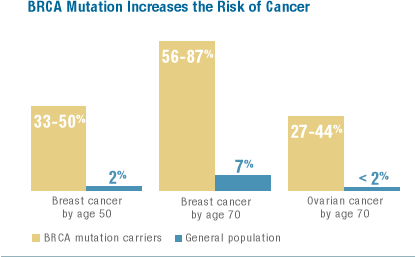
Comment/Additional Resources: For more information regarding HBOC syndrome, genetic testing, genetic counseling & counselors, and genetic risk management, please click the “Genetics” caption tab located at the top of the H*O*P*E* homepage. The BRCA mutation chart above was provided by Myriad Genetics Laboratories, Inc.

Federal Enactment of the 2008 Genetic Information Nondiscrimination Act (GINA) As Law Appears Imminent

“Although nearly 40 states have had individual forms of the legislation in place, with the federal passage of GINA, the message would be unambiguous: the misuse of genetic information resulting in discrimination in employment or health insurance is against the law in all U.S. states.”

“After installing compromises and ‘minor’ changes, including a ‘firewall’ separating the potential liabilities insurers and employers could face, the US Senate last week unanimously passed the Genetic Information Nondiscrimination Act [‘GINA’].

The bill, which seeks to protect individuals’ genetic information from being misused by insurers and employers, now moves to the House, where it is also expected to pass, and then to the White House, where President Bush is expected to sign it into law.

According to American Society of Human Genetics Executive VP Joann Boughman, the Senate version of the bill adopts language appearing in the House bill (HR 493) designed to ‘limit, but not completely prevent,’ employees from suing their employer for being denied insurance based on genetic information obtained by a payor.

The bill exempts employers from liabilities if the employer ‘inadvertently’ garners genetic information through a company-sponsored wellness program, or must request such information in order to monitor biological effects of toxic substances in the workplace. The bill’s language also specifies that ‘an employer, employment agency, labor organization, or joint labor-management committee shall not be considered to be in violation … [for the] use, acquisition, or disclosure of medical information that is not genetic information about a manifested disease, disorder, or pathological condition of an employee or member, including a manifested disease, disorder, or pathological condition that has or may have a genetic basis.’

Industry observers have long said that the lack of legal protections for people’s genetic information deters them from participating in clinical trials for gene-based therapies and tests, which in turn hampers advances in the genetics field.

In an NIH-funded study of families newly -diagnosed with a hereditary cancer syndrome named hereditary non-polyposis colorectal cancer, researchers found that participants consistently asked how their involvement in the study would impact their and their families’ insurance. During the study, ‘it was clear that there was an overwhelming concern, and in some cases, a palpable anxiety about the impact of genetic testing on health insurance,’ Donald Hadley, an associate investigator and a genetic counselor with the National Human Genome Research Institute, said in a 2004 testimony to the HHS Secretary’s Advisory Committee on Genetics, Health, and Society.

‘These concerns dominate our informed consent process and recur session after session with an intensity that opened our eyes to the level of concern that the public feels about genetic discrimination,’ Hadley said in his testimony.

With the expected passage of GINA, academic genetic researchers, diagnostics firms, and pharmacogenomics companies can better assure clinical trial participants that their genetic data will not be used to make insurance or employment decisions, and that they have recourse under the law if their genetic information is abused in such a manner.

GINA is expected to go back to the House of Representatives where it will be aligned with the Senate version of the bill and voted on again. Because GINA has already passed in the House twice with ‘considerable support,’ it is not expected to encounter any problems when the lower chamber votes on it, which can happen as early as this week.

Once it clears the House, GINA is expected to be signed into law ‘in short order,’ Kurt Bardella, press secretary for GINA sponsor Sen. Snowe, told Pharmacogenomics Reporter sister publication GenomeWeb Daily News last week.

In a recent address to the National Institutes of Health, President George Bush said he is willing to sign the bill into law if it passes Congress.

GINA’s Long Haul

Since last summer, after GINA cleared the House the first time by a vote of 420 to 3, the bill has had many detractors. The bill’s main opponent was Senator Coburn, who placed a hold on GINA, citing concern that the bill could potentially increase lawsuits against employers.

Mainly, Coburn wanted the bill to include a ‘firewall’ that would prohibit employees from being able to sue their employers if an insurer denied coverage based on genetic information.

Then in March, in a surprising move, the House passed GINA by a vote of 264 – 148 as part of the Paul Wellstone Mental Health and Addiction Equity Act of 2007 (H.R. 1424), which would require health insurers to cover mental health and substance abuse-related disorders under group health plans.

Attaching GINA to that bill appeared to invite more detractors to the expanded legislation. When the Wellstone bill passed in the House, 11 senators, including Coburn, sent a letter to Democratic leaders in Congress raising concerns about GINA’s ability to ‘maintain current law distinctions between employee benefit disputes … and disputes about civil rights in the employment context.’

Some of GINA’s other detractors, including the US Chamber of Commerce, the National Association of Manufacturers, and the National Retail Federation, shared the Senators’ concerns. These groups, which formed the Genetic Information Non-Discrimination in Employment Coalition, remained optimistic that the group may be appeased with ‘minor technical fixes’ to GINA, according to Michael Eastman, executive director of labor policy at the US Chamber of Commerce.

With GINA’s passage in the Senate, it seems those ‘minor fixes’ are now in place.

Senator Coburn’s office did not return requests for comment on GINA’s passage prior to deadline.

Employer Exemptions

Although the bill would make it unlawful for an employer to obtain genetic information from an employee or a family member in order to make employment decisions, the employer is not held liable for a number of scenarios.

For example, an employer would not be breaking the law if he “inadvertently requests or requires family medical history of the employee or family member of the employee” through a employee-provided wellness program; if the employee provides prior, knowing, voluntary, and written authorization; if the employee and the doctor receive individually identifiable information concerning the results of such services; and if the employer receives genetic information regarding these services in ‘aggregate terms that do not disclose the identity of specific employees.’

The employer is also exempt if genetic information is requested to comply with medical leave laws; if an employer purchases documents that are commercially and publicly available that include family medical history; or where the information involved is to be used for genetic monitoring of the biological effects of toxic substances in the workplace. In the last instance, the employer is required to provide written notice of the genetic monitoring on an employee.

Genetic Alliance President Sharon Terry described the compromise as a product of a “great conversation” between all parties involved and the engagement of the genetics community. She also suggested that the sudden advancement in consumer genetic testing businesses over the past year, and greater discussion in the media about the uses and ethics of such tests, could have helped push the bipartisan effort to pass GINA.

Grassroots Instruction

Expecting GINA to be signed into law, its supporters are now focused on educating physicians and patients regarding their rights.

‘Our challenge now is to make sure that doctors and patients are aware of these new protections so that fear of discrimination never again stands in the way of a decision to take a genetic test that could save a life,’ Kathy Hudson, director of the Genetics and Public Policy Center at Johns Hopkins University.

The pending passage of the bill also was lauded by the Personalized Medicine Coalition, a collection of industry, academic, payor, and other partners. The PMC lauded two of its members, IBM and Eli Lilly, for adding genetic nondiscrimination to their employment policies in advance of GINA’s passage.

‘GINA closes important gaps in the current patchwork of federal and state protections against the misuse of genetic information,’ the PMC said in a statement. ‘Current federal statutes for protecting medical information, including the Health Insurance Portability and Accountability Act, do not prohibit insurers from requiring genetic testing or from denying coverage based on genetic information; and while the Americans with Disabilities Act protects individuals with symptomatic genetic disabilities, it is not clear if it explicitly covers discrimination based on unexpressed genetic susceptibility to disease.’

In the ASHG‘s view, the promulgation of a national genetic anti-discrimination law will help clear up the confusing patchwork of state laws that have emerged.

‘Although nearly 40 states have had individual forms of the legislation in place, with the federal passage of GINA the message would be unambiguous: the misuse of genetic information resulting in discrimination in employment or health insurance is against the law in all US states,’ the ASHG said in a statement.”

[Quoted Source: “Senate Unanimously Passes GINA, Though With‘Compromises’; Now Faces Sympathetic House,” by Turna Ray, Pharmacogenomics Reporter, April 30, 2008.]

Comment: For additional GINA and genetic discrimination information, please refer to the following: (i) “Genetic Information Nondiscrimination Act: 2007-2008,” National Human Genome Research Institute, National Institutes of Health, April 24, 2008; (ii) “Senate Gives GINA Critical Boost Toward Becoming Law,” National Human Genome Research Institute, National Institutes of Health, April 24, 2008; (iii) “Genetic Discrimination” Overview, National Human Genome Research Institute, National Institutes of Health, April 28, 2008; and (iv) “State Genetic Privacy Laws,” National Conference of State Legislatures, January 2008.

Updates:

“Life Must Be Measured in Its Beauty, Not Its Length”

The title quote above was spoken by Elana Waldman, who is the inspirational ovarian cancer survivor highlighted and honored by H*O*P*E* this week. Simply put, Elana Waldman is an outstanding advocate for cancer research. She educated and inspired luncheon guests at the 2007 Israel Cancer Research Fund (ICRF) Women of Action Luncheon held in Toronto, Canada on April 19, 2007. During her talk, Elana provided an account of her illness and discussed her decision to be the first person in Canada to try an unconventional chemotherapy protocol. “I’m young,” Elana says, “my daughter is young, and the numbers are stacked against me. You do whatever you have to do to get the most time possible.” “Cancer,” Elana says, “has given me a clearer understanding of what life is about.”

As you will see from the excerpt of her April 2007 speech and the video below, “Elana’s courageous battle with ovarian cancer will touch your heart. Elana’s appreciation for everyday miracles will open your eyes. Elana’s determination to help others will inspire you …”

“…I was diagnosed 20 months ago on August 19, 2005. Time is running.

On September 23, 2005, after extensive surgery, I was told the cancer was stage 3c despite my doctor’s earlier belief that it was not that advanced. The diagnosis meant that I needed chemotherapy and only had a 30% chance of surviving 5 years from that point. At 32 years old, while trying to build my family and with a 2 year old daughter, this news was devastating.

When I was told the statistics though, I guess I couldn’t wrap my head around them because I never thought I would die. No one I knew had ever died from cancer. My own mother had fought and beat the disease twice. I knew I had a tough road ahead of me but I always focused on the light at the end of the tunnel and just did what I had to do to get better. It was hard but many others had done it before me and I knew I could and had to do it for my family…..

My cancer has returned. When I was told this time, the news hit me like a Mack truck. The numbers for a recurrence are even worse than for an original diagnosis and my chances for survival are small. I understood the numbers this time and the implications for me and my family. The diagnosis shook me to my core and I had a huge reality check. I have cancer, a potentially fatal disease. This is not something that regular medication can treat and I am now literally fighting for my life, everyday. I have given up my career to focus on my health and my family. I want to enjoy as much time as I can while I feel strong and healthy. I want to be a spokesperson for ovarian cancer for a long time but more importantly I want to see my daughter grow up and I want to grow old with my husband.

These simple goals in life that I now set for myself are in jeopardy so I have truly learned to enjoy all the everyday miracles that I do have – my daughter’s smile, my husband’s kiss, my mother’s laugh. I am more than this disease and I do not want to let it take away everything else that makes me the person that I am. I am asking you to help me continue to enjoy these miracles. Your donations and your generosity allow our scientists to do cutting edge research which will hopefully lead to a cure for cancer. Your support for ICRF directly benefits people who are battling cancer and on all their behalves, I say thank you.”

[Quoted Sources: Israel Cancer Research Fund Newsletter – Issue #5, Summer 2007; “Like Getting Hit By a Mack Truck: One Woman’s Fight With Cancer,” Chaim Steinmetz – Happiness Warrior Blog, April 25, 2007.

Jewish Women Change Their Destinies by Testing for Genetic Mutation

“One in 40 Ashkenazi Jews – compared to one in 500 in the general population – carries a mutation that gives women a 50 percent to 85 percent chance of getting breast cancer by the time they are 80. The genetic mutation, discovered in 1994, also increases the likelihood of melanoma and ovarian, prostate or pancreatic cancer. While within the general population about 5 percent of cancers can be attributed to a hereditary syndrome, in the Jewish community, that number is closer to 30 percent. ”

“Erika Taylor didn’t want to know whether she had the breast cancer gene.

‘My thinking was I would never get a prophylactic mastectomy,’ Taylor, 44, said of the idea of removing her breasts as a preventive measure. ‘I just thought it was horrible thing to do to myself, and if I was unwilling to do that, why bother finding out?’

Her grandmother died of breast cancer at 56, and her mother battled and beat the disease in her 30s. Taylor, who is single and the mother of a 14-year-old boy, always suspected cancer was in her future, but taking steps to confirm that was not something she wanted to do. Until she got her own diagnosis.

A routine mammogram last November revealed early stage noninvasive cancer cells in Taylor’s milk ducts, making information about her genetic status vital for determining her treatment.

All of a sudden, the idea of ‘I would never do such a thing’ goes out the window,’ she said. ‘It’s astonishing how quickly you go, ‘OK, OK, what do I need to do? I’ll do it.” Taylor’s mother tested first, and when she was identified as a carrier of the BRCA 2 genetic mutation common in Ashkenazi Jews, Taylor tested next. In January, she found out she, too, carries the gene that makes it likely that even if she were to rid herself of her diagnosed cancer, it would probably recur.

Like a growing number of women, Taylor faced both the gift and the terror of knowledge.

One in 40 Ashkenazi Jews – compared to one in 500 in the general population – carries a mutation that gives women a 50 percent to 85 percent chance of getting breast cancer by the time they are 80. The genetic mutation, discovered in 1994, also increases the likelihood of melanoma and ovarian, prostate or pancreatic cancer. While within the general population about 5 percent of cancers can be attributed to a hereditary syndrome, in the Jewish community, that number is closer to 30 percent.

The good news is that knowledge about how the mutation causes cancer is opening scientific doors to more effective, targeted treatment for those already diagnosed. And people who have the genetic mutation can take preventative measures to drastically reduce their breast and ovarian cancer risk.

Surgery – removal of the breasts and ovaries – reduces the risk of breast cancer by 90 percent, to well below the 13 percent odds of getting breast cancer in the general population. But less-drastic measures, such as drug therapy, removal of just the ovaries and careful screening to catch and cure the cancer at an early stage, can also save lives. Genetic information also helps women feel empowered to take control of other factors that raise risk, such as smoking, alcohol consumption and obesity.

‘The use of genetic information to understand a person’s risk for diseases like cancer is clearly reaping huge benefits,’ said Dr. William Audeh, a medical oncologist with an emphasis on hereditary risk at Cedars-Sinai Medical Center‘s Samuel Oschin Comprehensive Cancer Institute. ‘It’s gone from being a somewhat frightening piece of information that gave people concerns to a hugely important piece of information that empowers people to either take preventative steps that can save their lives or to accurately target therapy if one develops cancer. There is a general understanding that genetic information for cancer is going to be critical for taking the best care of people.’

Knowing she had the genetic mutation sent Taylor, editor of the trade publication, Pool and Spa magazine, into a tailspin of research and soul-searching. Treatment for DCIS (ductal carcinoma in situ) usually consists of removal of the tumor and perhaps radiation. But Taylor’s genetic status put her in a different risk category, and after hearing from four different doctors that her cancer, even if cured, would return, she opted for a double mastectomy and reconstruction. Her surgery is scheduled for May.

Taking the test

While Taylor confirmed her genetic status after a cancer diagnosis, experts encourage people to test before cancer strikes. For Ashkenazi Jews, having just one relative who has had premenopausal breast cancer warrants getting tested, according to geneticists. (For non-Jews, testing is indicated if there are two relatives.) Any history of male breast cancer or any ovarian cancer in the family also raises a red flag, as do multiple cases of melanoma or pancreatic cancer. And women who themselves have early onset breast cancer should be tested, so they can tailor their treatment and inform other family members.

In the last five years, the number of people testing for the BRCA mutation has increased by 50 percent every year, according to Myriad Genetics, which patented the blood test for BRCA about 12 years ago. About 70,000 people tested last year. Myriad recently launched an East Coast direct-marketing campaign for the test.

Of the estimated 600,000 people who carry the gene in the United States, only about 20,000 have been identified. Of those 600,000 carriers, about 150,000 are Jewish, mostly Ashkenazi. Other ethnic groups, such as French Canadians and Filipinas, also have a genetic predisposition, as do some Latina subpopulations – some of which have been traced back to having Jewish genes.

Only about 15 percent of people who test come out with positive results, though the percentage is somewhat higher among Jews. But even a negative result is not entirely reassuring, since it indicates only that the specific mutations were not found. Other as-yet-undiscovered mutations, or other genes, could also cause a heavy incidence of cancer in a family, according to Dr. Ora Gordon, director of the GenRISK adult genetics program at Cedars.

Gordon encourages anyone being tested to see a genetic counselor to get the results properly interpreted and to understand their options if they find out they are carriers.

‘When learning about this for the first time, very frequently people say to themselves, If I’m not going to have surgery, I shouldn’t get this test.” Gordon said. ‘But that would be a tremendous loss in terms of potential reassurance for people who are not carriers and for identifying people who might have a whole variety of other options that might provide very substantial risk reduction.’

Prophylactic bilateral mastectomy – or having both breasts removed before any sign of cancer – seems to be growing in popularity as an option in the United States, though hard statistics are just now being compiled.

One recent study of women with the BRCA mutation and a cancer diagnosis put the rate of mastectomy at 50 percent in the United States, the highest by far of anywhere in the world. In Israel, that number is 2 percent, Gordon said.

In Los Angeles in particular, the numbers seem to be especially high.

Gordon estimates that 65 percent to 70 percent of BRCA-positive women in Cedars’ cancer programs opt for the surgery, some immediately, some after a few years of surveillance. ‘The quantity and quality of medical options makes the surgery more attractive in big cities, and Los Angeles has a high tolerance for breast surgery,’ Gordon said. She is spearheading a study about decision-making among BRCA-positive women at Cedars’ Gilda Radner early detection program, which screens genetically high-risk women for ovarian cancer.

Gordon understands that a woman’s decision about treatment is intertwined with her relationship status, her self-image and how many family members she saw battle or succumb to cancer.

Surgery or surveillance?

‘The decision to take off your breasts is really hard. It’s a part of your body that is associated with your outward appearance, and it’s a part of who you are. It’s a part of your sex life,’ said Joi Morris, who was 41 when she learned she carried the same genetic mutation that gave her mother and grandmother breast cancer at a young age.

Morris remembers a day, not long after she found out, when she really confronted the issue as her sons, then 7 and 10, played at the beach.

‘My kids were in the water and jumping and playing and having a fabulous time, and I looked down at my breasts in my swimming suit and thought, “Oh my God, what would it be like to not have these?'” ‘It’s a seesaw of emotions,’ she said, because at the same time, ‘you wake up every morning, and you know you are at risk, and you wonder if there is something in there you can’t find.’

Morris initially opted for close surveillance – a regimen of regular mammograms, manual exams, ultrasounds and breast MRIs – the most sensitive, noninvasive screening available, used only for high-risk patients. Her first MRI revealed a lump close to her chest wall.

‘I panicked. There is no other way to put it. That lump turned out to be benign, but the whole process was so stressful for me and hard on my family. I just decided if this lump is not cancer, the next one could be,’ Morris said.

She had a prophylactic bilateral mastectomy, with immediate reconstruction. As it turned out, her surgery wasn’t prophylactic at all – pathology revealed pre-cancerous cells scattered throughout both breasts.

Early in the process, Morris turned for support and information to FORCE: Facing Our Risk for Cancer Empowered, an organization that advocates for people at high genetic risk for breast and ovarian cancer.

Today, she is an outreach coordinator for FORCE, helping link women through face-to-face groups and one-on-one pairings as they face life-altering decisions.

‘It was very hard getting those results,’ said Lisa Stein, a 43-year-old mother of two, who found out she has the gene last year. ‘I was trying to prepare for being positive, but I don’t think you ever can. After I got the results, I really struggled. I was feeling raw for a while, crying easily knowing that it was going to be life-changing.’

Stein’s mother died of breast cancer at 57, and her grandmother died of ovarian cancer, but she didn’t test until her older sister, Lauren Rothman, tested positive.

Rothman opted for a mastectomy, but Stein chose to keep her breasts.

‘I think I knew instinctively that I was not going to have a double mastectomy. That felt too radical to me,’ Stein said. ‘I didn’t feel psychologically prepared or that it was necessary. I don’t feel like cancer is imminent; I feel like I have a few years to take it in and think about it and prepare, so I’ve put that decision on hold.’

She goes in for screening every few months, and she said the anxiety of waiting for those results has been manageable.

Both Rothman and Stein had their ovaries removed, however, which doctors are now recommending for women who test positive and who are finished having children or who are over age 35. Removing ovaries not only reduces the risk of ovarian cancer – which is notoriously hard to catch early and thus has a high mortality rate – but it reduces the risk of breast cancer by 50 percent. Stein also went on Tamoxifen, a drug taken by breast cancer survivors to reduce the risk of recurrence and which reduces risk by 50 percent in BRCA-positive women. The birth control pill, which stops the ovaries from cycling, can also reduce the risk of ovarian cancer but requires more vigilant screening for breast cancer.

Both ovary removal and Tamoxifen push women into menopause, with all its emotional, sexual and physiological ramifications.

‘I think of myself as a healthy person but not like I used to – it’s kind of tainted,’ Stein said. ‘It’s an identity issue. I still think of myself as youthful, but suddenly, I’m dealing with instant menopause, and that doesn’t sit well with me. But I’m dealing with it.’

Stein and Rothman provide support for each other, despite the different routes they’ve taken.

‘I came to reality very quickly – and the reality was I wanted to see my children grow up, and I didn’t want cancer, and I didn’t want chemotherapy. I wanted the rest of my life,’ Rothman said. Her daughters were 3 and 5 years old when she had surgery.

Rothman, a program director for Hadassah of Southern California, traveled to New Orleans for her breast procedure – two surgeries and tatoooing – at a small clinic that specializes in natural-tissue reconstruction, where a solid flap of fat is removed from the belly and inserted into the shell of the breast after tissue has been removed. The surgery offers a more natural result than silicone implants, though it is longer and more involved.

‘This procedure has provided me with a new outlook on life. It has taken a huge weight off my shoulder,’ Rothman said. ‘I no longer go into mammograms thinking, “Is this the year I’m going to get cancer like mom?'”

And she loves her new body – she got not only a breast lift but a bonus tummy tuck, too.

Advances in reconstructive techniques mean that women have several options for maintaining a body they can feel proud of.

Decades ago, radical mastectomies removed all the tissue and muscle of the chest wall. Today, the muscle is not removed, and reconstructive surgery, usually at the time of mastectomy, can leave intact the women’s natural skin, but in most cases the nipples and areola are removed. A silicone implant, or, as in Rothman’s case, fat from the abdomen, fills the pocket from which breast tissue was removed. Nipples and areola are tattooed on, or some surgeons use a new technique that leaves a woman’s own nipple and areola intact. Doctors try to bury scars in the fold beneath the breast, though that is not always possible.

But even the most beautifully done reconstructions leave a woman with scars and no sensation in her breasts.

‘When women come to see me, my approach is to listen to them and find out where they are in life and how they relate to their own breasts,’ said Dr. Kristi Funk, a breast surgeon and director of patient education at Cedars’ Brandman Breast Center. ‘Women have different feelings about sexuality and what roles breasts play, and that makes a big difference.’

Funk also finds out about the woman’s relationship status, and how she has been affected by a family history of cancer.

More information, better treatment

Family histories can be deceptive, however. Some families don’t know their medical histories, because they were lost due to the Holocaust or immigration.

The gene also can hide out in male members of a family.

A BRCA 1 gene mutation raises the risk of male breast cancer to 6 percent, and there is no increased risk for other cancers. BRCA 2 mutation also increases the risk for melanoma, prostate and pancreatic cancer. Still, men who carry the gene are likely never to get any cancer, although they have a 50 percent chance of passing the gene to children. Families with few females may never discern any cancer history.

Dora Cohen (not her real name) suspects it was her father who passed the BRCA 1 gene mutation to her. Last year, she was diagnosed with DCIS, a noninvasive cancer, which was treated with a lumpectomy and radiation. Of the many oncologists she saw, only one recommended that as an Ashkenazi woman in her 40s, she probably should have genetic testing.

In the last six months, Dora has had her ovaries, uterus and breasts removed.

Her daughter, Diane (not her real name), who is 27 and has been married for two years, doesn’t want to get tested yet.

‘I see what my mom is going through,’ Diane said. ‘I want to have kids, and I’m not in a place where I would take those measures [mastectomy and removal of the ovaries]. Knowing I’m positive and having that pressure on me would be something very difficult to live with.’

She and her husband of two years have pushed up their plans for children, and she worries that a positive test could jeopardize her medical insurance, especially because she is self-employed.

Federal and California law provide fairly good protection against genetic discrimination from insurers, stipulating that a genetic predisposition cannot be considered a pre-existing condition. But individual policies are not as well protected as group policies.

Still, genetics experts say much of the fear is overblown. They point out that there has been little litigation involving genetic discrimination, and that the insurance industry is open to the reality that genetic testing can lead to better and more cost-effective treatment. Most insurers cover genetic testing, and some genetic counseling – a rapidly growing field.

‘The genetics community has been struggling to help people understand the importance of talking to someone who knows the nuances of genetic testing,’ said Heather Shappell, a genetic counselor and founder of Informed Medical Decisions, which offers over-the-phone genetic counseling.

‘Genetic tests do not always yield a yes-or-no answer,’ Shappell said, ‘and often doctors aren’t sure how to read the results and guide patients through their decisions.’

In August, Aetna extended full coverage for Shappell’s phone-counseling services to its 14 million policyholders.

What geneticists are looking for is an error in the sequencing of the BRCA gene.

All people carry two genes, BRCA 1 and BRCA 2, which prevent cancer by repairing damaged cells. A mutation damages the genes’ repair function, which leads to uncontrolled growth and causes cells to become cancerous.

About 95 percent of Ashkenazi Jews who have the mutation have one of three errors, which means the mutation is easier to find and the test costs much less – about $400, as compared to $3,000 for a test that analyzes the entire gene.

As researchers learn more about how BRCA mutations cause cancer, they are developing targeted treatments.

A clinical trial with sites at Cedars and City of Hope uses a drug called a PARP-inhibitor to shut down the cell’s backup repair function. Normal cells are not affected, because the primary repair pathway is still functioning. But cancerous cells are left with no functioning repair system, so those cells die. Because normal cells are not affected, there are few major side effects.

‘We have a promising situation where you have a treatment which is completely targeted to cancer and leaves the normal cells alone. And that is very different from treatments like chemotherapy, where there is toxicity to every cell,’ said Audeh of Cedars.

Another study in Israel has found that women with ovarian cancer who are BRCA positive respond better to chemotherapy and have a higher survival rate than women who are not carriers, according to Jeff Weitzel at City of Hope. Weitzel, an investigator in the PARP-inhibitor trial, is also working on a study that manipulates hormones to reduce breast density, which makes surveillance through mammography and ultrasound more effective.

In February, the Jerusalem Post reported that doctors for an Orthodox woman undergoing in-vitro fertilization at Hadassah Hospital were able to identify and screen out embryos that had inherited her BRCA mutation. [Jerusalem Post Feb. 2008 article abstract]

A gift of life?

But while such progressive procedures have been generally well received in Israel, there is still social reluctance to test for the gene, especially in traditional circles, where families fear a genetic flaw could hurt the marriageability of their kids.

Debra Nussbaum Stepen, a Los Angeles therapist who now lives in Israel, is trying to break those perceptions. She works as a therapist at a clinic for hereditary breast and ovarian cancer, and she volunteers for Bracha, a Hebrew-language Web site for BRCA carriers.

The name of the site – bracha means blessing and is a play on BRCA – connotes that knowing one’s genetic makeup is a blessing that can save one’s life.

It is a lesson Stepen learned personally.

Her father had several kinds of cancer, including breast cancer, and before he died at 77, Debra urged him to get genetic testing. She was 51 and had never had cancer when she found out she carried the gene.

‘My doctor told me my breasts were ticking time bombs, and I couldn’t go to bed at night knowing that and thinking today am I going to get cancer?’ said Stepen, who has three stepchildren and a new stepgranddaughter.

She observed her father’s first yahrzeit in New Orleans, where she was undergoing the third and last part of a double mastectomy and reconstruction.

‘I said to my husband, in my father’s death he gave me the gift of life,’ Stepen said.

It takes time to reach this comfort level. As Erika Taylor prepares for her surgery in a few weeks, she worries about the ‘gift’ she may give to her son. She and her mom have talked about how irrational that guilt is.

‘I can say to my mom, “You didn’t know. It’s OK. It’s not your fault,’” she said. ‘But when it comes to me and my son, I think how could I have done this to my son. I am in abject horror that I might have passed this on to him. I know it’s irrational, but the whole idea fills me with grief.’

At the same time, she has hope.

‘My grandmother died from breast cancer at 56. My mother almost died of this disease. And I’m not going to even come close to dying,’ Taylor said. ‘My hope for my son, if he has this, is that he may not have to have any medical intervention at all. Maybe they can repair this mutation. The idea that there is trajectory moving in the right direction gives me some comfort and hope.’”

[Quoted Source: “Jewish women change their destinies by testing for genetic mutation,” by Julie Gruenbaum Fax (Jewish Journal of Greater Los Angeles), Texas Jewish Post, April 24, 2008 (emphasis added)]

Comment: For additional information relating to hereditary breast and ovarian cancer with respect to all women (Jewish and Non-Jewish), refer to the following: (i) FORCE: Facing Our Risk of Cancer Empowered; (ii) National Breast and Ovarian Cancer Coalition; (iii) “Clinical Considerations,” Genetic Risk Assessment and BRCA Mutation Testing for Breast and Ovarian Cancer Susceptibility Recommendation Statement, U.S. Preventive Services Task Force (USPSTF), Agency for Healthcare Research & Quality (AHRQ), U.S. Department of Health & Human Services, September 2005; (iv) “Genetics” hyperlinked materials, H*O*P*E* Blog homepage.


Macmillan Cancer Support Launches On-Line Personalized Assessment For Risk of Inherited Breast or Ovarian Cancer

With so many women concerned about the possibility of inherited breast or ovarian cancer, Macmillan Cancer Support launched “OPERA” (On-line Personal Education and Risk Assessment) – the first United Kingdom on-line interactive software program which gives personalized information regarding a woman’s risk with respect to hereditary breast and ovarian cancer. Macmillan Cancer Support is based in London, England and merged with Cancerbackup in April 2008.

Dr Andrea Pithers, Genetic Information Project Manager at Macmillan Cancer Support, says: “By simply typing in some details of your family medical history, OPERA can provide personalised information and advice on whether there might be an inherited genetic link and where to go for further information and support.”

Upon the OPERA launch, Mike Richards, the United Kingdom Government’s National Cancer Director said: “This is an important resource for all those who have concerns over breast and ovarian cancer in their family. For many it will provide reassurance that the risk is not as high as they feared. For others it will provide the information which prompts them to see their GP [General Practitioner] and get tested for the BRCA gene or to be referred appropriately for further genetic assessment.”

Jan Buckle discovered that she inherited a BRCA gene mutation after her sister died of breast cancer and her mother was diagnosed with the same disease. She had her ovaries removed and a double mastectomy with reconstructive surgery as a preventative measure against developing cancer herself. When asked to comment about OPERA, Jan said: “OPERA will be very useful for families like mine, and those who are worried that inherited breast and ovarian cancer runs in their family. It was really important for me to know the risks and to find out if I had the gene so I could make informed decisions on how to prevent breast and ovarian cancer occurring. Knowing your risk from inherited breast or ovarian cancer and getting good advice on what to do is much better than burying your head in the sand and just hoping that you don’t get breast cancer. I urge anyone who has any concerns to go on-line and try OPERA out for themselves.”

For additional resources regarding hereditary breast and ovarian cancer, click on the “Genetics” caption tab located at the top of the H*O*P*E* homepage.

OPERA Genetic Breast/Ovarian Cancer Risk Assessment Tool

[Source: “Macmillan Cancer Support launch on-line personalised assessment for risk of inherited breast or ovarian cancer,” Macmillian Cancer Support Press Release dated April 23, 2008.]

Avastin/Tarceva Combination May Be No More Effective Than Avastin Monotherapy

The purpose of this single arm, multicenter Phase II clinical trial was to assess the activity and tolerability of the combination of bevacizumab (Avastin®) and erlotinib (Tarceva®) in patients with recurrent ovarian, primary peritoneal or fallopian tube cancer. Eligible patients received two or fewer prior chemotherapy regimens for recurrent or refractory disease and no prior anti-VEGF or anti-EGFR drugs. Between July and October 2005, 13 patients were enrolled.

There were two major objective responses — one complete response of 16+ month duration and one partial response of 11 month duration, representing an overall response rate of 15%. Two patients had fatal gastrointestinal perforations, and therefore, the study was discontinued. The trial investigators concluded that there was no strong suggestion that the Avastin®/Tarceva® combination was superior to single agent Avastin®, and noted that the rate of gastrointestinal perforation was of concern. The investigators believe that identification of risk factors for gastrointestinal perforation will be important with respect to the use of Avastin in the treatment of ovarian cancer.

[Source: “Efficacy and safety of bevacizumab plus erlotinib for patients with recurrent ovarian, primary peritoneal, and fallopian tube cancer: A trial of the Chicago, PMH, and California Phase II consortia;” Nimeiri HS, et. al., Gynecol Oncol. 2008 Apr 17 (Epublication ahead of print).]

Epirubicin Improves Overall Survival Better Than Ifosfamide When Combined with Paclitaxel and Cisplatin

Epirubicin (Ellence®) produced longer median overall survival (OS) than ifosfamide (Ifex®) in a recent phase II randomized clinical trial comparing (i) cisplatin, paclitaxel and ifosfamide, with (ii) cisplatin, paclitaxel and epirubicin, in newly diagnosed advanced epithelial ovarian cancer patients. In this trial, patients with histologically proven epithelial ovarian cancer were randomly assigned to receive first-line polychemotherapy with cisplatin/paclitaxel/epirubicin (CEP arm) or cisplatin/paclitaxel/ifosfamide (CIP arm) for six cycles every 21 days. Two hundred and eight patients were randomised between the two treatment arms. The Phase II clinical trial finds were as follows:

  • After a median follow-up of 82 months, median overall survival (OS) was 51 months in the CIP arm, and 65 months in the CEP arm; and
  • 5-year survival rates were 43% in the CIP arm, and 50% in the CEP arm.

The trial investigators note that the OS findings seem longer in duration than is commonly reported, especially considering that more than 50% of the newly diagnosed advanced ovarian cancer patients were suboptimally debulked or cytoreduced after their first surgery. The trial investigators concluded that this unexpected finding might be a consequence of the close surgical surveillance and aggressive chemotherapeutic approach.

[Source: “A phase II randomised clinical trial comparing cisplatin, paclitaxel and ifosfamide with cisplatin, paclitaxel and epirubicin in newly diagnosed advanced epithelial ovarian cancer: long-term survival analysis;” Fruscio R. et. al.; Br J Cancer. 2008 Feb 26;98(4):720-7.]

Comment: Although small in size, this Phase II randomized clinical trial suggests that aggressive surgical intervention followed by aggressive polychemotherapy (involving epirubicin or ifosfamide in tandem with paclitaxel and cisplatin) may increase overall survival in newly diagnosed, advanced-stage ovarian cancer survivors. The findings of at least one major clinical study cite that optimal cytoreduction, as a stand-alone independent factor, provides up to a 50% increase in actuarial survival. In the U.S., an “optimal” cytoreduction is generally defined as a surgical procedure that results in 1 centimeter or less of macroscopic cancer present within the body after surgery. The surprising results of the study discussed above seem to indicate that a suboptimal cytoreduction or debulking surgery followed by aggressive polychemotherapy may be beneficial in extending overall survival in newly diagnosed, advanced-stage ovarian cancer survivors. The issue of what measure should be used to define an “optimal” cytoreduction or debulking is not without controversy with the ovarian cancer arena.

Avastin Used in Combination with Taxol and Paraplatin Will Become the Clinical Gold Standard Treatment by 2011

“Avastin Used in Combination with Taxol and Paraplatin Will Become the Clinical Gold Standard Treatment by 2011, According to a New Report from Decision Resources

WALTHAM, Mass., April 23 /PRNewswire/ — Decision Resources, one of the world’s leading research and advisory firms focusing on pharmaceutical and healthcare issues, finds that surveyed oncologists say that a therapy’s effect on overall survival is the attribute that most influences their prescribing decisions in advanced ovarian cancer. Clinical data and expert opinion show that Roche/Genentech/Chugai‘s Avastin (bevacizumab) plus the regimen of paclitaxel (Bristol-Myers Squibb’s Taxol, generics) and carboplatin (Bristol- Myers Squibb’s Paraplatin, generics) has advantages in this attribute over the combination of paclitaxel/carboplatin, the current sales leader in ovarian cancer treatment.

The new report entitled Ovarian Cancer (Advanced): Therapies Must Increase Survival over Paclitaxel/Carboplatin to Successfully Enter this Generic Market finds that, according to surveyed oncologists, a drug that offers improved median overall survival compared with paclitaxel/carboplatin would earn a 50 percent patient share in the ovarian cancer market. Surveyed oncologists indicated that they would prescribe Avastin plus paclitaxel/carboplatin to 29 percent of their patients with advanced ovarian cancer. As a result, Avastin plus paclitaxel/carboplatin will earn a 22 percent patient share in the U.S. advanced ovarian cancer market in 2016.

The report also finds that Avastin plus paclitaxel/carboplatin will earn the clinical gold-standard status for treatment of advanced ovarian cancer in 2011, following its approval for the indication in 2010. Surveyed oncologists indicated that Avastin plus paclitaxel/carboplatin has competitive advantages in efficacy over paclitaxel/carboplatin, the current gold standard.

‘Avastin plus paclitaxel/carboplatin has the same delivery attributes and only marginally different safety attributes when compared with paclitaxel/carboplatin,’ said Jenna Avent, analyst at Decision Resources. ‘However, the regimen of Avastin plus paclitaxel/carboplatin has better efficacy when compared to the current gold standard, paclitaxel/carboplatin, and oncologists rate efficacy as the most important parameter in the treatment of advanced ovarian cancer.’”

[Quoted Source:  “Avastin Used in Combination with Drugs from Bristol-Myers Squibb Has Advantages in Survival Rates Over the Current Sales-Leading Therapy for Advanced Ovarian Cancer,” News, EarthTimes.org, April 23, 2008][Emphasis added].

Ovarian Cancer Developments Presented at the 2008 Annual AACR Meeting

I have set forth below a list of several significant ovarian cancer developments that were presented at the 2008 Annual Meeting of the American Association For Cancer Research (AACR) held on April 12 – 16, 2008 in San Diego, California.

“I’m Strongs to the Finish, ‘Cause I Eats Me Spinach”* — Popeye May Have It Right When It Comes to Ovarian Cancer Prevention

Brigham and Women’s Study Finds Eating a Flavonoid-Rich Diet Helps Women Decrease Risk of Ovarian Cancer –Findings from the Nurses’ Health Study

Boston, MA – New research out of the Channing Laboratory at Brigham and Women’s Hospital (BWH) reports that frequent consumption of foods containing the flavonoid kaempferol, including non-herbal tea and broccoli, was associated with a reduced risk of ovarian cancer. The researchers also found a decreased risk in women who consumed large amounts of the flavonoid luteolin, which is found in foods such as carrots, peppers and cabbage. These findings appear in the November 15, 2007 issue of the International Journal of Cancer.

‘This is good news because there are few lifestyle factors known to reduce a woman’s risk of ovarian cancer,’ said first author Margaret Gates, ScD, who is a research fellow at BWH. “Although additional research is needed, these findings suggest that consuming a diet rich in flavonoids may be protective.”

The causes of ovarian cancer are not well understood. What is known is the earlier the disease is found and treated, the better the chance for recovery; however, the majority of cases are diagnosed at an advanced (metastasized) stage after the cancer has spread beyond the ovaries. According to the National Cancer Institute, the 5-year relative survival rate for women diagnosed with localized ovarian cancer is 92.4 percent. Unfortunately, this number drops to 29.8 percent if the cancer has already metastasized.

In this first prospective study to look at the association between these flavonoids and ovarian cancer risk, Gates and colleagues calculated intake of the flavonoids myricetin, kaempferol, quercetin, luteolin and apigenin among 66,940 women enrolled in the Nurses’ Health Study. In this population, 347 cases of epithelial ovarian cancer were diagnosed between 1984 and 2002.

Although total intake of these five common dietary flavonoids was not clearly beneficial, the researchers found a 40 percent reduction in ovarian cancer risk among the women with the highest kaempferol intake, compared to women with the lowest intake. They also found a 34 percent reduction in the risk of ovarian cancer among women with the highest intake of luteolin, compared to women with the lowest intake.

‘In this population of women, consumption of non-herbal tea and broccoli provided the best defense against ovarian cancer,’ concluded Gates, who is also a research fellow at the Harvard School of Public Health. ‘Other flavonoid-rich foods, such as onions, beans and kale, may also decrease ovarian cancer risk, but the number of women who frequently consumed these foods was not large enough to clearly evaluate these associations. More research is needed.’

The National Cancer Institute funded this research.”

[Quoted Source: “Brigham and Women’s Study Finds Eating a Flavonoid-Rich Diet Helps Women Decrease Risk of Ovarian Cancer — Findings from the Nurses’ Health Study,” Brigham and Women’s Hospital Press Release, dated November 13, 2007 (citing findings from “A prospective study of dietary flavonoid intake and incidence of epithelial ovarian cancer;” Gates, M.A. et. al.; International Journal of Cancer, Volume 121, Issue 10, Pages 2225 – 2232 (November 15, 2007))].

Comment: In addition to spinach, foods richest in kaempferol include tea (nonherbal), onions, curly kale, leeks, broccoli, and blueberries.

* In 1933, Max and Dave Fleischer’s Fleischer Studios adapted Thimble Theatre characters into a series of Popeye the Sailor theatrical cartoon shorts for Paramount Pictures. These cartoons proved to be among the most popular of the 1930s, and the Fleischers-and later Paramount’s own Famous Studios-continued production through 1957. Since then, Popeye has appeared in comic books, television cartoons, a 1980 live-action film (Popeye, directed by Robert Altman), arcade and video games, and hundreds of advertisements and peripheral products.

Early references to spinach in the Fleischer cartoons and subsequently in further stories of Popeye are attributed to the publication of a study which, because of a misprint, attributed to spinach ten times its actual iron content. The error was discovered in the 1930s but not widely publicized until T.J. Hamblin wrote about it in the British Medical Journal in 1981. Until that time, the popularity of Popeye helped boost sales of the leafy vegetable 33% in the U.S.

“The Truth About Cancer,” Airs April 16th on PBS

The Truth About Cancer on PBS -- Airs April 16th