M.D. Anderson Researchers Find GM-CSF and rIFN-gamma1b Plus Carboplatin Effective For the Treatment of Recurrent, Platinum-Sensitive Ovarian Cancer

Researchers working in the Gynecologic Oncology Department of The University of Texas M.D. Anderson Cancer Center, reported Phase II clinical study results from their evaluation of the use of carboplatin, granulocyte-macrophage colony-stimulating factor (GM-CSF) and recombinant interferon gamma 1b (rIFN-gamma1b) in women with recurrent, platinum-sensitive ovarian, fallopian tube and primary peritoneal cancer. …

Researchers working in the Gynecologic Oncology Department of The University of Texas M.D. Anderson Cancer Center, reported Phase II clinical study results from their evaluation of the use of carboplatin, granulocyte-macrophage colony-stimulating factor (GM-CSF) and recombinant interferon gamma 1b (rIFN-gamma1b) in women with recurrent, platinum-sensitive ovarian, fallopian tube and primary peritoneal cancer.

As part of this Phase II clinical study, patients with recurrent, platinum-sensitive ovarian, fallopian tube or primary peritoneal cancer were treated with subcutaneous GM-CSF and rIFN-gamma1b before and after intravenous carboplatin until their disease progressed or unacceptable toxicity occurred. All patients had measurable disease and a chemotherapy-free interval >6 months. Response was determined using Response Evaluation Criteria In Solid Tumors (RECIST) criteria and CA 125 blood serum levels. Between 2003 and 2007, 59 patients received a median of 6 cycles of therapy (range, 1 to 13 cycles). The median patient age at enrollment was 61 years (range, 35 to 79 years). The median patient time to disease progression prior to clinical study enrollment was 11 months (range, 6 to 58 months).

The M.D. Anderson researchers reported the following results:

Based upon the foregoing results, the researchers concluded that the pre- and post-carboplatin cytokine regimen resulted in a reasonable response and a hematologic profile that could invite further evaluation of its components in the treatment of patients with ovarian cancer.

Primary SourceA phase II study of GM-CSF and rIFN-gamma1b plus carboplatin for the treatment of recurrent, platinum-sensitive ovarian, fallopian tube and primary peritoneal cancer; Schmeler KM, Vadhan-Raj S, Ramirez PT et. al., Gynecol Oncol. 2009 Mar 3. [Epub ahead of print].

A Potential Treatment For Ovarian Cancer – Claudin-3 Gene Silencing Using Small Interfering RNA

“… Ovarian tumors highly express two proteins, claudin-3 and -4. These proteins are associated with both an increase is cellular motility and survival of ovarian tumor cells.  Claudin-3 is also over expressed in breast and prostate tumors. This new therapy is targeting claudin-3 (CLDN3) using small interfering RNA (siRNA). More specifically, this team has developed a nanoparticulate, lipid-like delivery system for intraperitoneal delivery of siRNA to ovarian tumors. Tests of the therapeutic efficacy of CLDN3 siRNA in three different mouse models showed a significant reduction in tumor growth.  Additionally, these mice showed no ill side effects of the CLDN3 siRNA treatment. …”

“PAPER REVEALS POTENTIAL NEW TREATMENT FOR OVARIAN CANCER

Wynnewood, PA, February 9, 2009 – – – – – Ovarian cancer is the fourth most common cancer in women and has the highest mortality rate for gynecologic cancers because it is often diagnosed at an advanced stage. New effective therapies for the treatment of advanced stage ovarian cancer are urgently needed.

Today, a paper published in the Proceedings of the National Academy of Sciences (PNAS) by Dr. Janet Sawicki, Professor at the Lankenau Institute for Medical Research (LIMR), a team headed by Daniel G. Anderson, Ph.D. and Robert Langer, Sc.D. of the David H. Koch Institute for Integrative Cancer Research at the Massachusetts Institute of Technology (MIT) and David Bumcrot, Director of Research at Alnylam Pharmaceuticals, shows that a new therapy suppresses ovarian tumor growth and metastasis in preclinical studies.

Ovarian tumors highly express two proteins, claudin-3 and -4. These proteins are associated with both an increase is cellular motility and survival of ovarian tumor cells.  Claudin-3 is also over expressed in breast and prostate tumors. This new therapy is targeting claudin-3 (CLDN3) using small interfering RNA (siRNA). More specifically, this team has developed a nanoparticulate, lipid-like delivery system for intraperitoneal delivery of siRNA to ovarian tumors. Tests of the therapeutic efficacy of CLDN3 siRNA in three different mouse models showed a significant reduction in tumor growth.  Additionally, these mice showed no ill side effects of the CLDN3 siRNA treatment.

‘We are excited by the preclinical performance of these formulations, and are hopeful that the lipidoid-siRNA nanoparticulates developed here may enable new genetic therapies for ovarian cancer,’ said Anderson.

‘These findings offer new hope for a therapeutic treatment option for individuals with metastatic ovarian cancer and potentially other types of cancers that over-express CLDN3’, states Dr. Janet Sawicki.  ‘Our next step is to begin Phase I clinical trials to test for safety with hopes to bring this treatment to the patient in the next few years.’

This research was made possible through funding from the National Institutes of Health (NIH), the Sandy Rollman Ovarian Cancer Foundation of Havertown, PA, and Wawa.

Lankenau Institute for Medical Research
Founded in 1927, the Lankenau Institute for Medical Research (LIMR) is an independent, nonprofit biomedical research center located in suburban Philadelphia on the campus of the Lankenau Hospital. As part of the Main Line Health System, LIMR is one of the few freestanding, hospital-associated medical research centers in the nation.  The faculty and staff at the Institute are dedicated to advancing an understanding of the causes of cancer and heart disease. They use this information to help improve diagnosis and treatment of these diseases as well as find ways to prevent them. They are also committed to extending the boundaries of human health and well-being through technology transfer and education directed at the scientific, clinical, business and lay public communities. For more information visit: http://www.limr.org.

David H. Koch Institute for Integrative Cancer Research at MIT
Launched by MIT in 2008, the David H. Koch Institute for Integrative Cancer Research (KI) both transforms and transcends the Center for Cancer Research (CCR). CCR was founded in 1974 by Nobel Laureate and MIT Professor Salvador Luria, CCR has made enormous contributions to the field of cancer research. The Koch is one of only seven National Cancer Institute-designated basic research centers in the US and is comprised of faculty that have earned the most prestigious national and international science honors including the Nobel Prize and the National Medal of Science. For more information visit: web.mit.edu/ki/index.html.

Alnylam Pharmaceuticals, Inc.
Alnylam Pharmaceuticals, a leader in RNAi therapeutics, is a biopharmaceutical company developing novel therapeutics based on a breakthrough in biology known as RNA interference, or RNAi; a discovery that enables the creation of a broad new class of human therapeutics. Using RNAi, Alnylam has built a product engine to develop a deep pipeline of drug products to treat a wide array of important diseases. For more information visit: http://www.alnylam.com

Contact: Tava Shanchuk
Phone: (610) 645-3429
E-mail: shanchukt@mlhs.org”

RNA Interference Primer – Alnylam Pharmaceuticals

Quoted Source Paper Reveals Potential New Treatment for Ovarian Cancer, Press Release, Lankenau Institute for Medical Research, Feb. 9, 2009.

Primary CitationClaudin-3 gene silencing with siRNA suppresses ovarian tumor growth and metastasis; Huang YH, Bao Y, Peng W et. al., Proc Natl Acad Sci U S A. 2009 Feb 10. [Epub ahead of print]

Additional Resources:

Infinity Announces Hedgehog Pathway Ovarian Cancer Preclinical Data; Results Indicate Significant Inhibition of Tumor Growth in Primary Ovarian Cancer

Infinity Pharmaceuticals, Inc. (Nasdaq:INFI), an innovative cancer drug discovery and development company, … announced the presentation of preclinical data from the natural product foundation of IPI-926, Infinity’s orally-available inhibitor of the Hedgehog pathway, demonstrating significant inhibition of tumor growth in a primary ovarian cancer model.

“CAMBRIDGE, Mass., Feb. 9, 2009 (GLOBE NEWSWIRE) — Infinity Pharmaceuticals, Inc. (Nasdaq:INFI), an innovative cancer drug discovery and development company, today announced the presentation of preclinical data from the natural product foundation of IPI-926, Infinity’s orally-available inhibitor of the Hedgehog pathway [see “Hedgehog Structure & Function,’ and ‘Hedgehog Inhibition’ Animations below under ‘Additional Resources’] demonstrating significant inhibition of tumor growth in a primary ovarian cancer model.

Data from the laboratory of Bo Rueda, Ph.D., Associate Professor, Department of Obstetrics, Gynecology and Reproductive Biology, Harvard Medical School and Associate Director, Vincent Center for Reproductive Biology, Massachusetts General Hospital, was introduced in an oral presentation entitled, Hedgehog inhibitor cyclopamine suppresses Gli1expression and inhibits serous ovarian cancer xenograft growth last week at the 40th Annual Meeting on Women’s Cancer of the Society of Gynecologic Oncologists. The data show that treatment with cyclopamine, the natural product foundation of IPI-926, in animals bearing grafts of primary ovarian cancer resulted in significant tumor growth inhibition compared to vehicle treated animals. Dr. Rueda’s models of ovarian cancer are derived from patient specimens that have not undergone prior tissue culture, and are believed to reflect the clinical presentation of ovarian cancer.

Infinity’s novel, oral, Hedgehog pathway inhibitor, IPI-926, is semi-synthetic derivative of the natural product cyclopamine with superior drug-like properties, including being 30 to 50 times more potent. In addition, IPI-926 has demonstrated significant anti-tumor activity and excellent pharmaceutical properties, including oral bioavailability, long plasma half-life and duration of action, and dose-dependent inhibition of tumor growth, in a number of preclinical models including pancreatic cancer, small cell lung cancer, and medulloblastoma.

IPI-926 is currently being evaluated in a Phase 1 trial in patients with advanced and/or metastatic solid tumors. The study is designed to evaluate the safety, tolerability and pharmacokinetics of IPI-926, and to determine a recommended dose and schedule for subsequent studies. Infinity will also evaluate potential anti-tumor activity of IPI-926 and examine pharmacodynamic markers of its biological activity.

Infinity anticipates publishing additional preclinical data with IPI-926 at the 2009 Annual Meeting of the American Association for Cancer Research (AACR) in April 2009.

About IPI-926

IPI-926 is a novel, proprietary inhibitor of the Hedgehog signaling pathway being evaluated in a Phase 1 clinical trial in patients with advanced solid tumors. IPI-926 is a derivative of the natural product cyclopamine that binds to and inhibits a key regulator of this pathway, the Smoothened receptor. The Hedgehog signaling pathway is normally active in regulating tissue and organ formation during embryonic development. However, abnormal activation of the Hedgehog pathway can lead to cancer and is believed to play a central role in allowing the proliferation and survival of several types of cancers, including pancreatic, prostate, lung, breast, and certain brain cancers. In preclinical models, IPI-926 has demonstrated significant anti-tumor activity and excellent pharmaceutical properties, including oral bioavailability, long plasma and tumor half-life, and dose-dependent inhibition of tumor growth, in a number of preclinical models.

About Infinity Pharmaceuticals, Inc.

Infinity is an innovative cancer drug discovery and development company seeking to discover, develop, and deliver to patients best-in-class medicines for the treatment of cancer and related conditions. Infinity combines proven scientific expertise with a passion for developing novel small molecule drugs that target emerging cancer pathways. Infinity’s two most advanced programs in Hsp90 inhibition and Hedgehog signaling pathway inhibition are evidence of its innovative approach to oncology drug discovery and development. For more information on Infinity, please refer to the company’s website at http://www.infi.com.

Forward-Looking Statements

This press release contains forward-looking statements within the meaning of The Private Securities Litigation Reform Act of 1995. These statements involve risks and uncertainties that could cause actual results to be materially different from historical results or from any future results expressed or implied by such forward-looking statements. Such forward-looking statements include statements regarding the utility of Hedgehog inhibitors, including IPI-926, in treating various types of cancer; future clinical trial activity of IPI-926; and the presentation of additional preclinical data on IPI-926. Such statements are subject to numerous factors, risks and uncertainties that may cause actual events or results to differ materially from the company’s current expectations. For example, there can be no guarantee that IPI-926 will successfully complete necessary preclinical and clinical development phases. In particular, management’s expectations could be affected by risks and uncertainties relating to: results of clinical trials and preclinical studies, including subsequent analysis of existing data and new data received from ongoing and future studies; the content and timing of decisions made by the U.S. Food and Drug Administration and other regulatory authorities, investigational review boards at clinical trial sites, and publication review bodies; Infinity’s ability to enroll patients in its clinical trials; decisions made by EORTC and other organizations evaluating data for presentation or publication; Infinity’s ability to obtain additional funding required to conduct its research, development and commercialization activities; unplanned cash requirements and expenditures; and Infinity’s ability to obtain, maintain and enforce patent and other intellectual property protection for any product candidates it is developing. These and other risks which may impact management’s expectations are described in greater detail under the caption “Risk Factors” included in Infinity’s registration statement on Form S-3 filed with the Securities and Exchange Commission on January 9, 2009. Further, any forward-looking statements contained in this press release speak only as of the date hereof, and Infinity expressly disclaims any obligation to update any forward-looking statements, whether as a result of new information, future events or otherwise.

CONTACT: Infinity Pharmaceuticals, Inc.
Monique Allaire
617-453-1105
Monique.Allaire@infi.com
http://www.infi.com”

Quoted Source Infinity Announces Hedgehog Pathway Preclinical Data in Ovarian Cancer – Data Demonstrate Significant Inhibition of Tumor Growth in Primary Ovarian Cancer, Press Release, Infinity Pharmaceuticals, Inc., Feb. 9, 2009.

Additional Resources:

Endocyte Begins Phase II Clinical Trial of EC145 for Treatment of Women with Platinum Resistant Ovarian Cancer

Endocyte Inc. has announced the initiation of a randomized Phase II clinical study of the company’s investigational drug EC145 in women with platinum-resistant ovarian cancer. The phase II trial, also called the “PRECEDENT study,” will evaluate the efficacy and safety of EC145 when administered in combination with pegylated liposomal doxorubicin (PLD). …The PRECEDENT study will enroll 122 subjects and involve more than 50 clinical centers in the U.S., Canada, and Europe. … EC145 links a very potent anticancer drug to the vitamin folate, which is required for cell division. Rapidly dividing cancer cells over-express folate receptors to capture enough folate to support cell division. By combining a chemotherapy drug with folate, EC145 targets cancer cells while avoiding normal cells. This targeted approach is designed to provide treatment with more potent drugs with lower toxicity.”

″WEST LAFAYETTE, IN. – February 19, 2009 – Endocyte Inc. has announced the initiation of a randomized Phase II clinical study of the company’s investigational drug EC145 in women with platinumresistant ovarian cancer. The phase II trial, also called the “PRECEDENT study,” will evaluate the efficacy and safety of EC145 when administered in combination with pegylated liposomal doxorubicin (PLD).  PLD is widely used as a standard therapy for women with platinum-resistant ovarian cancer. The efficacy and safety of the combination of EC145/PLD  will be compared to treatment with PLD without EC145. Ovarian cancer is the fifth most common cancer among women in the United States and the leading cause of death due to cancer of the female reproductive system. The PRECEDENT study will enroll 122 subjects and involve more than 50 clinical centers in the U.S., Canada, and Europe. Trial details can be found at www.endocyte.com and http://www.clinicaltrials.gov.  EC145 links a very potent anticancer drug to the vitamin folate, which is required for cell division. Rapidly dividing cancer cells over-express folate receptors to capture enough folate to support cell division. By combining a chemotherapy drug with folate, EC145 targets cancer cells while avoiding normal cells. This targeted approach is designed to provide treatment with more potent drugs with lower toxicity.

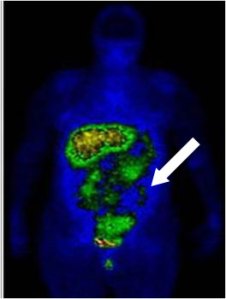
  Advanced Ovarian Cancer - Imaging folate-receptors cancer cells using EC20 (folate-Tc99m). Source:  Endocyte

Advanced Ovarian Cancer - Imaging folate-receptors cancer cells using EC20 (folate-Tc99m). Source: Endocyte

In addition to EC145, patients in the PRECEDENT trial will also be treated with a new molecular imaging agent called EC20 developed by Endocyte. By targeting folate receptors, EC20 imaging agent allows clinicians to identify tumors that overexpress the folate receptor. Using EC20, doctors may be able to identify, in advance, those patients who will benefit from EC145 therapy. According to Dr. Wendel Naumann of the Blumenthal Cancer Center, Carolinas Medical Center and principal investigator for the PRECEDENT study, ‘Patients with advanced, platinum resistant, ovarian cancer are in need of therapy that does not result in significant toxicity. The earlier clinical studies of EC145 were encouraging because they indicated that clinicians could use EC20 to identify women whose tumors expressed the molecular target of EC145. Therapy with EC145 might benefit these patients without causing significant additional toxicity.’ ‘The start of the PRECEDENT study is another important validation of Endocyte’s promising DGS [Drug Guidance System] technology platform,” said Dr. Richard Messmann, Endocyte’s vice president for medical affairs. ‘This also represents an important milestone in Endocyte’s efforts to develop a range of new drugs and predictive medicine tools to treat cancer and other serious diseases in the years ahead. ‘

About Endocyte
Endocyte is a privately-held biotechnology company with headquarters in the Purdue Research Park of West Lafayette, IN. Based on the applications of Endocyte’s advanced proprietary Drug Guidance System (DGS), the Company is working to develop new drugs and diagnostic agents to treat many types of cancer and other serious diseases. The DGS platform makes it possible to use highly-potent drugs on extended and frequent dosing schedules and in combination with other drugs to maximize efficacy. The technology improves drug targeting and reduces the risk of side effects by combining drugs with ligands that are able to identify and attach to receptors found on tumor and other disease cells. Endocyte is currently conducting three separate Phase 2 clinical trials for its lead compound, EC145, together with EC20, a companion molecular imaging agent, for the treatment of ovarian cancer and non-small cell lung cancer. Other clinical-stage products in the Endocyte pipeline include: EC0225, a combination of two potent anticancer drugs; BMS493, a potent drug being developed in partnership with Bristol-Myers Squibb; EC17, a targeted immunotherapy agent; and EC0489, a targeted cancer drug. The Company also has multiple product candidates in pre-clinical stage development.  This press release contains “forward-looking statements” as that term is defined in the Private Securities Litigation Reform Act of 1995. These statements are based on management’s current expectations and involve significant risks and uncertainties that may cause results to differ materially from those set forth in the statements. We undertake no obligation to publicly update any forwardlooking statement, whether as a result of new information, future events, or otherwise.

Contacts:
Vickey Buskirk, media relations, Endocyte Inc., (765) 463-7175 ext. 1117, vbuskirk@endocyte.com”

Quoted Source: ENDOCYTE BEGINS PHASE II CLINICAL TRIAL OF EC145 FOR TREATMENT OF WOMEN WITH OVARIAN CANCER, News Release, February 19, 2009 (PDF Document).

Other Sources:

Additional Resources:


Combination Targeted Therapy With Sorafenib & Bevacizumab Shows Antitumor Activity

The results from a recent Phase I solid tumor clinical trial indicate that combination targeted therapy with sorafenib and bevacizumab produces anti-tumor activity (and enhanced toxicity) with respect to 43% of the ovarian cancer patients enrolled in that trial. Sorafenib (Nexavar®) inhibits the Raf kinase and vascular endothelial growth factor (VEGF) receptor. Bevacizumab (Avastin®) is a monoclonal antibody targeted against VEGF.

Dr. Elise Kohn, Principal Trial Investigator, NCI Center for Cancer Research

Dr. Elise Kohn, Principal Trial Investigator, NCI Center for Cancer Research

The results from a recent Phase I solid tumor clinical trial indicate that combination targeted therapy with sorafenib and bevacizumab produces antitumor activity (and enhanced toxicity) with respect to 43% of the ovarian cancer patients enrolled in that trial. Sorafenib (Nexavar®) inhibits the Raf kinase and vascular endothelial growth factor (VEGF) receptor. Bevacizumab (Avastin®) is a monoclonal antibody targeted against VEGF. The trial is sponsored by the National Cancer Institute (NCI) and Elise Kohn is the principal trial investigator.

The patients enrolled in the trial had advanced solid tumors, with Eastern Cooperative Oncology Group performance status of 0 to 1. A phase I dose-escalation trial of sorafenib and bevacizumab was initiated at below-recommended single-agent doses because of possible overlapping toxicity: sorafenib 200 mg orally twice daily and bevacizumab intravenously at 5 mg/kg (dose level (DL1)) or 10 mg/kg (dose level (DL2)) every 2 weeks. Additional patients were enrolled at the maximum-tolerated dose (MTD).

Thirty-nine patients were treated under the trial protocol. DL1 was the MTD and was administered to 27 patients. Dose-limiting toxicity in DL2 was grade 3 proteinuria and thrombocytopenia. Adverse events included hypertension, hand-foot syndrome, diarrhea, transaminitis, and fatigue. Partial responses (PRs) were seen in six (43%) of 13 patients with ovarian cancer (response duration range, 4 to 22+ months) and one of three patients with renal cell cancer (response duration, 14 months). PR or disease stabilization ≥ 4 months (median, 6 months; range, 4 to 22+ months) was seen in 22 (59%) of 37 assessable patients. The majority (74%) required sorafenib dose reduction to 200 mg/orally at a median of four cycles (range, one to 12 cycles).

The trial investigators concluded that combination therapy with sorafenib and bevacizumab has promising clinical activity, especially in patients with ovarian cancer. The trial investigators also noted that the rapidity and frequency of sorafenib dose reductions indicates that sorafenib at 200 mg twice daily with bevacizumab 5 mg/kg every 2 weeks may not be tolerable long term, and alternate sorafenib dosing schedules should be explored.

Source: Combination targeted therapy with sorafenib and bevacizumab results in enhanced toxicity and antitumor activity; Azad NS et. al., J Clin Oncol. 2008 Aug 1;26(22):3709-14.

Additional Information:

IL-7 Boosts Immune Response in Cancer Patients

” … [Recombinant human interleukin-7] rhIL-7 appears to be an effective T cell growth factor with “immune rejuvenating” properties, suggesting that it is effective in augmenting immune reactivity in hosts with impaired immunity due to any number of factors, including age, chemotherapy, and infectious disease, the authors note. In patients with both intact and deficient immune systems, the capacity of rhIL-7 to augment responses to weak antigens and to increase T cell cycling without expanding T regulatory cells might be clinically exploitable in the context of immunotherapy regimens for cancer and/or chronic infection, they write.”

“Data from a preliminary study suggest that recombinant human interleukin (r-hIL)-7 can enhance and broaden immune responses in patients with impaired immunity due to lymphocyte depletion.

The results of the phase 1 trial, published online June 23 in The Journal of Experimental Medicine, showed that when given to cancer patients, rhIL-7 induced a dramatic polyclonal prolonged expansion of CD4+ and CD8+ T cells, which in turn caused a significant broadening of circulating T cell receptor repertoire diversity. These effects were mediated primarily through an increase in peripheral T cell cycling and augmented cell survival.

Lymphopenia induced by cytotoxic chemotherapy, or pathologies such as HIV infection, can significantly weaken immune function; as a physiologic immuno-enhancer, IL-7 can enhance the restoration of T cells. CD4+ T cell recovery in adults who have experienced severe depletion requires the reemergence of a pool of naive T cells, which generally takes 18 to 24 months and might only occur in people younger than 40 to 45 years. Thus, the authors note, a strategy that can accelerate or promote the recovery of a widely diverse T cell repertoire in older people might be useful for a large number of clinical applications.

‘We know that IL-7 can enhance tumor vaccines in animals, so that would be a clear avenue of research,’ said lead author Claude Sportès, MD, senior staff clinician at the National Cancer Institute‘s Center for Cancer Research, Experimental Transplantation and Immunology Branch, in Bethesda, Maryland. ‘But it wouldn’t only have to be tumor vaccines. Hopefully we will have a trial underway in the not-too-distant future looking at how it can enhance anti-viral and other immunizations, particularly in the elderly.’

Treatment with IL-7 therapy exerted a marked effect on T cell immune reconstitution during preliminary trials with animal models. It also appeared to augment effector and memory responses to vaccination in mice; in preclinical models, IL-7 therapy was able to augment anti-tumor responses that might improve survival when combined with anti-tumor vaccines.

‘In older individuals, therapy with IL-7 could lead to a rejuvenation of the phenotype,’ explained Dr. Sportès in an interview. ‘This in turn can lead to better vaccine responses in general and, in oncology, better tumor vaccine responses.’

The implications for rhIL-7 are potentially vast, and there are many promising therapeutic avenues. ‘But as often happens in medicine,’ he cautioned, ‘things can be very promising at this stage and then fizzle out.’

First Human Trial

In this phase 1 dose-escalation study, the first initiated in a human population, Dr. Sportès and colleagues evaluated the effects of IL-7 therapy on human lymphocytes in 16 patients, between the ages of 20 to 71 years, with nonhematologic, nonlymphoid refractory cancer. The doses, extrapolated from previous mouse and primate studies, were 3, 10, 30, and 60 μg/kg, and were administered by subcutaneous injection every other day for 14 days, for a total of 8 doses.

They found that after a very transient decrease, the numbers of circulating lymphocytes and CD4+ and CD8+ T cells increased in a dose-dependent manner. At the highest dose levels, increases approached 300% for CD4+ and exceeded 400% for CD8+ T cells. Overall, the treatment induced widespread T cell cycling and was able to expand the T cell pool in human patients while preserving T cell function.

Treatment with rhIL-7 also seems to have advantages over rhIL-2, explained Dr. Sportès. The expanded T cells retained significant functional capacity, and the CD4+ T cell expansion was not accompanied by a disproportionate increase in T regulatory cells, a phenomenon that has been observed after rhIL-2 therapy. Previous data have shown that in vivo IL-2 administration in humans has minimal effects on CD8+ T cell numbers, whereas rhIL-7 effects on CD8+ T cell expansion are at least comparable to the effects on CD4+ T cells.

The researchers noted that rhIL-7 increases T cell receptor repertoire diversity, and that although it appears to selectively expand CD4+ recent thymic emigrants, naive cells, and central-memory populations, it did not have the same effect on effector T cells.

The details of the clinical trial will be the focus of a separate paper, said Dr. Sportès. ‘But it was well tolerated and we went to full-dose escalation.’

“Immune Rejuvenating” Properties

rhIL-7 appears to be an effective T cell growth factor with “immune rejuvenating” properties, suggesting that it is effective in augmenting immune reactivity in hosts with impaired immunity due to any number of factors, including age, chemotherapy, and infectious disease, the authors note.

In patients with both intact and deficient immune systems, the capacity of rhIL-7 to augment responses to weak antigens and to increase T cell cycling without expanding T regulatory cells might be clinically exploitable in the context of immunotherapy regimens for cancer and/or chronic infection, they write.”

[Quoted Source: IL-7 Therapy Boosts Immune Response in Cancer Patients, by Roxanne Nelson, Medscape Medical News, Medscape Today, July 4, 2008 (summarizing the findings of Administration of rhIL-7 in humans increases in vivo TCR repertoire diversity by preferential expansion of naive T cell subsets; Sportes, C. et. al., J Exp Med. 2008 Jun 23. Epub ahead of print]