Exelixis Reports Promising Interim Data From Ovarian Cancer Patients Treated With XL184

Exelixis reports promising interim data from ovarian cancer patients treated with XL184, including:  a  32% confirmed response rate per RECIST in patients with platinum-resistant or platinum-sensitive disease, and a 64% overall week-12 disease control rate.

Ignace Vergote, M.D., Ph.D., Head, Department of Obstetrics & Gynecology and Gynecologic Oncology, Catholic University Hospital, Leuven, Belgium

Exelixis, Inc.  today reported interim data from the cohort of patients with advanced epithelial ovarian cancer, primary peritoneal, or fallopian tube carcinoma treated with XL184 in an ongoing phase 2 adaptive randomized discontinuation trial (RDT) [1]. Ignace Vergote, M.D., Ph.D., Head of the Department of Obstetrics and Gynecology and Gynecologic Oncology at the Catholic University Hospital Leuven, Leuven, Belgium, will present the data in the Molecular-Targeted Therapies-Clinical Trials poster session (Abstract #407) on Thursday, November 18th, at the 22nd EORTC-NCI-AACR [2] Symposium on Molecular Targets and Cancer Therapeutics, being held in Berlin, Germany.

XL184 Activity in Patients with Ovarian Cancer

XL184 is an oral, potent inhibitor of MET, VEGFR2 and RET. MET overexpression has been observed in advanced ovarian cancer, and anti-VEGF pathway agents have shown clinical benefit in ovarian cancer patients. For these reasons, co-targeting of the MET and VEGF signaling pathways using XL184 may represent a promising treatment strategy.

As of the November 1, 2010 cut-off date, a total of 51 patients were enrolled into the ovarian cancer cohort, with 31 evaluable for response, and 41 evaluable for safety. The median number of prior systemic treatments was 2. Tumor shrinkage was observed in 30 of 37 (81%) patients with measurable metastatic lesions. Of 31 patients evaluable for response per RECIST (Response Evaluation Criteria In Solid Tumors), 10 (32%) achieved a confirmed partial response (PR). Stable disease (SD) was reported in 15 patients (48%) including 3 patients who achieved unconfirmed PRs. The overall week-12 disease control rate (DCR)(complete responses + partial responses + stable disease responses = DCR) was 64%.

Upon subset analysis, 5 of 17 platinumrefractory or –resistant patients (29%) evaluable for response per RECIST achieved a confirmed PR. SD was reported in 7 patients (41%) including 2 patients with unconfirmed PRs. The week-12 DCR was 59% in platinum-resistant/refractory patients. Durable responses have been observed, including 2 patients with platinum-refractory or resistant disease who remain on study for 34+ and 36+ weeks, and 3 patients with platinum-sensitive disease on study for 24, 24+, and 28+ weeks. Some patients have experienced reductions in the ovarian cancer blood marker CA125, but in general no clear concordance between CA125 changes and tumor shrinkage has been observed.

Safety data are available for 49 patients who had at least 6 weeks of follow-up. The most common grade greater-than or equal to 3 adverse events, regardless of causality were PPE (Palmar-Plantar Erythrodysesthesia) syndrome (also referred to as “hand-foot syndrome”) (12%), diarrhea (7%), fatigue, vomiting (each 5%), nausea, rash, abdominal pain, hypertension, and hypomagnesemia (each 2%).

“The activity of XL184 in women with both platinum-sensitive and platinum-resistant/refractory disease is unique and encouraging. The response rate and overall disease control rate of this oral agent are impressive especially in the group of patients with platinum refractory/resistant ovarian cancer, and compare favorably to other targeted and systemic agents in development,” said, Dr. Vergote. “I believe these encouraging data warrant further evaluation of XL184 in ovarian cancer.”

Michael M. Morrissey, Ph.D., President & Chief Executive Officer, Exelixis, Inc.

“The high response rate in patients with ovarian cancer is reflective of the broad anti-tumor activity of XL184 observed in multiple tumor types to date,” said Michael M. Morrissey, Ph.D., president and chief executive officer of Exelixis. “The data from the RDT underscore the novel and differentiated clinical activity of XL184 in diverse tumor indications with predominance of either soft tissue or bone involvement.”

To access the clinical data poster mentioned in this press release, please visit www.exelixis.com.

Broad Clinical Activity of XL184 – Randomized Discontinuation Trial

XL184 has demonstrated anti-tumor activity in 9 of 12 indications studied to date. In ongoing trials, compelling activity has been observed in medullary thyroid cancer, glioblastoma, and clear cell renal cancer. In the RDT, XL184 is being evaluated in nine different tumor types, with clear signals of activity in six: prostate, ovarian, hepatocellular, breast, non-small cell lung cancer and melanoma. The adaptive RDT design allowed for rapid simultaneous assessment of the activity of XL184 across nine different tumor indications. As of the November 1, 2010 cut-off date, a total of 397 patients have been enrolled into the nine disease-specific cohorts, with 273 evaluable for response, and 312 evaluable for safety. Of 273 patients evaluable for response per RECIST, 39 achieved a PR (either confirmed or unconfirmed) and 100 had SD at week 12. The week-12 DCR for the overall population was 49%, with the highest rates occurring in hepatocellular cancer (75%), castration-resistant prostate cancer (71%), ovarian cancer (64%), melanoma (45%), non-small cell lung cancer (42%) and breast cancer (42%). Of note, a breast cancer patient with evidence of bone metastasis on bone scan demonstrated evidence of resolution on bone scan accompanied by 29% reduction in tumor size. XL184 has been generally well tolerated with a consistent adverse event profile across the nine different RDT tumor types.

About XL184

XL184, an inhibitor of tumor growth, metastasis and angiogenesis, simultaneously targets MET and VEGFR2, key kinases involved in the development and progression of many cancers, including ovarian cancer. It has recently been shown in preclinical models that treatment with selective inhibitors of VEGF signaling can result in tumors that are more invasive and aggressive compared to control treatment. In preclinical studies, upregulation of MET has been shown to occur in concert with development of invasiveness after selective anti-VEGF therapy, and may constitute a mechanism of acquired or evasive resistance to agents that target VEGF signaling. Accordingly, treatment with XL184 in similar preclinical studies resulted in tumors that were less invasive and aggressive compared to control or selective anti-VEGF treatment. Therefore, XL184 has the potential for improving outcomes in a range of indications, including those where selective anti-VEGF therapy has shown minimal or no activity.

About Exelixis

Exelixis, Inc. is a development-stage biotechnology company dedicated to the discovery and development of novel small molecule therapeutics for the treatment of cancer. The company is leveraging its biological expertise and integrated research and development capabilities to generate a pipeline of development compounds with significant therapeutic and commercial potential for the treatment of cancer. Currently, Exelixis’ broad product pipeline includes investigational compounds in phase 3, phase 2, and phase 1 clinical development. Exelixis has established strategic corporate alliances with major pharmaceutical and biotechnology companies, including Bristol-Myers Squibb Company, sanofi-aventis, GlaxoSmithKline, Genentech (a wholly owned member of the Roche Group), Boehringer Ingelheim, and Daiichi-Sankyo. For more information, please visit the company’s web site at http://www.exelixis.com.

Sources:

Additional Information:

References:

1/Rosner GL, Stadler W, Ratain MJ. et. al.  Randomized discontinuation design: Application to cytostatic antineoplastic agents. J Clin Oncol 20:4478-4484, 2002.  Pursuant to this design, all patients receive the investigational drug for an initial period of time. Patients with standard radiologic tumor shrinkage within that timeframe would continue investigational therapy, while those with radiologic progression or unacceptable toxicity would discontinue therapy. All patients with radiologic stable disease after the initial therapy period are then randomized to continuing or discontinuing therapy in a double-blind placebo-controlled manner. This is an enrichment strategy in which patients with the end point of interest are preferentially enrolled in the randomized portion and in which the heterogeneity of the randomized population is decreased. These two factors result in an increased power for detecting a clinically relevant difference and decrease the number of patients exposed to placebo. Importantly, the enrichment is driven by the properties of the investigational drug as opposed to clinical prognostic factors identified in historical untreated patients or patients treated with a different class of agents. In addition, the statistical behavior of the trial is not highly dependent on investigators’ assumptions regarding the “no dose effect” (i.e., non-receipt of drug = no effect)  for time to progression or stable disease rate, and thus effectively deals with uncertainty in this variable. Finally, patients may find such a trial design more appealing, resulting in brisk accrual.

2/EORTC [European Organisation for Research and Treatment of Cancer, NCI [National Cancer Institute], AACR [American Association for Cancer Research].

PARP Inhibitor MK-4827 Shows Anti-Tumor Activity in First Human Clinical Study

MK-4827, a new drug that targets proteins responsible for helping cancer cells repair their damaged DNA, has shown promising anti-tumor activity in its first human clinical trial.

MK-4827, a new drug that targets proteins responsible for helping cancer cells repair their damaged DNA, has shown promising anti-tumour activity in its first human clinical trial. Some patients with a range of solid tumors, many of whom had been treated unsuccessfully for their cancer with other therapies, have seen their tumors shrink or stabilize for periods of between 46 days to more than a year. The research will be presented today (Thursday) at the 22nd EORTCNCIAACR [1] Symposium on Molecular Targets and Cancer Therapeutics, which is being held in Berlin, Germany.

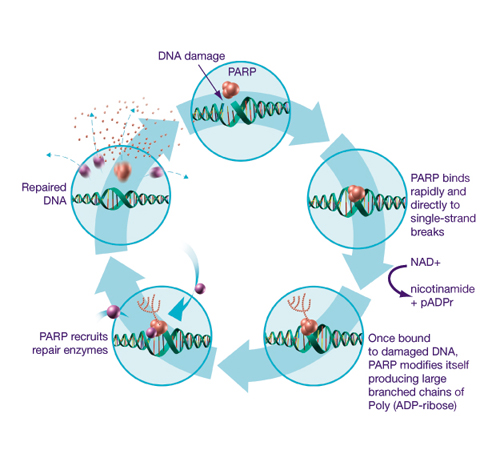
PARP is a key signaling enzyme involved in triggering the repair of single-strand DNA damage. PARP inhibition has been demonstrated to selectively kill tumor cells lacking components of the homologous recombination (HR) DNA repair pathway while sparing normal cells. Known defects in HR repair include the well-characterized hereditary BRCA1 and BRCA2 mutations in breast and ovarian cancer, as well as nonhereditary BRCA mutations. (Photo Credit: AstraZeneca Oncology)

Laboratory studies of the drug, MK-4827, have shown that it inhibits proteins called PARP1 and PARP2 (poly(ADP)-ribose polymerase). PARP is involved in a number of cellular processes and one of its important functions is to assist in the repair of single-strand breaks in DNA. Notably, if one single-strand DNA break is replicated (replication occurs before cell division), then it results in a double-strand break.  By inhibiting the action of PARP, double-strand breaks occur, which in turn, lead to cell death. Tumors that are caused by a mutation in the BRCA1 or BRCA2 genes are susceptible to cell death through PARP inhibition because correctly functioning BRCA genes assist in repairing double-strand DNA breaks via a process called homologous-recombination-dependent DNA repair, whereas mutated versions are unable to perform this role. Normal cells do not replicate as often as cancer cells and they still have homologous repair operating; this enables them to survive the inhibition of PARP and makes PARP a good target for anti-cancer therapy.

In a Phase I trial [2] conducted at the H. Lee Moffitt Cancer Center (Tampa Florida, USA), University of Wisconsin-Madison (Madison, USA) and the Royal Marsden Hospital (London, UK), MK-4827 was given to 59 patients (46 women, 13 men) with a range of solid tumors such as non-small cell lung cancer (NSCLC), prostate cancer, sarcoma, melanoma and breast and ovarian cancers. Some patients had cancers caused by mutations in the BRCA1/2 genes, such as breast and ovarian cancer, but others had cancers that had arisen sporadically.

Robert M. Wenham, M.D., MS, FACOG, Clinical Director, Gynecologic Oncology, Department of Women's Oncology, H. Lee Moffitt Cancer Center

The drug was given in pill form once a day, and the researchers found that the maximum tolerated dose was 300 mg per day. Dr. Robert Wenham, Clinical Director for Gynecologic Oncology in the Department of Women’s Oncology at the Moffitt Cancer Center, who is presenting data on behalf of the participating investigators, said: “MK-4827 is generally well tolerated, with the main dose-limiting toxicity being thrombocytopenia – an abnormal decrease in the number of platelets in the circulatory blood. The most common side effects are mild nausea, vomiting, anorexia and fatigue.”

The researchers saw anti-tumor responses in both sporadic (non-inherited) and BRCA1/2 mutation-associated cancers [emphasis added]. Ten patients with breast and ovarian cancers had partial responses, with progression-free survival between 51-445 days, and seven of these patients are still responding to treatment. Four patients (two with ovarian cancer and two with NSCLC) had stable disease for between 130-353 days.

Dr. Wenham said: “Most patients in the trial had exhausted standard therapies and those who responded to this drug have benefited. Several patients have been receiving treatment for more than a year. The responses mean that MK-4827 is working as hoped and justify additional studies. Just how well MK-4827 works compared to other treatments is the goal of the next set of studies.”

He gave a possible explanation as to why patients with cancers that were not caused by BRCA1 or BRCA 2 gene mutations also responded to the PARP inhibition. “BRCA is a tumor suppressor gene that assists in repairing double stranded DNA breaks. In BRCA-mutation related cancers, loss of both copies of the gene results in a non-functional protein and thus BRCA deficiency. Because BRCA works with other proteins, BRCA-pathway related deficiency can be seen in the absence of two mutated copies of the BRCA genes. This may explain why responses have been reported for this class of drugs in non-BRCA mutant cancers.”

Dr. Wenham and his colleagues are recruiting more patients for additional studies and an expansion of the existing trial. “We want to understand what types of cancers will respond best to treatment with MK-4827,” he said. “Cohorts are currently open for patients with ovarian cancer, patients without germ-line BRCA mutations, and prostate cancer patients. Cohorts will open soon for patients with T-cell prolymphocytic leukemia, endometrial cancer, breast cancer and colorectal cancer. MK-4827 is also being studied in combination with conventional chemotherapy drugs.”

Sources:

Additional Information:

Related Information:

References:

[1] EORTC [European Organisation for Research and Treatment of Cancer, NCI [National Cancer Institute], AACR [American Association for Cancer Research].

[2] This study was funded by Merck & Co., Inc. MK-4827 is owned by Merck & Co., Inc.

Clinical Conundrums: Choosing the Best Management Approaches in Patients With Ovarian Cancer

On June 16, 2010, Clinical Care Options Oncology released a Microsoft Powerpoint Presentation entitled, “Clinical Conundrums:  Choosing the Best Management Approaches in Patients With Ovarian Cancer.” The presentation provides the most recent data on managing patients with ovarian cancer in the frontline and recurrent setting and in specific clinical scenarios.

Thomas J. Herzog, M.D., Director, Division of Gynecologic Oncology, Columbia University College of Physicians and Surgeons, New York, NY

On June 16, 2010, Clinical Care Options Oncology released a Microsoft Powerpoint Presentation entitled, Clinical Conundrums:  Choosing the Best Management Approaches in Patients With Ovarian Cancer. The presentation provides the most recent data on managing patients with ovarian cancer in the frontline and recurrent setting and in specific clinical scenarios.

The presentation was created by Thomas J. Herzog, MD, Director, Division of Gynecologic Oncology Columbia University College of Physicians and Surgeons. The topics covered in the presentation include the following:

–Controversies in the Treatment of Newly Diagnosed Ovarian Cancer

–What About Alternative Taxane Therapy?

–Will Adding a Third Drug Help?

–What About Intraperitoneal (IP) Therapy?

–Will Adding a Targeted Therapy Help?

–Prognostic Factors in Ovarian Cancer.

–Does Having a BRCA Mutation Affect Ovarian Cancer Prognosis?

–Ongoing and Recently Completed Clinical Trials in Ovarian Cancer.

–Relevance of CA-125 Levels: Placing Novel Data Into Clinical Context.

–Best Management Approaches for Patients With Platinum-Sensitive Recurrent Disease.

–Who Are the Best Candidates?

–Management of Patients in Challenging Clinical Situations: Platinum Resistance and Other Clinical Scenarios.

  • PARPi Trials: Ongoing/Planned
  • Investigational Agents
  • NKTR-102: Peg-Irinotecan
  • EC145: Novel Folate Receptor Targeted Therapeutic
  • Developmental Strategies

Source: Clinical Conundrums: Choosing the Best Management Approaches in Patients With Ovarian Cancer, by Thomas J. Herzog, MD, Director, Division of Gynecologic Oncology Columbia University College of Physicians and Surgeons, Treatment Updates, Ovarian 2010, Clinical Options Oncology, June 16, 2010.

ASCO Releases Studies From Upcoming 2010 Annual Meeting

Yesterday, the American Society of Clinical Oncology (ASCO) made available more than 4,000 medical abstracts which are publicly posted online at http://www.abstract.asco.org. A hyperlink to the 2010 ASCO Annual Meeting ovarian cancer abstracts is provided below.  The ASCO Annual Meeting will be held June 4-8, 2010 at McCormick Place in Chicago, Illinois.

The 2010 ASCO Annual Meeting will be held June 4-8, 2010 at McCormick Place in Chicago, Illinois.

Yesterday, the American Society of Clinical Oncology (ASCO) highlighted six studies in a press briefing from among more than 4,000 abstracts publicly posted online at www.abstract.asco.org in advance of ASCO’s 46th Annual Meeting.  An additional 14 plenary, late-breaking and other major studies will be released at the Annual Meeting and highlighted in on-site press conferences.

The meeting, which is expected to draw approximately 30,000 cancer specialists, will be held June 4-June 8, 2010, at McCormick Place in Chicago, Illinois. The theme of this year’s meeting is “Advancing Quality Through Innovation.”

“Our growing understanding of cancer’s complex behavior is being translated into better, more targeted drugs against a variety of tumors,” said Douglas W. Blayney, MD, President of ASCO, professor of internal medicine at the University of Michigan Medical School and medical director of the Comprehensive Cancer Center at the University of Michigan. “These studies show that investment in cancer research pays off. We’re developing more personalized approaches to treating patients of all ages and across all cancer types, we’re learning how to use current treatments more effectively, and we’re identifying new ways to help patients live long, healthy lives following treatment.”

“Clinical trials are essential to continued progress against cancer. Yet, the nation’s federally funded clinical trial system is at a breaking point,” said George W. Sledge Jr, MD, ASCO President-Elect, Ballve-Lantero Professor of Oncology and professor of pathology and laboratory medicine at the Indiana University School of Medicine. “ASCO has called for a doubling of support for federally funded clinical cancer research within the next five years. We’ve made impressive strides against this disease, and it’s vital that the nation put more resources into these programs to continue the momentum.

Relevant studies highlighted in the May 20th press briefing include:

  • Promising New Ovarian Cancer Screening Strategy Developed for Post-Menopausal Women at Average Risk: A promising new screening approach for post-menopausal women at average risk of ovarian cancer is feasible and produces very few false-positive results. The method uses a mathematical model combining trends in CA-125 blood test results and a patient’s age, followed by transvaginal ultrasound and referral to a gynecologic oncologist, if necessary.
  • Yoga Improves Sleep and Quality of Life, Lessens Fatigue for Cancer Survivors: Sleep problems and fatigue are among the most common side effects experienced by cancer survivors. A four-week yoga program involving breathing, meditation, postures and other techniques helped cancer survivors sleep better, reduced fatigue and the use of sleep aids, and improved their quality of life.

If you are interested in reviewing the medical abstract subject listing, CLICK HERE.

If you are interested in reviewing the ovarian cancer medical abstracts, CLICK HERE.

Source: ASCO Releases Studies From Upcoming Annual Meeting — – Important Advances in Targeted Therapies, Screening, and Quality of Life, News Release, American Society of Clinical Oncology, May 20, 2010. For a complete PDF copy of the ASCO May 20, 2010 press release, CLICK HERE.

PARP Inhibitor Olaparib Benefits Women With Inherited Ovarian Cancer Based Upon Platinum Drug Sensitivity

Olaparib (AZD2281), a new type of cancer drug known as a “PARP inhibitor,” produced promising results in patients with platinum-refractory, platinum-resistant, and platinum-sensitive ovarian cancer linked to an inherited BRCA1 or BRCA2 gene mutation.

A new type of cancer drug — known as a “PARP inhibitor” — produced promising results in patients with ovarian cancer linked to an inherited BRCA1 or BRCA2 gene mutation. The trial results were published online in the Journal of Clinical Oncology on April 19th.

Scientists at The Institute of Cancer Research (ICR) and The Royal Marsden Hospital, working with pharmaceutical company KuDOS Pharmaceuticals, now a subsidiary of AstraZeneca, found the experimental drug olaparib shrank or stabilized tumors in approximately half of ovarian cancer patients possessing BRCA1 or BRCA2 mutations.

The five-year survival rate for ovarian cancer is just 40 per cent as the majority of patients are diagnosed with an advanced form of the disease. Most patients initially respond well to radical surgery and platinum and taxane-based chemotherapy, but relapse after an average of 18 months. Subsequent treatments generally become less effective as patients build up resistance.

Professor Stan Kaye, Head of Section of Medicine, Institute of Cancer Research; Head of Drug Development Unit, The Royal Marsden Hospital; and Cancer Research UK-funded scientist

“There is an urgent need to find new drugs for women diagnosed with ovarian cancer,” says Professor Stan Kaye, Head of the Section of Medicine at the ICR and Head of the Drug Development Unit at The Royal Marsden Hospital and a Cancer Research UK-funded scientist. “Olaparib is still in early-stage testing but the results so far are very encouraging. These findings raise the possibility that carefully selected patients in future may well be offered olaparib as an alternative to chemotherapy during the course of their treatment.”

Between 2005 and 2008, about 50 women with confirmed or suspected BRCA1 or BRCA2 mutations began treatment with olaparib in a dose escalation and single-stage expansion of a Phase I trial. Twenty patients responded with their tumors shrinking or with significant falls in their ovarian cancer marker CA125, or both. The disease also stabilized in three patients. The drug was effective for an average of seven months. Notably, several patients are still taking olaparib (for nearly two years). Drug side-effects were generally mild, especially when compared to current chemotherapy treatments.

Olaparib is a new type of drug known as a PARP inhibitor that works by turning a tumor’s specific genetic defect against itself. In susceptible cells, olaparib prevents the repair of naturally occurring breaks in DNA, which healthy cells are able to repair. Susceptible cancer cells – those with an existing defect in a DNA repair pathway caused by a mutation in the BRCA1 or BRCA2 genes – are unable to repair themselves, and therefore, die.

Platinum-based chemotherapy, particularly carboplatin, is one of the main treatments used for ovarian cancer. When this treatment ceases to be effective, theoretically, olaparib might be less effective too, so the ICR scientists examined whether olaparib would still benefit patients whose response to previous platinum-based drugs was limited. Finding new drugs to treat these “platinum-resistant” ovarian cancer patients (those who relapsed within six months of previous platinum therapy) is a particularly high priority as they have a lower chance of benefiting from re-treatment with chemotherapy and a poorer prognosis.

The research team found that the clinical benefit rate with olaparib was indeed higher — 70% — among patients with “platinum-sensitive disease” (disease recurrence more than six months after previous platinum therapy). Crucially, however, the clinical benefit rate was still 46% in platinum resistant patients.

ICR Study Findings:

  • 50 patients participated in the study (13 had platinum-sensitive disease, 24 had platinum-resistant disease, and 13 had platinum-refractory disease (according to platinum-free interval).
  • 20 patients (40%) achieved complete or partial responses under RECIST (Response Evaluation Criteria in Solid Tumors) criteria and/or tumor marker (CA125) responses.
  • Overall clinical benefit rate (complete response + partial response + stable disease) = 46%.
  • Median response duration was 28 weeks.
  • There was a significant association between the clinical benefit rate and platinum-free interval across the platinum-sensitive, resistant, and refractory patient subgroups (69%, 45%, and 23%, respectively).
  • Analyses indicated associations between platinum sensitivity and extent of olaparib response.
  • CONCLUSION: Olaparib has antitumor activity in BRCA1/2 mutation ovarian cancer, which is associated with platinum sensitivity.

Up to 15 per cent of breast and ovarian cancers have known BRCA1 or BRCA2 mutations on blood testing and, importantly, laboratory data strongly suggests that olaparib may also be effective in cancers linked to DNA repair defects not caused by BRCA1 and BRCA2 mutations. This could apply in about half the cases of the most common histological type of ovarian cancer.

“We have good reason for thinking that the benefit seen with olaparib in BRCA mutation-linked ovarian cancer may well extend to a broader population of patients with this disease,” says Professor Kaye.

Randomised trials of olaparib – in which some patients receive the drug and others a placebo – are underway and results will be available later this year.

KuDOS Pharmaceuticals (a wholly owned subsidiary of AstraZeneca) was the major funder of the trial, along with Cancer Research UK and the National Institute for Health Research. Olaparib was identified and developed at KuDOS Pharmaceuticals and subsequently at AstraZeneca.

PARP Inhibitor Clinical Trials:

To view a list of open ovarian cancer clinical trials that are testing olaparib (AZD2281), click here.

To view a list of open solid tumor clinical trials that are testing olaparib (AZD2281), click here.

To view a list of open ovarian cancer clinical trials that are testing various PARP inhibitors, click here.

To view a list of open solid tumor clinical trials that are testing various PARP inhibitors, click here.

About The Institute of Cancer Research (ICR)

* The ICR is Europe’s leading cancer research centre.

* The ICR has been ranked the UK’s top academic research centre, based on the results of the Higher Education Funding Council’s Research Assessment Exercise.

* The ICR works closely with partner The Royal Marsden NHS Foundation Trust to ensure patients immediately benefit from new research. Together the two organisations form the largest comprehensive cancer centre in Europe.

* The ICR has charitable status and relies on voluntary income, spending 95 pence in every pound of total income directly on research.

* As a college of the University of London, the ICR also provides postgraduate higher education of international distinction.

* Over its 100-year history, the ICR’s achievements include identifying the potential link between smoking and lung cancer which was subsequently confirmed, discovering that DNA damage is the basic cause of cancer and isolating more cancer-related genes than any other organization in the world.

* The ICR is home to the world’s leading academic drug development team. Several important anti-cancer drugs used worldwide were synthesised at the ICR and it has discovered an average of two preclinical candidates each year over the past five years.

For more information visit www.icr.ac.uk.

About The Royal Marsden Hospital

The Royal Marsden opened its doors in 1851 as the world’s first hospital dedicated to cancer treatment, research and education. Today, together with its academic partner, The Institute of Cancer Research, it is the largest and most comprehensive cancer centre in Europe treating over 40,000 patients every year. It is a centre of excellence, and the only NHS Trust to achieve the highest possible ranking in the Healthcare Commission’s Annual Health Check for the third year in a row. Since 2004, the hospital’s charity, The Royal Marsden Cancer Campaign, has helped raise over £43 million to build theatres, diagnostic centres, and drug development units. Prince William became President of The Royal Marsden in 2007, following a long royal connection with the hospital.

For more information, visit www.royalmarsden.nhs.uk

About Cancer Research UK

* Cancer Research UK is the world’s leading charity dedicated to beating cancer through research.

* The charity’s groundbreaking work into the prevention, diagnosis and treatment of cancer has helped save millions of lives. This work is funded entirely by the public.

* Cancer Research UK has been at the heart of the progress that has already seen survival rates double in the last thirty years.

* Cancer Research UK supports research into all aspects of cancer through the work of more than 4,800 scientists, doctors and nurses.

* Together with its partners and supporters, Cancer Research UK’s vision is to beat cancer.

For further information about Cancer Research UK’s work or to find out how to support the charity, please call 020 7121 6699 or visit www.cancerresearchuk.org

About Experimental Cancer Medicine Centre (ECMC)

Experimental Cancer Medicine Centre (ECMC) status has been awarded to 19 centres in the UK that are specialist centres conducting research into new cancer treatments. The aim is to bring together cancer doctors, research nurses and lab scientists to make clinical trials of new treatments quicker and easier. The ECMC initiative is funded by Cancer Research UK and the Departments of Health of England, Scotland, Wales and Northern Ireland. Together they are giving a total of £35 million pounds over five years to the 19 centres. The centres will use this money to run trials of new and experimental treatments. They will also analyse thousands of blood and tissue samples (biopsies) to help find out more about how treatments work and what happens to cancer cells.

Sources:


Genentech Announces Positive Results of Avastin Phase III Study in Women with Advanced Ovarian Cancer

Genentech announces positive results of Avastin Phase III study (GOG 218) in women with advanced ovarian cancer. The study showed that women who continued maintenance use of Avastin alone, after receiving Avastin in combination with chemotherapy, lived longer without the disease worsening compared to those who received chemotherapy alone. This is the first Phase III study of an anti-angiogenic therapy in advanced ovarian cancer to meet its primary endpoint.

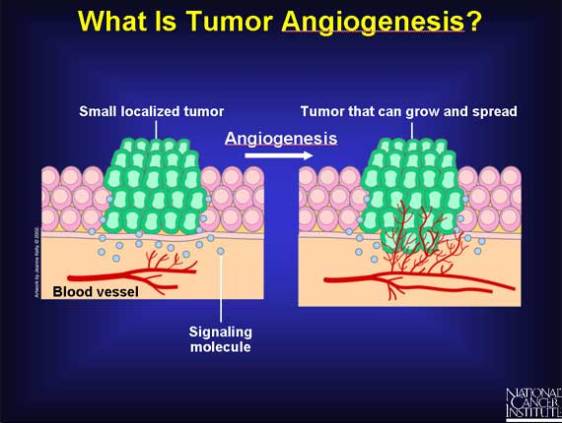
Tumor angiogenesis is the proliferation of a network of blood vessels that penetrates into cancerous growths, supplying nutrients and oxygen and removing waste products. Tumor angiogenesis actually starts with cancerous tumor cells releasing molecules that send signals to surrounding normal host tissue. This signaling activates certain genes in the host tissue that, in turn, make proteins to encourage growth of new blood vessels. Photo credit: NCI

Genentech, Inc., a wholly owned member of the Roche Group , today announced that a Phase III study showed the combination of Avastin® (bevacizumab) and chemotherapy followed by maintenance use of Avastin alone increased the time women with previously untreated advanced ovarian cancer lived without the disease worsening (progression-free survival or PFS), compared to chemotherapy alone. A preliminary assessment of safety noted adverse events previously observed in pivotal trials of Avastin. Data from the study will be submitted for presentation at the American Society of Clinical Oncology (ASCO) annual meeting, June 4 – 8, 2010.

In the three-arm study, known as Gynecologic Oncology Group (GOG) 0218, women with newly diagnosed advanced ovarian cancer who already had surgery to remove as much of the tumor as possible were randomized to receive one of the following:

  • Arm 1: Placebo in combination with carboplatin and paclitaxel chemotherapy followed by placebo alone, for a total of up to 15 months of therapy
  • Arm 2: Avastin in combination with carboplatin and paclitaxel chemotherapy followed by placebo alone, for a total of up to 15 months of therapy
  • Arm 3: Avastin in combination with carboplatin and paclitaxel chemotherapy followed by the maintenance use of Avastin alone, for a total of up to 15 months of therapy.

The study showed that women who continued maintenance use of Avastin alone, after receiving Avastin in combination with chemotherapy (Arm 3), lived longer without the disease worsening compared to those who received chemotherapy alone. Women who received Avastin in combination with chemotherapy, but did not continue maintenance use of Avastin alone (Arm 2), did not live longer without the disease worsening compared to chemotherapy alone.

“Additional medicines are urgently needed for women with newly diagnosed advanced ovarian cancer, as most women’s cancer will worsen after their initial treatment,” said Hal Barron, M.D., F.A.C.C., Executive Vice President, Global Development and Chief Medical Officer. “We are encouraged by the positive findings of this study, which highlight the importance of continuing maintenance Avastin after combining Avastin with chemotherapy in this setting. We will discuss these results with the U.S. Food and Drug Administration.”

Robert Allen Burger, MD, FACOG, FACS, Fox Chase Cancer Center, Philadelphia, Pennsylvania

“This is good news for women with ovarian, primary peritoneal or fallopian tube cancers,” said GOG 0218 study chair Robert Burger, M.D., Fox-Chase Cancer Center in Philadelphia. “This study showed that after initial surgery, the combination of Avastin and chemotherapy followed by extended treatment with Avastin improves progression-free survival in women with newly diagnosed advanced tumors.”

The trial is sponsored by the National Cancer Institute (NCI) under a Cooperative Research and Development Agreement between the NCI and Genentech, and is being conducted by a network of researchers led by the GOG.

Avastin is being studied worldwide in more than 450 clinical trials for multiple types of cancer, including approximately 25 ongoing clinical trials in the United States for women with various stages of ovarian cancer.

About Ovarian Cancer

According to the American Cancer Society, ovarian cancer is the fifth leading cause of cancer death among American women. In 2009 an estimated 21,500 women were diagnosed with ovarian cancer and approximately 14,500 died from the disease in the U.S. The disease causes more deaths than any other gynecologic cancer, and the American Cancer Society estimates that nearly 70 percent of women with advanced disease will die from it within five years.

Ovarian cancer is associated with high levels of vascular endothelial growth factor (VEGF), a protein associated with tumor growth and spread. Studies have shown a correlation between a high level of VEGF and a poorer prognosis in women with ovarian cancer. Currently, treatment options for women with this disease are limited to surgery and chemotherapy.

About the GOG 0218 Study

GOG 0218 is an international, multicenter, randomized, double-blind, placebo-controlled Phase III study in 1,873 women with previously untreated advanced epithelial ovarian, primary peritoneal or fallopian tube carcinoma. The study evaluates Avastin (5 cycles) in combination with carboplatin and paclitaxel chemotherapy (6 cycles) compared to carboplatin and paclitaxel chemotherapy alone (6 cycles). The trial is also designed to assess the maintenance use of Avastin alone following the initial combined regimen of Avastin and chemotherapy (for a total of up to 15 months of therapy), compared to carboplatin and paclitaxel chemotherapy alone (6 cycles).

The primary endpoint of the study is PFS as assessed by trial investigators. Secondary and exploratory endpoints of the study include overall survival, PFS by independent review, objective response rate, safety, quality of life measures and analysis of patient tumor and blood samples.

Detailed safety assessments are ongoing. A preliminary assessment of safety performed by the GOG identified Avastin-related serious adverse events noted in previous pivotal studies, including fatal neutropenic infection and gastrointestinal perforation. The full study results, including safety information, will be presented at a future medical meeting.

About Avastin

Avastin is a solution for intravenous infusion and is a biologic antibody designed to specifically bind to a protein called VEGF. VEGF plays an important role throughout the lifecycle of the tumor to develop and maintain blood vessels, a process known as angiogenesis. Avastin interferes with the tumor blood supply by directly binding to the VEGF protein to prevent interactions with receptors on blood vessel cells. Avastin does not bind to receptors on normal or cancer cells. The tumor blood supply is thought to be critical to a tumor’s ability to grow and spread in the body (metastasize). For more information about angiogenesis, visit http://www.gene.com.

Boxed WARNINGS and Additional Important Safety Information

People treated with Avastin may experience side effects. In clinical trials, some people treated with Avastin experienced serious and sometimes fatal side effects, including:

Gastrointestinal (GI) perforation: Treatment with Avastin can result in the development of a potentially serious side effect called GI perforation, which is the development of a hole in the stomach, small intestine or large intestine. In clinical trials, this side effect occurred in more people who received Avastin than in the comparison group (0.3 percent to 2.4 percent). In some cases, GI perforation resulted in fatality.

Surgery and wound healing problems: Treatment with Avastin can lead to slow or incomplete wound healing (for example, when a surgical incision has trouble healing or staying closed). In some cases, this event resulted in fatality. Surgery and wound healing problems occurred more often in people who received Avastin than in the comparison group. Avastin therapy should not be started for at least 28 days after surgery and until the surgical wound is fully healed. The length of time between stopping Avastin and having voluntary surgery without the risk of having surgery and wound healing problems following surgery has not been determined.

Severe bleeding: Treatment with Avastin can result in serious bleeding, including coughing up blood, bleeding in the stomach, vomiting of blood, bleeding in the brain, nosebleeds and vaginal bleeding. These events occurred up to five times more often in people who received Avastin. Across cancer types, 1.2 percent to 4.6 percent of people who received Avastin experienced severe to fatal bleeding. People who have recently coughed up blood (greater than or equal to a half teaspoon of red blood) or have serious bleeding should not receive Avastin.

In clinical trials for different cancer types, there were additional serious and sometimes fatal side effects that occurred in more people who received Avastin than in those in the comparison group. The formation of an abnormal passage from parts of the body to another part (non-GI fistula formation) was seen in 0.3 percent or less of people. Severe to life-threatening stroke or heart problems were seen in 2.4 percent of people. Too much protein in the urine, which led to kidney problems, was seen in less than 1 percent of people. Additional serious side effects that occurred in more people who received Avastin than those in the comparison group included severe to life-threatening high blood pressure, which was seen in 5 percent to 18 percent of people, and nervous system and vision disturbances (reversible posterior leukoencephalopathy syndrome), which was seen in less than 0.1 percent of people. Infusion reactions with the first dose of Avastin were uncommon and occurred in less than 3 percent of people and severe reactions occurred in 0.2 percent of people.

Common side effects that occurred in more than 10 percent of people who received Avastin for different cancer types, and at least twice the rate of the comparison group, were nosebleeds, headache, high blood pressure, inflammation of the nose, too much protein in the urine, taste change, dry skin, rectal bleeding, tear production disorder, back pain and inflammation of the skin (exfoliative dermatitis). Across all trials, treatment with Avastin was permanently stopped in 8.4 percent to 21 percent of people because of side effects.

Avastin may impair fertility. Patients who are pregnant or thinking of becoming pregnant should talk with their doctor about the potential risk of loss of the pregnancy or the potential risk of Avastin to the fetus during and following Avastin therapy, and the need to continue an effective birth control method for at least six months following the last dose of Avastin.

For full Prescribing Information and Boxed WARNINGS on Avastin please visit http://www.avastin.com.

About Genentech

Founded more than 30 years ago, Genentech is a leading biotechnology company that discovers, develops, manufactures and commercializes medicines to treat patients with serious or life-threatening medical conditions. The company, a wholly owned member of the Roche Group, has headquarters in South San Francisco, California. For additional information about the company, please visit http://www.gene.com.

About The Gynecologic Oncology Group (GOG)

The Gynecologic Oncology Group is a non-profit organization of more than 300 member institutions with the purpose of promoting excellence in the quality and integrity of clinical and basic scientific research in the field of Gynecologic malignancies. The Group is committed to maintaining the highest standards in the clinical trial development, execution, analysis and distribution of results. Continuous evaluation of our processes is utilized in order to constantly improve the quality of patient care.

GOG receives support from the National Cancer Institute (NCI) of the National Institutes for Health (NIH).

Sources:

Æterna Zentaris’ LHRH-Receptor Targeted Therapy AEZS-108 Produces Positive Preliminary Results in Advanced Stage Ovarian Cancer

Preliminary Phase II clinical study evaluation shows that primary efficacy endpoint has been met for patients with advanced-stage, platinum-resistant, taxane-pretreated ovarian cancer who were treated with the targeted therapy AEZS-108.

Æterna Zentaris Inc. , a global biopharmaceutical company focused on endocrine therapy and oncology, today announced positive efficacy data from a Phase II study with its targeted therapy AEZS-108 (formerly AN-152 or ZEN-008), in patients with platinumresistant, taxane-pretreated ovarian cancer. In a personalized healthcare approach, the study selected patients with tumors expressing luteinizing hormone-releasing hormone (LHRH) receptors, the key element in the targeting mechanism of AEZS-108. Under coordination by Prof. Günter Emons, MD, Chairman of the Department of Obstetrics & Gynaecology at the University of Göttingen, Germany, this open-label, multi-center and multi-national Phase II study (AGO-GYN 5) is being conducted by the German AGO Study Group (Arbeitsgemeinschaft Gynäkologische Onkologie / Gynaecological Oncology Working Group; www.ago-ovar.de), in cooperation with clinical sites in Europe.

Preliminary Phase II Clinical Study Results

Juergen Engel, Ph.D., President & CEO, AEterna Zentaris

Juergen Engel, Ph.D., President & Chief Executive Officer, Æterna Zentaris Inc. (Photo: AEterna Zentaris Inc.)

All 43 patients with LHRH-receptor positive ovarian cancer who entered study AGO-GYN 5 have completed their study treatment. A preliminary evaluation shows that the study met its primary efficacy endpoint of 5 or more responders in 41 evaluable patients.

Responders, as well as patients with stable disease after completion of treatment with AEZS 108, will now be followed to assess the duration of progression-free survival and, ultimately, overall survival. More detailed analyses, which will also include efficacy data from post-treatment follow-up of the ovarian cancer patients, are currently in preparation and will be presented at forthcoming scientific conferences.

Juergen Engel, Ph.D., Æterna Zentaris President and Chief Executive Officer stated, “We are pleased with the progress of this project. The successful completion of the recruitment and treatment phase and the apparent activity in this difficult group of cancer patients is encouraging. This is the basis we were looking for, in order to take the next steps in the further development of AEZS 108 in gynecological cancers and possibly also in prostate cancer.”

About the AEZS-108 Phase II Clinical Study

AEZS-108 represents a new targeting concept in oncology using a cytotoxic peptide conjugate which is a hybrid molecule composed of a synthetic peptide carrier and a well-known cytotoxic agent, doxorubicin. The design of this product allows for the specific binding and selective uptake of the cytotoxic conjugate by LHRH-receptor-positive tumors. The binding of AEZS-108 to cancerous cells that express these receptors results in its accumulation and preferential uptake in the malignant tissue.

In a Phase II study program entitled, “The antitumoral activity and safety of AEZS 108 (AN 152), a LHRH agonist linked doxorubicin in women with LHRH-receptor positive gynecological tumors“, patients with tumors expressing LHRH receptors are administered an intravenous infusion of 267 mg/m2 of AEZS 108 over a period of 2 hours, every Day 1 of a 21-day (3-week) cycle. The proposed duration of the study treatment is 6, 3-week cycles. Study AGO GYN 5 is performed with 14 centers of the German Gynecological Oncology Working Group (AGO; www.ago-ovar.de), in cooperation with 3 clinical sites in Europe.

The program was designed to include up to 82 patients; approximately 41 with a diagnosis of platinum-resistant, taxane-pretreated ovarian cancer, and 41 with disseminated endometrial cancer. For both indications, patient recruitment was planned in 2 stages with 21 and 20 patients, respectively, and the primary efficacy endpoint at the end of stage 2 was defined as 5 or more patients with partial or complete tumor responses according to Response Evaluation Criteria in Solid Tumors (RECIST) and/or Gynecologic Cancer Intergroup (GCIG) guidelines. Secondary endpoints include time to progression, survival, toxicity, as well as adverse effects.

Prior Phase I Clinical Trial Results

On June 3, 2007 positive results of an open, multi-center, sequential group, dose-escalation Phase I study in various gynecological cancers were presented at the American Society of Clinical Oncology’s (ASCO) Annual Meeting in Chicago, Illinois. Seventeen (17) patients with LHRH-receptor positive gynecological cancers were recruited. AEZS-108 was administered by intravenous infusion over two hours at dosages of 10, 20, 40, 80,160 and 267 mg/m2. At 160 mg/m2, six patients had a total of 32 cycles and at 267 mg/m2, seven patients had a total of 27 cycles. Most of the patients had been pretreated with various chemotherapies.

The study showed that AEZS-108 was well tolerated by patients with gynecological tumors. Furthermore, AEZS-108 is the first drug in a clinical study that targets the cytotoxic activity of doxorubicin specifically to LHRH-receptor expressing tumors. Finally, signs of anti-tumor activity were observed in seven out of 13 patients treated with 160 or 267 mg/m2 of AEZS 108, including three patients with complete or partial response

About AEZS-108

AEZS-108 Mechanism of Action

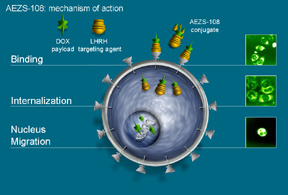
AEZS-108 Mechanism of Action (Photo: AEterna Zentaris Inc.)

AEZS-108 is a targeted cytotoxic peptide conjugate which is a hybrid molecule composed of a synthetic peptide carrier and a well-known cytotoxic agent, doxorubicin. The design of this product allows for the specific binding and selective uptake of the cytotoxic conjugate by LHRH-receptor-positive tumors. The binding of AEZS-108 to cancerous cells that express these receptors results in its accumulation in the malignant tissue. This binding is followed by internalization and retention of the cytotoxic drug, doxorubicin, in the cells. Therefore, since they target specific cells, cytotoxic conjugates are postulated to be less toxic, have less side-effects and are more effective in vivo than the respective non-conjugated/non-linked cytotoxic agents in inhibiting tumor growth.

About Ovarian and Endometrial Cancer

Ovarian cancer is one of the most common gynecologic malignancies and the fifth most frequent cause of cancer death in women, with most of the cases occurring in women between 50 and 75 years of age. Overall, ovarian cancer accounts for 4% of all cancer diagnoses in women and 5% of all cancer deaths. Approximately 26,000 new cases and 17,000 deaths from this disease are estimated in the European community every year (Source: Gynecologic Oncology, Volume 92, Issue 3, March 2004, Pages 819-826).

Cancer of the endometrium is the most common gynecologic malignancy and accounts for 6% of all cancers in women. The majority of the cases occur in postmenopausal women, with the largest number of women developing their cancers during their sixth decade. Approximately 38,000 new cases and 9,000 deaths from this disease are estimated annually in Europe (Source: Annals of Oncology 15:1149-1150, 2004).

About Æterna Zentaris Inc.

Æterna Zentaris Inc. is a global biopharmaceutical company focused on endocrine therapy and oncology, with proven expertise in drug discovery, development and commercialization. News releases and additional information are available at www.aezsinc.com.

Sources:

Endocyte’s EC145 Produces Significant Anti-Tumor Activity In Advanced Stage Chemoresistant Ovarian Cancer Patients

Endocyte, Inc., … presented data from a Phase 2a clinical trial for EC145, … In 49 women with advanced-stage ovarian cancer, EC145 was shown to have anti-tumor activity in a significant percentage of participants in the trial. …[T]he overall disease control rate, defined as stable disease, partial or complete response to therapy, was 40.8 percent (20 of 49). … In the subgroup of patients who were EC20 “positive” and who had failed four or fewer prior therapies, the disease control rate was 75 percent (9 of 12) and two patients exhibited a RECIST partial response. …

EC20 Imaging Results

Companion diagnostic images of ovarian cancer patients using folate-receptor targeted imaging agent (EC20-Tc99m). Patient on the top shows no targeting to tumor (negative profile). Patient on the bottom shows targeting to tumor (positive profile)(Photo: Endocyte, Inc.)

Endocyte, Inc., a cancer drug discovery and development company, presented data from a Phase 2a clinical trial for EC145, currently in development as a potential treatment for advanced ovarian cancer. Results were presented at the European Society of Gynaecologic Oncology (ESGO) meeting in Belgrade, Serbia last week. In 49 women with advanced-stage ovarian cancer, EC145 was shown to have anti-tumor activity in a significant percentage of participants in the trial.

The study participants had disease that was highly resistant to standard chemotherapy. Subjects had a median of four prior exposures to chemotherapy (with a range of 1 to 14), and 88 percent were diagnosed with “bulky disease,” defined as having a tumor volume of greater than five centimeters in diameter. However, in spite of this, the overall disease control rate, defined as stable disease, partial or complete response to therapy, was 40.8 percent (20 of 49).

Prior to the start of treatment with EC145, the women were scanned with 99mTc-EC20 [EC20], a molecular imaging agent that binds to folate receptors (FR) and is being developed by Endocyte as a companion diagnostic tool to identify patients whose tumors express FR, the molecular target for the EC145 therapy. When scanned with EC20, 76 percent of patients were found to be folate-receptor “positive.” In the subgroup of patients who were EC20 “positive” and who had failed four or fewer prior therapies, the disease control rate was 75 percent (9 of 12) and two patients exhibited a RECIST partial response. Across all patients, the drug was well tolerated with no grade 4 toxicities. The most common grade 3 toxicity was fatigue (8.2 percent).

According to Dr. Richard Messmann, Endocyte’s VP for medical affairs, “These preliminary results provide significant additional support for Endocyte’s technology platform and for the important role that Endocyte’s co-development of targeted therapeutics and companion diagnostics can play in cancer drug discovery. Based upon these promising results, EC145 is now being evaluated in our Phase 2b PRECEDENT study, an international randomized study of EC145 in combination with Doxil®/Caelyx® versus Doxil®/Caelyx® alone in women with platinumresistant ovarian cancer.”

About Endocyte

EC145 PRECEDENT Clinical TrialEndocyte is a privately held biotechnology company with headquarters in the Purdue Research Park of West Lafayette, IN. Based on the applications of Endocyte’s advanced proprietary Drug Guidance System (DGS), the company is working to develop new drugs and diagnostic agents to treat many types of cancer and other serious diseases. The DGS platform makes it possible to use highly potent drugs on extended and frequent dosing schedules and in combination with other drugs to maximize efficacy. The technology improves drug targeting and reduces the risk of side effects by combining drugs with ligands that are able to identify and attach to receptors found on tumor and other disease cells. Endocyte’s clinical development of EC20 and EC145 is progressing with the recent completion of accrual for the Phase 2a trials in advanced ovarian and lung cancer. EC20 and EC145 are now being studied in an international Phase 2b trial of EC145 in combination with Doxil® for the treatment of women with platinum resistant ovarian cancer. Other clinical-stage products in the Endocyte pipeline include EC0225, a targeted combination of two potent anticancer drugs; BMS753493, a potent drug being developed in partnership with Bristol-Myers Squibb; EC0489, a targeted cancer drug; and EC17, a targeted immunotherapy agent. The company also has multiple product candidates in pre-clinical stage of development.

Information about the PRECEDENT study can be found at http://clinicaltrials.gov/ct2/show/NCT00722592.

Sources:

Modified Chemo Regime Increases Survival In Advanced Ovarian Cancer Patients But Adds Toxicity

Women with advanced ovarian cancer lived longer and without their tumors growing after receiving a modified regimen of a standard chemotherapy drug combination, Japanese researchers reported last week. In a large phase III clinical trial, women who received carboplatin every 3 weeks and a reduced dose of paclitaxel (Taxol®) once a week for 3 weeks instead of carboplatin and a higher single dose of paclitaxel every 3 weeks had a 29 percent improvement in progression-free survival and a 25 percent improvement in overall survival after 3 years of follow-up.

Women with advanced ovarian cancer lived longer and without their tumors growing after receiving a modified regimen of a standard chemotherapy drug combination, Japanese researchers reported last week. In a large phase III clinical trial, women who received carboplatin every 3 weeks and a reduced dose of paclitaxel (Taxol®) once a week for 3 weeks instead of carboplatin and a higher single dose of paclitaxel every 3 weeks had a 29 percent improvement in progression-free survival and a 25 percent improvement in overall survival after 3 years of follow-up. The results were published online September 18 in The Lancet.

Although the toxicities of this dose-dense regimen were greater than they were in women who received the standard combination, survival benefits of this magnitude “have been rare in women with advanced ovarian cancer,” wrote Dr. Noriyuki Katsumata and colleagues from the Japanese Gynecologic Oncology Group (JGOG).

trimble

Edward L. Trimble, MD, MPH; Head - Gynecologic Cancer Therapeutics and Quality of Cancer Care Therapeutics, Clinical Investigation Branch, Cancer Therapy Evaluation Program, Division of Cancer Treatment and Diagnosis.

The results, explained Dr. Ted Trimble, from NCI’s Division of Cancer Treatment and Diagnosis, are consistent with what has been seen in breast cancer using a dose-dense chemotherapy regimen. The idea, he continued, is “to balance efficacy and toxicity by using a weekly schedule rather than every 3 weeks.”

Although the findings are important, “they won’t change practice overnight,” Dr. Trimble said. There are still several significant unknowns, including whether a lower dose of paclitaxel might be as effective but less toxic; the optimal timing of surgery; and where intraperitoneal chemotherapy fits into the treatment mix. The JGOG trial results, however, will influence the design of a number of phase III clinical trials, all of which include dose-dense chemotherapy, he added.

More than 630 women at 85 hospitals across Japan enrolled in the trial. Patients were randomly assigned to either of the two treatment groups. After 3 years of follow-up, women who received the dose-dense treatment had a median progression-free survival of 28 months, compared with 17 months for those who received the standard treatment.

bookman

Michael A. Bookman, M.D., Chief, Hematology/Oncology Section, Arizona Cancer Center

Not enough time has passed to determine with statistical confidence whether the overall survival advantage will be maintained. However, in ovarian cancer, improvements in progression-free survival tend to predict overall survival, said Dr. Michael A. Bookman, chief of the Hematology/Oncology Section at the Arizona Cancer Center, in an accompanying editorial in The Lancet.

The dose-dense chemotherapy regimen used in the trial was also dose-intense, meaning the total dose of paclitaxel patients received was actually higher than in those who received standard treatment. This was associated with some toxic side effects that caused treatment delays and modifications and also led to patients receiving less caboplatin than intended. In fact, more than half of the women in the dose-dense group discontinued treatment early, and most of them did so because of the toxicity.

Although it’s possible that the dose intensity was responsible for the survival improvements, Dr. Bookman wrote, the more frequent, lower-dose treatment schedule is the most “plausible explanation.” As a result, “similar results might be achieved” with a lower dose, he concluded, “with improved tolerability.”

As for why the dose-dense approach is more effective than the standard approach, the Japanese researchers suggested that it hampers the formation of blood vessels that feed tumors. In animal model studies, dose-dense chemotherapy, like a similar treatment also under active investigation called metronomic chemotherapy, has been shown to have such an antiangiogenic effect. And in the JGOG trial, the researchers noted, tumor shrinkage following treatment did not differ between those receiving dose-dense chemotherapy and standard chemotherapy. This suggests that the dose-dense treatment “might promote tumor dormancy by maintaining tumor size and preventing outgrowth,” they wrote.

alvarez

Ronald Alvarez, M.D., Director, Division of Gynecologic Oncology, University of Alabama at Birmingham

The U.S.-based Gynecologic Oncology Group is planning to launch a phase III clinical trial in advanced ovarian cancer combining the dose-dense approach with the targeted antiangiogenic drug bevacizumab (Avastin), said Dr. Ronald Alvarez, director of the Division of Gynecologic Oncology at the University of Alabama at Birmingham. This should help to confirm the Japanese trial’s results.

In the meantime, “Given the potential toxicity, clinicians should discuss with their patients the risks versus the benefits of this approach in comparison with other treatment strategies,” Dr. Alvarez said, particularly with those patients who have advanced disease and whose tumors could not be mostly eradicated by surgery.

Source: Modified Chemo Regimen Effective in Advanced Ovarian Cancer, by Carmen Phillips, NCI Cancer Bulletin Volume 6 / Number 18, National Cancer Institute, September 22, 2009.

References:

2009 ASCO Annual Meeting Highlights: Ovarian Cancer & Select General Issues

The 2009 American Society of Clinical Oncology (ASCO) Annual Meeting was held in Orlando, Florida from May 29 through June 2, 2009.  We provide below select highlights from the 2009 ASCO Annual Meeting that relate to ovarian cancer and other general issues.

The 2009 American Society of Clinical Oncology (ASCO) Annual Meeting was held in Orlando, Florida from May 29 through June 2, 2009.  We provide below select highlights from the 2009 ASCO Annual Meeting that relate to ovarian cancer and other general issues. Learn more about How to Read a Medical Abstract in a Research Study.

Development Time of Cancer Clinical Trials Linked to Accrual Goals.

Physicians Need to Address Prescription Costs With Patients Who Participate In Clinical Trials.

Availability of Experimental Therapy Outside of Randomized Clinical Trials In Oncology.

ASCO Fertility Preservation Guidelines For Cancer Patients Not Widely Followed By Oncologists.

Ginger (Zindol®) Quells Cancer Patients’ Chemotherapy-Related Nausea.

Early Treatment of Recurrent Ovarian Cancer Based Upon Rising CA-125 Levels Does Not Increase Survival.

Body Mass Index (BMI) Should Be Taken Into Account When Assessing A Cancer Patient’s Vitamin D Status.

Extreme Drug Resistance (EDR) Assay Results Do Not Independently Predict Or Alter The Outcomes of Patients With Epithelial Ovarian Cancer Who Are Treated With Optimal Cytoreductive Surgery Followed By Platinum & Taxane Combination Chemotherapy in Either a Primary or Recurrent Setting.

Systematic Review Of Past Study Results For Use of Cytoreductive Surgery Combined With Hyperthermic Intraperitoneal Chemotherapy (HIPEC).

Preliminary Results From Phase II Study of Oxaliplatin+Docetaxel+Bevacizumab As First Line Treatment of Advanced Ovarian Cancer Show 62% Overall Response Rate & 70% One-Year Progression Free Survival.

Combined Weekly Docetaxel + Gemcitabine In Relapsed Ovarian Cancer & Peritoneal Cancer Produces 59% Overall Response Rate.

A Phase II Trial of Irinotecan & Oral Etoposide Chemotherapy in Recurrent Ovarian Cancer Patients Produces 47% Overall Response Rate & 81% Clinical Benefit Rate.

Weekly Bevacizumab & Pegylated Liposomal Doxorubicin Produce 55% Clinical Benefit Rate In Progressing/Recurrent Ovarian Cancer Patients.

Phase II Study of Belotecan (CKD-602)+ Carboplatin Demonstrates 53% Overall Response Rate in Recurrent Ovarian Cancer Patients.

Single Agent Voreloxin Produces 11% Overall Response Rate & 52% Disease Control Rate in Phase II Study Involving Women with Platinum-Resistant Ovarian Cancer.

A Phase II Study of Patupilone In Patients With Platinum Refractory/Resistant Ovarian, Primary Fallopian, or Peritoneal Cancer Produces 48% Clinical Benefit Rate.

Trabectedin (Yondelis®) + Pegylated Liposomal Doxorubicin (PLD) Produces Better Response Than PLD Alone.

M.D. Anderson Cancer Center Finds Anti-VEGF Therapy Is Highly Effective In Patients With Ovarian Granulosa Cell Tumors.

M.D. Anderson Cancer Center Finds That Increased Angiogenesis Is A Significant Predictor Of Poor Clinical Outcome In Patients With Sex-Cord Stromal Tumors; Suggests Anti-Angiogenesis Therapy is Warranted For This Subtype of Ovarian Cancer.

ZYBRESTAT™ (Combretastatin A-4 phosphate) Produces 32% Confirmed Partial Response Rate (RR) in Evaluable Patients With Platinum Resistant Ovarian Cancer (25% RR if total enrolled patients used as denominator).

ASSIST-5 Trial of TELCYTA® + Pegylated Liposomal Doxorubicin Produces 12% Response Rate (With One Complete Response) in Patients With Platinum Refractory and Resistant Ovarian Cancer.

Two Studies Provide Contradictory Data for Use of Carboplatin + Pegylated Liposomal Doxorubicin in Ovarian Cancer

OGX-427 Treatment Demonstrates Safety, Evidence of Declines in Circulating Tumor Cells and Reductions in Tumor Markers in a Phase I Cancer Trial, Including 60% Response Rate (Based Upon Declining CA125) For Ovarian Cancer Patients.

Maintenance BIBF 1120 Could Delay Disease Progression in Recurrent Ovarian Cancer.

Oral PARP Inhibitor Olaparib (AZD2281) Effective Against BRCA-Deficient Advanced Ovarian Cancer.

Carfilzomib (PX-171-007) Produces Stable Disease For 4+ Months In One Ovarian Cancer Patient Who Failed Under Four Previous Treatment Lines – Phase II Solid Tumor Trial.

__________________________________________

About The American Society of Clinical Oncology

The American Society of Clinical Oncology is a non-profit organization founded in 1964 with the overarching goals of improving cancer care and prevention. More than 27,000 oncology practitioners belong to ASCO, representing all oncology disciplines and subspecialties. Members include physicians and health-care professionals in all levels of the practice of oncology. To view 2009 ASCO Annual Meeting presentation abstracts, click here.  To view 2009 ASCO Annual Meeting presentation abstracts regarding ovarian cancer, click here.  To view ASCO ovarian cancer information, click here.

About Cancer.Net

Cancer.Net, formerly People Living With Cancer (PLWC), brings the expertise and resources of the American Society of Clinical Oncology (ASCO), the voice of the world’s cancer physicians, to people living with cancer and those who care for and care about them. ASCO is composed of more than 27,000 oncologists globally who are the leaders in advancing cancer care. All the information and content on Cancer.Net was developed and approved by the cancer doctors who are members of ASCO, making Cancer.Net the most up-to-date and trusted resource for cancer information on the Internet. Cancer.Net is made possible by The ASCO Cancer Foundation, which provides support for cutting-edge cancer research, professional education, and patient information.

Cancer.Net provides timely, oncologist-approved information to help patients and families make informed health-care decisions. All content is subject to a formal peer-review process by the Cancer.Net Editorial Board, composed of more than 150 medical, surgical, radiation, and pediatric oncologists, oncology nurses, social workers, and patient advocates. In addition, ASCO editorial staff reviews the content for easy readability. Cancer.Net content is reviewed on an annual basis or as needed.

To view Cancer.Net ovarian cancer information, click here.

Learn more about How to Read a Medical Abstract in a Research Study, Cancer.Net.

Pattern of Genetic Faults Could Predict Whether An Ovarian Cancer Patient Will Respond to Common Chemo Drugs

“… A pattern of genetic defects in tumours could indicate whether ovarian cancer patients will respond to common chemotherapy drugs before treatment starts, reveals a Cancer Research UK study published in the Proceedings of the National Academy of Sciences … The researchers studied patterns of gene expression that indicate high levels of abnormal chromosomes or chromosomal instability (CIN) in cancer. …Patients with high levels of the CIN gene pattern were more resistant to paclitaxel.  Crucially, patients with high levels of CIN responded well to carboplatin – another commonly used ovarian cancer drug.  In contrast, tumours with low levels of CIN were resistant to carboplatin but responded to paclitaxel. …”

Continue reading

A Weekly Combination of Topotecan & Docetaxel Produces Clinical Benefit In Heavily Pretreated Ovarian Cancer Patients

Recurrent and metastatic endometrial and ovarian cancers can be notoriously difficult to treat. … Physicians at the Albert Einstein College of Medicine of Yeshiva University showed that a combination of two chemotherapy drugs not only produced clinical benefit for such patients but were also well tolerated.  The results of this phase II study were published online in Gynecologic Oncology on March 21st. …[T]he researchers concluded that the combination of weekly topotecan and docetaxel has clinical benefit and is well tolerated in this heavily treated epithelial ovarian and uterine cancer patient population.  The researchers also noted that patients with platinum-resistant tumors had clinical benefit and should be considered for further study with this regimen. …

Recurrent and metastatic endometrial and ovarian cancers can be notoriously difficult to treat.  Both diseases are capable of  spreading to other organs and developing resistance to chemotherapy.  Typically, under this scenario, the patients have been heavily treated with chemotherapy and may not be able to endure additional treatment. Physicians at the Albert Einstein College of Medicine of Yeshiva University showed that a combination of two chemotherapy drugs not only produced clinical benefit for such patients but were also well tolerated.  The results of this phase II clinical study were published online in Gynecologic Oncology on March 21st.

Mark H. Einstein, M.D., M.S., Associate Professor of Obstetrics & Gynecology and Women's Health, Albert Einstein College of Medicine of Yeshiva University

Mark H. Einstein, M.D., M.S., Associate Professor of Obstetrics & Gynecology and Women's Health, Albert Einstein College of Medicine of Yeshiva University

“Women with recurrent gynecologic cancers have often had multiple rounds of chemotherapy, which can cause tumor cells to develop resistance to these drugs,” says Mark H. Einstein, M.D., M.S., Associate Professor of Obstetrics & Gynecology and Women’s Health at Einstein, who headed the study. “This resistance can make it difficult for doctors to devise a treatment protocol that will impact the cancers while avoiding the often-severe side effects that certain chemotherapy drugs can cause, particularly when patients have already been heavily pretreated with other anti-cancer drugs.”Under the trial protocol, eligible patients with recurrent epithelial ovarian or uterine cancers were treated with weekly topotecan 3.5 mg/m(2) and docetaxel 30 mg/m(2) for 3 consecutive weeks. Cycles were repeated every 4 weeks for 6 cycles or until evidence of disease progression or unacceptable toxicity. Patient response was assessed under Response Evaluation Criteria In Solid Tumors (RECIST) or, when appropriate, Rustin’s Criteria.  The majority of patients had received 2 prior chemotherapy regimens (9 pts had received 1 previous regimen, 16 pts. had received 2, 1 pt. had received 3, and 1 pt. had received 4).  Of the twenty-seven patients registered, 24 were evaluable for response.  The results of the trial are set forth below.

  • 86 cycles of chemotherapy were administered.
  • There were three grade 4 (all neutropenia) and ten grade 3 toxicities.Six of the grade 3 toxicities were unrelated to treatment.
  • There were 8 dose delays and 4 dose reductions.
  • The overall response rate was 25%  (8% CR, 17% PR).
  • The clinical benefit rate was 38% (8% CR+17% PR+13% SD).
  • The median duration of response was 8.5 months (range 3-19 months).
  • The median overall survival was 18.5 months (range 1.8-50.7 months.

Based upon the foregoing results, the researchers concluded that the combination of weekly topotecan and docetaxel has clinical benefit and is well tolerated in this heavily treated epithelial ovarian and uterine cancer patient population.  The researchers also noted that patients with platinumresistant tumors had clinical benefit and should be considered for further study with this regimen.Compared with previous clinical trials, an unusually high proportion of these women had been heavily pretreated with chemotherapy─yet nearly 40 percent of them experienced clinical benefit. In addition, the overall survival with the drug combination (median survival of 18.5 months) was higher than in previous phase II studies that evaluated the drugs on an individual basis.  Finally, there were few and relatively mild side effects from the drug combination compared with toxicities observed in similar studies.

The effectiveness and safety outcomes of the trial are “promising enough to justify a larger clinical study of this drug combination for women with recurrent gynecologic cancers,” Dr. Einstein said.

Other researchers at Einstein involved in the trial were Divya Gupta, M.D., Ricky L. Owers, M.D., Mimi Kim, Sc.D., Dennis Yi-Shin Kuo, M.D., Gloria S. Huang, M.D., Shohreh Shahabi, M.D., and Gary L. Goldberg, M.D. Dr. Einstein’s research was funded, in part, by investigator-initiated grants from Sanofi-Aventis and GlaxoSmithKline Oncology for research-related trial costs.

Sources:

Personalized Medicine Helps Breast, Colorectal & Ovarian Cancer Patients Survive

“Cancer patients can survive longer under treatments based on their individual genetic profiles, according to a nationwide study released jointly today by Phoenix-area healthcare organizations. The study shows that molecular profiling of patients can identify specific treatments for individuals, helping keep their cancer in check for significantly longer periods, and in some cases even shrinking tumors. Study results were released today at the 100th annual meeting of the American Association for Cancer Research in Denver by Dr. Daniel Von Hoff, Physician-In-Chief of the Phoenix-based Translational Genomics Research Institute (TGen), and the study’s Principal Investigator. … Patients experienced varying levels of improvement. Among those with breast cancer, the period of progression-free survival increased for 44 percent of patients; for colorectal, 36 percent of patients; for ovarian, 20 percent of patients; and for miscellaneous cancers the improvement was seen in 16 percent of patients. …” [Emphasis added by Libby’s H*O*P*E*™]


tgen-logo1

“Personalized medicine helps cancer patients survive – TGen, Scottsdale Healthcare and Caris Dx clinical trial shows molecular profiling can result in specific treatments for individual patients that significantly limit the growth and spread of tumors

PHOENIX, Ariz. – April 19, 2009 – Cancer patients can survive longer under treatments based on their individual genetic profiles, according to a nationwide study released jointly today by Phoenix-area healthcare organizations.

The study shows that molecular profiling of patients can identify specific treatments for individuals, helping keep their cancer in check for significantly longer periods, and in some cases even shrinking tumors.

von_hoff

Daniel Von Hoff, M.D., F.A.C.P., Physician in Chief & Senior Investigator, The Translational Genomics Research Institute; Chief Scientific Officer, TGen Clinical Research Services, Scottsdale Healthcare; Clinical Professor of Medicine, University of Arizona Department of Medicine

Study results were released today at the 100th annual meeting of the American Association for Cancer Research in Denver by Dr. Daniel Von Hoff, Physician-In-Chief of the Phoenix-based Translational Genomics Research Institute (TGen), and the study’s Principal Investigator.

The study included 66 patients at nine centers across the United States, including Scottsdale Heathcare. Dr. Von Hoff also is the Chief Scientific Officer of TGen Clinical Research Services (TCRS) at Scottsdale Healthcare, a partnership between TGen and Scottsdale Healthcare that is administered by the Scottsdale Clinical Research Institute (SCRI) at Scottsdale Healthcare.

All of the patients had previously experienced growth of their tumors while undergoing as many as two to six prior cancer treatments, including conventional chemotherapy.

However, after molecular profiling identified precise targets, new treatments were administered that resulted in patients experiencing significant periods of time when there was no progression of their cancer.

This clinical trial was unique because patients acted as their own control,’ said Dr. Von Hoff. ‘We compared each patient’s progression-free survival, following treatment based on molecular profiling, to how their tumors progressed under their prior treatment regimens, before molecular profiling.’

In a significant number of patients, the targeted treatments provided significantly longer periods when tumors did not progress, or even shrunk, said Dr. Von Hoff, who also is a Medical Director of US Oncology and a former Director of the Arizona Cancer Center at the University of Arizona.

Dr. Von Hoff said the new study was done in a way that avoided issues surrounding tumor subtypes and differences in individual biology, which have confounded other clinical trials.

He said this clinical trial demonstrated the value of personalized medicine, in which treatments are prescribed based on an individual’s specific genetic makeup. The type of drugs, dosages, their delivery and other treatment aspects – all are based on each patient’s individual medical needs.

Among the patients, 27 percent had breast cancer, 17 percent had colorectal cancer, 8 percent had ovarian cancer and 48 percent had cancers that were classified as miscellaneous.

Patients experienced varying levels of improvement. Among those with breast cancer, the period of progression-free survival increased for 44 percent of patients; for colorectal, 36 percent of patients; for ovarian, 20 percent of patients; and for miscellaneous cancers the improvement was seen in 16 percent of patients.

‘With this trial, we are showing the power of personalized medicine using the tools we already have available to us. As these tools become more precise and more effective, the value of personalized medicine will increase,’ Dr. Von Hoff said.

The molecular profiling for this research study was performed by Caris Diagnostics (Caris Dx) in Phoenix.

These results are the first in a series of studies in support of Target NowTM, a commercially-available oncology testing service offered exclusively by Caris Dx. Target Now uses cutting-edge molecular profiling techniques, including both DNA microarray and immunohistochemical (IHC) analysis, to provide individualized information about a patient’s tumor as an aid to the treating oncologist.

‘This trial is evidence of an important breakthrough in the treatment of cancer. We are excited to work with Dr. Von Hoff and TGen as we make this important molecular diagnostic information available to physicians to aid in therapy-selection decision making,’ said David D. Halbert, Chairman and CEO of Caris Diagnostics. ‘The valuable information provided through the Target Now panel of tests improves patient care while reducing costs for the payer.’

Clinical studies were conducted by TCRS at the Virginia G. Piper Cancer Center at Scottsdale Healthcare Shea Medical Center. Scottsdale Healthcare is a primary clinical research site for TGen.

‘Patients in our community have access to ground-breaking, world-class research right in their own backyard thanks to this collaboration,’ said Tom Sadvary, president and CEO of Scottsdale Healthcare. ‘Our goal is reducing the time it takes to get new treatment discoveries from the research lab to the patient. We are thrilled to see these advances in personalized medicine taking place right here in Scottsdale.’

The recent clinical study was dubbed the Bisgrove Trial, after longtime Scottsdale Healthcare supporter Jerry Bisgrove. The trial was funded through a $5 million grant from Mr. Bisgrove’s Stardust Foundation to the Scottsdale Healthcare Foundation. Mr. Bisgrove has been a patient at Scottsdale Healthcare and is a member of the Scottsdale Healthcare Foundation Board of Trustees. In honor of the Stardust gift, the research building at the Virginia G. Piper Cancer Center at Scottsdale Healthcare Shea Medical Center is named the Debi and Jerry Bisgrove Research Pavilion.

‘The Stardust Foundation is proud to have played a key role in the advancements in cancer research represented by Dr. Von Hoff’s clinical trial. We believe we are closer than ever to finding a cure for this devastating disease that affects so many millions,’ Mr. Bisgrove said.

*          *          *

About Scottsdale Healthcare
Scottsdale Healthcare is a primary clinical research site for TGen. TGen Clinical Research Services (TCRS) at Scottsdale Healthcare is housed in the Virginia G. Piper Cancer Center at Scottsdale Healthcare, located on the Scottsdale Healthcare Shea medical campus. Scottsdale Healthcare is the not-for-profit parent organization of the Scottsdale Healthcare Shea, Scottsdale Healthcare Osborn and Scottsdale Healthcare Thompson Peak hospitals, Virginia G. Piper Cancer Center, Scottsdale Clinical Research Institute, TGen Clinical Research Services at Scottsdale Healthcare, Scottsdale Healthcare Home Health Services, Scottsdale Healthcare Community Health Services, and Scottsdale Healthcare Foundation. For additional information, visit www.shc.org.

About Scottsdale Clinical Research Institute (SCRI)
SCRI, established in 2005, provides infrastructure and support for the clinical research at Scottsdale Healthcare. Start-up funding for SCRI was provided by a lead gift of $4.5 million from the Virginia G. Piper Charitable Trust in 2005. An additional $5 million was provided by the Stardust Foundation to support this multi-site molecular profiling study of targeted therapies for treatment refractory cancers coordinated by SCRI. A defining feature of SCRI is a focus on genomics and personalized medicine as well as clinical and translational research. The basic science arm of SCRI is provided by a partnership with the Translational Genomics Research Institute (TGen). Innovations from TGen’s laboratory are taken to the bedside at SHC by our joint clinical research program, TGen Clinical Research Services (TCRS) at Scottsdale Healthcare. Additional research collaborations include the University of Arizona, Arizona State University, other local health care delivery systems and participation in the Arizona NIH Clinical and Translational Science Award (CTSA) program initiative. Areas of study at SCRI include Cancer, Cardiovascular, Trauma, Metabolic and Nanomedicine.

Press Contact:
Keith Jones
Public Relations Director
Scottsdale Healthcare
480-882-4412
kjones@shc.org

About TGen
The Translational Genomics Research Institute (TGen) is a non-profit organization dedicated to conducting groundbreaking research with life changing results. Research at TGen is focused on helping patients with diseases such as cancer, neurological disorders and diabetes. TGen is on the cutting edge of translational research where investigators are able to unravel the genetic components of common and complex diseases. Working with collaborators in the scientific and medical communities, TGen believes it can make a substantial contribution to the efficiency and effectiveness of the translational process. For more information, visit: www.tgen.org.

Press Contact:
Steve Yozwiak
TGen Senior Science Writer
602-343-8704
syozwiak@tgen.org

About Caris Diagnostics
Caris Diagnostics (Caris Dx) is a leading provider of the highest quality diagnostic, translational development and pharmaceutical services encompassing anatomic pathology and molecular testing. Caris Diagnostics provides world-class pathology services to physicians who treat patients in the community setting. The company provides academic-caliber medical consults through its industry-leading team of subspecialty fellowship and expert-trained pathologists in gastrointestinal and liver pathology, dermatopathology and hematopathology. Caris Diagnostics provides the highest levels of service to its customers and their patients through its state-of-the-art laboratories; proprietary, advanced clinical and technology solutions; and rigorous quality assurance programs. Through the molecular testing expertise of the Caris Molecular Profiling Institute (Caris MPI) at Caris Dx, the company also offers advanced molecular analyses of patient samples through prognostic testing services and genomic and proteomic profiling to provide critical information to physicians treating cancer and other complex diseases. In addition, Caris MPI supports pharmaceutical companies and other researchers in their clinical trials for targeted therapeutics with custom genomic and proteomic analyses, analyte preservation, tissue procurement and comprehensive reporting services. The company has strategic relationships with the International Genomics Consortium, US Oncology, the Translational Genomics Research Institute, and the Biodesign Institute of Arizona State University. More than 2,000 physicians nationally use Caris Diagnostics. Formed in 1996, the company is headquartered in Irving, Texas and operates four laboratories: Irving, Texas; Phoenix, Arizona (2 sites); Newton, Massachusetts. Additional information is available at www.carisdx.com.

Press Contact:
Brian Wright
Caris Dx
(602) 358-8916
bwright@carismpi.com”

Sources:

CNTO 328 Shows Promise For Ovarian Cancer In Small Clinical Trial, Say U.K. Scientists.

British scientists have developed and clinically tested a drug that could prolong the lives of ovarian cancer patients. A clinical trial of the drug, codenamed CNTO328, has been carried out at the Centre for Experimental Cancer Medicine, which is part of Barts and the London School of Medicine and Dentistry. … The drug is an antibody which works by targeting a molecule called Interleukin 6, which is made by cancer cells and is vital to help them multiply, spread and develop their own blood supply. … “At the end of the trial, eight of the women were either stable or getting better. Their cancer had stopped growing. That doesn’t sound great, but in ovarian cancer that’s pretty good because [without the drug] the disease would have progressed in all of them,” said McNeish.

British scientists have developed and clinically tested a drug that could prolong the lives of ovarian cancer patients.  A clinical trial of the drug, codenamed CNTO328, has been carried out at the Centre for Experimental Cancer Medicine, which is part of Barts and the London School of Medicine and Dentistry.

Eight of the 18 women enrolled in the trial experienced tumor stabilization or shrinkage.  The investigators noted that the percentage of women who received clinical benefit from CNTO328 is an unusually high proportion for an experimental cancer drug study. Typically only between 5%  and 20% of participants secure any benefit from taking untried treatments, according to the investigators.

Iain McNeish, MA, Ph.D., MRCP, Professor of Gynecological Oncology, Honorary Consultant in Medical Oncology,  Deputy Director Centre for Experimental Cancer Medicine Centre for Molecular Oncology & Imaging, Barts and the London School of Medicine & Denistry

Iain McNeish, MA, Ph.D., MRCP, Professor of Gynecological Oncology, Honorary Consultant in Medical Oncology, Deputy Director Centre for Experimental Cancer Medicine Centre for Molecular Oncology & Imaging, Barts and the London School of Medicine & Denistry, London, United Kingdom

Professor Iain McNeish, a professor of gynaecological oncology at Barts hospital in London and chief investigator of the trial, said: “We have taken the drug from the laboratory into patients and the results are promising.  The hope with this group of patients was to slow down the progress of their ovarian cancer, improve the quality of their life and possibly make them live longer. We have been quite successful in doing that. If this becomes a treatment, this is a whole new approach to treating ovarian cancer.”

The drug is an antibody which works by targeting a molecule called Interleukin 6, which is made by cancer cells and is vital to help them multiply, spread and develop their own blood supply.  Interleukin 6 is found in many cancers but plays a key role in ovarian cancer’s movement into the abdomen. The antibody binds to the Interleukin 6, blocks its progress by ensuring that it cannot bind itself to the cancer cells to assist their growth and thus renders it harmless.

McNeish hopes that, if further trials confirm the drug’s potential, it could prove as effective in tackling ovarian cancer as Herceptin has been in breast cancer. CNTO328 works in a similar way to Herceptin, which has revolutionized breast cancer treatment in recent years. “The dream scenario is that a combination of the existing chemotherapy drugs and this type of antibody will be a big breakthrough and open up a new avenue for the treatment of ovarian cancer”, said McNeish.

The new drug is the result of a collaboration between Professor Fran Balkwill, an expert in cancer and inflammation at the Institute of Cancer, Barts and the London School of Medicine and Denistry, and a Dutch biotech company called Centocor, which is now owned by Johnson & Johnson.

Eighteen women with the disease from north-east London and Essex joined the trial which began in late 2007.  All 18 were expected to live for less than a year when they began receiving the drug because their cancer had returned after undergoing several courses of chemotherapy.  Ten women died but the health of eight women improved. Seven of those eight women are still alive.  “At the end of the trial, eight of the women were either stable or getting better. Their cancer had stopped growing. That doesn’t sound great, but in ovarian cancer that’s pretty good because [without the drug] the disease would have progressed in all of them,” said McNeish.

Annwen Jones, chief executive of the UK charity Target Ovarian Cancer, said there were too few drugs available to treat ovarian cancer because of a lack of research. “This early stage trial certainly shows promise, because it appears that the growth of tumors has been slowed down in a good proportion of the patients who took part in the study,” said Jones. “Women being treated for ovarian cancer could be forgiven for despair, particularly when they grow resistant to chemotherapy and there are no drugs that can get them over this hurdle. Research projects like this are vital if we are to develop desperately needed new treatments,” she said.

Primary Sources:

Additional Resources:

GOG Reports on Evaluation of Pemetrexed in Treatment of Recurrent Platinum-Resistant Ovarian Cancer

A phase II Gynecologic Oncology Group (GOG) clinical study found that pemetrexed (Altima®)-an antifolate antineoplastic agent that disrupts folate-dependent cell replication metabolic processes-is sufficiently active in the treatment of recurrent platinum-resistant ovarian cancer to warrant further investigation.  “Thus [pemetrexed] should be considered for combination with other agents, especially carboplatin, in first-line therapy,” said David Miller, M.D., F.A.C.S. (University of Texas Southwestern Medical Center, Dallas, USA) and colleagues.

millerdavid

David Miller, M.D. F.A.C.S., Professor, Gynecologic Oncology, University of Texas Southwestern Medical Center

A phase II Gynecologic Oncology Group (GOG) clinical study found that pemetrexed (Altima®)-an antifolate antineoplastic agent that disrupts folate-dependent cell replication metabolic processes-is sufficiently active in the treatment of recurrent platinum-resistant ovarian cancer to warrant further investigation.  “Thus [pemetrexed] should be considered for combination with other agents, especially carboplatin, in first-line therapy,” said David Miller, M.D., F.A.C.S. (University of Texas Southwestern Medical Center, Dallas, USA) and colleagues.

The purpose of the GOG study was to estimate the antitumor activity of pemetrexed in patients with persistent or recurrent, platinum-resistant epithelial ovarian or primary peritoneal cancer and to determine the nature and degree of toxicities.  The patients that participated in the study experienced disease progression on platinum-based primary chemotherapy or recurred within 6 months. Pemetrexed at a dose of 900 mg/m2 was administered as an intravenous infusion over 10 minutes every 21 days. Dose delay and adjustments were permitted for toxicity. Treatment was continued until disease progression or unacceptable adverse effects.  From July 6, 2004, to August 23, 2006, 51 patients enrolled in the study.  A total of 259 cycles (median, four; range one to 19 cycles) of pemetrexed were administered, with 40% of the patients receiving six or more cycles.

According to the investigators, the study produced the following results:

  • No treatment -related deaths were reported;
  • Eighteen patients (38%) had progressive disease. Three patients (6%) were not assessable;
  • One patient (2%) had a complete response (CR) and nine patients (19%) had partial responses (PRs), with a median duration response of 8.4 months. Seventeen patients (35%) had stable disease (SD) for a median of 4.1 months. Clinical benefit rate (CR + PR + SD) was 56%; and

Based upon the foregoing results, the investigators noted that pemetrexed “exhibited activity more favorable than that seen in other agents that have been test in first-line combinations by the GOG.” Pemetrexed, according to the investigators, has sufficient activity in the treatment of recurrent platinum-resistant ovarian cancer at the dose and schedule tested to warrant further investigation.

Sources: