U.S. President Barack Obama Proclaims September 2010 As National Ovarian Cancer Awareness Month

Yesterday, U.S. President Barack Obama designated September 2010 as National Ovarian Cancer Awareness Month.  During National Ovarian Cancer Awareness Month, we honor all those lost to and living with ovarian cancer, and we renew our commitment to developing effective screening methods, improving treatments, and ultimately defeating this disease.

The White House

Office of the Press Secretary

For Immediate Release August 31, 2010

Presidential Proclamation–National Ovarian Cancer Awareness Month

While we have made great strides in the battle against ovarian cancer, this disease continues to claim more lives than any other gynecologic cancer. During National Ovarian Cancer Awareness Month, we honor all those lost to and living with ovarian cancer, and we renew our commitment to developing effective screening methods, improving treatments, and ultimately defeating this disease.

Each year, thousands of women are diagnosed with, and go on to battle valiantly against, this disease. Yet, ovarian cancer remains difficult to detect, and women are often not diagnosed until the disease has reached an advanced stage. I encourage all women — especially those with a family history of ovarian cancer or breast cancer, and those over age 55 — to protect their health by understanding risk factors and discussing possible symptoms, including abdominal pain, with their health care provider. Women and their loved ones may also visit Cancer.gov for more information about the symptoms, diagnosis, and treatment of ovarian and other cancers.

Across the Federal Government, we are working to promote awareness of ovarian cancer and advance its diagnosis and treatment. The National Cancer Institute, the Centers for Disease Control and Prevention, and the Department of Defense all play vital roles in reducing the burden of this illness through critical investments in research. Earlier this year, I was proud to sign into law the landmark Affordable Care Act (ACA), which includes provisions to help women living with ovarian cancer. The ACA eliminates annual and lifetime limits on benefits, creates a program for those who have been denied health insurance because of a pre-existing condition, and prohibits insurance companies from canceling coverage after individuals get sick. The ACA also requires that women enrolling in new insurance plans and those covered by Medicare or Medicaid receive free preventive care — including women’s health services and counseling related to certain genetic screenings that identify increased risks for ovarian cancer. In addition, the ACA prohibits new health plans from dropping coverage if an individual chooses to participate in a potentially life-saving clinical trial, or from denying coverage for routine care simply because an individual is enrolled in such a trial.

During National Ovarian Cancer Awareness Month and throughout the year, I commend all the brave women fighting this disease, their families and friends, and the health care providers, researchers, and advocates working to reduce this disease’s impact on our Nation. Together, we can improve the lives of all those affected and create a healthier future for all our citizens.

NOW, THEREFORE, I, BARACK OBAMA, President of the United States of America, by virtue of the authority vested in me by the Constitution and the laws of the United States, do hereby proclaim September 2010 as National Ovarian Cancer Awareness Month. I call upon citizens, government agencies, organizations, health care providers, and research institutions to raise ovarian cancer awareness and continue helping Americans live longer, healthier lives.

IN WITNESS WHEREOF, I have hereunto set my hand this thirty-first day of August, in the year of our Lord two thousand ten, and of the Independence of the United States of America the two hundred and thirty-fifth.

BARACK OBAMA

Source: NATIONAL OVARIAN CANCER AWARENESS MONTH, 2010, By the President of the United States of America, A Proclamation, Office of the Press Secretary For The President of the United States of America, The White House, August 31, 2010.

GOG Says Continuation of Pivotal OPAXIO Maintenance Therapy Trial (GOG-212) Remains High Priority

Gynecologic Oncology Group (GOG) Notifies CTI That Continuation of GOG-212 Pivotal Trial of OPAXIO Maintenance Therapy in Front Line Ovarian Cancer Remains High Priority.  GOG-218 Bevacizumab Results Do Not Influence Importance of GOG-212

Cell Therapeutics, Inc. (“CTI”) announced today that the company received a statement on March 1, 2010 from the Gynecologic Oncology Group (GOG) leadership that the phase III GOG-212 clinical trial of CTI’s OPAXIO™ (formerly known as Xyotax or CT-2103) used as maintenance therapy for ovarian cancer remains a high priority and enrollment will continue. The GOG made the statement to clarify that the recent results of the GOG-218 clinical trial bevacizumab in maintenance therapy for ovarian cancer has not influenced the importance of completing the GOG-212 clinical trial. The Gynecologic Oncology Group (GOG) is one of the National Cancer Institute’s (NCI) funded cooperative cancer research groups. The GOG is a multidisciplinary cooperative clinical trial research group focused on the study of gynecologic malignancies. The GOG is conducting phase III trials in ovarian cancer and other gynecologic cancers and has established standard treatments for these diseases in the U.S.

GOG leadership noted the following:

GOG-218 and GOG-212 differ in the type of patients under study. It is important to note that some of the patients who completed the initial 6 cycles of chemotherapy in GOG-218 had clinical evidence of persistent tumor and were randomized to either placebo (no treatment) or bevacizumab [Avastin®]. Thus a subset of GOG-218 patients received no therapy, despite the presence of persistent tumor. This is not the typical setting of using maintenance or consolidation therapy and it is not the setting for patients enrolled in GOG-212. In GOG-212, only patients who have achieved a complete clinical response are considered candidates for enrollment in the trial.

Reliance upon the data from GOG-218 to establish the “standard of care” must take into consideration the actual treatment effect (i.e., duration of benefit), the cost of the treatment, and the associated toxicity… [in GOG-212] the toxicity of the intervention may have less associated mortality and the incremental cost-effectiveness ratio may be more acceptable to patients and the health care economists. Thus the GOG has no intention to discontinue enrollment in GOG 212 as they feel that the study is addressing a different scientific question and the primary outcome study goal is survival, not progression free survival, an outcome of greater importance to both physicians and patients.

The Data Monitoring Committee is scheduled to conduct an interim analysis of overall survival when 130 events are recorded among patients in the no maintenance treatment arm. The statistical analysis plan utilizes pre-specified boundaries for early stopping for success. Based on current enrollment and study duration, the interim analysis could be conducted as early as 2011. If successful, CTI could utilize those results to form the basis of its New Drug Application for OPAXIO.

About Cell Therapeutics, Inc.

Headquartered in Seattle, CTI is a biopharmaceutical company committed to developing an integrated portfolio of oncology products aimed at making cancer more treatable. For additional information, please visit http://www.celltherapeutics.com/.

Sources:

PI3K Pathway: A Potential Ovarian Cancer Therapeutic Target?

…[T]here are several PI3K signaling pathway targeting drugs in clinical development for use against ovarian cancer and solid tumors, including GDC-0941, BEZ235, SF1126, XL-147, XL-765, BGT226, and PX-866.  The results of two recent medical studies suggest that the use of PI3K-targeted therapies may offer an effective therapeutic approach for patients with advanced-stage and recurrent ovarian cancer, including a generally chemotherapy-resistant histological subtype of epithelial ovarian cancer known as “ovarian clear cell cancer” (OCCC).  The targeting of the PI3K pathway in endometrial, ovarian, and breast cancer is also being investigated by a Stand Up To Cancer “Dream Team.” …

PI3K Cellular Signaling Pathway — An Overview

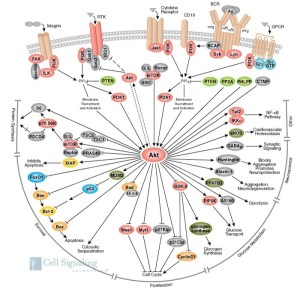
PI3K/AKT cellular signaling pathway (Photo: Cell Signaling Technology(R))

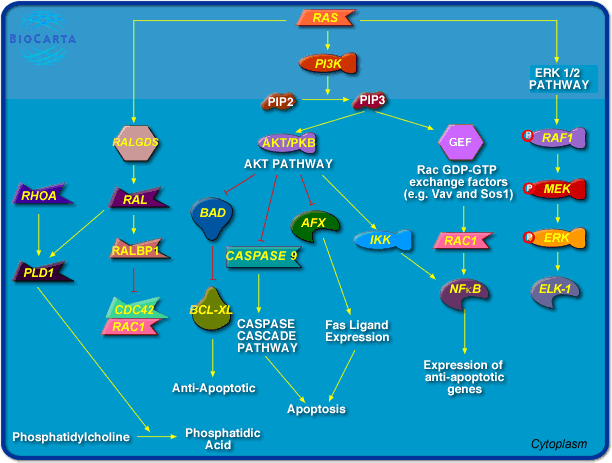
In 2004 and 2005, multiple researchers identified mutations in the PIK3CA  gene with respect to multiple cancers.[1]  The PIK3CA gene encodes the PI3K catalytic subunit p110α. PI3K (phosphoinositide 3- kinase) proteins have been identified in crucial signaling pathways of ovarian cancer cells. PI3Ks are also part of the PI3K-AKT-mTOR signaling pathway which promotes cellular glucose metabolism, proliferation, growth, survival, and invasion and metastasis in many cancers. PIK3CA gene mutations can increase PI3K signaling, thereby activating the PI3K-AKT-mTOR pathway within cancer cells.

As of this writing, there are several PI3K signaling pathway targeting drugs in clinical development for use against ovarian cancer and solid tumors, including GDC-0941, BEZ235, SF1126, XL-147, XL-765, BGT226, and PX-866. [2]  The results of two recent medical studies suggest that the use of PI3K-targeted therapies may offer an effective therapeutic approach for patients with advanced-stage and recurrent ovarian cancer, including a generally chemotherapy-resistant histological subtype of epithelial ovarian cancer known as “ovarian clear cell cancer” (OCCC).  The targeting of the PI3K pathway in endometrial, ovarian, and breast cancer is also being investigated by a Stand Up To CancerDream Team.”

Frequent Mutation of PIK3CA Gene In Recurrent & Advanced Clear Cell Ovarian Cancer

OCCC is one of the five major subtypes of epithelial ovarian cancer. OCCC accounts for only 4% to 12% of epithelial ovarian cancer in Western countries and, for unknown reasons, it comprises more than 20% of such cancers in Japan [3,4,5]. OCCC possesses unique clinical features such as a high incidence of stage I disease, a large pelvic mass, an increased incidence of venous thromboembolic complications, and hypercalcemia. It is frequently associated with endometriosis.  Compared to serous ovarian cancer, OCCC is relatively resistant to conventional platinum and taxane-based chemotherapy. For these reasons, new effective therapies are desperately needed for OCCC.

Researchers from Johns Hopkins and the University of California, Los Angeles (UCLA) analyzed 97 OCCC tumors for genetic sequence mutations in KRAS (v-Ki-ras2 Kirsten rat sarcoma viral oncogene homolog), BRAF (v-raf murine sarcoma viral oncogene homolog B1), PIK3CA (phosphoinositide-3-kinase, catalytic, alpha polypeptide), TP53 (tumor protein p53), PTEN (phosphatase and tensin homolog), and CTNNB1 (Catenin, Beta-1) as these mutations frequently occur in other major types of ovarian cancers.[6] The samples tested included the following:

  • 18 OCCCs for which affinity-purified tumor cells from fresh specimens were available;
  • 10 OCCC tumor cell lines.

Upon test completion, the researchers discovered that sequence mutations of PIK3CA, TP53, KRAS, PTEN, CTNNB1, and BRAF occurred in 33%, 15%, 7%, 5%, 3%, and 1% of OCCC cases, respectively.

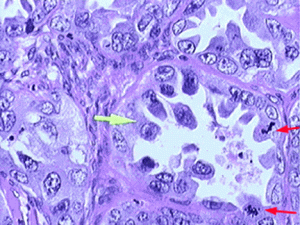
Clear cell carcinoma of the ovary (Photo: Geneva Foundation For Medical Education & Research)

The sequence analysis of the 18 affinity purified OCCC tumors and the 10 OCCC cell lines showed a PIK3CA mutation frequency of 46%. Based upon these findings the researchers concluded that the use of PIK3CA-targeting drugs may offer a more effective therapeutic approach compared with current chemotherapeutic agents for patients with advanced-stage and recurrent OCCC. As noted above, there are several PI3K-targeting drugs in clinical development for use against ovarian cancer and solid tumors.[2]

Notably, one of the researchers involved with this OCCC study is Dennis J. Slamon, M.D., Ph.D. Dr. Slamon serves as the Director of Clinical/Translational Research, and as Director of the Revlon/UCLA Women’s Cancer Research Program at the Jonsson Comprehensive Cancer Center. Dr. Slamon is also a professor of medicine, chief of the Division of Hematology/Oncology and Executive Vice Chair of Research for UCLA’s Department of Medicine. Dr. Slamon is a co-discoverer of the breast cancer drug Herceptin®. Herceptin is a monoclonal antibody targeted therapy used against HER-2 breast cancer, an aggressive breast cancer subtype that affects 20% to 30% of women with the disease. Herceptin’s development was based, in part, upon the unique genetic profile of HER-2 breast cancer as compared to other forms of breast cancer. Herceptin® revolutionized the treatment of HER-2 postive breast cancer and is recognized worldwide as the standard of care for that subtype of breast cancer.  The approach taken by Johns Hopkins and UCLA researchers in this study — the identification of  a subtype within a specific form of cancer that may be susceptible to a targeted therapy —  bears a striking similarity to the overarching approach taken in the development of Herceptin®.

Ovarian Cancer & Other Solid Tumors With PIK3CA Gene Mutations Respond To PI3K-AKT-mTOR Pathway Inhibitors In Phase I Clinical Testing.

Testing patients with cancer for PIK3CA gene mutations is feasible and may allow targeted treatment of the PI3K-AKT-mTOR cellular signaling pathway, according to the results of a University of  Texas, M.D. Anderson Cancer Center study presented on November 17, 2009 at the 2009 AACR (American Association for Cancer Research)-NCI (National Cancer Institute)-EORTC (European Organization For Research & Treatment of Cancer) International Conference on Molecular Targets and Cancer Therapeutics.[7]

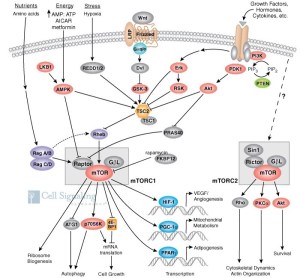
mTOR cellular signaling pathway (Photo: Cell Signaling Technology(R))

Filip Janku, M.D., Ph.D, a clinical research fellow with the M.D. Anderson Cancer Center’s department of investigational cancer therapeutics, and colleagues conducted a mutational analysis of exon 9 and exon 20 of the PI3KCA gene using DNA from the tumors of patients referred to targeted therapy clinical trials. Patients with PIK3CA mutations were preferably treated whenever possible with regimens utilizing PI3K-AKT-mTOR signaling pathway inhibitors.

As part of this study 117 tumor samples were analyzed. PIK3CA mutations were detected in 14 (12%) patients.  In tumor types with more than 5 patients tested, PIK3CA mutations were identified in endometrial cancer (43%, 3 out of 7 patients), ovarian cancer (22%, 5 out of 23 patients), squamous head and neck cancer (14%, 1 out of 7 patients), breast cancer (18%, 2 out of 11 patients), and colon cancer (15%, 2 out of 13 patients). No mutations were identified in patients with melanoma or cervical cancer.

Of the 14 patients found to possess PIK3CA mutations, 10 were treated based upon a clinical trial protocol that included a drug targeting the PI3K-AKT-mTOR pathway.  A partial response to treatment was experienced by 4 (40%) patients. Although the total number of patients is small, there were 2 (67%) patient responses in 3 endometrial cancer cases, 1 (25%) patient response in 4 ovarian cancer cases, 1 (100%) patient response in 1 breast cancer, and no patient response in 1 colorectal cancer case.  Although the total number of study patients is small, the researchers conclude that the response rate appears high (40%) in tumors with PIK3CA mutations treated with PI3K-AKT-mTOR pathway inhibitors.

“The implications of this study are twofold,” said Dr. Janku.  “We demonstrated that PIK3CA testing is feasible and may contribute to the decision-making process when offering a patient a clinical trial. Although this study suffers from low numbers, the response rate observed in patients treated with inhibitors of PI3K/AKT/mTOR pathway based on their mutational status was well above what we usually see in phase-1 clinical trials.”  “These results are intriguing but at this point should be interpreted with caution,” said Janku. “The promising response rate needs to be confirmed in larger groups of patients. We expect to learn more as this project continues to offer PIK3CA screening to patients considering a phase-1 clinical trial.”

Stand Up 2 Cancer Dream Team: Targeting the PI3K Pathway in Women’s Cancers

The potential importance of the PI3K pathway in the treatment of ovarian cancer is emphasized by the two medical studies above.  This issue is also receiving considerable attention from one of the Stand Up 2 Cancer (SU2C) “Dream Teams,” which is going to evalute  the potential for targeting the PI3K pathway in women’s cancer.  SU2C assigned $15 million of cancer research funding to this critical issue.  The scientists involved in this SU2C Dream Team are the pioneers who discovered the PI3K pathway and validated its role in human cancers, and they will focus on breast, ovarian and endometrial cancers, all of which possess the PI3K mutation.

The leader and co-leaders of the PI3K pathway SU2C team are set forth below.

Leader:

Lewis C. Cantley, Ph.D., Director, Cancer Center at Beth Israel Deaconess Medical Center.

Co-Leaders:

Charles L. Sawyers, M.D., Director, Human Oncology and Pathogenesis Program, Memorial Sloan-Kettering Cancer Center.

Gordon B. Mills, M.D., Ph.D., Chair, Department of Systems Biology, University of Texas, M.D. Anderson Cancer Center.

The specific SU2C Dream Team research goal with respect to targeting the PI3K pathway in women’s cancers is stated as follows:

The PI3K pathway is mutated in more cancer patients than any other, and these mutations are the most frequent events in women’s cancers, making it an attractive molecular target for agents that inhibit these genetic aberrations. If successful, this project will allow clinicians to use biomarkers and imaging techniques to predict which patients will benefit from PI3K pathway inhibitors and lead to the development of therapeutic combinations that will hit multiple targets in the complex pathways that contribute to cancer cell growth.  This work will help assure that these therapies are given to patients who will benefit from them, and it will also increase the overall pace of clinical trials targeting PI3K inhibitors.

Based upon the two studies discussed, and the creation and funding of the SU2C Dream Team for the purpose of targeting the PI3K pathway in women’s cancer, the future holds great promise in the battle against ovarian cancer (including OCCC).  It is our hope that more clinical study investigators will offer PI3K pathway mutation screening to all ovarian cancer patient volunteers.  Libby’s H*O*P*E*™ will continue to monitor the clinical development of PI3K pathway inhibitors, and make our readers aware of all future developments.

________________________________

References:

1/Yuan TL, Cantley LC. PI3K pathway alterations in cancer: variations on a theme. Oncogene. 2008 Sep 18;27(41):5497-510. PubMed PMID: 18794884
Samuels Y, Ericson K. Oncogenic PI3K and its role in cancer. Curr Opin Oncol. 2006 Jan;18(1):77-82. PubMed PMID: 16357568.
Levine DA, Bogomolniy F, Yee CJ, et. al. Frequent mutation of the PIK3CA gene in ovarian and breast cancers. Clin Cancer Res. 2005 Apr 15;11(8):2875-8. PubMed PMID: 15837735.
Samuels Y, Wang Z, Bardelli A, et. al. High frequency of mutations of the PIK3CA gene in human cancers. Science. 2004 Apr 23;304(5670):554. Epub 2004 Mar 11. PubMed PMID: 15016963.

2/For open ovarian cancer clinical trials using a PI3K-targeted therapy; CLICK HERE; For open solid tumor clinical trials using a PI3K-targeted therapy, CLICK HERE.

3/ Itamochi H, Kigawa J & Terakawa N.  Mechanisms of chemoresistance and poor prognosis in ovarian clear cell carcinoma. Can Sci 2008 Apr;99(4):653-658. [PDF Document]

4/Schwartz DR, Kardia SL, Shedden KA, et. alGene Expression in Ovarian Cancer Reflects Both Morphology and Biological Behavior, Distinguishing Clear Cell from Other Poor-Prognosis Ovarian CarcinomasCan Res 2002 Aug; 62, 4722-4729.

5/Sugiyama T & Fujiwara K.  Clear Cell Tumors of the Ovary – Rare Subtype of Ovarian Cancer, Gynecologic Cancer, American Society of Clinical Oncology (ASCO) Educational Book, 2007 ASCO Annual Meeting, June 2, 2007 (Microsoft Powerpoint presentation).

6/Kuo KT, Mao TL, Jones S, et. al. Frequent Activating Mutations of PIK3CA in Ovarian Clear Cell Carcinoma. Am J Pathol. 2009 Apr 6. [Epub ahead of print]

7/Janku F, Garrido-Laguna I, Hong D.S.  PIK3CA mutations in patients with advanced cancers treated in phase I clinical trials, Abstract #B134, Molecular Classification of Tumors, Poster Session B, 2009 AACR-NCI-EORTC Molecular Targets and Cancer Therapeutics Conference. [PDF Document].

Nationwide Registry to “Match” Study Volunteers With Researchers

Individuals who want to participate in research studies can connect online with researchers nationwide through the first disease-neutral, volunteer recruitment registry.  ResearchMatch.org is a not-for-profit secure Web site, designed to provide people who are interested in participating in research the opportunity to be matched with studies that may be the right fit for them.

NIH Announces First National Research Study Recruitment Registry

Nationwide Registry to “Match” Volunteers with Researchers

Barbara Alving, M.D.

Barbara Alving, M.D., Director, National Center For Research Resources. "ResearchMatch is a tool that can improve the connection and communication between potential participants and researchers providing opportunities for the public to contribute to advancing new treatments."

researchmatch.orgIndividuals who want to participate in research studies now can connect online with researchers nationwide through the first disease-neutral, volunteer recruitment registry.

ResearchMatch.org is a not-for-profit secure Web site, designed to provide people who are interested in participating in research the opportunity to be matched with studies that may be the right fit for them.

ResearchMatch offers an easy-to-use, free and safe way for volunteers to connect with thousands of researchers who are conducting research on a wide range of diseases.

The site is a collaborative effort of the national network of medical research institutions affiliated with the Clinical and Translational Science Awards (CTSAs). The CTSA program, which is led by the National Center for Research Resources (NCRR), a part of the National Institutes of Health, is focused on enhancing local and national efforts to enhance the translation of laboratory discoveries into treatments for patients.

“‘Participant recruitment continues to be a significant barrier to the completion of research studies nationwide — recent NIH data indicates that just 4 percent of the U.S. population has participated in clinical trials,’ said NCRR Director Barbara Alving, M.D.”

“Participant recruitment continues to be a significant barrier to the completion of research studies nationwide — recent NIH data indicates that just 4 percent of the U.S. population has participated in clinical trials,” said NCRR Director Barbara Alving, M.D. “ResearchMatch is a tool that can improve the connection and communication between potential participants and researchers providing opportunities for the public to contribute to advancing new treatments.”

” …One key difference is that ResearchMatch places the burden of connecting the right volunteers with the right study on the researchers, whereas Clinicaltrials.gov asks volunteers to identify the trials that could work for them. …”

The convenient and user-friendly registry employs a familiar research matching model that is complementary to Clinicaltrials.gov. One key difference is that ResearchMatch places the burden of connecting the right volunteers with the right study on the researchers, whereas Clinicaltrials.gov asks volunteers to identify the trials that could work for them.

“NIH data indicates that 85 percent of trials don’t finish on time due to low patient participation, and 30 percent of trial sites fail to enroll even a single patient. We aim to help combat these challenges with ResearchMatch.” — Gordeon Bernard, M.D., principal investigator of the Vanderbilt University CTSA

“ResearchMatch offers a convenient solution to the complex, competitive and often costly participant recruitment system,” said Gordon Bernard, M.D., principal investigator of the Vanderbilt CTSA, which hosts the national registry. “NIH data indicates that 85 percent of trials don’t finish on time due to low patient participation, and 30 percent of trial sites fail to enroll even a single patient. We aim to help combat these challenges with ResearchMatch.”

How ResearchMatch Works

ResearchMatch will match any interested individual residing in the United States with researchers who are approved to recruit potential research volunteers through the system. After an individual has self-registered to become a volunteer, researchMatch’s security features ensure that personal information is protected until volunteers authorize the release of their contact information to a specific study that may be of interest to them. Volunteers are notified electronically when they are a possible match and then make the decision regarding the release of their contact information. It also will promote choice as there are no obligations on the volunteer to participate in studies.

For the first year of the project, only researchers affiliated with participating CTSA institutions are eligible to use researchMatch. However, plans are in place to make researchMatch available beyond the CTSA consortium by 2011. Currently 52 individual institutions associated with 40 CTSA sites are part of the ResearchMatch network. A list of these institutions may be viewed here (http://ncrr.nih.gov/clinical_research_resources/clinical_and_translational_science_awards/researchmatch).

To learn more about researchMatch and to register as a volunteer, visit: www.researchmatch.org.

About the CTSA Consortium

The CTSA consortium is a national network of 46 medical research institutions working together to improve the way biomedical research is conducted across the country. The consortium, funded through Clinical and Translational Science Awards (CTSAs), shares a common vision to reduce the time it takes for laboratory discoveries to become treatments for patients and to engage communities in clinical research efforts. It also is fulfilling the critical need to train a new generation of clinical researchers. The CTSA program is led by the National Center for Research Resources, part of National Institutes of Health.

Launched in 2006, this network now includes awardees in 26 states. When the program is fully implemented, it will support approximately 60 CTSAs across the nation.

For more information about the CTSA program, visit www.ncrr.nih.gov/ctsa. The CTSA consortium Web site, which provides information on the consortium, current members and new grantees, can be accessed at www.CTSAweb.org.

About the National Center For Research Resources

The National Center for Research Resources, part of NIH, provides laboratory scientists and clinical researchers with the resources and training they need to understand, detect, treat and prevent a wide range of diseases. NCRR supports all aspects of translational and clinical research, connecting researchers, patients and communities across the nation. For more information, visit www.ncrr.nih.gov.

About the National Institutes of Health

The National Institutes of Health (NIH) — The Nation’s Medical Research Agency — includes 27 Institutes and Centers and is a component of the U.S. Department of Health and Human Services. It is the primary federal agency for conducting and supporting basic, clinical and translational medical research, and it investigates the causes, treatments, and cures for both common and rare diseases. For more information about NIH and its programs, visit www.nih.gov.

SourceNIH Announces First National Research Study Recruitment Registry – Nationwide Registry to “Match” Volunteers with Researchers, NIH News, U.S. National Institutes of Health, U.S. Department of Health & Human Services, November 10, 2009.

FDA Issues Final Rules to Help Patients Gain Access to Investigational Drugs

The U.S. Food and Drug Administration (FDA) published two rules [on August 12, 2009] …that seek to clarify the methods available to seriously ill patients interested in gaining access to investigational drugs and biologics when they are not eligible to participate in a clinical trial and don’t have other satisfactory treatment options.

U.S. Food & Drug Administration

U.S. Food & Drug Administration

The U.S. Food and Drug Administration (FDA) published two rules [on August 12, 2009] …that seek to clarify the methods available to seriously ill

Margaret Hamburg, M.D., Comissioner of Food & Drugs, U.S. Food & Drug Administration

Margaret A. Hamburg, M.D., Commissioner of Food & Drugs, U.S. Food & Drug Administration

patients interested in gaining access to investigational drugs and biologics when they are not eligible to participate in a clinical trial and don’t have other satisfactory treatment options.

To support the effort to help these patients, the agency also is launching a new Web site where patients and their health care professionals can learn about options for investigational drugs. In general, these options include being treated with a drug that has been approved by FDA, being given an investigational drug as part of a clinical trial, or obtaining access to an investigational drug outside of a clinical trial.

The new rule, “Expanded Access to Investigational Drugs for Treatment Use,” makes investigational drugs more widely available to patients by clarifying procedures and standards. The other rule, “Charging for Investigational Drugs Under an Investigational New Drug Application,” clarifies the specific circumstances and the types of costs for which a manufacturer can charge patients for an investigational drug when used as part of a clinical trial or when used outside the scope of a clinical trial.

“With these initiatives, patients will have the information they need to help them decide whether to seek investigational products,” said Margaret A. Hamburg, M.D., Commissioner of Food and Drugs. “For patients seeking expanded access to investigational drugs and biologics, the new rules make the process easier to understand.”

Clinical trials are studies of drugs and biologics that are still in development and have not yet been approved by the FDA. Many patients enroll in clinical trials to gain access to investigational therapies and contribute to finding out how well an investigational therapy works, and how safe it is for patients. Obtaining a drug or biologic under an expanded access program may be an option for some patients who are not able to enroll in clinical trials.

The FDA has allowed expanded access to experimental drugs and biologics since the 1970s. That access has allowed tens of thousands of patients with HIV/AIDS, cancer, and other conditions to receive promising therapies when no approved alternative is available.

“The final rules balance access to promising new therapies against the need to protect patient safety and seek to ensure that expanded access does not discourage participation in clinical trials or otherwise interfere with the drug development process,” said Janet Woodcock, M.D., director of the FDA’s Center for Drug Evaluation and Research. “Clinical trials are the most important part of the drug development process in determining whether new drugs are safe and effective, and how to best use them.”

Source: FDA Issues Final Rules to Help Patients Gain Access to Investigational Drugs, FDA News Release, News & Events, U.S. Food & Drug Administration, 12 Aug. 09.

Additional Information:

UPCI Launches Clinical Trial for Patients with Hereditary Breast and Ovarian Cancers

“The University of Pittsburgh Cancer Institute (UPCI) will be the primary site for a clinical trial of ABT-888, a drug previously proven in combination treatments to improve chemotherapy’s effectiveness by lowering cancer cells’ resistance to treatment. This trial will, for the first time, examine ABT-888 as a single agent for patients with cancers related to BRCA 1 or 2 genetic mutations, which predispose patients to breast and ovarian cancers. …”

Continue reading

M.D. Anderson Study Predicts Dramatic Growth in Cancer Rates Among U.S. Elderly, Minorities

” … Over the next 20 years, the number of new cancer cases diagnosed annually in the United States will increase by 45 percent, from 1.6 million in 2010 to 2.3 million in 2030, with a dramatic spike in incidence predicted in the elderly and minority populations, according to research from The University of Texas M. D. Anderson Cancer Center. …Given these statistics, the role of screening and prevention strategies becomes all the more vital and should be strongly encouraged, said [Ben] Smith [M.D.]. … These findings also highlight two issues that must be addressed simultaneously: clinical trial participation and the increasing cost of cancer care. Historically, both older adults and minorities have been under-represented in such studies, and, therefore, vulnerable to sub-optimal cancer treatment. Simultaneously, over the past decade in particular, the cost of cancer care is growing at a rate that’s not sustainable. …”

“Research underscores impact on health care system, importance of screenings, prevention strategies, inclusive clinical trials

Cancer Newsline Podcast
M. D. Anderson audio player (click & play)
Dramatic Growth in Cancer Rates Among Elderly, Minorities

Over the next 20 years, the number of new cancer cases diagnosed annually in the United States will increase by 45 percent, from 1.6 million in 2010 to 2.3 million in 2030, with a dramatic spike in incidence predicted in the elderly and minority populations, according to research from The University of Texas M. D. Anderson Cancer Center.

The study, published online today in Journal of Clinical Oncology, is the first to determine such specific long-term cancer incidence projections. It predicts a 67 percent increase in the number of adults age-65-or-older diagnosed with cancer, from 1 million in 2010 to 1.6 million in 2030. In non-white individuals over the same 20-year span, the incidence is expected to increase by 100 percent, from 330,000 to 660,000.

Ben Smith, M.D., Adjunct Assistant Professor, Department of Radiation Oncology, The University of Texas M.D. Anderson Center

Ben Smith, M.D., Adjunct Assistant Professor, Department of Radiation Oncology, The University of Texas M.D. Anderson Cancer Center

According to Ben Smith, M.D., adjunct assistant professor in M. D. Anderson’s Department of Radiation Oncology, the study underscores cancer’s growing stress on the U.S. health care system.

‘In 2030, 70 percent of all cancers will be diagnosed in the elderly and 28 percent in minorities, and the number of older adults diagnosed with cancer will be the same as the total number of Americans diagnosed with cancer in 2010,’ said Smith, the study’s senior author. ‘Also alarming is that a number of the types of cancers that are expected to increase, such as liver, stomach and pancreas, still have tremendously high mortality rates.’

Unless specific prevention and/or treatment strategies are discovered, cancer death rates also will increase dramatically, said Smith, who is currently on active military duty and is stationed at Lackland Air Force Base.

To conduct their research, Smith and his team accessed the United States Census Bureau statistics, updated in 2008 to project population growth through 2050, and the National Cancer Institute’s Surveillance, Epidemiology and End Results (SEER) registry, the premier population-based cancer registry representing 26 percent of the country’s population. Cancer incidence rates were calculated by multiplying the age, sex, race and origin-specific population projections by the age, sex, race and origin-specific cancer incidence rates.

The researchers found that from 2010 to 2030, the population is expected to grow by 19 percent (from 305 to 365 million). The total number of cancer cases will increase by 45 percent (from 1.6 to 2.3 million), with a 67 percent increase in cancer incidence in older Americans (1 to 1.6 million), compared to an 11 percent increase in those under the age of 65 (.63 to .67 million).

With respect to race, a 100 percent increase in cancer is expected for minorities (.33 to .66 million); in contrast, in white Americans, a 31 percent increase is anticipated (1.3 to 1.7 million). The rates of cancer in blacks, American Indian-Alaska Native, multi-racial, Asian-Pacific Islanders and Hispanics will increase by 64 percent, 76 percent, 101 percent, 132 percent and 142 percent, respectively.

Regarding disease-specific findings, Smith and his team found that the leading cancer sites are expected to remain constant – breast, prostate, colon and lung. However, cancer sites with the greatest increase in incidence expected are: stomach (67 percent); liver (59 percent); myeloma (57 percent); pancreas (55 percent); and bladder (54 percent).

Given these statistics, the role of screening and prevention strategies becomes all the more vital and should be strongly encouraged, said Smith. In the study, Smith and his team site [sic]: vaccinations for hepatitis B and HPV; the chemoprevention agents tamoxifen and raloxifene; interventions for tobacco and alcohol; and removal of pre-malignant lesions, such as colon polyps.

These findings also highlight two issues that must be addressed simultaneously: clinical trial participation and the increasing cost of cancer care. Historically, both older adults and minorities have been under-represented in such studies, and, therefore, vulnerable to sub-optimal cancer treatment. Simultaneously, over the past decade in particular, the cost of cancer care is growing at a rate that’s not sustainable.

‘The fact that these two groups have been under-represented in clinical research participation, yet their incidence of cancer is growing so rapidly, reflects the need for therapeutic trials to be more inclusive and address issues that are particularly relevant to both populations,’ said Smith. ‘In addition, as we design clinical trials, we need to seek not only the treatment that will prolong survival, but prolong survival at a reasonable cost to patients. These are two issues that oncologists need to be much more concerned about and attuned to.’

Another issue that needs to be addressed is the shortage of health care professionals predicted. For example, according to a workforce assessment by American Society for Clinical Oncology (ASCO), the shortage of medical oncologists will impact the health care system by 2020. Smith said ASCO and other professional medical organizations beyond oncology are aware of the problem, and are actively engaged in efforts to try and grow the number of physicians, as well as encourage the careers of nurse practitioners and physician assistants who are part of the continuum of care, to best accommodate the increase in demand forecasted.

‘There’s no doubt the increasing incidence of cancer is a very important societal issue. There will not be one solution to this problem, but many different issues that need to be addressed to prepare for these changes,’ said Smith. ‘I’m afraid if we don’t come to grips with this as a society, health care may be the next bubble to burst.’

In addition to Smith, other M. D. Anderson authors on the study include: Thomas Buchholz, M.D., professor and chair of the Department of Radiation Oncology and the study’s senior author; Gabriel Hortobagyi, M.D., professor and chair of the Department of Breast Medical Oncology; and Grace Smith, M.D., Ph.D., assistant professor in the Department of Radiation Oncology. Arti Hurria, M.D., post-doctoral fellow in the Department of Medical Oncology, City of Hope Cancer Center, also is a contributing author on the study.”

Sources:

Addition of Dasatinib (Sprycel) to Standard Chemo Cocktail May Enhance Effect in Certain Ovarian Cancers

“The addition of a chemotherapeutic drug for leukemia to a standard regimen of two other chemotherapy drugs appears to enhance the response of certain ovarian cancers to treatment, according to a pre-clinical study led by researchers in the Duke Comprehensive Cancer Center.  ‘We know that a pathway called SRC is involved in cell proliferation in certain types of cancers, including some ovarian cancers,’ said Deanna Teoh, MD, a fellow in gynecologic oncology at Duke and lead investigator on this study.  ‘By examining gene expression data, we determined that the combination of the leukemia drug dasatinib (Sprycel) made carboplatin and paclitaxel more effective in cell lines with higher levels of SRC expression and SRC pathway deregulation.’ …”

secord3

Angeles Secord, MD, Gynecologic Oncologist, Duke University Medical Center & Senior Investigator on this study. Deanna Teoh, MD, Gynecologic Oncologist at Duke was the lead investigator.

“The addition of a chemotherapeutic drug for leukemia to a standard regimen of two other chemotherapy drugs appears to enhance the response of certain ovarian cancers to treatment, according to a pre-clinical study led by researchers in the Duke Comprehensive Cancer Center.

‘We know that a pathway called SRC is involved in cell proliferation in certain types of cancers, including some ovarian cancers,’ said Deanna Teoh, MD, a fellow in gynecologic oncology at Duke and lead investigator on this study.

‘By examining gene expression data, we determined that the combination of the leukemia drug dasatinib (Sprycel®) made carboplatin and paclitaxel more effective in cell lines with higher levels of SRC expression and SRC pathway deregulation.’

That synergistic effect, in which drugs used in combination strengthen each other’s efficacy, was absent when low SRC expression and low SRC pathway deregulation were present, Teoh said.

‘These findings indicate that we may be able to direct the use of a targeted therapy like dasatinib based on gene expression pathways in select ovarian cancers,’ she said.

The results of the study are being presented on a poster at the 100th annual American Association for Cancer Research meeting in Denver on April 19, 2009. The study was funded by the Prudent Fund and the National Institutes of Health.

‘Our ultimate goal is to offer personalized therapy for women with ovarian cancer,’ said Angeles Secord, MD, a gynecologic oncologist at Duke and senior investigator on this study.

‘Hopefully in the future we will apply targeted therapies to individual patients and their cancers in order to augment response to treatment while minimizing toxic side effects.’

For this study, researchers examined four ovarian cancer cell lines, known as IGROV1, SKOV3, OVCAR3 and A2780. Three of the cell lines demonstrated high activation of SRC and one demonstrated lower SRC expression.

All were treated in lab dishes with various combinations of the chemotherapeutic agents dasatinib, carboplatin and paclitaxel.

‘We found that the addition of dasatinib to standard therapy in the three cell lines with significant SRC pathway deregulation – IGROV1, OVCAR3 and A2780 – enhanced the response of the cancer cells to therapy,’ Teoh said.

‘Conversely, in SKOV3, which has minimal SRC protein expression and pathway deregulation, we saw the least amount of anti-cancer activity when we added dasatinib.’

It’s possible that by blocking the SRC activity with the dasatinib, we are enhancing the effect of the other chemotherapeutic agents, Teoh said.

The results of this study support the further investigation of targeted biologic therapy using a SRC inhibitor in some ovarian cancers, she said. Currently a phase I trial of a combination of dasatinib, paclitaxel and carboplatin is available for women with advanced or recurrent ovarian, tubal and peritoneal cancers.

Dasatinib is a chemotherapeutic that is currently FDA-approved for use in leukemia. It is manufactured by Bristol-Myers Squibb and is sold under the brand name Sprycel. Bristol-Myers Squibb provided the dasatinib used in this study.

Other researchers involved in this study include Tina Ayeni, Jennifer Rubatt, Regina Whitaker, Holly Dressman and Andrew Berchuck.”

Source: Addition of Dasatinib to Standard Chemo Cocktail May Enhance Effect in Certain Ovarian Cancer, by Duke Medicine News and Communications, News, Health Library, DukeHealth.org, April 13, 2009.

Secondary Sources:

FDA Grants Paclical “Orphan Drug” Designation

“Oasmia Pharmaceutical, Uppsala, Sweden, has been granted Orphan Drug designation by the USA FDA of Paclical® for the treatment of ovarian cancer. Orphan Drug designation can entail additional assistance from FDA to expedite and optimize drug development and upon approval a seven year market exclusivity is granted. …”

“Oasmia: FDA grants Paclical® Orphan Drug Designation for ovarian cancer in the USA

Julian Aleksov, CEO, Oasmia Pharmaceutical AB

Julian Aleksov, CEO, Oasmia Pharmaceutical AB

Oasmia Pharmaceutical, Uppsala, Sweden, has been granted Orphan Drug designation by the USA FDA of Paclical® for the treatment of ovarian cancer. Orphan Drug designation can entail additional assistance from FDA to expedite and optimize drug development and upon approval a seven year market exclusivity is granted.

Orphan drug designation is intended to support the clinical development of new drugs in diseases affecting less than 200,000 people. This provides Oasmia with seven year market exclusivity on the indication when the pharmaceutical is approved. There is no direct generic competition during the period and FDA often provides technical and financial assistance to expedite and optimize drug development.

The designation is based on the hypothesis that Paclitaxel is safer than Taxol®. Oasmia Pharmaceutical is conducting a Phase III study comparing the use of Paclical to Taxol® in patients with ovarian cancer. A safety objective is to show the superiority of hypersensitivity reactions.

This designation shows that the FDA has a great confidence in the company and our product. The United States is one of the most important markets for Paclical®. This decision improves the possibilities for the product, says Julian Aleksov, CEO of Oasmia in a comment.

About Ovarian Cancer
Ovarian cancer is a disease with few and unspecific symptoms at its early stages, and is difficult to detect. The numbers of patients that are diagnosed are increasing on a yearly basis. Ovarian cancer is most often diagnosed in women over 50 years of age, but younger women are also affected. The annual incidence of new diagnosed cases is approximately 125,000 women in EU [European Union] alone. In the USA ovarian cancer accounts for 3 % of all cancer cases and is the fifth leading cause of cancer related deaths in the US.

About Paclical®
With the retinoid based unique platform XR-17, Oasmia has managed to produce a water soluble formulation of Paclitaxel (Paclical®), that does not require premedication and without the severe Cremophor® EL related side effects. The main indication is ovarian cancer. Other planned indications are malignant melanoma and lung cancer (NSCLC).

About Oasmia
Oasmia Pharmaceutical AB develops second and third generation cancer drugs based on nanotechnology for human and veterinary use. The broad portfolio is focused on oncology and contains several promising products in clinical and pre-clinical phase. Oasmia cooperates with leading universities and other biotech companies to discover and optimize substances with a favourable safety profile and better efficacy. The company was founded in 1998 and is based in Uppsala, Sweden. …”

Source: Oasmia: FDA grants Paclical® Orphan Drug Designation for ovarian cancer in the USA, Oasmia Pharmaceutical AB, April 14, 2009.

PhRMA Report Shows Record Number of Development Drugs to Treat Cancer; 63 Ovarian Cancer & 203 Solid Tumor Drugs Listed

“Responding to President Obama’s call for ‘a cure for cancer in our time,’ the Pharmaceutical Research and Manufacturers of America (PhRMA) delivered a new report today on medicines in the research pipeline for cancer. The report shows that America’s pharmaceutical research and biotechnology companies are testing a record 861 new cancer medicines and vaccines. The medicines listed in the report are being tested in human clinical trials or are awaiting approval by the U.S. Food and Drug Administration. [Libby’s H*O*P*E*™ : 63 Ovarian Cancer Drugs & 203 Solid Tumor Drugs are listed in the 2009 PhRMA report (pp. 51 – 55)]. …”

“New Report Shows Record Number of Medicines In Development to Treat Leading Causes of Cancer

phrmalogoDenver, CO (April 1, 2009) – Responding to President Obama’s call for ‘a cure for cancer in our time,’ the Pharmaceutical Research and Manufacturers of America (PhRMA) delivered a new report today on medicines in the research pipeline for cancer. The report shows that America’s pharmaceutical research and biotechnology companies are testing a record 861 new cancer medicines and vaccines. The medicines listed in the report are being tested in human clinical trials or are awaiting approval by the U.S. Food and Drug Administration. [Libby’s H*O*P*E*™ Note: 63 Ovarian Cancer Drugs & 203 Solid Tumor Drugs are listed in the 2009 PhRMA report (pp. 51-55)].

Nationwide, cancer is the second leading cause of death, affecting more than 10 million Americans, according to the National Cancer Institute. This year, more than half a million Americans are expected to die of cancer-more than 1,500 a day. In Colorado, the lifetime risk of cancer is 1 in 2 for males and 2 in 5 for females. The most commonly diagnosed cancer in the state is breast cancer, followed by prostate and lung cancer.

‘We released this report in Denver because of Colorado’s growing role in developing cancer medicines,’ said PhRMA Senior Vice President Ken Johnson, who unveiled the report at the State Capitol Building.

‘Oncology is one of Colorado’s core research competencies, so the President’s call to cure cancer resonates powerfully in our state,’ said Colorado Lt. Governor Barbara O’Brien. ‘We are proud that the cancer medicines now in the research pipeline in Colorado are contributing substantially to the incredible progress made in the last five years by biopharmaceutical companies in developing new and more effective cancer treatments. The nation must continue its strong commitment to the cutting-edge pharmaceutical research that will enable cancer patients to live longer, healthier, and more productive lives.’

billytauzin

Billy Tauzin, President and Chief Executive Officer, The Pharmaceutical Research and Manufacturers of America (PhRMA). PhRMA's mission is to conduct effective advocacy for public policies that encourage discovery of important new medicines for patients by pharmaceutical & biotechnology research companies.

‘I am one of those patients who was diagnosed with cancer and was given a new treatment that brought me from the brink of death back to life,’ says PhRMA President and CEO Billy Tauzin. ‘The men and women working for America’s pharmaceutical research companies are committed to developing new cancer medicines that, one day, could eradicate cancer all together.’

Cancer medicines being developed include 122 for lung cancer, the leading cause of cancer death in the United States; 107 for breast cancer, which is expected to strike more than 180,000 American women this year; 70 for colorectal cancer, which is the third most common cancer in both men and women; and 103 for prostate cancer, which this year is expected to kill 28,000 American men. Additional medicines target brain cancer, kidney cancer, ovarian cancer, pancreatic cancer, skin cancer, and others.

The medicines represent many cutting-edge approaches, including a drug that delivers a synthetic version of a substance derived from scorpions directly to brain tumor cells; a number of cancer vaccines; medicines that target and kill specific cancer cells; and treatments that activate the patient’s general immune system to destroy cancer.

‘Researchers are making exciting progress in the search for new cures and treatments for cancer. But these efforts are wasted if the medicines we develop aren’t accessible to patients who need them,’ said Johnson.

Help is available to patients in need through the Partnership for Prescription Assistance (PPA), a program sponsored by America’s pharmaceutical research companies. To date, the PPA has helped more than 5.7 million patients nationwide, including more than 72,000 people in Colorado. Since its launch in April 2005, the PPA bus tour has visited all 50 states and more than 2,500 cities to educate people about patient assistance programs.

The “Help is Here Express” is staffed by trained specialists able to quickly help uninsured and financially struggling patients access information on more than 475 patient assistance programs, including nearly 200 programs offered by pharmaceutical companies. When the “Help is Here Express” moves on, patients can visit PPA’s easy-to-use Web site (www.pparx.org) or call the toll-free phone number (1-888-4PPA-NOW).

Click here to read Medicines in Development for Cancer 2009. [Adobe Reader PDF Doc.]

Read the backgrounder fact sheet here.

______________________________________________________

Pharmaceutical Research & Manufacturers of America

The Pharmaceutical Research and Manufacturers of America (PhRMA) represents the country’s leading pharmaceutical research and biotechnology companies, which are devoted to inventing medicines that allow patients to live longer, healthier, and more productive lives. PhRMA companies are leading the way in the search for new cures. PhRMA members alone invested an estimated $50.3 billion in 2008 in discovering and developing new medicines. Industry-wide research and investment reached a record $65.2 billion in 2008.

PhRMA Internet Address: www.phrma.org

For information on stories of hope and survival, visit: http://sharingmiracles.com/

PhRMA en Español: www.nuestraphrma.org

For information on how innovative medicines save lives, visit: www.innovation.org

For information on the Partnership for Prescription Assistance, visit: www.pparx.org

For information on the danger of imported drugs, visit: www.buysafedrugs.info”

SourceNew Report Shows Record Number of Medicines In Development to Treat Leading Causes of Cancer, Press Release, Pharmaceutical Research and Manufacturers of America, April 1, 2009.

President of M.D. Anderson Outlines 10 Steps To Achieve Progress Against Cancer.

“The Houston Chronicle recently published a commentary by John Mendelsohn, M.D., president of M. D. Anderson, outlining actions the nation should take to achieve great progress against cancer. … Here are 10 steps we can take to ensure that deaths decrease more rapidly, the ranks of survivors swell, and an even greater number of cancers are prevented in the first place. …”

“Ten Pieces Help Solve Cancer Puzzle

John Mendelsohn, M.D., President, The University of Texas M.D. Anderson Cancer Center

John Mendelsohn, M.D., President, The University of Texas M.D. Anderson Cancer Center

The Houston Chronicle recently published a commentary by John Mendelsohn, M.D., president of M. D. Anderson, outlining actions the nation should take to achieve great progress against cancer.

An American diagnosed with cancer today is very likely to join the growing ranks of survivors, who are estimated to total 12 million and will reach 18 million by 2020. The five-year survival rate for all forms of cancer combined has risen to 66%, more than double what it was 50 years ago.

Along with the improving five-year survival rates, the cancer death rate has been falling by 1% to 2% annually since 1990.

According to the World Health Organization, cancer will be the leading worldwide cause of death in 2010. Over 40% of Americans will develop cancer during their lifetime.

While survival rates improve and death rates fall, cancer still accounts for one in every five deaths in the U.S., and cost this nation $89.0 billion in direct medical costs and another $18.2 billion in lost productivity during the illness in 2007, according to the National Institutes of Health.

Here are 10 steps we can take to ensure that deaths decrease more rapidly, the ranks of survivors swell, and an even greater number of cancers are prevented in the first place.

#1.  Therapeutic cancer research should focus on human genetics and the regulation of gene expression.

Cancer is a disease of cells that have either inherited or acquired abnormalities in the activities of critical genes and the proteins for which they code. Most cancers involve several abnormally functioning genes – not just one – which makes understanding and treating cancer terribly complex. The good news is that screening for genes and their products can be done with new techniques that accomplish in days what once took years.

Knowledge of the human genome and mechanisms regulating gene expression, advances in technology, experience from clinical trials, and a greater understanding of the impact of environmental factors have led to exciting new research approaches to cancer treatment, all of which are being pursued at M. D. Anderson:

  • Targeted therapies.  These therapies are designed to counteract the growth and survival of cancer cells by modifying, replacing or correcting abnormally functioning genes or their RNA and protein products, and by attacking abnormal biochemical pathways within these cells.
  • Molecular markers.  Identifying the presence of particular abnormal genes and proteins in a patient’s cancer cells, or in the blood, will enable physicians to select the treatments most likely to be effective for that individual patient.
  • Molecular imaging.  New diagnostic imaging technologies that detect genetic and molecular abnormalities in cancers in individual patients can help select optimal therapy and determine the effectiveness of treatment within hours.
  • Angiogenesis.  Anti-angiogenesis agents and inhibitors of other normal tissues that surround cancers can starve the cancer cells of their blood supply and deprive them of essential growth-promoting factors which must come from the tumor’s environment.
  • Immunotherapy. Discovering ways to elicit or boost immune responses in cancer patients may target destruction of cancer cells and lead to the development of cancer vaccines.

#2.  Better tests to predict cancer risk and enable earlier detection must be developed.

New predictive tests, based on abnormalities in blood, other body fluids or tissue samples, will be able to detect abnormalities in the structure or expression of cancer-related genes and proteins. Such tests may predict the risk of cancer in individuals and could detect early cancer years before any symptoms are present.

The prostate-specific antigen test for prostate cancer currently is the best known marker test to detect the possible presence of early cancer before it has spread. Abnormalities in the BRCA 1 and BRCA 2 genes predict a high risk for breast cancer, which can guide the decisions of physicians and patients on preventive measures. Many more gene-based predictors are needed to further our progress in risk assessment and early detection.

#3.  More cancers can and must be prevented.

In an ideal world, cancer “care” would begin with risk assessment and counseling of a person when no malignant disease is present. Risk factors include both inherited or acquired genetic abnormalities and those related to lifestyle and the environment.

The largest risk factor for cancer is tobacco smoking, which accounts for nearly one-third of all cancer deaths. Tobacco use should be discouraged with cost disincentives, and medical management of discontinuing tobacco use must be reimbursed by government and private sector payors.

Cancer risk assessment should be followed by appropriate interventions (either behavioral or medical) at a pre-malignant stage, before a cancer develops. Diagnosis and treatment of a confirmed cancer would occur only when these preventive measures fail.

A full understanding of cancer requires research to identify more completely the genetic, environmental, lifestyle and social factors that contribute to the varying types and rates of cancer in different groups in this country and around the world. A common cancer in Japan or India, for example, often is not a common cancer in the U.S. When prostate cancer occurs in African-Americans it is more severe than in Caucasians. A better understanding of the factors that influence differences in cancer incidence and deaths will provide important clues to preventing cancer in diverse populations worldwide.

#4.  The needs of cancer survivors must become a priority.

Surviving cancer means many things: reducing pain, disability and stress related to the cancer or the side effects of therapy; helping patients and their loved ones lead a full life from diagnosis forward; preventing a second primary cancer or recurrence of the original cancer; treating a difficult cancer optimally to ensure achieving the most healthy years possible, and more.  Since many more patients are surviving their cancers – or living much longer with cancer – helping them manage all the consequences of their disease and its treatment is critically important.  It is an area ripe for innovative research and for improvement in delivery of care.

#5.  We must train future researchers and providers of cancer care.

Shortages are predicted in the supply of physicians, nurses and technically trained support staff needed to provide expert care for patients with cancer.  On top of this, patient numbers are projected to increase.  We are heading toward a “perfect storm” unless we ramp up our training programs for cancer professionals at all levels.   The pipeline for academic researchers in cancer also is threatened due to the increasing difficulty in obtaining peer-reviewed research funding. We must designate more funding from the NIH and other sources specifically for promising young investigators, to enable them to initiate their careers.

#6.  Federal funding for research should be increased.

After growing by nearly 100% from 1998-2002, the National Cancer Institute budget has been in decline for the past four years. Through budget cuts and the effects of inflation, the NCI budget has lost approximately 12% of its purchasing power.  Important programs in tobacco control, cancer survivorship and support for interdisciplinary research have had significant cuts.  The average age at which a biomedical researcher receives his or her first R01 grant (the gold standard) now stands at 42, hardly an inducement to pursue this field. This shrinks the pipeline of talented young Americans who are interested in careers in science, but can find easier paths to more promising careers elsewhere.  Lack of adequate funding also discourages seasoned scientists with outstanding track records of contributions from undertaking innovative, but risky research projects.  The U.S. leadership in biomedical research could be lost.

Biomedical research in academic institutions needs steady funding that at least keeps up with inflation and enables continued growth.

#7.  The pace of clinical research must accelerate.

As research ideas move from the laboratory to patients, they must be assessed in clinical trials to test their safety and efficacy. Clinical trials are complicated, lengthy and expensive, and they often require large numbers of patients.  Further steps must be taken to ensure that efficient and cost-effective clinical trials are designed to measure, in addition to outcomes, the effects of new agents on the intended molecular targets. Innovative therapies should move forward more rapidly from the laboratory into clinical trials.

The public needs to be better educated about clinical trials, which in many cases may provide them with access to the best care available.  Greater participation in trials will speed up drug development, in addition to providing patients with the best options if standard treatments fail.  The potential risks and benefits of clinical trials must continue to be fully disclosed to the patients involved, and the trials must continue to be carefully monitored.

The issue of how to pay for clinical trials must be addressed. The non-experimental portion of the costs of care in clinical trials currently are borne in part by Medicare, and should be covered fully by all payors. The experimental portion of costs of care should be covered by the owner of the new drug, who stands to benefit from a new indication for therapeutic use.

#8.  New partnerships will encourage drug and device development.

One way to shorten the time for drug and device development is to encourage and reward collaboration among research institutions, and collaboration between academia and industry.  Increasingly, partnerships are required to bring together sufficient expertise and resources needed to confront the complex challenges of treating cancer. There is enormous opportunity here, but many challenges, as well.

Academic institutions already do collaborate, but we need new ways to stimulate increased participation in cooperative enterprises.

Traditionally, academic institutions have worked with biotech and pharmaceutical companies by conducting sponsored research and participating in clinical trials.  By forming more collaborative alliances during the preclinical and translational phases prior to entering the clinic, industry and academia can build on each other’s strengths to safely speed drug development to the bedside. The challenge is that this must be done with agreements that involve sharing, but also protect the property rights and independence of both parties.

The results of all clinical trials must be reported completely and accurately, without any influence from conflicts of interest and with full disclosure of potential conflicts of interest.

#9. We must provide access to cancer care for everyone who lives in the U.S.

More than 47 million Americans are uninsured, and many others are underinsured for major illnesses like cancer. Others are uninsurable because of a prior illness such as cancer.  And many are indigent, so that payment for care is totally impossible.

Depending on where they live and what they can afford, Americans have unequal access to quality cancer care. Treatment options vary significantly nationwide. We must find better ways to disseminate the best standards of high-quality care from leading medical centers to widespread community practice throughout the country.

Cancer incidence and deaths vary tremendously among ethnic and economic groups in this country. We need to address the causes of disparities in health outcomes and move to eliminate them.

We are unique among Western countries in not providing direct access to medical care for all who live here. There is consensus today among most Americans and both political parties that this is unacceptable.  Especially for catastrophic illnesses like cancer, we must create an insurance system that guarantees access to care.

A number of proposals involving income tax rebates, vouchers, insurance mandates and expanded government insurance programs address this issue. Whatever system is selected should ensure access and include mechanisms for caring for underserved Americans.  The solution will require give-and-take among major stakeholders, many of which benefit from the status quo.  However, the social and economic costs have risen to the point that we have no choice.

#10.  Greater attention must be paid to enhancing the quality of cancer care and reducing costs.

New therapies and medical instruments are expensive to develop and are a major contributor to the rising cost of medical care in the U.S.  The current payment system rewards procedures, tests and treatments rather than outcomes.  At the same time, cancer prevention measures and services are not widely covered.  A new system of payment must be designed to reward outcomes, as well as the use of prevention services.

Quality of care can be improved and costs can be reduced by increasing our efforts to reduce medical errors and to prescribe diagnostic tests and treatments only on the basis of objective evidence of efficacy.

A standardized electronic medical record, accessible nationwide, is essential to ensuring quality care for patients who see multiple providers at multiple sites, and we are far behind many other nations.  Beyond that, a national electronic medical record could provide enormous opportunities for reducing overhead costs, identifying factors contributing to many illnesses (including cancer), determining optimal treatment and detecting uncommon side effects of treatment.

What the future holds in store.

I am optimistic. I see a future in which more cancers are prevented, more are cured and, when not curable, more are managed as effectively as other chronic, life-long diseases. I see a future in which deaths due to cancer continue to decrease.

Achieving that vision will require greater collaboration among academic institutions, government, industry and the public.  Barriers to quality care must be removed.  Tobacco use must be eradicated.  Research must have increased funding.  Mindful that our priority focus is on the patient, we must continue to speed the pace of bringing scientific breakthroughs from the laboratory to the bedside.

M. D. Anderson resources:

John Mendelsohn, M.D.”

Primary SourceTen Pieces Help Solve Cancer Puzzle, by John Mendelsohn, M.D., Feature Article, The University of Texas M.D. Anderson Cancer Center Cancer News, Mar. 2009.


Infinity Announces Hedgehog Pathway Ovarian Cancer Preclinical Data; Results Indicate Significant Inhibition of Tumor Growth in Primary Ovarian Cancer

Infinity Pharmaceuticals, Inc. (Nasdaq:INFI), an innovative cancer drug discovery and development company, … announced the presentation of preclinical data from the natural product foundation of IPI-926, Infinity’s orally-available inhibitor of the Hedgehog pathway, demonstrating significant inhibition of tumor growth in a primary ovarian cancer model.

“CAMBRIDGE, Mass., Feb. 9, 2009 (GLOBE NEWSWIRE) — Infinity Pharmaceuticals, Inc. (Nasdaq:INFI), an innovative cancer drug discovery and development company, today announced the presentation of preclinical data from the natural product foundation of IPI-926, Infinity’s orally-available inhibitor of the Hedgehog pathway [see “Hedgehog Structure & Function,’ and ‘Hedgehog Inhibition’ Animations below under ‘Additional Resources’] demonstrating significant inhibition of tumor growth in a primary ovarian cancer model.

Data from the laboratory of Bo Rueda, Ph.D., Associate Professor, Department of Obstetrics, Gynecology and Reproductive Biology, Harvard Medical School and Associate Director, Vincent Center for Reproductive Biology, Massachusetts General Hospital, was introduced in an oral presentation entitled, Hedgehog inhibitor cyclopamine suppresses Gli1expression and inhibits serous ovarian cancer xenograft growth last week at the 40th Annual Meeting on Women’s Cancer of the Society of Gynecologic Oncologists. The data show that treatment with cyclopamine, the natural product foundation of IPI-926, in animals bearing grafts of primary ovarian cancer resulted in significant tumor growth inhibition compared to vehicle treated animals. Dr. Rueda’s models of ovarian cancer are derived from patient specimens that have not undergone prior tissue culture, and are believed to reflect the clinical presentation of ovarian cancer.

Infinity’s novel, oral, Hedgehog pathway inhibitor, IPI-926, is semi-synthetic derivative of the natural product cyclopamine with superior drug-like properties, including being 30 to 50 times more potent. In addition, IPI-926 has demonstrated significant anti-tumor activity and excellent pharmaceutical properties, including oral bioavailability, long plasma half-life and duration of action, and dose-dependent inhibition of tumor growth, in a number of preclinical models including pancreatic cancer, small cell lung cancer, and medulloblastoma.

IPI-926 is currently being evaluated in a Phase 1 trial in patients with advanced and/or metastatic solid tumors. The study is designed to evaluate the safety, tolerability and pharmacokinetics of IPI-926, and to determine a recommended dose and schedule for subsequent studies. Infinity will also evaluate potential anti-tumor activity of IPI-926 and examine pharmacodynamic markers of its biological activity.

Infinity anticipates publishing additional preclinical data with IPI-926 at the 2009 Annual Meeting of the American Association for Cancer Research (AACR) in April 2009.

About IPI-926

IPI-926 is a novel, proprietary inhibitor of the Hedgehog signaling pathway being evaluated in a Phase 1 clinical trial in patients with advanced solid tumors. IPI-926 is a derivative of the natural product cyclopamine that binds to and inhibits a key regulator of this pathway, the Smoothened receptor. The Hedgehog signaling pathway is normally active in regulating tissue and organ formation during embryonic development. However, abnormal activation of the Hedgehog pathway can lead to cancer and is believed to play a central role in allowing the proliferation and survival of several types of cancers, including pancreatic, prostate, lung, breast, and certain brain cancers. In preclinical models, IPI-926 has demonstrated significant anti-tumor activity and excellent pharmaceutical properties, including oral bioavailability, long plasma and tumor half-life, and dose-dependent inhibition of tumor growth, in a number of preclinical models.

About Infinity Pharmaceuticals, Inc.

Infinity is an innovative cancer drug discovery and development company seeking to discover, develop, and deliver to patients best-in-class medicines for the treatment of cancer and related conditions. Infinity combines proven scientific expertise with a passion for developing novel small molecule drugs that target emerging cancer pathways. Infinity’s two most advanced programs in Hsp90 inhibition and Hedgehog signaling pathway inhibition are evidence of its innovative approach to oncology drug discovery and development. For more information on Infinity, please refer to the company’s website at http://www.infi.com.

Forward-Looking Statements

This press release contains forward-looking statements within the meaning of The Private Securities Litigation Reform Act of 1995. These statements involve risks and uncertainties that could cause actual results to be materially different from historical results or from any future results expressed or implied by such forward-looking statements. Such forward-looking statements include statements regarding the utility of Hedgehog inhibitors, including IPI-926, in treating various types of cancer; future clinical trial activity of IPI-926; and the presentation of additional preclinical data on IPI-926. Such statements are subject to numerous factors, risks and uncertainties that may cause actual events or results to differ materially from the company’s current expectations. For example, there can be no guarantee that IPI-926 will successfully complete necessary preclinical and clinical development phases. In particular, management’s expectations could be affected by risks and uncertainties relating to: results of clinical trials and preclinical studies, including subsequent analysis of existing data and new data received from ongoing and future studies; the content and timing of decisions made by the U.S. Food and Drug Administration and other regulatory authorities, investigational review boards at clinical trial sites, and publication review bodies; Infinity’s ability to enroll patients in its clinical trials; decisions made by EORTC and other organizations evaluating data for presentation or publication; Infinity’s ability to obtain additional funding required to conduct its research, development and commercialization activities; unplanned cash requirements and expenditures; and Infinity’s ability to obtain, maintain and enforce patent and other intellectual property protection for any product candidates it is developing. These and other risks which may impact management’s expectations are described in greater detail under the caption “Risk Factors” included in Infinity’s registration statement on Form S-3 filed with the Securities and Exchange Commission on January 9, 2009. Further, any forward-looking statements contained in this press release speak only as of the date hereof, and Infinity expressly disclaims any obligation to update any forward-looking statements, whether as a result of new information, future events or otherwise.

CONTACT: Infinity Pharmaceuticals, Inc.
Monique Allaire
617-453-1105
Monique.Allaire@infi.com
http://www.infi.com”

Quoted Source Infinity Announces Hedgehog Pathway Preclinical Data in Ovarian Cancer – Data Demonstrate Significant Inhibition of Tumor Growth in Primary Ovarian Cancer, Press Release, Infinity Pharmaceuticals, Inc., Feb. 9, 2009.

Additional Resources:

Endocyte Begins Phase II Clinical Trial of EC145 for Treatment of Women with Platinum Resistant Ovarian Cancer

Endocyte Inc. has announced the initiation of a randomized Phase II clinical study of the company’s investigational drug EC145 in women with platinum-resistant ovarian cancer. The phase II trial, also called the “PRECEDENT study,” will evaluate the efficacy and safety of EC145 when administered in combination with pegylated liposomal doxorubicin (PLD). …The PRECEDENT study will enroll 122 subjects and involve more than 50 clinical centers in the U.S., Canada, and Europe. … EC145 links a very potent anticancer drug to the vitamin folate, which is required for cell division. Rapidly dividing cancer cells over-express folate receptors to capture enough folate to support cell division. By combining a chemotherapy drug with folate, EC145 targets cancer cells while avoiding normal cells. This targeted approach is designed to provide treatment with more potent drugs with lower toxicity.”

″WEST LAFAYETTE, IN. – February 19, 2009 – Endocyte Inc. has announced the initiation of a randomized Phase II clinical study of the company’s investigational drug EC145 in women with platinumresistant ovarian cancer. The phase II trial, also called the “PRECEDENT study,” will evaluate the efficacy and safety of EC145 when administered in combination with pegylated liposomal doxorubicin (PLD).  PLD is widely used as a standard therapy for women with platinum-resistant ovarian cancer. The efficacy and safety of the combination of EC145/PLD  will be compared to treatment with PLD without EC145. Ovarian cancer is the fifth most common cancer among women in the United States and the leading cause of death due to cancer of the female reproductive system. The PRECEDENT study will enroll 122 subjects and involve more than 50 clinical centers in the U.S., Canada, and Europe. Trial details can be found at www.endocyte.com and http://www.clinicaltrials.gov.  EC145 links a very potent anticancer drug to the vitamin folate, which is required for cell division. Rapidly dividing cancer cells over-express folate receptors to capture enough folate to support cell division. By combining a chemotherapy drug with folate, EC145 targets cancer cells while avoiding normal cells. This targeted approach is designed to provide treatment with more potent drugs with lower toxicity.

  Advanced Ovarian Cancer - Imaging folate-receptors cancer cells using EC20 (folate-Tc99m). Source:  Endocyte

Advanced Ovarian Cancer - Imaging folate-receptors cancer cells using EC20 (folate-Tc99m). Source: Endocyte

In addition to EC145, patients in the PRECEDENT trial will also be treated with a new molecular imaging agent called EC20 developed by Endocyte. By targeting folate receptors, EC20 imaging agent allows clinicians to identify tumors that overexpress the folate receptor. Using EC20, doctors may be able to identify, in advance, those patients who will benefit from EC145 therapy. According to Dr. Wendel Naumann of the Blumenthal Cancer Center, Carolinas Medical Center and principal investigator for the PRECEDENT study, ‘Patients with advanced, platinum resistant, ovarian cancer are in need of therapy that does not result in significant toxicity. The earlier clinical studies of EC145 were encouraging because they indicated that clinicians could use EC20 to identify women whose tumors expressed the molecular target of EC145. Therapy with EC145 might benefit these patients without causing significant additional toxicity.’ ‘The start of the PRECEDENT study is another important validation of Endocyte’s promising DGS [Drug Guidance System] technology platform,” said Dr. Richard Messmann, Endocyte’s vice president for medical affairs. ‘This also represents an important milestone in Endocyte’s efforts to develop a range of new drugs and predictive medicine tools to treat cancer and other serious diseases in the years ahead. ‘

About Endocyte
Endocyte is a privately-held biotechnology company with headquarters in the Purdue Research Park of West Lafayette, IN. Based on the applications of Endocyte’s advanced proprietary Drug Guidance System (DGS), the Company is working to develop new drugs and diagnostic agents to treat many types of cancer and other serious diseases. The DGS platform makes it possible to use highly-potent drugs on extended and frequent dosing schedules and in combination with other drugs to maximize efficacy. The technology improves drug targeting and reduces the risk of side effects by combining drugs with ligands that are able to identify and attach to receptors found on tumor and other disease cells. Endocyte is currently conducting three separate Phase 2 clinical trials for its lead compound, EC145, together with EC20, a companion molecular imaging agent, for the treatment of ovarian cancer and non-small cell lung cancer. Other clinical-stage products in the Endocyte pipeline include: EC0225, a combination of two potent anticancer drugs; BMS493, a potent drug being developed in partnership with Bristol-Myers Squibb; EC17, a targeted immunotherapy agent; and EC0489, a targeted cancer drug. The Company also has multiple product candidates in pre-clinical stage development.  This press release contains “forward-looking statements” as that term is defined in the Private Securities Litigation Reform Act of 1995. These statements are based on management’s current expectations and involve significant risks and uncertainties that may cause results to differ materially from those set forth in the statements. We undertake no obligation to publicly update any forwardlooking statement, whether as a result of new information, future events, or otherwise.

Contacts:
Vickey Buskirk, media relations, Endocyte Inc., (765) 463-7175 ext. 1117, vbuskirk@endocyte.com”

Quoted Source: ENDOCYTE BEGINS PHASE II CLINICAL TRIAL OF EC145 FOR TREATMENT OF WOMEN WITH OVARIAN CANCER, News Release, February 19, 2009 (PDF Document).

Other Sources:

Additional Resources:


Novel Cytotoxic Agents: Epothilones

The epothilones are effective antitumor medications for patients with cancer, including patients who have been previously treated with or are resistant to anthracyclines or the taxanes.

The epothilones are a novel class of antitumor medications, similar to the taxanes in some respects, but that also possess several advantages. Like taxanes, epothilones are believed to produce antitumor effects by binding to and stabilizing intracellular microtubules, which are essential in DNA replication and cell division. Several in vitro and animal studies have shown that the epothilones are more potent microtubule stabilizers than the taxanes, they are effective against cancer cell lines with high levels of drug resistance, and they induce the regression of taxane-resistant human tumors. Preclinical studies also have demonstrated synergistic increases in tumor cell killing when the epothilones are combined with other antitumor medications.

Epothilone B (patupilone/EPO906) has been evaluated in a series of phase I and II clinical trials, which demonstrated disease stabilization or objective responses in patients with a variety of cancers, including ovarian, prostate, breast, colon, stomach, and kidney cancers. This agent is currently being evaluated in phase III clinical trials. A second epothilone, ixabepilone (Ixempra™), was recently approved by the U.S. Food and Drug Administration (FDA) for the treatment of metastatic breast cancer. Ixabepilone was evaluated as a monotherapy for the treatment of breast cancer in phase II clinical trials of previously untreated patients and in taxane-experienced and taxane-resistant disease. A phase III clinical trial demonstrated that the combination of ixabepilone and capecitabine was superior to capecitabine alone in heavily pretreated, taxane-resistant patients. Ongoing clinical trials will continue to define the role of the epothilones in cancer therapy.

For a list of open clinical trials testing epothilones against ovarian cancer, click here.

[Source: Novel cytotoxic agents: epothilones; Goodin S., Am. J. Health Syst. Pharm. 2008 May 15;65(10 Suppl 3):S10-5.]

Clinical Trial Investigators Aim to Make Ovarian Cancer Cells “Terminally Ill” By Giving Advanced Ovarian Cancer Patients a Common Virus

Oncolytics Biotech Inc. (“Oncolytics”) announced today that patient enrolment has started in a Phase 1/2 clinical trial for patients with metastatic ovarian, peritoneal and fallopian tube cancers using concurrent intravenous (IV) and intraperitoneal (IP)REOLYSIN®, Oncolytics’ proprietary formulation of the human reovirus. … A cell with an activated Ras Pathway, which has lost its ability to “turn off,” leads to uncontrolled cell growth. These mutations along the Ras pathway are found in approximately two-thirds of all human cancers. The virus in REOLYSIN® will invade Ras-activated cancer cells, where the virus is able to replicate until it kills the host tumor cell.  When the cancer cell dies, thousands of progeny virus particles are released, which then proceed to infect and kill adjacent cancer cells.

Oncolytics Biotech Inc. (“Oncolytics”) announced today that patient enrolment has started in a Phase 1/2 clinical trial for patients with metastatic ovarian, peritoneal and fallopian tube cancers using concurrent intravenous (IV) and intraperitoneal (IP) administration of REOLYSIN®, Oncolytics’ proprietary formulation of the human reovirus. Reovirus, an acronym for Respiratory Enteric Orphan virus, is generally believed to inhabit the respiratory and bowel systems in humans. Reovirus is found naturally in sewage and water supplies. By age 12, half of all children show evidence of reovirus exposure and by adulthood, most people have been exposed. However, the disease is non-pathogenic, meaning there are typically no symptoms from infections. The link to its cancer-killing ability was established after the reovirus was discovered to reproduce well in various cancer cell lines. Reoviruses are able to replicate only in cancer cells with an activated Ras pathway, without harming healthy cells. The Ras pathway is instrumental in transferring growth signals to the nucleus of a cell, telling the cell when and how to grow-much like an “on-off” switch.

A cell with an activated Ras Pathway, which has lost its ability to “turn off,” leads to uncontrolled cell growth. These mutations along the Ras pathway are found in approximately two-thirds of all human cancers. The virus in REOLYSIN® will invade Ras-activated cancer cells, where the virus is able to replicate until it kills the host tumor cell.  When the cancer cell dies, thousands of progeny virus particles are released, which then proceed to infect and kill adjacent cancer cells. The process is believed to continue until all infected cancer cells with activated Ras pathways have been infected and killed by the reovirus – all without causing the nausea, hair loss and other side effects associated with radiation and chemotherapy. More recently, Oncolytics discovered that tumor antigens generated by this virus may educate the immune system to recognize and kill tumor cells.

The National Cancer Institute (NCI), part of the National Institutes of Health, is sponsoring the trial under its Clinical Trials Agreement with Oncolytics, while Oncolytics will provide clinical supplies of REOLYSIN®. The Principal Investigator is Dr. David E. Cohn, Associate Professor, Division of Gynecologic Oncology at The Ohio State University College of Medicine in Columbus, Ohio.

“REOLYSIN® is an exciting agent to investigate in patients with ovarian cancer,” said Dr. Cohn. “Targeting a specific alteration commonly present in these tumors will hopefully lead to efficacy with minimal toxicity.”

“We are looking forward to working closely with the NCI to examine the effects of using REOLYSIN® with two concurrent methods of administration,” said Dr. Brad Thompson, President and CEO of Oncolytics. “Our REOLYSIN® clinical program has now expanded to include ten Phase 1/2 or Phase 2 trials in the U.S. and the U.K. using REOLYSIN® as a monotherapy or in combination with radiation or chemotherapy.”

In the Phase 1 portion of the trial, patients will receive a constant dose of IV REOLYSIN® on days 1-5 every 28 days, as well as an escalating dose of IP REOLYSIN® on days 1-2 every 28 days. In the Phase 2 portion of the study, patients will receive a constant dose of IV REOLYSIN® on days 1-5 every 28 days as well as the Maximum Tolerated Dose (MTD) of IP REOLYSIN® from the Phase 1 portion.

The primary objectives of the Phase 1 trial are to determine the safety and tolerability of IV and IP administration of REOLYSIN®, and the MTD of IP REOLYSIN® when used with a fixed dose of IV REOLYSIN®. The primary objective of the Phase 2 trial is to determine the objective response rate of treatment with IV and IP REOLYSIN® in patients with recurrent, platinum-refractory ovarian, peritoneal and fallopian tubal carcinomas. The Phase 1/2 trial is expected to enroll up to 70 patients.

[Source: Oncolytics Biotech Inc. Announces Start of Enrolment in Phase 1/2 Ovarian Cancer Clinical Trial with REOLYSIN®, Oncolytics Biotech Inc. News Release, June 10, 2008.]

Additional Information: