ASCO Releases Studies From Upcoming 2010 Annual Meeting

Yesterday, the American Society of Clinical Oncology (ASCO) made available more than 4,000 medical abstracts which are publicly posted online at http://www.abstract.asco.org. A hyperlink to the 2010 ASCO Annual Meeting ovarian cancer abstracts is provided below.  The ASCO Annual Meeting will be held June 4-8, 2010 at McCormick Place in Chicago, Illinois.

The 2010 ASCO Annual Meeting will be held June 4-8, 2010 at McCormick Place in Chicago, Illinois.

Yesterday, the American Society of Clinical Oncology (ASCO) highlighted six studies in a press briefing from among more than 4,000 abstracts publicly posted online at www.abstract.asco.org in advance of ASCO’s 46th Annual Meeting.  An additional 14 plenary, late-breaking and other major studies will be released at the Annual Meeting and highlighted in on-site press conferences.

The meeting, which is expected to draw approximately 30,000 cancer specialists, will be held June 4-June 8, 2010, at McCormick Place in Chicago, Illinois. The theme of this year’s meeting is “Advancing Quality Through Innovation.”

“Our growing understanding of cancer’s complex behavior is being translated into better, more targeted drugs against a variety of tumors,” said Douglas W. Blayney, MD, President of ASCO, professor of internal medicine at the University of Michigan Medical School and medical director of the Comprehensive Cancer Center at the University of Michigan. “These studies show that investment in cancer research pays off. We’re developing more personalized approaches to treating patients of all ages and across all cancer types, we’re learning how to use current treatments more effectively, and we’re identifying new ways to help patients live long, healthy lives following treatment.”

“Clinical trials are essential to continued progress against cancer. Yet, the nation’s federally funded clinical trial system is at a breaking point,” said George W. Sledge Jr, MD, ASCO President-Elect, Ballve-Lantero Professor of Oncology and professor of pathology and laboratory medicine at the Indiana University School of Medicine. “ASCO has called for a doubling of support for federally funded clinical cancer research within the next five years. We’ve made impressive strides against this disease, and it’s vital that the nation put more resources into these programs to continue the momentum.

Relevant studies highlighted in the May 20th press briefing include:

  • Promising New Ovarian Cancer Screening Strategy Developed for Post-Menopausal Women at Average Risk: A promising new screening approach for post-menopausal women at average risk of ovarian cancer is feasible and produces very few false-positive results. The method uses a mathematical model combining trends in CA-125 blood test results and a patient’s age, followed by transvaginal ultrasound and referral to a gynecologic oncologist, if necessary.
  • Yoga Improves Sleep and Quality of Life, Lessens Fatigue for Cancer Survivors: Sleep problems and fatigue are among the most common side effects experienced by cancer survivors. A four-week yoga program involving breathing, meditation, postures and other techniques helped cancer survivors sleep better, reduced fatigue and the use of sleep aids, and improved their quality of life.

If you are interested in reviewing the medical abstract subject listing, CLICK HERE.

If you are interested in reviewing the ovarian cancer medical abstracts, CLICK HERE.

Source: ASCO Releases Studies From Upcoming Annual Meeting — – Important Advances in Targeted Therapies, Screening, and Quality of Life, News Release, American Society of Clinical Oncology, May 20, 2010. For a complete PDF copy of the ASCO May 20, 2010 press release, CLICK HERE.

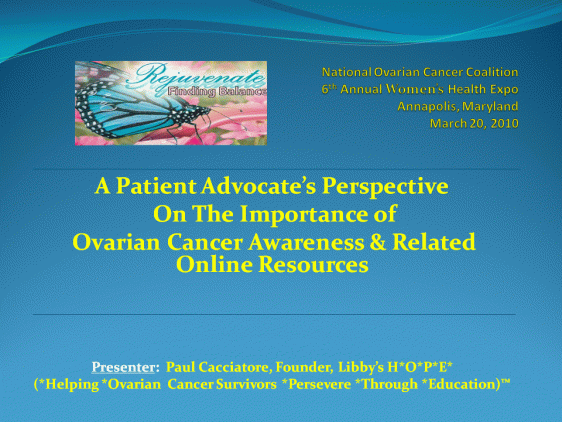
Libby’s H*O*P*E*™ National Ovarian Cancer Coalition 6th Annual Women’s Health Expo Presentation

On March 20, 2010, Libby’s H*O*P*E*™ made a presentation at the National Ovarian Cancer Coalition’s 6th Annual Women’s Health Expo.  The presentation was entitled, A Patient Advocate’s Perspective on the Importance of Ovarian Cancer Awareness and Helpful Online Resources.

On March 20, 2010, Libby’s H*O*P*E*™ made a presentation at the National Ovarian Cancer Coalition’s 6th Annual Women’s Health Expo.  The presentation was entitled, A Patient Advocate’s Perspective on the Importance of Ovarian Cancer Awareness and Helpful Online Resources.  The topics covered in the presentation include:

  • Genesis of Libby’s H*O*P*E*™,
  • Ovarian Cancer Overview,
  • Helpful Online Resources,
  • Stories of Hope, and
  • Making a Difference

The full presentation is provided below in Adobe Reader PDF document format. To view the full presentation, simply click on the image below.  If you require free Adobe Reader software, click here.

I want to extend special thanks to Nancy Long and Paula Kozik, co-presidents of the National Ovarian Cancer Coalition’s Central Maryland Chapter, for the invitation to speak at this worthwhile event.  Nancy and Paula are two very special ovarian cancer survivors, who put together an informative conference that was well attended and enjoyed by all.  It was both an honor and a privilege to meet Nancy, Paula, and many other ovarian cancer survivors during the conference.  Many women shared with me their personal stories of struggle, inspiration and hope.  These women are my “everyday heroes.”  If you have any questions regarding the presentation, please feel free to contact me by clicking on the homepage “Contact” tab.

Libby’s H*O*P*E* to Present At NOCC 6th Annual Women’s Health Expo (REJUVENATE Finding Balance)

On March 20, 2010, the National Ovarian Cancer Coalition (Maryland Chapter) will hold its 6th Annual Women’s Health Expo entitled, REJUVENATE Finding Balance (NOCC Rejuvenate), at the Sheraton Annapolis Hotel. … On behalf of Libby’s H*O*P*E*™, I will conduct a seminar as part of Session II entitled, A Patient Advocate’s Perspective on the Importance of Ovarian Cancer Awareness and Related On-line Resources.

On March 20, 2010, the National Ovarian Cancer Coalition (Maryland Chapter) will hold its 6th Annual Women’s Health Expo entitled, REJUVENATE Finding Balance (NOCC Rejuvenate), at the Sheraton Annapolis Hotel. NOCC Rejuvenate is sponsored by the National Breast & Ovarian Cancer Connection and Cancer Treatment Centers of America.  Additional funding was also provided through a grant from the Maryland Attorney General Settlement.

NOCC Rejuvenate is designed to appeal to all women who want to rejuvenate their mind, body and spirit. The event is divided into three sessions. Each session offers seven to eight different seminars for attendees. The seminars address a variety of topics including make-up and skin care, going green, photography, plastic surgery, decorating, fashion, finance, retirement solutions, nutrition, fitness, and holistic approaches to wellness. A list of all event seminars is provided below.

Informative seminars about ovarian and breast cancer are offered as part of each session. Knowing the signs and symptoms of ovarian cancer, the screening guidelines for breast cancer, and the basics about hereditary breast and ovarian cancer, could save your life or the life of someone you love.  On behalf of Libby’s H*O*P*E*™, I will conduct a seminar as part of Session II entitled, A Patient Advocate’s Perspective on the Importance of Ovarian Cancer Awareness and Related On-line Resources.  My presentation will address the genesis of the Libby’s H*O*P*E*™ website; highlight critical ovarian cancer awareness information; summarize available online ovarian cancer and cancer-related resources; describe stories of hope involving ovarian cancer survivors and their families; and explain how each individual can make a difference in the fight against ovarian cancer.

NOCC Rejuvenate also targets cancer survivors. The devastating effects of these diseases can rob women of hope and peace. This event will offer an opportunity for survivors to reinvent their self-image and gain more knowledge, offering a sense of hope and a chance to connect with other survivors.

An exhibitor’s area will be offered at the event. This area will include informational tables as well as vendor tables that have been specifically chosen to meet the overarching vision of the event. At the completion of the three event sessions, a nutritious lunch will be served while information is provided on the signs and symptoms of ovarian and breast cancer.

NOCC 6th Annual Women's Health Expo

What:  National Ovarian Cancer Coalition 6th Annual Women’s Health Expo entitled, REJUVENTE Finding Balance (click here to view event brochure, including mail-in registration)

When: Saturday, March 20, 2010 (8:00 A.M. – 3:00 P.M.)

Where: Sheraton Annapolis Hotel, 173 Jennifer Road, Annapolis, Maryland 21401 (driving instructions).

Register: To register online click here.

Contact: Nancy Long (NOCC Maryland Chapter Co-President) at 443-433-2597, or email (click here).

Keynote Speaker:  Yarrow, The Energy Whisperer

Session I Presentations (9:30 A.M. – 10:30 A.M.)

  • Treating Cancer By Alternative Medicine
  • The Survivors’ Connection
  • The Skinny on Fat – Cancer Prevention Naturally
  • Interior Design in Difficult Times – Cost Saving Design Solutions
  • Relaxation & Healing
  • Identifying & Solving the Challenges of Baby Boomer Women
  • Cancer and The Healing Power of Forgiveness
  • Belly Dancing

Session II Presentations (10:45-11:45)

  • Dr. Zandra Cheng, Breast Surgeon at Anne Arundel Medical Center
  • Hereditary Syndromes That Include Ovarian and Breast Cancers
  • Facial & Body Rejuvenation
  • A Patient Advocate’s Perspective On the Importance of Ovarian Cancer Awareness & Related On-line Resources (Paul Cacciatore, Founder, Libby’s H*O*P*E*™)
  • Designing Green Interiors
  • Creating Better Images with the Camera You Own
  • Some Expert Fashion Tips
  • Yoga:  A Balanced Life
  • Relaxation & Healing

Session III Presentations (12:00 P.M. – 1:00 P.M.)

  • New Advances in Ovarian Cancer (William McGuire, M.D., Medical Director of The Harry & Jeanette Weinberg Cancer Institute at Franklin Square Hospital)
  • What is My Daughter’s Chance of Getting My Cancer?
  • Planning for your Retirement Lifestyle:  The New Retirement
  • Super Health Begins with Super-food Nutrition
  • Around the World to Your Backyard
  • Balancing Your Life Wheel
  • Get Fit & Healthy with the Simple Rules of the Big 3
  • Relaxation & Healing

About the National Ovarian Cancer Coalition

The mission of the NOCC is to raise awareness and increase education about ovarian cancer. NOCC is committed to improving the survival rate and quality of life for women with ovarian cancer. Through national programs and local Chapter initiatives, the NOCC’s goal is to make more people aware of the early symptoms of ovarian cancer. In addition, the NOCC provides information to assist the newly diagnosed patient, to provide hope to survivors, and to support caregivers. NOCC programs are possible only with the help of its volunteers; committed men and women dedicated to the mission of the NOCC in communities across the country.  For more information go to http://www.ovarian.org/.

About the National Breast & Ovarian Cancer Connection

The mission of the NBOCC is to raise awareness and educate the general public about the link between breast and ovarian cancer. The organization is dedicated to teaching all women about their inherent risks and how to improve their chances of survival through early detection and research developments.  For more information go to http://www.nbocc.org/.

PI3K Pathway: A Potential Ovarian Cancer Therapeutic Target?

…[T]here are several PI3K signaling pathway targeting drugs in clinical development for use against ovarian cancer and solid tumors, including GDC-0941, BEZ235, SF1126, XL-147, XL-765, BGT226, and PX-866.  The results of two recent medical studies suggest that the use of PI3K-targeted therapies may offer an effective therapeutic approach for patients with advanced-stage and recurrent ovarian cancer, including a generally chemotherapy-resistant histological subtype of epithelial ovarian cancer known as “ovarian clear cell cancer” (OCCC).  The targeting of the PI3K pathway in endometrial, ovarian, and breast cancer is also being investigated by a Stand Up To Cancer “Dream Team.” …

PI3K Cellular Signaling Pathway — An Overview
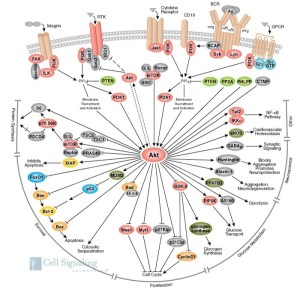
PI3K/AKT cellular signaling pathway (Photo: Cell Signaling Technology(R))

In 2004 and 2005, multiple researchers identified mutations in the PIK3CA  gene with respect to multiple cancers.[1]  The PIK3CA gene encodes the PI3K catalytic subunit p110α. PI3K (phosphoinositide 3- kinase) proteins have been identified in crucial signaling pathways of ovarian cancer cells. PI3Ks are also part of the PI3K-AKT-mTOR signaling pathway which promotes cellular glucose metabolism, proliferation, growth, survival, and invasion and metastasis in many cancers. PIK3CA gene mutations can increase PI3K signaling, thereby activating the PI3K-AKT-mTOR pathway within cancer cells.

As of this writing, there are several PI3K signaling pathway targeting drugs in clinical development for use against ovarian cancer and solid tumors, including GDC-0941, BEZ235, SF1126, XL-147, XL-765, BGT226, and PX-866. [2]  The results of two recent medical studies suggest that the use of PI3K-targeted therapies may offer an effective therapeutic approach for patients with advanced-stage and recurrent ovarian cancer, including a generally chemotherapy-resistant histological subtype of epithelial ovarian cancer known as “ovarian clear cell cancer” (OCCC).  The targeting of the PI3K pathway in endometrial, ovarian, and breast cancer is also being investigated by a Stand Up To CancerDream Team.”

Frequent Mutation of PIK3CA Gene In Recurrent & Advanced Clear Cell Ovarian Cancer

OCCC is one of the five major subtypes of epithelial ovarian cancer. OCCC accounts for only 4% to 12% of epithelial ovarian cancer in Western countries and, for unknown reasons, it comprises more than 20% of such cancers in Japan [3,4,5]. OCCC possesses unique clinical features such as a high incidence of stage I disease, a large pelvic mass, an increased incidence of venous thromboembolic complications, and hypercalcemia. It is frequently associated with endometriosis.  Compared to serous ovarian cancer, OCCC is relatively resistant to conventional platinum and taxane-based chemotherapy. For these reasons, new effective therapies are desperately needed for OCCC.

Researchers from Johns Hopkins and the University of California, Los Angeles (UCLA) analyzed 97 OCCC tumors for genetic sequence mutations in KRAS (v-Ki-ras2 Kirsten rat sarcoma viral oncogene homolog), BRAF (v-raf murine sarcoma viral oncogene homolog B1), PIK3CA (phosphoinositide-3-kinase, catalytic, alpha polypeptide), TP53 (tumor protein p53), PTEN (phosphatase and tensin homolog), and CTNNB1 (Catenin, Beta-1) as these mutations frequently occur in other major types of ovarian cancers.[6] The samples tested included the following:

  • 18 OCCCs for which affinity-purified tumor cells from fresh specimens were available;
  • 10 OCCC tumor cell lines.

Upon test completion, the researchers discovered that sequence mutations of PIK3CA, TP53, KRAS, PTEN, CTNNB1, and BRAF occurred in 33%, 15%, 7%, 5%, 3%, and 1% of OCCC cases, respectively.
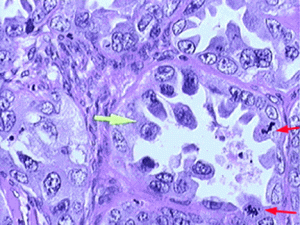
Clear cell carcinoma of the ovary (Photo: Geneva Foundation For Medical Education & Research)

The sequence analysis of the 18 affinity purified OCCC tumors and the 10 OCCC cell lines showed a PIK3CA mutation frequency of 46%. Based upon these findings the researchers concluded that the use of PIK3CA-targeting drugs may offer a more effective therapeutic approach compared with current chemotherapeutic agents for patients with advanced-stage and recurrent OCCC. As noted above, there are several PI3K-targeting drugs in clinical development for use against ovarian cancer and solid tumors.[2]

Notably, one of the researchers involved with this OCCC study is Dennis J. Slamon, M.D., Ph.D. Dr. Slamon serves as the Director of Clinical/Translational Research, and as Director of the Revlon/UCLA Women’s Cancer Research Program at the Jonsson Comprehensive Cancer Center. Dr. Slamon is also a professor of medicine, chief of the Division of Hematology/Oncology and Executive Vice Chair of Research for UCLA’s Department of Medicine. Dr. Slamon is a co-discoverer of the breast cancer drug Herceptin®. Herceptin is a monoclonal antibody targeted therapy used against HER-2 breast cancer, an aggressive breast cancer subtype that affects 20% to 30% of women with the disease. Herceptin’s development was based, in part, upon the unique genetic profile of HER-2 breast cancer as compared to other forms of breast cancer. Herceptin® revolutionized the treatment of HER-2 postive breast cancer and is recognized worldwide as the standard of care for that subtype of breast cancer.  The approach taken by Johns Hopkins and UCLA researchers in this study — the identification of  a subtype within a specific form of cancer that may be susceptible to a targeted therapy —  bears a striking similarity to the overarching approach taken in the development of Herceptin®.

Ovarian Cancer & Other Solid Tumors With PIK3CA Gene Mutations Respond To PI3K-AKT-mTOR Pathway Inhibitors In Phase I Clinical Testing.

Testing patients with cancer for PIK3CA gene mutations is feasible and may allow targeted treatment of the PI3K-AKT-mTOR cellular signaling pathway, according to the results of a University of  Texas, M.D. Anderson Cancer Center study presented on November 17, 2009 at the 2009 AACR (American Association for Cancer Research)-NCI (National Cancer Institute)-EORTC (European Organization For Research & Treatment of Cancer) International Conference on Molecular Targets and Cancer Therapeutics.[7]
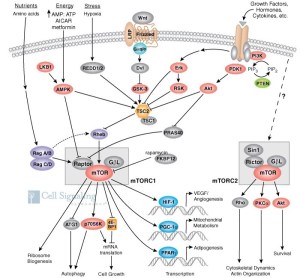
mTOR cellular signaling pathway (Photo: Cell Signaling Technology(R))

Filip Janku, M.D., Ph.D, a clinical research fellow with the M.D. Anderson Cancer Center’s department of investigational cancer therapeutics, and colleagues conducted a mutational analysis of exon 9 and exon 20 of the PI3KCA gene using DNA from the tumors of patients referred to targeted therapy clinical trials. Patients with PIK3CA mutations were preferably treated whenever possible with regimens utilizing PI3K-AKT-mTOR signaling pathway inhibitors.

As part of this study 117 tumor samples were analyzed. PIK3CA mutations were detected in 14 (12%) patients.  In tumor types with more than 5 patients tested, PIK3CA mutations were identified in endometrial cancer (43%, 3 out of 7 patients), ovarian cancer (22%, 5 out of 23 patients), squamous head and neck cancer (14%, 1 out of 7 patients), breast cancer (18%, 2 out of 11 patients), and colon cancer (15%, 2 out of 13 patients). No mutations were identified in patients with melanoma or cervical cancer.

Of the 14 patients found to possess PIK3CA mutations, 10 were treated based upon a clinical trial protocol that included a drug targeting the PI3K-AKT-mTOR pathway.  A partial response to treatment was experienced by 4 (40%) patients. Although the total number of patients is small, there were 2 (67%) patient responses in 3 endometrial cancer cases, 1 (25%) patient response in 4 ovarian cancer cases, 1 (100%) patient response in 1 breast cancer, and no patient response in 1 colorectal cancer case.  Although the total number of study patients is small, the researchers conclude that the response rate appears high (40%) in tumors with PIK3CA mutations treated with PI3K-AKT-mTOR pathway inhibitors.

“The implications of this study are twofold,” said Dr. Janku.  “We demonstrated that PIK3CA testing is feasible and may contribute to the decision-making process when offering a patient a clinical trial. Although this study suffers from low numbers, the response rate observed in patients treated with inhibitors of PI3K/AKT/mTOR pathway based on their mutational status was well above what we usually see in phase-1 clinical trials.”  “These results are intriguing but at this point should be interpreted with caution,” said Janku. “The promising response rate needs to be confirmed in larger groups of patients. We expect to learn more as this project continues to offer PIK3CA screening to patients considering a phase-1 clinical trial.”

Stand Up 2 Cancer Dream Team: Targeting the PI3K Pathway in Women’s Cancers

The potential importance of the PI3K pathway in the treatment of ovarian cancer is emphasized by the two medical studies above.  This issue is also receiving considerable attention from one of the Stand Up 2 Cancer (SU2C) “Dream Teams,” which is going to evalute  the potential for targeting the PI3K pathway in women’s cancer.  SU2C assigned $15 million of cancer research funding to this critical issue.  The scientists involved in this SU2C Dream Team are the pioneers who discovered the PI3K pathway and validated its role in human cancers, and they will focus on breast, ovarian and endometrial cancers, all of which possess the PI3K mutation.

The leader and co-leaders of the PI3K pathway SU2C team are set forth below.

Leader:

Lewis C. Cantley, Ph.D., Director, Cancer Center at Beth Israel Deaconess Medical Center.

Co-Leaders:

Charles L. Sawyers, M.D., Director, Human Oncology and Pathogenesis Program, Memorial Sloan-Kettering Cancer Center.

Gordon B. Mills, M.D., Ph.D., Chair, Department of Systems Biology, University of Texas, M.D. Anderson Cancer Center.

The specific SU2C Dream Team research goal with respect to targeting the PI3K pathway in women’s cancers is stated as follows:

The PI3K pathway is mutated in more cancer patients than any other, and these mutations are the most frequent events in women’s cancers, making it an attractive molecular target for agents that inhibit these genetic aberrations. If successful, this project will allow clinicians to use biomarkers and imaging techniques to predict which patients will benefit from PI3K pathway inhibitors and lead to the development of therapeutic combinations that will hit multiple targets in the complex pathways that contribute to cancer cell growth.  This work will help assure that these therapies are given to patients who will benefit from them, and it will also increase the overall pace of clinical trials targeting PI3K inhibitors.

Based upon the two studies discussed, and the creation and funding of the SU2C Dream Team for the purpose of targeting the PI3K pathway in women’s cancer, the future holds great promise in the battle against ovarian cancer (including OCCC).  It is our hope that more clinical study investigators will offer PI3K pathway mutation screening to all ovarian cancer patient volunteers.  Libby’s H*O*P*E*™ will continue to monitor the clinical development of PI3K pathway inhibitors, and make our readers aware of all future developments.

________________________________

References:

1/Yuan TL, Cantley LC. PI3K pathway alterations in cancer: variations on a theme. Oncogene. 2008 Sep 18;27(41):5497-510. PubMed PMID: 18794884
Samuels Y, Ericson K. Oncogenic PI3K and its role in cancer. Curr Opin Oncol. 2006 Jan;18(1):77-82. PubMed PMID: 16357568.
Levine DA, Bogomolniy F, Yee CJ, et. al. Frequent mutation of the PIK3CA gene in ovarian and breast cancers. Clin Cancer Res. 2005 Apr 15;11(8):2875-8. PubMed PMID: 15837735.
Samuels Y, Wang Z, Bardelli A, et. al. High frequency of mutations of the PIK3CA gene in human cancers. Science. 2004 Apr 23;304(5670):554. Epub 2004 Mar 11. PubMed PMID: 15016963.

2/For open ovarian cancer clinical trials using a PI3K-targeted therapy; CLICK HERE; For open solid tumor clinical trials using a PI3K-targeted therapy, CLICK HERE.

3/ Itamochi H, Kigawa J & Terakawa N.  Mechanisms of chemoresistance and poor prognosis in ovarian clear cell carcinoma. Can Sci 2008 Apr;99(4):653-658. [PDF Document]

4/Schwartz DR, Kardia SL, Shedden KA, et. alGene Expression in Ovarian Cancer Reflects Both Morphology and Biological Behavior, Distinguishing Clear Cell from Other Poor-Prognosis Ovarian CarcinomasCan Res 2002 Aug; 62, 4722-4729.

5/Sugiyama T & Fujiwara K.  Clear Cell Tumors of the Ovary – Rare Subtype of Ovarian Cancer, Gynecologic Cancer, American Society of Clinical Oncology (ASCO) Educational Book, 2007 ASCO Annual Meeting, June 2, 2007 (Microsoft Powerpoint presentation).

6/Kuo KT, Mao TL, Jones S, et. al. Frequent Activating Mutations of PIK3CA in Ovarian Clear Cell Carcinoma. Am J Pathol. 2009 Apr 6. [Epub ahead of print]

7/Janku F, Garrido-Laguna I, Hong D.S.  PIK3CA mutations in patients with advanced cancers treated in phase I clinical trials, Abstract #B134, Molecular Classification of Tumors, Poster Session B, 2009 AACR-NCI-EORTC Molecular Targets and Cancer Therapeutics Conference. [PDF Document].


2009 ASCO Annual Meeting Highlights: Ovarian Cancer & Select General Issues

The 2009 American Society of Clinical Oncology (ASCO) Annual Meeting was held in Orlando, Florida from May 29 through June 2, 2009.  We provide below select highlights from the 2009 ASCO Annual Meeting that relate to ovarian cancer and other general issues.

The 2009 American Society of Clinical Oncology (ASCO) Annual Meeting was held in Orlando, Florida from May 29 through June 2, 2009.  We provide below select highlights from the 2009 ASCO Annual Meeting that relate to ovarian cancer and other general issues. Learn more about How to Read a Medical Abstract in a Research Study.

Development Time of Cancer Clinical Trials Linked to Accrual Goals.

Physicians Need to Address Prescription Costs With Patients Who Participate In Clinical Trials.

Availability of Experimental Therapy Outside of Randomized Clinical Trials In Oncology.

ASCO Fertility Preservation Guidelines For Cancer Patients Not Widely Followed By Oncologists.

Ginger (Zindol®) Quells Cancer Patients’ Chemotherapy-Related Nausea.

Early Treatment of Recurrent Ovarian Cancer Based Upon Rising CA-125 Levels Does Not Increase Survival.

Body Mass Index (BMI) Should Be Taken Into Account When Assessing A Cancer Patient’s Vitamin D Status.

Extreme Drug Resistance (EDR) Assay Results Do Not Independently Predict Or Alter The Outcomes of Patients With Epithelial Ovarian Cancer Who Are Treated With Optimal Cytoreductive Surgery Followed By Platinum & Taxane Combination Chemotherapy in Either a Primary or Recurrent Setting.

Systematic Review Of Past Study Results For Use of Cytoreductive Surgery Combined With Hyperthermic Intraperitoneal Chemotherapy (HIPEC).

Preliminary Results From Phase II Study of Oxaliplatin+Docetaxel+Bevacizumab As First Line Treatment of Advanced Ovarian Cancer Show 62% Overall Response Rate & 70% One-Year Progression Free Survival.

Combined Weekly Docetaxel + Gemcitabine In Relapsed Ovarian Cancer & Peritoneal Cancer Produces 59% Overall Response Rate.

A Phase II Trial of Irinotecan & Oral Etoposide Chemotherapy in Recurrent Ovarian Cancer Patients Produces 47% Overall Response Rate & 81% Clinical Benefit Rate.

Weekly Bevacizumab & Pegylated Liposomal Doxorubicin Produce 55% Clinical Benefit Rate In Progressing/Recurrent Ovarian Cancer Patients.

Phase II Study of Belotecan (CKD-602)+ Carboplatin Demonstrates 53% Overall Response Rate in Recurrent Ovarian Cancer Patients.

Single Agent Voreloxin Produces 11% Overall Response Rate & 52% Disease Control Rate in Phase II Study Involving Women with Platinum-Resistant Ovarian Cancer.

A Phase II Study of Patupilone In Patients With Platinum Refractory/Resistant Ovarian, Primary Fallopian, or Peritoneal Cancer Produces 48% Clinical Benefit Rate.

Trabectedin (Yondelis®) + Pegylated Liposomal Doxorubicin (PLD) Produces Better Response Than PLD Alone.

M.D. Anderson Cancer Center Finds Anti-VEGF Therapy Is Highly Effective In Patients With Ovarian Granulosa Cell Tumors.

M.D. Anderson Cancer Center Finds That Increased Angiogenesis Is A Significant Predictor Of Poor Clinical Outcome In Patients With Sex-Cord Stromal Tumors; Suggests Anti-Angiogenesis Therapy is Warranted For This Subtype of Ovarian Cancer.

ZYBRESTAT™ (Combretastatin A-4 phosphate) Produces 32% Confirmed Partial Response Rate (RR) in Evaluable Patients With Platinum Resistant Ovarian Cancer (25% RR if total enrolled patients used as denominator).

ASSIST-5 Trial of TELCYTA® + Pegylated Liposomal Doxorubicin Produces 12% Response Rate (With One Complete Response) in Patients With Platinum Refractory and Resistant Ovarian Cancer.

Two Studies Provide Contradictory Data for Use of Carboplatin + Pegylated Liposomal Doxorubicin in Ovarian Cancer

OGX-427 Treatment Demonstrates Safety, Evidence of Declines in Circulating Tumor Cells and Reductions in Tumor Markers in a Phase I Cancer Trial, Including 60% Response Rate (Based Upon Declining CA125) For Ovarian Cancer Patients.

Maintenance BIBF 1120 Could Delay Disease Progression in Recurrent Ovarian Cancer.

Oral PARP Inhibitor Olaparib (AZD2281) Effective Against BRCA-Deficient Advanced Ovarian Cancer.

Carfilzomib (PX-171-007) Produces Stable Disease For 4+ Months In One Ovarian Cancer Patient Who Failed Under Four Previous Treatment Lines – Phase II Solid Tumor Trial.

__________________________________________

About The American Society of Clinical Oncology

The American Society of Clinical Oncology is a non-profit organization founded in 1964 with the overarching goals of improving cancer care and prevention. More than 27,000 oncology practitioners belong to ASCO, representing all oncology disciplines and subspecialties. Members include physicians and health-care professionals in all levels of the practice of oncology. To view 2009 ASCO Annual Meeting presentation abstracts, click here.  To view 2009 ASCO Annual Meeting presentation abstracts regarding ovarian cancer, click here.  To view ASCO ovarian cancer information, click here.

About Cancer.Net

Cancer.Net, formerly People Living With Cancer (PLWC), brings the expertise and resources of the American Society of Clinical Oncology (ASCO), the voice of the world’s cancer physicians, to people living with cancer and those who care for and care about them. ASCO is composed of more than 27,000 oncologists globally who are the leaders in advancing cancer care. All the information and content on Cancer.Net was developed and approved by the cancer doctors who are members of ASCO, making Cancer.Net the most up-to-date and trusted resource for cancer information on the Internet. Cancer.Net is made possible by The ASCO Cancer Foundation, which provides support for cutting-edge cancer research, professional education, and patient information.

Cancer.Net provides timely, oncologist-approved information to help patients and families make informed health-care decisions. All content is subject to a formal peer-review process by the Cancer.Net Editorial Board, composed of more than 150 medical, surgical, radiation, and pediatric oncologists, oncology nurses, social workers, and patient advocates. In addition, ASCO editorial staff reviews the content for easy readability. Cancer.Net content is reviewed on an annual basis or as needed.

To view Cancer.Net ovarian cancer information, click here.

Learn more about How to Read a Medical Abstract in a Research Study, Cancer.Net.

2009 Society of Gynecologic Oncologists Annual Meeting Ovarian Cancer Highlights

From February 5th through 8th, 2009, the Society of Gynecologic Oncologists’ (SGO) held its 40th Annual Meeting on Women’s Cancer in San Antonio, Texas. The meeting, viewed as the preeminent scientific and educational conference for women’s cancer care specialists, featured more than 350 scientific oral and poster presentations as well as educational sessions dealing with advances in the care and treatment of women’s cancers.

40thsgobanner2

From February 5th through 8th, 2009, the Society of Gynecologic Oncologists‘ (SGO)  held its 40th Annual Meeting on Women’s Cancer in San Antonio, Texas.  The meeting, viewed as the preeminent scientific and educational conference for women’s cancer care specialists, featured more than 350 scientific oral and poster presentations as well as educational sessions dealing with advances in the care and treatment of women’s cancers.  Several important presentations relating to ovarian cancer were made during the meeting and are highlighted below:

  • SGO: IVF Confers Slight Long-Term Risk of Ovarian Cancer, by Charles Bankhead, Medical News from SGO: Society of Gynecologic Oncologists Meeting, February 6, 2009 [Presentation Source:  Burger C, et al; The risk of borderline and invasive ovarian tumors after ovarian stimulation for in vitro fertilization in a large Dutch cohort after 15 years of follow-up, SGO 2009; 112(Suppl 1): Abstract 6].
  • SGO: Optimal Surgery Holds Benefits in Ovarian Cancer with Upper Abdominal Disease, by Charles Bankhead, Medical News from SGO: Society of Gynecologic Oncologists Meeting, February 6, 2009 [Presentation Source:  Zivanovic O, et al; Upper abdominal disease cephalad to the greater omentum and the impact on progression-free survival in patients with stage IIIC ovarian cancer;  SGO 2009; 112(Suppl 1): Abstract 1].
  • SGO: Rectovaginal Nodules Predict Bowel Perforation Risk with Bevacizumab, by Charles Bankhead, Medical News from SGO: Society of Gynecologic Oncologists Meeting, February 9, 2009 [Presentation Source:  Richardson DL, et al; Which factors predict bowel complications in patients with recurrent epithelial ovarian cancer being treated with bevacizumab? SGO 2009; 112(Suppl 1): Abstract 41].
  • Low Completion Rates for GOG 172 Intraperitoneal Chemotherapy Regimen: See Aletti G, et al Intraperitoneal chemotherapy for ovarian cancer: Exploring the “dark side” of the moon” SGO 2009; 112(Suppl 1): Abstract 40 (Source:  SGO: Few Ovarian Cancer Patients Tolerate Intraperitoneal Regimen, by Charles Bankhead, Medical News from SGO: Society of Gynecologic Oncologists Meeting, February 11, 2009).
  • Vermillion Presents Critical Data From Its OVA1 Clinical Trial, Vermillion Inc. News Release, February 10, 2009 [Presentation based upon a study entitled, A biomarker panel for distinguishing between malignant and benign ovarian tumors, which was co-authored by Fred Ueland, MD, Associate Professor of Gynecologic Oncology at the University of Kentucky and Principal Investigator of the OVA1 clinical trial, and Zhen Zhang, PhD, Associate Professor of Pathology at the Johns Hopkins University School of Medicine as well as Vermillion scientists].

About the Society of Gynecologic Oncologists

The SGO is a national medical specialty organization of physicians who are trained in the comprehensive management of women with malignancies of the reproductive tract. Its purpose is to improve the care of women with gynecologic cancer by encouraging research, disseminating knowledge which will raise the standards of practice in the prevention and treatment of gynecologic malignancies, and cooperating with other organizations interested in women’s health care, oncology and related fields. The Society’s membership, totaling more than 1280, is primarily comprised of gynecologic oncologists, as well as other related medical specialists including medical oncologists, radiation oncologists and pathologists. SGO members provide multidisciplinary cancer treatment including chemotherapy, radiation therapy, surgery and supportive care. More information on the SGO can be found at http://www.sgo.org.