Identifying & Overcoming Taxane Drug Resistance

Proteomics study reveals a protein that, when suppressed, makes cancers more susceptible to chemotherapy involving taxane drugs.

Taxanes, a group of cancer drugs that includes paclitaxel (Taxol®) and docetaxel (Taxotere®), have become front-line therapy for a variety of metastatic cancers. But as with many chemotherapy agents, resistance can develop, a frequent problem in breast, ovarian, prostate and other cancers. Now, cancer researchers at Children’s Hospital Boston report a protein previously unknown to be involved in taxane resistance and could potentially be targeted with drugs, making a cancer more susceptible to chemotherapy.

The researchers believe that this protein, prohibitin1, could also serve as a biomarker, allowing doctors to predict a patient’s response to chemotherapy with a simple blood test. The study was published online by the Proceedings of the National Academy of Sciences in its online early edition during the week of January 25.

Bruce Zetter, Ph.D., Charles Nowiszewski Professor of Cancer Biology, Vascular Biology Program, Department of General Surgery, Children's Hospital Boston

The study, led by Bruce Zetter, PhD, of Children’s Vascular Biology Program, used proteomics techniques to compare the proteins present in Taxol-susceptible versus Taxol-resistant human tumor cell lines. The researchers found that the resistant cell lines, but not the susceptible cell lines, had prohibitin1 on their surface. When they suppressed prohibitin1 with RNA interference techniques, the tumor cells became more susceptible to Taxol, both in cell culture and in live mice with implanted Taxol-resistant tumors.

Zetter’s lab is still investigating why having prohibitin1 on the cell surface makes a tumor cell resistant to taxanes. But in the meantime, he believes that not only could prohibitin1 be suppressed to overcome taxane resistance, but that it could also be exploited as a means of targeting chemotherapy selectively to resistant cancer cells.

“We are working to target various cancer drugs to taxane-resistant cells by attaching them to compounds that bind to prohibitin,” Zetter explains. One such compound is already known, and works well in animals to target other prohibitin-rich cells, but has yet to be tested in humans.

Suppressing prohibitin1 alone probably isn’t enough to make a cancer fully Taxol-susceptible, but could be combined with other strategies aimed at increasing taxane susceptibility, such as targeting another protein called GST Pi, the researchers say. Other mechanisms of resistance are known, but they so far haven’t been shown to present effective targets for therapy.

Zetter’s lab is also trying to develop prohibitin1 as a biomarker for taxane resistance that physicians could use in the clinic. Since it’s on the surface of the cell, Zetter believes prohibitin1 may circulate in the blood where it could easily be detected. His lab is in talks with several cancer centers to obtain serum samples from patients who did and didn’t respond to Taxol, so that prohibitin1 levels could be measured and compared.

Zetter notes that prohibitin1 could easily have been overlooked, and was found only because the team happened to look specifically at proteins in the cell membrane, rather than simply doing a whole-cell proteomic analysis.

“The interesting finding was that prohibitin was not just another over-expressed protein,” Zetter says. “It was up-regulated primarily on the cell surface. When we looked at the whole cell, the absolute amount of prohibitin wasn’t changed. Instead, prohibitin was moving from the inside of the cell to the cell surface. It had shifted from one location to another, and when it did, the tumor cells became resistant to taxanes. The fact that it moves to the cell surface also makes it easier to direct drugs to it.”

Children’s Hospital Boston has pending and issued international patents on this technology.  Nish Patel, PhD, was the study’s first author. The study was funded by a grant from the National Institutes of Health.

About Children’s Hospital Boston

Founded in 1869 as a 20-bed hospital for children, Children’s Hospital Boston today is one of the nation’s leading pediatric medical centers, the primary pediatric teaching hospital of Harvard Medical School, and the largest provider of health care to Massachusetts children. In addition to 396 pediatric and adolescent inpatient beds and more than 100 outpatient programs, Children’s houses the world’s largest research enterprise based at a pediatric medical center, where its discoveries benefit both children and adults. More than 500 scientists, including eight members of the National Academy of Sciences, 11 members of the Institute of Medicine and 13 members of the Howard Hughes Medical Institute comprise Children’s research community. For more information about the hospital visit: www.childrenshospital.org/newsroom.

Sources:

Disarming Specialized Stem Cells Might Combat Ovarian Cancer

Eliminating cancer stem cells (CSCs) within a tumor could hold the key to successful treatments for ovarian cancer, which has been notoriously difficult to detect and treat, according to new findings published this week in the journal Oncogene by Yale School of Medicine researchers.

Eliminating cancer stem cells (CSCs) within a tumor could hold the key to successful treatments for ovarian cancer, which has been notoriously difficult to detect and treat, according to new findings published this week in the journal Oncogene by Yale School of Medicine researchers.

“We found that stopping the expression of two genesLin28 and Oct4—reduces ovarian cancer cell growth and survival,” said Yingqun Huang, M.D., Ph.D., assistant professor in the Department of Obstetrics, Gynecology & Reproductive Sciences at Yale School of Medicine.

Ovarian cancer is challenging to treat because it tends to recur frequently and develop resistance to treatment. The poor outcome for women with ovarian cancer is associated with subtle and nonspecific symptoms—earning it the moniker the “disease that whispers.”

“This recurrence and drug resistance may be due to the presence of CSCs within the tumors that have the capacity to reproduce and to differentiate into non-CSC tumor cells that repopulate the tumor mass,” said Huang, who is a member of Yale Stem Cell Center and Yale Cancer Center. “Eliminating these CSCs may be key to successful treatments.”

While in the process of studying the functions of stem cell proteins in human embryonic stem cells, Huang and her colleagues unexpectedly discovered that a sub-population of ovarian cancer cells express stem cell proteins Lin28 and Oct4. They also found that the two proteins appear to act together in ovarian cancer tissue cells to produce more advanced tumors. Inhibiting their combined expression led to a significant decrease in the growth and survival of cancer cells. A larger-scale ovarian cancer study is currently underway to confirm the significance of the findings.

Genetic researchers prevent genes from functioning — a process commonly referred to as “knocking down” the gene — by inserting small interfering RNA (siRNA) molecules into the cells. Next, the research team will examine the effect of siRNA in ovarian cancer cells in the lab, and test the technique on mice. If successful, human clinical trials would follow. Treatment on cancer patients could occur within 10 years, Huang said.

“We hope we will soon be able to apply this new information to improve outcomes, perhaps by developing better diagnostic markers and treatment strategies that may be useful in customizing treatment for ovarian cancer patients,” said Huang.

The study was supported by Connecticut Innovations, the Fannie E. Rippel Foundation and the National Cancer Institute.

Other Yale authors on the study included Nita Maihle, Ph.D., and Shuping Peng.

Sources:

Elevated Proteins May Warn of Ovarian Cancer, But Sufficient Lead Time & Predictive Value Still Lacking

Fred Hutchinson Cancer Center researchers discovered that concentrations of the serum biomarkers CA125, human epididymis protein 4 (HE4), and mesothelin began to rise 3 years before clinical diagnosis of ovarian cancer, according to a new study published online December 30 in the Journal of the National Cancer Institute. However, the biomarkers became substantially elevated only in the last year prior to diagnosis. … In an accompanying editorial to the study results reported by Anderson et. al., Patricia Hartge, ScD, of the Division of Cancer Epidemiology and Genetics at the National Cancer Institute, applauds the researchers for taking the field one step closer to successful screening study designs by showing that the levels of certain biomarkers do not increase early enough to be used for screening.

Fred Hutchinson Cancer Center researchers discovered that concentrations of the serum biomarkers CA125, human epididymis protein 4 (HE4), and mesothelin began to rise 3 years before clinical diagnosis of ovarian cancer, according to a new study published online December 30 in the Journal of the National Cancer Institute (JNCI). [1] However, the biomarkers became substantially elevated only in the last year prior to diagnosis.

Garnet L. Anderson, Ph.D., Division of Public Health Sciences, Fred Hutchinson Cancer Research Center, Seattle, WA.

CA125, HE4, mesothelin, B7-H4, decoy receptor 3, and spondin-2 have been identified as potential ovarian cancer serum biomarkers, but their behavior in the prediagnostic period, with the exception of CA125, has not been evaluated.  In the JNCI study, Garnet L. Anderson, Ph.D., of the Division of Public Health Sciences at the Fred Hutchinson Cancer Research Center in Seattle, and colleagues analyzed prediagnostic serum samples and patient data from the Carotene and Retinol Efficacy Trial (CARET), a randomized, double-blind, placebo-controlled chemoprevention trial testing the effects of beta-carotene and retinol on lung cancer incidence among individuals at high risk for lung cancer. Prediagnostic serum samples (taken up to 18 years prior to diagnosis) were obtained for 34 CARET patients with ovarian cancer and 70 matched control CARET subjects. Changes in the levels of these biomarkers prior to ovarian cancer diagnosis were analyzed.

Anderson et. al. discovered that concentrations of CA125, HE4, and mesothelin (but not B7-H4, decoy receptor 3, and spondin-2) began to increase slightly in cancer patients relative to control subjects approximately 3 years before diagnosis, but became substantially elevated within one year prior to diagnosis. Thus, the diagnostic value of these biomarkers is limited because accuracy only increased shortly before diagnosis. “Although these markers are not accurate enough to prompt early intervention in existing screening protocols, the multivariable regression analyses identified modest but statistically significant increases in risk associated with CA125, HE4, and mesothelin, which are consistent with many of the established epidemiological risk factors for ovarian cancer,” say the authors of the study.

“I still think biomarkers may play a role in a cost-effective screening program, although none of these seem accurate enough either alone or together to justify their use in average-risk women,” Anderson told Medscape Oncology. “I do not know of any other currently identified biomarkers that hold more promise than these, but there has been a massive effort over the last few years to identify candidates and not all have been thoroughly vetted,” said Dr. Anderson.

One problem, cites Dr. Anderson, may lie in the approach used in identifying potential ovarian cancer biomarkers. “Most of the discovery work done so far has been conducted in women with advanced-stage disease and compared them to healthy women,” she explained. “If discovery work were done in samples like the ones we used here, representing specimens collected months to years prior to the advanced stage diagnosis, we might have a better chance of finding earlier signals of aggressive disease.”

Another opportunity for improving screening and early diagnosis lies in imaging, she adds. “Currently the most common and only affordable imaging option that could be considered for routine screening is transvaginal ultrasound, but it performs poorly in terms of accurately determining those women [who] have ovarian cancer from those who do not,” said Dr. Anderson. “A substantial improvement in this area would be very exciting.”

Study Limitations Cited By JNCI Editors

The JNCI editors state three limitations that they believe are associated with the study by Anderson et. al. First, the study sample size was small.  Second, all women who participated in CARET had a history of heavy smoking, and therefore, the JNCI editors believe that the blood serum testing results obtained by Anderson et. al. may not apply to other non-smoking groups. Third, the blood collected from women participating in CARET was collected at different times, but only a few samples were collected during the last 2–3 years before ovarian cancer diagnosis.

Designing Ovarian Cancer Early Detection Programs — Accompanying JNCI Editorial

Patricia Hartge, Sc.D. Deputy Director, Epidemiology and Biostatistics Program, Division of Cancer Epidemiology & Genetic, National Cancer Institute

In an accompanying editorial to the study results reported by Anderson et. al., Patricia Hartge, ScD, of the Division of Cancer Epidemiology and Genetics at the National Cancer Institute, applauds the researchers for taking the field one step closer to successful screening study designs by showing that the levels of certain biomarkers do not increase early enough to be used for screening. [2]

Dr. Hartge notes that despite the discovery that CA125 and other serum markers increase before the clinical onset of ovarian cancer, it has been exceedingly difficult to devise a successful ovarian cancer early screening program for asymptomatic women. Nevertheless, Hartge believes that Anderson et al. take a valuable step toward the design of such a successful screening program by demonstrating why screening regimens that are based on markers, or panels of markers, can fail. Specifically, the researchers discovered that blood levels of CA125, HE4, mesothelin, and three other promising markers did not increase early enough in the course of the disease to allow detection in early stages. Dr. Hartge emphasizes that the markers typically rose within one year of the disease symptoms that led to an accurate diagnosis, and therefore, many of the ovarian cancer patients were diagnosed with advanced stage disease.

Hartge further states “[t]hat the results of Anderson et al. are not the last word in serum markers or in combinations of markers.” “Serum markers likely will form a key element in any screening regimen, with the lead time and other parameters of each marker or combination of markers being taken into account. The careful evaluation technique applied in the current study fits into a staged approach necessary for testing performance of early markers of disease.” Hartge adds that “[o]nly the time-consuming, expensive, and demanding randomized clinical trial can reveal whether an early detection program that includes the biomarkers can save lives.”

In support of her position, Dr. Hartge observes that current randomized trials are testing the value of different screening programs that are built on combinations of CA125, ultrasound, and risk factor data (e.g., family history and age). After four rounds of screening 34,261 postmenopausal women for ovarian cancer with both CA125 and ultrasound, University of Alabama at Birmingham School of Medicine investigators of the large U.S. screening trial observed that the predictive value of a positive screen was quite low — approximately 1%. Of the 60 screen-detected cancers, 72% had already advanced to at least stage III. [3] In addition, of every 20 women who underwent surgery after a positive screen, only one women was diagnosed with cancer. Furthermore, in a recent UK trial with a slightly different design, positive predictive values from the first round of screening were higher; 35% in the 50,078 women whose risk was assessed with CA125 and risk factor data, followed by ultrasound only if indicated, and 3% in the 50,639 women screened first with ultrasound. [4] The effects on mortality in both trials remain to be determined.

Confronting The “Daunting Arithmetic” Required To Detect Early Stage Ovarian Cancer

Based upon the foregoing, Dr. Hartge highlights the “daunting arithmetic” required to detect early stage ovarian cancer. In the U.S., Surveillance, Epidemiology and End Results (SEER) data indicates that incidence amounts to 13 cases of ovarian cancer per 100,000 woman per year, referred to by Dr. Hartge as the “proverbial needles in the haystack.” [5] So as not to present a problem without a potential solution, Hartge provides a roadmap to additional factors that may help future researchers develop early screening methods to identify those rare cases of ovarian cancer in the general population.  Notably, SEER data also indicates that incidence of ovarian cancer steadily increases with age from 21 cases per 100,000 women per year within the 50-54 age range to 57 cases per 100,000 women per year within the 80-84 age range. [6] Furthermore, family history, low parity, and more ovulations over a woman’s lifetime predict additional risk, with the strongest but least common predictor being a mutation in the BRCA1 or BRCA2 gene. Thus, the general approach suggested by Hartge focuses on women with higher baseline risks, for whom the predictive value of a positive serum test tends to increase. Dr. Hartge believes that the performance of an overall screening program will improve by targeting higher-risk subgroups of women for screening by combining personal history, genetic abnormality status, and levels of serum markers in one prediction model. With ongoing advances in understanding the origin and causes of ovarian cancer, Hartge states that the risk models that are useful for screening programs should also improve.

Further technology advancements may also improve future ovarian cancer early detection screening models, says Hartege. For example, a screening program that is based on a panel of biomarkers can be improved by developing new medical imaging technology that is more specific than current ultrasound technology.  If better imaging existed, fewer women would undergo surgery following a suspicious biomarker finding.  Similarly, development of less invasive surgery could further reduce harmful side effects.  Although Hartge observes that a highly accurate biomarker(s) or an overall screening program does not yet exist, she also explains that the current study by Anderson et. al., with its sobering implications, brings future researchers closer to understanding the crucial elements in designing an effective early detection program for ovarian cancer.

References:

1/Anderson GL , McIntosh M, Wu L, et. al. Assessing Lead Time of Selected Ovarian Cancer Biomarkers: A Nested Case–Control Study. Journal of the National Cancer Institute Advance Access published on January 6, 2010, DOI 10.1093/jnci/djp438. J. Natl. Cancer Inst. 102: 26-38.

2/Hartge P. Designing Early Detection Programs for Ovarian Cancer. Journal of the National Cancer Institute Advance Access published on January 6, 2010, DOI 10.1093/jnci/djp450. J. Natl. Cancer Inst. 102: 3-4.

3/Partridge E, Kreimer AR, Greenlee RT, et al. Results from four rounds of ovarian cancer screening in a randomized trial. Obstet Gynecol (2009) 113(4):775–782. [PMCID: PMC2728067; PMID: 19305319].

4/Menon U, Gentry-Maharaj A, Hallett R, et al. Sensitivity and specificity of multimodal and ultrasound screening for ovarian cancer, and stage distribution of detected cancers: results of the prevalence screen of the UK Collaborative Trial of Ovarian Cancer Screening (UKCTOCS). Lancet Oncol (2009) 10(4):327–340. [PMID: 19282241]

5/ Horner MJ, Ries LAG, Krapcho M, et al, eds. SEER Cancer Stat Fact Sheets (2009) Bethesda, MD: National Cancer Institute. http://seer.cancer.gov/statfacts/html/ovary.html. Accessed December 2, 2009.

6/Horner MJ, Ries LAG, Krapcho M, et. al., eds. SEER Cancer Statistics Review, 1975-2006, National Cancer Institute. Bethesda, MD, http://seer.cancer.gov/csr/1975_2006, based on November 2008 SEER data submission, posted to the SEER web site, 2009 [See Table 21.6: Incidence & Mortality Rates By Age].

Sources:

Princeton Scientists Find Way To Catalog All That Goes Wrong In A Cancer Cell

A team of Princeton University scientists has produced a systematic listing of the ways a particular cancerous cell has “gone wrong,” giving researchers a powerful tool that eventually could make possible new, more targeted therapies for patients.

A team of Princeton University scientists has produced a systematic listing of the ways a particular cancerous cell has “gone wrong,” giving researchers a powerful tool that eventually could make possible new, more targeted therapies for patients.

Saeed Tavazoie is a professor in the Princeton University Department of Molecular Biology & the Lewis-Sigler Institute for Integrative Genomics

“For a very long time, cancer therapies have been developed by trial and error to essentially kill a broad variety of rapidly dividing cells, good and bad — that’s why they have massive side effects,” said Saeed Tavazoie, a professor in the Department of Molecular Biology and the Lewis-Sigler Institute for Integrative Genomics, who led the research. “The goal of cancer biology is to come up with therapies that are much more rational in terms of attacking the pathways that have been co-opted by cancer cells. The big challenge is to discover these pathways so that we can restore them to their normal state.”

Writing in the Dec. 11 issue of Molecular Cell, Tavazoie, along with his colleagues Hani Goodarzi, a graduate student in molecular biology, and Olivier Elemento, a former postdoctoral researcher in the department, found they were able to systematically categorize and pinpoint the alterations in cancer pathways and to reveal the underlying regulatory code in DNA. Elemento is now on the faculty of Weill Cornell Medical College in New York.

“We are discovering that there are many components inside the cell that can get mutated and give rise to cancer,” Tavazoie said. “Future cancer therapies have to take into account these specific pathways that have been mutated in individual cancers and treat patients specifically for that.”

The researchers developed an algorithm, a problem-solving computer program that sorts through the behavior of each of 20,000 genes operating in a tumor cell. When genes are turned “on,” they activate or “expressproteins that serve as signals, creating different pathways of action. Cancer cells often act in aberrant ways, and the algorithm can detect these subtle changes and track all of them.

“At the present moment, we lump a lot of cancers together and use the same therapy,” Tavazoie said. “In the future, we are aiming to be much more precise about treating the exact processes that were perturbed by the mutations.”

Pathologists presently examining the tumors of sick patients analyze a small set of tumor characteristics in order to determine the diagnostic and prognostic class to which the cells belong. This new method could give practitioners an encyclopedic accounting of the alterations in problem cells, spelling out the nature of the disease in much greater detail.

The algorithm devised by the group scans the DNA sequence of a given cell — its genome — and deciphers which sequences are controlling what pathways and whether any are acting differently from the norm. By deciphering the patterns, the scientists can conjure up the genetic regulatory code that is underlying a particular cancer.

The scientists developed the technique by employing modern methods of systems biology, where researchers seek to understand how components of living systems like cells work together to orchestrate processes, using powerful computers to sort vast arrays of data.

“Part of the promise of genomics and systems biology is the discovery of specific pathways of disease and finding ways to target them precisely,” Tavazoie said. “We have focused on revealing what these pathways are.”

The challenge for others, he said, will be to design specific therapies for such diseases, a process that could take many years. “This is an important first step,” Tavazoie added.

The method ultimately could work for any type of cancer and paves the way for rational approaches to treating a host of other diseases from diabetes to neurological disorders, the scientists said.

The research was funded by the National Human Genome Research Institute of the National Institutes of Health.

Sources:

MAGP2 Gene Expression Signature: A Potential Ovarian Cancer Personalized Treatment Target

A multi-institutional study has identified a potential personalized treatment target for the most common form of ovarian cancer. In the December 8 issue of Cancer Cell, the research team describes finding that a gene called MAGP2 – not previously associated with any type of cancer – was overexpressed in papillary serous ovarian tumors of patients who died more quickly. They also found evidence suggesting possible mechanisms by which MAGP2 may promote tumor growth.

A multi-institutional study has identified a potential personalized treatment target for the most common form of ovarian cancer. In the December 8 issue of Cancer Cell, the research team describes finding that a gene called MAGP2 (microfibril-associated glycoprotein 2) – not previously associated with any type of cancer – was overexpressed in papillary serous ovarian tumors of patients who died more quickly. They also found evidence suggesting possible mechanisms by which MAGP2 may promote tumor growth.

Michael Birrer, MD, Ph.D., Professor, Department of Medicine, Harvard Medical School; Director GYN/Medical Oncology, Medicine, Massachusetts General Hospital

“Ovarian cancer is typically diagnosed at an advanced stage when it is incurable, and the same treatments have been used for virtually all patients,” says Michael Birrer, MD, PhD, director of medical gynecologic oncology in the Massachusetts General Hospital (MGH) Cancer Center, and the study’s corresponding author. “Previous research from my lab indicated that different types and grades of ovarian tumors should be treated differently, and this paper now shows that even papillary serous tumors have differences that impact patient prognosis.” Birrer was with the National Institutes of Health when this study began but later joined the MGH Cancer Center.

The fifth most common malignancy among U.S. women, ovarian cancer is expected to cause approximately 15,000 deaths during 2009. Accounting for 60 percent of ovarian cancers, papillary serous tumors are typically diagnosed after spreading beyond the ovaries. The tumors typically return after initial treatment with surgery and chemotherapy, but while some patients die a few months after diagnosis, others may survive five years or longer while receiving treatment.

To search for genes expressed at different levels in ovarian cancer patients with different survival histories, which could be targets for new treatments, the researchers conducted whole-genome profiling of tissue samples that had been microdissected – reducing the presence of non-tumor cells – from 53 advanced papillary serous ovarian cancer tumors. Of 16 genes that appeared to have tumor-associated expression levels, MAGP2 had the strongest correlation with reduced patient survival.

Further analysis confirmed that MAGP2 expression was elevated in another group of malignant ovarian cancer tumors but not in normal tissue. MAGP2 gene expression was also reduced in patients whose tumors responded to chemotherapy. Recombinant expression of MAGP2 in samples of the endothelial cells that line blood vessels caused the cells to migrate and invade normal tissue.  In addition, MAGP2 gene overexpression increased microvessel density — a measurement used to determine the extent of tumor angiogenesis. The latter two observations suggest a potential role for MAGP2 gene overexpression in the growth of an ovarian cancer tumor’s blood supply.

“By confirming that different ovarian tumors have distinctive gene signatures that can predict patient prognosis, this study marks the beginning of individualized care for ovarian cancer,” says Birrer, a professor of Medicine at Harvard Medical School. “MAGP2 and the biochemical pathways it contributes to are definitely targets for new types of therapies, and we plan to pursue several strategies to interfere with tumor-associated pathways. But first we need to validate these findings in samples from patients treated in clinical trials.”

About The Study

Co-lead authors of the Cancer Cell paper are Samuel Mok, M.D., M.D. Anderson Cancer Center, and Tomas Bonome, National Cancer Institute (NCI). Additional co-authors are Kwong-Kowk Wong, M.D. Anderson; Vinod Vathipadiekal, Aaron Bell, Howard Donninger, Laurent Ozbun, Goli Samimi, John Brady, Mike Randonovich, Cindy Pise-Masison, and Carl Barrett, NCI; Michael Johnson, Dong-Choon Park, William Welch and Ross Berkowitz, Brigham and Women’s Hospital; Ke Hao and Wing Wong, Harvard School of Public Health; and Daniel Yip, University of South Florida. The study was supported by grants from the National Institutes of Health, the Ovarian Cancer Research Fund and the National Cancer Institute.

About Massachusetts General Hospital

Massachusetts General Hospital, established in 1811, is the original and largest teaching hospital of Harvard Medical School. The MGH conducts the largest hospital-based research program in the United States, with an annual research budget of more than $600 million and major research centers in AIDS, cardiovascular research, cancer, computational and integrative biology, cutaneous biology, human genetics, medical imaging, neurodegenerative disorders, regenerative medicine, systems biology, transplantation biology and photomedicine.

Sources:

PI3K Pathway: A Potential Ovarian Cancer Therapeutic Target?

…[T]here are several PI3K signaling pathway targeting drugs in clinical development for use against ovarian cancer and solid tumors, including GDC-0941, BEZ235, SF1126, XL-147, XL-765, BGT226, and PX-866.  The results of two recent medical studies suggest that the use of PI3K-targeted therapies may offer an effective therapeutic approach for patients with advanced-stage and recurrent ovarian cancer, including a generally chemotherapy-resistant histological subtype of epithelial ovarian cancer known as “ovarian clear cell cancer” (OCCC).  The targeting of the PI3K pathway in endometrial, ovarian, and breast cancer is also being investigated by a Stand Up To Cancer “Dream Team.” …

PI3K Cellular Signaling Pathway — An Overview
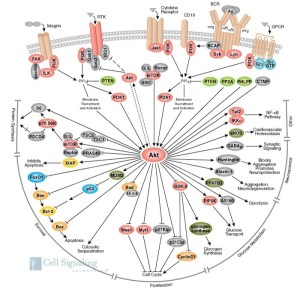
PI3K/AKT cellular signaling pathway (Photo: Cell Signaling Technology(R))

In 2004 and 2005, multiple researchers identified mutations in the PIK3CA  gene with respect to multiple cancers.[1]  The PIK3CA gene encodes the PI3K catalytic subunit p110α. PI3K (phosphoinositide 3- kinase) proteins have been identified in crucial signaling pathways of ovarian cancer cells. PI3Ks are also part of the PI3K-AKT-mTOR signaling pathway which promotes cellular glucose metabolism, proliferation, growth, survival, and invasion and metastasis in many cancers. PIK3CA gene mutations can increase PI3K signaling, thereby activating the PI3K-AKT-mTOR pathway within cancer cells.

As of this writing, there are several PI3K signaling pathway targeting drugs in clinical development for use against ovarian cancer and solid tumors, including GDC-0941, BEZ235, SF1126, XL-147, XL-765, BGT226, and PX-866. [2]  The results of two recent medical studies suggest that the use of PI3K-targeted therapies may offer an effective therapeutic approach for patients with advanced-stage and recurrent ovarian cancer, including a generally chemotherapy-resistant histological subtype of epithelial ovarian cancer known as “ovarian clear cell cancer” (OCCC).  The targeting of the PI3K pathway in endometrial, ovarian, and breast cancer is also being investigated by a Stand Up To CancerDream Team.”

Frequent Mutation of PIK3CA Gene In Recurrent & Advanced Clear Cell Ovarian Cancer

OCCC is one of the five major subtypes of epithelial ovarian cancer. OCCC accounts for only 4% to 12% of epithelial ovarian cancer in Western countries and, for unknown reasons, it comprises more than 20% of such cancers in Japan [3,4,5]. OCCC possesses unique clinical features such as a high incidence of stage I disease, a large pelvic mass, an increased incidence of venous thromboembolic complications, and hypercalcemia. It is frequently associated with endometriosis.  Compared to serous ovarian cancer, OCCC is relatively resistant to conventional platinum and taxane-based chemotherapy. For these reasons, new effective therapies are desperately needed for OCCC.

Researchers from Johns Hopkins and the University of California, Los Angeles (UCLA) analyzed 97 OCCC tumors for genetic sequence mutations in KRAS (v-Ki-ras2 Kirsten rat sarcoma viral oncogene homolog), BRAF (v-raf murine sarcoma viral oncogene homolog B1), PIK3CA (phosphoinositide-3-kinase, catalytic, alpha polypeptide), TP53 (tumor protein p53), PTEN (phosphatase and tensin homolog), and CTNNB1 (Catenin, Beta-1) as these mutations frequently occur in other major types of ovarian cancers.[6] The samples tested included the following:

  • 18 OCCCs for which affinity-purified tumor cells from fresh specimens were available;
  • 10 OCCC tumor cell lines.

Upon test completion, the researchers discovered that sequence mutations of PIK3CA, TP53, KRAS, PTEN, CTNNB1, and BRAF occurred in 33%, 15%, 7%, 5%, 3%, and 1% of OCCC cases, respectively.
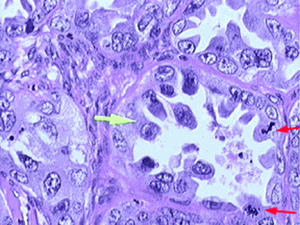
Clear cell carcinoma of the ovary (Photo: Geneva Foundation For Medical Education & Research)

The sequence analysis of the 18 affinity purified OCCC tumors and the 10 OCCC cell lines showed a PIK3CA mutation frequency of 46%. Based upon these findings the researchers concluded that the use of PIK3CA-targeting drugs may offer a more effective therapeutic approach compared with current chemotherapeutic agents for patients with advanced-stage and recurrent OCCC. As noted above, there are several PI3K-targeting drugs in clinical development for use against ovarian cancer and solid tumors.[2]

Notably, one of the researchers involved with this OCCC study is Dennis J. Slamon, M.D., Ph.D. Dr. Slamon serves as the Director of Clinical/Translational Research, and as Director of the Revlon/UCLA Women’s Cancer Research Program at the Jonsson Comprehensive Cancer Center. Dr. Slamon is also a professor of medicine, chief of the Division of Hematology/Oncology and Executive Vice Chair of Research for UCLA’s Department of Medicine. Dr. Slamon is a co-discoverer of the breast cancer drug Herceptin®. Herceptin is a monoclonal antibody targeted therapy used against HER-2 breast cancer, an aggressive breast cancer subtype that affects 20% to 30% of women with the disease. Herceptin’s development was based, in part, upon the unique genetic profile of HER-2 breast cancer as compared to other forms of breast cancer. Herceptin® revolutionized the treatment of HER-2 postive breast cancer and is recognized worldwide as the standard of care for that subtype of breast cancer.  The approach taken by Johns Hopkins and UCLA researchers in this study — the identification of  a subtype within a specific form of cancer that may be susceptible to a targeted therapy —  bears a striking similarity to the overarching approach taken in the development of Herceptin®.

Ovarian Cancer & Other Solid Tumors With PIK3CA Gene Mutations Respond To PI3K-AKT-mTOR Pathway Inhibitors In Phase I Clinical Testing.

Testing patients with cancer for PIK3CA gene mutations is feasible and may allow targeted treatment of the PI3K-AKT-mTOR cellular signaling pathway, according to the results of a University of  Texas, M.D. Anderson Cancer Center study presented on November 17, 2009 at the 2009 AACR (American Association for Cancer Research)-NCI (National Cancer Institute)-EORTC (European Organization For Research & Treatment of Cancer) International Conference on Molecular Targets and Cancer Therapeutics.[7]
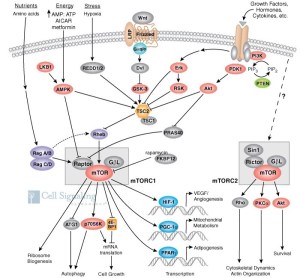
mTOR cellular signaling pathway (Photo: Cell Signaling Technology(R))

Filip Janku, M.D., Ph.D, a clinical research fellow with the M.D. Anderson Cancer Center’s department of investigational cancer therapeutics, and colleagues conducted a mutational analysis of exon 9 and exon 20 of the PI3KCA gene using DNA from the tumors of patients referred to targeted therapy clinical trials. Patients with PIK3CA mutations were preferably treated whenever possible with regimens utilizing PI3K-AKT-mTOR signaling pathway inhibitors.

As part of this study 117 tumor samples were analyzed. PIK3CA mutations were detected in 14 (12%) patients.  In tumor types with more than 5 patients tested, PIK3CA mutations were identified in endometrial cancer (43%, 3 out of 7 patients), ovarian cancer (22%, 5 out of 23 patients), squamous head and neck cancer (14%, 1 out of 7 patients), breast cancer (18%, 2 out of 11 patients), and colon cancer (15%, 2 out of 13 patients). No mutations were identified in patients with melanoma or cervical cancer.

Of the 14 patients found to possess PIK3CA mutations, 10 were treated based upon a clinical trial protocol that included a drug targeting the PI3K-AKT-mTOR pathway.  A partial response to treatment was experienced by 4 (40%) patients. Although the total number of patients is small, there were 2 (67%) patient responses in 3 endometrial cancer cases, 1 (25%) patient response in 4 ovarian cancer cases, 1 (100%) patient response in 1 breast cancer, and no patient response in 1 colorectal cancer case.  Although the total number of study patients is small, the researchers conclude that the response rate appears high (40%) in tumors with PIK3CA mutations treated with PI3K-AKT-mTOR pathway inhibitors.

“The implications of this study are twofold,” said Dr. Janku.  “We demonstrated that PIK3CA testing is feasible and may contribute to the decision-making process when offering a patient a clinical trial. Although this study suffers from low numbers, the response rate observed in patients treated with inhibitors of PI3K/AKT/mTOR pathway based on their mutational status was well above what we usually see in phase-1 clinical trials.”  “These results are intriguing but at this point should be interpreted with caution,” said Janku. “The promising response rate needs to be confirmed in larger groups of patients. We expect to learn more as this project continues to offer PIK3CA screening to patients considering a phase-1 clinical trial.”

Stand Up 2 Cancer Dream Team: Targeting the PI3K Pathway in Women’s Cancers

The potential importance of the PI3K pathway in the treatment of ovarian cancer is emphasized by the two medical studies above.  This issue is also receiving considerable attention from one of the Stand Up 2 Cancer (SU2C) “Dream Teams,” which is going to evalute  the potential for targeting the PI3K pathway in women’s cancer.  SU2C assigned $15 million of cancer research funding to this critical issue.  The scientists involved in this SU2C Dream Team are the pioneers who discovered the PI3K pathway and validated its role in human cancers, and they will focus on breast, ovarian and endometrial cancers, all of which possess the PI3K mutation.

The leader and co-leaders of the PI3K pathway SU2C team are set forth below.

Leader:

Lewis C. Cantley, Ph.D., Director, Cancer Center at Beth Israel Deaconess Medical Center.

Co-Leaders:

Charles L. Sawyers, M.D., Director, Human Oncology and Pathogenesis Program, Memorial Sloan-Kettering Cancer Center.

Gordon B. Mills, M.D., Ph.D., Chair, Department of Systems Biology, University of Texas, M.D. Anderson Cancer Center.

The specific SU2C Dream Team research goal with respect to targeting the PI3K pathway in women’s cancers is stated as follows:

The PI3K pathway is mutated in more cancer patients than any other, and these mutations are the most frequent events in women’s cancers, making it an attractive molecular target for agents that inhibit these genetic aberrations. If successful, this project will allow clinicians to use biomarkers and imaging techniques to predict which patients will benefit from PI3K pathway inhibitors and lead to the development of therapeutic combinations that will hit multiple targets in the complex pathways that contribute to cancer cell growth.  This work will help assure that these therapies are given to patients who will benefit from them, and it will also increase the overall pace of clinical trials targeting PI3K inhibitors.

Based upon the two studies discussed, and the creation and funding of the SU2C Dream Team for the purpose of targeting the PI3K pathway in women’s cancer, the future holds great promise in the battle against ovarian cancer (including OCCC).  It is our hope that more clinical study investigators will offer PI3K pathway mutation screening to all ovarian cancer patient volunteers.  Libby’s H*O*P*E*™ will continue to monitor the clinical development of PI3K pathway inhibitors, and make our readers aware of all future developments.

________________________________

References:

1/Yuan TL, Cantley LC. PI3K pathway alterations in cancer: variations on a theme. Oncogene. 2008 Sep 18;27(41):5497-510. PubMed PMID: 18794884
Samuels Y, Ericson K. Oncogenic PI3K and its role in cancer. Curr Opin Oncol. 2006 Jan;18(1):77-82. PubMed PMID: 16357568.
Levine DA, Bogomolniy F, Yee CJ, et. al. Frequent mutation of the PIK3CA gene in ovarian and breast cancers. Clin Cancer Res. 2005 Apr 15;11(8):2875-8. PubMed PMID: 15837735.
Samuels Y, Wang Z, Bardelli A, et. al. High frequency of mutations of the PIK3CA gene in human cancers. Science. 2004 Apr 23;304(5670):554. Epub 2004 Mar 11. PubMed PMID: 15016963.

2/For open ovarian cancer clinical trials using a PI3K-targeted therapy; CLICK HERE; For open solid tumor clinical trials using a PI3K-targeted therapy, CLICK HERE.

3/ Itamochi H, Kigawa J & Terakawa N.  Mechanisms of chemoresistance and poor prognosis in ovarian clear cell carcinoma. Can Sci 2008 Apr;99(4):653-658. [PDF Document]

4/Schwartz DR, Kardia SL, Shedden KA, et. alGene Expression in Ovarian Cancer Reflects Both Morphology and Biological Behavior, Distinguishing Clear Cell from Other Poor-Prognosis Ovarian CarcinomasCan Res 2002 Aug; 62, 4722-4729.

5/Sugiyama T & Fujiwara K.  Clear Cell Tumors of the Ovary – Rare Subtype of Ovarian Cancer, Gynecologic Cancer, American Society of Clinical Oncology (ASCO) Educational Book, 2007 ASCO Annual Meeting, June 2, 2007 (Microsoft Powerpoint presentation).

6/Kuo KT, Mao TL, Jones S, et. al. Frequent Activating Mutations of PIK3CA in Ovarian Clear Cell Carcinoma. Am J Pathol. 2009 Apr 6. [Epub ahead of print]

7/Janku F, Garrido-Laguna I, Hong D.S.  PIK3CA mutations in patients with advanced cancers treated in phase I clinical trials, Abstract #B134, Molecular Classification of Tumors, Poster Session B, 2009 AACR-NCI-EORTC Molecular Targets and Cancer Therapeutics Conference. [PDF Document].


UA Research Team Designing Holographic Imaging System For Ovarian Cancer

University of Arizona researchers Jennifer Barton and Ray Kostuk have received a five-year, $2.4 million grant from the National Institutes of Health to build the instrument that they hope will one day be used to monitor women at high risk for ovarian cancer.

Hologram of Human Ovary

Human ovary image captured with the use of the prototype holographic imaging system the team developed. (Photo: Univ. of Arizona News)

Hologram of An Orange

For comparison, an onion is imaged with the use of the prototype system the team developed. (Photo: Univ. of Arizona News)

Two University of Arizona [UA] researchers have formed a research team to design, build and evaluate two versions of an ovarian cancer medical imaging and screening instrument that will use holographic components in a new type of optical microscope.

Raymond Kostuk and Jennifer Barton have secured a five-year, $2.4 million grant from the National Institutes of Health to build the instrument that they hope will one day be used to monitor women at high risk for ovarian cancer. Kostuk is the Kenneth Von Behren Professor of Electrical and Computer Engineering and professor of optical sciences. Barton heads the UA department of biomedical engineering and is assistant director of the BIO5 Institute.

The system is unique in that it will for the first time project multiple spatial images from different depths within a tissue sample and simultaneously provide spectral information from optical markers in order to better identify cancerous cells.

This combined spectral spatial imaging technique shows potential to be much more effective in identifying cancerous tissue sites than by separately using spatial or spectral information.

The grant was issued following the successful two-year development of a prototype system the team built. It tests the validity of using holographic technology for subsurface imaging without having to perform surgery and take tissue samples.

According to the National Institutes of Health, there is, to date, no single effective screening test for ovarian cancer, so ovarian cancer is rarely diagnosed in its early stages. The result is that in more than 50 percent of women with ovarian cancer are diagnosed in the late stages of the disease when the cancer has already advanced.

  • About 76 percent percent of women with ovarian cancer survive one year after diagnosis.
  • About 45 percent live longer than 5 years after diagnosis.

Barton said ovarian cancer provides a compelling case to test holographic imaging and its efficacy in detecting cancers. At the present time the preferred treatment is surgery, which is also often needed to diagnose ovarian cancer. The procedure includes taking tissue samples, which may threaten the woman’s ability to have children in the future.

Jennifer Barton, UA

Jennifer Barton, Professor & Chair, Department of Biomedical Engineering; Assistant Director, BIO5 Institute. (Photo: Univ of Arizona News)

“Ovarian cancer has no symptoms until it is highly advanced making the five-year prognosis extremely poor. Those at high risk – with a family history of ovarian cancer or those who carry genetic mutations in the BRCA1 and BRCA2 genes, which normally help protect against both breast and ovarian cancer – may be counseled to have their ovaries removed through laparoscopic surgery,” Barton said. “Now imagine if you are an 18-year-old woman who has this history – ovaries are an important part of your overall health. They produce hormones you need over and above the notion that you would need your ovaries should you want to have children in the future.”

Thus, new technology capable of reliably diagnosing ovarian cancer in earlier stages could reduce the morbidity, high mortality and economic impact of this disease.

The system will work like a high-powered microscope that can be used to study tissue samples already removed. In addition, an endoscopic version is in the design stage to safely scan the ovaries for cancer during laparoscopic screenings in high-risk women, or as an adjunct to other laparoscopic procedures in all women.

The team will work with Dr. Kenneth D. Hatch, president of the Society of Pelvic Surgeons, and a professor of obstetrics and gynecology and director of female pelvic medicine and reconstructive surgery at the UA College of Medicine.

Through Hatch and a partnership with his patients who consent, Barton and Kostuk will be able to identify abnormal spatial and spectral markers of cancerous ovarian tissue.

Ray Kostuk

Ray Kostuk, Kenneth Von Behren Professor of Electrical and Computer Engineering & Professor of Optical Sciences, University of Arizona (Photo: Univ. of Arizona News)

The new imaging system will be tested on high-risk patients who are willing to participate and provide some future benefit to other patients who find themselves in a similar situation, Barton said.

Kostuk and Barton’s aim is to design the imaging system so that it is easy to use, requiring very little training, and also be cost effective.

“The system will image like an MRI or a CT scan but with much higher resolution than an ultrasonic image and will be a lot less expensive than an MRI. As an additional benefit no radiation will be used or exposed to sensitive ovary areas during the cancer screenings,” Kostuk said.

During the past 25 years Kostuk has researched different aspects of holography and holographic materials for use as optical elements.

The holographic imaging system being designed combines an optical technique that creates images capable of detecting subtle tissue microstructure changes. Together with fluorescence spectroscopy methods, the system has demonstrated capability for early cancer detection.

Another member of the team, UA research professor Marek Romanowski, with the UA department of biomedical engineering and the BIO5 Institute, is working on the development of targeted fluorescent dyes that will be used on tissue samples to identify or confirm suspected cancerous areas shown in the spatial image.

The multidisciplinary approach to the design of the hologram-based imaging system is a testament to the complexity of treating cancers.

“One of the advantages of being part of the UA is the ability to interact collaboratively with people in other disciplines,” Kotuk said. “Jennifer is a wonderful colleague who can identify important medical applications for new techniques and is able to bridge the gap between traditional engineering and medicine. Her skill and knowledge is critical to the success of the program,” he said.

“To solve the really interesting problems of today, no one person has all the expertise needed,” Barton added.

Sources:

Women Often Opt to Surgically Remove Their Breasts, Ovaries to Reduce Cancer Risk

Many women at high risk for breast or ovarian cancer are choosing to undergo surgery as a precautionary measure to decrease their cancer risk, according to a report in Cancer Epidemiology, Biomarkers & Prevention, a journal of the American Association for Cancer Research.

PHILADELPHIA – Many women at high risk for breast or ovarian cancer are choosing to undergo surgery as a precautionary measure to decrease their cancer risk, according to a report in Cancer Epidemiology, Biomarkers & Prevention, a journal of the American Association for Cancer Research.

Gareth

Dr. Gareth Evans is an international authority on cancer genetics. Dr. Evans is the Chairman of the National Institute For Health & Clinical Excellence (NICE) familial breast cancer group; Chairman, Cancer Genetics Group & Council Member, British Society of Human Genetics; Consultant, Genesis Prevention Center, Univ. Hospital of South Manchester NHS Trust; Professor, Univ. of Manchester, UK

“Women have their breasts or ovaries removed based on their risk.

Claudine_2009_July_(photo_credit_Phil_Humnicky,_Georgetown)

Dr. Claudine Isaacs is an Associate Professor of Medicine, Director of the Familial Cancer Registry Shared Resource, Director of the Clinical Breast Cancer Program, and the Co-Medical Director of the Fisher Center for Familial Cancer Research at the Lombardi Comprehensive Cancer Center, Georgetown Univ., Washington, D.C. (photo credit: Phil Humnicky, Georgetown Univ.)

It does not always happen immediately after counseling or a genetic test result and can take more than seven years for patients to decide to go forward with surgery,” said lead researcher D. Gareth Evans, M.D. Evans is a consultant in clinical genetics at the Genesis Prevention Center, University Hospital of South Manchester NHS Trust and a professor at the University of Manchester, United Kingdom.

Evans and colleagues assessed the increase in risk-reduction surgery among women with breast cancer and evaluated the impact of cancer risk, timing and age.

Rate of increase was measured among 211 women with known unaffected BRCA1 or BRCA2 mutation carriers. BRCA1 and BRCA2 are hereditary gene mutations that indicate an increased risk for developing breast cancer. Additionally, more than 3,500 women at greater than 25 percent lifetime risk of breast cancer without mutations also had a documented increase in risk-reduction surgery.

Women who had a biopsy after undergoing risk evaluation were twice as likely to choose a risk-reducing mastectomy. Forty percent of the women who were mutation carriers underwent bilateral risk-reducing mastectomy; 45 percent had bilateral risk-reducing salpingo-oophorectomy (surgical removal of ovaries). These surgeries are widely used by carriers of BRCA1 and BRCA2 gene mutations to reduce the risk for breast and ovarian cancer.

Evaluated by gene type, bilateral risk-reducing salpingo-oophorectomy was more common in women who were BRCA1 gene carriers – 52 percent had the surgery compared with 28 percent of the women who were BRCA2 gene carriers.

“We found that older women were much less likely to have a mastectomy, but were more likely to have their ovaries removed,” said Evans.

Most of the women, specifically those aged 35 to 45 years, opted for surgery within the first two years after the genetic mutation test, but some did not make a decision until seven years later.

“This is a very interesting study. It fleshes out some of what we know about adoption of risk reduction strategies in high-risk women who have participated in a very comprehensive and well thought-out genetic counseling, testing and management program,” said Claudine Isaacs, M.D., an associate professor of medicine and co-director of the Fisher Center for Familial Cancer Research, Lombardi Comprehensive Cancer Center at Georgetown University.

BRCA1 and BRCA2 mutation carriers have a very high lifetime risk of cancer, and for BRCA1 carriers there are unfortunately no clearly proven non-surgical prevention strategies, according to Isaacs. These women face a 50 to 85 percent lifetime risk of breast cancer, and mastectomy is currently the most effective prevention method available.

The findings confirm the expectations that when a woman has a biopsy, even if benign, most are more likely to opt for risk-reduction surgery.

“Screening should be conducted at a place with expertise in an effort to minimize false-positive results, which often lead to biopsy. This will minimize the anxiety that comes along with such a diagnosis. Patients should consult with an expert in advance and stay in contact with them to see how the science may be changing over time,” she advised. “This is an ongoing conversation that needs to be addressed and individualized for each patient.”

Likewise, Evans suggested that additional studies are needed to help evaluate the communication efforts and methods between doctors and/or counselors and women at risk for breast cancer. Questions to be raised should include how is the communication method occurring, are the doctors sympathetic and is there an ongoing dialogue?

“Careful risk counseling does appear to influence women’s decision for surgery although the effect is not immediate,” the researchers wrote.

References:

Novel Targeted Gene Therapies Use Diphtheria Toxin To Fight Ovarian Cancer; One Clinical Trial Underway

Two separate research teams reported promising results last week based upon preclinical studies involving the use of diphtheria toxin to fight ovarian cancer. … A targeted gene therapy was utilized in both studies, wherein a gene fragment capable of producing diptheria toxin was combined with a nanoparticle which was targeted against a unique or overexpressed genetic characteristic of the ovarian cancer tumor cells. Both research teams reported significant reduction in ovarian cancer tumor mass and extended survival for the treated mice. Based upon these findings, one research team already announced the opening of a Phase I/II clinical trial which will test the novel therapy on patients with advanced stage ovarian cancer.

Targeted Gene Therapy In the Fight Against Ovarian Cancer

The peritoneal cavity is a common site of ovarian cancer and accompanying ascites caused by the disease. Ascites is an abnormal buildup of fluid in the peritoneal cavity that causes swelling.  Malignant tumor cells may be found in the ascites fluid in connection with late stage ovarian cancer.  Massive ascites and the related abdominal distention can cause anorexia, nausea, vomiting and respiratory difficulties, and negatively impact the patient’s quality of life. Ovarian cancer patients frequently experience disease involvement of the pelvic and retroperitoneal lymph nodes as well. The standard primary treatment of patients with advanced stage ovarian cancer is cytoreductive surgery followed by platinum drug and taxane drug doublet chemotherapy. Despite this aggressive approach, there is a high rate of disease recurrence. Although discovery of several other active nonplatinum cytotoxic agents has improved outcome, long-term survival rates are low. Success of traditional chemotherapy has been limited by drug resistance and lack of specificity with respect to disease formation and progression. Thus, novel “targeted” ovarian cancer therapies that achieve improved long-term disease control with lower toxicity are desperately needed.

A so-called “targeted therapy” utilizes drugs or other medically manufactured substances (e.g., small molecule drugs or monoclonal antibodies) to block the growth and spread of cancer by interfering with specific molecules involved in cancer tumor growth and progression.  By identifying and selectively focusing upon molecular and cellular changes or unique genetic characteristics that are specific to cancer, targeted cancer therapies may be more effective than other types of treatment, including chemotherapy, and less harmful to normal cells.

It is possible for a targeted therapy to incorporate a gene therapy. Gene therapy is an experimental treatment that involves the introduction of genetic material (DNA or RNA) into a human cell to fight a disease such as cancer.  When both therapeutic approaches are combined by researchers, a “targeted gene therapy” is the result.  A targeted gene therapy is an attractive approach to controlling or killing human cancer cells only if the therapy can selectively identify and exploit the genetic and epigenetic alterations in cancer cells, without harming normal cells that do not possess such alternations.

Two separate research groups reported promising results last week based upon preclinical studies involving the use of diphtheria toxin to fight ovarian cancer.  The toxin is produced by a deadly bacterium (Corynebacterium diphtheriae).  A targeted gene therapy was utilized in both studies, wherein a gene fragment capable of producing diptheria toxin was combined with a nanoparticle which was targeted against a unique or overexpressed genetic characteristic of the ovarian cancer tumor cells.  Both research teams reported significant reduction in ovarian cancer tumor mass and extended survival for the treated mice. Based upon these findings, one research team already announced the opening of a Phase I/II clinical trial which will test the novel therapy on patients with advanced stage ovarian cancer.

MIT-Lankenau Institute Researchers Use Diphtheria Toxin Gene Therapy To Target Overexpression Of The MSLN & HE4 Ovarian Cancer Genes.

anderson

Daniel Anderson, Ph.D., Research Associate, David H. Koch Institute for Integrative Cancer Research, Massachusetts Institute of Technology

The first study, which appears in the August 1 issue of the journal Cancer Research, was conducted by a team of researchers from the Massachusetts Institute of Technology (MIT) and the Lankenau Institute of Medical Research (Lankenau Institute). In this study, the researchers used a nanoparticle as a delivery vehicle (or vector) for DNA that encodes a diphtheria toxin suicide protein (DT-A).  The novel nanoparticles are made with positively charged, biodegradable polymers known as poly(beta-amino esters). When mixed together, these polymers can spontaneously assemble with DNA to form nanoparticles. The polymer-DNA nanoparticle can deliver functional DNA when injected into or near the targeted tissue.

The nanoparticle carrying the DT-A is designed to target overexpression of two genes (mesothelin (MSLN) and HE4 (or WFDC2)) that are highly active in ovarian tumor cells, but not in normal cells. Once inside an ovarian cancer tumor cell, the DT-A disrupts the tumor cell’s ability to manufacture critical life sustaining proteins, thereby causing cell death.  Accordingly, the choice of the DT-A fragment of a diptheria toxin gene ensures high ovarian cancer cell killing activity.  It also avoids unintended toxicity to normal cells because the DT-A released from destroyed ovarian cancer cells is not able to enter normal neighboring tissue cells in the absence of the DT-B fragment which was excluded from the original nanoparticle delivery system or vector.

As part of this study, researchers administered DT-A nanoparticles directly into the peritoneal cavity – which encases abdominal organs such as the stomach, liver, spleen, ovaries and uterus – of mice xenografted with primary and metastatic ovarian tumors.  Ovarian cancer is known to initially spread throughout the peritoneal cavity, and current therapeutic approaches in humans include direct injection into the peritoneal space, thereby targeting the therapy to the ovaries and nearby tissues where tumors may have spread.

“… [The researchers] discovered that the intraperitoneal (IP) administration of DT-A nanoparticles resulted in a significant reduction in ovarian tumor mass and extended survival for the treated mice.  The researchers also found that the targeted gene-therapy treatment was as effective, and in some cases more effective, than the traditional chemotherapy combination of cisplatin and paclitaxel. …”

langerrobert

Robert S. Langer is the David H. Koch Institute for Integrative Cancer Research Professor (there are 14 Institute Professors at MIT; being an Institute Professor is the highest honor that can be awarded to a faculty member). Dr. Langer has written approximately 1,050 articles. He also has approximately 750 issued and pending patents worldwide. Dr. Langer’s patents have been licensed or sublicensed to over 220 pharmaceutical, chemical, biotechnology and medical device companies. He is the most cited engineer in history.

Sawicki

Janet Sawicki, Ph.D., Professor, Lankenau Institute of Medical Research. Dr. Sawicki also serves as an Associate Professor at the Kimmel Cancer Center of Thomas Jefferson University. Her ovarian cancer research is funded by the National Institutes of Health, the U.S. Department of Defense, the Sandy Rollman Foundation, the Teal Ribbon Ovarian Cancer Foundation, and the Kaleidoscope of Hope Foundation.

Daniel Anderson, Ph.D., research associate in the David H. Koch Institute for Integrative Cancer Research at MIT and a senior author of the paper, and others from MIT, including Institute Professor Robert Langer, along with researchers from the Lankenau Institute, led by Professor Janet Sawicki, discovered that the intraperitoneal (IP) administration of DT-A nanoparticles resulted in a significant reduction in ovarian tumor mass and extended survival for the treated mice.  The researchers also found that the targeted gene-therapy treatment was as effective, and in some cases more effective, than the traditional chemotherapy combination of cisplatin and paclitaxel. Furthermore, the novel therapy did not have the toxic side effects of chemotherapy because the diptheria toxin gene is engineered to function in ovarian cells but is inactive in normal cell types.

Based upon these finding, the MIT and Lankenau Institute researchers concluded that IP administration of DT-A nanoparticles, combined with designed targeting of those nanoparticles against ovarian tumor cell gene (MSLN & HE4) expression, holds promise as an effective therapy for advanced-stage ovarian cancer. According to Anderson, human clinical trials could start, after some additional preclinical studies, in about 1 to 2 years.  Currently ovarian cancer patients undergo surgery followed by chemotherapy. In many cases, the cancer returns after treatment.  Disease recurrence is problematic because there are no curative therapies for advanced-stage tumors.

For several years, the MIT-Lankenau Institute team worked to develop the DT-A nanoparticles as an alternative to viruses, which are associated with safety risks. In addition to ovarian cancer, these nanoparticles have demonstrated treatment potential for a variety of diseases, including prostate cancer and viral infection. “I’m so pleased that our research on drug delivery and novel materials can potentially contribute to the treatment of ovarian cancer,” Langer said. In future studies, the team plans to examine the effectiveness of nanoparticle-delivered diphtheria toxin genes in other types of cancer, including brain, lung and liver cancers.

Other MIT authors of the paper are recent MIT Ph.D. recipients Gregory Zugates and Jordan Green (now a professor at John’s Hopkins University), and technician Naushad Hossain. The research was funded by the Department of Defense and the National Institutes of Health.

Israeli Researchers Use Diphtheria Toxin Gene Therapy To Target Overexpression Of The H19 Ovarian Cancer Gene.

The second study was conducted by Israeli researchers and was published August 6 online ahead of print in the Journal of Translational Medicine.

In the provisional study report, the researchers note that based upon earlier studies from their team and others, the H19 gene has emerged as a candidate for cancer gene therapy. The H19 gene is expressed at substantial levels in ovarian cancer tumor cells, but is nearly undetectable in surrounding normal tissue cells.  Although the Israeli research team acknowledges that the exact function of H19 is the subject of past debate, it notes that recent data suggests a role for H19 in promoting cancer progression, angiogenesis and metastasis.

As a first step, Israeli researchers tested H19 gene expression in ovarian cancer cells obtained from the ascites fluid of 24 patients, and established that H19 expression levels were detected in 90% of the tested patients. Of those patients with positive H19 expression, 76% showed a moderate or high level of expression, while 24% showed a low level of expression.

Next, the researchers created a DT-A nanoparticle similar to the one created by the MIT/Lankenau research team as described above, except the Israeli nanoparticle was designed to target H19 overexpression within ovarian cancer cells.  The therapeutic effect of the DT-A/H19 nanoparticles was first tested in vitro against various ovarian cancer cell lines and cells obtained from patient ascites fluid.  The researchers determined that the DT-A/H19 nanoparticle therapy caused ovarian cancer cell death.  The therapeutic effect of the DT-A nanoparticles was tested in vivo by injecting the DT-A nanoparticles into mice xenografted with ovarian cancer tumors. The researchers estimate that the DT-A nanoparticle therapy reduced ovarian cancer tumor growth in the treated mice by 40%.

Based upon these finding, the researchers note that although the study report issued is provisonal, it is their working hypothesis that intraperitoneal administration of DT-A/H19 nanoparticles holds the potential to (1) reach ascites tumor cells, (2) deliver its intracellular toxin without targeting normal tissue cells, and (3) reduce tumor burden & fluid accumulation; and therefore, improve the patient’s quality of life, and hopefully, prolong her survival.

  • DT-A/H19 Nanoparticle Therapy Administered To An Israeli Patient On A Compassionate Use Trial Basis

In the provisional study report, the researchers state that the targeted gene therapy was administered to an Israeli patient with advanced, recurrent ovarian cancer, who qualified for compassionate use treatment under Israeli regulatory rules.  Specifically, the patient’s intraperitoneal ovarian cancer metastases and ascites were treated with the DT-A/H19 nanoparticle therapy after the failure of conventional chemotherapy. The results of the single patient compassionate use trial suggest that the drug caused no serious adverse events at any drug dosage level.  Moreover, the patient experienced (1) a 50% decrease in serum cancer marker protein CA-125, (2) a significant decrease in the number of cancerous cells in the ascites, and (3) a clinical improvement as reported by her doctors.  It is reported that the patient’s quality of life increased during the course of treatment and her condition continues to be stable, with no new cancerous growths.

  • Phase I/II Clinical Trial To Test DT-A/H19 Nanoparticle Therapy (BC-819) In the U.S. & Israel

The DT-A/H19 nanoparticle therapy is being developed commercially by BioCancell Therapeutics, Inc (BioCancell) Recently, BioCancell announced the opening of a clinical trial to test the DT-A/H19 nanoparticle therapy (also referred to as BC-819) in patients with advanced stage ovarian cancer.  The clinical trial is entitled, Phase 1/2a, Dose-Escalation, Safety, Pharmacokinetic, and Preliminary Efficacy Study of Intraperitoneal Administration of DTA-H19 in Subjects With Advanced Stage Ovarian Cancer, and the trial investigators are recruiting patients in the U.S. and Israel as indicated below.

University of Pennsylvania Medical Center [Abramson Cancer Center] (Recruiting)
Philadelphia, Pennsylvania, United States, 19104-6142
Contact: Lana E. Kandalaft, Pharm.D, PhD – 215-537-4782 (lknd@mail.med.upenn.edu)
Principal Investigator: George Coukos, M.D., Ph.D.

Massey Cancer Center (Not yet recruiting)
Richmond, Virginia, United States, 23298-0037
Contact: Jane W. Baggett, RN 804-628-2360 (jbaggett@mcvh-vcu.edu)
Principal Investigator: Cecelia H. Boardman, M.D.

The Edith Wolfson Medical Center (Recruiting)
Holon, Israel
Contact: Pnina Nir (972)-52-8445143 (pninanir@wolfson.health.gov.il)
Principal Investigator: Tally Levy, M.D.

Hadassah University Hospital (Recruiting)
Jerusalem, Israel
Contact: Zoya Bezalel (972)-2-6776725 (zoyab@hadassah.org.il)
Principal Investigator: David Edelman, MD

Meir Hospital (Recruiting)
Kfar Saba, Israel
Contact: Tal Naderi 09-7472213 (Ta.INadiri@clalit.org.il)
Principal Investigator: Ami Fishman, MD

In the provisional study report, the Israeli researchers discuss the importance of collecting data regarding the correlation between the level of ovarian cancer cell H19 expression and the efficacy of the treatment as part of the clinical trial discussed above.  Based upon accrued future clinical trial data, the researchers believe that they will be able to identify in advance patients that will respond to this novel therapy, as well as non-responders who are resistant to all known therapies, thereby avoiding treatment failure and unnecessary suffering and cost.

References:

Ovary Removal May Increase Lung Cancer Risk

Women who have premature menopause because of medical interventions are at an increased risk of developing lung cancer, according to a new study published in the International Journal of Cancer.  The startling link was made by epidemiologists from the Université de Montréal, the Research Centre of the Centre Hospitalier de l’Université de Montréal and the INRS—Institut Armand-Frappier. …

Ovary removal may increase lung cancer risk

Press Release, Monday, 20 July 2009

lungsWomen who have premature menopause because of medical interventions are at an increased risk of developing lung cancer, according to a new study published in the International Journal of Cancer.  The startling link was made by epidemiologists from the Université de Montréal, the Research Centre of the Centre Hospitalier de l’Université de Montréal and the INRS—Institut Armand-Frappier.

“We found that women who experienced non-natural menopause are at almost twice the risk of developing lung cancer compared to women who experienced natural menopause,” says Anita Koushik, a researcher at the Université de Montréal’s Department of Social and Preventive Medicine and a scientist at the Research Centre of the Centre Hospitalier de l’Université de Montréal. “This increased risk of lung cancer was particularly observed among women who had non-natural menopause by having had both their ovaries surgically removed.”

The scientists studied 422 women with lung cancer and 577 control subjects at 18 hospitals across Montreal, Quebec, Canada. They assessed socio-demographic characteristics, residential history, occupational exposures, medical and smoking history, and (among women) menstruation and pregnancy histories.

Koushiki

Anita Koushik, researcher, Université de Montréal's Department of Social & Preventive Medicine; scientist, Research Centre of the Centre Hospitalier de l'Université de Montréal.

“A major strength of this study was the detailed smoking information which we obtained from all study participants; this is important because of the role of smoking in lung cancer and because smokers generally have lower estrogen levels than non-smokers,” says Dr. Koushik. “Although smoking is the dominant cause of lung cancer, we know other factors can play an important role in enhancing the impact of tobacco carcinogens; this research suggests that in women hormonal factors may play such a role.”

Women were considered menopausal if their menstrual periods had stopped naturally, surgically (by hysterectomy with bilateral surgical ovary removal) or because of radiation or chemotherapy.  Women who had at least one remaining ovary and who still had their menstrual periods at the time of diagnosis/interview were classified as premenopausal.  Among participants with natural menopause, the median age for attaining menopause was 50 years old; among those with non-natural menopause, it was at 43 years.

“Non-natural menopause, particularly surgical menopause, may represent an increased risk with younger age at menopause given that surgery is usually done before natural menopause occurs. It’s possible that vulnerability to lung cancer is caused by early and sudden decrease in estrogen levels or potentially long-term use of hormone replacement therapy and further research is needed to explore these hypotheses,” says Jack Siemiatycki a professor at the Université de Montréal’s Department of Social and Preventive Medicine and a scientist at the Research Centre of the Centre Hospitalier de l’Université de Montréal.

Siemiatycki

Jack Siemiatycki, professor, Université de Montréal's Department of Social & Preventive Medicine; scientist, Research Centre of the Centre Hospitalier de l'Université de Montréal


About the Study
The article “Characteristics of menstruation and pregnancy and the risk of lung cancer in women,” published in the International Journal of Cancer, was authored by Anita Koushik and Jack Siemiatycki of the Université de Montréal and Research Centre of the Centre Hospitalier de l’Université de Montréal and Marie-Elise Parent of the INRS—Institut Armand-Frappier.

Partners in Research
This study was funded by the Canadian Institutes of Health Research, the Fonds de la recherche en santé du Québec and the Guzzo-SRC Chair in Environment and Cancer.

Source: Ovary Removal May Increase Lung Cancer Risk, Press Release, University of Montreal, 20 Jul. 09 [summarizing the findings of Koushik A, Parent ME, Siemiatycki J. Characteristics of menstruation and pregnancy and the risk of lung cancer in women. Int J Cancer. 2009 May 11. (Epub ahead of print)].

Beyond BRCA1 & BRCA2: U.K. Researchers Identify Genetic Defect That Could Increase Risk of Ovarian Cancer Up To 40%

Scientists have located a region of DNA which – when altered – can increase the risk of ovarian cancer according to research published in Nature Genetics today. An international research group led by scientists based at the Cancer Research UK Genetic Epidemiology Unit, at the University of Cambridge and UCL (University College London) searched through the genomes of 1,810 women with ovarian cancer and 2,535 women without the disease from across the UK. …The scientists estimate that there is a 40 per cent increase in lifetime risk for women carrying the DNA variation on both copies of chromosome nine compared with someone who doesn’t carry it on either chromosome. The risk for women carrying the variation on both chromosomes is 14 in 1000 – compared with [10] ten in 1000 [in the general population]. … The lifetime risk for a woman carrying the DNA variant on one copy of the chromosome is increased by 20 per cent from ten in 1000 to 12 in 1000. …

Genetic link to ovarian cancer found

Cancer Research UK

SUNDAY 2 AUGUST 2009

Cancer Research UK Press Release

Scientists have located a region of DNA which – when altered – can increase the risk of ovarian cancer according to research published in Nature Genetics today.

An international research group led by scientists based at the Cancer Research UK Genetic Epidemiology Unit, at the University of Cambridge and UCL (University College London) searched through the genomes of 1,810 women with ovarian cancer and 2,535 women without the disease from across the UK. They analysed 2.5 million variations in DNA base pairs – the letters which spell out the genetic code – to identify common spelling ‘errors’ linked to ovarian cancer risk.

The scientists identified the genetic ‘letters’- called single nucleotide polymorphisms (SNPs) – which when spelled slightly differently increase ovarian cancer risk in some women. This is the first time scientists have found a SNP linked uniquely to risk of ovarian cancer and is the result of eight years of investigations. With the help of the international Ovarian Cancer Association Consortium (OCAC), they then looked at more than 7,000 additional women with ovarian cancer and 10,000 women without disease from around the world to confirm this finding.

Vodpod videos no longer available.

The region of risk DNA is located on chromosome nine – there are 23 pairs of each chromosome in humans, one of each pair inherited from each parent. The scientists estimate that there is a 40 per cent increase in lifetime risk for women carrying the DNA variation on both copies of chromosome nine compared with someone who doesn’t carry it on either chromosome. The risk for women carrying the variation on both chromosomes is 14 in 1000 – compared with [10] ten in 1000 [in the general population].

Approximately 15 per cent of women in the UK population carry two copies of the variant DNA.

The lifetime risk for a woman carrying the DNA variant on one copy of the chromosome is increased by 20 per cent from ten in 1000 to 12 in 1000. Approximately 40 per cent of women in the UK carry one copy.

Senior author Dr. Simon Gayther, whose work is supported by Cancer Research UK and The Eve Appeal charity which fundraises for the gynaecological cancer research team based at UCL, said: “The human DNA blueprint contains more than 10 million genetic variants. These are part and parcel of our characteristics and make-up – but a handful will also increase the chances of some women getting ovarian cancer and we have found the first one of these.”

“There is now a genuine hope that as we find more, we can start to identify the women at greatest risk and this could help doctors to diagnose the disease earlier when treatment has a better chance of being successful.”

Dr. Andrew Berchuck, head of the international Ovarian Cancer Association Consortium steering committee, said: “This study confirms that ovarian cancer risk is partly determined by genetic variants present in a large number of women. This initial discovery and others that will likely follow in the future lay the groundwork for individualised early detection and prevention approaches to reduce deaths from ovarian cancer.”

Ovarian cancer is the fifth most common cancer in women in the UK with around 6,800 new cases diagnosed each year in the UK – 130 women every week. It is the fourth most common cause of cancer death in women in the UK with around 4,300 deaths from the disease in the UK each year.

BRCA1 and BRCA2 are high risk genes which cause breast cancer and are already known to significantly increase the risk of ovarian cancer- but faults in these genes are rare and probably cause less than five per cent of all cases of ovarian cancer.

Lead author, Professor Dr Paul Pharoah, a Cancer Research UK senior research fellow at the University of Cambridge, said: “We already know that people with mistakes in the BRCA1 and BRAC2 genes have a greater risk of ovarian cancer – but on their own they don’t account for all of the inherited risk of the disease. “It is likely that the remaining risk is due to a combination of several unidentified genes – which individually carry a low to moderate risk. Now we have ticked one off, the hunt is on to find the rest.”

Rose Lammy, the mother of David Lammy MP [Member of Parliament] for Tottenham and Minister for Higher Education and Intellectual Property, died of ovarian cancer in 2008. Rose Lammy’s DNA sample was included in the study, and she carried both risk alleles of the new genetic marker that researchers have identified.

David Lammy said: “I am pleased that Mum’s sample was included in this study as it is one step towards earlier diagnosis of ovarian cancer when treatment is more successful. We now know the fact that she had this altered DNA meant that her lifetime risk had risen from 10 in 1,000 to 14 in 1,000, an increase of 40 per cent compared to those women who don’t carry this DNA variation. Dr Lesley Walker, director of cancer information at Cancer Research UK, added: “This is an important discovery. Our researchers have worked as part of a huge collaboration to establish the regions of DNA that can increase someone’s risk of developing ovarian cancer. “This research paves the way for scientists to discover even more genes linked to ovarian cancer and could lead to new approaches to treat or prevent the disease – crucially it will help doctors manage women who are at increased risk.”

Source: Genetic link to ovarian cancer found, Cancer Research U.K. Press Release & Video, 02 Aug. 09.

Reference: Honglin Song et al. (2009). A genome-wide association study identifies a new ovarian cancer susceptibility locus on 9p22.2 Nature Genetics 10.1038/ng.424.

One In Three Billion Found: Single Mutation In FOXL2 Gene May Cause Granulosa Cell Ovarian Cancer

“… Vancouver scientists from the Ovarian Cancer Research (OvCaRe) Program at BC Cancer Agency and Vancouver Coastal Health Research Institute have discovered that there appears to be a single spelling mistake in the genetic code of granulosa cell tumours, a rare and often untreatable form of ovarian cancer. This means that out of the three billion nucleotide pairs that make up the genetic code of the tumour, one – the same one in every tumour sample – is incorrect. The discovery, published online June 10th in the New England Journal of Medicine, marks the beginning of a new era of cancer genomics, where the complete genetic sequence of cancers can be unravelled and the mutations that cause them exposed. For women with granulosa cell tumours it represents the first specific diagnostic tool and clear path to develop much needed treatments for this cancer. …”

Found: One in Three Billion

The spelling mistake in the genetic code that causes a type of Ovarian Cancer

Eureka! Vancouver scientists from the Ovarian Cancer Research (OvCaRe) Program at BC Cancer Agency and Vancouver Coastal Health Research Institute have discovered that there appears to be a single spelling mistake in the genetic code of granulosa cell tumours, a rare and often untreatable form of ovarian cancer. This means that out of the three billion nucleotide pairs that make up the genetic code of the tumour, one – the same one in every tumour sample – is incorrect. The discovery, published online June 10th in the New England Journal of Medicine, marks the beginning of a new era of cancer genomics, where the complete genetic sequence of cancers can be unravelled and the mutations that cause them exposed. For women with granulosa cell tumours it represents the first specific diagnostic tool and clear path to develop much needed treatments for this cancer.

Dr. David Huntsman

David Huntsman, M.D. (Nfld.), Associate Professor, Department of Pathology & Laboratory Medicine, University of British Columbia; Genetic Pathologist, BC Cancer Agency

“This is really a two-fold discovery,” says Dr. David Huntsman, lead author and genetic pathologist at the BC Cancer Agency and Vancouver General Hospital and associate professor in the Department of Pathology and Laboratory Medicine at the University of British Columbia. “It clearly shows the power of the new generation of DNA sequencing technologies to impact clinical medicine, and for those of us in the area of ovarian cancer research and care, by identifying the singular mutation that causes granulosa cell tumours, we can now more easily identify them and develop news ways to treat them.”

In the past when scientists wanted to look at the sequence of a tumour, it was a laborious process, with each gene individually decoded into thousands of nucleotides and all data accumulated and sorted. Most studies could only look at one or at most a few of the 20,000 genes in the human genome whereas the new sequencing technologies allow scientists to look at everything at once. Through a collaboration between OvCaRe and the BC Cancer Agency’s Genome Sciences Centre, the research team used “next generation” sequencing machines that are able to decode billions of nucleotides at rapid speed and new computer techniques to quickly assemble the data. “This task would have been unfathomable in terms of both cost and complexity even two years ago,” says Dr. Marco Marra, Director of the BC Cancer Agency’s Genome Sciences Centre.

The OvCaRe team decoded four tumour samples of the relatively rare granulosa cell tumour, which affects five percent of ovarian cancer patients. Using the new sequencing technology and bioinformatics, they discovered a single nucleotide located in the FOXL2 gene was mutated in every sample. The research team further validated their work by examining a large number [95 samples] of additional tumour samples from across Canada and around the world, and are satisfied they have been able to validate that this mutation is present in almost all granulosa cell tumours and not in unrelated cancers. Most types of cancers, including ovarian cancers, have a broad range of genetic abnormalities. This finding shows that granulosa cell tumours have a characteristic single DNA spelling mistake that can serve as an easy to read identity tag for this cancer type.

“Although it has been suggested that hundreds of any cancer type would have to be sequenced at great depth to make clinically useful discoveries,” says Huntsman, “we had hypothesized that knowledge could be gained from much smaller studies if the cancers were carefully selected and represented clinically homogenous diseases. There are many rarer cancer types, like granulosa cell tumours that fit that bill and based upon our success in decoding granulosa cell tumours we are focusing on other rare tumours in what could be described as a guerrilla war on cancer. We hope that these studies will not only help future patients with rare tumours but will also teach us about more common ones as well.”

“This cancer is unique,” says Dr. Dianne Miller, gynecologic oncologist at BC Cancer Agency and Vancouver General Hospital. “For patients with this tumour type, it means they should all have the same response to the same treatment. And now that we have this pathway, we can look for existing cancer drugs that might work on this particular gene mutation to make the cancer disappear.”

The OvCaRe team was able to make this discovery because of the multidisciplinary nature of the group, which crosses two provincial health authorities and is made up of gynaecologists, pathologists, bioinformatics specialists, and oncologists. Further enhancing the team’s success is the centralization of patient treatment and record keeping.

“We are excited by this paper,” says Dr. Michael Birrer, professor, Department of Medicine, Harvard Medical School and director GYN/Medical Oncology, Medicine, Massachusetts General Hospital. “The ovarian cancer research and care community now has new biologic insights into this poorly understood tumour and a potential therapeutic target. More importantly, this tour de force study reveals the power of genomic approaches to cancer, particularly rare tumours.”

Ovarian cancer affects about one in 70 Canadian women. Approximately 2500 new cases are diagnosed each year and the five-year survival rate is only 30 per cent.

This study was supported by donors to VGH & UBC Hospital Foundation and the BC Cancer Foundation, and Genome BC for the development of Illumina sequencing at the BC Cancer Agency’s Genome Sciences Centre. OvCaRe and the BC Cancer Agency’s Genome Sciences Centre are also supported by the Michael Smith Foundation for Health Research.

Ovarian Cancer Research Program (OvCaRe) is a multidisciplinary research program involving clinicians and research scientists in gynaecology, pathology, and medical oncology. OvCaRe is a unique collaboration between the BC Cancer Agency, Vancouver Coastal Health Research Institute, and the University of British Columbia. Funding is provided through donations to VGH & UBC Hospital Foundation and the BC Cancer Foundation, who, in a joint partnership created a campaign to raise funds to make OvCaRe possible. The OvCaRe team is considered a leader in ovarian cancer research, breaking new ground in better identifying, understanding, and treating this disease. Earlier this year, the team discovered that ovarian cancer was not just one disease, but rather made up of several distinct subtypes.

Primary Sources:

Related N Engl J Med Editorial:  Shendure J, Stewart, CJ. Cancer Genomes on a Shoestring Budget. N Engl J Med 2009 0: NEJMe0903433 (Full Text).

Additional Reference:  Köbel M, Kalloger SE, Boyd N,et. al. Ovarian carcinoma subtypes are different diseases: implications for biomarker studies. PLoS Med. 2008 Dec 2;5(12):e232. PubMed PMID: 19053170; PubMed Central PMCID: PMC2592352.

Additional Resources:

Gene Network Sciences, UConn To Work On Computer-Modeled Ovarian Cancer Treatments

Gene Network Sciences, Inc. (GNS) today announced that it has entered into a research collaboration with The University of Connecticut Health Center’s Carole and Ray Neag Comprehensive Cancer Center in which the parties will incorporate genetic, genomic and clinical data (“3-D Data”) together into computer models of different cancers [with ovarian cancer as initial area of focus] to be used to identify the best treatments for individual patients and to develop new drug treatments and diagnostics.

Gene Network Sciences Announces Cancer Collaboration with University of Connecticut Health Center’s Neag Comprehensive Cancer Center

CAMBRIDGE, Mass., June 3 — Gene Network Sciences, Inc. (GNS) today announced that it has entered into a research collaboration with The University of Connecticut Health Center’s Carole and Ray Neag Comprehensive Cancer Center in which the parties will incorporate genetic, genomic and clinical data (“3-D Data”) together into computer models of different cancers to be used to identify the best treatments for individual patients and to develop new drug treatments and diagnostics. Financial terms were not disclosed.

runowicz

Carolyn D. Runowicz, M.D., Director, Neag Comprehensive Cancer Center, Univ. of Conn. Health Center; Chair, National Cancer Advisory Board

Tom Neyarapally, Senior VP, Corporate Development, Gene Network Sciences, Inc.

GNS and the Neag Comprehensive Cancer Center began their collaboration as a result of a connection made last year between two University of Connecticut alumni from different generations, Dr. Carolyn Runowicz (a graduate of the College of Liberal Arts and Sciences in the 1970s) and Tom Neyarapally (a graduate of the School of Engineering in the 1990s). Runowicz, who served as President of the American Cancer Society from 2005-2006 and is currently Director of the Neag Comprehensive Cancer Center, and Neyarapally identified ovarian cancer as an initial area of focus. Runowicz and Neyarapally are also, together with colleagues Drs. Molly Brewer and Iya Khalil, preparing a scientific publication regarding ovarian cancer treatment and the use of computational modeling capabilities such as GNS’s supercomputing-driven REFS(TM)[Reverse Engineering/Foward Simulation] platform to improve treatments and outcomes. The parties are also in the process of assembling a consortium in ovarian cancer with additional cancer centers that have yet to be named.

“With ever-increasing quantities of molecular and genetic data from cancer patients becoming available, we as clinicians are in great need of capabilities to optimally and rapidly utilize this information,” said Dr. Runowicz. “We are excited to link up with GNS, which has created a unique supercomputer-driven technology platform to turn this information directly into simulation models, and ultimately better treatments, for cancer patients.”

The parties will utilize the Neag Comprehensive Cancer Center’s clinical expertise to assess and validate findings from the ovarian cancer model simulations and will work with strategic partners to make drugs and diagnostics created based on these discoveries available to patients. They are also currently in discussions regarding the application of the REFS(TM) platform in other cancers such as prostate cancer.

“GNS is looking forward to working with the Neag Comprehensive Cancer Center’s extremely talented cancer researchers to rapidly convert data into actionable computer models of different cancers and clinical insights,” said Neyarapally, Senior Vice President of Corporate Development at GNS. “We feel privileged to be working closely with Dr. Runowicz, an established leader in the fight against cancer.”

About Gene Network Sciences

Gene Network Sciences (http://www.gnsbiotech.com/) is a leader in biosimulation with its ability to derive molecular mechanisms of drugs and diseases directly from molecular profiling and clinical data. Based in Cambridge, Massachusetts, and Ithaca, New York, GNS uses its REFS(TM) technology in pharmaceutical and clinical settings to rapidly turn combinations of genetic, genomic, and clinical measurements into models of disease progression and drug response. These models are then simulated to discover both new targets for drug intervention and genetic markers of drug response that allow patients who will respond to a given drug treatment to be matched to a particular clinical trial. By discovering how and why specific sets of genes and drug candidates impact human biology, GNS technology enables the rapid development of breakthrough drug and diagnostic products.

About The University of Connecticut Health Center

The University of Connecticut Health Center includes the schools of medicine and dental medicine, the UConn Medical Group, University Dentists, and John Dempsey Hospital. Founded in 1961, the Health Center pursues a mission of providing outstanding health care education in an environment of exemplary patient care, research and public service. To learn more about the UConn Health Center, visit our website at http://www.uchc.edu.

Contact:
Thomas Neyarapally
Gene Network Sciences
(617) 494-0492
tneyarapally@gnsbiotech.com

SourceGene Network Sciences announces a cancer collaboration with the University of Connecticut Health Center’s NEAG Comprehensive Cancer Center, Press Release, June 3, 2009.

Genetic Testing For Hereditary Breast and Ovarian Cancers Greatly Underutilized By High-Risk Women

A women’s lifetime breast cancer risk is approximately 13 percent, and her ovarian cancer risk is less than 2 percent.  But women with BRCA1 (BReast CAncer 1) or BRCA2 (BReast CAncer 2) gene mutations may be 3 to 7 times more likely to develop breast cancer, and 9 to 30 times more likely to develop ovarian cancer, respectively, than women who do not possess such mutations. A recent report, published online in the Journal of General Internal Medicine on May 20, 2009, states that genetic testing of high-risk women for hereditary breast and ovarian cancers is greatly underutilized.

Continue reading

ACLU Challenges Patents On Genes Responsible For Hereditary Breast and Ovarian Cancers

“The American Civil Liberties Union and the Public Patent Foundation at Benjamin N. Cardozo School of Law (PUBPAT) filed a lawsuit … charging that patents on two human genes associated with breast and ovarian cancer stifle research that could lead to cures and limit women’s options regarding their medical care. Mutations along the genes, known as BRCA1 and BRCA2, are responsible for most cases of hereditary breast and ovarian cancers. The lawsuit argues that the patents on these genes are unconstitutional and invalid. …”

Continue reading