What Do You Stand For? Standup2Cancer Tonight At 8:00 P.M. E.T./P.T., 7:00 P.M. C.T.

This year, approximately 565,650 Americans are expected to die of cancer — that’s more than 1,500 people a day. … Ovarian cancer causes more deaths than any other cancer of the female reproductive system. … In an unprecedented television event, NBC, ABC, and CBS will simultaneously devote 1 hour of commercial-free prime time to raise funds for the fight against cancer under an initiative called “Standup2cancer.”

What Do You Stand For?

  • This year, approximately 565,650 Americans are expected to die of cancer — that’s more than 1,500 people a day.
  • Cancer is the second most common cause of death in the US, exceeded only by heart disease. In the US, cancer accounts for 1 of every 4 deaths.
  • The NIH estimate overall costs of cancer in 2007 at $219.2 billion:
    • $89.0 billion for direct medical costs;
    • $18.2 billion for lost productivity due to illness; and
    • $112.0 billion for lost productivity due to premature death.
  • Ovarian Cancer can afflict adolescent, young adult, and mature women, although the risk of disease increases with age and peaks in the late 70s. Pregnancy and the long-term use of oral contraceptives reduce the risk of developing ovarian cancer.
  • Women who have had breast cancer, or who have a family history of breast cancer or ovarian cancer may have increased risk. Inherited mutations in BRCA1 or BRCA2 genes increase risk. Another genetic syndrome, hereditary nonpolyposis colon cancer, has also been associated with endometrial and ovarian cancer.
  • Ovarian cancer incidence rates are highest in Western industrialized countries.
  • Ovarian cancer accounts for about 3% of all cancers among women and ranks #2 among gynecologic cancers.
  • An estimated 21,650 new ovarian cancer cases are expected in the U.S. in 2008.
  • An estimated 15,520 ovarian cancer deaths are expected in 2008.
  • Ovarian cancer causes more deaths than any other cancer of the female reproductive system.
  • Ovarian cancer is not a “silent” disease; it is a “subtle” disease. Recent studies indicate that some women may experience persistent, nonspecific symptoms, such as (i) bloating, (ii) pelvic or abdominal pain, (iii) difficulty eating or feeling full quickly, or (iv) urinary urgency or frequency. Women who experience such symptoms daily for more than a few weeks should seek prompt medical evaluation. (To learn more about the warning signs and symptoms of ovarian cancer, CLICK HERE).
  • There is no reliable screening test for the detection of early stage ovarian cancer. Pelvic examination only occasionally detects ovarian cancer, generally when the disease is advanced. However, the combination of a thorough pelvic exam, transvaginal ultrasound, and a blood test for the tumor marker CA125 may be offered to women who are at high risk of ovarian cancer and to women who have persistent, unexplained symptoms like those listed above.
  • If diagnosed at the localized stage, the 5-year ovarian cancer survival rate is 92%; however, only about 19% of all cases are detected at this stage, usually fortuitously during another medical procedure.
  • For women with regional and distant metastatic disease, the 5-year ovarian cancer survival rates are 71% and 30%, respectively. The 10-year relative survival rate for all stages combined is 38%.
  • During 1987-2004, ovarian cancer incidence declined at a rate of 0.9% per year.

Sources: Cancer Facts & Figures 2008, American Cancer Society (Adobe Reader PDF); There Are Many Ways To Fight Cancer. Cutting Funding For Research Isn’t One of Them, by Paul Cacciatore, Libby’s H*O*P*E* post, June 10, 2008.

Tonight, over 50 of the most renowned personalities in TV, film, sports and music will come together to make history. In an unprecedented television event, NBC, ABC, and CBS will simultaneously devote 1 hour of commercial-free prime time to raise funds for the fight against cancer under an initiative called “Standup2cancer.” In May, Libby’s H*O*P*E*™ covered the opening of the Standup2cancer initiative. [May 30, 2008].

A spectacular line up of talent including Jennifer Aniston, James Taylor, Scarlett Johansson, Meryl Streep, David Cook, Christina Applegate, Lance Armstrong, Jack Black, Kirsten Dunst, Charles Barkley, America Ferrera, Halle Berry, Hilary Swank, Forrest Whitaker, Jimmy Fallon, Keanu Reeves will make personal appearances on the show. These celebrities and more will educate you, move you and entertain you. They will also be on hand to answer your calls in the celebrity phone bank.

To donate, CLICK HERE. The YouTube video below provides an explanation of how the public donations will be used.

SU2C: Where the Money Goes?

The premiere TV performance of “Just Stand Up” – the star studded charitable single in support of Stand Up To Cancer will be performed tonight by legendary recording artists Mariah Carey, Beyonce, Mary J. Blige, Rihanna, Fergie, Sheryl Crow, Miley Cyrus, Melissa Etheridge, Ashanti, Natasha Bedingfield, Keyshia Cole, Ciara, Leona Lewis, LeAnn Rimes, and Carrie Underwood.

Just Stand Up! – Standup2cancer

Combination Targeted Therapy With Sorafenib & Bevacizumab Shows Antitumor Activity

The results from a recent Phase I solid tumor clinical trial indicate that combination targeted therapy with sorafenib and bevacizumab produces anti-tumor activity (and enhanced toxicity) with respect to 43% of the ovarian cancer patients enrolled in that trial. Sorafenib (Nexavar®) inhibits the Raf kinase and vascular endothelial growth factor (VEGF) receptor. Bevacizumab (Avastin®) is a monoclonal antibody targeted against VEGF.

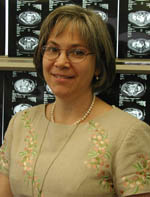
Dr. Elise Kohn, Principal Trial Investigator, NCI Center for Cancer Research

Dr. Elise Kohn, Principal Trial Investigator, NCI Center for Cancer Research

The results from a recent Phase I solid tumor clinical trial indicate that combination targeted therapy with sorafenib and bevacizumab produces antitumor activity (and enhanced toxicity) with respect to 43% of the ovarian cancer patients enrolled in that trial. Sorafenib (Nexavar®) inhibits the Raf kinase and vascular endothelial growth factor (VEGF) receptor. Bevacizumab (Avastin®) is a monoclonal antibody targeted against VEGF. The trial is sponsored by the National Cancer Institute (NCI) and Elise Kohn is the principal trial investigator.

The patients enrolled in the trial had advanced solid tumors, with Eastern Cooperative Oncology Group performance status of 0 to 1. A phase I dose-escalation trial of sorafenib and bevacizumab was initiated at below-recommended single-agent doses because of possible overlapping toxicity: sorafenib 200 mg orally twice daily and bevacizumab intravenously at 5 mg/kg (dose level (DL1)) or 10 mg/kg (dose level (DL2)) every 2 weeks. Additional patients were enrolled at the maximum-tolerated dose (MTD).

Thirty-nine patients were treated under the trial protocol. DL1 was the MTD and was administered to 27 patients. Dose-limiting toxicity in DL2 was grade 3 proteinuria and thrombocytopenia. Adverse events included hypertension, hand-foot syndrome, diarrhea, transaminitis, and fatigue. Partial responses (PRs) were seen in six (43%) of 13 patients with ovarian cancer (response duration range, 4 to 22+ months) and one of three patients with renal cell cancer (response duration, 14 months). PR or disease stabilization ≥ 4 months (median, 6 months; range, 4 to 22+ months) was seen in 22 (59%) of 37 assessable patients. The majority (74%) required sorafenib dose reduction to 200 mg/orally at a median of four cycles (range, one to 12 cycles).

The trial investigators concluded that combination therapy with sorafenib and bevacizumab has promising clinical activity, especially in patients with ovarian cancer. The trial investigators also noted that the rapidity and frequency of sorafenib dose reductions indicates that sorafenib at 200 mg twice daily with bevacizumab 5 mg/kg every 2 weeks may not be tolerable long term, and alternate sorafenib dosing schedules should be explored.

Source: Combination targeted therapy with sorafenib and bevacizumab results in enhanced toxicity and antitumor activity; Azad NS et. al., J Clin Oncol. 2008 Aug 1;26(22):3709-14.

Additional Information:

From Zero to Hero: HMGB1 Protein Found to Promote DNA Repair, Prevents Cancer

“An abundant chromosomal protein [HMGB1] that binds to damaged DNA prevents cancer development by enhancing DNA repair, researchers at The University of Texas M. D. Anderson Cancer Center report online this week in the Proceedings of the National Academies of Science.”

“An abundant chromosomal protein that binds to damaged DNA prevents cancer development by enhancing DNA repair, researchers at The University of Texas M. D. Anderson Cancer Center report online this week in the Proceedings of the National Academies of Science.

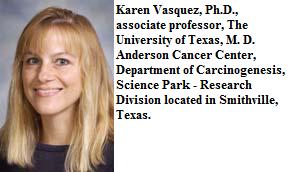
The protein, HMGB1 [High mobility group box 1] , was previously hypothesized to block DNA repair, said senior author Karen Vasquez, Ph.D., associate professor in M. D. Anderson’s Department of Carcinogenesis at the Science Park – Research Division in Smithville, Texas.

Identification and repair of DNA damage is the frontline defense against the birth and reproduction of mutant cells that cause cancer and other illnesses.

Pinpointing HMGB1’s role in repair raises a fundamental question about drugs under development to block the protein, Vasquez said. The protein also plays a role in inflammation, so it’s being targeted in drugs under development for rheumatoid arthritis and sepsis.

‘Arthritis therapy involves long-term treatment,’ Vasquez said. ‘Our findings suggest that depleting this protein may leave patients more vulnerable to developing cancer.’

Long known to attach to sites of damaged DNA, the protein was suspected of preventing repair. ‘That did not make sense to us, because HMGB1 is a chromosomal protein that’s so abundant that it would be hard to imagine cell repair happening at all if that were the case,’ Vasquez said.

In a series of experiments reported in the paper, Vasquez and first author Sabine Lange, a doctoral candidate in the Graduate School of Biomedical Sciences, tracked the protein’s impact on all three steps of DNA restoration: access to damage, repair and repackaging of the original structure, a combination of DNA and histone proteins called chromatin.

First, they knocked out the [HMGB1] gene in mouse embryonic cells [HMGB1 knockout cells] and then exposed cells to two types of DNA-damaging agents. One was UV light, the other a chemotherapy called psoralen that’s activated by exposure to darker, low frequency light known as UVA. In both cases, the cells survived at a steeply lower rate after DNA damage than did normal cells.

Next they exposed HMGB1 knockout cells and normal cells to psoralen and assessed the rate of genetic mutation. The knockout cells had a mutation frequency more than double that of normal cells, however, there was no effect on the types of mutation that occurred.

Knock out and normal cells were then exposed to UV light and suffered the same amount of damage. However, those with HMGB1 had two to three times the repair as those without. Evidence suggests that HMGB1 works by summoning other DNA repair factors to the damaged site, Vasquez said.

The last step in DNA repair is called chromatin remodeling. DNA does not exist in a linear structure in the chromosome, but wraps around specialized histone proteins. This chromatin structure permits access to DNA when it is loose, or opened up, and blocks access when it is more tightly wrapped. Presence of HMGB1 resulted in a much higher rate of chromatin assembly in both undamaged and UVC-damaged cells.

Lange and Vasquez hypothesize that HMGB1 normally binds to the entrance and exit of DNA nucleosomes, so is nearby when DNA damage occurs. It then binds to and bends the damaged site at a 90-degree angle, a distortion that may help DNA repair factors recognize and repair the damage. After repair it facilitates restructuring of the chromatin.

Co-author with Lange and Vasquez is David Mitchell, Ph.D., professor of carcinogenesis.

The research was supported by grants from the National Cancer Institute and the National Institute of Environmental Health Sciences as well as an American Legion Auxiliary fellowship. 07/21/08”

Quoted Source: Once Suspect Protein Found to Promote DNA Repair, Prevent Cancer – M. D. Anderson scientists caution against targeting HMGB1 to treat other disease, M. D. Anderson News Release, July 21, 2008.

M.D. Anderson Identifies TG2 As a Potential Target in Chemo-Resistant Ovarian Cancer

“Scientists from The University of Texas M. D. Anderson Cancer Center have found overexpression of tissue type transglutaminase (TG2) in ovarian cancer is associated with increased tumor cell growth and adhesion, resistance to chemotherapy and lower overall survival rates. When researchers targeted and silenced TG2 in animal models, cancer progression was reversed, suggesting the protein may also provide a novel therapeutic approach for late-stage ovarian cancer.”

“Scientists from The University of Texas M. D. Anderson Cancer Center have found overexpression of tissue type transglutaminase (TG2) in ovarian cancer is associated with increased tumor cell growth and adhesion, resistance to chemotherapy and lower overall survival rates. When researchers targeted and silenced TG2 in animal models, cancer progression was reversed, suggesting the protein may also provide a novel therapeutic approach for late-stage ovarian cancer.

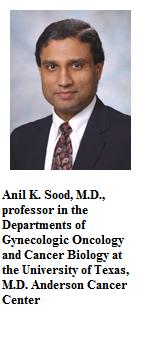
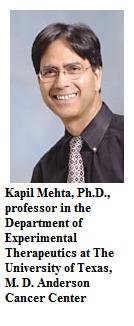
These findings in the July 15th issue of Cancer Research by a team of researchers led by Anil K. Sood, M.D., professor in the Departments of Gynecologic Oncology and Cancer Biology, and Kapil Mehta, Ph.D., professor in the Department of Experimental Therapeutics at M. D. Anderson, are among the first to explore TG2’s functionality in ovarian cancer.

‘TG2 appears to fuel different types of cancer through multiple molecular pathways, making it an important therapeutic target,’ said Mehta, whose lab also has connected TG2 overexpression to drug-resistant and metastatic melanoma, breast cancer and pancreatic cancer.

‘Drug resistance and metastasis are major impediments to the successful treatment of ovarian cancer and until now we had little information about the role TG2 played in ovarian cancer,’ Sood said. ‘We began to see its story unfold as we translated this data from tissue samples to cell lines to animal models.’

The American Cancer Society estimates 15,000 U.S. women will die from ovarian cancer this year. Most patients present with advanced stage disease that has spread beyond the primary tumor site. More than 70 percent of ovarian cancer patients will suffer a recurrence and eventually succumb to the disease.

Higher TG2, lower survival

The study, which examined 93 ovarian cancer samples of ranging stages, found that high levels of TG2 corresponded with significantly lower patient survival than those with low levels of TG2. Sixty-nine percent of high-stage ovarian cancers overexpressed TG2 compared with 30 percent of low-stage cancers. In-depth analysis demonstrated that tumors which overexpressed the protein tended to have an increased ability to invade healthy tissue and to survive or avoid the affects of chemotherapy.

‘From this investigation it became clear that TG2 activates the survival pathway p13K/Akt in these tumors, explaining the adverse, resistant behavior we observed on a molecular level,’ said Sood. ‘We then focused on whether silencing TG2 would block these effects.’

Researchers shut off TG2 with a small interfering RNA strand (TG2 siRNA) targeted to the protein, reducing the ability of the tumor cells to invade and killing them through programmed cell death, or apoptosis. ‘When exposed to this potent targeted therapy, ovarian cancer cells greatly reduced cancer cell proliferation and blood vessel development, while increasing apoptosis,’ said Sood.

Mouse model studies of chemotherapy-sensitive and chemotherapy-resistant models showed considerable antitumor activity both with TG2 siRNA alone and in combination with docetaxel chemotherapy. The combination therapy of TG2 siRNA with docetaxel reduced tumor weight by 86 percent, proving to have the greatest efficacy compared to control groups or those without chemotherapy.

‘While it remains to be seen if these results will translate in humans, looking ahead long term, it will be an attractive option against advanced ovarian cancer,’ said co-author Gabriel Lopez-Berestein, M.D. professor in the Department of Experimental Therapeutics at M. D. Anderson.

TG2 fuels pancreatic cancer differently

Sood and Lopez-Berestein, have developed siRNA therapy by packaging the gene-silencing strips of RNA in a fatty nanoparticle called a liposome and delivering it intravenously. TG2 is the third protein they have targeted in preclinical research. Sood and Mehta are moving TG2 siRNA toward Phase I clinical trials for ovarian and pancreatic cancers.

TG2 acts through different pathways in other types of cancer, Mehta noted. For example, TG2 overexpression causes the degradation of the tumor-suppressing protein PTEN in pancreatic cancer, Mehta and colleagues reported in Clinical Cancer Research in April. With PTEN out of the picture, pancreatic cancer is protected from a separate type of cell death called autophagy. In a separate paper, they showed that silencing TG2 with the siRNA liposome reduced tumor size, slowed metastasis and enhanced the effect of gemcitabine chemotherapy.

‘This aberrant protein is doing so many different things, you would have to develop a small-molecule drug to block each function,’ Mehta said. ‘Liposomal siRNA is exciting because it takes out TG2 completely, blocking everything that it does.’

Research was funded by grants from the National Cancer Institute, including M. D. Anderson’s Specialized Program in Research Excellence in Ovarian Cancer grant, a program project development grant from the Ovarian Cancer Research Fund, Inc., and the Zarrow Foundation.

In addition to Sood, Mehta and Lopez-Berestein, authors include Jee Young Hwang, M.D., Lingegowda S. Mangala, Ph.D., co-first authors, and Yvonne G. Lin, M.D., William M. Merritt, M.D., Whitney A. Spannuth, M.D., Alpa M. Nick, M.D., Derek J. Fiterman, M.D., and Robert L. Coleman, M.D., all of M. D. Anderson’s Department of Gynecologic Oncology; Jansina Y. Fok, also a co-first author, and Pablo E. Vivas-Mejia, Ph.D., both of the Department of Experimental Therapeutics; and Michael T. Deavers, M.D., of M. D. Anderson’s Department of Pathology. Hwang is also with the Department of Obstetrics and Gynecology, Dongguk University of College of Medicine, Kyung-ju, Korea. 07/15/08”

Quoted Source: TG2 Identified as Potential Target in Chemo-Resistant Ovarian Cancer – M. D. Anderson team silences protein with siRNA, implicates TG2 in fourth cancer, The University of Texas, M.D. Anderson Cancer Center News Release, July 15, 2008 (summarizing the findings of Clinical and biological significance of tissue transglutaminase in ovarian carcinoma; Sood, AK et. al,  Cancer Res. 2008 Jul 15;68(14):5849-58.)

Additional Information:

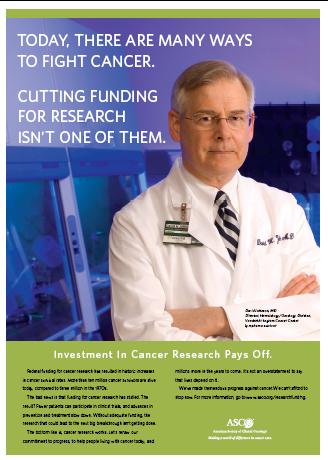
There Are Many Ways To Fight Cancer. Cutting Funding For Research Isn’t One of Them.

“ASCO and others in the biomedical research community are calling for Congress to increase funding for NIH by $1.9 billion (6.6%) in Fiscal Year 2009 to keep pace with medical research inflation, to reverse the effects of flat funding, and to sustain momentum in biomedical research.”

“Federal Research Funding


Increase Federal Research Funding. Make Your Voice Heard.
The fight against cancer needs your help.

Almost 1.5 million Americans will be diagnosed with cancer this year, and 1 American dies of the disease every minute.

But instead of increasing funding to find new and better cures, our nation’s commitment to funding cancer research is waning. In fact, adjusted for inflation, we have about $500 million less for cancer research than we did just five years ago.

Take Action Now. Sign ASCO’s petition to support increased funding for the National Institutes of Health and the National Cancer Institute.

Background:

The nation’s investment in cancer research is paying off. Cancer deaths are decreasing, survival rates are increasing and treatments are becoming more targeted and with fewer side-effects.

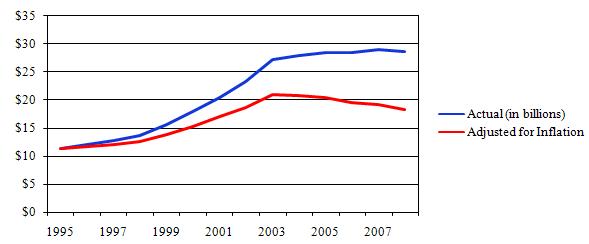
But the United States is in the midst of the longest sustained period of flat funding for cancer research. The budgets for the National Institutes of Health (NIH) and the National Cancer Institute (NCI) have been flat for 5 years. Adjusted for inflation (using the Biomedical Research and Development Price Index), the NIH budget has fallen 13 percent since 2003, and the NCI budget has fallen 12 percent since 2004.

Decline in NIH Purchasing Power: 1995-2007

(Source: Association of American Medical Colleges)

(ASCO Ad in USA Today, June 2, 2008 )

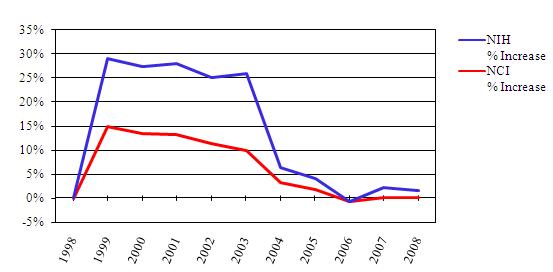
Annual Increase of NIH and NCI Appropriations 1998-2008

(Source: ASCO)

After years of progress, funding for NIH and NCI leveled off and actually decreased in recent years. From 1998 to 2003, funding for NCI increased by 80 percent, allowing for major advances in cancer research . Since that period of rapid growth, NCI’s budget has grown by an average of less than 1 percent annually. In FY 2006, NCI experienced a cut of almost 1 percent.

These declines in the value of NIH and NCI funding threaten to erode the extraordinary recent progress made in biomedical research over the past decade, at a time when scientific potential has never been greater.

ASCO Position:

ASCO and others in the biomedical research community are calling for Congress to increase funding for NIH by $1.9 billion, or 6.6 percent, in FY 2009, to keep pace with medical research inflation, to reverse the effects of flat funding and to sustain momentum in biomedical research. ASCO respects the professional judgment of the NCI in requesting a total of $5.26 billion (a $455 million increase over FY 2008 funding levels). ASCO will work to ensure that Congress approves the largest possible total funding increase to support NIH and cancer research. ASCO is also calling for funding increases over the next several years that at least keep pace with inflation to ensure that progress in cancer research continues.

ASCO Links of Interest:

Advocating for Change
ASCO Legislative Activities
ASCO’s Clinical Cancer Advances Report
Current Congressional Activities
Fact Sheet: “The Crisis in Cancer Research Funding”
Timeline: Progress in Cancer Research over the Past Four Decades

Other Links of Interest:

A Broken Pipeline? Flat funding of the NIH puts a generation of science at risk.
Lasker Foundation Papers on Economic Impact of Research Funding
NCI Report: The Nation’s Investment in Cancer Research
Research! America Cancer Fact Sheet
Research! America Fact Sheet: Four Reasons Congress Must Act Now To Support Health Research

[Quoted Source: ASCO Ad in USA Today Calls for Increased Research Funding, American Society of Clinical Oncology E-News, June 10, 2008.]