New Assay Test Predicts That 50% of Ovarian Cancers Will Respond To In Vitro PARP Inhibition

U.K. researchers develop a new test that could be used to select ovarian cancer patients who will benefit from a new class of drugs called “PARP inhibitors.”

U.K. researchers have developed a new test that could be used to select which patients with ovarian cancer will benefit from a new class of drugs called “PARP (poly (ADP-ribose) polymerase) inhibitors,” according to preclinical research presented at the National Cancer Research Institute (NCRI) Cancer Conference held in Liverpool on November 8th.  According to the test results, approximately 50 percent of all patients with ovarian cancer may benefit from PARP inhibitors.

Dr. Asima Mukhopadhyay Discusses Her Research Into A More Tailored Treatment For Ovarian Cancer

PARP Inhibition & BRCA Gene Mutations: Exploiting Ovarian Cancer’s Inherent Defects

  • Genetics 101

DNA (deoxyribonucleic acid) is the genetic material that contains the instructions used in the development and functioning of our cells. DNA is generally stored in the nucleus of our cells. The primary purpose of DNA molecules is the long-term storage of information. Often compared to a recipe or a code, DNA is a set of blueprints that contains the instructions our cells require to construct other cell components, such as proteins and RNA (ribonucleic acid) molecules. The DNA segments that carry this genetic information are called “genes.”

A gene is essentially a sentence made up of the bases A (adenine), T (thymine), G (guanine), and C (cytosine) that describes how to make a protein. Any change in the sequence of bases — and therefore in the protein instructions — is a mutation. Just like changing a letter in a sentence can change the sentence’s meaning, a mutation can change the instruction contained in the gene. Any changes to those instructions can alter the gene’s meaning and change the protein that is made, or how or when a cell makes that protein.

Gene mutations can (i) result in a protein that cannot carry out its normal function in the cell, (ii) prevent the protein from being made at all, or (iii) cause too much or too little of a normal protein to be made.

  • Targeting DNA Repair Through PARP Inhibition

Targeting DNA repair through PARP inhibition in BRCA gene-mutated cancer cells. "DSB" stands for DNA "Double Stand Break." (Photo Credit: AstraZeneca Oncology)

Normally functioning BRCA1 and BRCA2 genes are necessary for DNA repair through a process known as “homologous recombination” (HR).  HR is a form of genetic recombination in which two similar DNA strands exchange genetic material. This process is critical to a cell’s ability to repair its DNA in the event that it becomes damaged, so the cell can continue to function.

A cell’s DNA structure can be damaged by a wide variety of intentional (i.e., select cancer treatments) or unintentional (ultraviolet light, ionizing radiation, man-made chemicals, etc.) factors.  For example, chemotherapy regimens used in the treatment of cancer, including alkylating agents, topoisomerase inhibitors, and platinum drugs, are designed to damage DNA and prevent cancer cells from reproducing.

In approximately 10 percent of inherited ovarian cancers, the BRCA 1 or BRCA2 gene is damaged or mutated.  When the BRCA1 or BRCA2 gene is mutated, a backup type of DNA repair mechanism called “base-excision repair” usually compensates for the lack of DNA repair by HR.  Base-excision repair represents a DNA “emergency repair kit.” DNA repair enzymes such as PARP, whose activity and expression are upregulated in tumor cells, are believed to dampen the intended effect of chemotherapy and generate drug resistance.

When the PARP1 protein – which is necessary for base-excision repair – is inhibited in ovarian cancer cells possessing a BRCA gene mutation, DNA repair is drastically reduced, and the cancer cell dies through so-called “synthetic lethality.”  In sum, PARP inhibitors enhance the potential of chemotherapy (and radiation therapy) to induce cell death.  Healthy cells are unaffected if PARP is blocked because they either contain one or two working BRCA1 or BRCA2 genes which do an effective DNA repair job through use of HR.

  • PARP Inhibitors: A New Class of Targeted Therapy

PARP inhibitors represent a new, targeted approach to treating certain types of cancers. PARP inhibition has the potential to overwhelm cancer cells with lethal DNA damage by exploiting impaired DNA repair function inherent in some cancers, including breast and ovarian cancers with defects in the BRCA1 gene or BRCA 2 gene, and other DNA repair molecules. Inhibition of PARP leads to the cell’s failure to repair single strand DNA breaks, which, in turn, causes double strand DNA breaks. These effects are particularly detrimental to cancer cells that are deficient in repairing double strand DNA breaks and ultimately lead to cancer cell death.

PARP inhibitors are the first targeted treatment to be developed for women with inherited forms of breast and ovarian cancer carrying faults or mutations in a BRCA gene. Early results from clinical trials are showing promise for patients with the rare inherited forms of these cancers.

Study Hypothesis: PARP Inhibitors May Be Effective Against a Large Proportion of Non-Inherited Ovarian Cancers

As noted above, PARP inhibitors selectively target HR–defective cells and have shown good clinical activity in hereditary breast and ovarian cancers associated with BRCA1 or BRCA2 mutations. The U.K. researchers hypothesized that a high proportion (up to 50%) of sporadic (non-inherited) epithelial ovarian cancers could be deficient in HR due to genetic or epigenetic inactivation of the BRCA1, BRCA2, or other HR-related genes, which occur during a woman’s lifetime. Therefore, PARP inhibitors could prove beneficial to a larger group of ovarian cancer patients, assuming a patient’s HR status can be properly identified.

To test this hypothesis, the U.K. researchers developed a functional assay to test the HR status of primary ovarian cancer cultures derived from patients’ ascitic fluid. The test, referred to as the “RAD51 assay,” scans the cancer cells and identifies which tumor samples contain defective DNA repair ability (i.e., HR-deficient) which can be targeted by the PARP inhibitor. The researchers tested the HR status of each culture, and then subjected each one to in vitro cytotoxicity testing using the potent PARP inhibitor PF-01367338 (formerly known as AG-14699).

Study Results: 90% of HR-Deficient Ovarian Cancer Cultures Respond to PARP Inhibition

Upon testing completion, the U.K. researchers discovered that out of 50 primary cultures evaluated for HR status and cytotoxicity to the PARP inhibitor, approximately 40% of the cultures evidenced normal HR activity, while 60 percent of the cultures evidenced deficient HR activity. Cytotoxicity to PARP inhibitors was observed in approximately 90 percent of the HR deficient cultures, while no cytotoxicity was seen in the cultures that evidenced normal HR activity. Specifically, the PARP inhibitor PF-01367338 was found to selectively block the spread of ovarian tumor cells with low RAD51 expression.

Conclusion

Based upon the findings above, the U.K. researchers concluded that HR-deficient status can be determined in primary ovarian cancer, and that such status correlates with in vitro response to PARP inhibition.  Accordingly, the researchers concluded that potentially 50 to 60 percent of ovarian cancers could benefit from PARP inhibitors, but they note that use of the RAD51 assay as a biomarker requires additional clinical trial testing.  Although the RAD51 assay test that was used by the U.K. researchers to examine tumor samples in the laboratory is not yet suitable for routine clinical practice, the U.K. research team hopes to refine it for use in patients.

Upon presentation of the testing results, Dr. Asima Mukhopadhyay said:

“Our results show that this new test is almost 100 percent effective in identifying which ovarian cancer patients could benefit from these promising new drugs.  We have only been able to carry out this work because of the great team we have here which includes both doctors and scientists.”

The team based at Queen Elizabeth Hospital, Gateshead and the Newcastle Cancer Centre at the NICR, Newcastle University collaborated with Pfizer to develop the new assay to test tumor samples taken from ovarian cancer patients when they had surgery.

Dr. Mukhopadhyay added:

“Now we hope to hone the test to be used directly with patients and then carry out clinical trials. If the trials are successful we hope it will help doctors treat patients in a personalised and targeted way based on their individual tumour. It is also now hoped that PARP inhibitors will be useful for a broad range of cancers and we hope this test can be extended to other cancer types.”

Dr. Lesley Walker, Cancer Research UK’s director of cancer information, said:

“It’s exciting to see the development of promising new ‘smart’ drugs such as PARP inhibitors. But equally important is the need to identify exactly which sub-groups of patients will benefit from these new treatments. Tests like this will become invaluable in helping doctors get the most effective treatments quickly to patients, sparing them from unnecessary treatments and side effects.”

Sources:

Additional Information:

________________________________________

About The Researchers

Dr. Asima Mukhopadhyay is a doctor and clinical research fellow working at the Queen Elizabeth Hospital, Gateshead and the Northern Institute for Cancer Research at Newcastle University. Queen Elizabeth Hospital is run by Gateshead Health NHS Foundation Trust and is the home for gynecological oncology for the North East of England and Cumbria. She received a bursary to attend the conference, which was awarded on the merit of her work.

Key researchers on the study included Dr. Richard Edmondson, who was funded by the NHS, and Professor Nicola Curtin, who was funded by the Higher Education Funding Council. Dr Asima Mukhopadhyay is funded by the NHS.

Dr Richard Edmondson is a consultant gynecological oncologist at the Northern Gynaecological Oncology Centre, Gateshead and a Senior Lecturer at the Newcastle Cancer Centre at the Northern Institute for Cancer Research, Newcastle University, and is a member of the research team.

Nicola Curtin is Professor of Experimental Cancer Therapeutics at Newcastle University and is the principal investigator of this project.

Current and future work involves working closely with Pfizer. Pfizer developed one of the PARP inhibitors and supported this project.

About The Newcastle Cancer Centre

The Newcastle Cancer Centre at the Northern Institute for Cancer Research is jointly funded by three charities: Cancer Research UK, Leukaemia and Lymphoma Research, and the North of England Children’s Cancer Research Fund.  Launched in July 2009, the Centre is based at the Northern Institute for Cancer Research at Newcastle University.  The Centre brings together some of the world’s leading figures in cancer research and drug development. They play a crucial role in delivering the new generation of cancer treatments for children and adults by identifying new drug targets, developing new drugs and verifying the effectiveness and safety of new treatments. This collaborative approach makes it easier for researchers to work alongside doctors treating patients, allowing promising new treatments to reach patients quickly.

About the NCRI Cancer Conference

The National Cancer Research Institute (NCRI) Cancer Conference is the UK’s major forum for showcasing the best British and international cancer research. The Conference offers unique opportunities for networking and sharing knowledge by bringing together world leading experts from all cancer research disciplines. The sixth annual NCRI Cancer Conference was held from November 7-10, 2010 at the BT Convention Centre in Liverpool. For more information visit www.ncri.org.uk/ncriconference.

About the NCRI

The National Cancer Research Institute (NCRI) was established in April 2001. It is a UK-wide partnership between the government, charity and industry which promotes cooperation in cancer research among the 21 member organizations for the benefit of patients, the public and the scientific community. For more information visit www.ncri.org.uk.

NCRI members include: the Association of the British Pharmaceutical Industry (ABPI); Association for International Cancer Research; Biotechnology and Biological Sciences Research Council; Breakthrough Breast Cancer; Breast Cancer Campaign; CancerResearch UK; CHILDREN with LEUKAEMIA, Department of Health; Economic and Social Research Council; Leukaemia & Lymphoma Research; Ludwig Institute for Cancer Research; Macmillan Cancer Support; Marie Curie Cancer Care; Medical Research Council; Northern Ireland Health and Social Care (Research & Development Office); Roy Castle Lung Cancer Foundation; Scottish Government Health Directorates (Chief Scientist Office);Tenovus; Welsh Assembly Government (Wales Office of Research and Development for Health & Social Care); The Wellcome Trust; and Yorkshire Cancer Research.

Access Pharma Commences European Phase II Study of ProLindac™ + Paclitaxel In Platinum-Sensitive Ovarian Cancer Patients

Access Pharmaceuticals announces commencement of a Phase 2 combination trial for its second generation DACH-platinum cancer drug, ProLindac™ (formerly known as AP5346), in platinum-sensitive ovarian cancer patients. This trial is an open-label, Phase 2 study of ProLindac™ given intravenously with paclitaxel. The combination trial will be conducted in up to eight European participating centers.

Access Pharmaceuticals, Inc., a biopharmaceutical company leveraging its proprietary drug-delivery platforms to develop treatments in the areas of oncology, cancer supportive care and diabetes, announces commencement of a Phase 2 combination trial for its second generation DACH-platinum [the active part of the currently-marketed drug, oxaliplatin] cancer drug, ProLindac™ (formerly known as AP5346), in platinum-sensitive ovarian cancer patients. This trial is an open-label, Phase 2 study of ProLindac™ given intravenously with paclitaxel. The combination trial will be conducted in up to eight European participating centers.

“We are very pleased to be able to begin this trial, which will be the first of several ProLindac-based combination studies in a variety of indications,” said Prof. Esteban Cvitkovic, Vice Chairman Europe and Senior Director Clinical Oncology R&D, Access Pharmaceuticals, Inc. He continued, “The ambitious two-step design of the study will allow us to rapidly benchmark ProLindac/paclitaxel in a clinical setting where there is a clear need to establish an improved standard for long-term tumor responses. When treated using the current first-line combination of carboplatin/paclitaxel, more than half of patients with advanced ovarian cancer will relapse. There are very few second-line options. Approved agents for second-line and later therapy are currently focused primarily on the palliation of more resistant tumors. This lack of valid second-line options presents an opportunity to prove the role of ProLindac-based combinations in ovarian cancer.”

“After optimizing ProLindac’s scaled-up manufacturing process, we are pleased to be moving forward with its clinical development,” said Jeff Davis, President and CEO, Access Pharmaceuticals, Inc. He continued, “We think there is a significant clinical need and commercial opportunity for safer, more effective platinum drugs.”

Access Pharmaceuticals previously announced positive safety and efficacy results from its Phase 2 monotherapy clinical study of ProLindac™ in late-stage, heavily pretreated ovarian cancer patients. In this study, 66% of patients who received the highest dose achieved clinically meaningful disease stabilization according to RECIST [Response Evaluation Criteria in Solid Tumors] criteria, including sustained significant reductions in CA-125 (the established specific serum marker for ovarian cancer) observed in several patients. No patient in any dose group exhibited signs of acute neurotoxicity, which is a major adverse side-effect of the approved DACH platinum, Eloxatin®. ProLindac was very well tolerated, with only minor sporadic hematologic toxicity.

Access Pharmaceuticals is evaluating various indications where DACH platinum-based combinations have been proven active, such as hepatocarcinoma, biliary tree cancer and pancreatic cancer before deciding on an expanded Phase 2 program.

About ProLindac:

ProLindac™ is a novel DACH platinum prodrug that has completed a phase 2 monotherapy study in ovarian cancer patients. It is a polymer therapeutic that utilizes a safe, water-soluble nanoparticulate system to deliver DACH platinum to tumors, while reducing delivery to normal tissue, resulting in an increase in drug effectiveness and a significant decrease in toxic side-effects seen in the currently marketed DACH platinum, Eloxatin®.

For more information, please visit http://www.accesspharma.com/product-programs/prolindac/.

Source: Access Pharmaceuticals Commences ProLindac Phase 2 Combination Clinical Trial – Multicenter, Open-Label Trial to Target Platinum-Sensitive Ovarian-Cancer Patients, News Release, Access Pharmaceuticals, Inc., November 3, 2010.

Additional Information:


Peptide Being Tested for Atherosclerosis Inhibits Ovarian Cancer Growth; Clinical Trial Planned

A drug in testing to treat atherosclerosis significantly inhibited growth of ovarian cancer in both human cell lines and mouse models, marking the first such report of a peptide being used to fight malignancies, according to a study by researchers at UCLA’s Jonsson Comprehensive Cancer Center.

A drug in testing to treat atherosclerosis significantly inhibited growth of ovarian cancer in both human cell lines and mouse models, marking the first such report of a peptide being used to fight malignancies, according to a study by researchers at UCLA’s Jonsson Comprehensive Cancer Center.

The study follows a previous discovery by the same group showing that a protein called apolipoprotein A-I (apoA-I) may be used as a biomarker to diagnose early stage ovarian cancer in patients, when it typically is asymptomatic and much easier to treat. These earlier findings could be vital to improving early detection, as more than 85 percent of ovarian cancer cases present in the advanced stages, when the cancer has already spread and patients are more likely to have a recurrence after treatment, said Dr. Robin Farias-Eisner, chief of gynecologic oncology and co-senior author of the study with Dr. Srinu Reddy, a professor of medicine.

Robin Farias-Eisner, M.D., Ph.D., Chief of Gynecologic Oncology, UCLA Jonsson Comprehensive Cancer Center

“The vast majority of ovarian cancer patients are diagnosed with advanced disease and the vast majority of those, after surgery and chemotherapy, will eventually become resistant to standard therapy,” Farias-Eisner said. “That’s the reason these patients die. Now, with this peptide as a potential therapy, and if successful in clinical trials, we may have a novel effective therapy for recurrent, chemotherapy-resistant ovarian cancer, without compromising the quality of life during treatment.”

The study was published Nov. 1, 2010 in the early online edition of the peer-reviewed journal Proceedings of the National Academy of Sciences.

In their previous work, Farias-Eisner, Reddy and their research teams identified three novel biomarkers that they used to diagnose early stage ovarian cancer. In September 2009, the U.S. Food and Drug Administration cleared the first laboratory test that can indicate the likelihood of ovarian cancer, OVA1™ Test, which includes the three biomarkers identified and validated by Farias-Eisner, Reddy and their research teams.

They observed that one of the markers, apoA-I, was decreased in patients with early stage disease. They wondered why the protein was decreased and set out to uncover the answer. They speculated that the protein might be protective, and may be preventing disease progression.

The protein, apoA-I, is the major component of HDL [high-density lipoprotein], the good cholesterol, and plays an important role in reverse cholesterol transport by extracting cholesterol and lipids from cells and transferring it to the liver for extraction. The protein also has anti-inflammatory and antioxidant properties. Because lipid transport, inflammation and oxidative stress are associated with the development and progression of cancer, Farias-Eisner and Reddy hypothesized that the reduced levels of apoA-I in ovarian cancer patients may be causal in disease progression.

Mice that were engineered to have many copies of human apoA-I gene showed very little cancer development when induced with ovarian cancer, while the mice without the extra copies of apoA-I showed much more disease. The mice with extra copies of the apoA-I gene also lived 30 to 50 percent longer than those who didn’t receive it.

Farias-Eisner and Reddy wanted to treat the mice that had more cancer with the protein apoA-I, but it was too large to conveniently administer, having 243 amino acids. The researchers then turned to apoA-I mimetic peptides—only 18 amino acids in length—that are being tested for cardiovascular diseases. That project had been ongoing for a number of years at UCLA, said Reddy, who is also a part of the cardiovascular research team led by Dr. Alan M. Fogelman, executive chair of the Department of Medicine.

Srinivasa T. Reddy, Ph.D., M.Sc., Professor, Division of Cardiology, Depart. of Molecular & Medical Pharmacology, David Geffen School of Medicine, University of California at Los Angeles

“The smaller peptides mimic the larger apoA-I protein and provided us with agents we could give to the mouse to see if it was effective in fighting ovarian cancer,” said Reddy. “One of the peptides was being tested as an experimental therapy for atherosclerosis, so we already have some information on how it’s being tolerated in humans, which would be vital information to have if we progressed to human studies in ovarian cancer.”

The peptide, thus far, has caused little to no side effects in atherosclerosis patients, Reddy said, a hopeful sign that it might be well tolerated in ovarian cancer patients.

The mice that were given the peptide by injection had about 60 percent less cancer than the mice that did not receive the peptide, Farias-Eisner said. The peptide also was given in drinking water or in mouse food and proved to be as effective when administered that way.

“It was an exciting result,” Farias-Eisner said. “It looked like we had something that could be ingested or injected that might be very effective against ovarian cancer progression.”

Farias-Eisner said the peptide avidly binds oxidized lipids, one of which is known to stimulate cancer cells to survive and multiply. In the mouse studies, the mice that received peptide had significantly lower levels of this cancer promoting lipid.

An early phase clinical trial is being planned testing the peptide in patients with aggressive ovarian cancers that are resistant to chemotherapy, a group of patients whose median survival is just 40 months. Farias-Eisner hopes the study will be started and completed within two years.

The study was funded by the Womens Endowment, the Carl and Roberta Deutsch Family Foundation, the Joan English Fund for Women’s Cancer Research, the National Institutes of Health and the West Los Angeles Veterans Affairs Medical Center.

UCLA’s Jonsson Comprehensive Cancer Center has more than 240 researchers and clinicians engaged in disease research, prevention, detection, control, treatment and education. One of the nation’s largest comprehensive cancer centers, the Jonsson center is dedicated to promoting research and translating basic science into leading-edge clinical studies. In July 2010, the Jonsson Cancer Center was named among the top 10 cancer centers nationwide by U.S. News & World Report, a ranking it has held for 10 of the last 11 years. For more information on the Jonsson Cancer Center, visit our website at http://www.cancer.ucla.edu.

Sources:

Estrogen Replacement Therapy Speeds Growth of ER+ Ovarian Cancer & Increases Risk of Lymph Node Metastasis

Estrogen therapy used by menopausal women causes “estrogen receptor positive” (ER+) ovarian cancer to grow five times faster, according to a new study being published by researchers at the University of Colorado Cancer Center in the November 1 issue of Cancer Research.

Estrogen therapy used by menopausal women causes so-called “estrogen receptor positive” (ER+) ovarian cancer to grow five times faster, according to a new study being published tomorrow by researchers at the University of Colorado Cancer Center.

Menopausal estrogen replacement therapy (ERT) also significantly increases the likelihood of the cancer metastasizing to the lymph nodes, according to the study, which will be published in the November 1 issue of Cancer Research. The study was released online on Oct. 19, 2010. Cancer Research, published by the American Association for Cancer Research, is the world’s largest (based upon circulation) medical journal devoted specifically to cancer research.

The effect of ERT was shown in mouse models of estrogen receptor positive (ER+) ovarian cancer, which accounts for about 60 percent of all human ovarian cancer cases. Ovarian cancer is one of the deadliest cancers affecting women. This year alone, nearly 22,000 women will be newly diagnosed with ovarian cancer and an estimated 13,850 women will die from the disease, according to the National Cancer Institute.

Monique Spillman, M.D., Ph.D., Gynecologic Oncologist, University of Colorado Hospital; Assistant Professor, Obstetrics & Gynecology, University of Colorado School of Medicine.

“We showed that estrogen replacement substantially increases proliferation and risk of distant lymph node metastasis in ER+ tumors,” says Monique Spillman, M.D., Ph.D., the study’s lead researcher, a gynecologic oncologist at University of Colorado Hospital and assistant professor at of obstetrics and gynecology at the University of Colorado School of Medicine.

For the first time, Spillman and her team measured ovarian cancer growth in the abdomen of mice using novel techniques for visualizing the cancer. In mice with ER+ ovarian cancer cells, which were tagged with a firefly-like fluorescent protein that allowed them to be tracked, the introduction of estrogen therapy made the tumors grow five times faster than in mice that did not receive the ERT. The risk of the cancer moving to the lymph nodes increased to 26 percent in these mice compared with 6 percent in mice that did not receive ERT.

The team also found that the estrogen-regulated genes in ovarian cancer reacted differently than ER+ genes found in breast cancer, helping to explain why current anti-estrogen therapies used with breast cancer, such as tamoxifen, are largely ineffective against ovarian cancer.

“Breast cancer and ovarian cancer are often linked when talking about hormone replacement therapy, but we found that only 10 percent of the ER+ genes overlapped,” Spillman says. “We were able to identify estrogen-regulated genes specific to ER+ ovarian cancer that are not shared with ER+ breast cancers. We believe these genes can be specifically targeted with new anti-estrogen therapies that could more effectively treat ER+ ovarian cancers.”

“Breast cancer and ovarian cancer are often linked when talking about hormone replacement therapy, but we found that only 10 percent of the ER+ genes overlapped.  We were able to identify estrogen-regulated genes specific to ER+ ovarian cancer that are not shared with ER+ breast cancers. We believe these genes can be specifically targeted with new anti-estrogen therapies that could more effectively treat ER+ ovarian cancers.”

— Monique Spillman, M.D., Ph.D., Gynecologic Oncologist, University of Colorado Hospital; Assistant Professor, Obstetrics & Gynecology, University of Colorado School of Medicine.

Spillman and her team now will begin to screen current anti-estrogen therapies against the newly identified ovarian cancer genes to identify the [biological] pathways and compounds relevant to the treatment for ER+ ovarian cancer.

This study looked at the effect of estrogen replacement therapy in mice that already possessed ER+ ovarian cancer cells. It did not test whether the estrogen replacement actually could cause the development of these cancer cells. The study also dealt only with estrogen replacement, which is linked to higher risks of ovarian cancer, not combined estrogen/progesterone therapy that is used with women who retain their uteruses.

This research is too early to draw implications for use of estrogen replacement therapy in women, Spillman cautions. “We cannot make clinical recommendations based on what is happening in mice,” says Spillman, one of just eight gynecological oncologists in Colorado. “Every woman is different and needs to talk to her doctor about the decision to use hormone replacement therapy.”

The study was funded by a Gynecologic Cancer Foundation Career Development Award and the Liz Tilberis Scholars Award from the Ovarian Cancer Research Foundation. This competitive award, a $450,000 three-year grant, is given to early-career researchers who are developing techniques for early diagnosis and improved care for women with ovarian cancer.

About the University of Colorado Cancer Center

The University of Colorado Cancer Center is the Rocky Mountain region’s only National Cancer Institute-designated comprehensive cancer center. NCI has given only 40 cancer centers this designation, deeming membership as “the best of the best.” Headquartered on the University of Colorado Denver Anschutz Medical Campus, UCCC is a consortium of three state universities (Colorado State University, University of Colorado at Boulder and University of Colorado Denver) and five institutions (The Children’s Hospital, Denver Health, Denver VA Medical Center, National Jewish Health and University of Colorado Hospital). Together, our 440+ members are working to ease the cancer burden through cancer care, research, education and prevention and control. Learn more at www.uccc.info.

Sources:

Additional Information:

PBS Documentary, “The Whisper: The Silent Crisis of Ovarian Cancer.”

To raise ovarian cancer awareness, Long Island’s Public Broadcasting Service (PBS) affiliate WLIW-Channel 21 will present the exclusive New York metro area premiere of a half-hour television documentary entitled, “The Whisper: the silent crisis of ovarian cancer.” The program will debut at 7 P.M. (EDT) on Friday, September 24 in the New York metro area, and will be rolled out to other PBS affiliates across the country over the next 12 months.

More than 13,000 women this year will be struck down by ovarian cancer, which is the most lethal gynecologic cancer. Ovarian cancer statistics are staggering; nearly three out of every four women with this disease will die because of it. Chances of survival can improve if it is detected early and confined to the ovaries. Unfortunately, only about 25 percent of women are diagnosed with early stage disease because there is no reliable early stage screening test available. Victims of ovarian cancer include President Obama’s mother Ann Soetoro, Coretta Scott King and comedienne Gilda Radner.

To raise awareness of this devastating disease, Long Island’s Public Broadcasting Service (PBS) affiliate WLIW-Channel 21 will present the exclusive New York metro area premiere of a half-hour television documentary entitled, The Whisper: The Silent Crisis of Ovarian Cancer.  A preview trailer of the documentary is provided below.

The Whisper:  the silent crisis of ovarian cancer — PBS Documentary

The program will debut at 7 P.M. (EDT) on Friday, September 24, with encore presentations scheduled for 10:30 P.M. on Monday, September 27, and 11:30 P.M. on Friday, October 1. The program will be rolled out to other PBS affiliates across the country over the next 12 months.

The documentary was made possible by a generous grant from the Sonia L. Totino Foundation and the Rocco Totino family. Mr. Totino, a New York resident, lost his wife Sonia to ovarian cancer several years ago, and wished to honor her with an initiative that seeks to raise awareness among women of the warning signs of ovarian cancer, and by doing so, reduce the number of women lost to this devastating disease.

Sharon Blynn is the founder of Bald is Beautiful & the host of “The Whisper: the silent crisis of ovarian cancer” (a PBS documentary)

The host featured in the documentary is Sharon Blynn, who is an ovarian cancer survivor and the founder of the Bald Is Beautiful campaign. Through this campaign, Sharon wants to send a message to women that they can “flip the script” on the many traumatic aspects of the cancer experience, and embrace every part of their journey with self-love, empowerment, and a deep knowing that their beauty and femininity radiate from within and are not diminished in any way by the effects of having cancer.  As an “actorvist,” Sharon communicates the Bald Is Beautiful message through acting, writing, modeling and spokesperson appearances, and she continues to do patient outreach through one-on-one correspondence via her website, hospital visitations, being a chemo buddy and other such activities.

Other Bald Is Beautiful highlights include an international print campaign for the Kenneth Cole “We All Walk in Different Shoes” campaign, an international print and TV campaign for Bristol-Myers Squibb, appearances in “Sex and the City” and a principal role in Seal’s music video “Love’s Divine.” She has been featured in magazine and newspaper articles in Glamour, Vogue, Marie Claire (US & Italia), Organic Style, BUST, the Miami Herald and other publications. Sharon has also performed onstage as part of the “Off the Muff” collective, and she was commissioned to write and perform her one-woman theatrical piece “How Are We Feeling Today?” which saw its world premiere in Los Angeles and was presented in New York City. A QuickTime video compilation of Sharon’s past projects can be viewed here.

Blynn was awarded the prestigious 2010 Lilly Tartikoff/Entertainment Industry Foundation Hope Award at the 2010 National Coalition for Cancer SurvivorshipRays of Hope Gala” held in Washington, D.C. Sharon has also been selected to be part of Lifetime Television Network’s Every Woman Counts “Remarkable Women” campaign, and will appear in a 30-second spot that will run the week of Sept 17–23, 2010.

The nationally-renowned ovarian cancer experts featured in the documentary include:

Barbara A. Goff, M.D., Professor, Gynecologic Oncology, University of Washington School of Medicine. Dr. Goff is the principal investigator responsible for critical ovarian cancer research which revealed that ovarian cancer is generally accompanied by four primary warning signs or symptoms — bloating, pelvic or abdominal pain, difficulty eating or feeling full quickly, and urinary symptoms (urgency or frequency).  Goff’s research became the foundation for the Ovarian Cancer Symptoms Consensus Statement, which was sponsored and co-authored by the American Cancer Society, Gynecologic Cancer Foundation, and Society of Gynecologic Oncologists in July 2007.

Beth Y. Karlan, M.D., Board of Governors Endowed Chair, Director, Women’s Cancer Research Institute and Division of Gynecologic Oncology, Cedars-Sinai Medical Center; Professor, Obstetrics and Gynecology, David Geffen School of Medicine ,University of California, Los Angeles (UCLA). Dr. Karlan is a world-renowned expert in the field of gynecologic oncology, specifically ovarian cancer surgery, early detection, targeted therapies and inherited cancer susceptibility. She is a past-president of the Society of Gynecologic Oncologists, the Editor-in-Chief of Gynecologic Oncology, and has held many international leadership positions.  She is committed to both scientific advancement and enhancing public awareness about gynecologic cancers.

John Lovecchio, M.D., Chief of Gynecologic Oncology, North Shore-Long Island Jewish Health System; Leader of the North Shore-LIJ Cancer Institute; Professor of Obstetrics and Gynecology, the New York University School of Medicine.  Dr. Lovecchio’s major areas of research are in uterine and ovarian cancers, and he holds administrative and leadership positions in regional and national professional organizations and has published extensively in peer-reviewed journals. Lovecchio is widely regarded as a leading physician-surgeon and has received numerous awards in recognition of his academic and professional achievements.  In the documentary, Dr. Lovecchio offers his insight on ways to combat this deadly form of cancer. He is also credited as the technical advisor for the documentary.

Maurie Markman, M.D., Vice President of Patient Oncology Services & National Director of Medical Oncology, Cancer Treatment Centers of America.  For more than 20 years, Dr. Markman has been engaged in clinical research in the area of gynecologic malignancies, with a particular focus on new drug development and exploring novel management strategies in female pelvic cancers.  Dr. Markman’s many accomplishments include serving as Editor-In-Chief for the Current Oncology Reports journal and Oncology (Karger Publishers) journal, and serves as Chairman of the Medical Oncology Committee of the national Gynecologic Oncology Group.  In addition, Dr. Markman has served on numerous editorial boards, including the Journal of Clinical Oncology and Gynecologic Oncology.  Dr. Markman has been the primary author, or co-author, on more than 1,000 published peer-reviewed manuscripts, reviews, book chapters, editorials or abstracts, and he has edited or co-edited 14 books on various topics in the management of malignant disease, including Atlas of Oncology and the most recent edition of Principles and Practice of Gynecologic Oncology.

“Taking part in this program was a labor of love and concern for my patients,” said Dr. Lovecchio, who is based at North Shore University Hospital in Manhasset. “I wanted to make sure that women are getting the right information, and are aware of the signs and symptoms of ovarian cancer. They must be alert to their own bodies and recognize that abdominal bloating, abdominal pain, pelvic pain, urinary symptoms, difficulty in eating, and feeling full quickly may not be the norm.”

“I wanted to make sure that women are getting the right information, and are aware of the signs and symptoms of ovarian cancer. They must be alert to their own bodies and recognize that abdominal bloating, abdominal pain, pelvic pain, urinary symptoms, difficulty in eating, and feeling full quickly may not be the norm.”

— John Lovecchio, M.D., Chief of Gynecologic Oncology, North Shore-Long Island Jewish Health System

“Women should seek the advice of experts trained in this field and not think that they are being alarmists. Other medical experts and patients interviewed in this documentary are all seeking the same outcome — to make every woman aware of her own body and to encourage every woman to seek help if she feels that something is not quite right,” said Dr. Lovecchio, who was interviewed for the documentary along with Drs. Goff, Karlan, and Markman.

Source:  PBS Documentary on Ovarian Cancer, News Release, North Shore-Long Island Jewish Health System, September 9, 2010.

British Columbian Researchers Make Groundbreaking Genetic Discovery In Endometriosis-Associated Ovarian Cancers

British Columbian researchers discover that approximately one-half of clear-cell ovarian cancers and one-third of endometrioid ovarian cancers possess ARID1A gene mutations, as reported today in the New England Journal of Medicine.

British Columbian researchers discover that approximately one-half of ovarian clear-cell cancers (OCCC) and one-third of endometrioid ovarian cancers possess ARID1A (AT-rich interactive domain 1A (SWI-like)) gene mutations, as reported today in the New England Journal of Medicine (NEJM). The research paper is entitled ARID1A Mutations in Endometriosis-Associated Ovarian Carcinomas, and represents, in large part, the collaborative work of Drs. David Hunstman and Marco Marra.
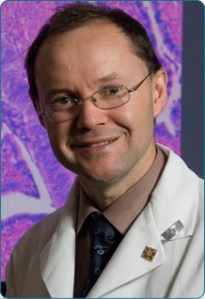
Dr. David Huntsman, Co-Founder & Acting Director, Ovarian Cancer Research Program of British Columbia

Dr. Marco Marra, Director, Michael Smith Genome Sciences Centre, British Columbia Cancer Agency

David Huntsman, M.D., FRCPC, FCCMG, is a world-renowned genetic pathologist, and the Co-Founder and Acting Director of the Ovarian Cancer Research Program of British Columbia (OvCaRe). He also heads the Centre for Translational and Applied Genomics, located in the British Columbia (BC) Cancer Agency’s Vancouver Centre.  Dr. Huntsman is the Co-Director of the Genetic Pathology Evaluation Centre, Vancouver General Hospital, and the Associate Director of the Hereditary Cancer Program, BC Cancer Agency. He is involved in a broad range of translational cancer research and, as the OvCaRe team leader, has studied the genetic and molecular structure of ovarian cancer for many years. In June 2009, the NEJM published one of Dr. Huntsman’s most recent groundbreaking discoveries:  the identification of  mutations in the FOXL2 gene as the molecular basis of adult granulosa cell ovarian cancer tumors.

Marco Marra, Ph.D. is the Director of the BC Cancer Agency’s Michael Smith* Genome Sciences Centre (GSC) , one of eight BC Cancer Agency specialty laboratories. Dr. Marra is internationally recognized as a preeminent leader in the field of genetics.  His leadership has helped transform the GSC into one of the world’s most advanced and productive centers for development and application of genomics, bioinformatics and related technologies. The work of the GSC , along with collaborations involving the BC Cancer Agency and other local, national and international researchers and organizations, have led to several major scientific breakthroughs over the past decade.

*Dr. Michael Smith won the 1993 Nobel Prize in chemistry for his development of oligonucleotide-based site-directed mutagenesis, a technique which allows the DNA sequence of any gene to be altered in a designated manner. His technique created an groundbreaking method for studying complex protein functions, the basis underlying a protein’s three-dimensional structure, and a protein’s interaction with other molecules inside the cell.

Tackling Ovarian Cancer, “One Subtype At a Time”

In December 2008, the OvCaRe team announced an important discovery about the genetics of ovarian cancer – that instead of being one single disease, it is made up of a spectrum of distinct diseases. “Until now,” says OvCaRe team leader David Huntsman, “ovarian cancer has been treated as a single disease both in the cancer clinic and the research lab.” This may help explain why there have been many fewer advances in ovarian cancer research and treatment than for other cancer types.

On the heels of this important finding, Huntsman says his team decided to tackle ovarian cancers “one subtype at a time.” For its first target, the team chose granulosa cell ovarian tumors, which account for five percent of ovarian tumors and have no known drug treatments. Working with research colleagues at the GSC, Huntsman’s team used the latest genomic sequencing equipment to decipher the genetic code of this ovarian cancer subtype.

“[T]en years ago, ovarian cancer appeared to be an unsolvable problem—the liberating moment came when we established that ovarian cancer is actually a number of distinct diseases … We tailor our research approach to each subtype with the hope of developing effective treatments specific to each disease.”

Dr. David Huntsman, Co-Founder & Acting Director, Ovarian Cancer Research Program of British Columbia.

The genomic sequencing study results were illuminating, says Huntsman, as the research team was able to identify “a single ‘spelling mistake’ in this tumor’s DNA.” Still, Huntsman is buoyed by the promise of this research and its potential to save lives. “We’ve had dozens of letters and emails from women around the world with granulosa cell tumors, who’ve written to thank us saying this discovery has given them hope they never thought they would have. Reading these letters has been both incredibly humbling and inspiring for our team.” Libby’s H*O*P*E*™ reported Dr. Huntsman’s critical ovarian cancer discovery on June 10, 2009.

The OvCaRe team’s research findings have already been used to advance the care of BC patient Barbara Johns, a fourth grade teacher whose granulosa cell tumor was surgically removed in February 2009. “This could lead to new non-surgical treatment options for patients with this type of cancer,” says Johns, who was the first patient to benefit from the new diagnostic test. “It’s definitely a step in the right direction.”

Listen to a brief audio excerpt taken from an interview with Dr. David Huntsman, in which he explains why this is an exciting time for ovarian cancer research.

The Ovarian Cancer Research Program of British Columbia

Select NEJM Article Authors (left to right): Drs. Sohrab Shah, David Huntsman, Dianne Miller, C. Blake Gilks

OvCaRe, a multi-institutional and multi-disciplinary ovarian cancer research group, was developed as a collaboration between the BC Cancer Agency, the Vancouver Coastal Health Research Institute, and the University of British Columbia.  The OvCaRe program includes clinicians and research scientists from Vancouver General Hospital (VGH) and the BC Cancer Agency, who specialize in gynecology, pathology, and medical oncology. As noted above, Dr. Huntsman leads the OvCaRe team as its Co-Founder and Acting Director.

A team approach has ensured the building of translational research platforms, accessible to all OvCaRe team members regardless of institutional affiliation or medical/scientific discipline. The OvCaRe program research platforms include a gynecologic cancer tumor bank, the Cheryl Brown Ovarian Cancer Outcomes Unit, a tissue microarray core facility for biomarker studies, a xenograft core facility for testing experimental therapeutics, and a genomics informatics core facility. OvCaRe is developing two additional core facilities to improve knowledge dissemination and clinical trials capacity.

Although OvCaRe was formed less than ten years ago, the team has been recognized for several groundbreaking medical and scientific discoveries related to the understanding and management of ovarian cancer. The significant discoveries reported within the past two years are listed below.

  • Proved that various subtypes of ovarian ovarian are distinct diseases, and reported that potential treatment advances depend on both clinically managing and researching these subtypes as separate entities (2008)( PMID: 19053170).
  • Identified mutations in the FOXL2 gene as the molecular basis of adult granulosa cell ovarian cancer tumors using next generation sequencing – the first clinically relevant discovery made with this new technology (2009)(PMID: 19516027).
  • Discovered that women with earlier stage ovarian clear-cell cancer may benefit from lower abdominal radiation therapy (2010)(PMID: 20693298).

In many cases, these contributions have already led to changes in clinical practice in British Columbia. The international reputation of Vancouver’s OvCaRe team ensures that the positive impact of these changes is felt immediately throughout British Columbia, while also being emulated in other jurisdictions worldwide.  These contributions were made possible due to the population-based cancer system in British Columbia and strong support from the BC Cancer Foundation and the Vancouver General Hospital (VGH) & University of British Columbia (UBC) Hospital Foundation.

Background:  Ovarian Clear-Cell Cancer

Ovarian cancer ranks as the 5th deadliest cancer among U.S. women.[1] There are four general subtypes of epithelial ovarian cancer — serous, clear-cell, endometrioid, and mucinous.[2] High-grade serous ovarian cancer is the most common and represent approximately 70% of all cases of epithelial ovarian cancer in North America. [3]

The OCCC subtype represents 12 percent of ovarian cancers in North America; however, it represents up to 20 percent of ovarian cancers diagnosed in Japan and other East Asian countries. [3,4] OCCC possesses unique clinical features such as a high incidence of stage I disease, a large pelvic mass, an increased incidence of vascular thromboembolic complications, and hypercalcemia. [4-6] Both OCCC and endometrioid ovarian cancer are frequently associated with endometriosis. [4-6] The genetic events associated with the transformation of endometriosis into ovarian clear-cell cancer and endometrioid cancer are unknown.
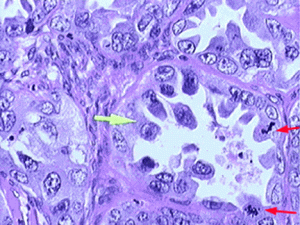
Clear cell carcinoma of the ovary

OCCC does not respond well to the standard platinum and taxane-based ovarian cancer chemotherapy: response rates are 15 per cent compared to 80 per cent for the most common type of ovarian cancer, high-grade serous ovarian cancer. [4-6] However, the exact mechanisms underlying OCCC’s resistance to chemotherapy is not fully understood. Although several mechanisms involved in drug resistance exist in OCCC, including decreased drug accumulation, increased drug detoxification, increased DNA repair activity [4-6], and low proliferation activity[4]; no particular chemoresistance system has been identified. Due to the general chemoresistant nature of OCCC, it is generally stated that the prognosis for advanced-stage or recurrent OCCC is poor. [3, 7-8] The prognosis for OCCC that is diagnosed in Stage I, and treated by complete cytoreduction that results in little or no residual disease, is usually good. [8-10]

Although OCCC is the second leading cause of death from ovarian cancer, it is relatively understudied by the medical and research community. Despite this fact, there have been a few important studies involving this subtype of ovarian cancer.

Various researchers have long noted that OCCC has a distinct genetic profile, as compared to other types of epithelial ovarian cancer.[6, 11-14] Gene expression profiling can serve as a powerful tool to determine biological relationships, if any, between tumors.  In fact, National Cancer Institute (NCI) and Memorial Sloan-Kettering Cancer Center (MSKCC) researchers observed that clear-cell cancers share similarity in gene expression profiles, regardless of the human organ of origin (including kidney), and could not be statistically distinguished from one another. [13] The researchers found that the same was not true for the non-OCCC forms of epithelial ovarian cancer.  Several investigators have made similar observations. [14-16] It is important to note, however, that there are significant genetic differences between OCCC and renal clear-cell cancer (RCCC).  For example, abnormalities of the VHL (Von Hippel-Lindau)/HIF1-α (Hypoxia-inducible factor 1-alphapathway have been identified in the majority of RCCC cases, but not in OCCC cases. [17, 18]

The basic finding that clear-cell tumors show remarkably similar gene expression patterns regardless of their organ of origin is provocative.  This NCI/MSKCC study finding raises the question of whether therapies used to treat RCCC would be effective against OCCC.  Targeted-therapies such as VEGFR inhibitors (e.g., sunitinib (Sutent®)), PDGFR inhibitors (e.g., sorafenib (Nexavar®)), m-TOR inhibitors (e.g., temsirolimus (Torisel®) & everolimus (Afinitor®)), and anti-angiogenesis drugs (e.g., bevacizumab (Avastin®)) are used to treat RCCC. Notably, Fox Chase Cancer Center researchers performed preclinical testing of everolimus on ovarian cancer cell lines and xenografted mice and observed significant anti-tumor activity. [19, 20] The Division of Clinical Gynecologic Oncology at the Massachusetts General Hospital also observed the anti-tumor effect of sunitinib in one refractory OCCC patient that recurred after nine years and four prior treatment lines. [21] Japanese researchers have also highlighted this potential approach to fighting OCCC. [22-25]

All of the above-mentioned drugs used to treat RCCC are currently being tested in ovarian cancer and solid tumor clinical studies.  Accordingly, these drugs are generally available to advanced-stage and recurrent OCCC patients who do not respond to prior taxane/platinum therapy and other standard lines of treatment, assuming such patients satisfy all clinical study enrollment criteria. [26-30]

In a 2009 study conducted by researchers at Johns Hopkins and University of California, Los Angeles (UCLA), it was discovered that approximately one-third of OCCCs contained PIK3CA (phosphoinositide-3-kinase, catalytic, alpha polypeptide) gene mutations. [31] Testing patients with cancer for PIK3CA gene mutations may be feasible and allow targeted treatment of the PI3K-AKTmTOR cellular signaling pathway, according to the results of a University of Texas, M.D. Anderson Cancer Center study presented at the 2009 AACR (American Association for Cancer Research)-NCI-EORTC (European Organization For Research & Treatment of Cancer) International Conference on Molecular Targets and Cancer Therapeutics. [31] The M.D. Anderson study results may carry great significance in the future because there are several PI3K signaling pathway targeting drugs in clinical development for use against ovarian cancer and solid tumors. [32]

Also in 2009, researchers affiliated with UCLA, the Mayo Clinic, and Harvard Medical School announced that they established a biological rationale to support the clinical study of the U.S. Food & Drug Administration (FDA)-approved leukemia drug dasatinib (Sprycel®), either alone or in combination with chemotherapy, in patients with ovarian cancer (including OCCC). [33]

In August 2010, Dr. Ken Swenerton, a senior OvCaRe team member and co-leader of OvCaRe’s Cheryl Brown Ovarian Cancer Outcomes Unit, reported provocative findings relating to the use of adjuvant radiotherapy to fight OCCC. [34] Dr. Swenerton is also a co-chair of the NCI Gynecologic Cancer Steering Committee (GCSC) Ovarian Cancer Task Force.  The NCI GCSC determines all phase III clinical trials for gynecologic cancers in the U.S. and other jurisdictions. The population-based, retrospective study conducted by OvCaRe reported that a 40 percent decrease in disease specific mortality was associated with adjuvant radiotherapy administered to women with stage I (other than grade 1 tumors), II, & III clear-cell, endometrioid, and mucinous ovarian cancers, who possessed no residual (macroscopic) disease following complete cytoreductive surgery. Although the study dataset was too small to discriminate effects among the clear-cell, endometrioid and mucinous ovarian cancer histologies, the overall results highlight the curative potential of adjuvant radiotherapy in select non-serous ovarian cancer patients.  Moreover, there is limited scientific and anecdotal evidence set forth in past studies that supports the select use of radiotherapy against OCCC. [35-38]

BRCA 1 (BReast CAncer gene 1) & BRCA 2 (BReast CAncer gene 2) mutations increase a woman’s lifetime risk of breast and ovarian cancer. [39] In at least one small study, BRCA2 germline (inherited) and somatic (non-inherited) gene mutations were identified in 46 percent of the OCCC samples tested. [40] This provocative study brings into question the potential use of PARP (Poly (ADP-ribose) polymerase) inhibitors against OCCC in select patients. [41] PARP inhibitors have shown effectiveness against germline BRCA gene mutated ovarian cancers, [42, 43] and may be effective against somatic BRCA gene mutated ovarian cancers. [44, 45]

International researchers continue to identify theoretical therapeutic drug targets for OCCC. These targets include:  IGF2BP3 (insulin-like growth factor 2 mRNA-binding protein 3) [46], HNF-1beta (hepatocyte nuclear factor-1beta) [47], annexin A4  [48], GPC3(Glypican-3) [49], osteopontin [50], sFRP5 (secreted frizzled-related protein 5) [51], VCAN (versican) [52], transcription factor POU6F1 (POU class 6 homeobox 1) [53], and microRNA mir-100 [54].

Although researchers have identified that OCCC is distinct from high-grade serous carcinoma, OCCC-specific biomarkers and treatments have not been broadly adopted. Despite the theoretical approaches and study results highlighted above, there are no definitive (i.e., clinically-proven) anti-cancer agents for OCCC, and without understanding the molecular basis of this ovarian cancer subtype in much greater detail, the development of more targeted therapies is unlikely.

NEJM ARID1A Study Methodology

The OvCaRe team research consisted of four major analyses as described below.

  • RNA Sequencing of OCCC Tumor Samples and Cell Line (Discovery Cohort)

By way of background, DNA (deoxyribonucleic acid) is the genetic material that contains the instructions used in the development and functioning of our cells. DNA is generally stored in the nucleus of our cells. The primary purpose of DNA molecules is the long-term storage of information. Often compared to a recipe or a code, DNA is a set of blueprints that contains the instructions our cells require to construct other cell components, such as proteins and RNA (ribonucleic acid) molecules. The DNA segments that carry this genetic information are called genes.

RNA is the genetic material that transcribes (i.e., copies) DNA instructions and translates them into proteins.  It is RNA’s job to transport the genetic information out of the cell’s nucleus and use it as instructions for building proteins.  The so-called “transcriptome” consists of all RNA molecules within our cells, including messenger RNA (mRNA), transfer RNA (tRNA), and ribosomal RNA (rRNA). The sequence of RNA mirrors the sequence of the DNA from which it was transcribed or copied. Consequently, by analyzing the entire collection of RNAs (i.e., the transcriptome) in a cell, researchers can determine when and where each gene is turned on or off in our cells and tissues.  Unlike DNA, the transcriptome can vary with external environmental conditions. Because it includes all mRNA transcripts in the cell, the transcriptome reflects the genes that are being actively expressed at any given time.

A gene is essentially a sentence made up of the bases A (adenine), T (thymine), G (guanine), and C (cytosine) that describes how to make a protein.  Any change in the sequence of bases — and therefore in the protein instructions — is a mutation. Just like changing a letter in a sentence can change the sentence’s meaning, a mutation can change the instruction contained in the gene.  Any changes to those instructions can alter the gene’s meaning and change the protein that is made, or how or when a cell makes that protein.

Gene mutations can (i) result in a protein that cannot carry out its normal function in the cell, (ii) prevent the protein from being made at all, or (iii) cause too much or too little of a normal protein to be made.

The first study analysis involved the RNA sequencing of 18 patient OCCC tumors and 1 OCCC cell line.  The primary purpose of this step was to discover any prevalent genetic mutations within the sample tested.  Specifically, the research team sequenced the whole transcriptomes of the OCCC tumors and the single OCCC cell line and discovered  a variety of somatic (non-inherited) mutations in the ARID1A gene.  The researchers also found mutations in CTNNB1(catenin beta-1 gene), KRAS (v-Ki-ras2 Kirsten rat sarcoma viral oncogene homologue gene), and PIK3CA (phosphoinositide-3-kinase, catalytic, alpha polypeptide gene).

ARID1A encodes the BAF250a protein, a key component of the SWI-GNF chromatin remodeling complex which regulates many cellular processes, including development, differentiation, proliferation, DNA repair, and tumor suppression. [55] The BAF250a protein encoded by ARID1A is believed to confer specificity in regulation of gene expression.

To date, mutations or other aberrations in ARID1A have not been identified in ovarian cancer, but have been identified in breast and lung cancer cell lines. [56] Other researchers have suggested that ARID1A is a tumor-suppressor gene. [56]

  • DNA Sequencing of OCCC Tumor Samples and Cell Lines (Discovery Cohort + Mutation Validation Cohort)

The finding of multiple types of mutations in a single gene, ARID1A, within the discovery cohort, led researchers to perform a mutation validation analysis.  The researchers only conducted analyses with respect to ARID1A, because it was already known that mutations in CTNNB1, KRAS, and PIK3CA are recurrent in ovarian cancer. [31, 57]

This step of the research involved DNA sequencing of 210 samples of various subtypes of ovarian cancer and one OCCC cell line, along with the 18 OCCC tumor samples and one OCCC cell line used in the discovery cohort. Upon completion of the DNA sequencing, the researchers identified ARID1A mutations in 55 of 119 (46%) OCCCs, 10 of 33 (30%) endometrioid cancers, and none of the 76 high-grade serous cancers. Also, the researchers found primarly somatic (non-inherited) truncating mutations.

Based on the second study analysis, the researchers report that the presence of ARID1A mutations are strongly associated with OCCCs and endometrioid cancers.  These two subtypes of ovarian cancer, as noted above, are associated with endometriosis.

  • Testing For BAF250a Protein Expression

In the third study analysis, the researchers used immunohistochemical analysis (IHC) to measure BAF250a protein expression in 450 ovarian cancers.

The first round of IHC testing involved 182 ovarian cancers which were available from the discovery cohorts and the mutation-validation cohorts: 73 OCCCs, 33 endometrioid cancers, and 76 high-grade serous ovarian cancers.  The goal of the first IHC analysis was to compare the loss of BAF250a protein expression in OCCCs and endometrioid cancers, with and without ARID1A mutations. Upon completion, the researchers identified loss of BAF250a protein expression in 27 of 37 (73%) OCCCs, and 5 of 10 (50%) endometrioid cancers, which possessed ARID1A mutations. In contrast, loss of BAF250a protein expression was identified in only 4 of 36 (11%) OCCCs, and 2 of 23  (9%) endometrioid cancers, which did not possess ARID1A mutations. Thus, the loss of BAF250a protein expression was much greater in OCCCs and endometrioid cancers with ARID1A mutations.

The goal of the second IHC analysis was to compare loss of BAF250a protein expression among all OCCCs, endometrioid cancers, and high-grade serous cancers. The researchers identified loss of BAF250a protein expression in 31 of 73 (42%) OCCCs, and 7 of 33 (21%) endometrioid cancers, as compared to 1 of 76 (1%) high-grade serous cancers. Thus, the loss of BAF250a protein expression was much greater in the OCCCs and endometrioid cancers, as compared to high-grade serous cancers, regardless of ARID1A mutation status.

The second round of IHC testing measured loss of BAF250a protein expression within the IHC validation cohort. This analysis revealed that 55 of 132 (42%) OCCCs, 39 of 125 (31%) endometrioid cancers, and 12 of 198 (6%) high-grade serous cancers, lost BAF250a protein expression.

By the end of IHC testing, the researchers established that the loss of BAF250a protein expression was consistently more common in OCCCs and endometrioid cancers than in high-grade serous cancers, when assessed in the discovery and mutation-validation cohorts, and again in the IHC cohort.

The researchers also reported that no significant associations with loss of BAF250a protein expression were noted on the basis of age at disease presentation, disease stage, or disease-specific survival within any of the ovarian cancer subtypes.

  • Analysis of ARID1A Gene Mutations & BAF250a Protein Expression In Continguous Atypical Endometriosis

The fourth study analysis evaluated samples taken from two OCCC patients who had ARID1A mutations and contiguous atypical endometriosis. In both instances, the patient sample included the primary OCCC tumor, clones derived from contiguous atypical endometriosis, and clones derived from a distant endometriotic lesion.

In the first patient, ARID1A mutations were identified in the OCCC tumor, and 17 of 42 clones derived from contiguous atypical endometriosis, but in none of the 52 clones derived from a distant endometriotic lesion. The samples taken from this patient’s OCCC tumor and atypical endometriosis revealed loss of BAF250a protein expression; however, expression was maintained in the distant endometriotic lesion. HNF-1beta was expressed in the OCCC tumor, but not in the contiguous atypical or distant endometriosis. Estrogen receptor expression tested positive in both the contiguous atypical and distant endometriosis, but not in the OCCC tumor.

In the second patient, ARID1A mutations and a CTNNB1 mutation were identified in the OCCC tumor and contiguous atypical endometriosis, but not in a distant endometriotic lesion.

Results Summary

Based on the foregoing discussion, the major OvCaRe study findings are summarized below.

  • 46% of patients with OCCC and 30% of those with endometrioid cancers had somatic (non-inherited) truncating or missense mutation in the ARID1A gene.
  • No ARID1A mutations were identified in the 76 high-grade serous cancers analyzed.
  • Loss of BAF250a protein expression was identified in 36% of OCCCs and endometrioid cancers, but in only 1% of high-grade serous cancers.
  • Loss of BAF250a protein expression was seen in 73% and 50% of OCCCs and endometrioid cancers with an ARID1A mutation, respectively, and in only 11% and 9% of samples without ARID1A mutations, respectively.
  • The majority of cancers possessing somatic ARID1A mutations and loss of BAF250a expression appear to have a normal (also known as “wild-type”) allele present.
  • DNA and RNA sequencing data reveals that the ratio of abnormal (mutant) to normal (wild-type) alleles at both the DNA and RNA levels is consistent, thereby suggesting that epigenetic silencing is not a significant factor.
  • In two patients, ARID1A mutations and loss of BAF250a protein expression were identified in the OCCC tumor and contiguous atypical endometriosis, but not in distant endometriotic lesions.

Conclusions

The researchers note in the study that ARID1A is located at chromosome 1p36.11. Although this fact carries little meaning for a layperson, the researchers explain that this chromosomal region is commonly deleted in tumors, and that such deletions could contain tumor-suppressor genes. Based upon the totality of the data, the OvCaRe team believes that ARID1A is a tumor-suppressor gene which is frequently disrupted in OCCCs and endometrioid cancers.  Although a bit speculative due to small sample size, the researchers also believe that because ARID1A mutation and loss of BAF250a protein expression were identified in precancerous endometriotic lesions, such events represent a transformation of endometriosis into cancer.

“The finding that ARID1A is the most frequently mutated gene described thus far in endometrioid and clear cell ovarian cancers represents a major scientific breakthrough. This discovery also sheds light on how endometriosis predisposes to the development of these cancers. The novel insights provided by this work have the exciting potential to facilitate advances in early diagnosis, treatment and prevention of endometrioid and clear cell cancers, which account for over 20 per cent of ovarian cancer cases.”

Dr. Andrew Berchuck, Director, Division of Gynecologic Oncology, Duke University Medical Center

Inaugural Ovarian Clear-Cell Carcinoma Symposium

International Clear-Cell Carcinoma of the Ovary Symposium (June 24, 2010)

On June 24, 2010, a group of preeminent clinicians and cancer research scientists from around the world gathered for the Clear Cell Carcinoma of the Ovary Symposium (the Symposium), which was held at the University of British Columbia. To my knowledge, the Symposium is the first global scientific meeting dedicated to a specific subtype of ovarian cancer, namely OCCC.

At the invitation of Dr. David Huntsman, the founder of the Symposium, I had the distinct pleasure and honor of attending this prestigious and informative meeting as an observer. Dr. Huntsman was aware that my 26-year old cousin, Libby, died from OCCC, and he thought that the Libby’s H*O*P*E*™ community would benefit from the information presented at the Symposium.

The stated goal of the Symposium was to empower the international clinical and research community interested in OCCC, and allow that community to focus on the major barriers to improving OCCC outcomes. Moreover, the Symposium speakers and attendees were charged with presenting unpublished data and providing provocative OCCC questions for group discussion. The countries represented at that Symposium included Australia, Canada, Italy, Japan, the United Kingdom, and the U.S.

The 1-day event was presented through three major sessions.  The first session addressed issues that challenge the clinical dogma relating to OCCC, and covered topic areas such as epidemiology, surgery, pathology, systemic oncology, and radiation oncology. The second session addressed OCCC molecular pathology and genomics.  The third session addressed global OCCC translational research and covered topic areas including OCCC outcomes from conventional clinical trials, current OCCC clinical trials, and novel approaches to OCCC treatment and the testing of new agents.

The international Symposium presenters, included the following individuals:

  • David Bowtell, Group Leader, Cancer Genetics & Genomics Research Laboratory, Peter MacCallum Cancer Centre; Program Head, Cancer Genetics & Genomics, Peter MacCallum Cancer Centre, Melbourne (Australia).
  • Michael A. Quinn, MB ChB Glas. MGO Melb. MRCP FRCOG FRANZCOG CGO, Director of Oncology/Dysplasia, Royal Women’s Hospital, Melbourne, Australia; Professor, Department of Obstetrics and Gynecology, University of Melbourne; Chair, National Cancer Control Initiative; Chair, Education Committee, International Gynecological Cancer Society; Chair, Ovarian Cancer Research Group, Cancer Council; Member, National Expert Advisory Group on Ovarian Cancer. (Australia)
  • C. Blake Gilks, M.D., FRCPC,  Co-Founder, Ovarian Cancer Research Program of BC; Professor & Acting Head, Department of Pathology and Laboratory Medicine, University of British Columbia; Head of Anatomic Pathology, Vancouver General Hospital; Member, Vancouver Coastal Health Research Institute; Co-Founder & Co-Director, Genetic Pathology Evaluation Centre, Vancouver General Hospital. (Canada)
  • Paul Hoskins, MA, M.B. B. CHIR, MRCP., FRCPC, Clinical Professor, University of British Columbia. (Canada)
  • David Huntsman, M.D., FRCPC, FCCMG, Co-Founder & Acting Director, Ovarian Cancer Research Program of British Columbia; Director, Centre for Translational and Applied Genomics, BC Cancer Agency; Co-Director, Genetic Pathology Evaluation Centre, Vancouver General Hospital; Associate Director, Hereditary Cancer Program, BC Cancer Agency. (Canada)
  • Helen MacKay, M.D., Staff Physician, Division of Medical Oncology and Hematology, Princess Margaret Hospital; Assistant Professor, University of Toronto; Member: (i) ICON 7 Translational Committee (representing NCIC CTG),  (ii) Study Committee of the TFRI Ovarian Cancer Biomarker Program, (iii) Gynecologic Cancer Steering Committee Cervical Cancer Task Force: Intergroup/NCI/National Institutes of Health, (iv) Cervix Working Group (NCIC CTG), (v) Gynecologic Disease Site Group (Cancer Care Ontario), and (vi) the GOC CPD Committee. (Canada)
  • Amit M. Oza, Bsc, MBBS, M.D., FRCPC, FRCP, Senior Staff Physician & Professor of Medicine, Princess Margaret Hospital, University of Toronto; Clinical Studies Resource Centre Member, Ontario Cancer Institute. (Canada)
  • Ken Swenerton, M.D., Co-Leader, Cheryl Brown Ovarian Cancer Outcomes Unit, Ovarian Cancer Research Program of BC; Clinical Professor, Medical Oncology, University of British Columbia; Department of Pathology, Vancouver Coastal Health Research Institute;  Genetic Pathology Evaluation Centre,Vancouver General Hospital; Co-Chair, NCI Gynecologic Cancer Steering Committee Ovarian Cancer Task Force. (Canada).
  • Anna Tinker, M.D., FRCPC, Clinical Assistant Professor, University of British Columbia, Department of Medicine; Medical Oncologist, Oncology, British Columbia Cancer Agency (Canada).
  • Gillian Thomas, M.D., FRCPC, Professor, Department of Radiation Oncology & Obstetrics and Gynecology, University of Toronto; Radiation Oncologist, Odette Cancer Centre; Co-Chair, NCI Gynecologic Cancer Steering Committee; Member, ACRIN Gynecologic Committee; Member, Cervix Committee and Executive Committee, Gynecologic Cancer Intergroup (GCIG); Member, Cervix Committee – Gynecologic Oncology Group (GOG); Associate Editor, International Journal of Gynecologic Cancer. (Canada)
  • Aikou Okamoto, M.D., Department of Obstetrics & Gynecology, Jikei University School of Medicine, Tokyo (Japan).
  • Ian McNeish, MA, Ph.D., MRCP, MRC, Senior Clinical Fellow, Professor of Gynecological Oncology & Honorary Consultant in Medical Oncology, Deputy Director of the Barts Experimental Cancer Medicine Centre, Institute of Cancer, Barts and the London School of Medicine. (United Kingdom) (See Libby’s H*O*P*E*™, April 7, 2009)
  • Michael J. Birrer, M.D., Ph.D., Director of GYN/Medical Oncology at the Massachusetts General Hospital Cancer Center; Professor, Department of Medicine, Harvard Medical School; Co-Chair, NCI Gynecologic Cancer Steering Committee; formerly, Chief of the Molecular Mechanisms Section, Cell and Cancer Biology Branch, NCI Center for Cancer Research; formerly official representative from NCI Center for Cancer Research to the Gynecological Cancer Steering Committee. (United States)(See Libby’s H*O*P*E*™, December 8, 2009)

OvCaRe Ovarian Clear-Cell Carcinoma Research Initiative

As noted above, OCCC has been identified as distinct subtype of ovarian cancer.  OCCC-specific biomarkers or treatments have not been broadly adopted. Moreover, there are currently no clinically proven anti-cancer agents for OCCCs. For this reason, the OvCaRe team and other BC Cancer Agency scientists, have initiated a pioneering OCCC research initiative that consists of six separate, but interrelated projects.

The project will begin with the most fundamental research, the large scale sequencing of RNA and DNA derived from OCCC tumors. In the second, concurrent project, the vast quantities of genome sequence data will be transformed into usable knowledge that will be evaluated for clinical relevance by local and international experts. Identifying and validating novel biomarkers from the data obtained will be the focus of the third project, and the fourth project will permit scientists to specifically target those cellular biochemical signaling pathways that are considered to be useful tools for future drug development. The development and testing of the therapeutic targets and new drugs or new combinations of drugs in animal and human testing will complete this initiative.

The OvCaRe and the BC Cancer Agency scientists have a unique opportunity to completely reshape the scientific and medical understanding of OCCC and impact the way patients with this rare form of cancer are treated. The strength of their research initiative is based on linking the clinical research resources developed through OvCaRe with the genomic sequencing capacity of the BC Cancer Agency’s Genome Sciences Centre, and the drug development capacity of the Centre for Drug Research and Development and the NanoMedicine Research Group.

“This pioneering discovery by Dr. Huntsman and his dedicated ovarian cancer research team will allow the international research community to take the genomic ‘high ground’ in the battle against these formidable subtypes of epithelial ovarian cancer. The Ovarian Cancer Research Program of BC’s reported findings represent a critical first step towards development of one or more personalized targeted therapies to combat these lethal forms of ovarian cancer.”

Paul Cacciatore, Founder, Libby’s H*O*P*E*™

The impact of this research may not be experienced by women diagnosed with OCCC today, but this foundational research must begin immediately so as to impact outcomes in the years to come. Ably led by Dr. David Huntsman, this team of dedicated individuals represents a depth and breadth of medical and scientific expertise not often found in a single geographic location.

The hope is that through the identification of therapeutic targets for OCCC, this team will yield a powerful “superstar” drug such as Herceptin (used successfully for HER-2 positive breast cancer) or Gleevec (used successfully for chronic myelogenous leukemia (CML)). These drugs are examples of therapeutics that were created based on a direct match of an identified genetic target to the therapeutic solution.

This project is of utmost importance as it will define the unique aspects of OCCC and lead to the development of more effective therapies for women diagnosed with this rare subtype of ovarian cancer.

Special Acknowledgments

First and foremost, I want to thank Dr. Huntsman for his intelligence, creative vision and compassion, which he utilizes to great effect each day, in conducting scientific research designed to ultimately benefit all women with OCCC. I also want to thank Dr. Huntsman for the generous invitation to attend the OCCC Symposium in June. It was a privilege and honor to attend and listen to international OCCC experts discuss and debate the merits of various approaches to beating this subtype of epithelial ovarian cancer. In sum, Dr. Huntsman has been extremely generous to me with respect to his time and expertise during my recent trip to Vancouver and throughout my preparation of this article.

Prior to today’s ARID1A gene mutation discovery announcement, women with OCCC did not have a “voice” in the cancer research scientific community. Dr. Huntsman has not only given these women a voice, he has given them hope for the future.  As the late Christopher Reeve said: “Once you choose hope, anything is possible.”

I also want to thank the OvCaRe team members and BC Cancer Agency scientists that I met in Vancouver during my June trip, including Ken Swenerton, M.D., Sohrab Shah, Ph.D., Dianne Miller, M.D., Sam Aparicio, Ph.D., and Blake Gilks, M.D., for taking the time to answer all of my novice questions with a great understanding and passion.

Simply stated, this article would not have been possible without the substantial assistance provided to me by Sharon Kennedy, a Senior Director of Development with the BC Cancer Foundation. Sharon exemplifies the “heart and soul” behind the BC Cancer Foundation’s philanthropic activities.

Last, but certainly not least, I want to thank Mr. Douglas Gray, a highly successful entrepreneur and attorney, for introducing me to the BC scientific cancer research community. Doug is a tireless supporter of all women with OCCC, through his compassion, caring, and philanthropic generosity.

The Talmud says: “And whoever saves a life, it is considered as if he saved an entire world.” Doug Gray is in the business of saving women’s lives.

_________________________________

References:

1/Jemal A, Siegel R, Xu J, Ward E. Cancer Statistics, 2010. CA Cancer J Clin 2010 July 7 (Epub ahead of print).

2/Cellular Classification of Ovarian Epithelial Cancer, Ovarian Epithelial Cancer Treatment (PDQ®)(Health Professional Version), National Cancer Institute, July 9, 2010.

3/Köbel M, Kalloger SE, Huntsman DG, et al. Differences in tumor type in lowstage versus high-stage ovarian carcinomas. Int J Gynecol Pathol 2010;29:203-11.

4/Itamochi H, Kigawa J, Terakawa N. Mechanisms of chemoresistance and poor prognosis in ovarian clear cell carcinoma. Cancer Sci 2008;99:653-8.

5/Schwartz DR, Kardia SL, Shedden KA, Kuick R, Michailidis G, Taylor JM, et. al.  Gene Expression in Ovarian Cancer Reflects Both Morphology and Biological Behavior, Distinguishing Clear Cell from Other Poor-Prognosis Ovarian CarcinomasCan Res 2002 Aug; 62, 4722-4729.

6/Sugiyama T & Fujiwara K.  Clear Cell Tumors of the Ovary – Rare Subtype of Ovarian Cancer, Gynecologic Cancer, ASCO Educational Book, 2007 ASCO Annual Meeting, June 2, 2007 (Microsoft Powerpoint presentation).

7/Chan JK, Teoh D, Hu JM, Shin JY, Osann K, Kapp DS. Do clear cell ovarian carcinomas have poorer prognosis compared to other epithelial cell types? A study of 1411 clear cell ovarian cancersGynecol Oncol. 2008 Jun;109(3):370-6. [Epub 2008 Apr 18].

8/Ma SK, Zhang HT, Wu LY, Liu LY. Prognostic analysis of 88 patients with ovarian clear cell carcinomaZhonghua Zhong Liu Za Zhi. 2007 Oct;29(10):784-8.

9/Takano M, Sasaki N, Kita T, Kudoh K, Fujii K, Yoshikawa T et. alSurvival analysis of ovarian clear cell carcinoma confined to the ovary with or without comprehensive surgical staging; Oncol Rep. 2008 May;19(5):1259-64.

10/Takano M, Kikuchi Y, Yaegashi N, Kuzuya K, Ueki M, Tsuda H et. al.  Clear cell carcinoma of the ovary: a retrospective multicentre experience of 254 patients with complete surgical stagingBr J Cancer. 2006 May 22;94(10):1369-74.

11/Sugiyama T, Kumagai S, & Hatayama S. Treatments of epithelial ovarian cancer by histologic subtype. Gan To Kagaku Ryoho. 2009 Feb;36(2):187-92.

12/Pectasides D, Pectasides E, Psyrri A, Economopoulos T. Treatment Issues in Clear Cell Carcinoma of the Ovary: A Different Entity?Oncologist. 2006 Nov-Dec;11(10):1089-94.

13/Zorn KK, Bonome T, Gangi L, Chandramouli GV, Awtrey CS, Gardner GJ et. al.  Gene expression profiles of serous, endometrioid, and clear cell subtypes of ovarian and endometrial cancer; Clin Cancer Res. 2005 Sep 15;11(18):6422-30.

14/Schaner ME, Ross DT, Ciaravino G, Sorlie T, Troyanskaya O, Diehn M, et. alGene Expression Patterns in Ovarian CarcinomasMol. Bio. Cell 2003 Dec.; 14(11):4376-4386.

15/Tan DS, Kaye S.  Ovarian clear cell adenocarcinoma: a continuing enigma.  J Clin Pathol. 2007 Apr;60(4):355-60. Epub 2006 Oct 3.

16/ Dent J, Hall GD, Wilkinson N, Perren TJ, Richmond I, Markham AF, et. alCytogenetic alterations in ovarian clear cell carcinoma detected by comparative genomic hybridisation. Br J Cancer. 2003 May 19;88(10):1578-83.

17/Costa LJ, Drabkin HA. Renal cell carcinoma: new developments in molecular biology and potential for targeted therapiesOncologist 2007;12:1404-1415.

18/Köbel M, Xu H, Bourne PA, Spaulding BO, Shih IM; Mao TL et. alIGF2BP3 (IMP3) Expression Is a Marker of Unfavorable Prognosis in Ovarian Carcinoma of Clear Cell Subtype. Modern Pathology. 2009;22(3):469-475. [Epub 2009 Jan 9].

19/Mabuchi S, Altomare DA, Cheung M, Zhang L, Poulikakos PI, Hensley HH, et. alRAD001[everolimus] inhibits human ovarian cancer cell proliferation, enhances cisplatin-induced apoptosis, and prolongs survival in an ovarian cancer model.  Clin. Cancer. Res. 2007 Jul; 13, 4261-4270.

20/Mabuchi S, Altomare DA, Connolly DC, Klein-Szanto A, Litwin S, Hoelzle MK, et. al. RAD001 (Everolimus) delays tumor onset and progression in a transgenic mouse model of ovarian cancer.  Cancer Res. 2007 Mar 15;67(6):2408-13.

21/Rauh-Hain JA, Penson RT. Potential benefit of Sunitinib in recurrent and refractory ovarian clear cell adenocarcinoma. Int J Gynecol Cancer. 2008 Sep-Oct;18(5):934-6. Epub 2007 Dec 13.

22/Yoshida S, Furukawa N, Haruta S, et. al. Theoretical model of treatment strategies for clear cell carcinoma of the ovary: focus on perspectives. Cancer Treat Rev. 2009 Nov;35(7):608-15. Epub 2009 Aug 8. Review.

23/Mabuchi S, Kawase C, Altomare DA, et. al.  mTOR is a promising therapeutic target both in cisplatin-sensitive and cisplatin-resistant clear cell carcinoma of the ovary. Clin Cancer Res. 2009 Sep 1;15(17):5404-13. Epub 2009 Aug 18.

24/Miyazawa M, Yasuda M, Fujita M, et. al. Therapeutic strategy targeting the mTOR-HIF-1alpha-VEGF pathway in ovarian clear cell adenocarcinoma. Pathol Int. 2009 Jan;59(1):19-27.

25/Mabuchi S, Kawase C, Altomare DA, et. al.  Vascular endothelial growth factor is a promising therapeutic target for the treatment of clear cell carcinoma of the ovary. Mol Cancer Ther. 2010 Aug;9(8):2411-22. Epub 2010 Jul 27.

26/For open ovarian cancer clinical trials using sunitinib, CLICK HERE; For open solid tumor clinical trials using sunitinib, CLICK HERE.

27/For open ovarian cancer clinical trials using sorafenib CLICK HERE; For open solid tumor clinical trials using sorafenib, CLICK HERE.

28/For open ovarian cancer clinical trials using temsirolimus, CLICK HERE; For open solid tumor clinical trials using temsirolimus, CLICK HERE.

29/For open ovarian cancer clinical trials using everolimus, CLICK HERE; For open solid tumor clinical trials using everolimus, CLICK HERE.

30/For open ovarian cancer clinical trials using bevacizumab, CLICK HERE; For open solid tumor clinical trials using bevacizumab, CLICK HERE.

31/PI3K Pathway: A Potential Ovarian Cancer Therapeutic Target?, by Paul Cacciatore, Libby’s H*O*P*E*™, November 30, 2009.

32/For open ovarian cancer clinical trials using a phosphoinositide 3′-kinase (PI3K)-targeted therapy; CLICK HERE; For open solid tumor clinical trials using a phosphoinositide 3′-kinase (PI3K)-targeted therapy, CLICK HERE.

33/UCLA Researchers Significantly Inhibit Growth of Ovarian Cancer Cell Lines With FDA-Approved Leukemia Drug Dasatinib (Sprycel®),by Paul Cacciatore, Libby’s H*O*P*E*™, November 30, 2009.

34/Swenerton KD, Santos JL, Gilks CB, et. al. Histotype predicts the curative potential of radiotherapy: the example of ovarian cancers. Ann Oncol. 2010 Aug 6. [Epub ahead of print]

35/Nagai Y, Inamine M, Hirakawa M, et. al. Postoperative whole abdominal radiotherapy in clear cell adenocarcinoma of the ovary. Gynecol Oncol. 2007 Dec;107(3):469-73. Epub 2007 Aug 31.

36/Skirnisdottir I, Nordqvist S, Sorbe B. Is adjuvant radiotherapy in early stages (FIGO I-II) of epithelial ovarian cancer a treatment of the past? Oncol Rep. 2005 Aug;14(2):521-9. PubMed PMID: 16012740.

37/Takai N, Utsunomiya H, Kawano Y, et. al. Complete response to radiation therapy in a patient with chemotherapy-resistant ovarian clear cell adenocarcinoma. Arch Gynecol Obstet. 2002 Dec;267(2):98-100.

38/Suzuki M, Saga Y, Tsukagoshi S, et. al. Recurrent ovarian clear cell carcinoma: complete remission after radiation in combination with hyperthermia; a case study and in vitro study. Cancer Biother Radiopharm. 2000 Dec;15(6):625-8.

39/BRCA1 and BRCA2: Cancer Risk and Genetic Testing, National Cancer Institute Fact Sheet, Cancer Topic, National Cancer Institute, May 29, 2009.

40/Goodheart MJ, Rose SL, Hattermann-Zogg M, et. al. BRCA2 alteration is important in clear cell carcinoma of the ovary. Clin Genet. 2009 Aug;76(2):161-7. Epub 2009 Jul 28.

41/For open ovarian cancer clinical trials using PARP inhibitors, CLICK HERE; For open solid tumor clinical trials using PARP inhibitors, CLICK HERE.

42/Audeh MW, Carmichael J, Penson RT, et. al. Oral poly(ADP-ribose) polymerase inhibitor olaparib in patients with BRCA1 or BRCA2 mutations and recurrent ovarian cancer: a proof-of-concept trial. Lancet. 2010 Jul 24;376(9737):245-51. Epub 2010 Jul 6.

43/PARP Inhibitor Olaparib Benefits Women With Inherited Ovarian Cancer Based Upon Platinum Drug Sensitivity, by Paul Cacciatore, Libby’s H*O*P*E*™, April 23, 2010.

44/Konstantinopoulos PA, Spentzos D, Karlan BY, et. al. Gene expression profile of BRCAness that correlates with responsiveness to chemotherapy and with outcome in patients with epithelial ovarian cancer. J Clin Oncol. 2010 Aug 1;28(22):3555-61. Epub 2010 Jun 14.

45/Bast RC Jr, Mills GB. Personalizing therapy for ovarian cancer: BRCAness and beyond. J Clin Oncol. 2010 Aug 1;28(22):3545-8. Epub 2010 Jun 14.

46/Köbel M, Xu H, Bourne PA, et. al. IGF2BP3 (IMP3) expression is a marker of unfavorable prognosis in ovarian carcinoma of clear cell subtype. Mod Pathol. 2009 Mar;22(3):469-75. Epub 2009 Jan 9.

47/Köbel M, Kalloger SE, Carrick J, Huntsman D, et. al. A limited panel of immunomarkers can reliably distinguish between clear cell and high-grade serous carcinoma of the ovary. Am J Surg Pathol. 2009 Jan;33(1):14-21.

48/Kim A, Serada S, Enomoto T, Naka T. Targeting annexin A4 to counteract chemoresistance in clear cell carcinoma of the ovary. Expert Opin Ther Targets. 2010 Sep;14(9):963-71.

49/Maeda D, Ota S, Takazawa Y, et. al. Glypican-3 expression in clear cell adenocarcinoma of the ovary. Mod Pathol. 2009 Jun;22(6):824-32. Epub 2009 Mar 27.

50/Matsuura M, Suzuki T, Saito T. Osteopontin is a new target molecule for ovarian clear cell carcinoma therapy. Cancer Sci. 2010 Aug;101(8):1828-33. Epub 2010 May 12.

51/Ho CM, Lai HC, Huang SH, et. al. Promoter methylation of sFRP5 in patients with ovarian clear cell adenocarcinoma. Eur J Clin Invest. 2010 Apr;40(4):310-8.

52/Yamaguchi K, Mandai M, Oura T, et. al. Identification of an ovarian clear cell carcinoma gene signature that reflects inherent disease biology and the carcinogenic processes.  Oncogene. 2010 Mar 25;29(12):1741-52. Epub 2010 Jan 11.

53/Yoshioka N, Suzuki N, Uekawa A, et. al. POU6F1 is the transcription factor that might be involved in cell proliferation of clear cell adenocarcinoma of the ovary. Hum Cell. 2009 Nov;22(4):94-100.

54/Nagaraja AK, Creighton CJ, Yu Z, et. al. A link between mir-100 and FRAP1/mTOR in clear cell ovarian cancer. Mol Endocrinol. 2010 Feb;24(2):447-63. Epub 2010 Jan 15.

55/Reisman D, Glaros S, Thompson EA. The SWI/SNF complex and cancer. Oncogene 2009;28:1653-68.

56/Huang J, Zhao YL, Li Y, et. al.  Genomic and functional evidence for an ARID1A tumor suppressor role.  Genes Chromosomes Cancer 2007;46:745-50.

57/Largest Study Matching Genomes To Potential Anticancer Treatments Releases Initial Results, by Paul Cacciatore, Libby’s H*O*P*E*™, August 3, 2010.

_________________________________

Sources:

_________________________________

Genetics 101

The information hyperlinked above was obtained from GeneticHealth & the BC Cancer Agency’s Michael Smith Genome Sciences Centre.

About David Huntsman, M.D., FRCPC, FCCMG

David Huntsman, M.D., FRCPC, FCCMG, is a world-renowned genetic pathologist, and the Co-Founder and Director of the Ovarian Cancer Research Program of British Columbia(OvCaRe). He also heads the Centre for Translational and Applied Genomics, located in the British Columbia (BC) Cancer Agency’s Vancouver Centre.  Dr. Huntsman is also the Co-Director of the Genetic Pathology Evaluation Centre, Vancouver General Hospital, and the Associate Director of the Hereditary Cancer Program, BC Cancer Agency. He is involved in a broad range of translational cancer research and, as the OvCaRe team leader, has studied the genetic and molecular structure of ovarian cancer for many years.

His recent retrospective assessment of 21 candidate tissue-based biomarkers implicated that ovarian cancer subtypes are different diseases, contributing to the view that contemplation of disease subtype is crucial to the study of ovarian cancer. To ultimately beat ovarian cancer, Huntsman and his dedicated OvCaRe team believe that ovarian cancer must be genetically tackled “one subtype at a time.”  In June 2009, the NEJM published one of Dr. Huntsman’s most recent groundbreaking discoveries:  the identification of  mutations in the FOXL2 gene as the molecular basis of adult granulosa cell ovarian cancer tumors.  As of today, Dr. Huntsman and his OvCaRe team can add to their groundbreaking discoveries, the identification of frequent ARID1A gene mutations in endometriosis-associated ovarian cancers (i.e., the clear-cell and endometrioid ovarian cancer subtypes).

About Marco Marra, Ph.D.

Marco Marra, Ph.D. is the Director of the BC Cancer Agency’s Michael Smith Genome Sciences Centre (GSC), one of eight BC Cancer Agency specialty laboratories. Dr. Marra is internationally recognized as a preeminent leader in the field of genetics.  His leadership has helped transform the GSC into one of the world’s most advanced and productive centers for development and application of genomics, bioinformatics and related technologies.

The work of the GSC , along with collaborations involving the BC Cancer Agency and other local, national and international researchers and organizations, have led to several major scientific breakthroughs over the past decade.  These breakthroughs include the rapid genome sequencing of the SARS Coronavirus, and the sequencing and genome analysis of the avian flu (H7N3).

About the Ovarian Cancer Research Program of British Columbia (OvCaRe)

The Ovarian Cancer Research Program of BC was formed in late 2000 when a group of Vancouver-based physicians and scientists joined with the common vision of enhancing ovarian cancer research in British Columbia and the explicit goal of improving outcomes for ovarian cancer patients. OvCaRe was developed as a collaboration between the BC Cancer Agency, the Vancouver Coastal Health Research Institute, and the University of British Columbia.  The OvCaRe program includes clinicians and research scientists from the Vancouver General Hospital (VGH) and the British Columbia (BC) Cancer Agency, who specialize in gynecology, pathology, and medical oncology.

OvCaRe is currently focused on three major goals.

1. To improve ovarian cancer survival through early detection of disease. OvCaRe researchers are working to identify proteins that are produced in the early stages of ovarian cancer. Detection of these proteins can then be developed into diagnostic tests to allow for earlier diagnosis of ovarian cancer.

2. To develop new therapies for ovarian cancer treatment. This is being achieved through research aimed at identifying the cause of ovarian cancer at the cellular level and then directly and specifically targeting that defect. OvCaRe is using a similar strategy to develop treatments to prevent ovarian cancer recurrence.

3. To develop individualized ovarian cancer treatments. Ovarian cancer can be subdivided into several groups based on their pathological appearance, however these groups are currently all treated in the same manner, though their responses are quite variable. OvCaRe is working to determine what is responsible for division between ovarian cancers subtypes and developing subtype specific treatments.

OvCaRe is funded through generous donations to the VGH & UBC Hospital Foundation and BC Cancer Foundation. The OvCaRe team is considered a leader in ovarian cancer research, breaking new ground to improve the identification, understanding, and treatment of this disease.

About the British Columbia (BC) Cancer Agency

The BC Cancer Agency provides a comprehensive province-wide, population-based cancer control program for the people of British Columbia, Canada, including prevention, screening and early detection programs, translational research and education, and care and treatment.

The BC Cancer Agency’s mandate covers the spectrum of cancer care, from prevention and screening, to diagnosis, treatment, and rehabilitation. The BC Cancer Agency’s mandate is driven by a three-fold mission: (1) reduce the incidence of cancer, (2)  reduce the mortality rate of people with cancer, and (3) improve the quality of life of people living with cancer. This mission includes providing screening, diagnosis and care, setting treatment standards, and conducting research into causes of, and cures for, cancer.

The BC Cancer Agency operates five regional cancer centres, providing assessment and diagnostic services, chemotherapy, radiation therapy, and supportive care.  Each of the BC Cancer Agency’s centres delivers cancer treatment based on provincial standards and guidelines established by the Agency.

Research is an essential part of the BC Cancer Agency’s mission to not only find the causes of cancer, but to find better treatments for prolonged life and better quality of life. With direct links between the BC Cancer Agency’s physicians and researchers at its five centres (including the Deeley Research Centre (located in Victoria) and the BC Cancer Agency’s Research Centre (located in Vancouver)), the BC Cancer Agency can quickly translate new discoveries into clinical applications. The BC Cancer Agency’s Research Centre includes eight specialty laboratories including the Michael Smith Genome Sciences Centre, and the Terry Fox Laboratory.

The BC Cancer Agency includes the following among its many accomplishments:

  • Canada’s largest fully integrated cancer and research treatment organization;
  • the best cancer incidence and survival rates in Canada as a result of the unique and longstanding population-based cancer control system;
  • leadership in cancer control with world-renowned programs in lymphoid, lung, breast, ovarian and oral cancer research and care; and
  • a unique set of research platforms that form the basis of research and care, including one of the world’s top four genome sciences centres.

About the Vancouver General Hospital (VGH)

The Vancouver General Hospital (VGH) is a 955 bed hospital that offers specialized services to residents in Vancouver and across the province.  VGH is also a teaching hospital, affiliated with the University of British Columbia and home to one of the largest research institutes in Canada.

About the British Columbia (BC) Cancer Foundation

The BC Cancer Foundation is an independent charitable organization that raises funds to support breakthrough cancer research and care at the BC Cancer Agency.

Over 70 years ago, the BC Cancer Foundation, led by a group of prominent BC citizens, created what is today the BC Cancer Agency. The Foundation has offices in all five of the BC Cancer’s Agency’s treatment centres – Abbotsford, Fraser Valley, Southern Interior, Vancouver Island and Vancouver.

About the Vancouver General Hospital (VGH) & University of British Columbia (UBC) Hospital Foundation

The VGH & UBC Hospital Foundation is a registered charity that raises funding for the latest, most sophisticated medical equipment, world-class research and improvements to patient care for VGH, UBC Hospital, GF Strong Rehab Centre and Vancouver Coastal Health Research Institute. For more than 25 years, the Foundation and its donors have been a bridge between the essential health care governments provide and the most advanced health care possible.

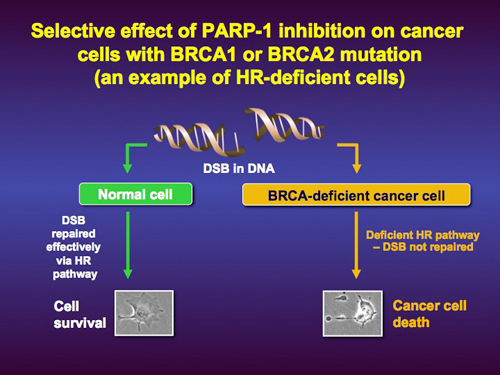

Call To Action! Protect & Expand U.S. Federal Ovarian Cancer Research Funding

Do you live in AL, CA, HI, IL, IA, KS, KY, MD, MI, MO, NH, ND, PA, TX, UT, VT, WA or WI? If so, one of your Senators sits on the U.S. Senate Defense Appropriations subcommittee that determines how much funding is given to the Department of Defense Ovarian Cancer Research Program. Ask your Senator to increase funding for this critical ovarian cancer research program. Click on the hyperlink below to obtain step-by-step instructions provided by the Ovarian Cancer National Alliance. It’s so important, and it’s so easy!

Woody Allen once said that 80% of success in life is just showing up. When it comes to U.S. federal funding of ovarian cancer research on Capitol Hill, decision are definitely made by those who show up.

Do you live in Alabama, California, Hawaii, Illinois, Indiana, Kansas, Kentucky, Maryland, Michigan, Mississippi, Missouri, New Hampshire, North Dakota, Pennsylvania, Texas, Utah, Vermont, Washington, or Wisconsin?

If so, you live in a state represented by a Senator who sits on the U.S. Senate Defense Appropriations subcommittee, the subcommittee that controls spending levels for the Department of Defense Ovarian Cancer Research Program (DoD OCRP). This critical program is the only dedicated federal budget line item that funds ovarian cancer research. Last year, funding for the program was cut. We need your Senator to support this program.

Please call your Senator’s office and request that he or she talk to the Chairman or Vice-Chair of the Defense Appropriations Subcommittee to express their support of a minimum of $30 million for the DoD OCRP in 2011.

The Ovarian Cancer National Alliance makes taking this action simple! CLICK HERE , enter your zip code, and you will receive step-by-step instructions.

If your Senator gets enough calls, he or she will believe that this is an important issue and will be more inclined to have this conversation with the Chairman or Vice Chairman. Both the Chairman and the Vice-Chair play a key role in determining how much money the DoD OCRP receives in order to carry out ovarian cancer research, so it is important that they hear from their Senate colleagues.

As seen in the chart below, ovarian cancer research funded by the U.S. federal government makes up the majority of all ovarian cancer research conducted in the U.S. We need to protect and expand this funding so we can get an early detection test and more effective treatments.

Source: Ovarian Cancer National Alliance

The more calls we make, the bigger impact we will make. Get your friends and family in your state involved in the mission to get increased U.S. federal funding for ovarian cancer research by asking them to call too!

Please place your calls by September 10th!

Source:  Call to action! Protect and expand ovarian cancer research funding! Action Alert, Ovarian Cancer National Alliance.

NOCC To Host 6th Annual “Walk To Break The Silence On Ovarian Cancer” In Washington, D.C. Area

The National Ovarian Cancer Coalition (NOCC) Central Maryland Chapter announces its 6th Annual “Walk to Break the Silence on Ovarian Cancer” to be held on Sunday, September 12, 2010 at Quiet Waters Park, located in Annapolis, Maryland.

Pureology is the Premier Sponsor of the NOCC 6th Annual "Walk To Break The Silence On Ovarian Cancer" Event

The National Ovarian Cancer Coalition (NOCC) Central Maryland Chapter announces its 6th Annual “Walk to Break the Silence on Ovarian Cancer” to be held on Sunday, September 12, 2010 at Quiet Waters Park, located in Annapolis, Maryland.

Registration will open at 8:00 am, and the 5K Run will begin at 9:00 am. The 3K Walk is scheduled to kick off at 9:05 am. To view a complete schedule of events, click here. To view the event brochure, click here.

September is Ovarian Cancer and Gynecologic Cancer Awareness Month. “We walk and run to raise funds but just as importantly, we walk and run to raise awareness,” said Nancy Long, NOCC Central Maryland Chapter’s Co-President. “There is no early detection test for ovarian cancer. That is why education and awareness are currently our best defense against this disease.”

Special events will include a survivor’s area with prizes and gifts available for ovarian cancer survivors. Refreshments will be provided, as well as face painting for the kids, big and small, and a table to make a flag in honor of or in memory of a loved one.

All participants will receive a T-shirt and a Pureology gift pack containing Pureology Hydrate Shampoo and Pureology Hydrate Conditioner. Pureology is the premier sponsor of the NOCC’s “Walk to Break the Silence on Ovarian Cancer.”

Quiet Waters Park - South River Overlook, Annapolis, Maryland

Quiet Waters Park - Bridge & Fountain, Annapolis, Maryland

More than 20,000 women are diagnosed with ovarian cancer each year, and approximately 15,000 women die from the disease annually. Unfortunately, most cases are diagnosed in their later stages when the prognosis is poor.  However, if diagnosed and treated early, when the cancer is confined to the ovary, the five-year survival rate is over 90 percent. There is currently no early detection test for ovarian cancer, and Pap tests do not detect the disease.  That is why it is imperative that the early signs and symptoms of the disease are recognized, not only by women, but also by their families and the medical community.

Symptoms of ovarian cancer may include bloating, pelvic or abdominal pain, trouble eating or feeling full quickly, and feeling the need to urinate urgently or often. Other symptoms of ovarian cancer may include fatigue, upset stomach or heartburn, back pain, pain during intercourse, constipation, and menstrual changes. Women who experience these symptoms for longer than two weeks, especially if these symptoms are new to them, are encouraged to visit their health care provider.

Many women attending this event are anxious and willing to tell their stories of, or related to, diagnosis, misdiagnosis, the hardships of treatment, the potential for inherited genetic mutations, and the fears and joys of being a survivor.

To register for the NOCC Central Maryland Chapter’s “Walk to Break the Silence on Ovarian Cancer,” please call 443-433-2597 or visit www.nocc.kintera.org/mdcentral

About the National Ovarian Cancer Coalition

The mission of the National Ovarian Cancer Coalition, a 501 (c)(3) charitable organization, is to raise awareness and promote education about ovarian cancer. The Coalition carries out its mission through a toll-free Help Line, local NOCC Chapters, a comprehensive website, peer support, written publications, and awareness/educational programs. The Coalition is committed to improving the survival rate and quality of life for women with ovarian cancer. If you would like more information on the “Break the Silence” campaign, or wish to contact one of the local NOCC Chapters, visit www.ovarian.org or call 1-888-OVARIAN (1-888-682-7426).

Source: NOCC Central MD Announces the 6th Annual Walk/Run To Break the Silence on Ovarian Cancer, National Ovarian Cancer Coalition, Central Maryland Chapter, Press Release, July 2, 2010.

The Cancer Biomarker Conundrum: Too Many False Discoveries

The boom in cancer [including ovarian] biomarker investments over the past 25 years has not translated into major clinical success. The reasons for biomarker failures include problems with study design and interpretation, as well as statistical deficiencies, according to an article published online August 12 in The Journal of the National Cancer Institute.

The boom in cancer [including ovarian] biomarker investments over the past 25 years has not translated into major clinical success. The reasons for biomarker failures include problems with study design and interpretation, as well as statistical deficiencies, according to an article published online August 12 in The Journal of the National Cancer Institute.

The National Institutes of Health defines a biomarker as “a characteristic that is objectively measured and evaluated as an indicator of normal biologic processes, pathogenic processes, or pharmacologic responses to a therapeutic intervention.” In the past decade, there have been numerous biomarker discoveries, but most initially promising biomarkers have not been validated for clinical use.

Eleftherios P. Diamandis, M.D., Ph.D., Head, Section of Clinical Biochemistry, Department of Pathology and Laboratory Medicine, Mount Sinai Hospital, Toronto, Ontario, Canada

To understand why so-called biomarker “breakthroughs” have not made it to the clinic, Eleftherios P. Diamandis, M.D., Ph.D., professor of pathology and laboratory medicine at Mount Sinai Hospital in Toronto and associate scientist at the Samuel Lunenfeld Research Institute of Mount Sinai Hospital, reviewed some biomarkers initially hailed as breakthroughs and their subsequent failings.

Diamandis first describes the requirements for biomarkers to be approved for clinical use: A biomarker must be released into circulation in easily detectable amounts by a small asymptomatic tumor or its micro-environment; and it should preferably be specific for the tissue of origin. Also, if the biomarker is affected by a non-cancer disease, its utility for cancer detection may be compromised. For example, the prostate-specific antigen (PSA) biomarker, which is used to detect prostate cancer, is also elevated in benign prostatic hyperplasia.

Diamandis looks at seven biomarkers that have emerged in the past 25 years, all of which were considered promising when they were first described. These include nuclear magnetic resonance of serum for cancer diagnosis; lysophosphatidic acid for ovarian cancer; four– and six-parameter diagnostic panels for ovarian cancer; osteopontin for ovarian cancer; early prostate cancer antigen-2 (EPCA-2) for prostate cancer detection; proteomic profiling of serum by mass spectrometry for ovarian cancer diagnosis; and peptidomic patterns for cancer diagnosis. Problems ranged from inappropriate statistical analysis to biases in case patient and control subject selection. For example, the problems with EPCA-2 included reporting values that were beyond the detection limit of the assay and using inappropriate reagents to test EPCA-2, such as solid surfaces coated with undiluted serum.

Diamandis concludes that “problems with pre-analytical, analytical, and post-analytical study design could lead to the generation of data that could be highly misleading.”

Sources:

The Cancer Biomarker Conundrum: Too Many False Discoveries, Journal of the National Cancer Institute Advance Access,  published on August 12, 2010, DOI 10.1093/jnci/djq335.

Eleftherios P. Diamandis. Cancer Biomarkers: Can We Turn Recent Failures into Success? Commentary, Journal of the National Cancer Institute Advance Access published on August 12, 2010, DOI 10.1093/jnci/djq306.

Georgia Tech’s Ovarian Cancer Early Detection Blood Test Exhibits High Accuracy in Small Study; Larger Study Planned

Scientists at the Georgia Institute of Technology have attained very promising results on their initial investigations of a new test for ovarian cancer. Using a new technique involving mass spectrometry of a single drop of blood serum, the test correctly identified women with ovarian cancer in 100 percent of the 94 patients tested. Because of the extremely low prevalence of ovarian cancer in the general population (∼0.04%), extensive prospective testing will be required to evaluate the test’s potential utility in general screening applications.

Scientists at the Georgia Institute of Technology have attained very promising results on their initial investigations of a new test for ovarian cancer. Using a new technique involving mass spectrometry of a single drop of blood serum, the test correctly identified women with ovarian cancer in 100 percent of the 94 patients tested. The results can be found online in the journal Cancer Epidemiology, Biomarkers, & Prevention Research.

John McDonald, Ph.D., Professor, Associate Dean for Biology Program Development, Georgia Institute of Technology; Chief Science Officer, Ovarian Cancer Institute

Facundo Fernandez, Ph.D., Associate Professor, School of Chemistry & Biochemistry, Georgia Institute of Technology

“Because ovarian cancer is a disease of relatively low prevalence, it’s essential that tests for it be extremely accurate. We believe we may have developed such a test,” said John McDonald, chief research scientist at the Ovarian Cancer Institute (Atlanta) and professor of biology at Georgia Tech.

The measurement step in the test, developed by the research group of Facundo Fernandez, associate professor in the School of Chemistry and Biochemistry at Tech, uses a single drop of blood serum, which is vaporized by hot helium plasma. As the molecules from the serum become electrically charged, a mass spectrometer is used to measure their relative abundance. The test looks at the small molecules involved in metabolism that are in the serum, known as metabolites. Machine learning techniques developed by Alex Gray, assistant professor in the College of Computing and the Center for the Study of Systems Biology, were then used to sort the sets of metabolites that were found in cancerous plasma from the ones found in healthy samples. Then, McDonald’s lab mapped the results between the metabolites found in both sets of tissue to discover the biological meaning of these metabolic changes.

The assay did extremely well in initial tests involving 94 subjects. In addition to being able to generate results using only a drop of blood serum, the test proved to be 100 percent accurate in distinguishing sera from women with ovarian cancer from normal controls. In addition it registered neither a single false positive nor a false negative

The group is currently in the midst of conducting the next set of assays, this time with 500 patients.

“The caveat is we don’t currently have 500 patients with the same type of ovarian cancer, so we’re going to look at other types of ovarian cancer,” said Fernandez. “It’s possible that there are also signatures for other cancers, not just ovarian, so we’re also going to be using the same approach to look at other types of cancers. We’ll be working with collaborators in Atlanta and elsewhere.”

In addition to having a relatively low prevalence, ovarian cancer is also asymptomatic in the early stages. Therefore, if further testing confirms the ability to accurately detect ovarian cancer by analyzing metabolites in the serum of women, doctors will be able detect the disease early and save many lives.

Libby’s H*O*P*E*™ Comment:

Alex Gray, Ph.D., Assistant Professor, College of Computing & Center for the Study of Systems Biology, Georgia Institute of Technology

This study involved testing the metabolite levels in blood sera from 44 women diagnosed with serous papillary ovarian cancer (stages I-IV) and 50 healthy women or women with benign conditions.  The assay distinguished between the cancer and control groups with an unprecedented 99% to 100% accuracy. The method possesses significant clinical potential as a cancer diagnostic tool.  Because of the extremely low prevalence of ovarian cancer in the general population (∼0.04%), extensive prospective testing will be required to evaluate the test’s potential utility in general screening applications.

Sources:

Initial Trials On New Ovarain Cancer Tests Exhibit Extremely High Accuracy, News Release, Georgia Institute of Technology, August 11, 2010.

Zhou M,Guan W, Walker LD, et. al. Rapid Mass Spectrometric Metabolic Profiling of Blood Sera Detects Ovarian Cancer with High Accuracy. Cancer Epidemiol Biomarkers Prev 1055-9965.EPI-10-0126; Published OnlineFirst August 10, 2010; doi:10.1158/1055-9965.EPI-10-0126

Largest Study Matching Genomes To Potential Anticancer Treatments Releases Initial Results

The largest study to correlate genetics with response to anticancer drugs released its first results on July 15. The researchers behind the study, based at Massachusetts General Hospital Cancer Center and the Wellcome Trust Sanger Institute, describe in this initial dataset the responses of 350 cancer samples (including ovarian cancer) to 18 anticancer therapeutics.

U.K.–U.S. Collaboration Builds a Database For “Personalized” Cancer Treatment

The Genomics of Drug Sensitivity in Cancer project released its first results on July 15th. Researchers released a first dataset from a study that will expose 1,000 cancer cell lines (including ovarian) to 400 anticancer treatments.

The largest study to correlate genetics with response to anticancer drugs released its first results on July 15. The researchers behind the study, based at Massachusetts General Hospital Cancer Center and the Wellcome Trust Sanger Institute, describe in this initial dataset the responses of 350 cancer samples (including ovarian cancer) to 18 anticancer therapeutics.

These first results, made freely available on the Genomics of Drug Sensitivity in Cancer website, will help cancer researchers around the world to obtain a better understanding of cancer genetics and could help to improve treatment regimens.

Dr. Andy Futreal, co-leader of the Cancer Genome Project at the Wellcome Trust Sanger Institute, said:

Today is our first glimpse of this complex interface, where genomes meet cancer medicine. We will, over the course of this work, add to this picture, identifying genetic changes that can inform clinical decisions, with the hope of improving treatment.  By producing a carefully curated set of data to serve the cancer research community, we hope to produce a database for improving patient response during cancer treatment.

How a patient responds to anticancer treatment is determined in large part by the combination of gene mutations in her or his cancer cells. The better this relationship is understood, the better treatment can be targeted to the particular tumor.

The aim of the five-year, international drug-sensitivity study is to find the best combinations of treatments for a wide range of cancer types: roughly 1000 cancer cell lines will be exposed to 400 anticancer treatments, alone or in combination, to determine the most effective drug or combination of drugs in the lab.

The therapies include known anticancer drugs as well as others in preclinical development.

To make the study as comprehensive as possible, the researchers have selected 1000 genetically characterized cell lines that include common cancers such as breast, colorectal and lung. Each cell line has been genetically fingerprinted and this data will also be publicly available on the website. Importantly, the researchers will take promising leads from the cancer samples in the lab to be verified in clinical specimens: the findings will be used to design clinical studies in which treatment will be selected based on a patient’s cancer mutation spectrum.

The new data released today draws on large-scale analyses of cancer genomes to identify genomic markers of sensitivity to anticancer drugs.

The first data release confirms several genes that predict therapeutic response in different cancer types. These include sensitivity of melanoma, a deadly form of skin cancer, with activating mutations in the gene BRAF to molecular therapeutics targeting this protein, a therapeutic strategy that is currently being exploited in the clinical setting. These first results provide a striking example of the power of this approach to identify genetic factors that determine drug response.

Dr. Ultan McDermott, Faculty Investigator at the Wellcome Trust Sanger Institute, said:

It is very encouraging that we are able to clearly identify drug–gene interactions that are known to have clinical impact at an early stage in the study. It suggests that we will discover many novel interactions even before we have the full complement of cancer cell lines and drugs screened. We have already studied more gene mutation-drug interactions than any previous work but, more importantly, we are putting in place a mechanism to ensure rapid dissemination of our results to enable worldwide collaborative research. By ensuring that all the drug sensitivity data and correlative analysis is freely available in an easy-to-use website, we hope to enable and support the important work of the wider community of cancer researchers.

Further results from this study should, over its five-year term, identify interactions between mutations and drug sensitivities most likely to translate into benefit for patients: at the moment we do not have sufficient understanding of the complexity of cancer drug response to optimize treatment based on a person’s genome.

Professor Daniel Haber, Director of the Cancer Center at Massachusetts General Hospital and Harvard Medical School, said:

We need better information linking tumor genotypes to drug sensitivities across the broad spectrum of cancer heterogeneity, and then we need to be in position to apply that research foundation to improve patient care.  The effectiveness of novel targeted cancer agents could be substantially improved by directing treatment towards those patients that genetic study suggests are most likely to benefit, thus “personalizing” cancer treatment.

The comprehensive results include correlating drug sensitivity with measurements of mutations in key cancer genes, structural changes in the cancer cells (copy number information) and differences in gene activity, making this the largest project of its type and a unique resource for cancer researchers around the world.

Professor Michael Stratton, co-leader of the Cancer Genome Project and Director of the Wellcome Trust Sanger Institute, said:

“This is one of the Sanger Institute’s first large-scale explorations into the therapeutics of human disease.  I am delighted to see the early results from our partnership with the team at Massachusetts General Hospital. Collaboration is essential in cancer research: this important project is part of wider efforts to bring international expertise to bear on cancer.”

Ovarian Cancer Sample Gene Mutation Prevalence

As part of the Cancer Genome Project, researchers identified gene mutations found in 20 ovarian cancer cell lines and the associated prevalence of such mutations within the sample population tested. For purposes of this project, a mutation — referred to by researchers as a “genetic event” in the project analyses description — is defined as (i) a coding sequence variant in a cancer gene, or (ii) a gene copy number equal to zero (i.e., a gene deletion) or greater than or equal to 8 (i.e., gene amplification).  The ovarian cancer sample analysis thus far, indicates the presence of mutations in twelve genes. The genes that are mutated and the accompanying mutation prevalence percentage are as follows:  APC (5%), CDKN2A (24%), CTNNB1 (5%), ERBB2/HER-2 (5%), KRAS (10% ), MAP2K4 (5%), MSH2 (5%), NRAS (10%), PIK3CA (10%), PTEN (14%), STK11 (5%), and TP53 (62%). Accordingly, as of date, the top five ovarian cancer gene mutations occurred in TP53, CDKN2A, CDKN2a(p14)(see below), PTEN, and KRAS.

Click here to view the Ovary Tissue Overview.  Click here to download a Microsoft Excel spreadsheet listing the mutations in 52 cancer genes across tissue types. Based upon the Ovary Tissue Overview chart, the Microsoft Excel Chart has not been updated to include the following additional ovarian cancer sample mutations and associated prevalence percentages: CDKN2a(p14)(24%), FAM123B (5%), FBXW7 (5%), MLH1 (10%), MSH6 (5%).

18 AntiCancer Therapies Tested; Next 9 Therapies To Be Tested Identified

As presented in the initial study results, 18 drugs/preclinical compounds were tested against various cancer cell lines, including ovarian. The list of drugs/preclinical compounds that were tested for sensitivity are as follows:  imatinib (brand name: Gleevec),  AZ628 (C-Raf inhibitor)MG132 (proteasome inhibitor), TAE684 (ALK inhibitor), MK-0457 (Aurora kinase inhibitor)sorafenib (C-Raf kinase & angiogenesis inhibitor) (brand name: Nexavar), Go 6976 (protein kinase C (PKC) inhibitor), paclitaxel (brand name: Taxol), rapamycin (mTOR inhibitor)(brand name: Rapamune), erlotinib (EGFR inhibitor)(brand name: Tarceva), HKI-272 (a/k/a neratinib) (HER-2 inhibitor), Geldanamycin (Heat Shock Protein 90 inhibitor), cyclopamine (Hedgehog pathway inhibitor), AZD-0530 (Src and Abl inhibitor), sunitinib (angiogenesis & c-kit inhibitor)(brand name:  Sutent), PHA665752 (c-Met inhibitor), PF-2341066 (c-Met inhibitor), and PD173074 (FGFR1 & angiogenesis inhibitor).

Click here to view the project drug/preclinical compound sensitivity data chart.

The additional drugs/compounds that will be screened by researchers in the near future are metformin (insulin)(brand name:  Glucophage), AICAR (AMP inhibitor), docetaxel (platinum drug)(brand name: Taxotere), cisplatin (platinum drug)(brand name: Platinol), gefitinib (EGFR inhibitor)(brand name:  Iressa), BIBW 2992 (EGFR/HER-2 inhibitor)(brand name:  Tovok), PLX4720 (B-Raf [V600E] inhibitor), axitinib (angiogenesis inhibitor)(a/k/a AG-013736), and CI-1040 (PD184352)(MEK inhibitor).

Ovarian cancer cells dividing. (Source: ecancermedia)

Ovarian Cancer Therapy Sensitivity

Targeted molecular therapies that disrupt specific intracellular signaling pathways are increasingly used for the treatment of cancer. The rational for this approach is based on our ever increasing understanding of the genes that are causally implicated in cancer and the clinical observation that the genetic features of a cancer can be predictive of a patient’s response to targeted therapies. As noted above, the goal of the Cancer Genome Project is to discover new cancer biomarkers that define subsets of drug-sensitive patients. Towards this aim, the researchers are (i) screening a wide range of anti-cancer therapeutics against a large number of genetically characterized human cancer cell lines (including ovarian), and (ii) correlating drug sensitivity with extensive genetic data. This information can be used to determine the optimal clinical application of cancer drugs as well as the design of clinical trials involving investigational compounds being developed for the clinic.

When the researchers tested the 18 anticancer therapies against the 20 ovarian cancer cell lines, they determined that the samples were sensitive to many of the drugs/compounds. The initial results of this testing indicate that there are at least six ovarian cancer gene mutations that were sensitive to eight of the anticancer therapies, with such results rising to the level of statistical significance.  We should note that although most (but not all) of the ovarian cancer gene mutations were sensitive to several anticancer therapies, we listed below only those which were sensitive enough to be assigned a green (i.e., sensitive) heatmap code by the researchers.

Click here to download a Microsoft Excel spreadsheet showing the effect of each of the 51 genes on the 18 drugs tested. Statistically significant effects are highlighted in bold and the corresponding p values for each gene/drug interaction are displayed in an adjacent table.  A heatmap overlay for the effect of the gene on drug sensitivity was created, with the color red indicating drug resistance and the color green indicating drug sensitivity.
The mutated genes present within the 20 ovarian cancer cell line sample that were sensitive to anticancer therapies are listed below.  Again, only statistically significant sensitivities are provided.

  • CDKN2A gene mutation was sensitive to TAE684, MK-0457, paclitaxel, and PHA665752.
  • CTNNB1 gene mutation was sensitive to MK-0457.
  • ERBB2/HER-2 gene mutation was sensitive to HKI-272.
  • KRAS gene mutation was sensitive to AZ628.
  • MSH2 gene mutation was sensitive to AZD0530.
  • NRAS gene mutation was sensitive to AZ628.

We will provide you with future updates regarding additional ovarian cancer gene mutation findings, and new anticancer therapies tested, pursuant to the ongoing Cancer Genome Project.

Sources:

_____________________________________________________________

About The Genomics of Drug Sensitivity In Cancer Project

The Genomics of Drug Sensitivity In Cancer Project was launched in December 2008 with funding from a five-year Wellcome Trust strategic award. The U.K.–U.S. collaboration harnesses the experience in experimental molecular therapeutics at Massachusetts General Hospital Cancer Center and the expertise in large scale genomics, sequencing and informatics at the Wellcome Trust Sanger Institute. The scientists will use their skills in high-throughput research to test the sensitivity of 1000 cancer cell samples to hundreds of known and novel molecular anticancer treatments and correlate these responses to the genes known to be driving the cancers. The study makes use of a very large collection of genetically defined cancer cell lines to identify genetic events that predict response to cancer drugs. The results will give a catalogue of the most promising treatments or combinations of treatments for each of the cancer types based on the specific genetic alterations in these cancers. This information will then be used to empower more informative clinical trials thus aiding the use of targeted agents in the clinic and ultimately improvements in patient care.

Project leadership includes Professor Daniel Haber and Dr. Cyril Benes at Massachusetts General Hospital Cancer Center and Professor Mike Stratton and Drs. Andy Futreal and Ultan McDermott at the Wellcome Trust Sanger Institute.

About Massachusetts General Hospital

Massachusetts General Hospital (MGH), established in 1811, is the original and largest teaching hospital of Harvard Medical School. The MGH conducts the largest hospital-based research program in the United States, with an annual research budget of more than $600 million and major research centers in AIDS, cardiovascular research, cancer, computational and integrative biology, cutaneous biology, human genetics, medical imaging, neurodegenerative disorders, regenerative medicine, systems biology, transplantation biology and photomedicine.

About The Wellcome Trust Sanger Institute

The Wellcome Trust Sanger Institute, which receives the majority of its funding from the Wellcome Trust, was founded in 1992 as the focus for U.K. gene sequencing efforts. The Institute is responsible for the completion of the sequence of approximately one-third of the human genome as well as genomes of model organisms such as mouse and zebrafish, and more than 90 pathogen genomes. In October 2005, new funding was awarded by the Wellcome Trust to enable the Institute to build on its world-class scientific achievements and exploit the wealth of genome data now available to answer important questions about health and disease. These programs are built around a Faculty of more than 30 senior researchers. The Wellcome Trust Sanger Institute is based in Hinxton, Cambridge, U.K.

About The Wellcome Trust

The Wellcome Trust is a global charity dedicated to achieving extraordinary improvements in human and animal health. It supports the brightest minds in biomedical research and the medical humanities. The Trust’s breadth of support includes public engagement, education, and the application of research to improve health. It is independent of both political and commercial interests.

Required Cancer Genome Project Disclaimer:

The data above was obtained from the Wellcome Trust Sanger Institute Cancer Genome Project web site, http://www.sanger.ac.uk/genetics/CGP. The data is made available before scientific publication with the understanding that the Wellcom Trust Sanger Institute intends to publish the initial large-scale analysis of the dataset. This publication will include a summary detailing the curated data and its key features.  Any redistribution of the original data should carry this notice: Please ensure that you use the latest available version of the data as it is being continually updated.  If you have any questions regarding the sequence or mutation data or their use in publications, please contact cosmic@sanger.ac.uk so as to obtain any updated or additional data.  The Wellcome Trust Sanger Institute provides this data in good faith, but makes no warranty, express or implied, nor assumes any legal liability or responsibility for any purpose for which the data are used.

Researchers Identify “Missing Link” Underlying DNA Repair & Platinum Drug Resistance

Researchers have discovered an enzyme crucial to a type of DNA repair that also causes resistance to a class of cancer drugs most commonly used against ovarian cancer.

Scientists from The University of Texas MD Anderson Cancer Center and the Life Sciences Institute of Zhejiang University in China report the discovery of the enzyme and its role in repairing DNA damage called “cross-linking” in the Science Express advance online publication of Science.

Junjie Chen, Ph.D., Professor and Chair, Department of Experimental Radiation Oncology, University of Texas M.D. Anderson Cancer Center

“This pathway that repairs cross-linking damage is a common factor in a variety of cancers, including breast cancer and especially in ovarian cancer. If the pathway is active, it undoes the therapeutic effect of cisplatin and similar therapies,” said co-corresponding author Junjie Chen, Ph.D., professor and chair of MD Anderson’s Department of Experimental Radiation Oncology.

The platinum-based chemotherapies such as cisplatin, carboplatin and oxaliplatin work by causing DNA cross-linking in cancer cells, which blocks their ability to divide and leads to cell death. Cross-linking occurs when one of the two strands of DNA in a cell branches out and links to the other strand.

Cisplatin and similar drugs are often initially effective against ovarian cancer, Chen said, but over time the disease becomes resistant and progresses.

Scientists have known that the protein complex known as FANCIFANCD2 responds to DNA damage and repairs cross-linking, but the details of how the complex works have been unknown. “The breakthrough in this research is that we finally found an enzyme involved in the repair process,” Chen said.

The enzyme, which they named FAN1, appears to be a nuclease, which is capable of slicing through strands of DNA.

In a series of experiments, Chen and colleagues demonstrated how the protein complex summons FAN1, connects with the enzyme and moves it to the site of DNA cross-linking. They also showed that FAN1 cleaves branched DNA but leaves the normal, separate double-stranded DNA alone. Mutant versions of FAN1 were unable to slice branched DNA.

Like a lock and key

The researchers also demonstrated that FAN1 cannot get at DNA damage without being taken there by the FANCI-FANCD2 protein complex, which detects and moves to the damaged site. The complex recruits the FAN1 enzyme by acquiring a single ubiquitin molecule. FAN1 connects with the complex by binding to the ubiquitin site.

“It’s like a lock and key system, once they fit, FAN1 is recruited,” Chen said.

Analyzing the activity of this repair pathway could guide treatment for cancer patients, Chen said, with the platinum-based therapies used when the cross-linking repair mechanism is less active.

Scientists had shown previously that DNA repair was much less efficient when FANCI and FANCD2 lack the single ubiquitin. DNA response and damage-repair proteins can be recruited to damage sites by the proteins’ ubiquitin-binding domains. The team first identified a protein that had both a ubiquitin-binding domain and a known nuclease domain. When they treated cells with mitomycin C, which promotes DNA cross-linking, that protein, then known as KIAA1018, gathered at damage sites. This led them to the functional experiments that established its role in DNA repair.

They renamed the protein FAN1, short for Fanconi anemia-associated nuclease 1. The FANCI-FANCD2 complex is ubiquitinated by an Fanconi anemia (FA) core complex containing eight FA proteins. These genes and proteins were discovered during research of FA, a rare disease caused by mutations in 13 fanc genes that is characterized by congenital malformations, bone marrow failure, cancer and hypersensitivity to DNA cross-linking agents.

Chen said the FANCI-FANCD2 pathway also is associated with the BRCA1 and BRCA2 pathways, which are involved in homologous recombination repair. Scientists know that homologous recombination repair is also required for the repair of DNA cross-links, but the exact details remain to be resolved, Chen said. Mutations to BRCA1 and BRCA2 are known to raise a woman’s risk for ovarian and breast cancers and are found in about 5-10 percent of women with either disease.

Co-authors with Chen are co-first author Gargi Ghosal, Ph.D., and Jingsong Yuan, Ph.D., also of Experimental Radiation Oncology at MD Anderson; and co-corresponding author Jun Huang, Ph.D., co-first author Ting Liu, Ph.D., of the Life Sciences Institute of Zhejiang University in Hangzhou, China.

This research was funded by a grant from the U.S. National Institutes of Health and the Startup Fund at Zhejiang University.

Sources:

“Smile, Open Your Eyes, Love and Go On.”

Today marks the 2nd anniversary of Libby’s death from ovarian cancer at the age of 26. Although the family healing process continues, we celebrate Libby’s life formally on this day to honor her memory, and remind ourselves that life is precious and should not be taken for granted.

Today marks the 2nd anniversary of Libby’s death from ovarian cancer at the age of 26. Although the family healing process continues, we celebrate Libby’s life formally on this day to honor her memory, and remind ourselves that life is precious and should not be taken for granted.  This day also reminds us that there is a considerable amount of work yet to be done in raising ovarian cancer awareness and finding a reliable screening test, and ultimately a cure, for this unforgiving disease.

As reported by the American Cancer Society earlier this month, the estimated number of newly diagnosed ovarian cancer cases and related deaths in the U.S. during 2010 will be 21,880 and 13,850, respectively.  Simply stated, a U.S. woman will die every 38 minutes from ovarian cancer in 2010. Cancer Research U.K. also reported this month that the 10-year ovarian cancer survival rate nearly doubled since the 1970s. Unfortunately, this much heralded statistical “doubling” represents an increase of the long-term ovarian cancer survival rate from 18% to only 35%. Ovarian cancer still remains the most lethal gynecologic cancer in women. I know that if Libby were alive today, she would say, “we must do better.”

Although the vast majority of visitors to this website never knew Libby, it is because of her that Libby’s H*O*P*E*™ was created and shared with the general public. What began as a family website used to exchange ovarian cancer and cancer-related information within the family during Libby’s illness, has rapidly become a global information resource for ovarian cancer survivors and their families after her death. It is my greatest hope that Libby would be proud of the following accomplishments achieved over the past two years, which are dedicated to her memory:

  • Created Libby’s H*O*P*E*™ mission statement to be carried out by a future nonprofit, tax-exempt organization.
  • Generated approximately 145,000 website visitors, from 60 countries around the world.
  • Generated 5% to 10% of daily website visitors from major U.S. and international cancer centers and elite academic institutions actively engaged in cancer research.
  • Established a website library containing over 500 videos relating to ovarian cancer and cancer-related topics.
  • Responded to approximately 700 ovarian cancer survivor (and family) general informational inquiries, which were answered within 96 hours of website posting or email receipt.
  • Created Vox Populi website article features which provide the general public with a better understanding of how ovarian cancer impacts the daily life of a woman diagnosed with the disease and her family. These stories have been well-received by our readers as a source of inspiration and hope.
  • Highlighted in the Eyes on Advocacy section of the 2010 University of Washington Tumor Vaccine Group (UWTVG) quarterly (Winter) newsletter entitled, TVG Focus. The UWTVG is headed by Mary L. (Nora) Disis, M.D., a Professor of Medicine and Adjunct Professor of Pathology and Obstetrics & Gynecology at the University of Washington, and a Member of the Fred Hutchinson Cancer Research Center. Dr. Disis is a world-renowned cancer immunologist.
  • Established a new working relationship with Women’s Oncology Research & Dialogue (WORD), a non-profit, tax-exempt organization dedicated to raising gynecological cancer awareness.  To promote this new relationship, WORD recently shot a video of Paul Cacciatore, the Libby’s H*O*P*E* founder.  In the video, Paul addresses the genesis of the website, the Libby’s H*O*P*E* mission statement, and why it is important for all women to educate themselves about the early warning signs of ovarian cancer.  WORD will be launching a new website before the end of 2010, and it is anticipated that this video will appear on both the WORD and Libby’s H*O*P*E* websites at that time.

“Remember Me”

Based upon instructions from Her Majesty Queen Elizabeth II (“Her Majesty”), a poem entitled, She Is Gone, was recited at the Queen Mother’s funeral, which was held in Westminster Abbey on April 9, 2002. The poem recitation sparked a glut of media interest because of its simple, upbeat nature – and mystery author, who was credited in the service program as “Anon” [i.e., Anonymous].  Apparently, Her Majesty found the poem while leafing through old memorial service books and she chose it to be read at her mother’s funeral, where it struck a chord with millions of mourners.

After the conclusion of the Queen Mother’s funeral, the BBC, The Times, and other U.K. media outlets took great effort to identify the author, with attributions going to, among others, Immanuel Kant and Joyce Grenfell. Eventually, it was discovered that the true author was Mr. David Harkins, who wrote the poem in 1981 while working at a bakery.  Mr. Harkins, who now works as an artist selling paintings over the Internet, said he “couldn’t believe his eyes” when he saw his poetry published in several newspapers after the funeral.

Quite shocked by all of the media attention, David Harkins sent the original manuscript of the poem to Prince Charles (of Wales), and St. James’s Palace replied thanking Mr. Harkins for explaining its origin. As it turned out, the poem was originally written by David Harkins in homage to an unrequited love. Mr. Harkins recalled: “I was 23 when I first met Anne Lloyd, my inspiration for the poem I called Remember Me.”  The reply received by David Harkins from the Prince of Wales’s office stated: “I have no doubt that it [Remember Me] will be reproduced on many occasions over the years to come. The Prince of Wales has asked me to send you his very best wishes.”

I chose to include Remember Me as part of our tribute to Libby for two reasons.  First, the poem is instructive as to how Libby would want all of us to continue on with our lives, energized by our loving memories of her.  Second, Libby would no doubt find great joy and humor in the fact that a talented baker from a small U.K. town became famous worldwide for his literary prowess rather than his pastries. The full text of Remember Me is provided below.

Remember Me

You can shed tears that she is gone

Or you can smile because she has lived

You can close your eyes and pray that she will come back

Or you can open your eyes and see all that she has left

Your heart can be empty because you can’t see her

Or you can be full of the love that you shared

You can turn your back on tomorrow and live yesterday

Or you can be happy for tomorrow because of yesterday

You can remember her and only that she is gone

Or you can cherish her memory and let it live on

You can cry and close your mind, be empty and turn your back

Or you can do what she would want: smile, open your eyes, love and go on.

— written by David Harkins, Silloth, Cumbria, U.K. (1981)

Did You Ever Hear An Angel Sing?

The inspirational story of Rhema Marvanne provides further proof that it is possible to “smile, open your eyes, love and go on,” after the death of a family member from ovarian cancer. It is difficult to believe that the life lesson highlighted by this touching story is provided to us through the example of a 7-year old child, albeit it a very talented one.

Rhema Marvanne was born on September 15, 2002.  Rhema lives with her father Teton Voraritskul, and a family pet dog named, “Mojo.” According to her father, Rhema began singing at the same time she began talking.

Rhema’s mother, Wendi Marvanne Voraritskul, loved Rhema with all of her heart. Wendi was diagnosed with ovarian cancer when Rhema was just 3 years old. Succumbing to the disease three years later, Wendi Marvanne died at the age of 36 on November 8, 2008.  According to Teton Voraritskul, most of Rhema’s memories with her mom were pleasant ones, but revolved around surgery, multiple chemotherapy treatments, sickness and struggle. Wendi was a strong believer in God and never complained about or questioned God during her illness. Teton explains that Wendi always encouraged those around her, even in the midst of her cancer battle. During Wendi’s final months, Rhema and Teton took care of her. Rhema spent almost every hour with her mother. When asked what her greatest accomplishment was prior to her death, Wendi simply replied, “Rhema.” A YouTube video featuring Wendi and her original songs is provided below. You can learn more about Wendi Marvanne’s life and music at www.jchouseofmercy.org.

It was less than a year ago that Rhema recorded her first song, Amazing Grace, and quickly became an Internet singing sensation. She obtains great inspiration from her mother, Wendi.  It is Rhema’s greatest hope to make her mother proud, both as a singer and as a “servant of God,” which is why she also performs for church congregations, non-profit organizations, charities, hospitals and special events.

Already a supremely talented singer, recording artist, and actor, Rhema counts the following among her recent accomplishments:

  • Acted in 1st featured film entitled Machine Gun Preacher, a Lionsgate production set to release in Fall 2011. The movie Machine Gun Preacher is based upon the true story of Sam Childers (portrayed by well-known actor Gerard Butler), a drug-dealing biker who finds religion and dedicates his life to helping Sudanese children escape the Lord’s Resistance Army (LRA) in Africa. Childers founded the Angels of East Africa, a children’s village located in southern Sudan, for the children he saves from the LRA.

During her free time Rhema enjoys playing with her friends and dolls, and loves to watch movies. The best description of Rhema is provided by her father:

…The best way to describe Rhema is that she has a beautiful heart and soul. She is sweet, kind, caring and most importantly pure in heart. Most people who have dealt with or are currently dealing with cancer, disease, challenges, etc…..see hope and inspiration in Rhema. The little girl who should have been scared or harmed by seeing her mother suffer and gone, is strong and perfect. I see Rhema as a cancer survivor. She gives me hope for goodness in mankind. God gave her a beautiful heart and the voice of an angel. Most people that hear her sing can not deny that God does speak through a child. Her voice touches people’s hearts.

Whenever we remember Libby, or any woman who lost her battle to ovarian cancer, we should follow Rhema’s example and heed the call to action set forth in the last line of the poem Remember Me, ” … smile, open your eyes, love and go on.”

Libby, we will always love you and keep your memory alive in our hearts and minds.

How Can You Help?

To support Libby’s H*O*P*E*™, you can make a donation ($10 minimum) through our Facebook Cause page.  All donations made to the Libby’s H*O*P*E*™ Facebook cause are designated for the benefit of the Ovarian Cancer Research Fund (OCRF). OCRF is one of the largest U.S. private, non-profit organizations dedicated to finding an early detection test, and ultimately a cure, for ovarian cancer.

If you are not a Facebook member, you can still make a donation through the Libby’s H*O*P*E*™ Facebook donation page (no membership or registration required).

If you are unable to donate, you can nevertheless support OCRF without any out-of-pocket cost by clicking on our “SocialVibe” widget that appears on the website homepage right sidebar, or by using our designated SocialVibe website. For each reader that clicks on the SocialVibe widget (or goes to our designated SocialVibe website), and watches the video presented and/or answers the question(s) listed, our current SocialVibe sponsor will donate money to OCRF on your behalf for ovarian cancer research. It’s fast & it’s free!

Special Thanks:

We would like to extend special thanks to Teton Voraritskul for allowing us to feature Rhema’s story and music videos, as well as the video of Wendi’s life.  To learn more about Rhema Marvanne and her music, go to www.RhemaMarvanne.com. Rhema’s songs are sold on iTunes®, Amazon.com, and RhemaMarvanne.com.

Sources:

  • Jemal A., Siegel R., Xu J. et. al. Cancer Statistics, 2010.  CA Cancer J Clin. 2010 Jul 7. [Epub ahead of print] [PMID: 20610543].
  • Remember Me, written by David Harkins, Silloth, Cumbria, U.K., PoeticExpressions.co.uk.

_________________________________________

*“Vox Populi,” a Latin phrase that means “voice of the people,” is a term often used in broadcast journalism to describe an interview of the “man on the street.”

In the spirit of Vox Populi, Libby’s H*O*P*E*™ searches online for original writings and visual media created by ovarian cancer survivors, survivors’ family members, cancer advocates, journalists, and health care professionals, which address one or more aspects of ovarian cancer within the context of daily life. The written and visual media features that we discover run the gamut; sometimes poignant, sometimes educational, sometimes touching, sometimes comedic, but always honest. The Vox Populi feature may take the form of an essay, editorial, poem, letter, story, song or video picture montage.

It is our hope that the Vox Populi feature will allow our readers to obtain, in some small way, a better understanding of how ovarian cancer impacts the life of a woman diagnosed with the disease and her family. We invite all readers to submit, or bring to our attention, original writings and visual media suitable for publication as Vox Populi features.

Yale Identifies KRAS Gene Variant in Ovarian Cancer Patients With “Non-BRCA” Family History of Breast/Ovarian Cancer

A team of Yale researchers have identified a genetic marker that can help predict the risk of developing ovarian cancer, a hard to detect and often deadly form of cancer.

A team of Yale researchers have identified a genetic marker that can help predict the risk of developing ovarian cancer, a hard to detect and often deadly form of cancer.

Reporting online in the July 20 edition of the journal Cancer Research, the team showed that a variant of the KRAS oncogene [KRAS variant allele at rs61764370] was present in 25 percent of all ovarian cancer patients. In addition, this variant was found in 61 percent of ovarian cancer patients with a family history of breast and ovarian cancer, suggesting that this marker may be a new marker of ovarian cancer risk for these families, said the researchers.

Joanne B. Weidhaas, M.D., Associate Professor of Therapeutic Radiology & Researcher, Yale Cancer Center

Frank Slack, Ph.D., Professor of Molecular, Cellular & Developmental Biology, Yale University

“For many women out there with a strong family history of ovarian cancer who previously have had no identified genetic cause for their family’s disease; this might be it for them,” said Joanne B. Weidhaas, M.D., associate professor of therapeutic radiology, researcher for the Yale Cancer Center and co-senior author of the study. “Our findings support that the KRAS-variant is an new genetic marker of ovarian cancer risk.”

Weidhaas and co-senior author Frank Slack, also of Yale, first searched for the KRAS-variant among ovarian cancer patients and found that one in four had the gene variant, compared to 6 percent of the general population. To confirm that the KRAS-variant was a genetic marker of ovarian cancer risk, they studied women with ovarian cancer who also had evidence of a hereditary breast and ovarian cancer syndrome. All these women had strong family history of cancer, but only half in their study had known genetic markers of ovarian cancer risk, namely BRCA1 or BRCA2 mutations.

Six out of 10 women without other known genetic markers of ovarian cancer risk had the KRAS-variant. Unlike women with BRCA mutations who develop ovarian cancer at a younger age, women with the KRAS-variant tend to develop cancer after menopause. Because ovarian cancer is difficult to diagnose and thus usually found at advanced stages, finding new markers of increased ovarian cancer risk is critical, note the researchers.

Genetic tests for the KRAS-variant [PreOvar™] are currently being offered to ovarian cancer patients and to women with a family history of ovarian cancer by MiraDx, a New Haven-based biotechnology company that has licensed the Yale discoveries.

The study was funded by the National Institutes of Health. Weidhaas and Slack have a financial interest in MiraDX.

Other Yale authors of the paper include: Elena Ratner, Lingeng Lu, Marta Boeke, Rachel Barnett, Sunitha Nallur, Lena J. Chin, Cory Pelletier, Rachel Blitzblau, Renata Tassi, Trupti Paranjape, Herbert Yu, Harvey Risch, Thomas Rutherford, Peter Schwartz, Alessandro Santin, Ellen Matloff, Daniel Zelterman.

Sources:

ESMO Clinical Practice Guidelines Regarding BRCA Gene Mutations, Ovarian Cancer & Supportive Cancer Care

The European Society for Medical Oncology (ESMO) is the leading European professional organization committed to advancing the specialty of medical oncology, and promoting a multidisciplinary approach to cancer treatment and care. …  The ESMO Clinical Practice Guidelines include coverage of  (i) BRCA gene mutations in breast and ovarian cancer, (ii) gynecologic tumors, and (iii) supportive cancer care …

The European Society for Medical Oncology (ESMO) is the leading European professional organization committed to advancing the specialty of medical oncology, and promoting a multidisciplinary approach to cancer treatment and care.  Since its founding in 1975 as a non-profit organization, ESMO’s mission is to support oncology professionals in providing people with cancer the most effective treatments available at the highest quality of care.

Formerly known as the ESMO Clinical Recommendations, the ESMO Clinical Practice Guidelines (CPG) are intended to provide users with a set of requirements for the highest standard of care for cancer patients. The ESMO CPG represent vital, evidence-based information including the incidence of the malignancy, diagnostic criteria, staging of disease and risk assessment, treatment plans and follow-up.

A growing number of the new guidelines were developed using large, multidisciplinary writing groups, ensuring optimal input from the oncology profession and better geographic representation.

For example, two revised guidelines address the prevention of chemotherapy- and radiotherapy–induced nausea and vomiting, developed as a result of the 3rd Perugia Consensus Conference organized by the Multinational Association of Supportive Care in Cancer (MASCC) and ESMO.

The new guidelines published this month and available online represent the first stage of a process that will include recommendations for more than 55 different clinical situations, covering almost all tumor types as well as various other topics including the therapeutic use of growth factors.

The ESMO Clinical Practice Guidelines include coverage of  (i) BRCA gene mutations in breast and ovarian cancer, (ii) gynecologic tumors, and (iii) supportive cancer care, as provided below.

Breast Cancer

Gynecologic Tumors

Supportive Care

Sources: